- Clumping clay litter is dangerous for kittens under 4 months due to intestinal blockage risk.
- Kittens develop litter habits between 2-9 weeks; positive reinforcement is crucial, punishment is harmful.
- Malaysia's humidity requires special litter care to prevent odors and mold, especially with organic litters.
- Systematic troubleshooting helps solve litter box refusal, always rule out medical issues first.
- Choosing safe, appropriate litter and a good setup prevents lifelong behavioral problems.
Ah, the pitter-patter of tiny kitten paws! Bringing a new furball home is pure joy, but let's be honest, the thought of litter training can feel a bit daunting. We've all pictured those adorable moments, but also braced for the occasional 'surprise' outside the box. As fellow cat parents, we get it. Litter box problems are more than just a nuisance; they're a leading reason why cats end up in shelters globally, though specific data for Malaysia remains a quiet challenge, as SPCA Selangor's 2023 review, for example, shares intake numbers (224 cats and kittens) but not detailed surrender reasons.
This guide cuts through the noise, offering clear, science-backed advice tailored for Malaysian cat owners. We'll walk you through everything from choosing safe litter to troubleshooting common hiccups, all designed to help your kitten grow into a confident, lifelong litter user. Ready to turn those tiny paws into expert scoopers?
When to Start Litter Training Your Kitten
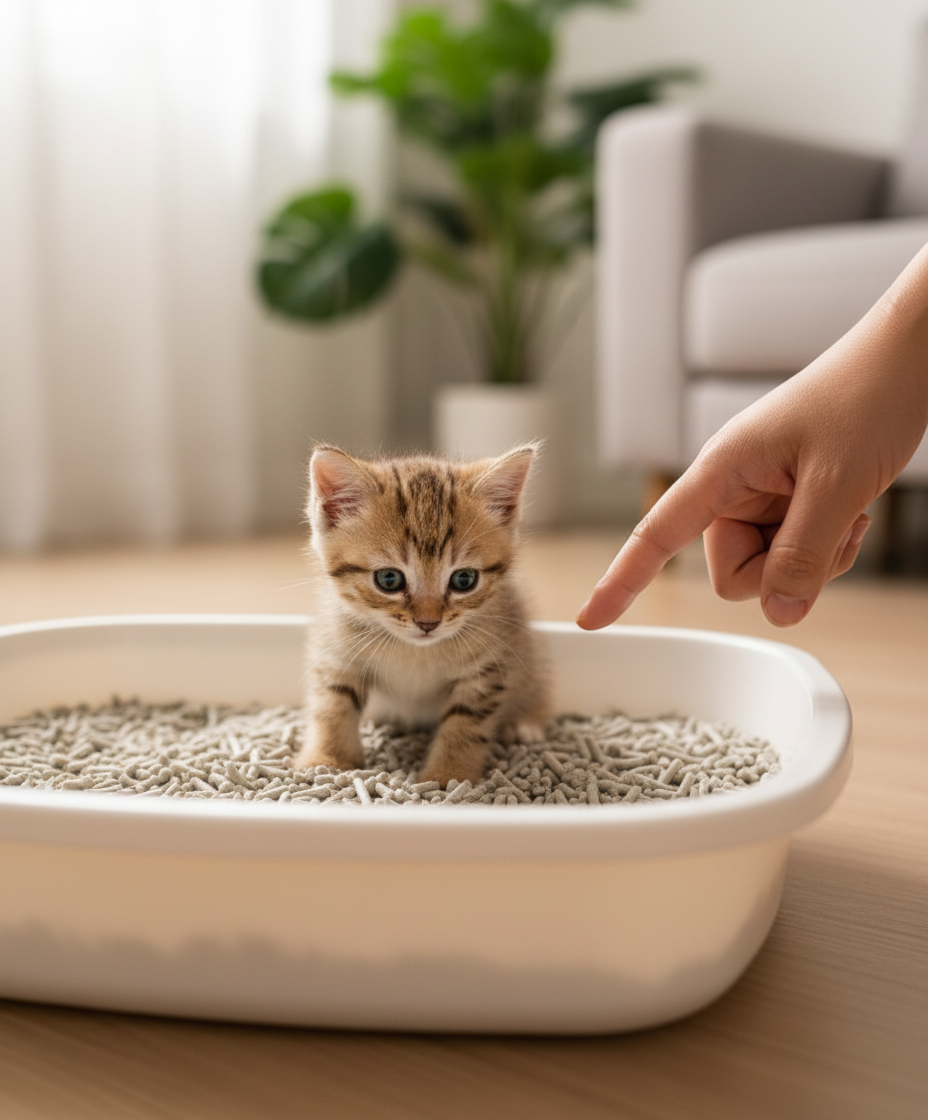
Understanding your kitten’s natural development is the first step to stress-free litter training. It’s less about 'teaching' and more about 'guiding' their innate instincts.
The 3-Week to 4-Week Window
For the first few weeks, a mother cat handles everything. She stimulates her kittens to eliminate and keeps the nest spotless. It's truly amazing to watch! However, around three to four weeks of age, a switch flips. Kittens start to gain voluntary control over their bladder and bowels. This is your cue! They're biologically ready to explore and begin using a litter box. At this stage, they'll also start showing that natural instinct to dig and cover their waste, a behavior passed down from their wild ancestors.
Rescue Kittens With No Litter Experience
If you've welcomed a rescue kitten, especially one found on the streets, their journey might be a little different. Unlike breeder-raised kittens who often learn by watching their mothers use a litter box, rescue kittens might have no prior exposure. They might be used to eliminating on grass, soil, or concrete. This means you, dear cat parent, become their primary teacher. It might take a bit more patience, possibly weeks or even months, to build that consistent habit, especially if they have pre-existing preferences for natural substrates. But it's absolutely doable, and incredibly rewarding.
The Kitten Litter Safety Matrix — Choosing Safe Litter by Age ⭐
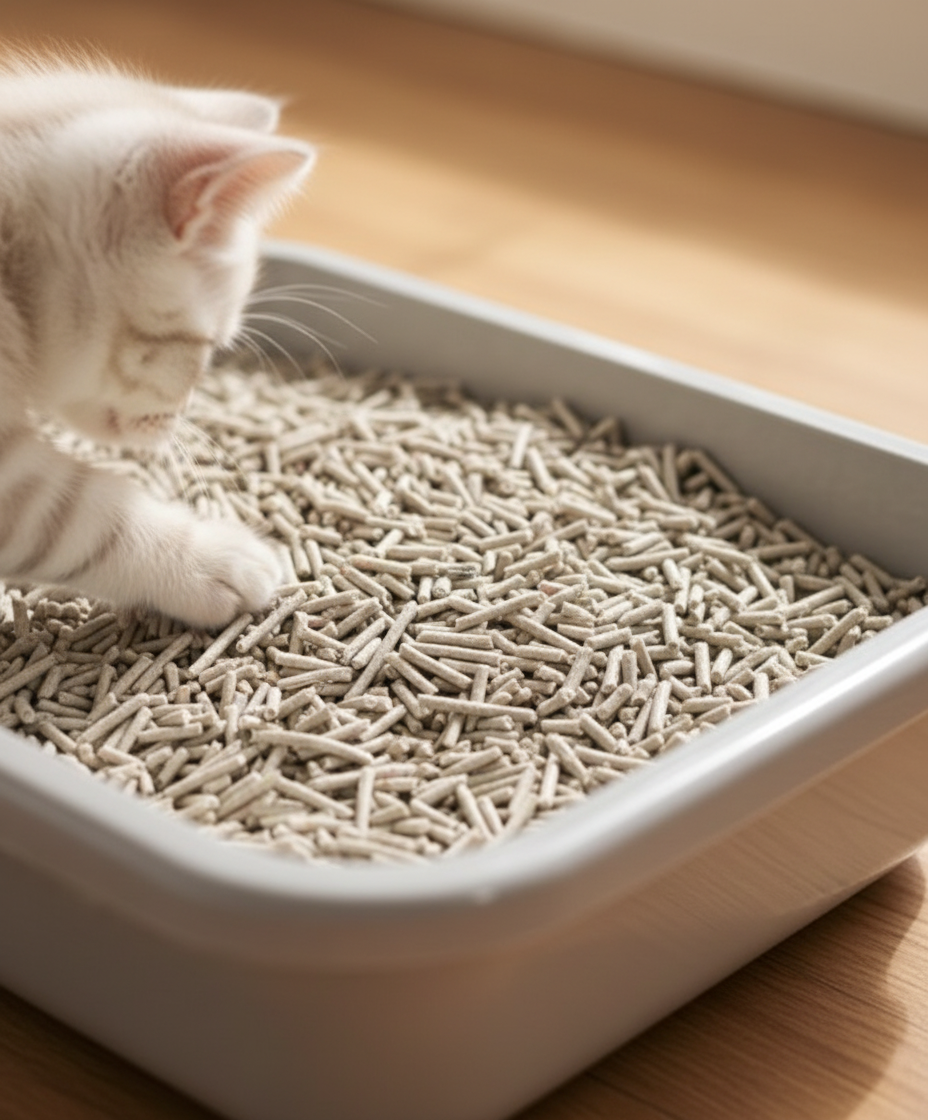
Choosing the right cat litter for a young kitten isn't just about odor control; it’s a critical health decision. A kitten’s curious nature means they’ll explore new textures with their mouth, and some litters pose a severe, even fatal, risk.
Why Kittens Eat Litter (and Why It Matters)
Picture a curious little kitten, just discovering the world. Everything new goes straight into the mouth! That's why clumping clay litters, especially those with sodium bentonite, are a major no-go for young furballs. Bentonite is incredibly absorbent, expanding up to 15 times its original volume when wet. If a kitten ingests even a small amount, it can swell and harden inside their digestive system, forming a cement-like blockage. This can lead to a life-threatening intestinal obstruction, an emergency no cat parent wants to face. One vet tech sadly shared an X-ray of a kitten’s gut completely blocked by clumping litter, a stark reminder of this danger.
Litter Type Safety by Age (Table)
To simplify your choice, here’s a safety matrix comparing common litter types and their suitability for different kitten ages:
| Age Range | Litter Type | Safety Rating | Reason / Key Consideration |
|---|---|---|---|
| 0-4 Weeks (Too Young) | Any litter | Not Applicable | Kittens are dependent on mother for elimination; not yet litter training. |
| 4-8 Weeks | Clumping Clay / Bentonite | High Risk (Fatal) | Severe intestinal blockage risk if ingested. **Strictly avoid.** |
| 4-8 Weeks | Tofu / Soy | Low Risk (Safe) | Natural, food-grade, less likely to cause blockage if ingested. Good for training. |
| 4-8 Weeks | Paper Pellets | Low Risk (Safe) | Non-toxic, highly absorbent, dissolves if ingested. Safe for very young kittens. |
| 4-8 Weeks | Wood Pellets (Pine/Cedar) | Medium Risk | Can be dusty; some woods contain phenols potentially toxic if ingested or inhaled. Choose pet-specific, dust-free. |
| 4-8 Weeks | Crystal (Silica Gel) | High Risk | Ingestion risk, can cause irritation. Not recommended for young kittens. |
| 8-12 Weeks | Clumping Clay / Bentonite | High Risk (Fatal) | Still high risk due to oral exploration; **strictly avoid until 4 months.** |
| 8-12 Weeks | Tofu / Soy | Low Risk (Safe) | Remains a safe and excellent choice. |
| 8-12 Weeks | Paper Pellets | Low Risk (Safe) | Continues to be a safe choice. |
| 8-12 Weeks | Wood Pellets (Pine/Cedar) | Medium Risk | Still some ingestion/inhalation risk, but generally safer than clay. |
| 8-12 Weeks | Crystal (Silica Gel) | Medium Risk | Better than 4-8 weeks, but still not ideal due to potential ingestion and texture. |
| 3+ Months (12+ Weeks, ideally 16+) | Clumping Clay / Bentonite | Medium Risk (Use with Caution) | Kittens usually outgrow oral exploration. Monitor closely for ingestion. Many vets still advise waiting until 4 months (16 weeks). |
| 3+ Months (12+ Weeks) | Tofu / Soy | Safe | Excellent, safe option for all ages. |
| 3+ Months (12+ Weeks) | Paper Pellets | Safe | Continues to be a safe option. |
| 3+ Months (12+ Weeks) | Wood Pellets (Pine/Cedar) | Safe | Generally safe for older kittens who don't ingest. |
| 3+ Months (12+ Weeks) | Crystal (Silica Gel) | Medium Risk (Monitor) | Safer for older kittens, but still less preferred due to hard texture and ingestion risk. |
Why Tofu Litter Is the Safest Choice for Kittens
When it comes to kitten safety, natural tofu litter stands out. Made from 100% natural, food-grade soybean pulp, it's generally non-toxic if accidentally ingested. While no litter should be eaten in large quantities, if Lucky, our playful troublemaker, decided to try a nibble, the risk of a dangerous blockage is significantly lower compared to bentonite. Plus, Liger Tofu Cat Litter features an ultra-low dust formula, which is a big deal for kittens and cats with sensitive respiratory systems, like Ping'An. It also clumps fast and firm, making daily scooping a breeze, and has a mild milk fragrance rather than artificial perfumes. This makes it a clean, comfortable, and safe option for those tiny paws.
Setting Up the Perfect Litter Station
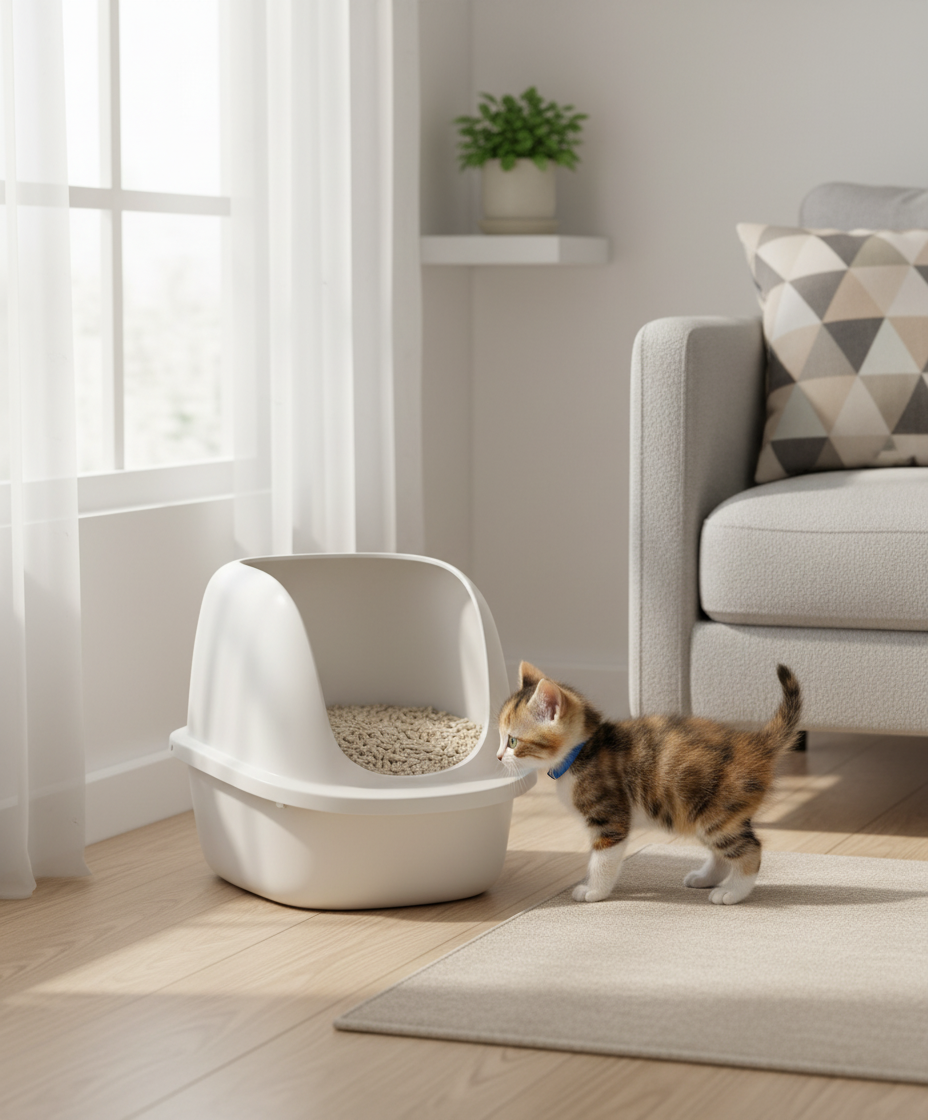
A well-planned litter station isn't just convenient for you; it's essential for your kitten's comfort and confidence. Getting this right from the start can prevent many future litter box problems.
Box Size and Style (The 1.5x Rule)
When it comes to litter boxes, bigger is almost always better. The golden rule is: the box should be at least 1.5 times the length of your cat, from nose to the base of their tail. This gives them enough space to comfortably dig, turn around, and cover their waste without feeling cramped. For kittens, start with a shallow tray with low sides, making it easy for their tiny legs to climb in and out. As for style, most cats prefer an open-top box. Hooded boxes might seem neat, but they can trap odors inside and make some cats feel confined, which can lead to aversion. We even have a litter box size calculator to help you find the perfect fit!
Where to Place It (Malaysia Condo vs Landed Tips)
Location, location, location! Pick a spot that's quiet, easily accessible, and has an escape route so your kitten feels safe. Avoid high-traffic areas, noisy appliances (like the washing machine or fridge), and placing it too close to their food and water bowls. Imagine eating next to a toilet – not ideal, right? The same goes for your cat.
- **For Condo Living:** Space is often a premium. Look for discreet corners in bathrooms (away from the shower spray), a quiet utility room, or a less-used balcony (if sheltered from rain and direct sun). Good ventilation is vital to combat odors in smaller spaces.
- **For Landed Homes:** You might have more options, like a laundry room, a quiet corner in a spare bedroom, or even a covered porch. The key is still privacy and accessibility.
The N+1 Rule for Multi-Cat Homes
If you're lucky enough to have multiple cats, this rule is your best friend: provide one litter box per cat, plus one extra. So, if you have two cats, you'll need three litter boxes. This helps prevent territorial disputes, ensures a clean option is always available, and reduces the chances of inappropriate elimination, which is a leading behavioral cause for relinquishment to shelters for at least 10% of cats according to Best Friends Animal Society. Spread them out in different locations, not just side-by-side.
The 7-Step Litter Training Method
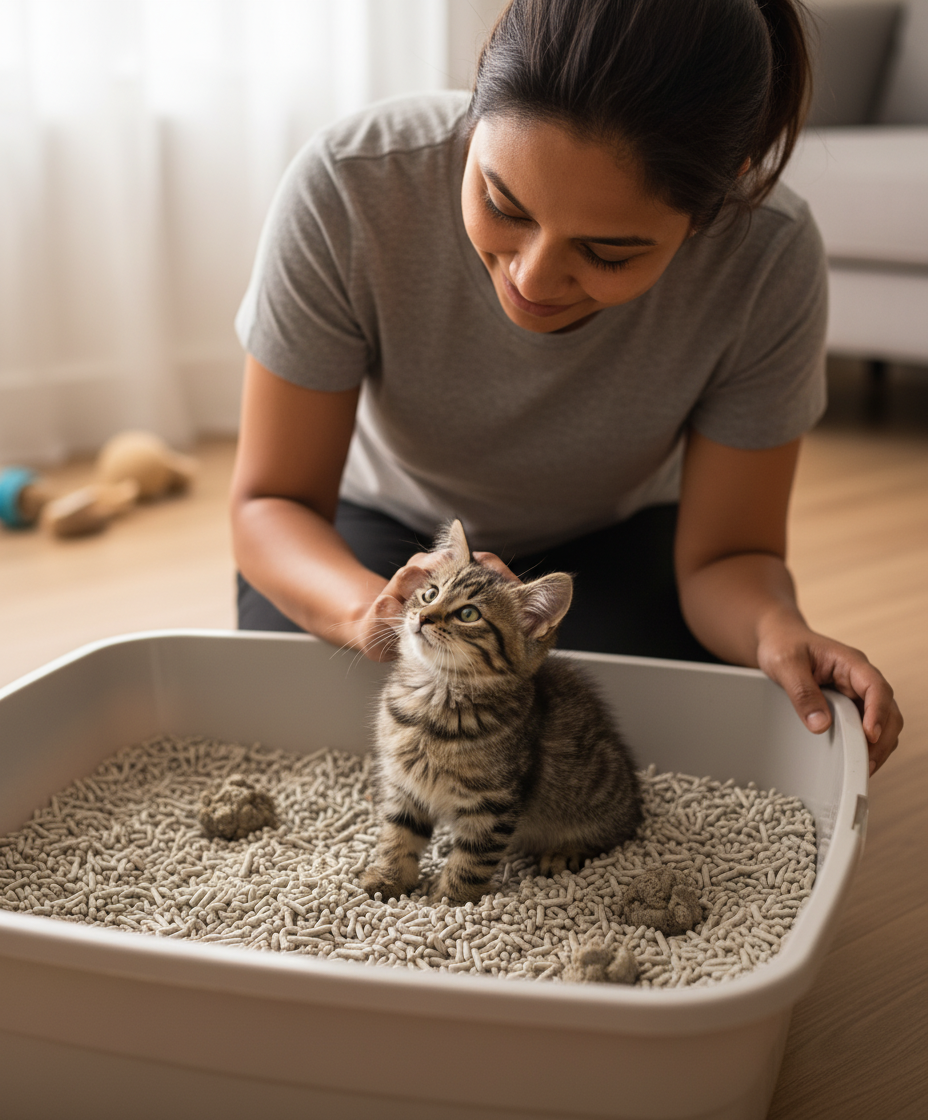
Litter training is a dance between you and your kitten’s instincts. Focus on positive experiences, and they’ll naturally take to the box.
Step 1 — First Introduction (Let Them Explore)
When you first bring your kitten home, immediately place them in the litter box. Let them sniff around, paw at the litter, and get a feel for it. Don’t force anything. The goal is to make it a positive, neutral experience. You might even gently dig a bit with your finger to show them the digging motion, but let them choose to participate.
Step 2 — Post-Meal and Post-Nap Placement
Kittens, much like human babies, often need to go after waking up and eating. This is your prime training time! Gently carry your kitten to the litter box after every meal and nap. Place them inside and give them a few minutes. You don't need to stay and stare, just be nearby.
Step 3 — Read the Pre-Potty Signals
Learn to spot the signs! Before a kitten eliminates, they might start sniffing around, looking for a spot, circling, or even squatting slightly. If you see these signals, calmly and quickly pick them up and place them in the litter box.
Step 4 — Positive Reinforcement (Timing Is Everything)
This is the secret sauce! The moment your kitten uses the litter box correctly, immediately praise them with a soft voice, a gentle pat, or a tiny treat. The timing is crucial – they need to associate the positive reward with the act of using the litter box, not just with you. Make it a celebration!
Step 5 — Accident Protocol (Enzymatic Cleaners, Not Punishment)
Accidents will happen. Seriously. When they do, resist the urge to scold, rub their nose in it, or shout. Punishment doesn't teach them anything except to fear you and the litter box itself. As The Cat Coach explains, it creates fear and lasting aversion, damaging your bond. Instead, clean accidents thoroughly with an enzymatic cleaner. These cleaners break down the odors that might attract your kitten back to the same spot.
Step 6 — Gradual Freedom Expansion
Start by keeping your kitten in a smaller, confined area (like a playpen or a kitten-proofed room) with their litter box, food, water, and bed. Once they consistently use the litter box there, gradually expand their access to other rooms, always supervising them. Slowly give them more freedom as they prove their reliability.
Step 7 — Transition to Adult Litter (When and How)
Once your kitten is at least four months (16 weeks) old and reliably using their kitten-safe litter, you can begin the slow transition to an adult litter if you wish. Start by mixing a small amount of the new litter (e.g., Liger Tofu Cat Litter with its natural milk fragrance) with their current litter. Over a week or two, gradually increase the ratio of the new litter until it's 100%. Watch your kitten closely for any signs of hesitation or aversion during this process.
Week-by-Week Training Timeline
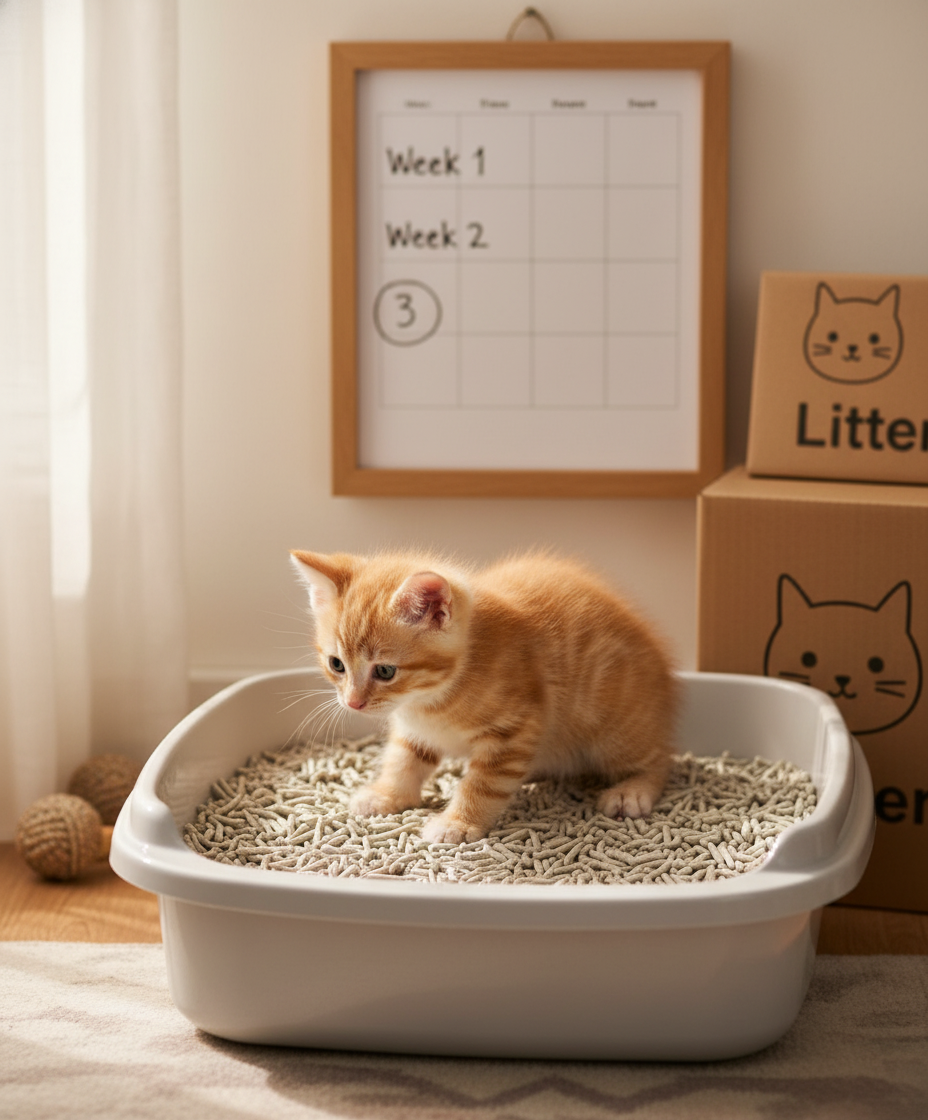
Knowing what to expect as your kitten grows can make the training process smoother. Here's a general guide for their first few crucial weeks:
Week 1-2 (Age 4-6 Weeks): Foundation
- **Milestones:** Begins to control bladder and bowels; shows initial digging instincts.
- **Training Focus:** Introduce a very shallow, easy-access litter box with kitten-safe, non-clumping litter (like Liger Tofu Cat Litter or paper pellets). Place kitten in the box after waking and eating. Supervise closely in a small, confined area.
- **Expectations:** Will start using the box, but accidents are common. Praise every successful use.
Week 3-4 (Age 6-8 Weeks): Consistency
- **Milestones:** More consistent use of the litter box; stronger preference for litter texture and scent begins to form.
- **Training Focus:** Maintain routine of placing after meals/naps. Continue positive reinforcement. Ensure the litter box is impeccably clean. Begin to slowly expand their supervised roaming area if consistent.
- **Expectations:** Fewer accidents, growing confidence. This is a critical period for forming lifelong habits.
Week 5+ (Age 8-12 Weeks): Independence
- **Milestones:** Full voluntary control of elimination; confidently uses the litter box; actively digs and covers waste.
- **Training Focus:** Reinforce good habits. Monitor for any changes in behavior. If switching litter, begin gradual transition after 12 weeks, ideally 16 weeks.
- **Expectations:** Should be reliably using the litter box. Accidents become rare and signal an underlying problem.
The Why Won't My Kitten Use the Box Diagnostic Tree ⭐
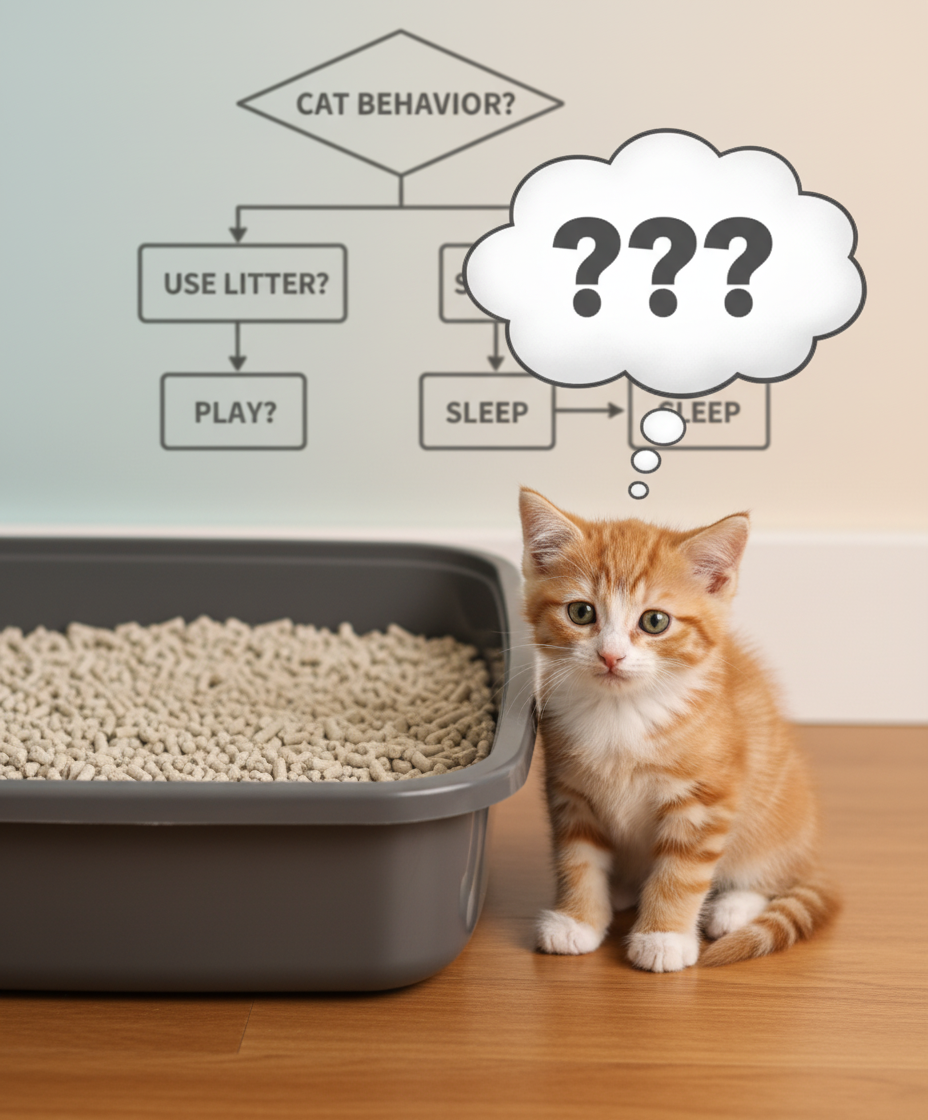
When your kitten refuses the litter box, it's not defiance; it's a message. It signals something isn't quite right. Instead of getting frustrated, let's become detectives and systematically figure out the issue.
Is It a Location Problem?
Cats crave privacy and peace during their bathroom breaks. If your kitten is avoiding the box, consider these:
- **Too Noisy/Busy?** Is the box in a high-traffic area, next to a loud washing machine, or near a constantly opening door?
- **Too Close to Food/Water?** Nobody wants to eat where they use the toilet. Move the box away from their dining area.
- **No Escape Route?** Does your kitten feel trapped or vulnerable? An open box in a corner with clear exits is ideal.
- **Hidden?** Sometimes, we hide the box too well. Make sure it's accessible but private.
Is It a Litter Problem?
Cats are particular about what they step on. This is often the most common culprit after medical issues:
- **Is the Box Dirty?** This is the number one reason for refusal. Cats are fastidious. Scoop at least twice a day, and perform full changes weekly.
- **Litter Type/Texture?** Most cats prefer fine-grained, soft, sand-like textures. If you've switched to a new type, your kitten might hate it. Liger Tofu Cat Litter's cylindrical pellets are gentle on paws and usually well-accepted.
- **Litter Scent?** Strong perfumes, often found in 'odor control' litters, can be overwhelming for a cat's sensitive nose. Stick to unscented or naturally mildly scented options, like Liger's natural milk fragrance.
- **Litter Depth?** Too little or too much can be off-putting. Aim for about 2-3 inches.
Is It a Medical Problem?
This is always the first thing to rule out for any sudden change in litter box habits. Painful urination or defecation can quickly cause your kitten to associate the litter box with discomfort and seek relief elsewhere. Conditions like urinary tract infections (UTIs), bladder inflammation (feline interstitial cystitis), or even digestive upset can trigger aversion. If your kitten suddenly stops using the box, pees small amounts frequently, strains, or shows discomfort, please schedule a veterinary check-up immediately. It might be a quick, easy fix!
Is It a Stress/Fear Problem?
A kitten’s world can be stressful, especially during big changes. Stress can manifest as inappropriate elimination.
- **New Environment?** Moving to a new home, even if it's yours, can be overwhelming. Keep their litter box consistent.
- **New Pet/Person?** The introduction of a new family member, human or animal, can cause anxiety. Make introductions slow and positive.
- **Punishment?** As we discussed, punishment creates fear, not understanding. If you've been scolding, your kitten might be avoiding the box because they associate it with being punished. You can read more about why punishment backfires.
5 Training Mistakes That Cause Lifelong Litter Box Problems ⭐
It's easy to make mistakes during kittenhood. Trust me, we’ve all been there! But some seemingly small missteps during litter training can unfortunately spiral into lifelong problems for your cat. The early weeks of a kitten's life are incredibly impressionable, setting the stage for their behavior for the next 15 years.
Mistake 1 — Punishing Accidents
This is probably the biggest and most common mistake. Yelling, scolding, or (heaven forbid) rubbing a kitten's nose in a mess is incredibly damaging. A kitten doesn't understand 'punishment' in the human sense. They only learn to associate you (the punisher) or the litter box itself with fear and pain. This stress actually makes them *more* likely to avoid the box and find hidden spots to eliminate, worsening the problem and shattering your bond. Remember, punishment backfires, creating anxiety that drives undesirable behaviors. The solution? Positive reinforcement is always the answer.
Mistake 2 — Wrong Litter Type for Age
Using clumping clay litter for kittens under four months old is a critical safety error. We've talked about the intestinal blockage risk, and it's a danger worth repeating. Even a single instance of ingestion can be fatal. If your kitten develops a painful blockage, they'll forever associate that pain with the litter box, creating a deep-seated aversion that's incredibly difficult to overcome. Always stick to kitten-safe, non-clumping options like tofu or paper pellets during this vulnerable period.
Mistake 3 — Dirty Box During Training
Cats are naturally very clean creatures. A dirty, smelly litter box is a huge turn-off, especially for a developing kitten forming their preferences. If their first experiences with the litter box are unpleasant due to lingering odors or soiled clumps, they'll learn to dislike it. This aversion can then lead them to seek cleaner spots around your home. Daily scooping, especially in Malaysia's humid climate, is not just a suggestion – it’s a necessity to ensure a positive association.
Mistake 4 — Too Much Freedom Too Soon
It’s tempting to let your adorable kitten roam free, but too much unsupervised freedom too early can lead to accidents that reinforce bad habits. If a kitten can easily find a 'better' (to them) spot to eliminate when the litter box isn't immediately available or appealing, they'll use it. Confining them to a smaller, kitten-proofed area initially, and gradually expanding their space as they show consistent litter box use, helps them solidify the correct habit without developing preferences for inappropriate spots.
Mistake 5 — Ignoring Medical Signs
Any sudden change in litter box habits, especially during kittenhood, should trigger an immediate thought: 'Is my kitten unwell?' Pain from a UTI, digestive upset, or even discomfort from worms can make elimination painful. If this pain happens *in* the litter box, the kitten will quickly (and logically, from their perspective) associate the box with that pain. They then avoid the box, not because they're being naughty, but because they're trying to avoid pain. Ignoring these early medical signs allows the negative association to become deeply ingrained, making future behavior correction much harder.
Malaysia-Specific Tips
Malaysia's tropical climate, with its constant high humidity, throws a few curveballs at cat parents. Managing litter in this environment requires some specific strategies to keep things fresh and healthy.
Humidity and Litter Box Maintenance
Humidity is the nemesis of fresh litter boxes. Malaysia’s ambient humidity, often soaring above 80%, significantly degrades litter performance. It weakens clumps in clay litters, making them crumbly and harder to scoop, leaving behind ammonia-producing particles. For organic litters, like tofu and wood, the risk is even greater: visible mold colonies can develop within just seven days in environments with over 70% humidity. Ingesting this mold can expose your kitten to harmful mycotoxins.
To combat this:
- **Store Litter Properly:** Keep all litter in airtight containers, away from direct humidity, until use.
- **Increase Scooping Frequency:** Scoop at least twice daily, but ideally after every use to remove moisture-laden waste.
- **More Frequent Full Changes:** You might need to change out all the litter more often than the package suggests – perhaps every 5-7 days for organic litters, or as soon as odors become noticeable.
- **Good Ventilation:** Place litter boxes in well-ventilated areas. A small fan can help, but don't aim it directly at the litter.
For high-humidity climates like Malaysia, silica gel litter is often recommended due to its exceptional moisture-absorbing properties, although its hard texture and ingestion risks make it less ideal for young kittens. Liger Tofu Cat Litter, with its fast clumping and flushability, helps minimize lingering moisture if scooped promptly.
Condo Living Litter Setup
Living in a Malaysian condo means maximizing space and minimizing odors. Here are some tips:
- **Location is Key:** Choose a quiet, low-traffic spot that’s easy to access but also out of the main living area. A dedicated corner in a utility room or bathroom works well.
- **Ventilation:** Good airflow prevents odors from lingering. Open windows regularly, use an exhaust fan, or consider an air purifier.
- **Odor Control:** High-quality litter is paramount. Liger Tofu Cat Litter's ultra-low dust and natural milk fragrance helps keep condo air fresh. Its flushable nature also means waste is quickly removed from your home, reducing odor buildup. You can learn more about condo cat litter solutions.
- **Regular Cleaning:** Consistency is your best friend. Daily scooping and frequent full litter changes are crucial.
Where to Buy Kitten-Safe Litter in Malaysia
Kitten-safe litters, such as tofu, paper, and pet-specific wood pellets, are widely available across Malaysia. You can find them at:
- **Major Pet Stores:** Pet Lovers Centre, Pet Safari, and local independent pet shops.
- **Online Retailers:** Platforms like Shopee, Lazada, and dedicated pet e-commerce sites. Liger Tofu Cat Litter is readily available online through our official website and these platforms.
- **Veterinary Clinics:** Some clinics stock recommended kitten-safe litters.
Always double-check product labels for ingredients and confirm they are non-clumping and non-toxic for young kittens. You can use our litter comparison tool to explore options.
Litter training your kitten doesn't have to be a nightmare. By understanding their developmental stages, choosing safe and appropriate litter, setting up a comfortable station, and most importantly, using patient, positive reinforcement, you're setting your little furball up for a lifetime of good habits. Remember, accidents are learning opportunities, not reasons for punishment. And in Malaysia's humid climate, diligent cleaning and smart litter choices like Liger Tofu Cat Litter can make all the difference.
Your action for this Monday morning: If your kitten is under four months old, double-check your current litter. If it's clumping clay, swap it out for a kitten-safe alternative today. Seriously. Your kitten’s health depends on it!