The golden rule: Box length should be at least 1.5 times your cat's body length.
Small boxes can lead to stress-related health issues like Feline Idiopathic Cystitis (FIC).
Cats need enough space to perform their natural 39-step elimination sequence.
Senior cats need lower entries, even if the box itself is large.
Imagine you're in a crowded airplane toilet. It's cramped. You can barely turn around without hitting your elbows. You want to get out as fast as possible. That’s exactly how your cat feels when their litter box is too small. Honestly, we spend so much time picking the prettiest 'designer' box that we forget who actually has to use it.
Size matters. It really does. When a box is too tight, your cat isn't just uncomfortable—they're stressed. And a stressed cat is a cat that starts looking at your expensive rug as a better alternative. If you're seeing 'accidents' around the house, don't blame the cat yet. Look at the box first.
The 1.5x Golden Rule
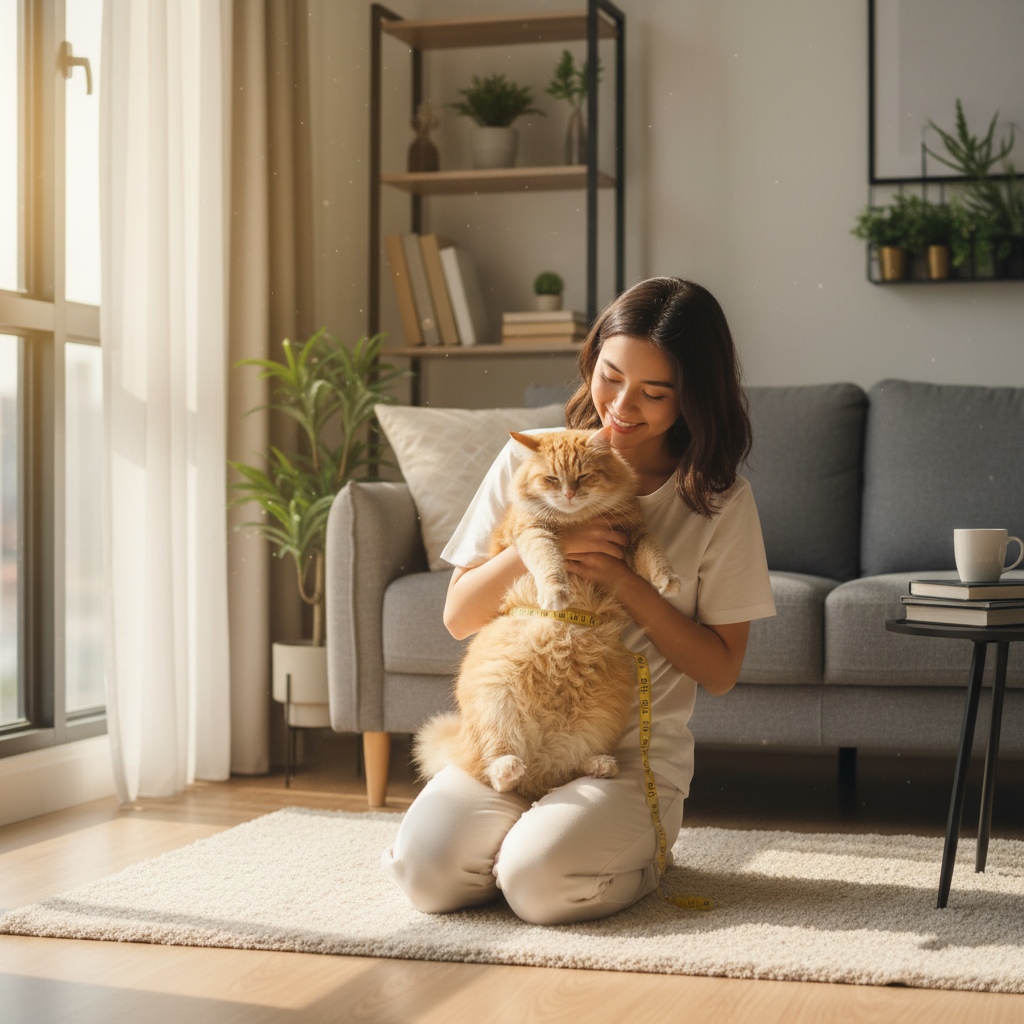
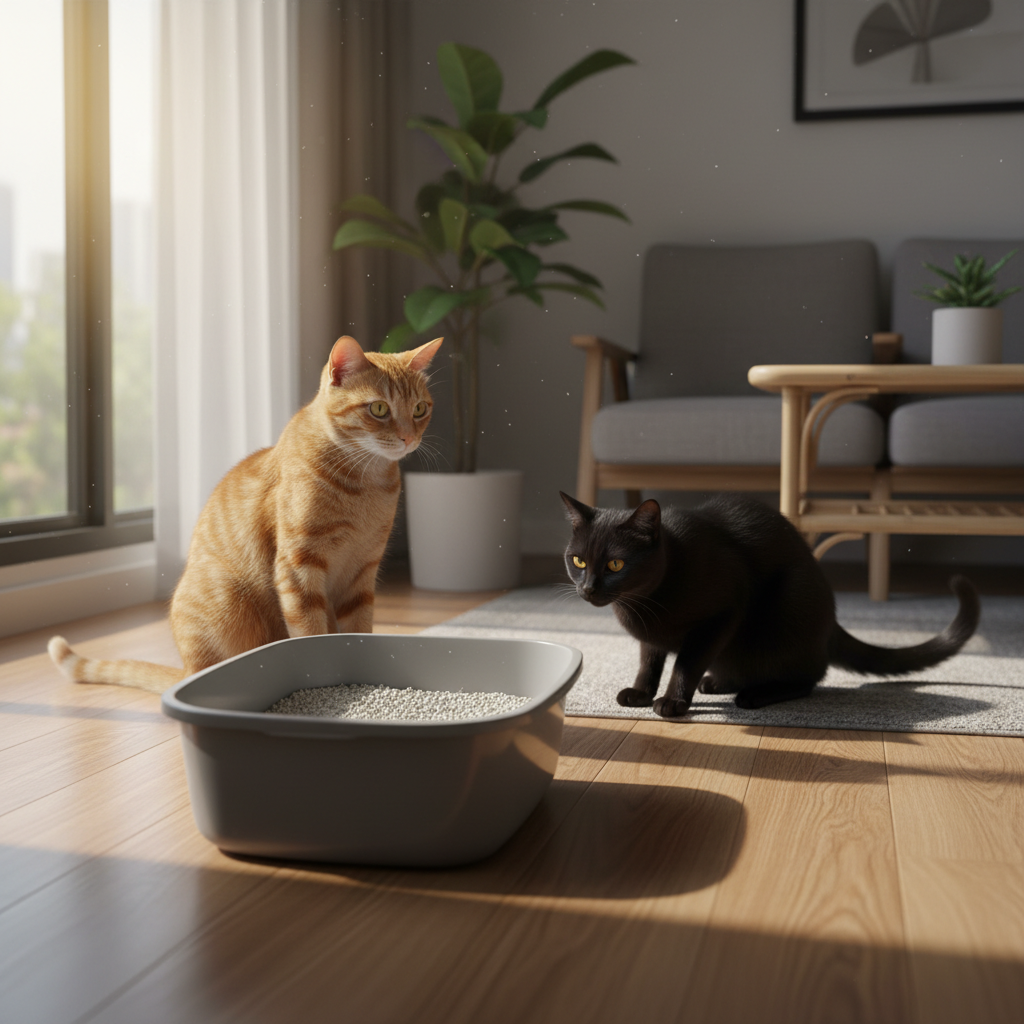
How big is big enough? Most commercial boxes sold in pet shops are actually meant for kittens, not full-grown Malaysian 'kampung' cats or big breeds. The Golden rule for litter box size is that the length must be at least 1.5 times the length of your cat, measured from the tip of the nose to the base of the tail.
Why so specific? Because of how they move. A study on the McGowan cat elimination ethogram found that cats go through up to 39 different behaviors when doing their business. They sniff, they circle, they dig, they squat, and they cover. If they can't do the full 'dance' because they're hitting the walls, they'll get frustrated. You can use our litter box size calculator to find the exact dimensions your cat needs.
| Cat Type | Avg. Body Length (Nose to Tail Base) | Min. Litter Box Length (1.5x Body Length) | Min. Litter Box Width (1.0x Body Length) |
|---|---|---|---|
| Kitten (3-6 months) | 25 - 35 cm | 37.5 - 52.5 cm | 25 - 35 cm |
| Domestic Shorthair (Adult) | 46 - 50 cm | 69 - 75 cm | 46 - 50 cm |
| Large Breed (Ragdoll, British Shorthair) | 55 - 60 cm | 82.5 - 90 cm | 55 - 60 cm |
| Giant Breed (Maine Coon) | 70 - 76+ cm | 105 - 114+ cm | 70 - 76+ cm |
The Time I Bought a 'Fancy' Small Box
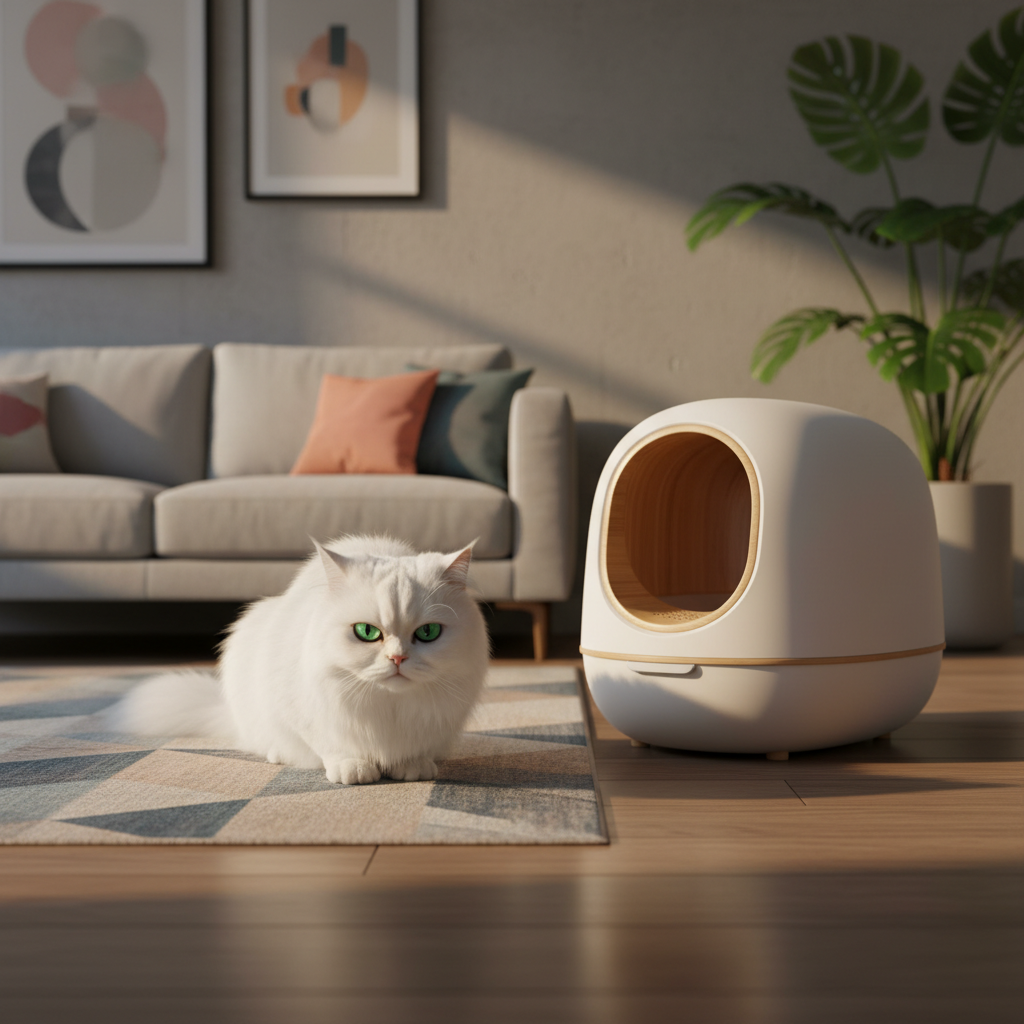
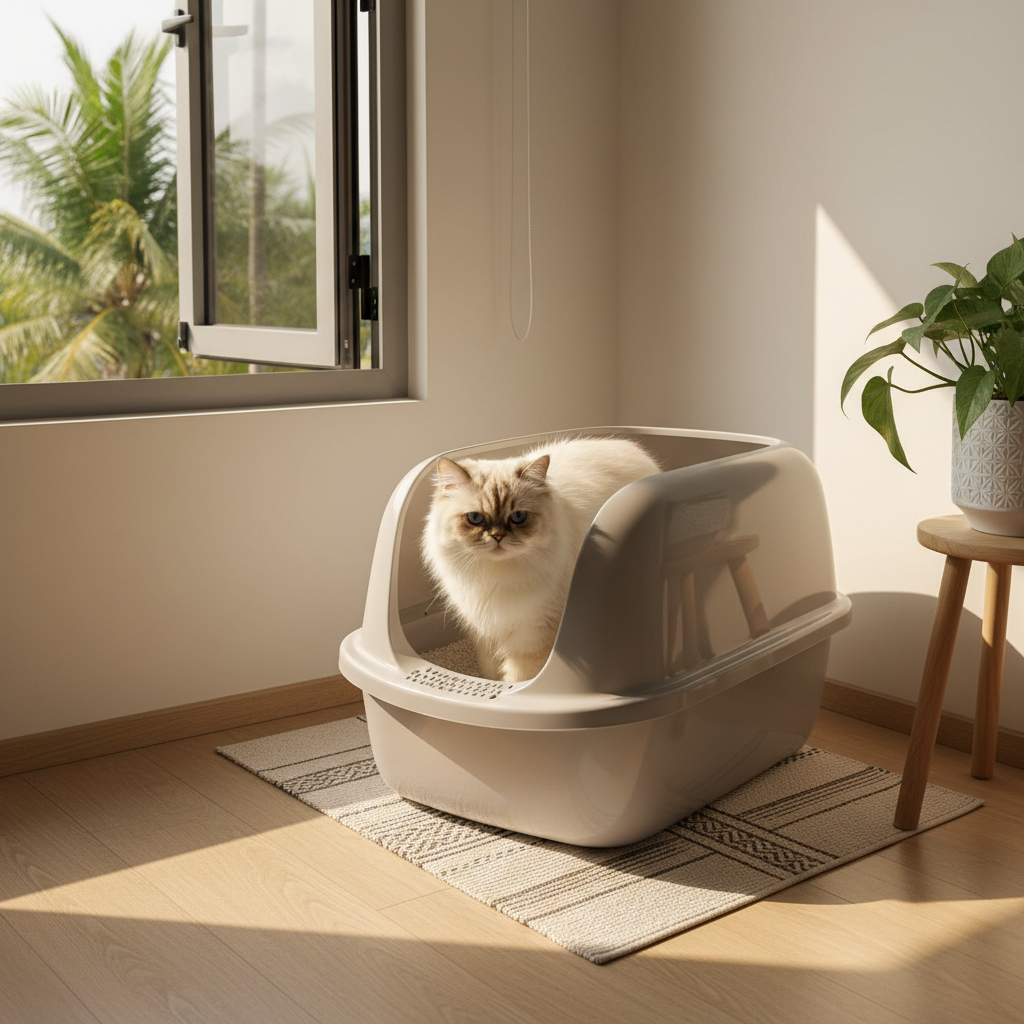
I'll be honest—I used to be obsessed with those hidden litter boxes that look like furniture. I bought this sleek, egg-shaped one for Lion. It looked amazing in my living room, but Lion? He hated it. Since Lion is a total clean freak, he’d try to turn around, step on a fresh clump because the space was too tight, and then run out in a panic, tracking litter everywhere. Eventually, he just stopped using it and peed on my beanbag instead.
That was a RM200 mistake. I realized that my need for 'aesthetic' was actually causing Lion significant stress. If you're dealing with similar issues, check out our guide on why cats pee outside the box. Sometimes, the solution is just a bigger, uglier box.
More Than Just Comfort: It's Health
A cramped box isn't just annoying; it can make your cat sick. When cats feel uncomfortable in their box, they might hold their urine for too long. This behavior is a leading trigger for Understanding FIC in cats (Feline Idiopathic Cystitis). This isn't a bacterial thing; it's a stress-induced inflammation of the bladder.
For senior cats, size matters for a different reason. About 90% of cats over 12 suffer from arthritis. If the box is too small, they have to contort their painful joints just to fit. If you have an older cat, you need a large box with a very low entry. You can read more about common cat diseases in Malaysia to see how environmental stress affects them.
The Smell Factor
Smaller boxes concentrate odor faster. Since a cat's nose is 14 times more sensitive than ours, that ammonia sting is like a punch in the face for them. Ping'An has an incredibly sensitive nose—if the box is small and enclosed, she won't even go near it. Using a high-quality litter like Liger Tofu Cat Litter helps because the mild milk scent neutralizes odors without being overwhelming, but even the best litter can't fix a box that's too small.
Myth: Covered Boxes Are Better
Unpopular opinion: Most cats actually prefer open-top boxes. Humans like covers because they hide the 'mess' and the smell, but for a cat, it's a trap. In the wild, cats are vulnerable when they poop, so they like to see their surroundings. A covered box limits their vision and traps dust. If you must use a cover, make sure it's massive. Most 'XL' covered boxes are actually just 'Medium' in the eyes of a cat.
At the end of the day, your cat doesn't care about the color or the brand of the box. They care about being able to spin around and dig without feeling like they're in a sardine can. Bigger is almost always better when it comes to feline toilets.
Your Monday Morning Action: Get a measuring tape today. Measure your cat from nose to tail base. Now measure the inside of your litter box. If the box isn't at least 50% longer than your cat, go to the store and buy a bigger one (or a large IKEA Samla bin) this weekend. Your cat's bladder will thank you.
| Litter Box Type | Human Benefits | Cat Drawbacks | Suitability |
|---|---|---|---|
| Covered/Enclosed | Hides mess & odor; aesthetic appeal | Visual deprivation (vulnerability); ammonia buildup; dust trap; potential for ambush in multi-cat homes | Generally NOT recommended; if used, must be massive and open-entry |
| Top-Entry | Reduces litter tracking | Spinal/hip stress for entry/exit; no escape route; claustrophobia (especially for senior/arthritic cats) | Not recommended, particularly for senior or less agile cats |
| Automatic | Hands-free cleaning | Often small usable area despite large exterior; noise/sudden movement frightens sensitive cats | Not recommended due to space limitations and potential for fear/aversion |
| Open-Top (Standard Commercial) | Easy cleaning; visual monitoring | Litter tracking; visible mess | Acceptable if adequately sized (often too small commercially) |
| DIY Industrial Storage Bin (High-Sided Open Box) | Very large & cost-effective; high sides prevent scatter; easy to clean (flat bottom); customizable entry | Requires DIY modification for entry | Highly recommended as the 'golden standard' for cat welfare |
| Brand & Model | Dimensions (L x W x H) | Capacity | Material & Features | Suitability | Notes |
|---|---|---|---|---|---|
| IKEA SAMLA (Large) | 78 x 56 x 43 cm | 130 L | Transparent PP; relatively flat bottom | Giant/Multi-cat/Maine Coon | Highly recommended, excellent value. Bottom has slight waves, suggest thicker litter. |
| Toyogo Code 9914 | 80+ x 50+ x 40+ cm | 140 L+ | Semi-transparent PP; industrial grade thickness; vertical walls | Giant/Multi-cat/Maine Coon | Malaysian national brand, very durable. High space utilization. |
| Lava STBX1709 | 71 x 47.5 x 37 cm | 80 L | Transparent PP | Medium-Large Cats | Common in supermarkets. Note: bottom often has wheel grooves, harder to clean. |