You know the routine. The night before the vet appointment, you quietly fetch the carrier from the store room — and your cat, who was asleep, somehow vanishes into a dimension behind the wardrobe. What follows is a sweaty, scratchy wrestling match that leaves you both traumatised before you've even left the house. If this is your yearly ritual, here's the good news: the carrier battle is almost entirely preventable, and the fix isn't a stronger grip — it's changing what the carrier means to your cat. Here's how we turned the carrier from a monster into a nap spot for Tiger, Lion, Ping'An and Lucky.
Why the Carrier Battle Happens
Cats aren't being difficult for the sake of it. The problem is simple, sad association: for most cats, the carrier only ever appears right before something frightening — a rattly car ride to a clinic full of strange smells, dogs, and someone poking them with a thermometer. So the carrier itself becomes a warning sign. The moment it comes out, your cat's brain screams 'the bad thing is coming,' and it runs.
It gets worse when we react by chasing and grabbing. Being cornered and stuffed into a box feels, to a cat, exactly like being caught by a predator — and research confirms that forceful, full-body restraint dramatically increases a cat's fear and stress. Each traumatic capture makes the next one harder, and the stress doesn't end at the door: a terrified cat arrives at the vet with a racing heart and sky-high stress hormones, which can even skew the exam. The whole goal of carrier training is to break that chain — to make the carrier boring, then safe, then maybe even nice.
Choosing the Right Carrier
Before training, get the right equipment, because some carriers make everything harder. What to look for:
- Hard-sided, not flimsy fabric. A sturdy plastic carrier feels more secure to a cat and is easier to clean (important in our climate, and after a stressed cat has an accident).
- Top-loading AND front-loading. This is the big one. A carrier that opens from the top lets you gently lower a cat in and lift it out, instead of trying to shove it through a small front door or tip it out. At the clinic, the vet can often examine a calm cat while it sits in the bottom half.
- A removable top half. The best carriers let you unclip and lift the entire top off, so an anxious cat can stay nestled in the familiar bottom half during the exam — far less stressful than being dragged out.
- Right size. Big enough for the cat to stand, turn, and lie down, but not so cavernous it feels exposed. Cosy equals safe.
A good carrier is on every new cat owner's checklist for a reason — it's not just a travel box, it's a safety tool you'll rely on for emergencies.
Step One: Leave It Out as Furniture
Here's the single most powerful change, and it costs nothing: stop hiding the carrier in the store room. If the carrier only materialises before vet trips, it will always be a trap. Instead, leave it out in your home, all the time, as a normal piece of furniture.
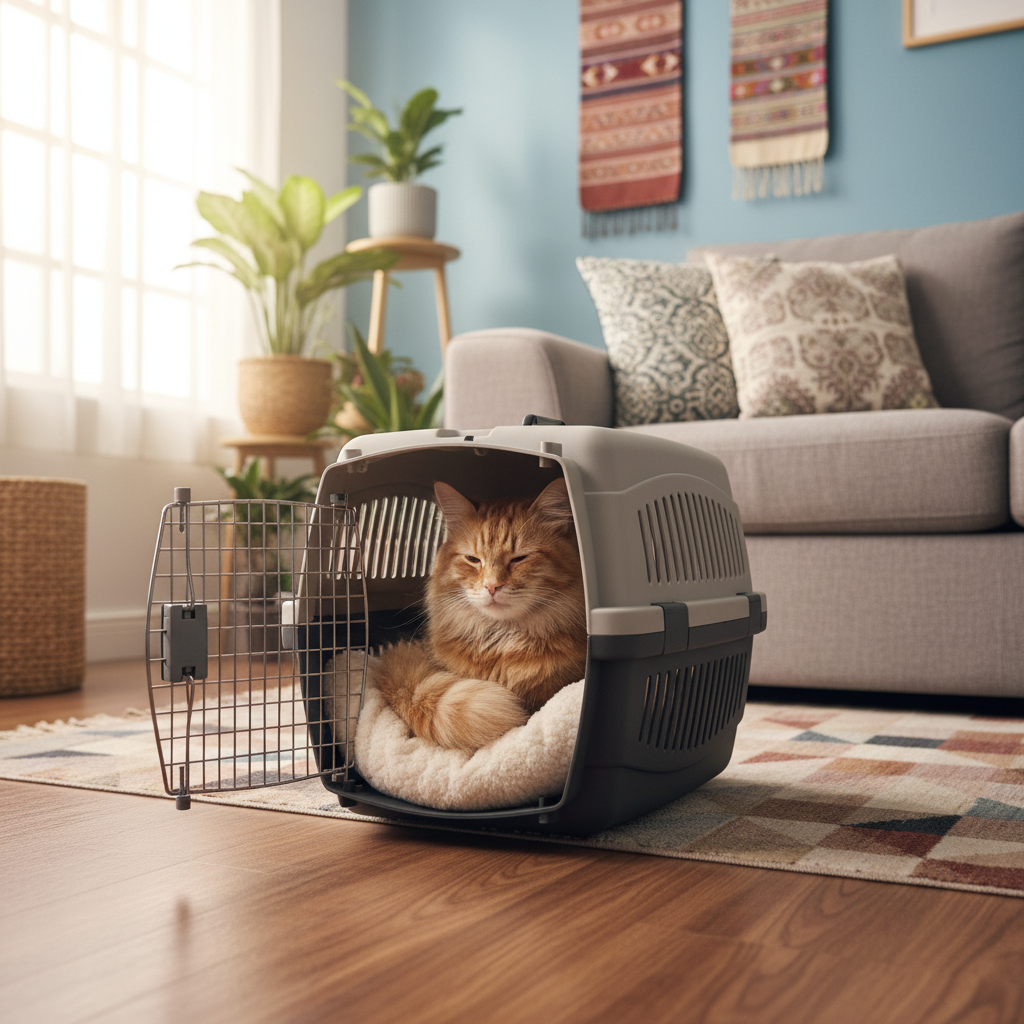
Pop the door open (or take it off), put a soft, familiar-smelling blanket inside, and place it somewhere your cat already likes to hang out — a quiet corner, a sunny spot. The aim is for the carrier to become just another cosy cave your cat can choose to nap in. Cats love enclosed hiding spots; research on stressed cats shows that simply having a hiding box significantly lowers their stress. A carrier left open is exactly that kind of safe den. Give it a few weeks and many cats will start using it voluntarily — at which point it has stopped being scary. You can speed this along with a feline facial pheromone spray (the synthetic F3 'this place is safe' pheromone) inside the carrier.
Step Two: Building the Positive Association
Once the carrier is just part of the furniture, start actively making it a good place. Go slowly — let your cat stay relaxed at each step before moving on. Over days to weeks:
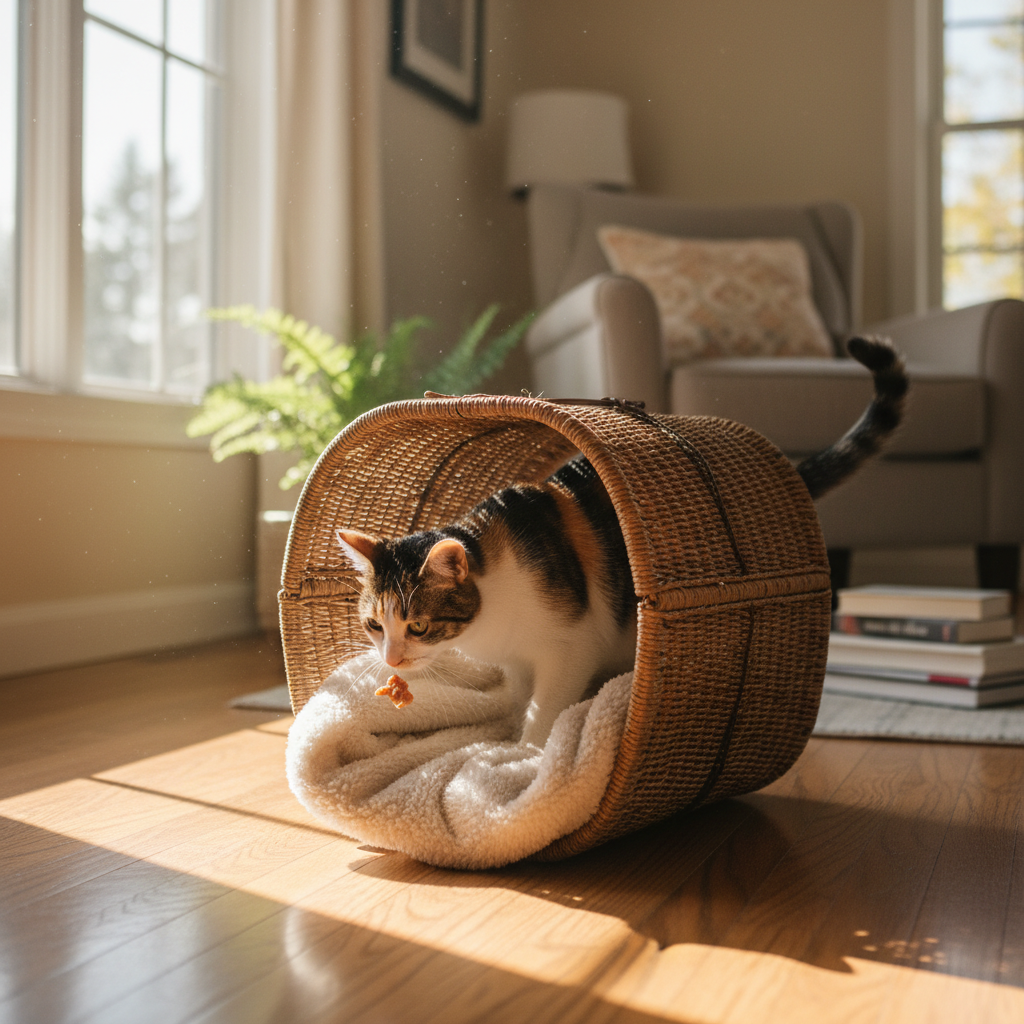
- Feed near it, then in it. Put treats or meals beside the carrier, then just inside the opening, then further in. Your cat learns that good things happen here.
- Toss treats inside during the day so your cat wanders in and out freely with no pressure. Praise calmly when it goes in.
- Close the door for a few seconds, then open it and reward — gradually building up the time with the door shut while the cat stays calm.
- Lift it briefly. Once your cat is comfortable inside with the door closed, pick the carrier up for a moment, set it down, reward. Then a short walk around the house.
- Practice short car trips that don't end at the vet. A five-minute drive around the block, then home and a treat. This breaks the 'carrier = vet = doom' link, so the carrier no longer predicts only bad outcomes.
The golden rules throughout: never rush to the next step, always end on a positive note with a reward, and never use the carrier as punishment. If your cat gets tense, you've moved too fast — drop back a step. Patience over a few weeks now saves you years of wrestling matches.
The Day Of: Car, Heat and the Clinic
Even a carrier-trained cat needs a calm appointment-day routine:
- Stay calm yourself. Cats read your energy — rushing and stress are contagious. Move slowly and keep your voice low.
- Line the carrier with a familiar blanket, ideally one that smells of home, and consider a spritz of pheromone spray beforehand. Covering the carrier with a light towel during transport blocks scary sights and calms many cats.
- Mind the heat — this is critical in Malaysia. Never leave a cat in a parked car for even a minute; the interior becomes an oven dangerously fast. Keep the aircon on and the carrier out of direct sun, and never put the carrier in a hot boot. (Our guide to heatstroke explains just how quickly cats overheat.)
- Secure the carrier in the car — on the floor behind a seat or strapped in — so it doesn't slide around.
- At the clinic, keep the carrier off the floor (on your lap or a chair) and away from dogs, and ask the vet to examine your cat in the bottom half of the carrier if it's nervous. A nervous cat feels safer in an enclosed, familiar space.
If your cat is severely stressed despite all this, talk to your vet about pre-visit calming medication — for some cats it's genuinely kinder. That's a vet decision, not a self-prescribed one.
Keep the Skill: Travel, Emergencies and Beyond
Carrier training isn't just about the annual check-up — it's a life skill that pays off again and again. A cat that's comfortable in its carrier is infinitely easier to manage when you move house, when you need to evacuate during a flood or emergency, when balik kampung travel comes up, or when a sudden illness means a panicked midnight vet run. In a real emergency, the last thing you want is to lose precious minutes fishing a terrified cat out from under the bed.
So keep the carrier out permanently, refresh the positive associations now and then with the odd treat tossed inside, and do the occasional 'practice' car trip that ends happily at home. The few weeks of patient training buy you a lifetime of calm, scratch-free vet visits — and a cat that, astonishingly, sometimes climbs into its carrier just to take a nap. That's the goal: a carrier that means safety, not doom.