Walk through any Malaysian neighbourhood and you'll hear them: "Oyen!", "Tompok!", "Comel, mari sini!" Our cats carry names that international name lists simply can't offer — names rooted in the Malay language, in Arabic, and in a culture that has cherished cats for centuries. This is the guide those global lists leave out: beautiful Malay and Islamic cat names, what they actually mean, the cultural story behind our love of cats, and how to choose a name respectfully.
It's part of our wider how to name your cat series, written specifically for Malaysian homes. If you'd like English or themed ideas too, that hub links every list — but this one is proudly local.
Why Cats Hold a Special Place in Islam
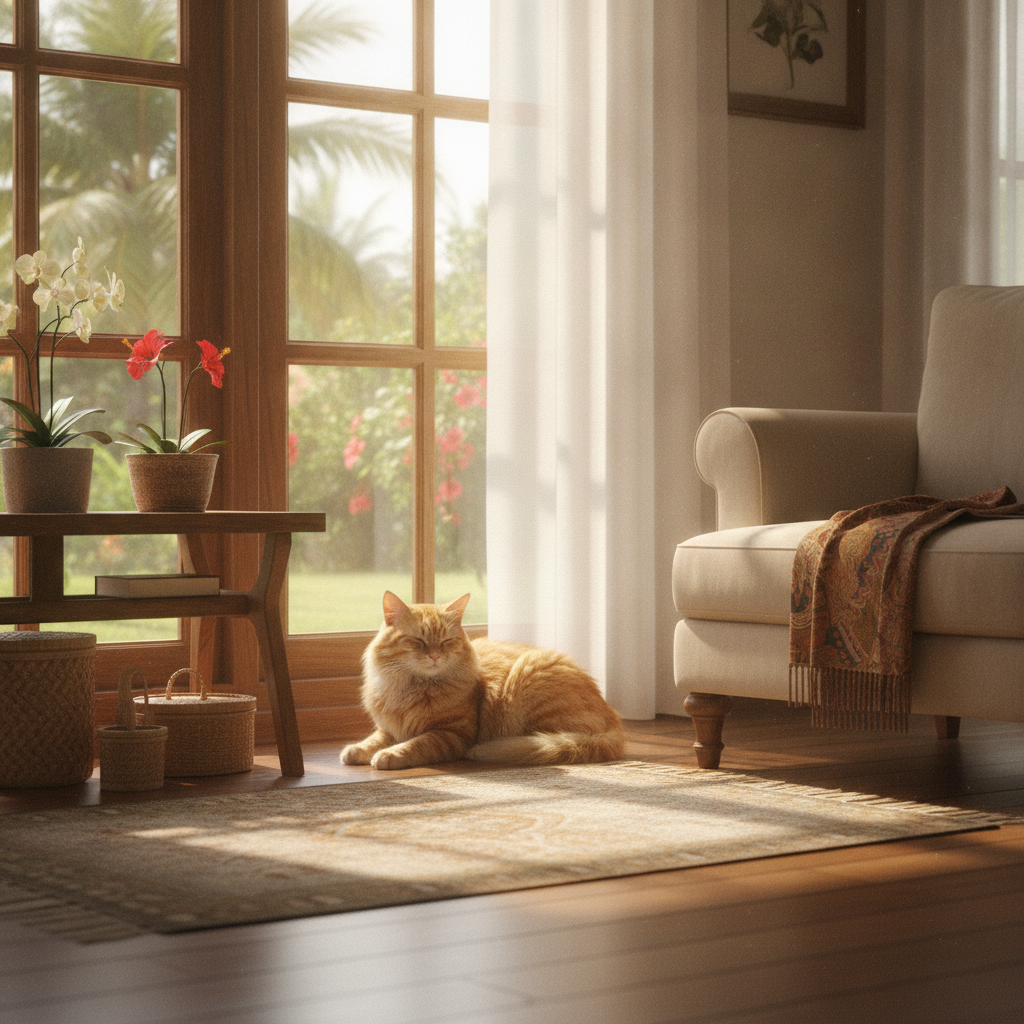
Before the names, a little context that makes naming a cat feel meaningful for Muslim families. In Islam, cats are regarded as ritually clean (tahir) animals — not impure (najis) — which is why, as documented Islamic tradition notes, they are welcomed into homes and even mosques. A hadith recorded by Abu Dawood describes cats as "among those who go around among us," and it is even permissible to perform wudu with water a cat has drunk from.
That affection has deep roots. One of the Prophet Muhammad's closest companions, Abd al-Rahman ibn Sakhr al-Dawsi, loved cats so much he was given the affectionate title Abu Hurayra — "Father of the Kitten." Underlying it all is the Islamic value of rahmah (mercy) to all of God's creatures. The Prophet's teachings explicitly warn against cruelty — a well-known hadith tells of a woman punished for cruelly starving a cat — and promise reward for kindness to any living thing. Naming your cat thoughtfully, and caring for it well, is in a small way part of that tradition of mercy.
Popular Malay Cat Names (with Meanings)
The classic Malaysian way to name a cat is wonderfully practical: describe what you see. These names are simple, affectionate, and instantly understood across the country.
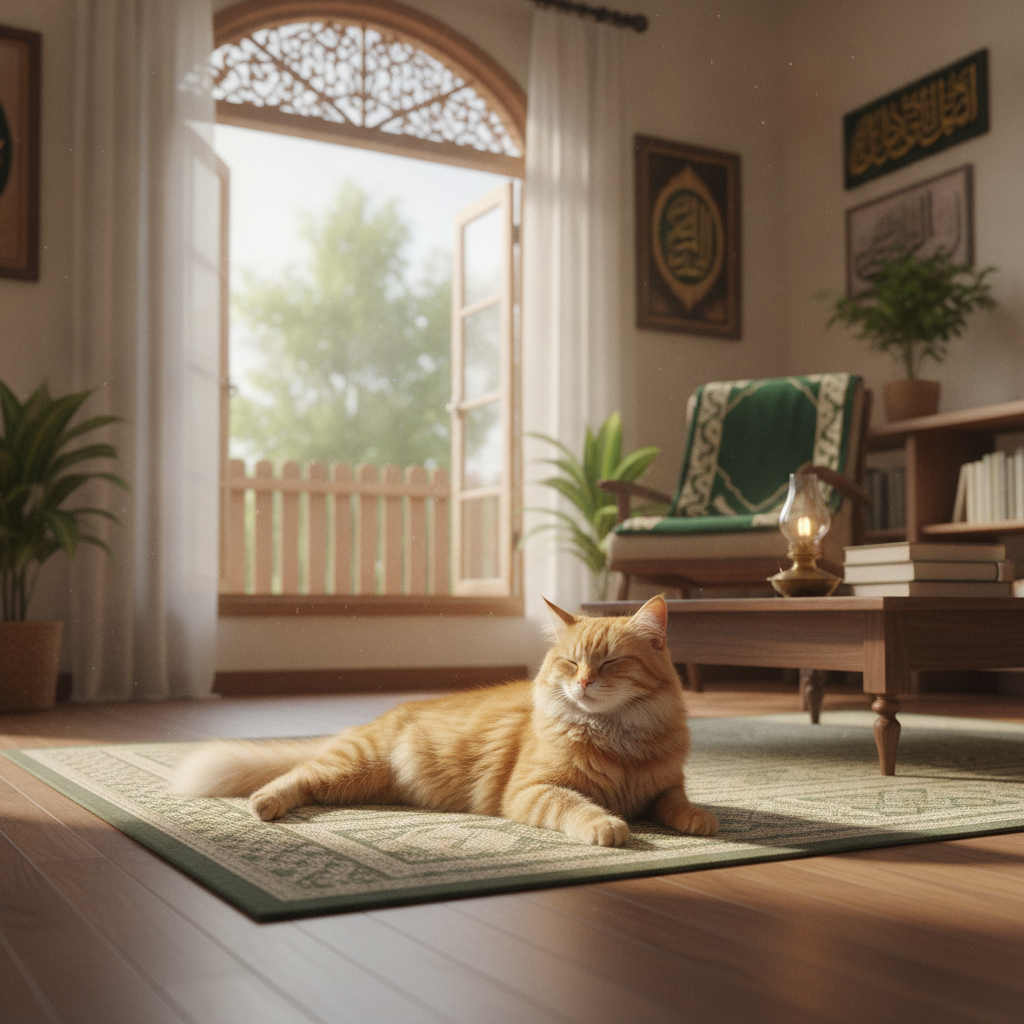
- Oyen — colloquial for oren (orange); the default name for a ginger cat.
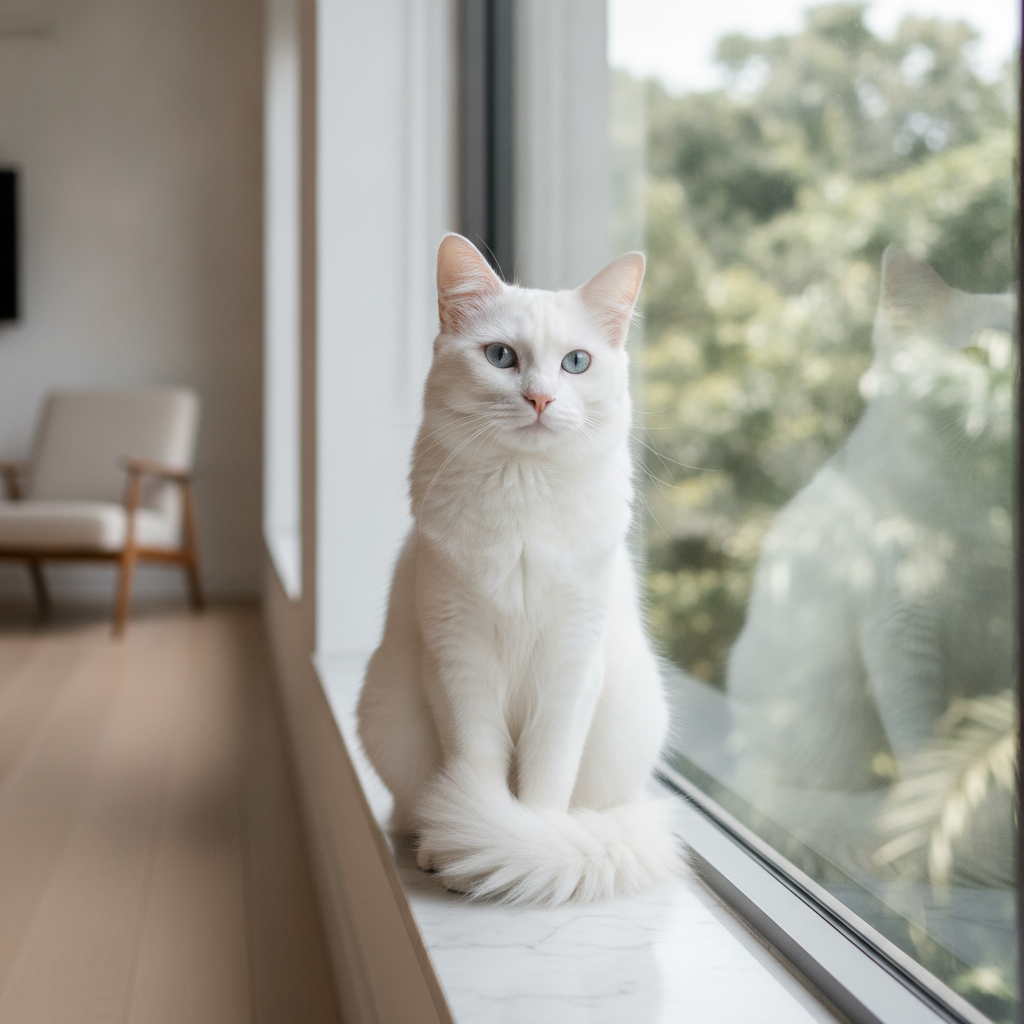
- Putih — "white," for an all-white cat (often Si Putih, "the white one").
- Tam — short for hitam (black), an affectionate clip for a black cat.
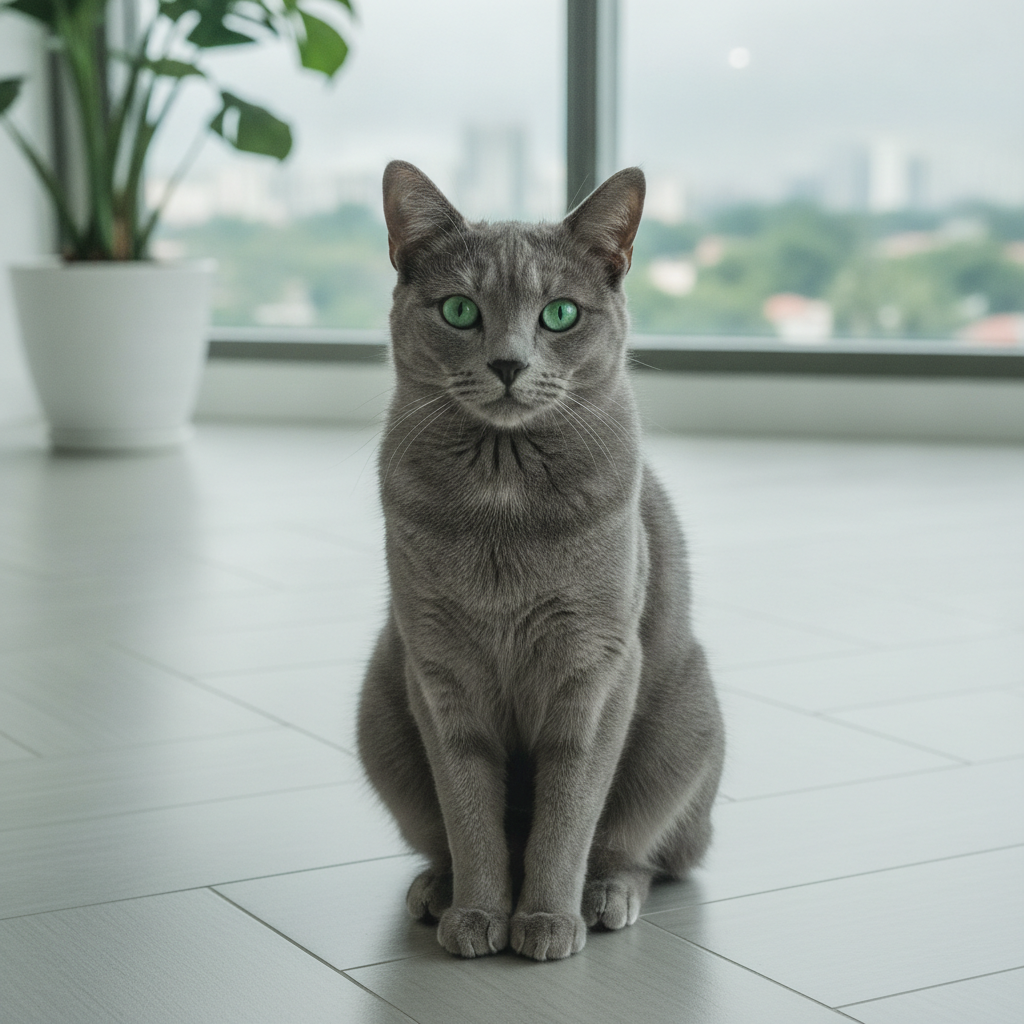
- Abu — "ash," perfect for a grey cat.
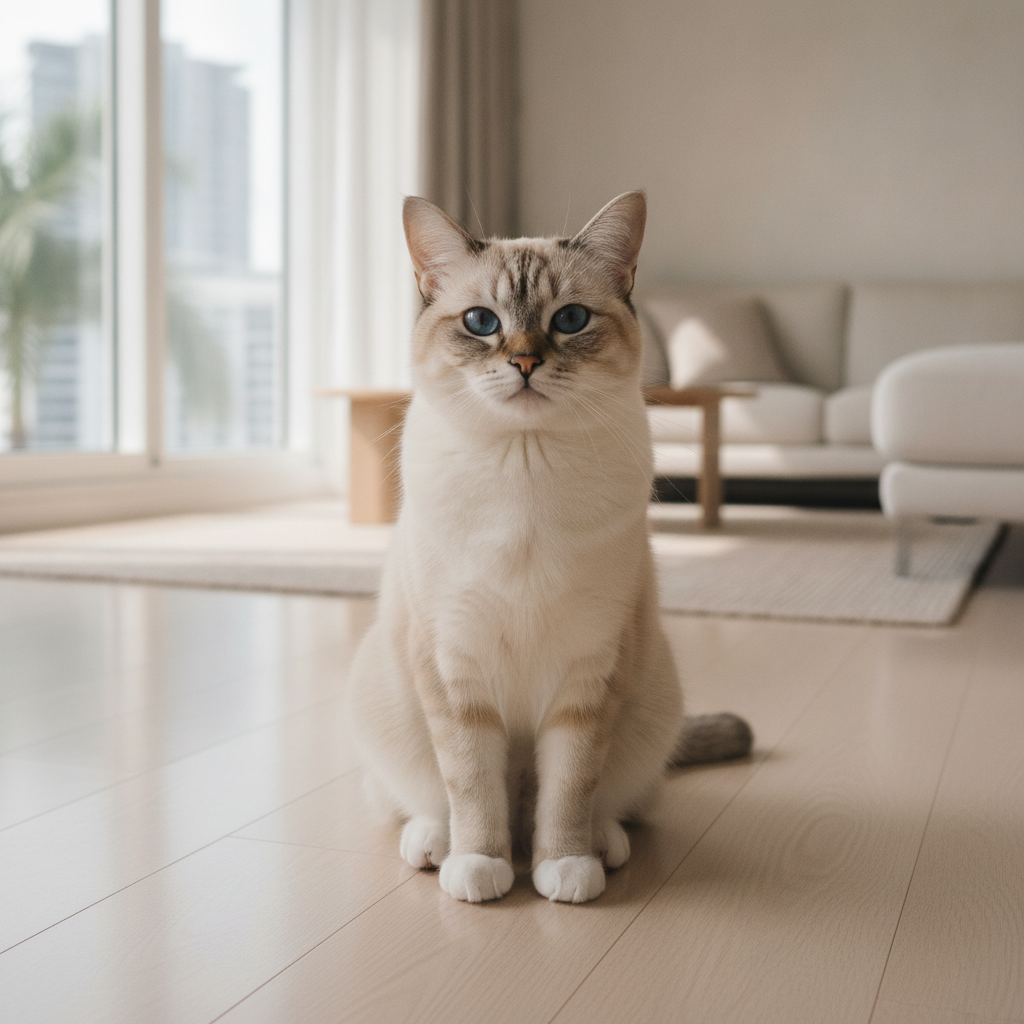
- Tompok — "spot" or "patch," for a cat with patches of colour.
- Belang — "stripe," for tabbies.
- Comel — "cute," the all-purpose term of endearment.
- Manja — "pampered/cuddly," for an affectionate lap cat.
- Gebus — "fluffy," for the floofs.
- Comot — "smudgy/messy," fondly used for a cat with a smudged face.
- Adik — "younger sibling," often for the baby of a multi-cat home.
- Raja — "king," for a cat with a commanding presence.
- Gemuk — literally "fat," used lovingly for a chonky cat.
- Kacang — "peanut," for a tiny one.
- Bulan — "moon," lovely for a calm or white cat.
- Mata — "eye," sometimes Si Mata, for a cat with striking eyes.
- Sayang — "love/darling," a pure term of endearment.
Notice the pattern: an everyday word becomes a name the moment your cat owns it. "Putih" stops being a colour and becomes your Putih. Malaysians often add the affectionate prefix Si — Si Comel, Si Tompok — which works rather like saying "little" or "the" before a name, a small linguistic hug. That shift from plain word to fond name is exactly how a cat joins the family.
And because we're a food-loving nation, local snack and drink names are everywhere too: Milo, Kopi, Teh, Roti, Nasi and Mee all make cheeky, very Malaysian cat names. For more colour-based ideas in English too, see cat names by colour.
The Oyen Phenomenon
No Malay cat name has gone as gloriously viral as Oyen. What began as plain slang for "orange" has become a whole personality archetype — the mischievous, lovable, slightly chaotic ginger cat that Malaysians adore. It hit national-icon status when a stray ginger named Oyen befriended the capybaras at Zoo Negara and earned his own signage. If your ginger boy is a bit of a clown, you already know his name. (And given that roughly 80% of orange cats are male, "boy" is usually a safe bet.)
Beautiful Arabic & Islamic-Origin Names (with Meanings)
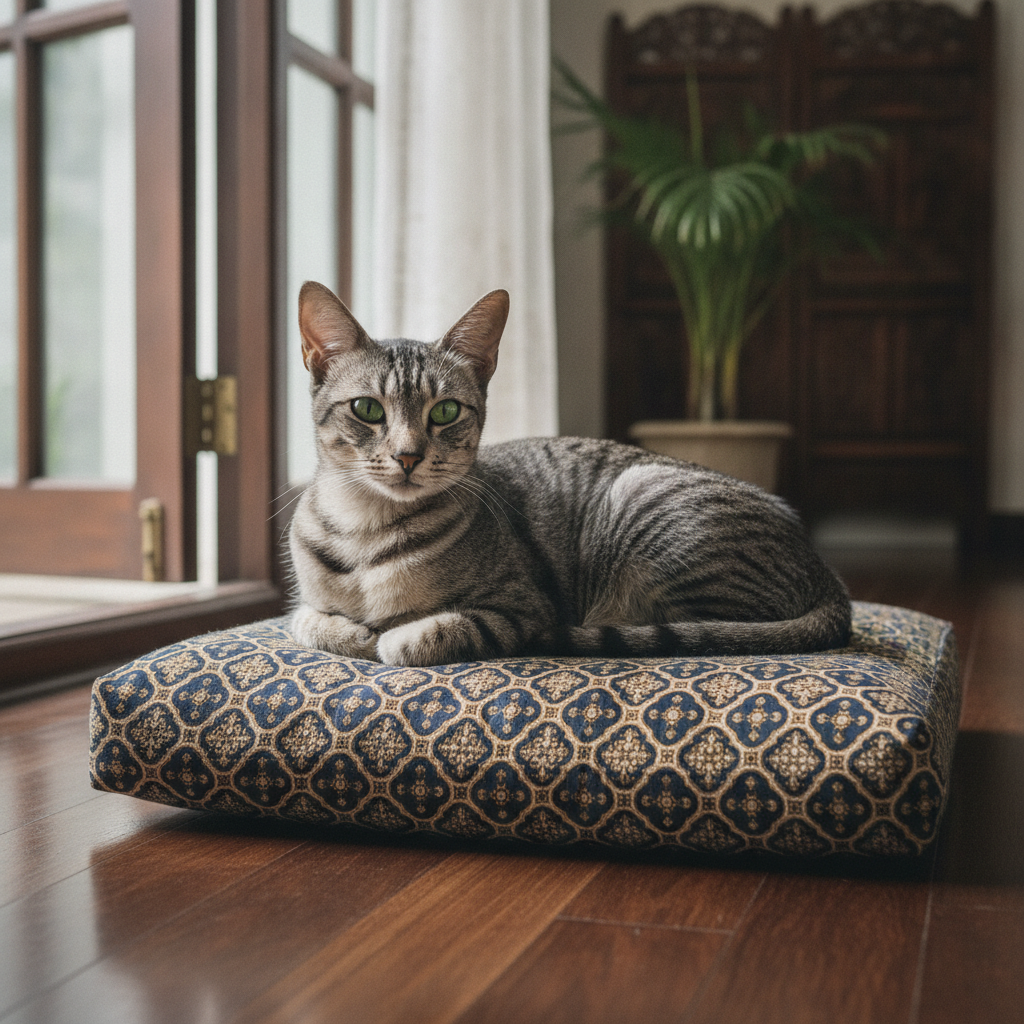
For a name with extra meaning, Arabic offers gorgeous options — many chosen, as resources like cat-name guides note, for their lovely sounds and positive meanings. Grouped by theme:
- Light & celestial: Noor (light), Qamar (moon), Shams (sun), Lail/Layla (night — lovely for a black cat).
- Sweet & precious: Lulu (pearl), Sukkar (sugar), Mishmish (apricot — great for a ginger), Misk (musk).
- Affection: Habibi (my beloved, male), Habibti (my love, female), Anis (close friend), Sayang (Malay for "love").
- Auspicious: Baraka (blessing), Safa (purity, serenity).
- Regal & strong: Amir (prince), Asad (lion), Faris (knight), Zayn (beauty/grace).
- Graceful (female): Zahra (flower/shining), Aisha (alive, spirited), Safiya (pure, serene).
- Playful: Naranj (orange, for a ginger), Aswad (black), Kesturi (musk-deer scent, a Malay-Arabic favourite).
A name like Misk for a sleek dark cat, or Noor for a pale one, carries both beauty and meaning — a small daily reminder of the affection behind it. Many of these double as the cat's "formal" name with a Malay nickname for daily calling: a dignified Qamar on the vet card, a quick "Comar!" across the living room. Best of both worlds.
Naming Etiquette: What's Appropriate (and What to Avoid)
Here's where many cat owners appreciate clear guidance. Giving a pet a name is permissible in Islam, but Malaysian religious authorities are firm on a few boundaries:
- Never use the names of Allah (SWT), the prophets, or the esteemed angels. Malaysian preacher Ustaz Azhar Idrus has stated plainly that this is forbidden (haram) by scholarly consensus (ijmak ulama), out of respect for the sanctity of those names. This is the clearest and most important rule.
- Avoid names of deities from other religions. The Selangor Mufti Department has ruled against this to protect a Muslim's akidah (faith), giving "Aphrodite" as an example.
- Human names — use judgement. Some authorities, including the Sabah branch of JAKIM, advise against giving animals human names out of respect for the honoured status of people. In everyday Malaysian practice, human-style names are common and generally accepted as long as they're not those of a prophet, angel, or Allah — but if you prefer to stay firmly on the cautious side, the descriptive Malay and Arabic words above are perfect.
One gentle bit of traditional adab (etiquette): some scholars suggest not naming your cat the same as a neighbour's name, to avoid any awkwardness. When in doubt, a descriptive name like Comel or a beautiful word like Noor keeps things both lovely and worry-free. None of this is meant to make naming stressful — the boundaries are few and clear, and everything else is open. The spirit behind the rules is simply respect: respect for the sacred, and respect for the little creature you're welcoming in.
The Legend of Muezza
You've probably heard the tender story of Muezza, said to be the Prophet Muhammad's beloved cat — the one who fell asleep on his sleeve, so he cut the cloth rather than wake her. It's a beautiful tale. In the interest of honesty, it's worth knowing that Islamic scholars, including the Federal Territories Mufti's Office, have found no strong, authenticated evidence for this specific narrative in the primary sources; it's best understood as a cherished folktale rather than verified history.
Its endurance, though, says something true: it perfectly captures the authentic Islamic ideal of rahmah — gentleness and mercy toward animals — which is firmly grounded in the Quran and authenticated hadith. The story may be a legend, but the kindness it teaches is very real — and it's a lovely thing to keep in mind as you welcome a new cat into your home.
Named Your Cat? Set Up a Clean, Comfortable Home
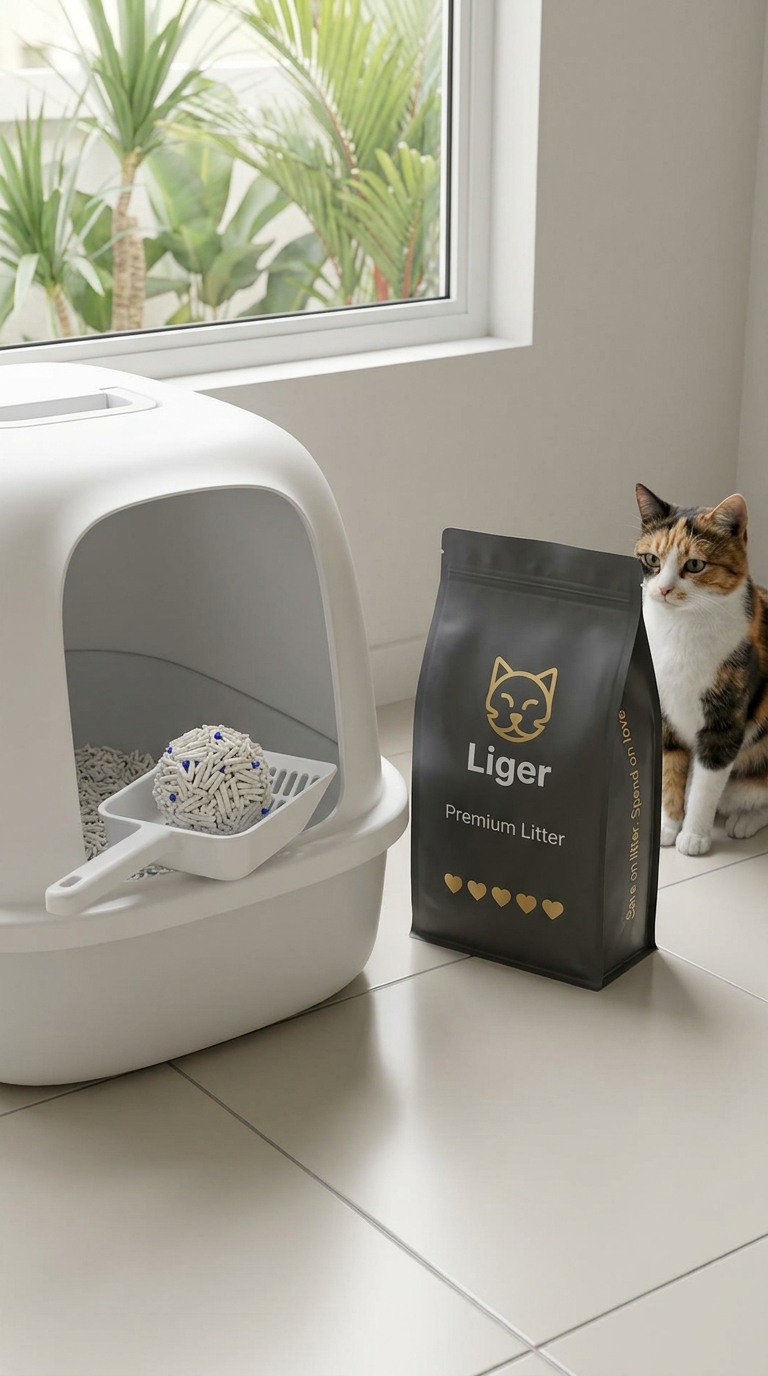
Whatever you land on — Oyen, Comel, Noor or Misk — welcoming a cat well means setting up a clean, comfortable space, something that sits naturally with the value Muslim households place on cleanliness. The litter box is central to that. A low-dust, plant-based, flushable litter keeps the area fresh and easy to manage, and is gentle on your cat's sensitive nose.
That's exactly what Liger Premium Tofu Cat Litter offers — made from food-grade soy fibre, low-dust, fast-clumping, and flushable in small amounts. Current Liger pricing (as of May 2026) is RM21.90 for a single 2kg pack, RM53.90 for 3 packs, RM89 for 5 packs and RM169 for 10 packs (RM8.45/kg), with free shipping across Peninsular Malaysia. Get everything ready with our new cat owner checklist and size your supply with the litter calculator. A good name and a clean, loving home — the perfect permulaan (beginning) for your new companion, and a quiet act of the rahmah our tradition holds so dear. And if your cat is a hardy local, don't miss our love letter to the kucing kampung.