Switch to 304 stainless steel or ceramic bowls to prevent painful feline acne (black chin).
In Malaysia's 70-90% humidity, food bowls are a breeding ground for dangerous Aflatoxins.
Multiple small meals (4+ times daily) help manage blood sugar and prevent 'Scarf and Barf'.
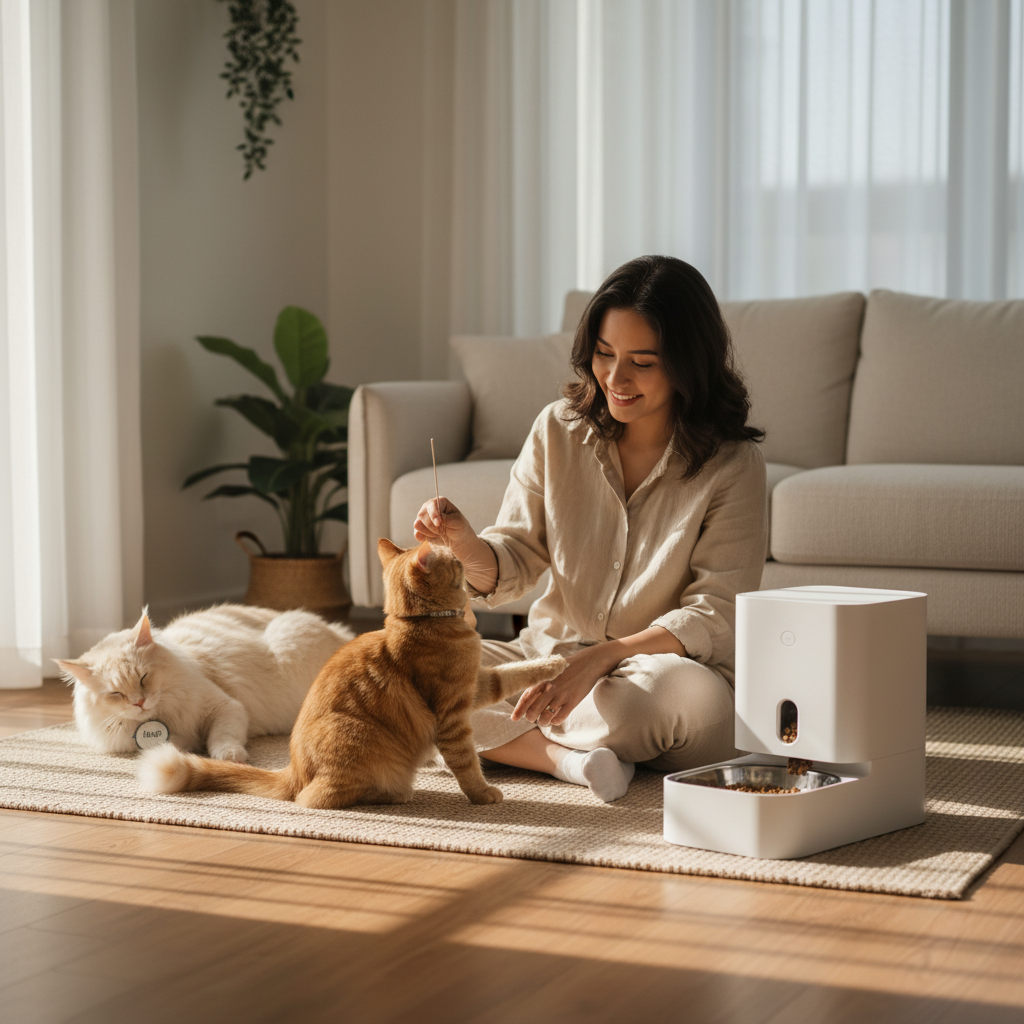
Automatic feeders aren't just for travel; they sync with your cat's natural dawn/dusk hunting rhythm.
Midnight. Your bedroom door rattles. A low, demanding meow starts—the kind that says your cat hasn't eaten in exactly two hours and is currently wasting away. We've all been there. You stumble to the kitchen, eyes half-shut, just to dump a scoop of kibble so you can get another hour of sleep.
But here is the thing: automatic feeders aren't just about reclaiming your sleep at 4 AM. In our humid Malaysian climate, these machines are actually sophisticated tools to fight off mold, manage weight, and keep our cats' skin healthy. It’s time we stop looking at them as a 'lazy' hack and start seeing them as essential home medical equipment.
The Silent Threat in the Bowl: Humidity and Mold
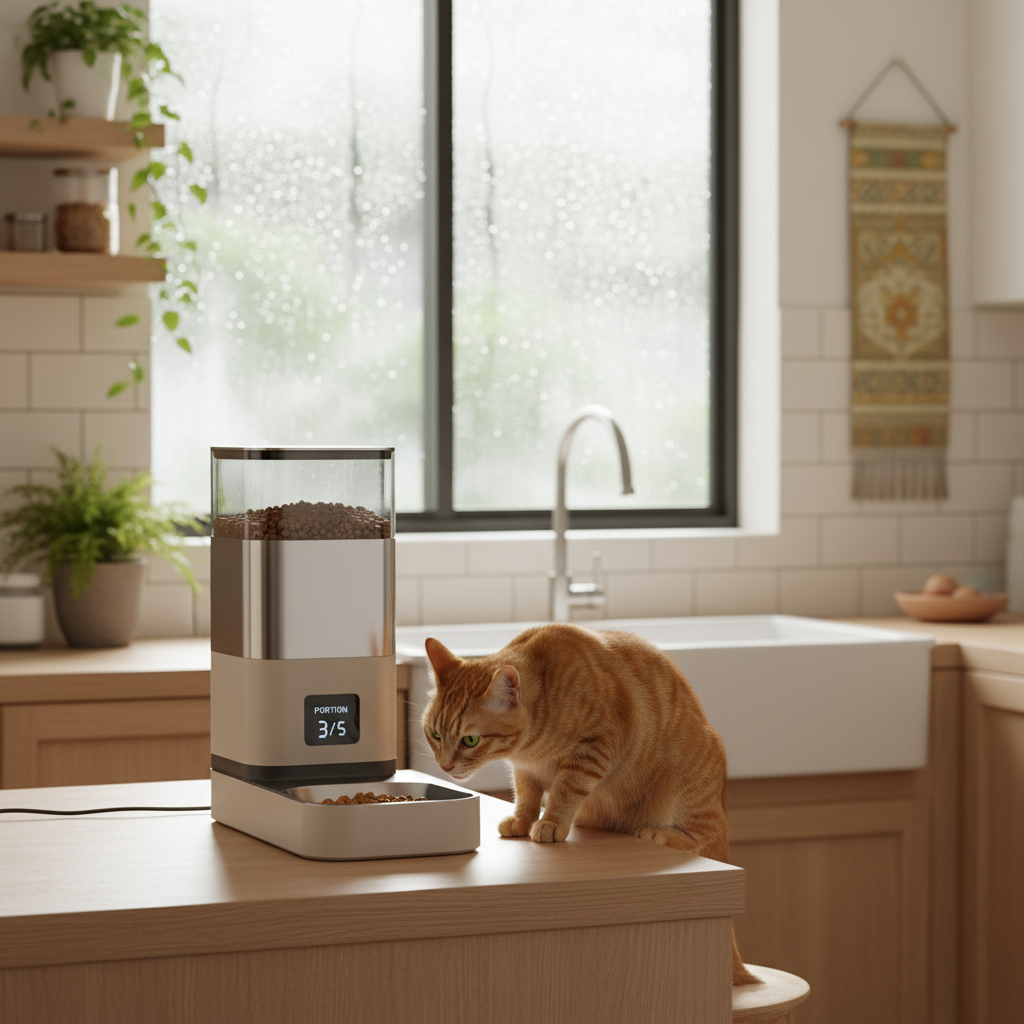
We live in a giant steam room. Seriously, the Kuala Lumpur humidity data shows our indoor moisture levels often hit 90% during rainy seasons. When you leave a big bowl of kibble out all day, it acts like a sponge. It absorbs that moisture, and within hours, invisible spores start to grow.
The biggest worry is Aflatoxin poisoning in pets. These toxins thrive in hot, humid spots. They attack a cat's liver, and the scary part is you can't see them with the naked eye. By only releasing small amounts of food that your cat eats immediately, an automatic feeder with a good sealing ring keeps the rest of the stash bone-dry and safe.
Say Goodbye to the 'Black Chin'
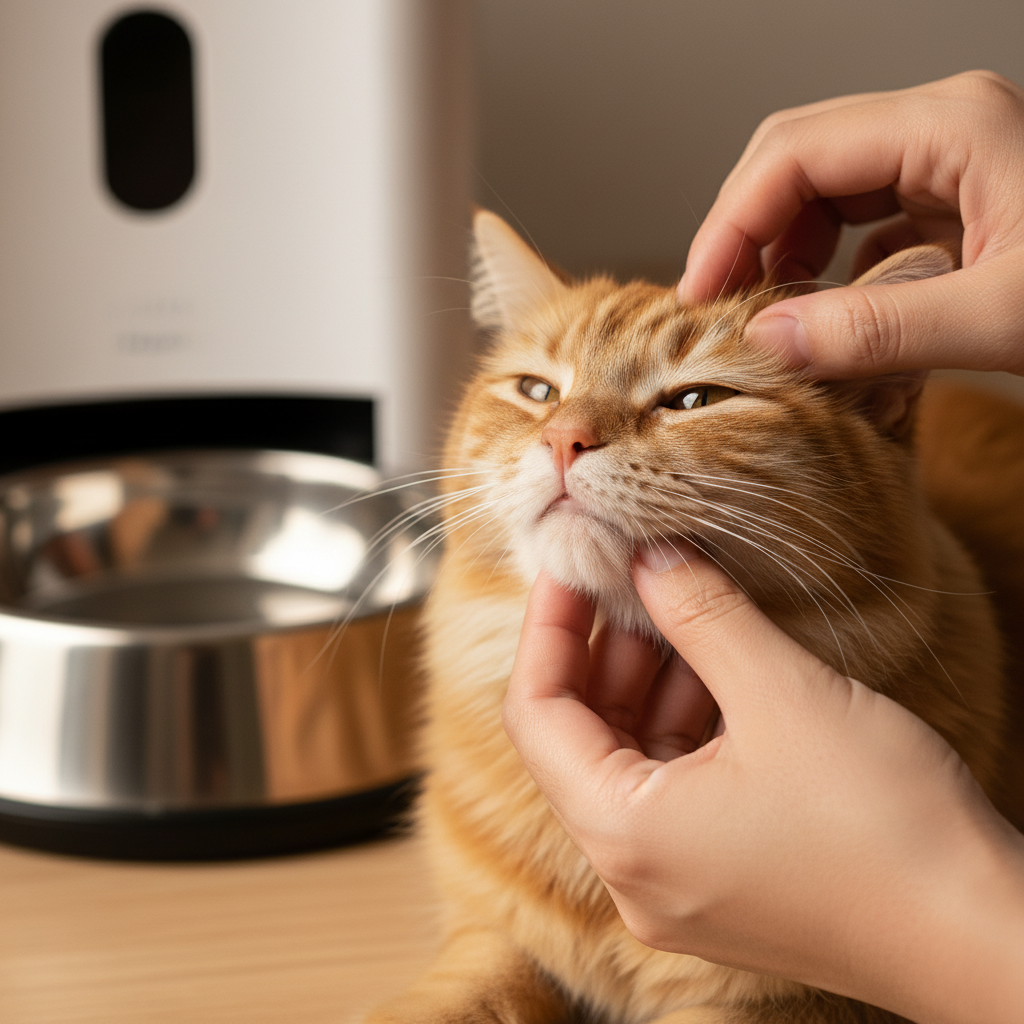
Have you noticed tiny black specks on your cat's chin? It looks like black pepper, but you can't just brush it off. That's likely feline chin acne. Most of the time, cheap plastic bowls are the culprit. Plastic is lipophilic—it loves oil. The fats from kibble get trapped in micro-scratches on the plastic, creating a slimy biofilm that bacteria love.
When your cat dips their chin in to eat, they're basically rubbing their skin against a petri dish. Most high-quality feeders now come with 304 food-grade stainless steel bowls. They are non-porous and easy to clean, which is essential if you want a clear chin. If you suspect your cat already has a breakout, you can use our Skin Condition Checker to see if it's getting serious.
| Feature | Plastic Bowls | Stainless Steel / Ceramic Bowls |
|---|---|---|
| Material Properties | Lipophilic, porous, prone to micro-scratches | Non-porous, smooth, durable |
| Hygiene & Bacteria | Traps oils, harbors biofilm, leads to feline acne | Easy to clean, inhibits bacterial growth |
| Durability | Less durable, can degrade over time | Highly durable, resistant to scratches |
| Maintenance | Harder to clean thoroughly, requires frequent replacement | Very easy to clean, often dishwasher safe |
| Cost | Generally lower | Generally higher |
The Time I 'Starved' My Cats During Raya
I'll be honest—I used to think those RM80 'no-brand' feeders from Shopee were a bargain. I bought one right before a Balik Kampung trip for Raya. I figured, 'It’s just a dispenser, how hard can it be?'
I came home three days later to find the machine jammed. A single oversized piece of kibble had wedged itself in the gears. My cats were fine, but they were clearly stressed, and I felt like the worst cat parent alive. That 'budget' purchase nearly cost me a vet visit for stress-induced issues. I learned the hard way that a feeder without a 'jam-prevention' motor and a battery backup is just a plastic box waiting to fail. Now, I always cross-check portions with a cat food calculator and trust machines with better build quality.
Myth: Automatic Feeders Make Cats Fat
Actually, the opposite is true. Most people overfeed because they use their eyes, not a scale. 'Oh, Lion looks extra hungry today, I'll add another handful,' we say. That's how cats end up needing a weight loss plan. A machine doesn't have 'guilt.' It drops exactly 10g or 15g every single time.
For cats like Tiger, who needs a very stable routine because of his heart condition, consistency is medicine. Small, frequent meals prevent that painful 'scarf and barf' cycle where they eat too fast and puke it right back up. It’s about precision, not just convenience.
An automatic feeder isn't a replacement for you. It’s your assistant. It handles the 'boring' 4 AM and 1 PM snacks so that when you do feed them wet food in the evening, it’s a high-quality bonding moment, not a desperate scramble for calories. Tiger and Lion are much calmer now that their stomachs have a predictable clock.
Your Monday Morning Action: Go look at your cat's current food bowl. If it’s plastic and has visible scratches, throw it out today. Buy a stainless steel or ceramic replacement—even if you're not ready for an automatic machine yet, your cat's chin will thank you by noon tomorrow.
| Aspect | Manual Feeding (Traditional) | Automatic Feeder (Modern) |
|---|---|---|
| Feeding Frequency | Often 1-2 large meals/day | Multiple small meals (4-8+ times/day) |
| Health Benefits | Risk of "scarf and barf", blood sugar spikes, obesity, liver issues (hepatic lipidosis) | Prevents "scarf and barf", stabilizes blood sugar, aids weight management, reduces risk of metabolic diseases |
| Behavioral Impact | Inconsistent schedule, potential for early morning wake-up calls, stress from irregular feeding | Matches natural crepuscular rhythm, reduces anxiety, calmer cat behavior, strengthens human-cat bond during wet food meals |
| Hygiene & Safety | Food exposed to humidity/pests, risk of Aflatoxins, plastic bowl issues | Sealed storage, precise portions reduce exposure, less Aflatoxin risk, promotes use of safe bowl materials |
| Owner Convenience | Tied to specific feeding times, can be inconvenient for travel/work | Handles routine dry food meals, frees owner for quality bonding, peace of mind during absences |