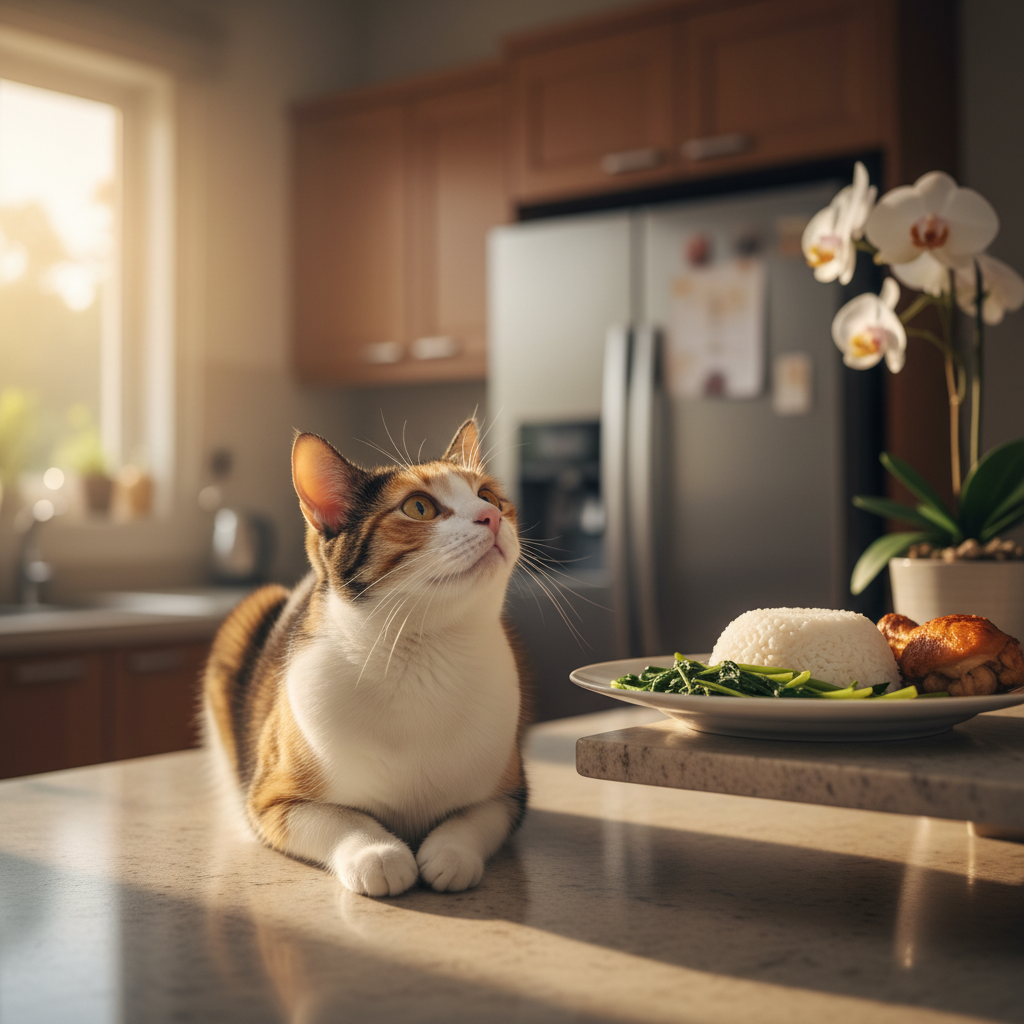
If you've ever caught your cat staring you down while you eat dinner, you know the look. Tiger does it to us every single night — parked beside the table, eyes locked on the chicken rice, fully convinced that a stray prawn is his birthright. It's tempting to share. But here's the hard truth every Malaysian cat parent needs to sit with: a lot of the food on your plate, the stuff that's perfectly safe (and delicious) for you, can quietly poison your cat.
This isn't fear-mongering. Some of these foods cause mild tummy upset. Others can shut down your cat's kidneys or destroy their red blood cells within hours. And the scary part? Many of the most dangerous ones are hidden inside everyday Malaysian dishes — the onion and garlic in your sambal, the chocolate in your kuih, the bones in your satay. Your cat doesn't know the difference. You have to know it for them.
We've pulled this guide together from the canonical sources vets actually use — the ASPCA Animal Poison Control Center, the Pet Poison Helpline, and the Merck (MSD) Veterinary Manual — and grounded it in the foods we actually eat here in Malaysia. By the end you'll know exactly what to keep away from your cat, why it's dangerous, what poisoning looks like, and the one thing you should do if your cat eats something it shouldn't.
Want a quick lookup tool to settle "can my cat eat this?" arguments at the dinner table? Bookmark our Can My Cat Eat This? checker and the food ingredient checker — both are free and built for exactly these moments.
The quick-reference table: 15 toxic foods at a glance
If you read nothing else, screenshot this table and stick it on your fridge. We've ranked danger level so you know which ones are "monitor and call the vet" versus "this is an emergency, go now."
| Food | Why it's toxic | Danger level | Common signs of poisoning |
|---|---|---|---|
| Onion, garlic, chives, shallots (allium) | Damages red blood cells → anaemia | High | Weakness, pale gums, rapid breathing, red/brown urine |
| Chocolate | Theobromine & caffeine — heart & nervous system | High | Vomiting, racing heart, tremors, seizures |
| Caffeine (coffee, tea, energy drinks) | Stimulant toxicity | High | Restlessness, racing heart, tremors |
| Grapes & raisins | Can trigger sudden kidney failure | High | Vomiting, lethargy, reduced urination |
| Alcohol | Rapid CNS & organ depression | High | Disorientation, vomiting, collapse, coma |
| Xylitol (sugar-free sweetener) | Possible toxicity; never safe | High | Vomiting, weakness, collapse |
| Raw bread dough | Expands in stomach + alcohol from yeast | High | Bloated belly, retching, disorientation |
| Cooked bones (satay, chicken, fish) | Splinter → choking, gut perforation | High | Drooling, gagging, blood in stool |
| Macadamia nuts | Toxic mechanism unknown; vomiting | Medium | Vomiting, weakness, wobbliness |
| Raw fish (regular/large amounts) | Thiaminase destroys vitamin B1 | Medium | Loss of appetite, wobbly gait, seizures (chronic) |
| Tuna (human, as a staple) | Mercury & nutrient imbalance, B1 issues | Medium | Poor coat, weight loss, neurological signs |
| Liver (in excess) | Vitamin A toxicity → bone disease | Medium | Stiffness, lameness, deformed bones (chronic) |
| Dairy / milk (most adult cats) | Lactose intolerance | Low | Diarrhoea, gas, vomiting |
| Raw egg whites (regular) | Avidin blocks biotin; Salmonella risk | Low–Medium | Skin/coat problems, GI upset |
| Excess salt & salty snacks | Sodium ion poisoning | Medium | Thirst, vomiting, tremors, seizures (severe) |
Notice how many of these hide in normal home cooking. That's the real risk in a Malaysian household — it's rarely someone deliberately feeding the cat chocolate. It's the curry, the leftover satay, the marinade. Let's go through each one properly.
1. Onion, garlic, chives & shallots — the allium family (the #1 hidden danger)
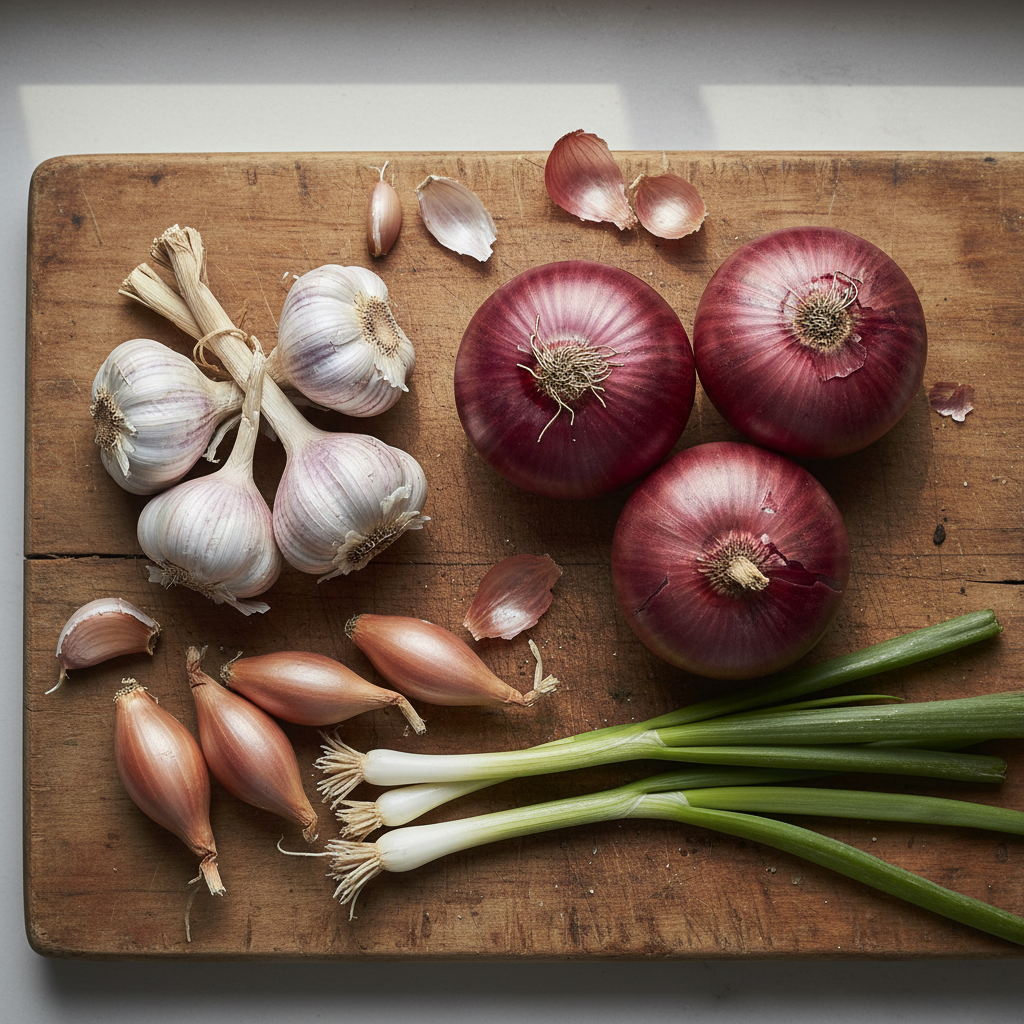
This is the one we beg every Malaysian cat parent to take seriously, because allium vegetables are in almost everything we cook. Onion (bawang besar), garlic (bawang putih), shallots (bawang merah), spring onion, leeks and chives all belong to the allium family, and all of them are toxic to cats.
Why it's toxic: Alliums contain organosulfur compounds (like n-propyl disulfide) that damage the membrane of a cat's red blood cells. The damaged cells form clumps called Heinz bodies and get destroyed by the body, leading to a condition called Heinz-body haemolytic anaemia. As the Merck Veterinary Manual explains, cats are far more sensitive to this than dogs.
How much is dangerous: Less than you'd think. The toxic threshold is roughly 5 grams per kilogram of body weight — for a 4kg cat that's only about 20 grams of onion, less than a quarter of a medium onion. And cooking does not destroy the toxin. Garlic is even more concentrated than onion, gram for gram. This means a few licks of onion gravy, a piece of garlic bread, or — critically — a "natural garlic supplement for fleas" can all add up. Please don't fall for garlic flea remedies; they're a poisoning risk, not a cure.
The Malaysian reality: Sambal, rendang, curry, fried rice, soup bases, marinades — onion and garlic form the backbone of our cuisine. The biggest danger isn't a whole onion; it's table scraps. When Lucky once licked a plate that had leftover ayam masak merah on it, we called our vet the same evening just to be safe. Never share food cooked with onion or garlic, and be careful with baby food too — many contain onion powder.
Signs of poisoning: Often delayed by a few days. Watch for lethargy, weakness, pale or yellowish gums, rapid breathing, reduced appetite, and reddish-brown urine (a sign red blood cells are breaking down).
2. Chocolate — theobromine is the killer
Why it's toxic: Chocolate contains theobromine and caffeine, both methylxanthines that cats cannot metabolise efficiently. These compounds overstimulate the heart and nervous system. According to the Pet Poison Helpline, darker and more bitter chocolate is more dangerous — baking chocolate and dark chocolate carry far more theobromine than milk chocolate.
How much is dangerous: Cats are smaller and rarely have a sweet tooth, so chocolate poisoning is less common than in dogs — but it's more dangerous per gram because of their size. Even a small amount of dark chocolate or cocoa powder can cause problems for a 3–4kg cat.
The Malaysian reality: Watch out during festive seasons — Raya cookies, Christmas chocolate hampers, and kuih that use cocoa. Chocolate-coated nuts and chocolate cake left on the counter are classic culprits.
Signs of poisoning: Vomiting, diarrhoea, restlessness, increased thirst, a racing or irregular heartbeat, muscle tremors, and in severe cases seizures.
3. Caffeine — coffee, tea, energy drinks, kopi-O
Why it's toxic: Caffeine is a methylxanthine like theobromine, and it hits cats hard. It overstimulates the cardiovascular and nervous systems.
How much is dangerous: A lick of your kopi probably won't hurt, but chewing on coffee grounds, tea bags, or — most dangerously — caffeine pills or energy drinks can cause serious toxicity. Used coffee grounds in the rubbish are surprisingly tempting to curious cats.
The Malaysian reality: We're a nation that runs on kopi and teh tarik. Keep cups, used grounds, and tea bags away from counters where cats jump. Energy drinks are the highest risk because of their concentrated caffeine.
Signs of poisoning: Restlessness, rapid breathing, racing heart, muscle tremors, and elevated body temperature.
4. Grapes & raisins — small fruit, big kidney risk
Why it's toxic: This one baffles scientists. Grapes and raisins can cause sudden, severe kidney failure in pets, but the exact toxic compound — recently suspected to be tartaric acid — is still being studied. What's clear is that the reaction is unpredictable: some animals eat a few and are fine, others have severe reactions to small amounts. The ASPCA treats any ingestion as a potential emergency.
How much is dangerous: There's no established safe amount. Because the response varies so much between individuals, vets treat any grape or raisin ingestion seriously.
The Malaysian reality: Raisins hide in fruit cake, kurma-stuffed snacks, raisin bread, breakfast cereals and trail mixes. Be especially watchful during Raya and Deepavali when these treats are everywhere.
Signs of poisoning: Vomiting (often within hours), then lethargy, loss of appetite, and reduced or absent urination as the kidneys fail.
5. Alcohol — even a little is dangerous
Why it's toxic: Cats have a tiny body mass and cannot process ethanol. Alcohol rapidly depresses the central nervous system and can cause dangerous drops in blood sugar, body temperature and breathing.
How much is dangerous: Very little. Alcohol also hides in unexpected places — raw bread dough (the yeast produces alcohol), rum-soaked cakes, and some fermented foods.
Signs of poisoning: Disorientation, drooling, vomiting, difficulty walking, slow breathing, low body temperature, and in severe cases collapse or coma. This is always an emergency.
6. Xylitol — the sugar-free sweetener you must check for
Why it's toxic: Xylitol (and the related birch sugar) is a sugar substitute found in sugar-free gum, mints, some peanut butters, baked goods and even some medications. It's famously dangerous to dogs, where it triggers a massive insulin release and liver failure. While the data on cats is less complete, the Pet Poison Helpline advises treating it as unsafe — there is no reason a cat should ever eat it.
The Malaysian reality: "Sugar-free", "diabetic-friendly" and "no added sugar" kuih and snacks are increasingly common. Always read ingredient lists. Sugar-free gum is the classic culprit — never let a cat chew a stray piece.
Signs of poisoning: Vomiting, sudden weakness, lack of coordination and collapse. Treat any ingestion as urgent.
7. Raw bread dough — a double threat
Why it's toxic: Two dangers in one. First, the warm, moist environment of the stomach makes raw dough keep rising — it can expand dramatically and cause a painful, dangerous bloat or even a twisted stomach. Second, the yeast ferments the sugars and produces alcohol, leading to alcohol poisoning on top of the bloat.
The Malaysian reality: If you bake roti or pizza at home, never leave proving dough where a cat can reach it. The smell of yeast is attractive.
Signs of poisoning: A distended, hard belly, unproductive retching, restlessness, and signs of alcohol poisoning like disorientation. This needs a vet fast.
8. Cooked bones — the satay & fried chicken trap
Why it's toxic: Cooked bones — from satay, fried chicken, fish, or curry — become brittle and splinter when chewed. Sharp fragments can lodge in the mouth or throat (choking), or worse, puncture the stomach or intestines, causing a life-threatening internal injury. They can also cause painful constipation or blockages.
The Malaysian reality: Satay sticks and bones, fried chicken bones, and fish bones from steamed fish or assam pedas are everywhere in our kitchens and rubbish bins. Secure your bins — cats are excellent scavengers. (Raw feeding is a separate topic with its own safety rules; see our raw meat safety guide.)
Signs of poisoning: Drooling, pawing at the mouth, gagging, vomiting, loss of appetite, straining to poop, or blood in the stool.
9. Macadamia nuts
Why it's toxic: The exact mechanism is unknown, but macadamia nuts are documented to cause weakness, vomiting, tremors and hyperthermia in pets. Best-practice is to keep all nuts away from cats — many are high in fat (risking pancreatitis) and present a choking hazard.
The Malaysian reality: Macadamias appear in cookies, festive nut mixes and chocolate-coated treats. Combined with chocolate, the risk multiplies.
Signs of poisoning: Weakness (especially in the back legs), vomiting, tremors and a raised body temperature.
10. Raw fish — the thiaminase problem
Why it's toxic: Certain raw fish contain an enzyme called thiaminase that destroys thiamine (vitamin B1), a vitamin cats critically need for nerve function. Regularly feeding raw fish can cause a thiamine deficiency over time. According to VCA Hospitals, thiamine deficiency causes serious neurological problems. Raw fish also carries a risk of parasites and bacteria.
The Malaysian reality: It's a common myth that cats should eat raw fish like ikan bilis or fresh market fish raw. An occasional small amount of cooked fish is fine; a raw-fish-heavy diet is not.
Signs of poisoning: Loss of appetite, an unsteady or wobbly walk, dilated pupils, and in advanced cases seizures.
11. Too much tuna — the human tin trap
Why it's toxic: Cats go crazy for tuna, but human tuna isn't formulated for them. A tuna-only diet lacks essential nutrients (like vitamin E and taurine balance), and can cause mercury build-up and the same thiamine issues as raw fish. The result can be a condition called steatitis (yellow fat disease), which is painful.
The Malaysian reality: Tinned tuna is cheap and many cat parents use it as a topper or treat. That's fine occasionally — but it should never replace a complete, balanced cat food. If you're unsure how to read what's actually balanced, our guide on how to read cat food labels walks through AAFCO and taurine.
Signs of poisoning: A dull, greasy coat, weight loss, sensitivity to touch (from steatitis), and neurological signs over time.
12. Liver in excess — too much vitamin A
Why it's toxic: A little liver is fine and even nutritious, but liver is extremely high in vitamin A. Fed in large amounts regularly, it causes vitamin A toxicity (hypervitaminosis A), which leads to painful bone deformities and stiff joints over time.
The Malaysian reality: Some home-cooked cat diets and homemade treats lean heavily on chicken liver because cats love it. Use it sparingly, as a small part of a balanced diet — not the main course.
Signs of poisoning: Stiffness, reluctance to move, lameness, neck pain, and (over months) visible bone changes.
13. Dairy & milk — the Tom & Jerry myth
Why it's "toxic": Dairy isn't poisonous, but most adult cats are lactose intolerant. After weaning, they lose the enzyme (lactase) needed to digest the lactose in milk, so cow's milk causes digestive upset. It's the lowest-danger item on this list, but it still earns a place because so many people give cats milk as a "treat."
The Malaysian reality: Please don't give your cat a saucer of fresh milk or condensed milk. We dug into this fully in our cats and milk guide — short version: water is the only drink a cat needs.
Signs of upset: Diarrhoea, gas, bloating, and vomiting within hours of drinking milk.
14. Raw eggs (regularly) — avidin & bacteria
Why it's toxic: Raw egg whites contain a protein called avidin that binds biotin (a B vitamin), and over time this can cause skin and coat problems. Raw eggs also carry a risk of Salmonella and E. coli. Cooked egg in small amounts is generally fine; it's regular raw consumption that's the concern.
Signs of problems: A dull coat, skin issues, and gastrointestinal upset if bacteria are involved.
15. Too much salt & salty snacks
Why it's toxic: Large amounts of salt can cause sodium ion poisoning. This is more of a risk from salty human snacks, salted fish, and homemade playdough or rock salt than from a normal cat diet.
The Malaysian reality: Ikan masin (salted fish), keropok, salted nuts and crisps are everywhere. A nibble won't poison a cat, but don't make salty human snacks a habit, and never leave salted fish where a cat can steal it.
Signs of poisoning: Excessive thirst and urination, vomiting, diarrhoea, tremors, and in severe cases seizures.
What about dog food and other "not poison but not okay" foods?
A quick honourable mention, because we get asked this a lot. Dog food isn't toxic to cats, but it's not safe as a regular diet. Cats are obligate carnivores who must get taurine from their food — dog food doesn't have enough, and a taurine deficiency causes heart disease and blindness. An accidental mouthful is fine; long-term dog food is not.
Other things to keep away: raw bread dough (covered above), large amounts of fat trimmings (pancreatitis risk), and anything heavily seasoned. When in doubt, run it through our food ingredient checker before sharing.
What to do if your cat eats something toxic

This is the most important section, so read it carefully. Cat poisoning is a medical emergency. Cats are small, and toxins act fast. The difference between a good and bad outcome is often how quickly you act.
- Stay calm and remove the food. Take away whatever's left so they can't eat more, and move your cat to a safe, quiet space.
- Do NOT try home remedies. Never make your cat vomit unless a vet explicitly tells you to — with some toxins, vomiting causes more damage. Don't give milk, salt water, or anything you read in a forum. Wrong "treatment" can kill faster than the poison.
- Call your vet or the nearest emergency vet immediately. Have this ready: what your cat ate, roughly how much, and when. If you can, bring the packaging or a photo of the food.
- Know where your 24-hour emergency vet is — before you need it. In the Klang Valley and major Malaysian cities there are several 24-hour animal hospitals. Save the number in your phone today. The ASPCA Animal Poison Control Center hotline is a useful global reference for what's toxic, but for treatment you need a local vet who can see your cat.
- Follow the vet's instructions exactly. They may induce vomiting safely, give activated charcoal, run blood tests, or start IV fluids. Early treatment dramatically improves the odds.
Don't wait to "see if symptoms appear." With allium toxicity, grapes and several others, signs can be delayed by hours or days — by which point internal damage is already done. If you know your cat ate something on this list, call now.
Prevention: a clean, cat-safe home
The best cure is never needing one. A few habits keep our four cats — Tiger, Lion, Ping'an and Lucky — out of trouble:
- Secure your rubbish bins. Bones, onion scraps and food packaging are the most common poisoning sources. Use a lidded, cat-proof bin.
- Clear the table and counters straight after eating. No leftover plates with gravy, no chocolate hampers on display, no cups of kopi within paw's reach.
- Feed a complete, balanced cat food so your cat isn't hungry and hunting for scraps. A well-fed cat is a less desperate cat.
- Tell your guests and kids the rules. "No feeding the cat human food" should be a house rule, especially during festive open houses when tables are full of risky treats.
- Keep your litter area and feeding area clean and separate. A tidy, low-dust setup (we use tofu litter for exactly this reason) keeps the whole eating-and-toileting zone hygienic, which matters for a cat's overall health.
If you're ever unsure whether a specific food is safe, don't guess. Use our Can My Cat Eat This? tool for an instant answer, and the food ingredient checker to scan a packaged snack's ingredient list. When it comes to a creature that depends entirely on you, a 30-second check beats a midnight vet emergency every time.
Curious about other "can my cat eat X" questions? We've covered milk, raw meat, and human fish oil in detail. Your cat trusts you with every bite — and that trust is worth getting right.