Up to 80% of cats reported as 'depressed' are actually suffering from undiagnosed physical pain like osteoarthritis.
True clinical depression is marked by anhedonia—a total lack of interest in previously loved treats or toys.
The Feline Grimace Scale (FGS) is a scientific tool to detect pain through subtle facial muscle changes.
Physical illness often hides as 'sickness behavior,' an evolutionary tactic to hide vulnerability from predators.
Your cat is hiding under the sofa again. They haven't touched their favorite feather wand in three days. You might think, "Maybe they're just getting lazy," or worse, "Is my cat depressed?"
Here is a startling reality: 70-80% of cats reported by owners as being 'depressed' are actually suffering from chronic pain or systemic diseases. In the wild, showing pain is a death sentence. So, your cat doesn't cry. They just go quiet. They aren't lazy; they are surviving a silent internal battle.
The Master of Disguise: Sickness Behavior
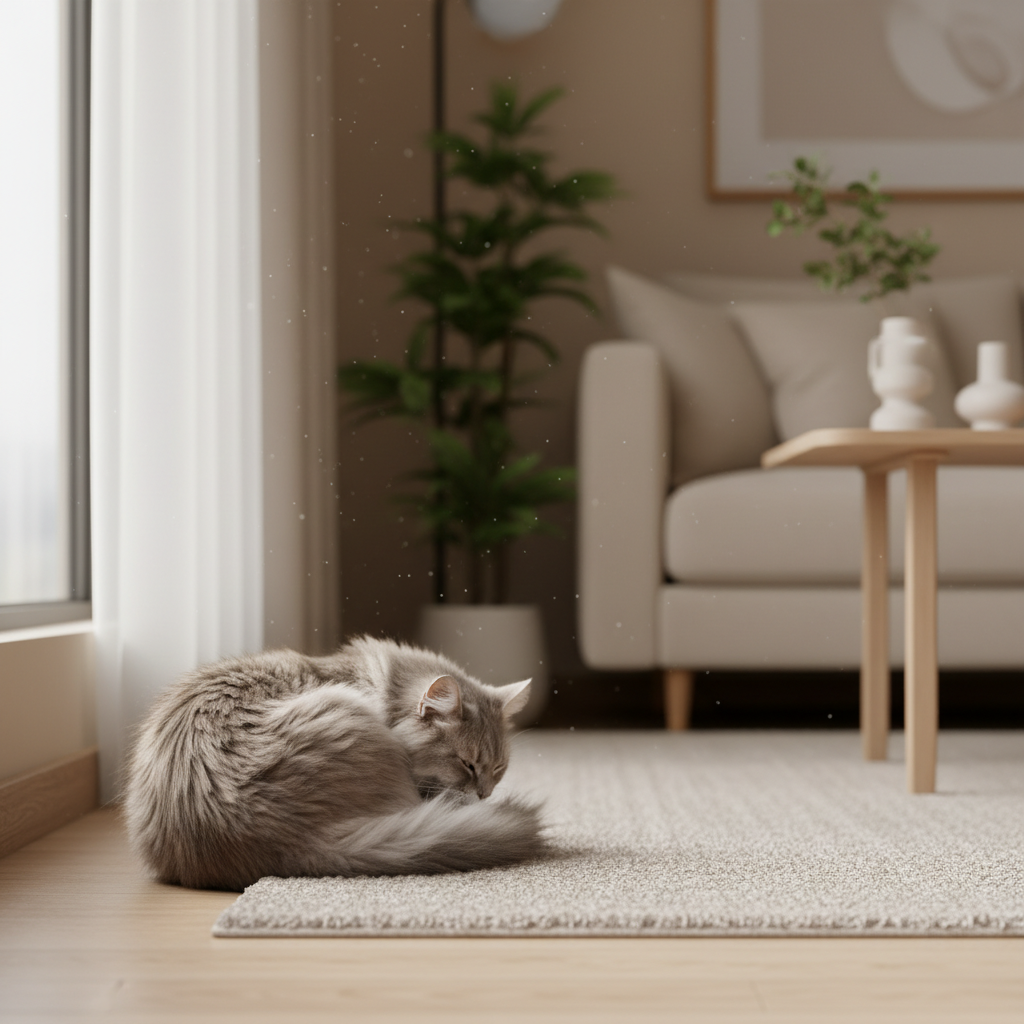
When we feel sick, we complain. When a cat feels sick, they use a strategy called **Sickness Behavior**. It looks like depression—lethargy, social withdrawal, loss of appetite—but it's actually a highly adaptive survival tool. By moving less, the body saves energy for the immune system to fight infection or repair tissue.
For example, Tiger is quite young (born June 2024), but because he has congenital heart disease, he might naturally have lower energy days. It's not depression; it's his body managing its resources. If your cat stops jumping onto high shelves, don't assume they are 'chilled out.' They might have osteoarthritis, which affects 90% of cats over 12 years old.
The Red Flag: Anhedonia
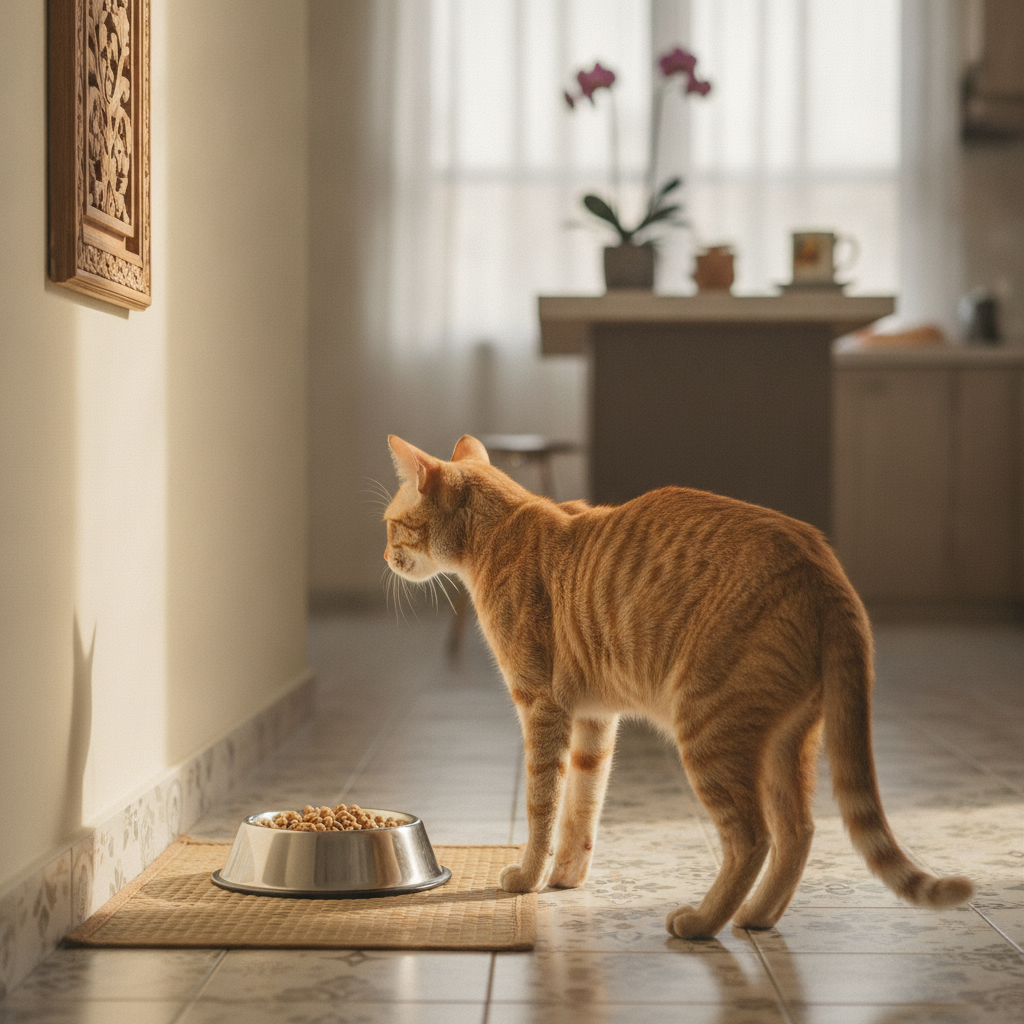
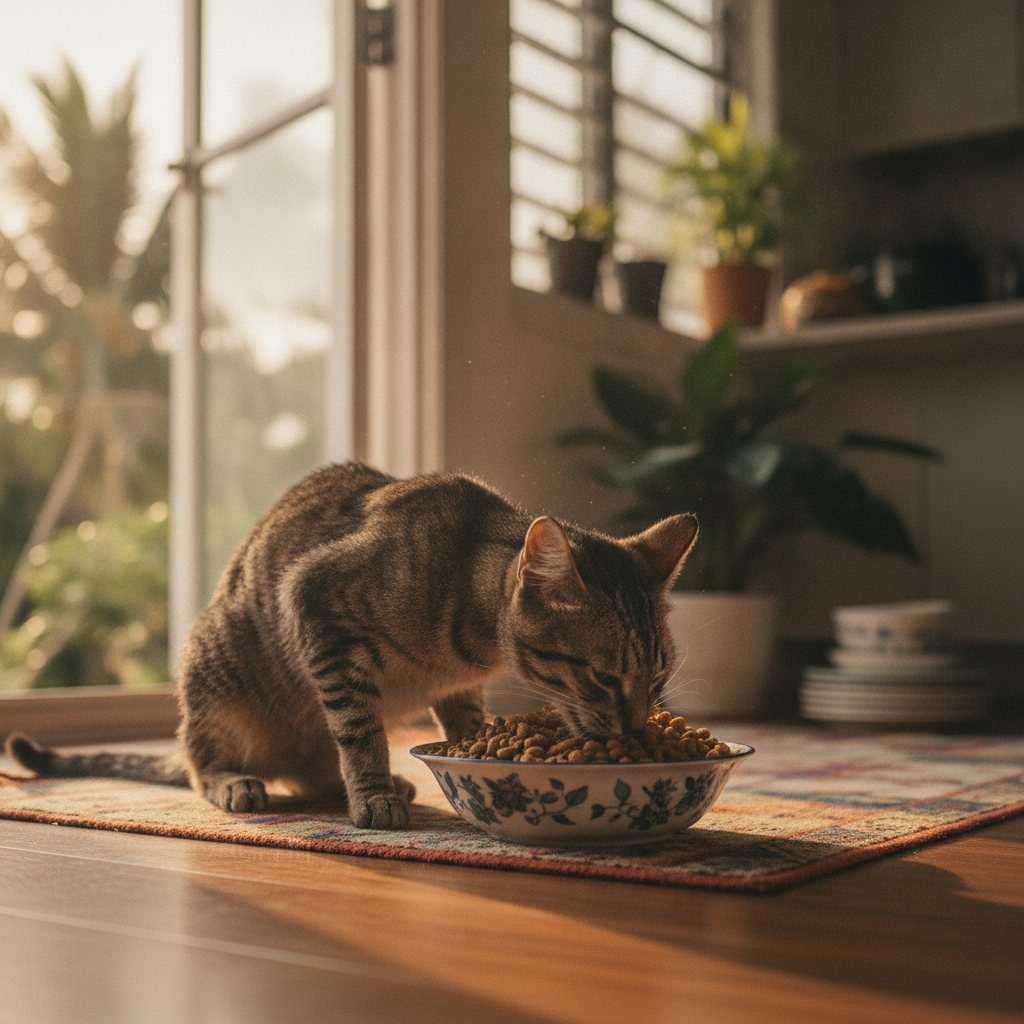
So how do you spot actual mental depression? Look for Anhedonia. A cat in pain will still be interested in a Churu treat, even if they eat it slowly. A clinically depressed cat will show zero reaction to things they used to love. If their eyes are glassy and they don't even look at their favorite toy, that’s the moment to worry.
| Characteristic | Sickness Behavior (Pain/Illness) | True Depression (Anhedonia) |
|---|---|---|
| Core Motivation | Cannot/Daren't do (physical inability/fear of pain). Motivation intact but physically limited. | Does not want to do (lack of motivation). Brain reward system impaired, no anticipation of pleasure. |
| Response to Favorite Treats/Toys | Interested but hesitant; may eat slowly or give up due to pain. | No reaction or indifference; may sniff and walk away, no desire to eat, vacant eyes. |
| Feline Grimace Scale (FGS) | High FGS score (≥4); signs like squinting, flattened ears, tense muzzle. | Facial muscles relaxed, possibly dull expression, lack of change. |
| General Activity | Reduced activity to conserve energy, often hiding in protective postures. | Lethargy, social withdrawal, reduced interaction with environment. |
The Time I Ignored the 'Lazy' Sign
I'll be honest—I used to think my older cat was just enjoying his "retirement years" because he slept 20 hours a day. I told myself he was just lazy. Then one day, I noticed him struggle to climb into the litter box. One vet visit and a dose of joint support later, he was chasing Lucky around the house like a kitten again.
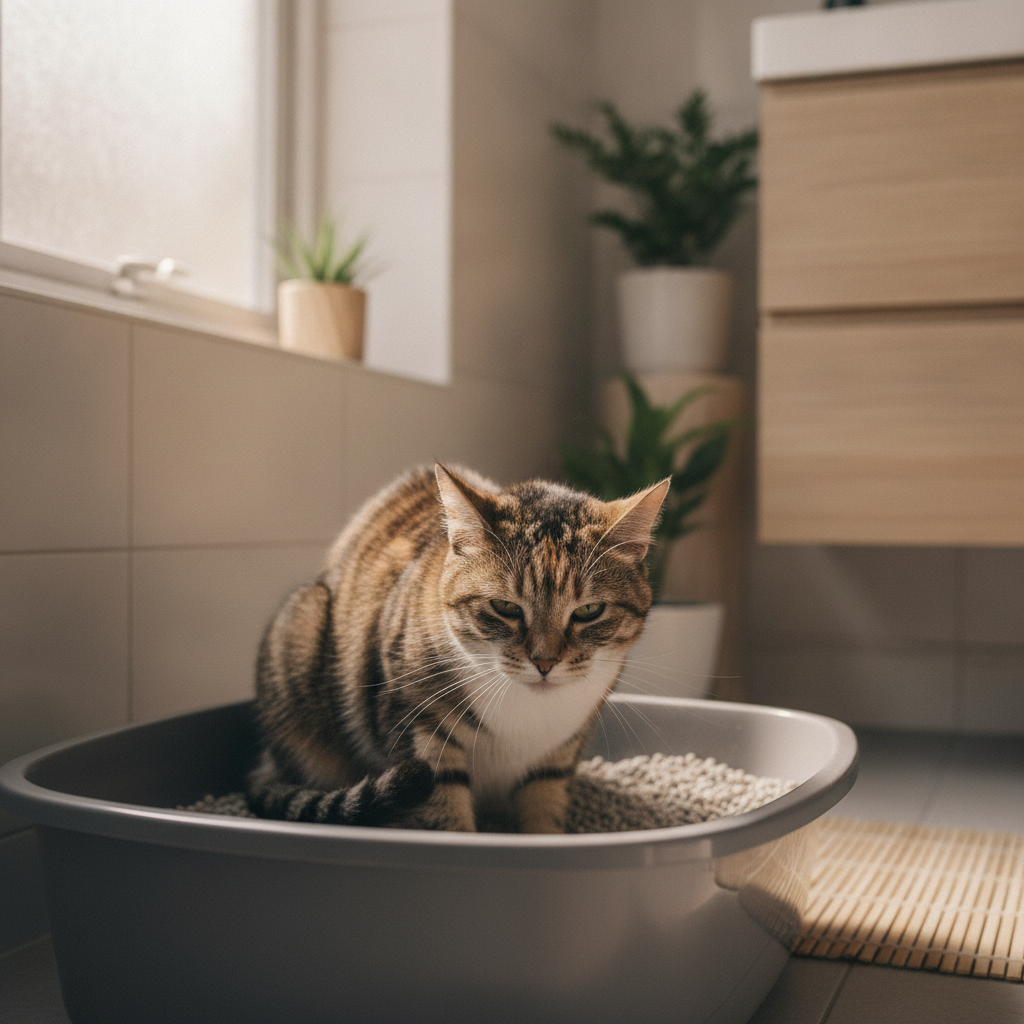
I realized then that 'lazy' is often just a mask for 'it hurts to move.' If your cat is peeing outside the box, don't assume it's a grudge. Use our Urinary Health Checker to see if it's a medical cry for help instead. Sometimes, what we call 'attitude' is actually agony.
Malaysian Stress: High-Density Issues
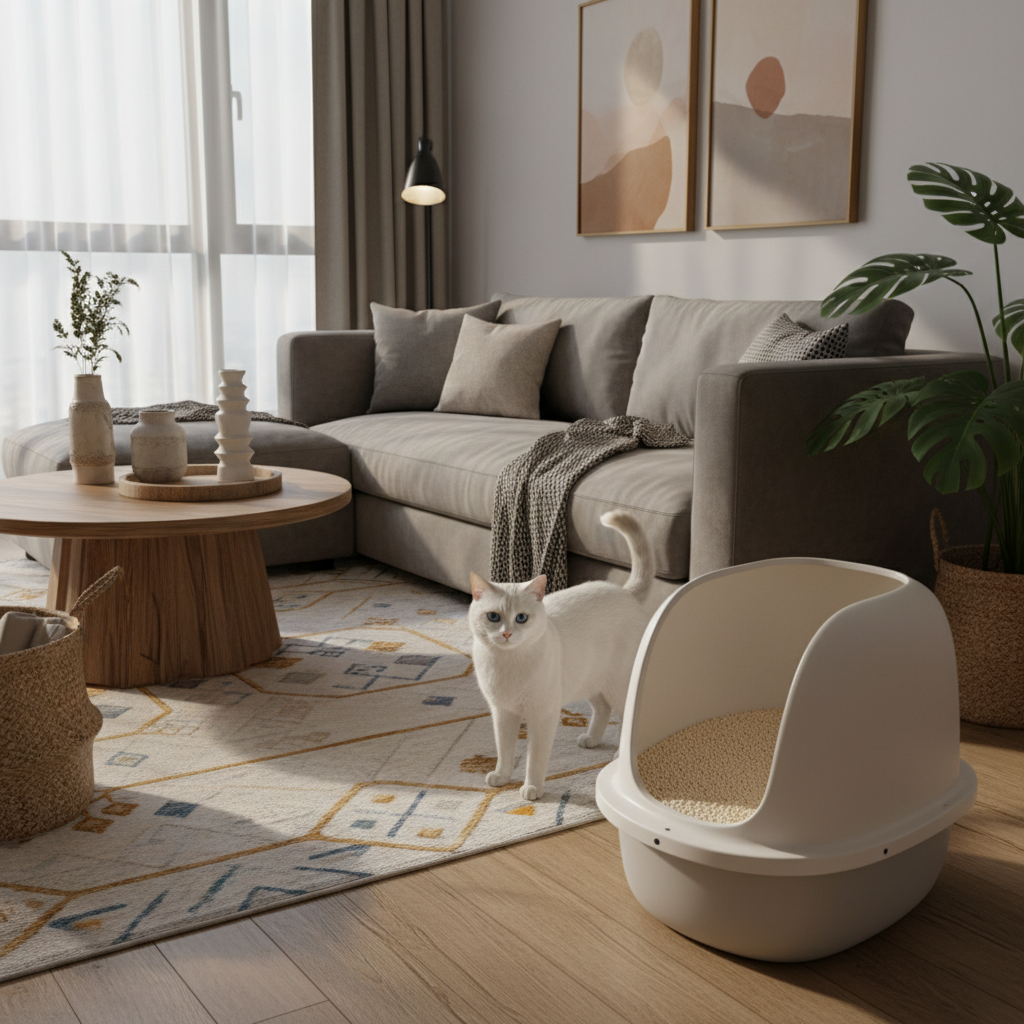
Living in a condo in KL or PJ? Your cat might be stressed by things you can't even hear. Cats have hearing three times more sensitive than ours. Constant drilling from your neighbor's renovation or the sharp ammonia sting from a neglected litter box can trigger severe anxiety.
Our cat Ping'An has an extremely sensitive nose—she sneezes at the slightest bit of dust. That's why we formulated our tofu litter to be ultra-low dust. For a cat like Lion, who is a complete clean freak, even a slightly smelly box can feel like a crisis. Keeping the environment predictable and the litter box spotless is the first step in treating 'depression' symptoms.
Healing a "depressed" cat isn't just about extra cuddles. It’s about being a detective and ruling out physical pain first. When the pain disappears and they regain control over their environment, that curious, life-filled cat will naturally return.
Your Monday Morning Action: Tonight, observe your cat's face while they are resting. Look at their ears. Are they pulled apart or flattened? If so, they might be in pain. Download a Feline Grimace Scale chart and do a quick 1-minute check. If they score 4 or higher, call your vet tomorrow morning.