Ear mites look like coffee grounds but smell like old pennies/iron.
The '28-Day Rule' is non-negotiable because current meds don't kill eggs.
Never use cotton swabs deep in the ear; it packs gunk against the eardrum.
In multi-cat homes, you must treat every animal simultaneously.
Your cat is scratching. Again. That frantic, thumping sound against the floor at 2 AM that tells you something is very wrong. You look inside their ear and see it: a dry, black, crumbly mess that looks exactly like used coffee grounds. But here is the thing—those aren't just dirt specks. They are living, breathing, eight-legged arachnids eating your cat’s tissue fluid. Gross? Absolutely.
We have seen so many Malaysian cat parents struggle with "recurring" ear mites. They buy a RM5 bottle of drops from a random Shopee seller, use it for three days, and then wonder why the scratching starts again two weeks later. The truth is, ear mites are clever, but their life cycle is predictable. If you don't play by the biological rules, you're just giving the mites a temporary vacation instead of an eviction notice.
The 'Coffee Grounds' Test
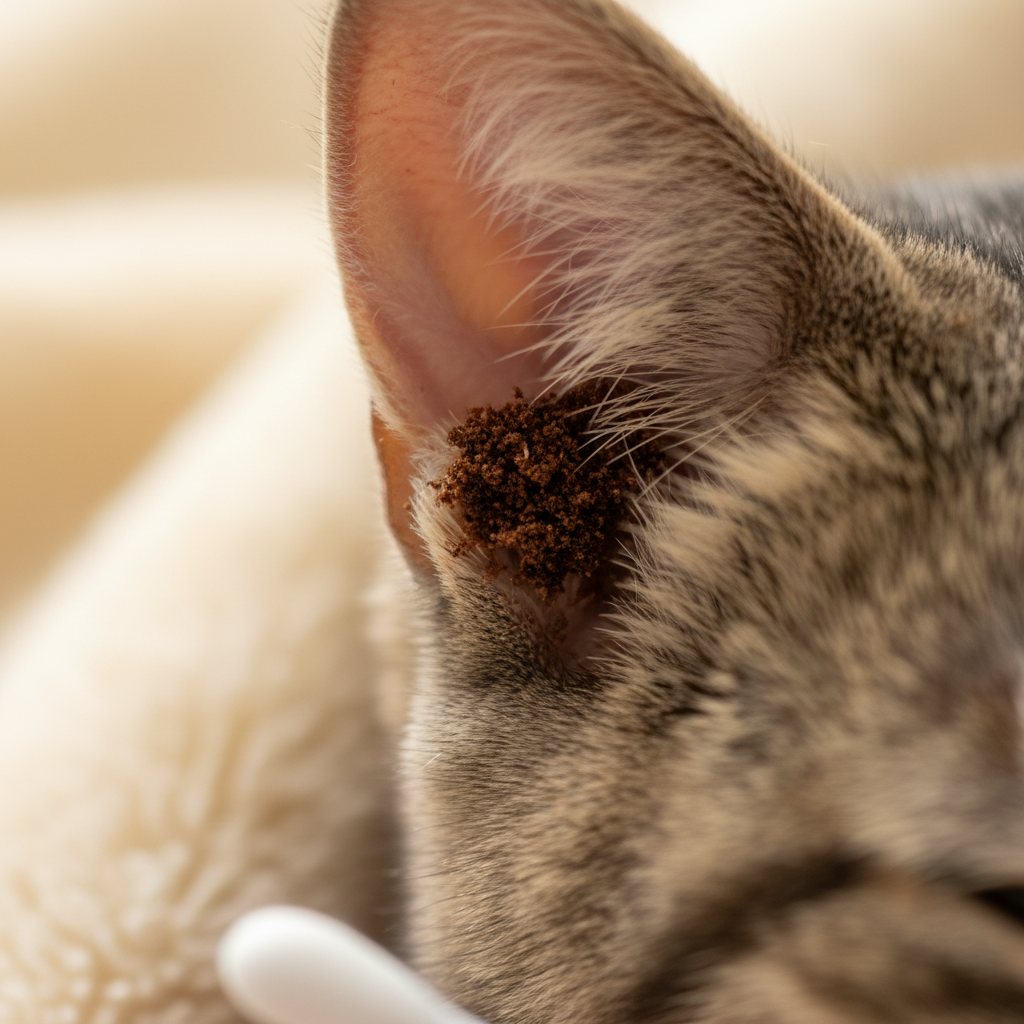
Not everything black in a cat's ear is a mite. Sometimes it is a yeast infection (Malassezia), and the treatment is completely different. Mite debris is typically dry and granular, whereas yeast smells like fermented bread or stinky cheese and feels greasy. If you are unsure, try the flashlight test: put some debris on black paper and shine a light. If you see tiny white dots moving, congratulations, you have a colony.
I’ve seen Tiger’s brother, Lion, get incredibly fussy when his ears are even slightly dirty. He is our resident clean freak, but even he couldn't groom out mites. If your cat is scratching to the point of causing an Aural Hematoma (where the ear flap swells up like a balloon), you've waited too long.
| Diagnostic Indicator | Ear Mites (Otodectes cynotis) | Yeast (Malassezia) | Bacterial Infection (Bacteria) |
|---|---|---|---|
| Typical Color | Dark brown to black | Yellow-brown, reddish-brown, peanut butter-like | Yellow, green, creamy |
| Texture Description | Dry, crumbly, granular | Greasy, moist, waxy | Purulent, viscous, watery |
| Visual Analogy | Coffee Grounds / Potting Soil | Peanut Butter / Melted Caramel | Condensed Milk / Pus |
| Odor Characteristic | Rusty (stale blood) or old earwax smell | Distinct fermented, moldy, or bread-like smell | Putrid, foul, fishy smell |
| Itchiness Level | Sudden, severe itching | Moderate to severe continuous itching | Pain often outweighs itchiness |
| Other Signs | Visible white moving specks under bright light | Oily, thickened ear flap skin | Red, swollen, hot, painful ear flap |
The Cotton Swab Disaster
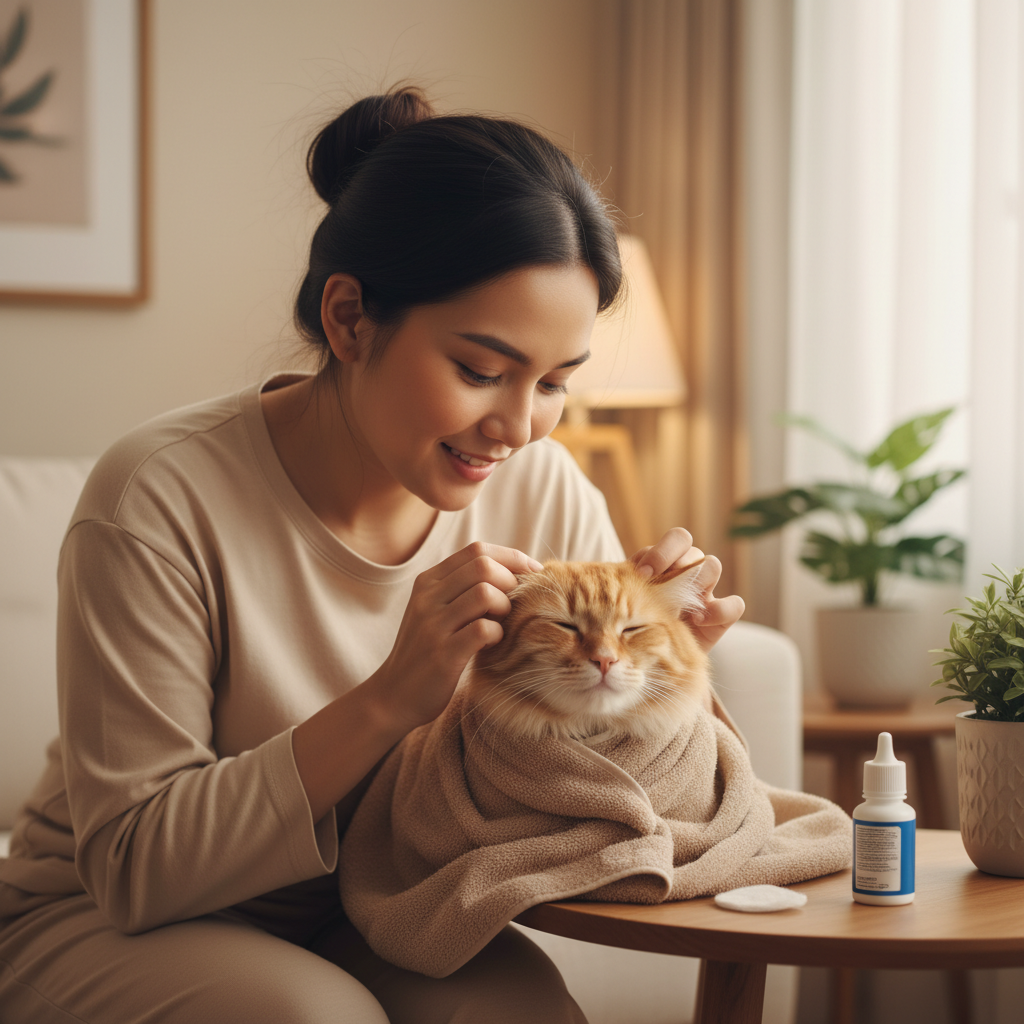
I’ll be honest—when I first started caring for cats, I thought I was being a hero by digging out every bit of black gunk with cotton swabs. I was so satisfied seeing the dirt come out. But I was wrong. Dead wrong. A cat's ear canal is 'L' shaped. Every time I pushed that swab in, I was actually packing 80% of the mites and debris deeper toward the eardrum, like stuffing gunpowder into a cannon.
One day, my cat yelped and started tilting her head. I’d caused a minor infection just by being 'helpful'. Now, I follow the Fill-Massage-Shake method. You fill the ear with a proper vet-grade cleanser, massage the base (you'll hear a 'squish' sound), and let the cat shake it out naturally. It’s messy, but it works without the trauma.
Why 'One and Done' Treatment Fails
Most people stop treatment the moment the ears look clean. Big mistake. According to the Companion Animal Parasite Council, the life cycle of a mite from egg to adult is about 18-21 days. Most topical drops only kill the living mites, not the eggs. If you stop at day 7, the eggs hatch on day 10, and by day 20, you have a brand new infestation.
The Golden Rule is 28 days. You need a treatment window that covers the entire life cycle plus a safety margin. In Malaysia’s humidity, these pests thrive. We recommend using a long-acting systemic spot-on like Fluralaner (Bravecto), which lasts for 12 weeks and breaks the cycle with one dose. It is much easier than fighting with your cat daily for a month.
The Multi-Pet Trap
If you have three cats and only one is scratching, you still have to treat all three. Asymptomatic carriers are real. One cat might have a high tolerance and show no symptoms while acting as a 'reservoir host', constantly reinfecting the others. Don't waste money treating them one by one—do the whole squad on the same day.
| Drug Type | Brand Name | Active Ingredient(s) | Dosing Frequency | Remarks |
|---|---|---|---|---|
| Systemic Spot-on (Recommended) | Revolution | Selamectin | Day 0 & Day 30 | High safety, covers fleas/heartworm. |
| Systemic Spot-on (Recommended) | Advocate | Moxidectin | Day 0 & Day 30 | Highly effective against mites, suitable for multi-pet homes. |
| Systemic Spot-on (Long-acting) | Bravecto | Fluralaner | Day 0 (single dose) | Effective for 12 weeks, completely breaks the life cycle. |
| Topical Ear Ointment | Oridermyl | Permethrin + Steroids | Once daily, for 10-21 days | Use with caution. Fast itch relief, strict dosage, contraindicated for perforated eardrum. |
| Ear Cleanser | Epi-Otic / CleanAural | Salicylic acid / Lactic acid | 2-3 times per week (during treatment) | Avoid ear cleaning 2 days before and after spot-on application. |
Shopee Beware: The RM10 Poison
I know it's tempting to buy those cheap, unbranded ear drops online. But check the ingredients. Many contain high concentrations of Permethrin. While safe for dogs, cats lack the liver enzyme (glucuronosyltransferase) to break it down. Using the wrong 'cheap' med can lead to tremors, seizures, and death. Always stick to vet-approved brands like Revolution or Advocate.
Ping'An is super sensitive to chemicals—she sneezes if we even use a dusty litter. That’s why we created Liger Tofu Cat Litter to be ultra-low dust. When your cat is already fighting an ear infection, the last thing they need is a dusty environment or toxic chemicals making them sicker.
Getting rid of ear mites isn't a weekend project; it's a month-long mission. But with the right long-acting spot-on and a proper 'Fill-Massage-Shake' cleaning routine, you can end the scratching for good. Stop digging, start treating the whole family, and be patient.
Your Monday Morning Action: Tonight, do the 'Flashlight Test'. Take a tiny bit of ear gunk, put it on a dark surface under a bright light, and wait 30 seconds. If you see movement, book a vet appointment or grab a systemic spot-on immediately.