Praziquantel is the only gold standard ingredient to kill tapeworms and liver flukes.
Malaysian heat (30°C) makes roundworm eggs infectious in just 11-14 days.
Indoor cats aren't safe; geckos (cicak) and cockroaches carry dangerous larvae.
Daily scooping is essential as eggs take about a week to become infectious.
It usually starts with a minor 'gross-out' moment. You're cuddling your cat, and you spot it: a tiny, white, wiggling 'rice grain' stuck to their fur near the tail. Welcome to the world of Malaysian cat ownership, where parasites are a year-round reality, not a seasonal guest.
Living in our high-humidity tropical climate means we're fighting a different battle than cat parents in cooler regions. Between the 32°C heat and our ubiquitous house guests—yes, I'm talking about the cicaks (geckos)—the risk levels are through the roof even for cats that never set a paw outside. If you've been relying on a 'monthly spot-on' without checking the label, your cat might be carrying more than just a purr.
Spaghetti vs. Rice Grains: What are you looking at?

In clinical practice, we see two main 'celebrities'. First is the Tapeworm. Those wiggling rice grains are actually segments (proglottids) filled with eggs. If you see them, your cat almost certainly has fleas, as fleas are the intermediate hosts. Second is the Roundworm, which looks exactly like a strand of spaghetti or mee hoon in vomit or stool.
But the invisible ones are the scariest. Hookworms are like microscopic vampires, sucking blood from the gut lining. If your cat has pale gums or dark, tarry stools, it's an emergency. You can use our Flea & Worm Risk Checker to see where your cat stands.
Tapeworms: Look like moving rice grains or dried sesame seeds.
Roundworms: Look like white/cream spaghetti, 3-15cm long.
Hookworms: Invisible to the eye, but cause severe anemia.
The Heat Factor: Why Malaysia is Different
Research shows that in our average daily temperature of 30°C, Toxocara larvae develop significantly faster, becoming infectious in just 11 to 14 days. In colder countries, this takes weeks. This is why a 'relaxed' deworming schedule just doesn't work here.
Parasite Type | Appearance/Visual Clues | Key Symptoms/Risks | Transmission/Intermediate Hosts |
|---|---|---|---|
Tapeworms (Dipylidium) | Moving 'rice grains' or dried sesame seeds near anus/on fur | Itching around anus ('scooting'), weight loss, increased appetite | Fleas (must be ingested) |
Roundworms (Toxocara) | White/cream 'spaghetti' (3-15cm) in vomit or stool | Pot-bellied appearance (kittens), dull coat, vomiting, diarrhea | Ingestion of eggs from environment, rodents, mother's milk |
Hookworms (Ancylostoma) | Invisible to the naked eye (microscopic) | Severe anemia (pale gums), dark tarry stools (melena), weight loss | Skin penetration from contaminated soil, ingestion |
Liver Fluke (Platynosomum) | Invisible to the naked eye (microscopic) | Jaundice (yellow skin/gums), weight loss, vomiting, liver dysfunction | Geckos/lizards (ingestion by cat) |
Giardia/Coccidia (Protozoa) | Invisible to the naked eye (microscopic) | 'Jelly-like' or bloody diarrhea with foul odor | Contaminated water/feces (ingestion) |
Stomach Worm (Physaloptera) | Invisible to the naked eye (microscopic) | Chronic intermittent vomiting, weight loss | Cockroaches, beetles, crickets (ingestion by cat) |
The Day I Realized My 'All-in-One' Wasn't Enough
I'll be honest—I used to be smug about deworming. I used a popular spot-on monthly and assumed my indoor cats were fortresses. Then I saw a tapeworm on Lucky. I was confused. I'd been paying for 'complete' protection!
That's when I learned the hard way: many popular spot-ons (like Advocate or basic Revolution) do not contain Praziquantel, the only ingredient that effectively kills tapeworms. If your cat eats a stray flea or a lizard, those drops won't save them from the 'rice grains'. Now, I'm obsessive about reading labels and following a strict Deworming Schedule. Don't make my mistake; 'external' protection often misses the internal giants.
Ingredient Name | Classification | Target Parasite(s) | Mechanism of Action | Key Notes |
|---|---|---|---|---|
Praziquantel | Isoquinoline | Cestodes (Tapeworms), Trematodes (Liver Flukes) | Increases cellular calcium permeability, leading to muscle paralysis and vacuolization of the tegument, ultimately disintegrating the worm. | The 'gold standard' for killing tapeworms and liver flukes. Essential for complete coverage. |
Pyrantel | Tetrahydropyrimidine | Nematodes (Roundworms, Hookworms) | Cholinergic agonist, causing spastic paralysis of nematodes, leading to their expulsion. | Ineffective against tapeworms. Often part of combination drugs. |
Eprinomectin | Macrolide Lactone | Nematodes, Lungworms | Binds to glutamate-gated chloride channels, causing paralysis and death of parasites. | Broad-spectrum, good topical absorption. |
Moxidectin | Macrolide Lactone | Nematodes, Heartworms, Mites | Similar mechanism to Eprinomectin, lipophilic nature creates a tissue reservoir for sustained protection. | Ineffective against tapeworms. Provides month-long protection. |
Esafoxolaner | Isoxazoline | Fleas, Ticks, Mites | Blocks insect GABA receptors, causing hyperexcitation and death. | New generation external antiparasitic, fast-acting, effective against resistant fleas. |
Product Name | Form | Kills Fleas? | Kills Ticks? | Kills Round/Hookworms? | Kills Tapeworms? | Expert Recommended Scenario |
|---|---|---|---|---|---|---|
Drontal Cat | Oral Tablet | No | No | Strong | Strong | "Intestinal clean-out" for internal worms. Best combined with external parasite treatment for comprehensive protection. |
Advocate (Spot-on) | Spot-on | Strong | No | Strong | No | Ideal for indoor cats not exposed to fleas/ticks, prevents heartworms and ear mites. Requires additional Praziquantel if tapeworms are present. |
Broadline (Spot-on) | Spot-on | Strong | Strong | Strong | Strong | Recommended for hunting/outdoor cats. Contains Praziquantel and is effective against fipronil-resistant flea strains. Covers liver flukes. |
NexGard Combo (Spot-on) | Spot-on | Strong | Strong | Strong | Strong | Premium all-in-one protection, suitable for cats difficult to medicate orally. New ingredients effective against resistant fleas, comprehensive parasite coverage. |
Revolution (Spot-on) | Spot-on | Moderate | No | Moderate | No | Good for kittens, high safety profile. Narrower spectrum; does not kill tapeworms or ticks. |
Revolution Plus (Spot-on) | Spot-on | Strong | Strong | Strong | No | Upgraded version for outdoor cats, adds tick protection. Still does not kill adult tapeworms. |
The 'Cicak' Threat: Why Indoor Cats Aren't Safe
In Malaysia, we have a unique problem: Platynosomum fastosum, or the Liver Fluke. Local myths say cats get thin and jaundiced from eating lizards. Science agrees. Surveys in the Klang Valley show significant infection rates in both stray and indoor cats who like to hunt. Since we can't 'gecko-proof' a Malaysian home, deworming with Praziquantel is non-negotiable.
Your First Line of Defense: The Litter Box
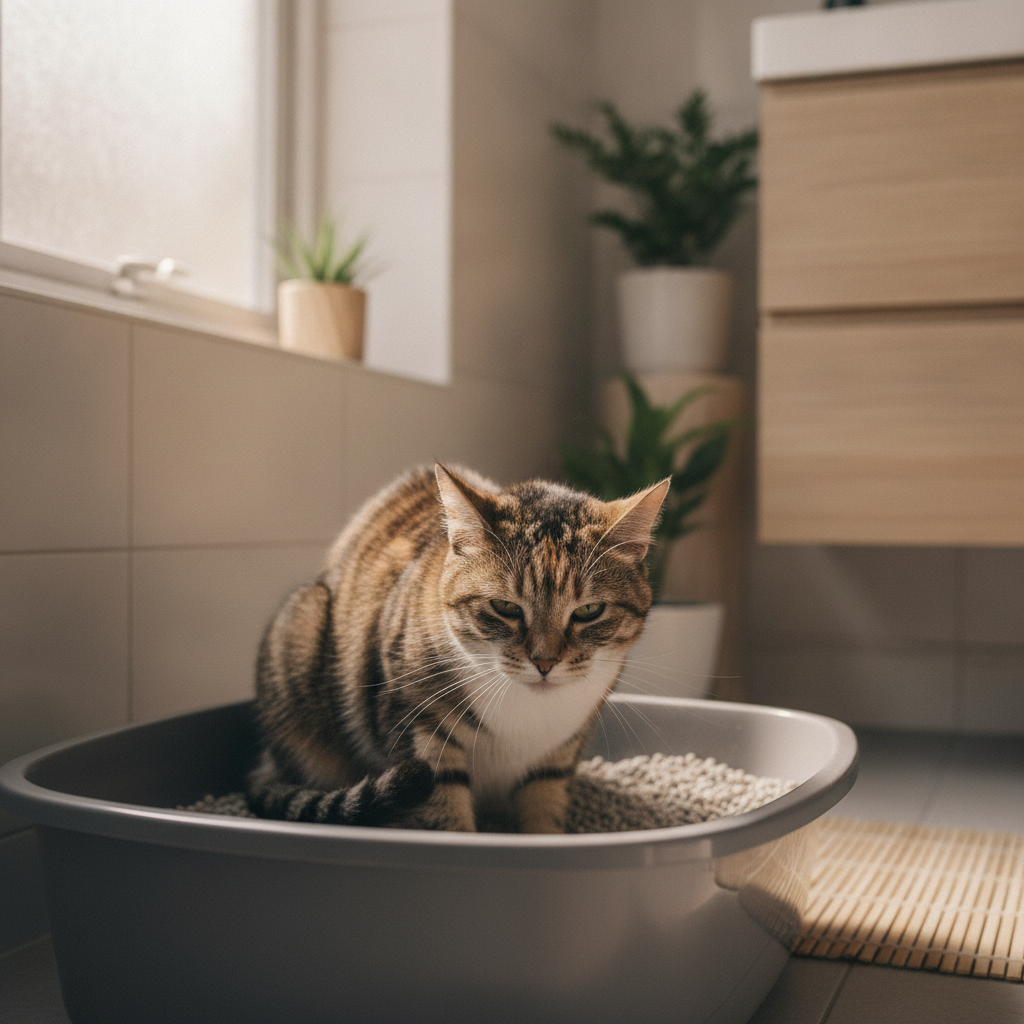
Parasite control isn't just about drugs; it's about hygiene. Newly passed roundworm eggs aren't infectious immediately—they need about a week in the environment to mature. This means if you scoop daily, you break the cycle.
We designed Liger Tofu Cat Litter with a natural milk fragrance to make scooping less of a chore, but also because its light color helps you spot abnormalities. If you see blood or weird 'noodles' in the poop, you'll know immediately. Plus, it's low-dust, which is great because cats with heavy worm loads often have weakened immune systems. You can check if your cat's bathroom habits are normal with our Poop Frequency Checker.
Living in Malaysia means we have to be smarter than the parasites. They thrive in our heat, but they can't survive a vigilant cat parent armed with the right knowledge and a clean litter box. Remember, 'prevention' isn't just a pill; it's a lifestyle of observation.
Your Monday Morning Action: Flip your deworming box over and check the ingredients list. Does it contain Praziquantel? If not, and you've seen 'rice grains' or your cat is a cicak-hunter, call your vet tomorrow to get the right coverage.