Scratching is a physiological 'restart' program after sleep, not just claw maintenance.
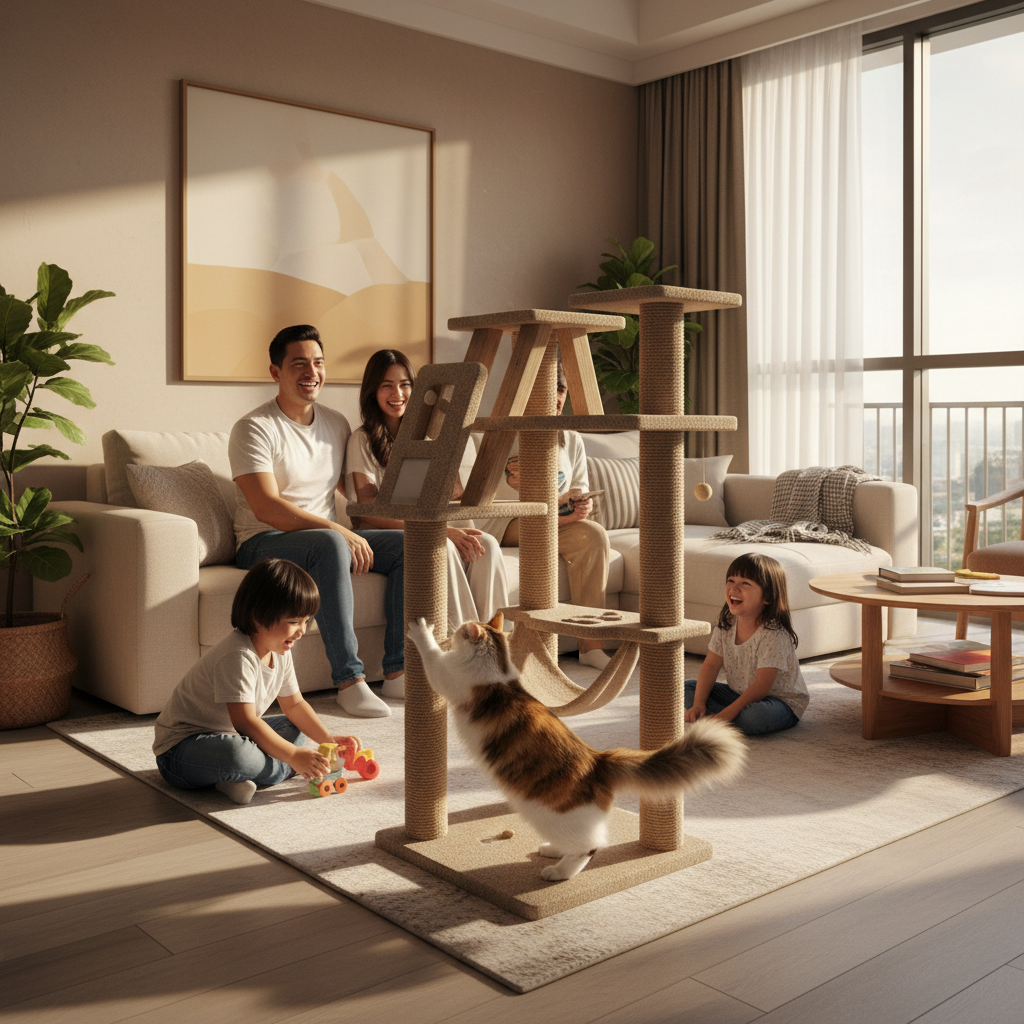
Vertical posts must be 80-90cm tall to allow full spinal decompression.
Stability is non-negotiable; a wobbly post can create a long-term fear response.
The 'No-Yes' rule: block the sofa (No) while providing a superior scratcher right next to it (Yes).
Your expensive sofa is dying. You see the threads hanging like battle scars, and your cat is looking at you with that blank, 'I’ll do it again' stare. It’s frustrating, right? But here is the thing: your cat isn't trying to be a jerk. To them, that sofa arm is the perfect gym equipment.
Scratching is actually a physiological necessity. Research shows that house cats sleep for 12-16 hours a day, and scratching serves as a 'restart' program immediately after they wake up. It’s like how we crave a big stretch after a long nap. It wakes up their muscles, decompresses their spine, and lets the world know they're back in business.
The 'Onion' Mechanism: Why Your Cat Needs to Shred
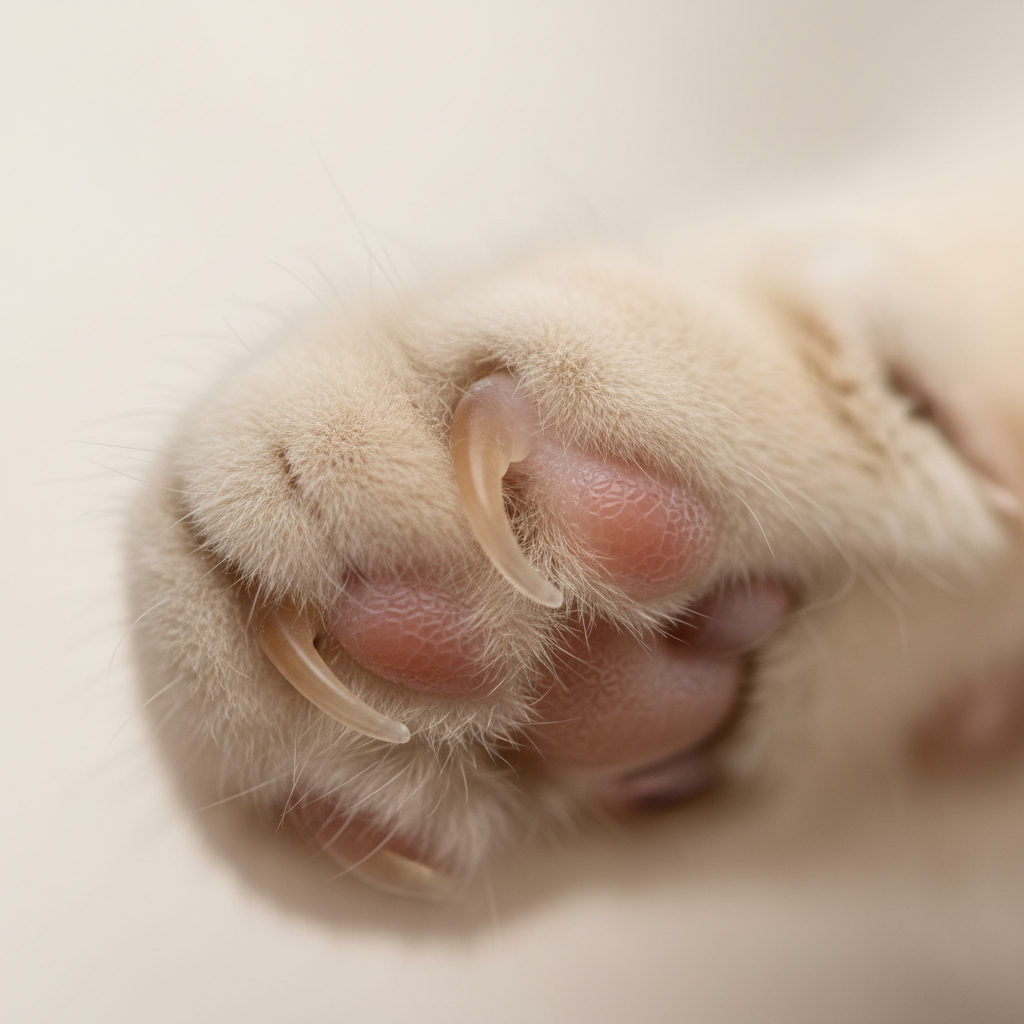
Unlike human nails that grow from the base, cat claws grow in layers, like an onion. The outer layer (the sheath) gets dry and dull over time. If they don't peel it off, it can become painful or even lead to infections. When you find those little crescent-shaped husks near the scratcher, that's a sign of a healthy cat at work.
But it's not just about maintenance. When a cat scratches, they use special interdigital glands between their paw pads to leave behind semiochemicals (pheromones). It's their way of leaving a 'Post-it note' for other cats—or themselves—to feel secure in their territory. If your cat feels anxious (maybe because of a move or a new guest), you'll notice the scratching increases. They're basically trying to spray 'home scent' everywhere to calm down.
The Gold Standards of a Perfect Scratcher
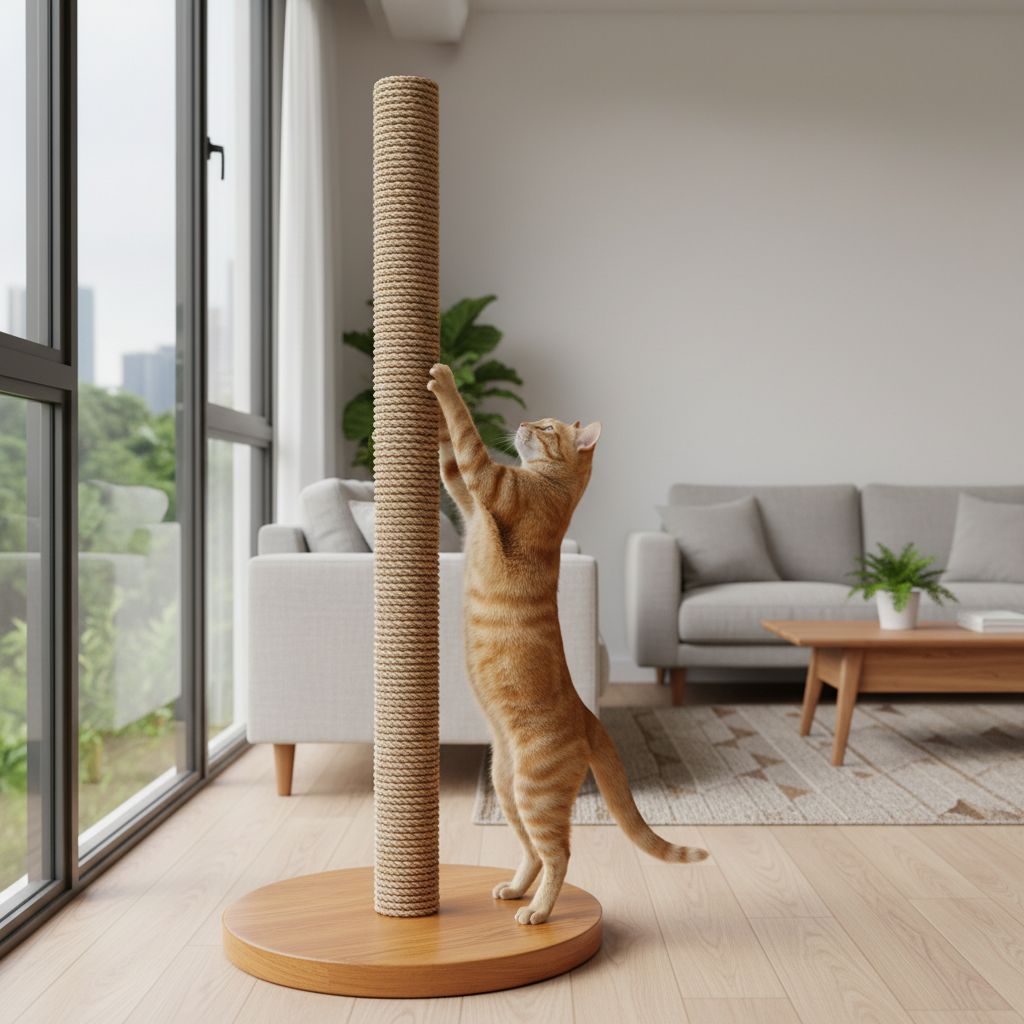
I used to buy those cheap RM15 scratchers from the local pet shop, wondering why my cats ignored them. It turns out, size and stability are everything. If it wobbles, it's garbage. A cat puts a lot of torque into a scratch; if the post shakes, they feel vulnerable and will go back to the rock-solid sofa instead.
Height is Queen: For an adult cat, a vertical post should be at least 80-90 cm tall. Anything shorter than 60cm won't allow a full body stretch.
Texture Matters: Woven sisal is usually better than sisal rope. Rope has gaps that create a 'washboard' effect, which can interrupt the scratching flow.
Stability: The base should be wide and heavy. If you can tip it over with one finger, it's not safe for a 5kg cat.
| Material Type | Recommendation | Physical Properties | Behavioral Impact |
|---|---|---|---|
| Woven Sisal | Excellent | Cross-hatched texture, dense, excellent resistance. Claws can embed smoothly, minimal debris. | Closest to natural tree bark, effective for removing old claw sheaths, highly preferred by most cats. |
| Sisal Rope | Good (with flaws) | Common but flawed. Gaps create a "washboard effect," interrupting scratching. Ropes can break and fray. | Usable but less satisfying than woven sisal. Broken strands can be ingested by cats. |
| Cardboard | Excellent | Soft texture, easily shredded, produces loud tearing sound (auditory feedback). | Excellent stress-relief tool, suitable for horizontal scratching. Wears out quickly, requires frequent replacement, produces debris. |
| Loop Pile Carpet | Avoid (X) | Loop structure easily snags cat claws, preventing retraction. | Severe warning. Pain from snagged claws makes cats dislike scratchers. Can confuse cats between scratcher and home carpet, increasing correction difficulty. |
| Natural Wood/Log | Excellent | Most primitive and natural tactile feel. | Excellent, but requires attention to insect control and splinters. Suitable for cats with outdoor experience. |
The Time I Traumatized Lucky with a Pink Castle
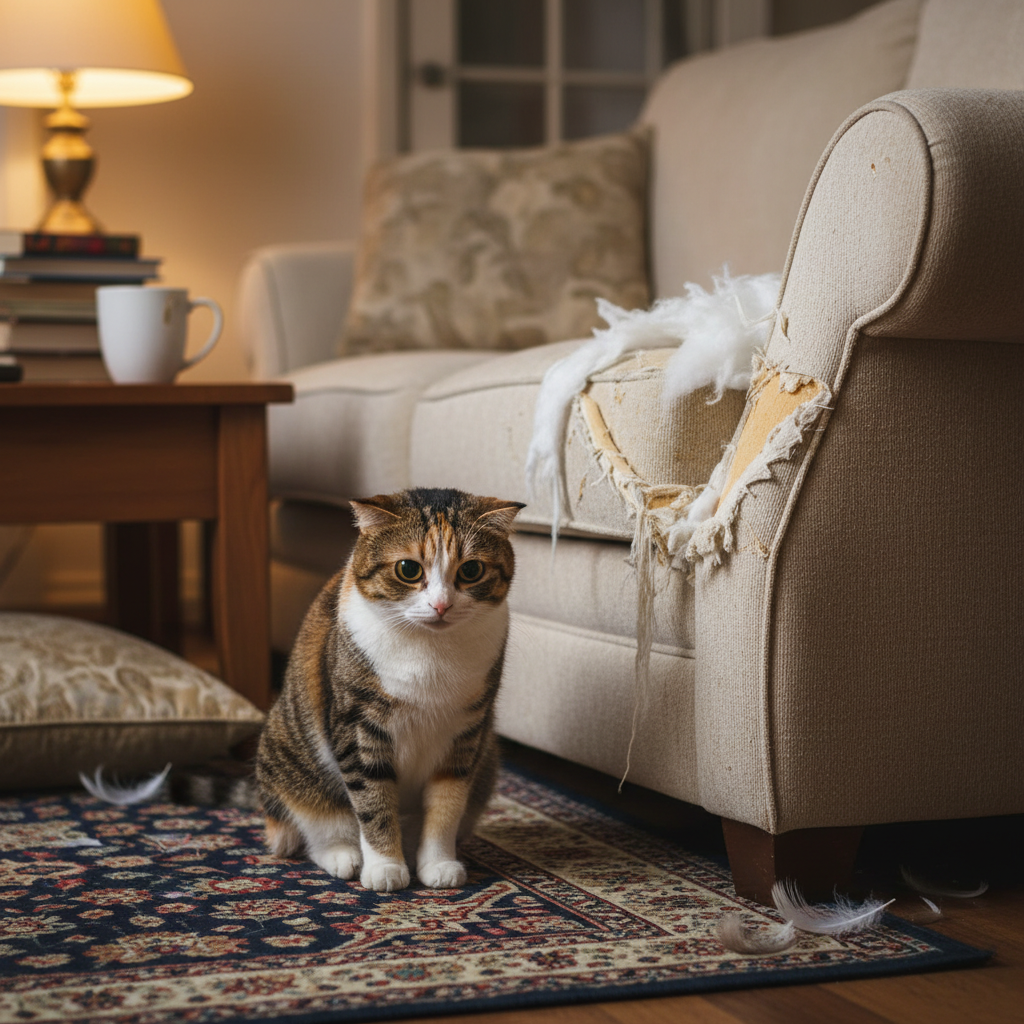
I’ll be honest—I once fell for a 'cute' aesthetic over engineering. I bought this adorable pink castle scratcher for Lucky. It looked great on Instagram, but it was light as a feather. The first time Lucky tried to use it, the whole thing toppled over on him. He wasn't hurt, but the psychological damage was done.
For the next three months, Lucky wouldn't touch *any* scratcher. He associated them with 'traps' and became a full-time sofa terrorist. I had to rebuild his trust by using the 3-second rule. When I finally got a heavy, floor-to-ceiling post, I had to give him positive reinforcement within 3 seconds of him sniffing it to help him overcome that fear. Lesson learned: 'Cute' doesn't protect your furniture; 'Heavy' does.
Myth: Hide the Scratcher in the Corner
Most people put the scratcher in a guest room or behind the TV because it's 'ugly.' This is a recipe for failure. Cats scratch to mark their presence in social areas. If you put the scratcher where nobody goes, the cat will just use your sofa in the living room because that's where the 'action' is.
Place the scratcher right next to the sofa they love. Once they consistently use the post, you can slowly move it—inch by inch—to a more convenient spot. Also, if you’re using DIY deterrents, avoid citrus. Citrus fruits contain D-limonene and Linalool, which are toxic to cats because their livers can't process them. Stick to double-sided tape or rosemary spray instead.
At the end of the day, your cat isn't trying to destroy your home—they're just following a million years of instinct. By giving them the right tools and placing them in the right spots, you stop being a referee and start being a teammate. Happy cats lead to healthy sofas.
Your Monday Morning Action: Measure your current scratching post. If it’s under 60cm, go online today and look for one that is at least 80cm. Your cat’s spine (and your sofa) will thank you.