Cat tail wagging often signals conflict or annoyance, not happiness like a dog.
The 'Question Mark' tail is the friendliest signal a cat can give.
Thumping tails are a 'final warning' before an attack happens.
Litter box behavior, like a tucked tail when leaving, can signal health or litter quality issues.
Your cat is lying on your lap. Purring. Suddenly, their tail starts swishing back and forth like a clock pendulum. You think, "Aw, they're so happy!" so you pet them again.
Chomp. Your hand is now a chew toy. If this sounds familiar, don't worry—you're just a victim of "dog logic." We've been conditioned to think wagging equals winning, but in the cat world, that tail is a high-sensitivity antenna connected directly to their emotional brain.
The Great Misconception: Cats Are Not Small Dogs
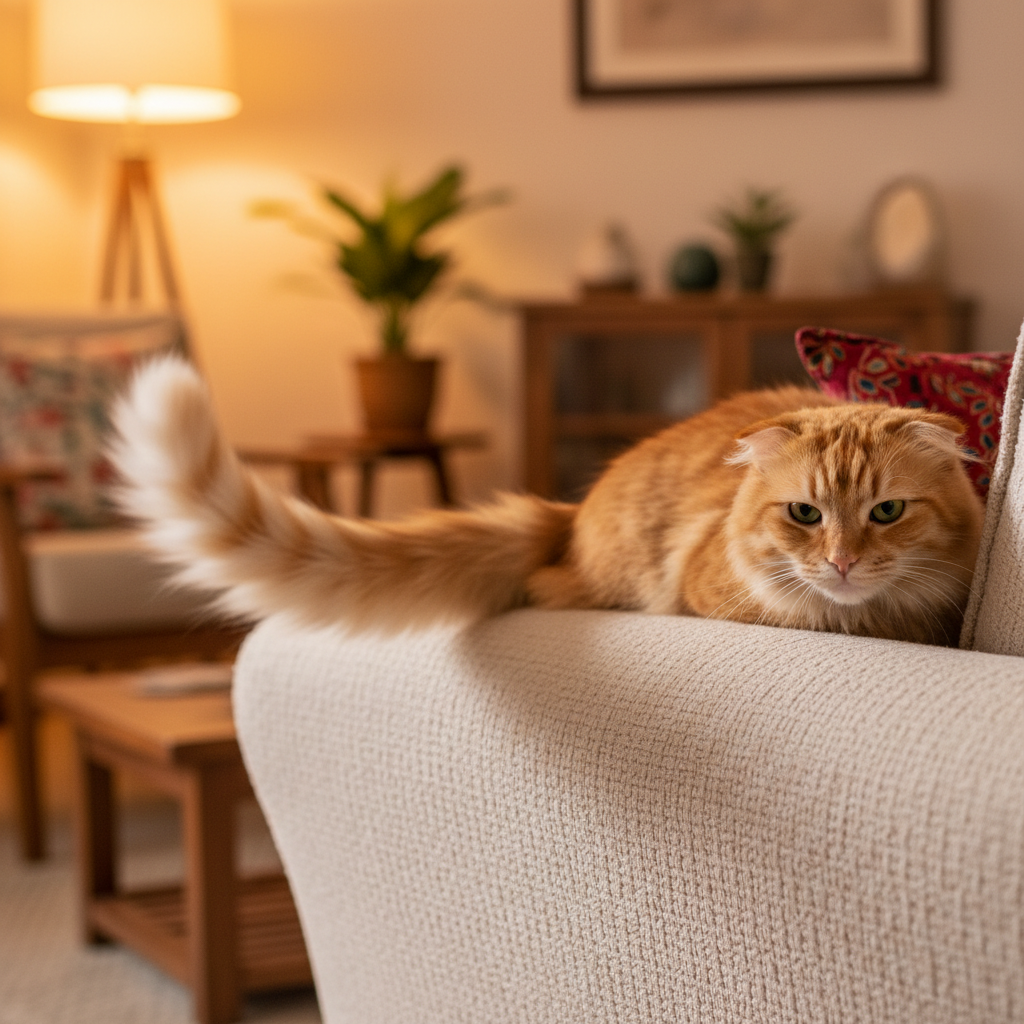
This is the first rule of cat ownership. While a dog's logic is "Hey! I'm excited! Play with me!", a cat's swish usually means "I'm annoyed" or "I'm conflicted." Scientists call this psychological conflict.
Imagine a war in their brain. One side says, "This lap is warm and I like the scratches," but the other side screams, "I've been held too long, I'm trapped!" If you ignore that swishing tail, it escalates into petting-induced aggression. Basically, that tail is a ticking time bomb. You can even check your cat's trust level to see if you're reading their vibes correctly.
The Tail Dictionary: 4 Signs You Need to Know

To understand your cat, you need to look at the tail like a microscope. Here are the most common movements:
The Question Mark (Straight Up + Hook): This is the "Affiliative Signal." It means "Hi! Want to be friends?" It's the friendliest thing a cat can do.
The Quiver: High-speed vibrating. If they're facing you during mealtime, it's pure joy (a dopamine hit!). If they're backing into a curtain with their butt, they're likely spraying to mark territory.
The Puffed Bottle Brush: This isn't just anger; it's defensive fear. They're trying to look bigger to scare off a threat.
Thumping the Floor: A heavy "thump, thump, thump." This is the final warning before a strike.
| Signal Light | Tail State | Human Translation | Suggested Action |
|---|---|---|---|
| Green (Safe) | Upright + Question Mark | "Hi! I'm in a good mood." | Best time for interaction; you can pet or play. |
| Green (Safe) | Gentle, slight wag | "I'm interested in this thing." | Continue current interaction; they are engaged. |
| Yellow (Caution) | Slow left-right swish | "I'm thinking/a bit annoyed." | Stop action. If petting, stop; if playing, let them catch the prey. |
| Yellow (Caution) | Low + half-tucked | "I'm not sure, a bit tense." | Give it space; do not force closeness or eye contact. |
| Red (DANGER) | Hard thumping on ground | "I'm about to explode!" | Retreat immediately. Do not try to comfort; that's adding fuel to the fire. |
| Red (DANGER) | Puffed (Bottle Brush) | "Aggression due to fear." | Eliminate environmental threats; maintain distance. |
The Time I Misread Tiger
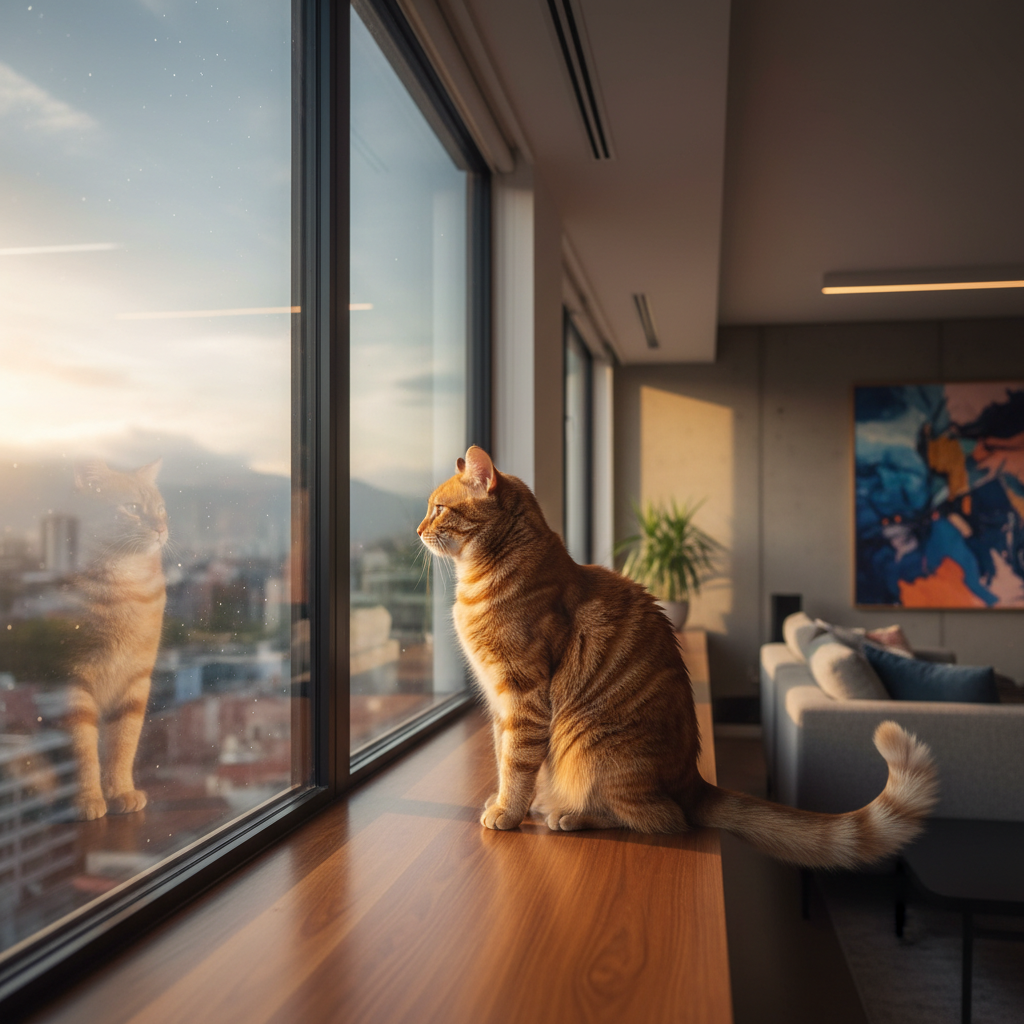
I'll be honest—even though I live and breathe cat behavior, I've made mistakes. Last year, Tiger was lying near the window, and his tail was doing a slow, gentle swish. I thought he was just relaxed, watching birds. I went to pick him up, and he let out a low growl I'd never heard before.
I felt so guilty. It turned out he wasn't relaxed; he was hyper-focused on a stray cat outside and was actually in a high state of arousal. By jumping in, I almost caused a "redirected aggression" bite. It taught me that context is everything. Always look at the "Full Set": Tail + Ears + Eyes. If you see "Airplane Ears" (pinned back) combined with a wagging tail, it's not a hairball issue—it's a 100% attack warning.
Tail and the Litter Box: The Ultimate Quality Test
One place you should always watch the tail is the litter box. It’s where a cat is most vulnerable. If they enter the box with a twitchy, fast-swishing tail, or run out with their tail tucked between their legs like they're escaping a crime scene, something is wrong. Usually, it's the dust stinging their nose or the sand feeling like sharp gravel on their paws.
This is why we focus so much on the texture of our Liger Tofu Cat Litter. When Ping'An (who has a super sensitive nose) walks into her box, she usually sports a confident "Question Mark" tail. No sneezing, no frantic running. A confident tail means a comfortable cat. If you're struggling with your current setup, maybe it's time to check a litter box size calculator to ensure they have enough space to be happy.
I know, I sound like a tail-obsessed creep. But honestly, once you start "reading" the tail, your relationship with your cat changes. You stop getting scratched, and they stop feeling misunderstood. It’s the best way to show you’re a parent who actually listens.
Your Monday Morning Action: Watch your cat use the litter box tomorrow morning. Don't stare (that's weird), but notice their tail. Is it upright and confident, or is it swishing fast and low? If it's the latter, your cat might be trying to tell you they hate their current litter.