
- The traditional 'multiply by 7' rule for cat years is inaccurate; modern veterinary science uses a 15/9/+4 formula.
- A cat's lifespan is dramatically influenced by lifestyle (indoor vs. outdoor) and spay/neuter status, not just genetics.
- Malaysian cats face unique challenges like year-round parasites and heat stress, requiring specific care strategies.
- Proactive, age-appropriate veterinary care, including regular health screenings, is crucial for extending your cat's healthy years.
Ever looked at your furry friend curled up on the sofa and wondered, 'How old are you, really?' For generations, cat parents have muttered the old wives' tale: multiply by seven. But if a two-year-old cat is 14 in human years, why does it still act like a playful, energetic young adult, not a teenager? Because that old rule of thumb for converting cat years to human years is simply wrong.
Cats have a unique developmental timeline, rocketing through kittenhood at an astonishing pace before their aging process settles into a more predictable rhythm. A more accurate model, embraced by leading veterinary experts, tells us a cat's first year is equivalent to about 15 human years, their second adds another nine, and each subsequent year approximately four. This isn't just trivia; understanding your cat's true age and corresponding life stage is the cornerstone of providing the right care at the right time.
For us Malaysian cat parents, this knowledge is even more critical. Our beautiful tropical climate, while a paradise for us, presents unique challenges for our feline companions, from persistent parasite threats to the dangers of heat stress. This guide will take you beyond simple age conversion, offering a deep dive into feline life stages, the factors that truly influence longevity, and a comprehensive care action plan tailored to our local environment. Prepare to unlock the secrets to a longer, happier, and healthier life for your cherished cat.
How to Calculate Cat Years to Human Years

While the concept of 'cat years' helps us relate to our felines, the old 'multiply by seven' myth is incredibly misleading. Think about it: a one-year-old cat is sexually mature and capable of reproduction; a seven-year-old human is still very much a child! Modern veterinary science offers a much more accurate framework for understanding a cat's developmental journey.
The Modern Formula (Not the 7-Year Myth)
The widely accepted modern formula for estimating a cat's age in human years is a simple yet effective guide that accounts for their rapid early development. Endorsed by organizations like the American Animal Hospital Association (AAHA) and the American Association of Feline Practitioners (AAFP), this formula breaks down as:
- The first year of a cat's life equates to approximately **15 human years**. This covers their swift growth from kitten to adolescent.
- The second year adds another **9 human years**, making a two-year-old cat comparable to a 24-year-old human (15 + 9).
- Each subsequent year after that is counted as roughly **4 human years**, reflecting a more gradual aging process throughout adulthood.
This AAHA/AAFP Feline Life Stage Guidelines consensus model helps cat parents and veterinarians better understand where a cat is in its life, informing everything from nutrition to preventative care strategies.
Why Cats Age Faster in Their First Two Years
Cats don't age like humans; their developmental curve is much steeper at the beginning. In their first year, kittens undergo an astonishing transformation: they're born blind and helpless, rapidly grow teeth, learn to walk, run, hunt, and achieve sexual maturity. This biological imperative for quick development, historically vital for survival in the wild, means their organs, skeletal structure, and cognitive abilities mature at an accelerated rate compared to ours.
By the end of their first year, a cat is essentially a young adult, fully capable of living independently. The second year sees them solidify these capabilities, reaching their full physical and behavioral prime. After this initial burst, their aging slows down, becoming more linear, which is why each subsequent year adds a smaller increment to their 'human age' equivalent. It's a fascinating biological reality that explains why that tiny fluffball in your arms quickly becomes a sleek, independent companion.
Cat Age to Human Age Chart (Complete Table)
To make sense of your cat's age in human terms, here's a comprehensive conversion chart. Remember, these are estimates, but they provide a much better picture than the old 'times seven' rule. Use this chart to quickly find your cat's approximate human age, and then delve deeper into what that means for their care.
| Cat Age | Human Age Equivalent | Life Stage (2010 Model) |
|---|---|---|
| 1 Month | ~6 Months | Kitten |
| 2 Months | ~1 Year | Kitten |
| 3 Months | ~2.5 Years | Kitten |
| 4 Months | ~4 Years | Kitten |
| 5 Months | ~8 Years | Kitten |
| 6 Months | ~10 Years | Kitten |
| 1 Year | 15 Years | Junior |
| 2 Years | 24 Years | Junior |
| 3 Years | 28 Years | Adult |
| 4 Years | 32 Years | Adult |
| 5 Years | 36 Years | Adult |
| 6 Years | 40 Years | Adult |
| 7 Years | 44 Years | Mature |
| 8 Years | 48 Years | Mature |
| 9 Years | 52 Years | Mature |
| 10 Years | 56 Years | Mature |
| 11 Years | 60 Years | Senior |
| 12 Years | 64 Years | Senior |
| 13 Years | 68 Years | Senior |
| 14 Years | 72 Years | Senior |
| 15 Years | 76 Years | Geriatric |
| 16 Years | 80 Years | Geriatric |
| 17 Years | 84 Years | Geriatric |
| 18 Years | 88 Years | Geriatric |
| 19 Years | 92 Years | Geriatric |
| 20 Years | 96 Years | Geriatric |
Remember, you can always get a precise calculation and tailored advice using our Cat Age Calculator tool.
Cat Life Stages Explained ⭐
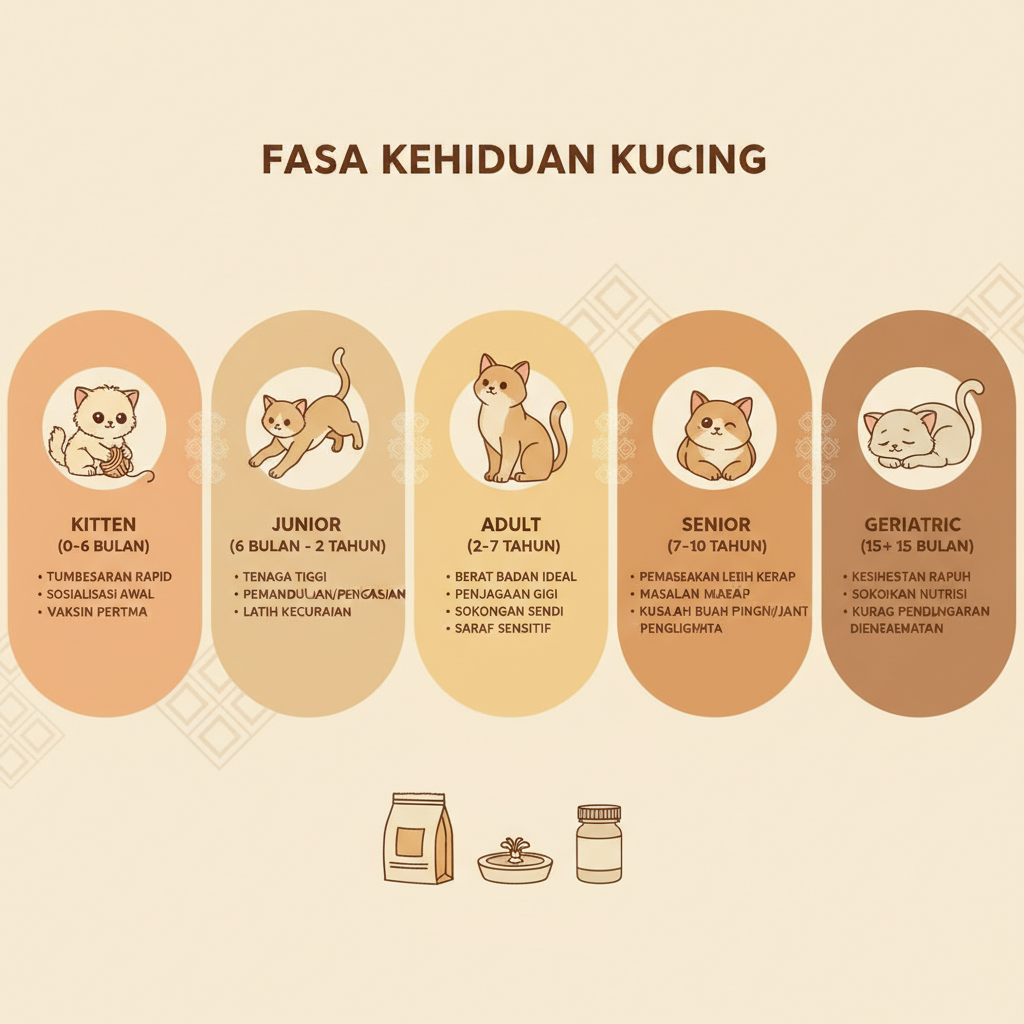
While the veterinary community has streamlined its official guidelines to a four-stage model (Kitten, Young Adult, Mature Adult, Senior) in the 2021 AAHA/AAFP feline life stage classifications, understanding the more granular six-stage model can give cat parents a richer picture of their cat's changing needs. For the sake of deep understanding, we'll break down the traditional six life stages, which offer a detailed perspective on developmental milestones and specific care requirements.
Kitten (0-6 Months) = Human Baby to Child
This is a period of explosive growth and development. Newborns are entirely dependent, but quickly open their eyes, learn to walk, explore, and play. Socialization during this time is crucial for their future temperament. Key priorities include establishing a vaccination schedule, regular deworming, and introducing them to various sights, sounds, and gentle handling. By six months, they are often spry, curious, and full of energy.
Junior (7 Months - 2 Years) = Human Teenager
Much like human teenagers, junior cats are full of boundless energy, curiosity, and can sometimes push boundaries. They reach sexual maturity during this phase, making spaying or neutering a critical health decision to prevent unwanted litters and reduce behavioral issues. They still need plenty of mental and physical stimulation, and a consistent routine helps them feel secure. This is when their personality truly blossoms.
Adult (3-6 Years) = Human 28-40
These are often considered a cat's prime years. They are typically settled into their routines, maintain peak physical condition (assuming good diet and exercise), and exhibit a stable personality. Preventative care focuses on annual wellness check-ups, maintaining a healthy weight, and diligent dental care to prevent periodontal disease. Regular play sessions continue to be important for their mental well-being and to keep them active.
Mature (7-10 Years) = Human 44-56
As cats enter their mature adult years, you might start noticing subtle changes. They may become a little less active, sleep more, or show a decreased interest in intense play. This is a critical stage for early detection of age-related conditions. Veterinarians recommend starting to monitor weight more closely, paying attention to changes in appetite or water intake, and incorporating baseline bloodwork into annual exams to screen for common issues like kidney disease, thyroid imbalances, or diabetes. Dental health remains paramount, as dental disease can significantly impact overall health.
Senior (11-14 Years) = Human 60-72
Cats in their senior years face an increased risk of multiple health issues. Their senses might dull, their mobility could decrease, and chronic conditions are more likely to manifest. For this reason, veterinary experts recommend check-ups at a minimum of every six months for senior cats, as stated by AAHA Chief Medical Officer Dr. Heather Loenser. These biannual visits are essential for close monitoring, with expanded bloodwork, urinalysis, and blood pressure checks becoming standard practice. Comfort care, like easily accessible litter boxes and soft bedding, becomes increasingly important.
Geriatric (15+ Years) = Human 76+
Cats who reach this stage are truly elder statesmen (or women!) of the feline world. Their needs are often complex, focusing on maximizing comfort, managing pain, and maintaining a good quality of life. Mobility support, specialized diets, and a warm, predictable environment are key. Regular veterinary visits, as frequent as every three to four months, are often necessary to manage multiple conditions and adjust care as needed. These beloved companions deserve extra patience, understanding, and dedicated care in their golden years.
What Affects How Fast Your Cat Ages?
While genetics lay the groundwork, your cat's lifespan isn't solely determined by its DNA. In fact, many factors within a cat parent's control can significantly influence how quickly a cat ages and how long they live. Making informed choices about your cat's environment and care can truly add years to their life.
Indoor vs Outdoor Lifestyle
This is arguably the most dramatic factor impacting a cat's lifespan. The difference is stark: an exclusively indoor cat enjoys an average life expectancy of 15 to 17 years. Many live well into their late teens or even twenties. For example, the oldest cat on record, Creme Puff, was an indoor cat.
In contrast, cats with outdoor access face a brutal reality. Their average lifespan plummets to a mere 2 to 5 years. Why such a difference? Outdoor cats are constantly exposed to dangers like vehicle accidents, attacks from other animals (dogs, wild predators), and a much higher risk of contracting infectious diseases such as Feline Leukemia Virus (FeLV) and Feline Immunodeficiency Virus (FIV). They also encounter poisons, environmental hazards, and the risk of getting lost or stolen. Keeping your cat indoors is one of the most loving and impactful decisions you can make for their longevity, a fact supported by data from institutions like UC Davis and highlighted by veterinary experts on indoor vs. outdoor cat lifespan.
Diet and Nutrition
Just like humans, what a cat eats profoundly affects its health and longevity. A high-quality, balanced diet tailored to their life stage can prevent obesity, support organ function, and maintain a strong immune system. Overweight or obese cats are at a higher risk for diabetes, arthritis, and heart disease, all of which can shorten their lifespan. Proper hydration, often encouraged by wet food or water fountains, is also crucial for kidney health, especially as cats age. Feeding a consistent, high-quality diet is an investment in their long-term well-being.
Breed and Genetics
While lifestyle is key, genetics do play a role. Purebred cats generally have an average lifespan of about 12.5 years. Mixed-breed cats, often referred to as 'kampung' cats in Malaysia, tend to live longer, averaging around 14 years. This phenomenon, known as 'hybrid vigor,' means their diverse gene pool can make them less susceptible to specific hereditary diseases that might affect purebred lines.
However, some purebreds are known for exceptional longevity:
- **Siamese:** Often live 10 to 20 years, with many reaching 15-20 years.
- **Russian Blue:** Known for robust health, commonly living 15 to 20 years.
- **Ragdoll:** Typically enjoy a lifespan of 12 to 17 years.
Even with genetic predispositions, excellent care can help any cat reach its maximum potential lifespan.
Spaying/Neutering (39-62% Lifespan Impact)
This is not just about population control; sterilization is a powerful factor in extending a cat's life. The claim of a 39-62% increase in lifespan is backed by solid research. The Banfield Pet Hospital's 2013 Report, a landmark study analyzing data from 460,000 cats, found compelling evidence:
- **Neutered male cats** lived, on average, 62% longer than their unneutered counterparts (11.8 years vs. 7.5 years).
- **Spayed female cats** lived, on average, 39% longer than unspayed females (13.1 years vs. 9.5 years).
The reasons are clear: spaying eliminates the risk of ovarian and uterine cancers, and the life-threatening uterine infection pyometra, while significantly reducing mammary tumor incidence. Neutering drastically reduces roaming, fighting, and territorial spraying behaviors, which in turn lowers the risk of trauma (like car accidents) and exposure to infectious diseases (like FeLV and FIV). It's a foundational act of care for your cat's long-term health. If you're weighing the decision, our blog post on The Real Truth About Cat Neutering offers more insights.
Cat Aging in Malaysia's Tropical Climate ⭐
Living in Malaysia offers unique joys, but our year-round warmth and humidity also present specific challenges for our feline friends. Unlike cats in temperate zones, Malaysian cats contend with a constant environment that can accelerate certain health issues if not properly managed. Understanding these regional factors is vital for extending their healthy years.
Heat Stress and Year-Round Parasite Exposure
The persistent heat and humidity here can easily lead to dehydration and heat stress, particularly for brachycephalic (flat-faced) breeds like Persians, as well as kittens, senior cats, and overweight felines. Dr. Tan Check Nam, president of the Malaysian Small Animal Veterinary Association (MSAVA), highlights dehydration as the most common initial sign of heat stress in Malaysian cats. If not managed, this can quickly escalate to fatal heatstroke. Keeping cats indoors in well-ventilated or air-conditioned spaces and ensuring constant access to fresh water is crucial to preventing this, as detailed in our guide on heat stress in Malaysian cats.
Furthermore, Malaysia's climate is a perpetual breeding ground for parasites. There's no cold winter to offer respite from fleas, ticks, and mosquitoes. This means year-round, diligent parasite prevention is non-negotiable. Fleas can cause severe allergies, ticks transmit diseases like Babesiosis and Ehrlichiosis, and mosquitoes pose the risk of heartworm, a potentially fatal condition for cats. Regular physical checks and veterinarian-prescribed preventatives are essential for every Malaysian cat, even those living strictly indoors. You can use our Deworming Schedule tool for a personalized plan.
Kampung Cat vs Purebred Longevity
In Malaysia, our beloved 'kampung' cats (domestic mixed-breeds) often outlive their purebred counterparts. This isn't just anecdotal; studies suggest that mixed-breed cats, including our kampung cats, generally live an average of 14 years, while purebreds average around 12.5 years. This 'hybrid vigor' means a broader genetic pool, often resulting in increased resistance to common genetic diseases and overall hardiness. This makes them incredibly resilient companions, well-suited to our local environment, though they still benefit immensely from responsible ownership and preventative care.
Local Vet Checkup Schedule by Age
Given the unique challenges of the Malaysian climate and the general principles of feline aging, a proactive veterinary schedule is vital. Local veterinarians align with international guidelines, recommending:
| Cat Life Stage | Recommended Vet Visits | Key Focus for Malaysian Vets |
|---|---|---|
| Kitten (0-1 Year) | Multiple visits for initial vaccinations & boosters, deworming, spay/neuter consultation. | FeLV/FIV testing, year-round parasite prevention initiation, heat stress advice for kittens. |
| Young Adult (1-6 Years) | Annual wellness exams. | Annual core vaccinations, consistent year-round parasite control, dental health, weight management (obesity is a growing concern). |
| Mature Adult (7-10 Years) | Annual wellness exams, possibly semi-annual if health concerns arise. | Baseline bloodwork (CBC, biochemistry, T4 for thyroid), urinalysis, early detection of kidney/diabetes, continued parasite control. |
| Senior (10+ Years) | Minimum of every six months. | Comprehensive geriatric bloodwork, urinalysis, blood pressure, pain management (e.g., for arthritis – see The Silent Limp), careful monitoring for multiple organ diseases, tailored parasite control. |
This consistent schedule, coupled with open communication with your local vet, provides the best defense against tropical health risks and age-related decline.
Age-Appropriate Care: What to Do at Every Life Stage ⭐

Knowing your cat's age in human years or their life stage isn't just for curiosity; it's a blueprint for action. The needs of a playful kitten are vastly different from those of a dignified senior. This actionable guide, informed by the senior cat health screening schedule from leading veterinary organizations, outlines key care priorities for each phase of your cat's life.
Kitten & Junior Care Priorities
These early years are foundational. For kittens (0-6 months), the focus is on rapid development. They need multiple veterinary visits for crucial vaccinations and deworming. All kittens should be tested for Feline Leukemia Virus (FeLV) and Feline Immunodeficiency Virus (FIV). Socialization is key; expose them gently to different sounds, people, and experiences. For junior cats (7 months-2 years), the primary focus shifts to spaying or neutering to prevent health issues and behavioral problems. Continue annual check-ups, maintain a high-quality kitten or growth formula diet, and provide ample enrichment through toys and playtime to channel their boundless energy constructively.
Adult Cat Maintenance
Adult cats (3-6 years) are in their prime, and the goal is to maintain their peak health. Annual wellness exams are essential, including a full physical and dental check. Many veterinarians recommend annual professional dental cleanings under anesthesia to prevent periodontal disease, which can lead to more serious health issues. Monitor their weight closely using a cat weight calculator, as even a small amount of extra weight can impact their joints and metabolism. Continue a balanced adult cat diet, engage them in regular play, and ensure year-round parasite prevention, especially vital in Malaysia's humid climate.
Senior & Geriatric Cat Health Screening
For mature (7-10 years), senior (11-14 years), and geriatric (15+ years) cats, the emphasis shifts dramatically to early detection and management of age-related diseases. Biannual (every six months) vet visits are highly recommended. These visits should include comprehensive geriatric screening: a Complete Blood Count (CBC), a serum biochemistry panel (to evaluate kidney, liver, and pancreatic function), a urinalysis, and a Total Thyroxine (T4) test to screen for hyperthyroidism. Routine blood pressure measurement is also crucial. These tests are vital for catching conditions like chronic kidney disease, diabetes, and hyperthyroidism early, often before visible symptoms appear. This proactive approach can significantly improve their quality of life and extend their healthy years.
How to Tell Your Cat's Age (Physical Signs)
Sometimes, especially with rescued strays like our Ping'An, you don't know your cat's exact birthday. While a veterinarian can give you the most accurate estimate, there are several physical indicators that can offer clues about your cat's age.
Teeth and Dental Condition
A cat's teeth offer some of the best clues to their age:
- **Kittens (0-6 months):** Deciduous (baby) teeth erupt between 2-4 weeks. Permanent teeth replace them by 4-6 months. All adult teeth should be present by 7 months.
- **Young Adults (1-2 years):** Teeth are generally clean and white, with minimal tartar.
- **Adults (3-5 years):** Some tartar buildup may appear on molars and canines.
- **Mature/Senior (6+ years):** Significant tartar buildup, gum disease, and potential tooth loss become more common. Severely stained or missing teeth usually indicate a cat is much older.
However, diet and dental care habits can greatly influence this, so it's not foolproof.
Eyes (Iris Texture, Nuclear Sclerosis)
A cat's eyes can reveal subtle signs of aging. In younger cats, the iris (the colored part) is usually smooth and clear. As they age, especially after 6-8 years, the iris might develop a slightly mottled or lacy appearance. A common, normal age-related change is nuclear sclerosis, which typically begins around 8-9 years of age. This presents as a bluish-gray, transparent haze in the center of the pupil. It's crucial to distinguish this from cataracts, which are true opacities that significantly impair vision. Nuclear sclerosis generally doesn't affect sight, but cataracts do. A vet can differentiate them with an ophthalmoscope.
Coat Quality and Muscle Tone
A healthy young cat typically has a soft, shiny, and full coat. As cats age, their coat might become coarser, thinner, or develop gray hairs, especially around the muzzle. Older cats often lose muscle tone, appearing bonier around the hips and shoulders, and their skin might be less elastic. Their movements might become stiffer or slower, indicating potential arthritis. Younger cats, in contrast, are usually lean, muscular, and agile. These subtle changes in appearance and movement can help indicate a cat's general age range.
Is 1 cat year really 7 human years?
No, this is a common misconception. Cats age much more rapidly in their early life. The first year of a cat's life is roughly equivalent to 15 human years, the second year adds another 9, and each subsequent year after that is approximately 4 human years.
How old is a 10-year-old cat in human years?
Using the modern formula (15 + 9 + (8 * 4)), a 10-year-old cat is approximately 56 human years old. They would be considered in their mature adult stage, requiring diligent health monitoring.
What is the oldest cat ever recorded?
The oldest cat ever recorded in history was Creme Puff, who lived to an incredible 38 years and 3 days. She was a domestic shorthair cat from Austin, Texas, showcasing the remarkable longevity some felines can achieve.
Do indoor cats age slower than outdoor cats?
Indoor cats don't necessarily age 'slower,' but they do live significantly longer. The average lifespan for an indoor cat is 15-17 years, compared to just 2-5 years for outdoor cats. This difference is due to the reduced exposure to trauma, predators, and infectious diseases.
At what age is a cat considered senior?
According to the 2021 AAHA/AAFP Feline Life Stage Guidelines, a cat is generally considered senior from 10 years of age onwards. This marks a shift towards more frequent veterinary check-ups and specialized health screenings to address age-related health concerns proactively.
Understanding your cat's true age and life stage is the ultimate superpower for any cat parent. We've seen how the old 'multiply by seven' rule is a myth, replaced by a more accurate understanding of feline development where the early years count for more. The insights from the AAHA and AAFP regarding life stages offer a clear roadmap for providing targeted care, from the energetic demands of a junior cat to the gentle needs of a geriatric one.
Crucially, your proactive choices as a cat parent directly translate into more years of purrs and headbutts. Keeping your cat safely indoors can nearly quadruple their lifespan compared to outdoor cats. And the longevity benefits of spaying and neutering, with male cats living 62% longer and females 39% longer, are simply undeniable. For Malaysian cat parents, adding tailored strategies for heat stress and year-round parasite control is non-negotiable in our tropical environment.
Ultimately, your veterinarian is your best partner in this journey. Regular wellness exams—annually for adults, and a minimum of every six months for seniors—are the cornerstone of a proactive health strategy. These visits allow for early detection of conditions, personalized dietary advice, and ongoing adjustments to their care plan, ensuring your companion receives the best possible foundation for a long, healthy, and happy life. Make that vet appointment this week, because every extra year with your cat is priceless.