AAFCO rules allow brands to list ingredients by weight before processing, masking high water content in 'fresh meat'.
Ingredient splitting hides the true amount of grains by listing them as separate items like 'corn flour' and 'corn gluten'.
Cats are obligate carnivores with almost zero physiological need for carbohydrates.
Learn the NFE formula to calculate hidden sugar levels that lead to feline diabetes and obesity.
Your cat is a tiny, purring lion, but the food you're buying might be more suited for a chicken. Most cat parents look at a bag of kibble, see a picture of a juicy roasted chicken breast, and think, "Perfect, my cat will love this." But that glossy packaging is often a masterpiece of industrial deception. It's not just about spending RM200 on a bag of 'biscuits'—it's about the silent toll this takes on their kidneys and pancreas over the years.
We need to stop feeding based on pictures and start feeding based on biology. If we don't learn how to read the fine print, we're basically choosing our cat's future vet bills. It sounds harsh, but after seeing so many cats struggle with preventable issues, it’s time to talk about what's actually inside that bag.
The 'Fresh Chicken' Illusion
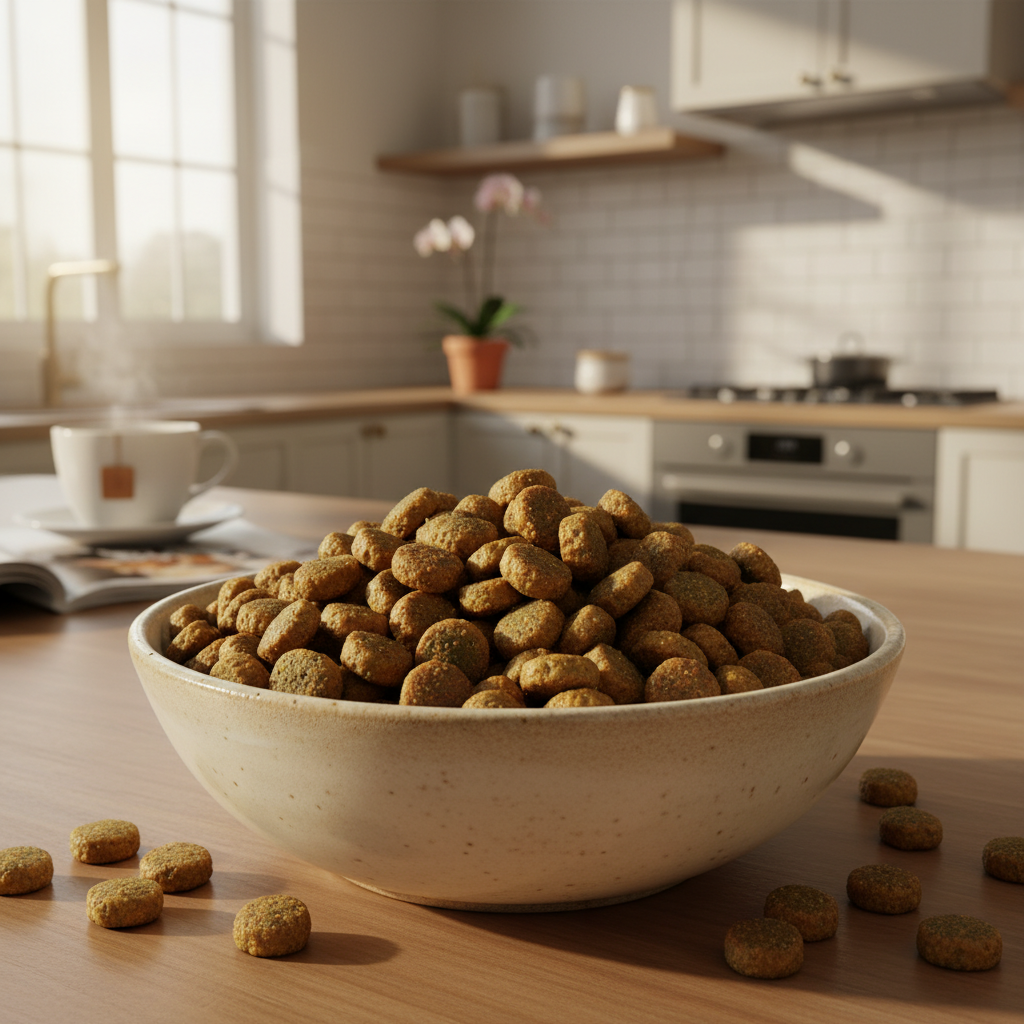
When you see "Deboned Chicken" as the first ingredient, you feel like a responsible cat parent. But here’s the industrial secret: AAFCO rules require ingredients to be listed by their weight before processing. Fresh chicken is 75% water. During the high-heat extrusion process that makes kibble, that water evaporates. What’s left? A tiny fraction of meat that would actually rank much lower if listed by final dry weight.
Compare this to "Chicken Meal." It sounds less appetizing, but it's actually concentrated protein with the water already removed. If your cat, like Lion, is a picky eater who needs high-quality protein, look for a mix of meal and named meats rather than just 'fresh' claims that disappear in the oven. To understand the real protein density, you should use our feeding calculator to see what your cat actually needs per day.
Ingredient Splitting: The Mathematical Magic
Manufacturers are smart. If they have 40% corn and 25% chicken, corn must be listed first. That looks bad. So they split the corn into 'Corn Flour', 'Corn Gluten Meal', and 'Whole Grain Corn'. Individually, each weight is now less than the chicken, allowing chicken to 'float' to the top spot. But your cat's body doesn't care about the labels—it still sees 40% sugar. Always add up the similar-looking ingredients in your head before buying.
| Ingredient Type | Approx. Water Content | Approx. Protein (per 100g) | Relative Protein Density |
|---|---|---|---|
| Fresh Chicken | 70-75% | 18g | 1x |
| Chicken Meal | 10-12% | 65g | 3-4x |
The Time I Realized My 'Premium' Choice Was Killing Him
I’ll be honest—I used to be that person at the pet shop who just bought the bag with the most 'natural' looking packaging and the highest price tag. I thought spending RM250 a month meant I was being a great cat parent. Then, I noticed my cat getting sluggish and drinking excessive water. One vet check later, and the diagnosis hit me like a truck: early-stage insulin resistance. The 'premium' food I was so proud of turned out to be 42% carbohydrates. I was essentially feeding him expensive dessert for every meal. It was a massive wake-up call that price doesn't always equal health.
The Missing Number: How Much Sugar is Hidden?
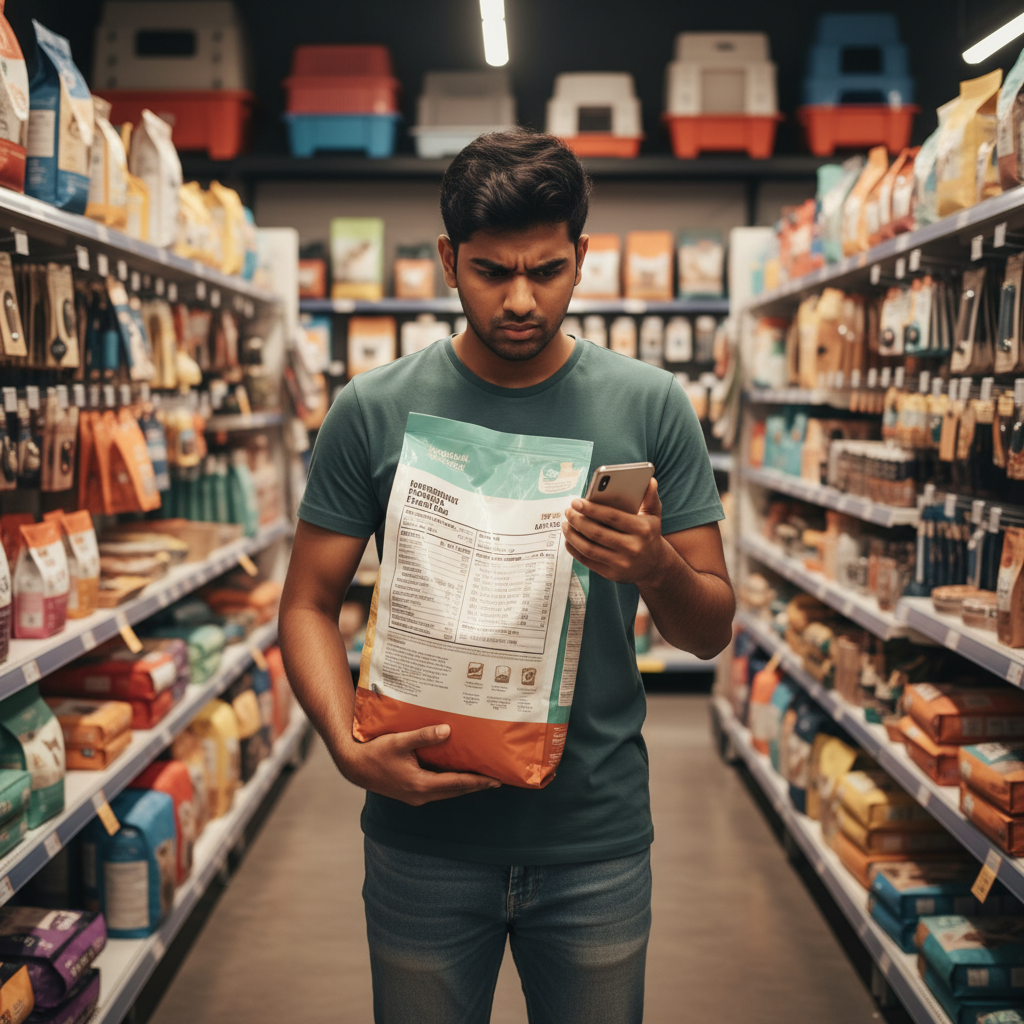
Have you noticed that "Carbohydrates" is almost never listed on cat food labels? AAFCO doesn't require it, and manufacturers love that. Why? Because the natural prey carbohydrate content of a cat is only 2-5%. Most kibble is 30-50%. If you want to find the truth, use the NFE (Nitrogen Free Extract) formula: 100 - Protein - Fat - Fiber - Moisture - Ash = Carbs. If the result is over 25%, you're looking at a bag of feline obesity.
For cats with sensitive systems, like Ping'An who sneezes at artificial additives, these high-carb fillers often trigger inflammation. If you're worried about your cat's digestion or weight, our Ingredient Checker can help you spot these red flags before you buy.
The 'Halal' Misconception in Malaysia
In Malaysia, we often look for the Halal or Suci logo. While this ensures the food is pork-free and prepared according to religious standards, it doesn't automatically mean the food is biologically appropriate for a cat. Many affordable 'Halal' certified brands are filled with corn, soybean meal, and 'fish flavor' (which is often just chemical MSG) rather than actual fish. A 'clean' label for us doesn't always mean a healthy pancreas for them. Always check if the first three ingredients are specific animal proteins like chicken or mackerel, not 'poultry meal' or 'cereal derivatives'.
At the end of the day, cat food is a game of numbers. Marketing people spend millions to make you feel good about a bag of processed grain, but your cat's body is the ultimate truth-teller. High carbs lead to insulin spikes, weight gain, and long-term health misery. By learning to look past the 'Fresh Meat' claims and the 'Halal' marketing, you're giving your cat a chance at a much longer, healthier life.
Your Monday Morning Action: Grab your current bag of cat food. Find the 'Guaranteed Analysis' section and use your phone's calculator. Apply the NFE formula (100 minus everything else). If that number is over 30%, it’s time to start looking for a better alternative before the bag runs out.
| Category | Keyword (EN) | Hazard Reason |
|---|---|---|
| Vague Meat Sources | Meat & Bone Meal | High likelihood of 4D meat, drug residues; imbalanced Ca:P ratio; untraceable origin. |
| Meat Meal (unspecified) | Untraceable origin (e.g., not specified if beef, lamb, pork). | |
| Poultry Meal (unspecified) | Untraceable origin (e.g., not specified if chicken, duck, turkey); allergy risk. | |
| Animal Digest (if high on list) | Source could be low quality; often used as a flavor enhancer. | |
| Vague Fats | Animal Fat | Could be waste oil, highly oxidized, toxic. |
| Poultry Fat (unspecified) | Untraceable origin; oxidation risk. | |
| Artificial Preservatives | BHA / BHT | Potential carcinogens, liver/kidney toxicity, immune system disruption. |
| Ethoxyquin | Potential carcinogen, thyroid/kidney damage, immune system disruption. | |
| Propyl Gallate | Potential carcinogen, endocrine disruption. | |
| Sweeteners | Corn Syrup | Cats cannot taste sweetness; added to mask poor quality or increase stickiness. Leads to obesity, diabetes, gut fermentation. |
| Sugar / Sucrose | Cats cannot taste sweetness; added to mask poor quality or increase stickiness. Leads to obesity, diabetes, gut fermentation. | |
| Cane Molasses | Cats cannot taste sweetness; added to mask poor quality or increase stickiness. Leads to obesity, diabetes, gut fermentation. | |
| Sorbitol | Cats cannot taste sweetness; added to mask poor quality or increase stickiness. Leads to obesity, diabetes, gut fermentation. | |
| Artificial Colors | Blue 2, Red 40, Yellow 5 | Cats don't care about color; added for owner appeal. Potential carcinogens and allergens. |
| Titanium Dioxide | Added for color; potential carcinogen and allergen. | |
| Specific Gums | Carrageenan | Potent inflammatory agent, linked to IBD and intestinal tumors. |
| Dangerous Supplements | Menadione Sodium Bisulfite Complex (Vitamin K3) | Synthetic Vitamin K, liver cell toxicity risk; natural sources preferred. |
| Toxic Plants | Garlic / Onion (powder or extract) | Oxidizes red blood cells, causes hemolytic anemia. |
| Category | Gold Standard Criteria |
|---|---|
| Primary Protein Sources | First 3 ingredients are specific animal proteins (e.g., Deboned Chicken, Chicken Meal, Salmon). Ideally, 3-4 animal sources in the top 5. |
| Fat Sources | Specific animal fats (e.g., Chicken Fat, Salmon Oil). AVOID "Animal Fat" or "Vegetable Oil". |
| Carbohydrates/Fillers | Minimal or no grains (Corn, Wheat, Soy) or plant protein concentrates (Pea Protein, Corn Gluten Meal). Whole peas, lentils, or sweet potato are acceptable as binders in small amounts (after 5-6th ingredient). |
| Preservatives | Natural preservatives (Mixed Tocopherols / Vitamin E, Rosemary Extract, Green Tea Extract). |
| Beneficial Additives | Chelated Minerals (e.g., Zinc Proteinate, Iron Proteinate) for better absorption. Prebiotics/Probiotics (e.g., Dried Chicory Root, Bacillus Coagulans Fermentation Product) for gut health. |