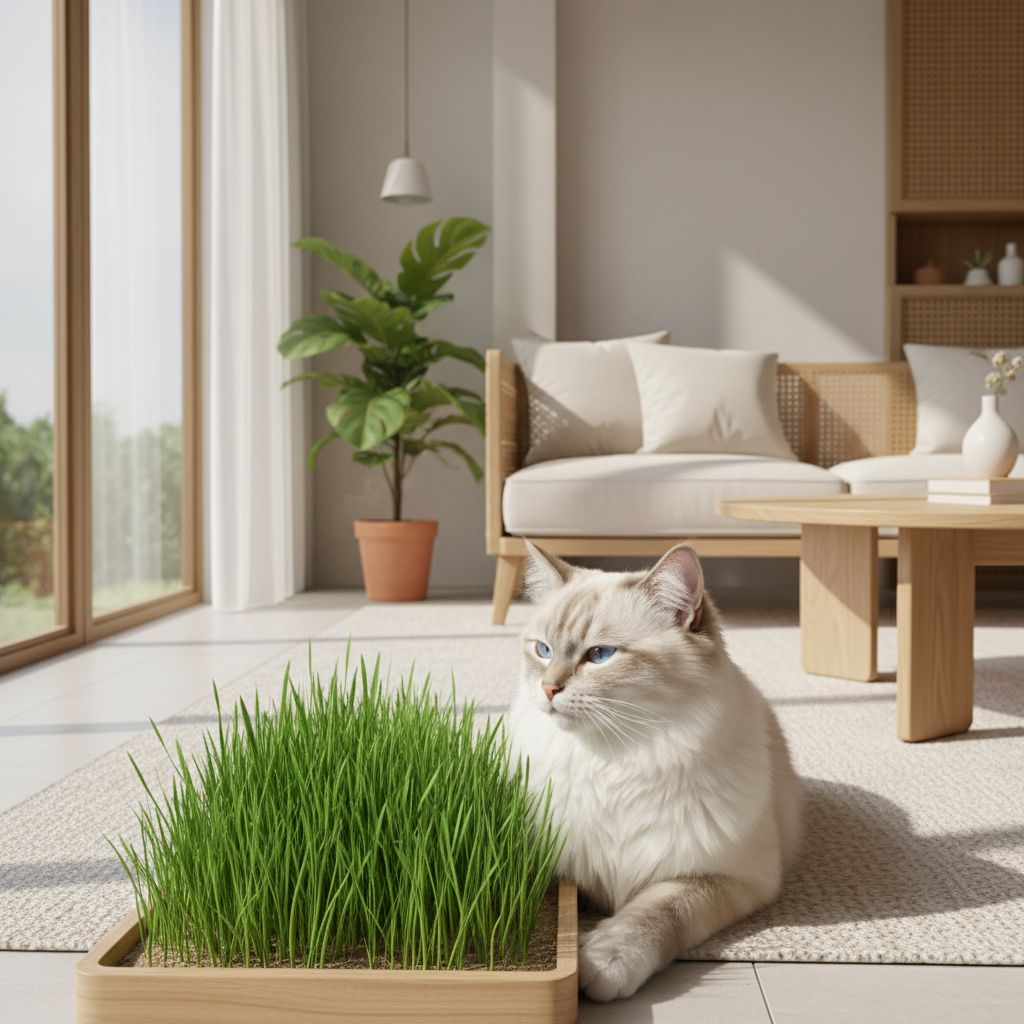
Cat grass is functional fiber (wheat/oat) that helps cats vomit hairballs and aids digestion.
Catnip is a behavioral stimulant that affects the brain, not the gut; about 30% of cats are genetically immune to it.
Silvervine is a more potent alternative to catnip, with an 80% response rate in cats.
In Malaysia's 80%+ humidity, use hydroponics for cat grass to avoid deadly root mold.
I caught Tiger chewing on a plastic Shopee bag yesterday. Again. He looked at me with those big eyes as if to say, "What? It's chewy." If you're a cat parent, you know the drill: the constant battle to keep them away from your indoor lilies or that one corner of the rug they keep licking.
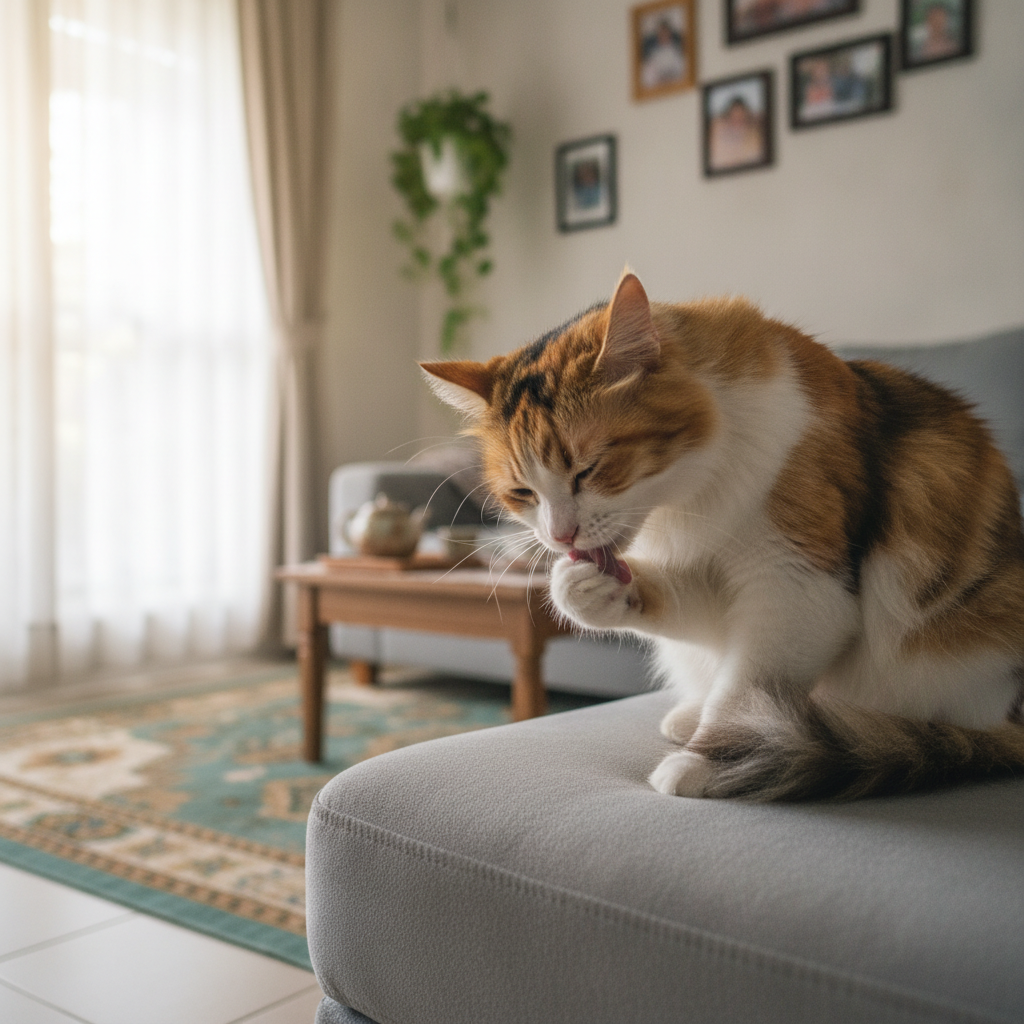
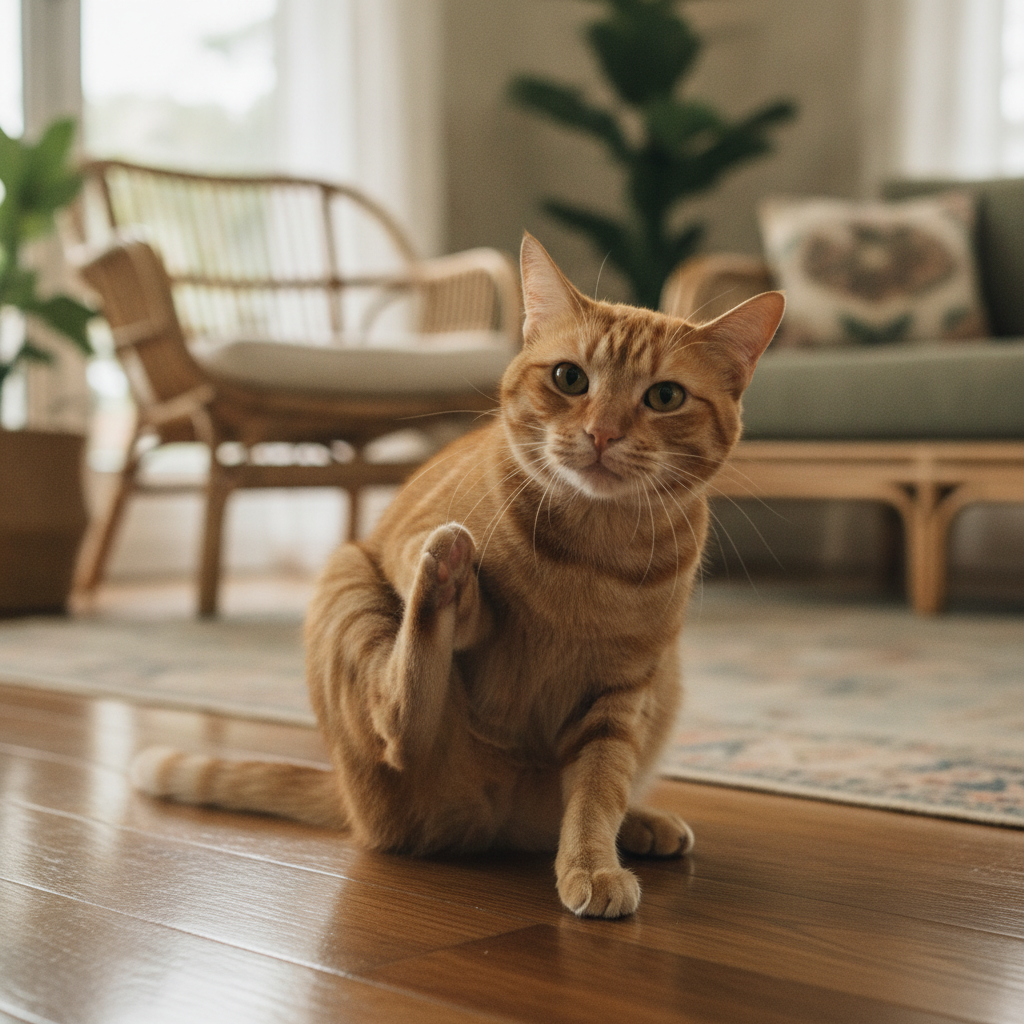
Many owners think cat grass and catnip are interchangeable. They aren't. One is a biological necessity for a species that spends 30-50% of its day grooming; the other is a chemical bliss that mimics feline pheromones. Understanding the difference isn't just about fun—it's about managing your cat's health in our uniquely humid Malaysian climate.
The Functional Difference: Fiber vs. Feelings
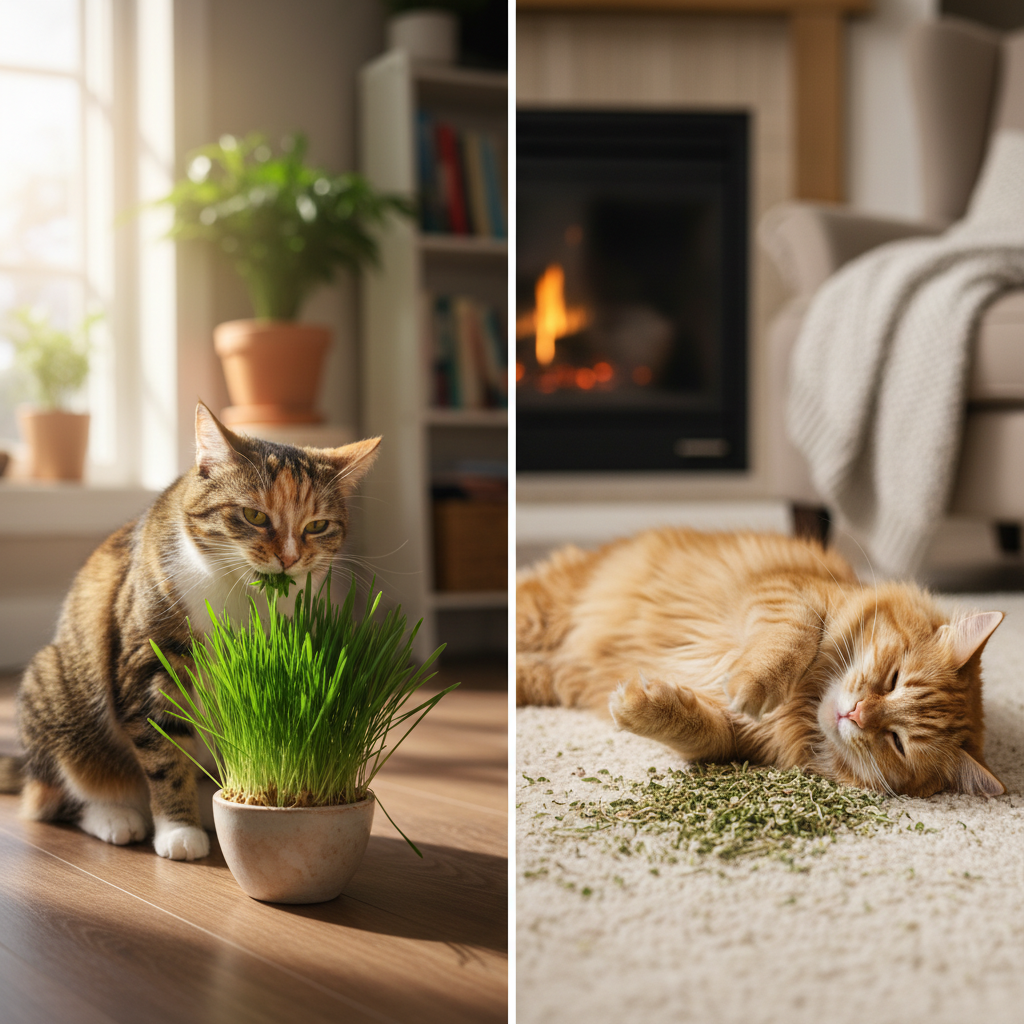
To understand why your cat needs these, we have to look at their biology. Cats are obligate carnivores, but in the wild, they'd eat the stomach contents of their prey—which usually contains grass and fiber. Indoors? They look for the next best thing. Usually your curtains.
Feature | Cat Grass | Catnip | Silvervine |
|---|---|---|---|
Primary Use | Digestive Aid (Hairballs) | Mental Enrichment | Stronger Mental Boost |
Mechanism | Mechanical irritation of stomach | Olfactory stimulation (Smell) | Multi-point olfactory hit |
Response Rate | 100% (Instinctive eating) | ~60-70% (Genetic) | ~80% (Works for catnip-immunes) |
According to "Eating Your Greens: The Basics of Cat Grass", you should provide cat grass 2-3 times per week. It acts like a "broom" for the stomach. This is critical because hairball disease is actually the second most common health problem for indoor cats. If your cat is constantly gagging, they aren't being dramatic—they're struggling with a build-up.
Catnip: The 10-Minute High
Catnip (Nepeta cataria) contains Nepetalactone. It doesn't work through the stomach; it works through the nose. When a cat sniffs it, the signal goes straight to their brain's emotional center. You'll see rolling, drooling, and maybe some "zoomies." After about 10 minutes, the receptors get tired, and your cat will ignore it for an hour or two. It's totally non-addictive, though. Think of it as a feline spa day.
The Time I Almost Poisoned My Cat with 'Natural' Grass
I'll admit it: when I first got Lion, I was cheap. I thought, "Why buy a kit? There's grass outside for free!" I pulled some long blades from the garden and gave them to him. Two hours later, he was vomiting—not hairballs, but yellow bile and blood. The culprit? Garden pesticides and parasites I hadn't even thought about.
That RM5 I saved cost me a RM200 vet bill. Now, I only grow my own wheatgrass indoors. It's cleaner, safer, and I know exactly what's in it. If you're worried about your cat's health after a vomit session, always check our cat poop health guide to see if things are moving through properly.
Growing Cat Grass in Malaysia: Humidity is the Enemy

In Malaysia, our humidity is often above 80%. If you use soil, the roots will rot or grow fuzzy white mold within 4 days. This isn't just gross; it's toxic.
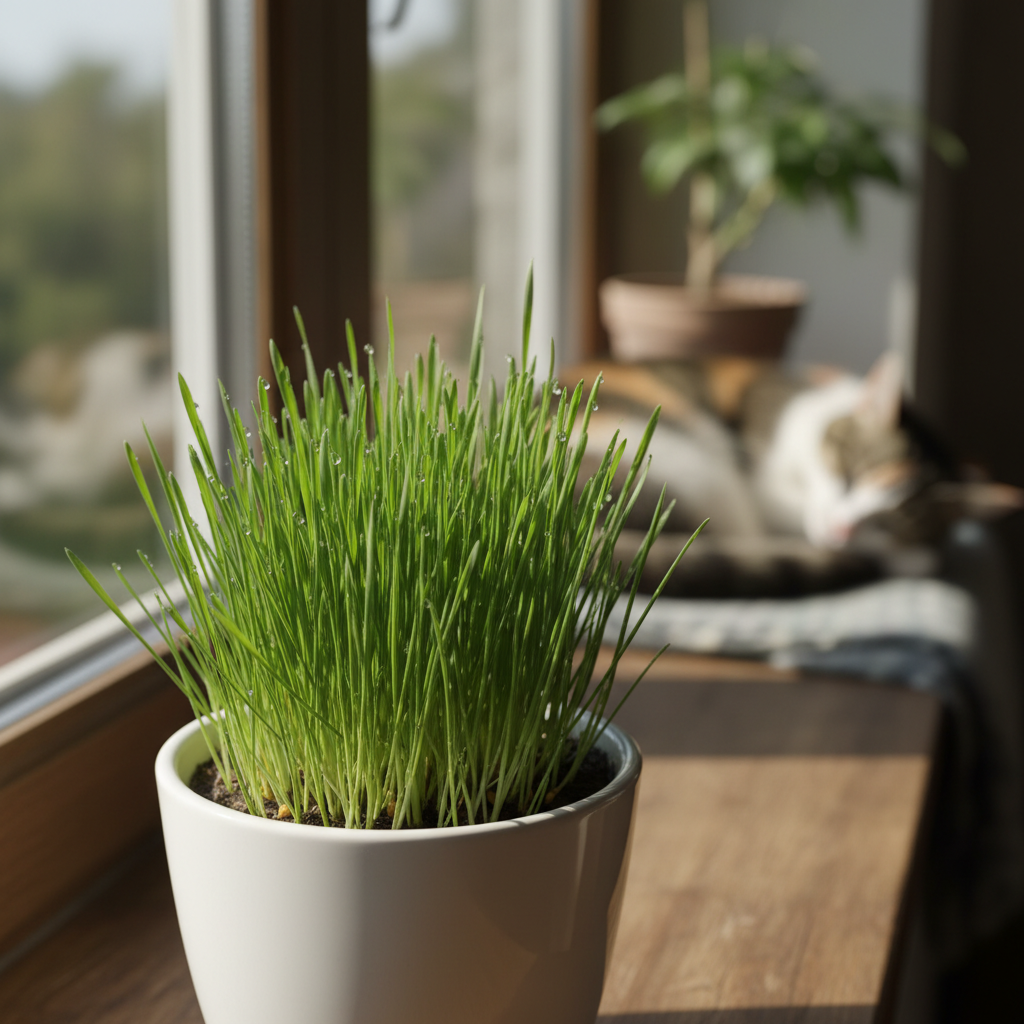
Pro Tip: Hydroponics is the way to go. Use a mesh tray and water only. Change the water daily. If you see any black spots on the roots, throw the whole batch away. Seriously. It’s not worth the risk of fungal poisoning. Once the grass is 10-15cm tall, it's perfect. For more tips on keeping your cat's gut moving, check out our Cat Health Hub.
Why Your Litter Choice Matters When Using Cat Grass
When you start giving cat grass, you'll be checking the litter box a lot more. Why? Because you're looking for proof it's working—those long strands of hair wrapped in fiber. This is where Liger Tofu Cat Litter becomes a literal diagnostic tool.
Our light-colored tofu litter makes it much easier to spot abnormalities. In dark clay litter, a "string of pearls" (feces linked by hair or string) is almost invisible. With Liger, the natural milk fragrance doesn't just mask the 'poop smell'; it makes the daily scooping ritual a little less of a chore so you actually pay attention to what's in there. Plus, if Tiger decides to taste the litter (he's curious!), I know it's food-grade soy and safe.
Think of cat grass as the essential 'broccoli' for their gut and catnip as the fun 'weekend mocktail' for their mind. Both have a place in a happy home, provided you grow them safely and avoid the moldy pitfalls of our tropical weather.
Your Monday Morning Action: Buy a small packet of organic wheatgrass seeds (look for "Biji Gandum" at Mr. DIY or Shopee). Don't use soil. Start a small hydroponic batch tonight. By next Monday, your cat will have a fresh, safe garden to munch on.