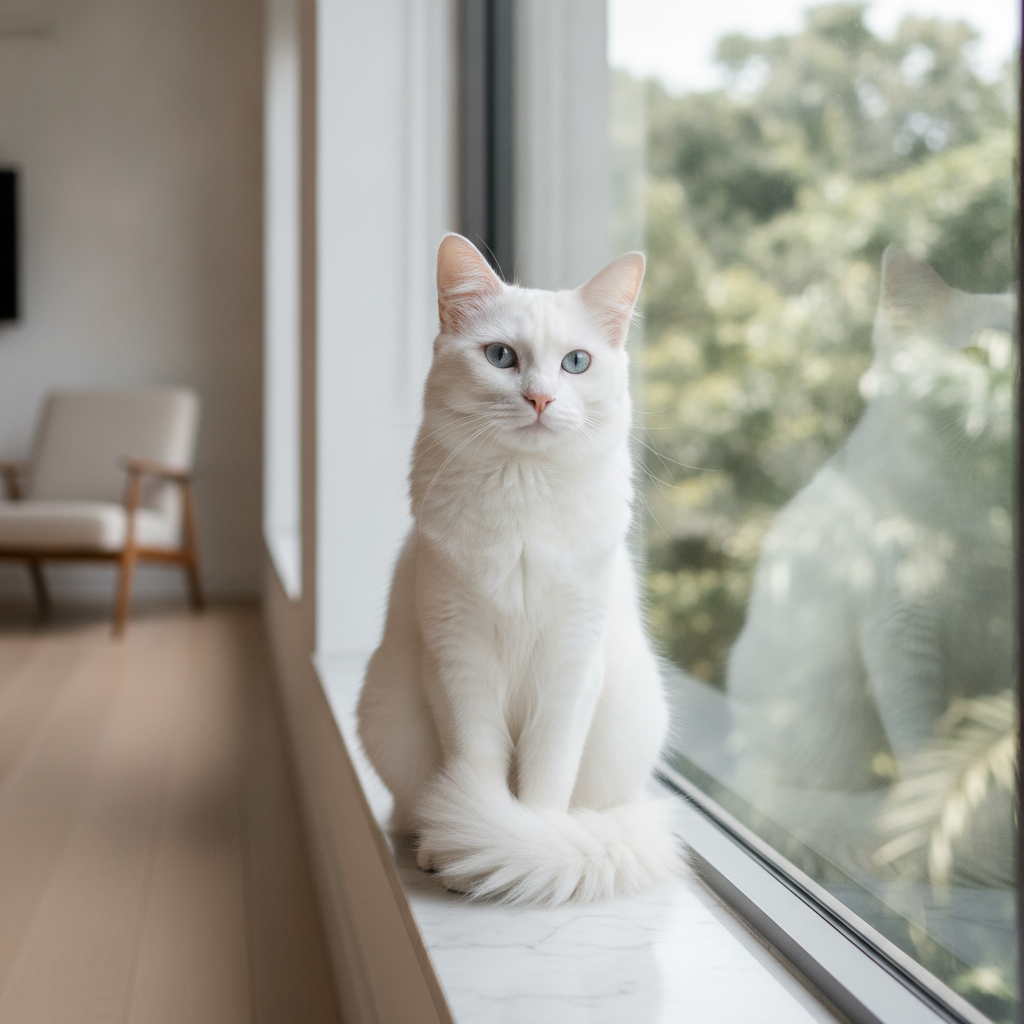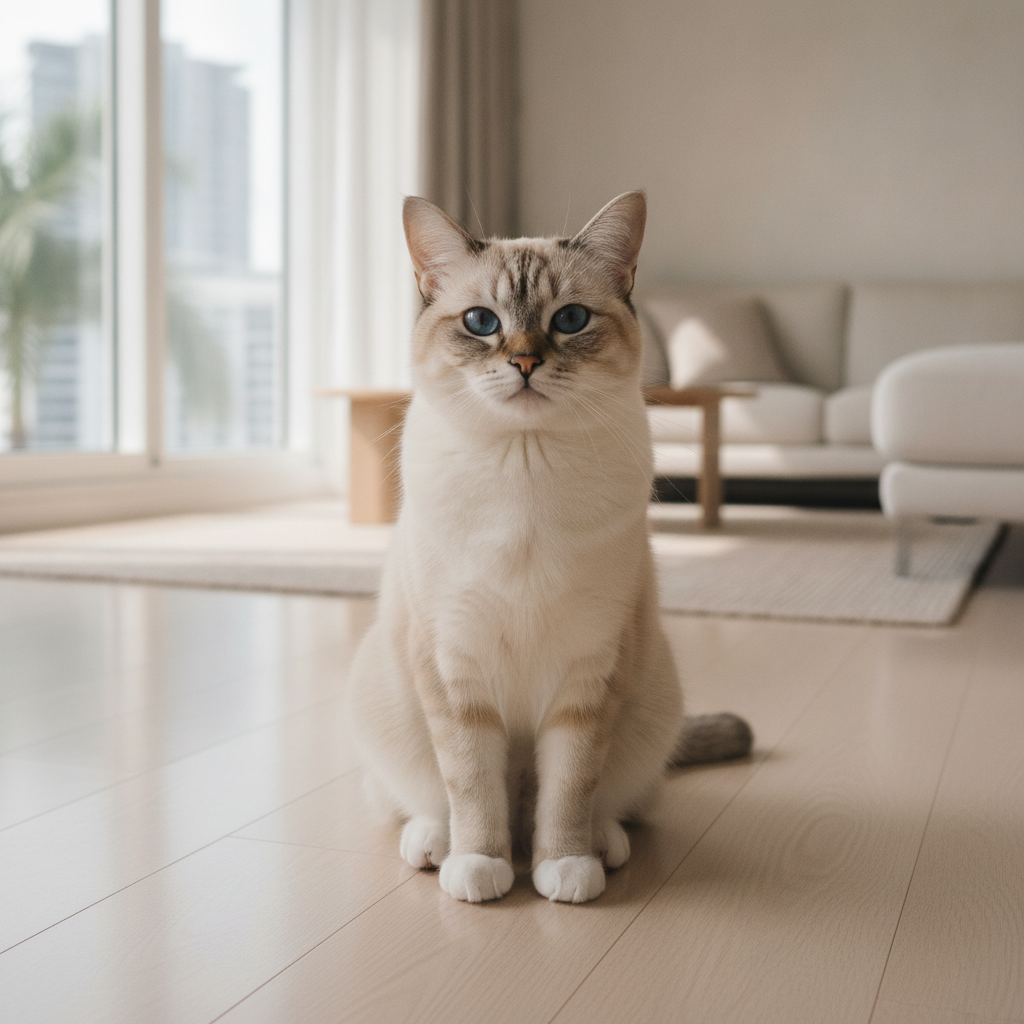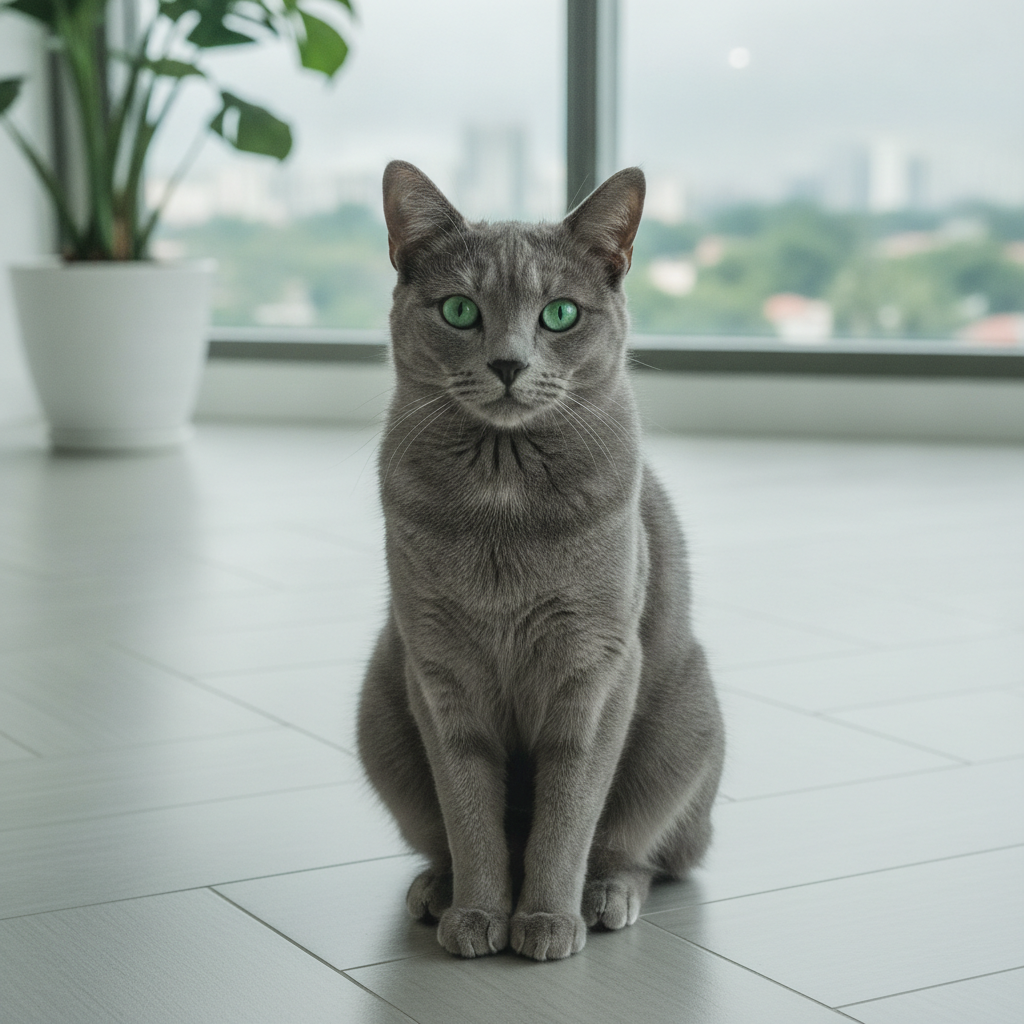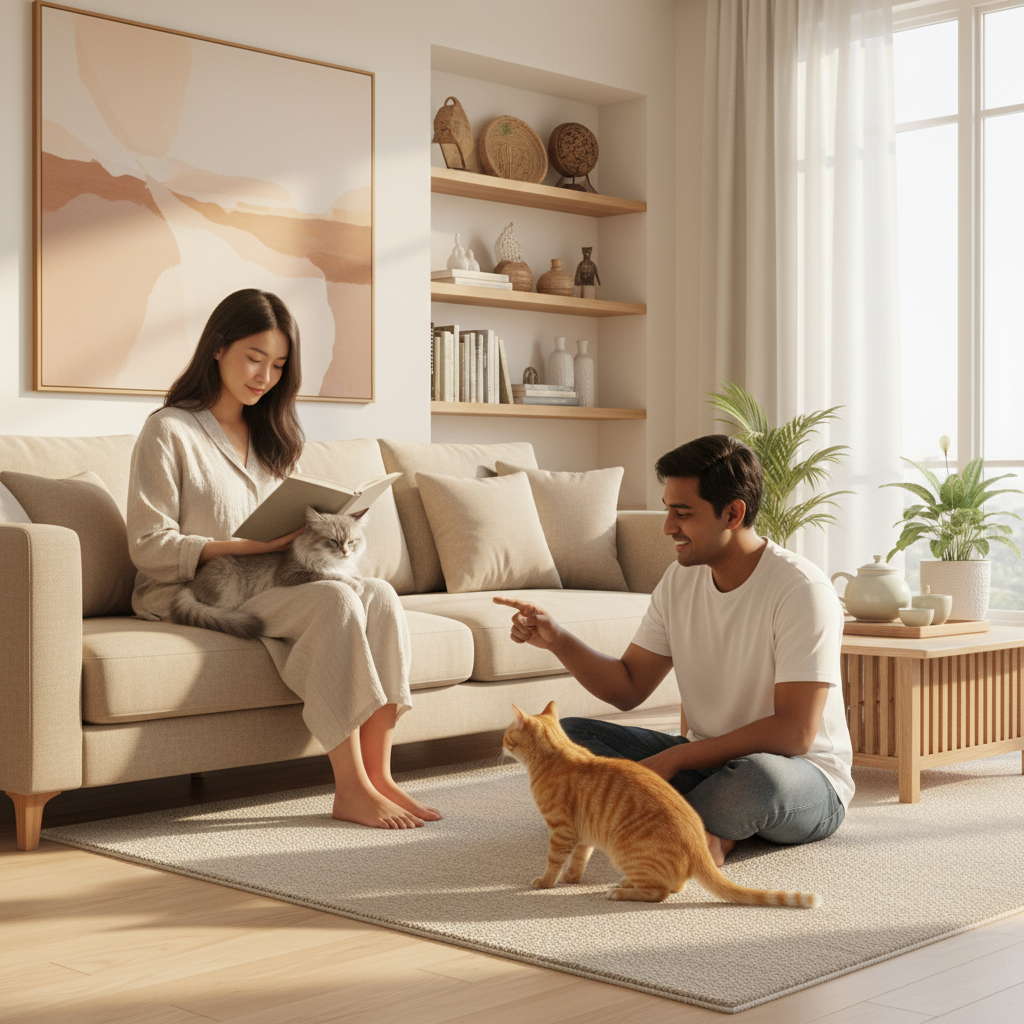
Cats don't have a biological 'sexist' switch; they prefer specific behavioral traits statistically more common in women.
Women are more likely to use 'Cat-Directed Speech' (high pitch, slow tempo) which cats find biologically attractive.
Cats value predictability and 'rhythm' in interaction (T-patterns), feeling safer with people who respect their agency.
Men often get meowed at more frequently not because of more love, but because they require 'louder' signals to respond.
Your cat is a tactical genius, not a sexist. If you've ever felt like your resident feline ignores you the moment your wife or girlfriend walks into the room, you’re not alone. It’s a common scene in many Malaysian households—the husband tries to 'bro' out with the cat, only to be met with a cold shoulder, while the cat practically teleports onto the lady’s lap.
Is it the hormones? The perfume? Or do cats just have a thing for long hair? Scientists have actually spent years tracking every tail twitch and blink to figure this out. Turns out, cats aren't looking at your identity card; they’re looking at your 'vibe' and how well you master their specific social grammar.
It’s All About the 'Rhythm' of the Dance
Research by Dr. Manuela Wedl found that women often have more 'complex' and 'structured' interactions with cats. In science-speak, these are called T-patterns. Think of it like a perfectly timed dance: you look at the cat, the cat blinks, you say something soft, the cat approaches. When these sequences happen in a predictable rhythm, cats feel safe. Statistically, women tend to be more in sync with these micro-signals.
If you're curious about where you stand in your cat's heart, you can try our 猫咪信任度测试 to see if you've mastered this rhythm. It’s not about how much time you spend together, but the quality of that time. A cat prefers a predictable partner over an erratic one any day.
| Research Dimension | Typical Female Owner Behavior | Typical Male Owner Behavior | Cat's Reaction & Preference Mechanism |
|---|---|---|---|
| Interaction Temporal Patterns (T-patterns) | Higher frequency, more complex, stronger synchronicity. | Lower frequency, relatively simple, sometimes lacks coherence. | Cats prefer predictable, rhythmic interactions; high-frequency T-patterns bring a sense of security. |
| Interaction Initiation | Tends to wait for the cat to initiate; sensitive to the cat's subtle initiation signals. | Tends to initiate proactively; sometimes ignores the cat's rejection signals. | Cat-initiated interactions last significantly longer; cats avoid forced interactions. |
| Physical Contact Style (Tactile) | Gentle petting, focused on head/face; tolerates cats lying on lap for long periods. | May engage in rough play (Rough-and-tumble); more restraining actions. | Cats generally dislike rough play or restraint; prefer gentle petting in glandular areas of the head. |
| Personality Trait Correlation | Average Neuroticism score may affect interaction; shows higher consistency in caregiving behavior. | High Extraversion may lead to overly active interactions. | Neuroticism leads to interaction breakdown; cats prefer low Neuroticism, high Conscientiousness partners. |
The 'Bro-Touch' Blunder: Where I Went Wrong
I'll admit it—I used to be the guy who thought cats liked to be handled like small dogs. I'd scoop them up unexpectedly, do that rough 'tumble' play, and wonder why they'd bolt under the sofa the second I walked in. My failure was assuming my way of showing affection was universal. I missed the subtle signs: the slightly flattened ears, the twitching tail tip.
The insight? Respect the 'Agency'. When I stopped forcing the interaction and started waiting for them to come to me, the relationship changed. For instance, with **Tiger**, our young boy with congenital heart disease, we have to be extra gentle. His heart condition makes him stress easily, so 'rough play' is a big no-no. Learning to read his slow blinks instead of forcing a hug made us finally click. If you're struggling to connect, check out these 猫咪信任你的5个迹象 to see what you might be missing.
Myth: Cats Meow More at Men Because They Love Them More
Here’s a contrarian take: If a cat is meowing loudly at a male owner, it might actually be a sign of a *weaker* bond, not a stronger one. A study from Ankara University found cats meow more frequently at men. Why? Because cats are master observers. They realize that men often miss subtle body language cues like a tail twitch or a stare. To get what they want (food, usually), cats have to 'turn up the volume'.
In contrast, they stay relatively quiet with women because women often respond to the quieter signals. It’s not 'sexism'; it’s an efficiency strategy. Cats think men are a bit 'slow on the uptake', so they meow louder to bridge the communication gap. Seriously, judgement away, but your cat might be shouting because they think you're not listening!
| Voice Type | Key Characteristics | Cat's Reaction | Scientific Explanation |
|---|---|---|---|
| Cat-Directed Speech (CDS) | High pitch, slow tempo, repeated, exaggerated vowels. | Dilated pupils, ear rotation, approach, tail erect. | Similar to mother cat's calls to kittens; high-frequency sounds are biologically more attractive. |
| Adult-Directed Speech (ADS) | Low pitch, flat tone, fast tempo. | Indifferent reaction, sometimes ignored. | Cats can distinguish CDS from ADS; ADS is perceived as background noise. |
| Male Owner's Voice | Lower fundamental frequency; higher reaction threshold for cats. | More vocalization (meowing). | Not due to preference, but to overcome male owners' "not listening"; requires increased signal intensity. |
The Power of Being a 'Human Pillow'
Cats have a high 'thermoneutral zone', meaning they are constantly seeking heat. They literally feel cold when we feel comfortable. Statistically, women tend to spend more time sitting still while reading or working at home. For a cat, a warm, unmoving lap is premium real estate. If you’re a guy who is constantly moving, pacing, or shifting in your chair, you’re basically a 'broken heater' in their eyes.
Even **Lion**, our resident clean freak, will tolerate a lot if he finds a warm, steady spot to nap. He's picky about his litter box, sure, but he's even pickier about his nap spots. If you want to improve your status, try sitting still for 20 minutes. Just 20 minutes. See if the cat decides you're finally worth the warmth. You can also explore 猫咪性格测试 to see if your cat is the 'cuddly' type or the 'independent hunter' type before you get your hopes up.
At the end of the day, cats don't care about your gender; they care about your ears, your voice, and your stillness. They love the 'Cat-Directed Speech' and the respect for their boundaries that women often naturally provide. But any man can become a 'preferred human' by simply lowering his voice, slowing his pace, and learning to wait. It’s about being a partner, not a boss.
Your Monday Morning Action: Tomorrow morning, when you see your cat, don't walk towards them. Instead, squat down to their eye level about 2 meters away, stretch out one finger, and just wait. Don't make a sound. Let them decide to bridge the gap. That one moment of 'waiting' is worth more than a thousand forced head scratches.
| Common Misconception (Myth) | Scientific Fact | Explanation |
|---|---|---|
| "Cats inherently dislike men." | Cats dislike forced interactions and unpredictable behavior. | If men adjust their interaction style (e.g., sitting, speaking softly), cat attitudes can change quickly. |
| "Cats distinguish gender by scent." | Cats can smell hormonal changes, but there is no evidence they form social preferences based on this. | Reactions to "male scent" are often physiological reflexes (e.g., Flehmen response to androstenone) rather than emotional attachment. |
| "Cats ignore people they like." | Cats prefer low-threat individuals. | Ignoring means no direct staring (threat), giving cats safe space to explore proactively. However, long-term bonding still requires subsequent positive interaction. |