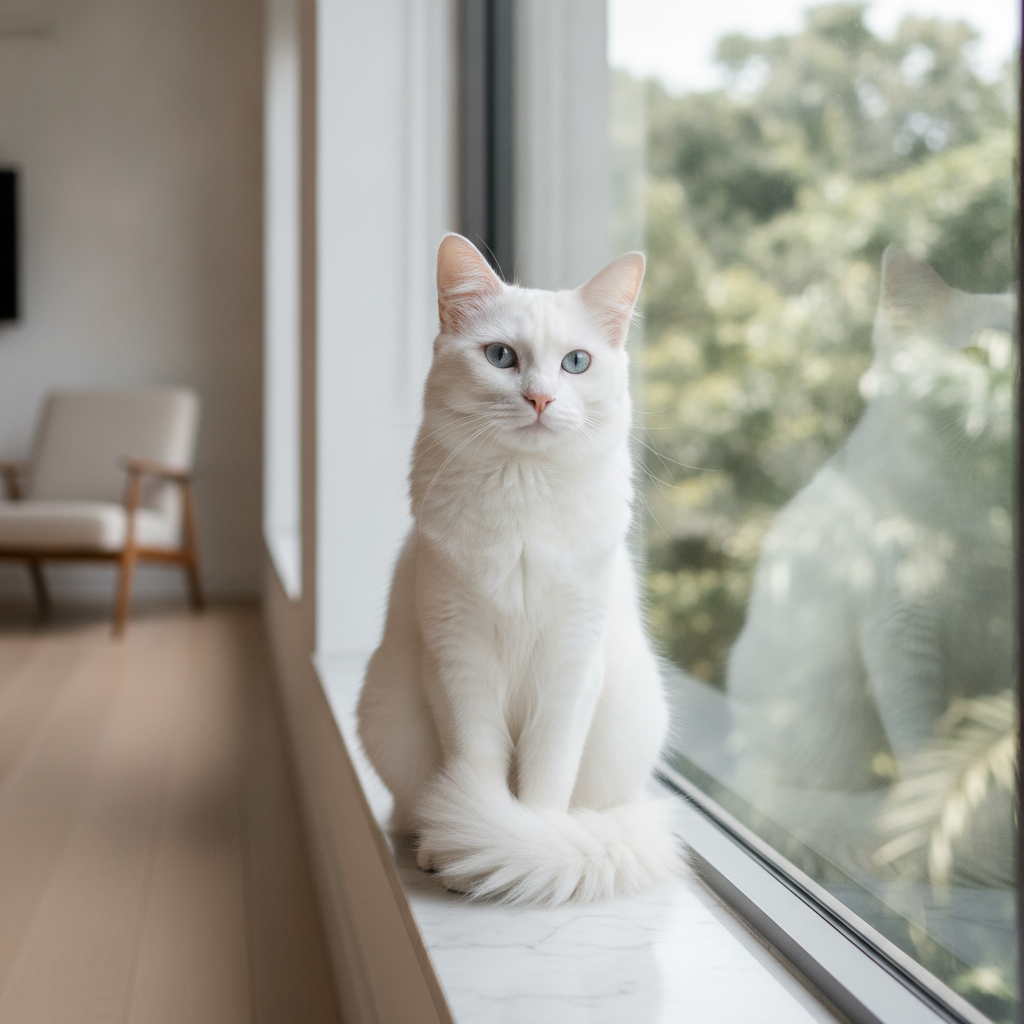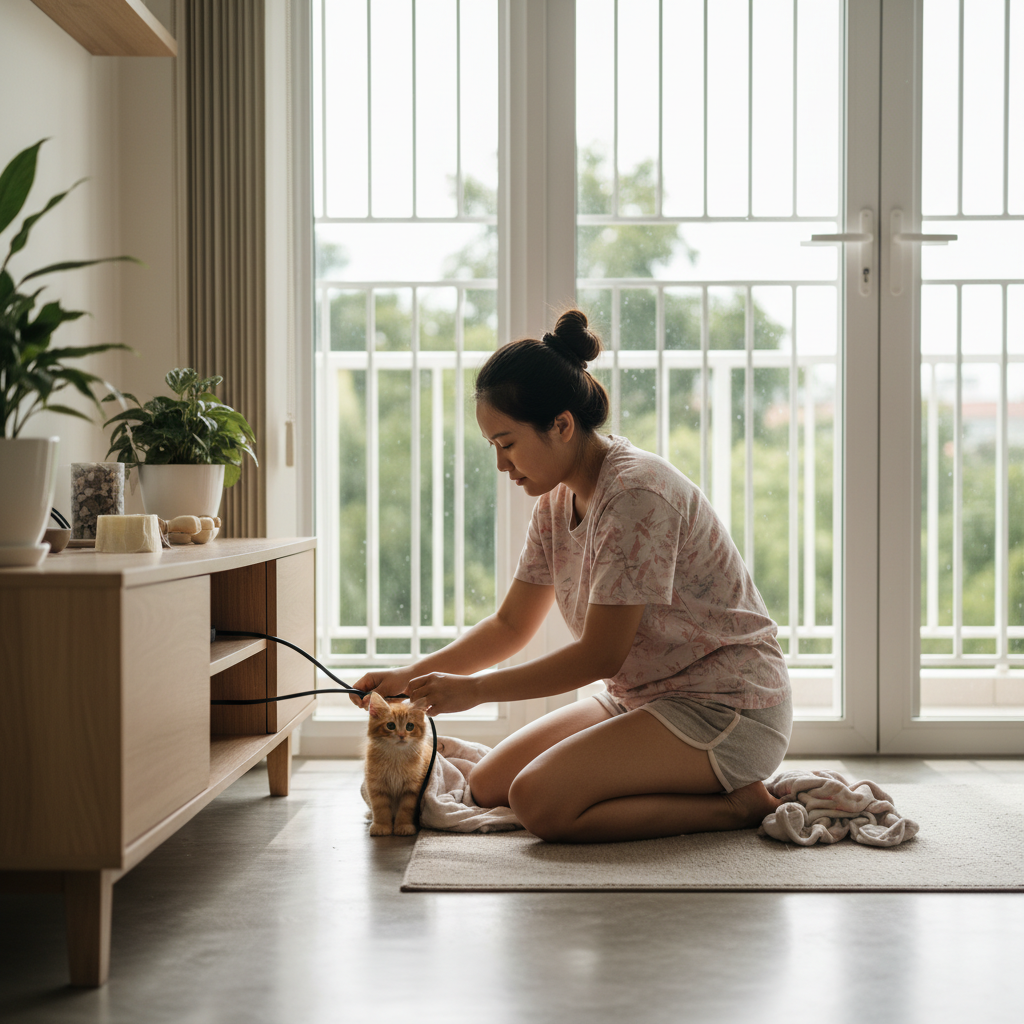
Bringing home a new cat or kitten is pure joy — right up until you watch it wriggle behind the fridge, bat a sewing needle under the sofa, and eye the open window with worrying interest. Cats are relentlessly curious, astonishingly bendy, and completely unable to tell a toy from a death trap. A Malaysian home, in particular, hides a few dangers that don't make the standard Western checklists. So before your new companion finds the hazards for you, walk through your home and cat-proof it. Here's the room-by-room guide we wish every new owner read on day one — written after years of out-smarting Tiger, Lion, Ping'An and Lucky.
Why Cat-Proof? A Curious Cat Finds Everything
The golden rule of cat-proofing: assume your cat can and will reach anything. They climb shelves, squeeze into gaps the size of a fist, open cupboards, and investigate everything with their mouths. 'Up high' isn't safe (they climb), 'behind a door' isn't safe (they nose it open), and 'too small to bother with' is often exactly what they swallow. Kittens are worse, because everything is new and chewable.
Cat-proofing isn't about wrapping your home in bubble wrap. It's about removing or securing the genuinely dangerous things and being deliberate about the rest. Do it once, properly, and you prevent the great majority of household accidents — the kind that turn a normal evening into a panicked, expensive dash to the emergency vet. Speaking of which: before anything else, save your regular vet's number and your nearest 24-hour clinic in your phone now. You don't want to be searching mid-crisis.
The Deadliest Risk: Windows, Balconies and Falls
If you do only one thing on this list, do this one. In Malaysia, where so many of us live in condos and high-rise apartments, falls are the single biggest killer of household cats. The danger even has a clinical name: feline 'high-rise syndrome', the pattern of severe injuries from falls out of windows and off balconies. A cat lunging at a bird or simply losing its footing on a railing can be gone in an instant. And contrary to the myth, cats do not always land safely — high-rise falls regularly cause broken jaws, shattered limbs, chest injuries, and death.
So, before your cat has free run of the place:
- Secure every window with sturdy grilles or fine mesh screens. An open, unscreened window on an upper floor is a lethal hazard.
- Cat-proof the balcony with netting or mesh, or make it strictly off-limits. A railing is not a barrier to a cat.
- Mind the gap. Standard safety grilles designed for people aren't always cat-safe — the spacing matters. Guidance for pet-safe grilles recommends gaps of less than 2 inches (about 5cm), because a cat can squeeze its body through anything its head fits through. Check your existing grilles against this.
This single step prevents the most common fatal accident for Malaysian cats. Everything else on this list matters, but nothing matters more than this.
Strings, Cords and Small Things: The Swallowing Danger
Cats are wired to chase and chew dangly, stringy things — which is exactly what makes them swallow them. And swallowed string is far more dangerous than it sounds. A length of thread, ribbon, or tinsel can cause what vets call a 'linear foreign body': the string snags in the gut while the intestines keep trying to push it along, sawing through the intestinal wall. It's a surgical emergency, and it kills cats. The worst offenders, all common in our homes:
- Sewing thread and needles (a needle still attached is doubly dangerous), embroidery floss, ribbon, and gift string.
- Hair ties, rubber bands, and elastic — irresistible to bat around and easy to swallow.
- Electrical cords and phone chargers, which cause electric shock or burns when chewed.
- Blind and curtain cords, a strangulation risk — tie them up out of reach.
- Small swallowables: bottle caps, hair clips, jewellery, kids' toys, foam earplugs, twist ties.
The fix is simple discipline: keep sewing kits firmly closed and away, never leave hair ties or rubber bands lying on counters, bundle and hide electrical cords (cord-protector tubing helps), and tie up blind cords. If you give your cat string toys, put them away after supervised play — never leave a cat alone with string.
Chemicals, Medicines and the Kitchen
Cats walk through spills and then groom every drop off their paws and fur, so floor and surface chemicals are a real poisoning route. Their livers also can't process many compounds other animals tolerate. Secure these:
- Cleaning products and disinfectants. Many floor cleaners and bleaches are hazardous; rinse and dry floors before letting cats back, and store everything in a closed cupboard. Insecticides — ant and roach products, mosquito sprays — can cause severe poisoning (the 'SLUDGE' syndrome).
- Human medicines. Paracetamol (Panadol) and ibuprofen are deadly to cats; one tablet can kill. Keep all human medication locked away, and never give a cat human medicine.
- Dog flea and tick products. A heartbreakingly common mistake — dog spot-ons contain permethrin, which is highly toxic to cats. Never use dog parasite products on a cat.
- Antifreeze and gel cooling mats. Both can contain ethylene glycol, lethal to cats in tiny amounts and dangerously sweet-tasting.
- Kitchen foods. Onions, garlic, chocolate, grapes, and xylitol (in sugar-free products and some peanut butters) are toxic. Even local staples can hurt: sweetened condensed milk (susu pekat) is far too sugary and rich for cats. Check anything you're unsure about with our can-my-cat-eat-this tool, and our guide to human foods toxic to cats has the full list.
Plants, Pest Control and Other Hidden Hazards
A few more easy-to-miss dangers around Malaysian homes:
- Toxic plants. Many popular houseplants and garden plants are poisonous, and lilies are outright deadly. Before you green up your home, run through our guide to toxic and safe plants for cats.
- Rat poison and pest bait. Common in landed homes and around bins — rodenticides are lethal, and a cat can also be poisoned by eating a poisoned rat. Use pet-safe pest control and never leave bait where a cat can reach it.
- Mosquito coils and incense placed at cat-nose level — irritating to feline airways. Keep them well away from where cats rest.
- The washing machine and dryer. Cats love climbing into warm, dark drums. Keep the doors shut and always check inside before you switch one on — this one has tragic outcomes.
- Reclining chairs and gaps behind appliances, where a cat can get trapped or crushed.
- Hot stoves, candles, and irons — burns from jumping onto a hot surface or knocking over a flame.
The Room-by-Room Quick Checklist
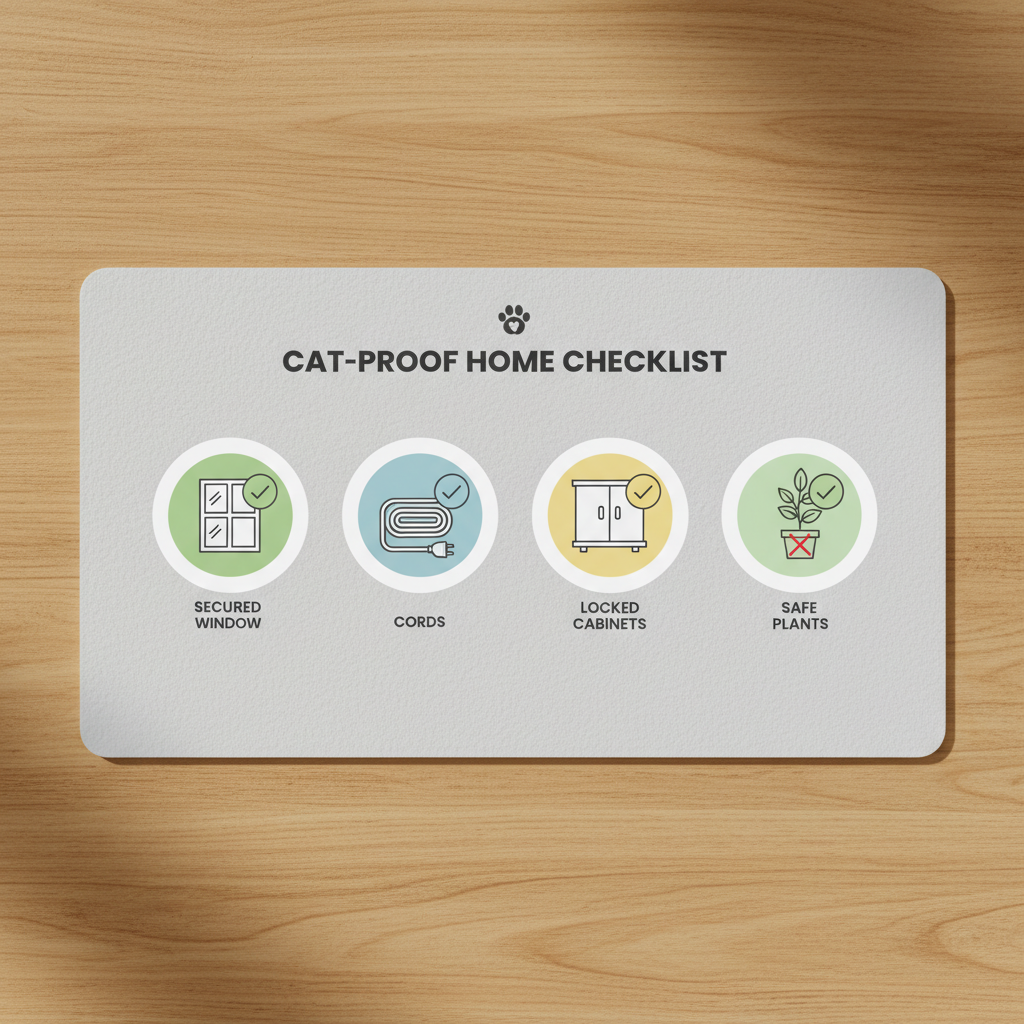
Walk your home with this list, one room at a time:
- Living room: windows/balcony secured? Cords bundled and hidden? Blind cords tied up? Toxic plants removed? Small objects off surfaces?
- Kitchen: chemicals in a closed cupboard? Toxic foods away? Stove off and guarded? Bin lidded? Washing machine shut?
- Bathroom: medicines locked up? Cleaning products stored? Toilet lid down? Hair ties and razors away?
- Bedroom: sewing kit and jewellery secured? Chargers tucked away? Wardrobe and drawers checked before closing (cats hide)?
- Whole home: every window and balcony cat-proofed? Pest bait inaccessible? Vet and emergency numbers saved? Carrier ready?
A good carrier and the basics are all on every new cat owner's checklist, and it's worth pairing this safety pass with our cat first-aid guide so you're ready if something does go wrong. Cat-proofing takes an afternoon, and it's the cheapest insurance you'll ever buy: it turns your home from an obstacle course of hidden dangers into a safe playground where your curious new friend can explore, climb, and nap without finding the one thing that could hurt it. Do it before you give your cat the run of the place — your future self, and your cat, will thank you.