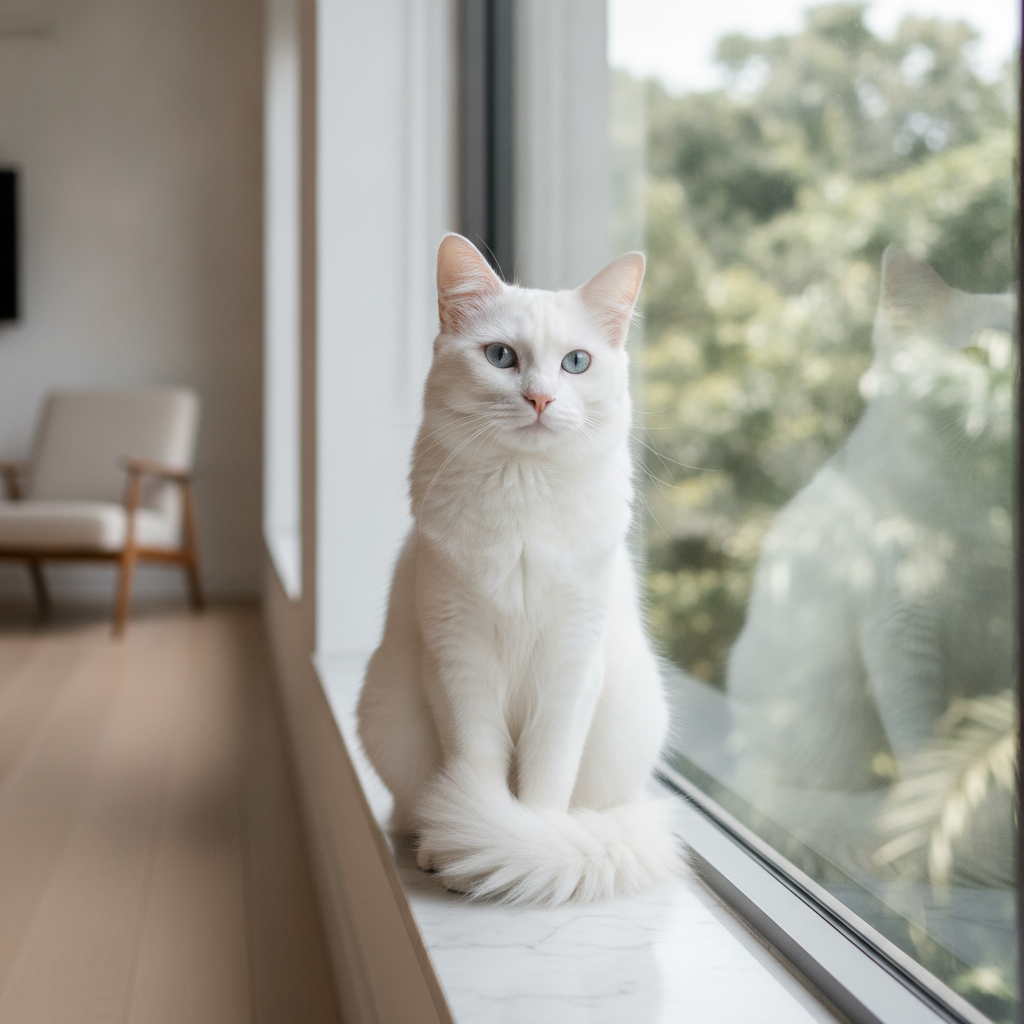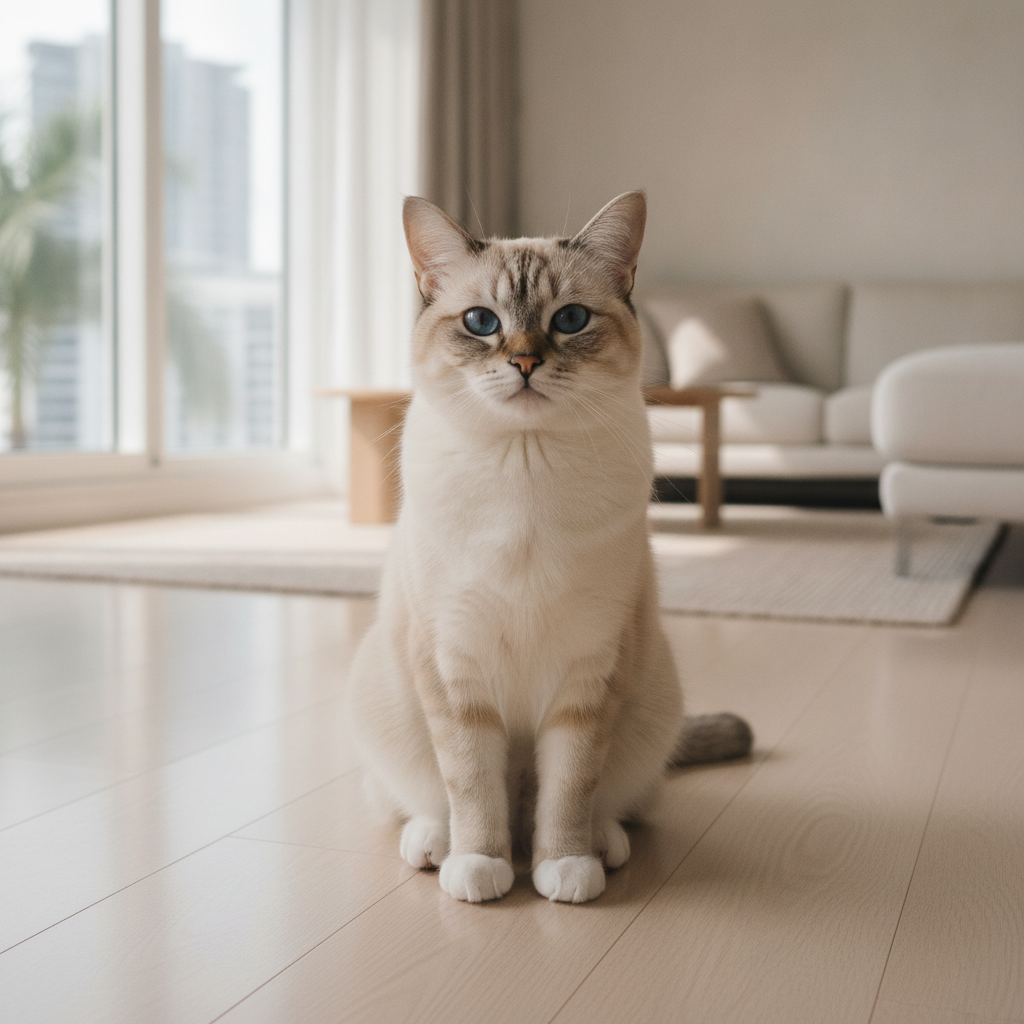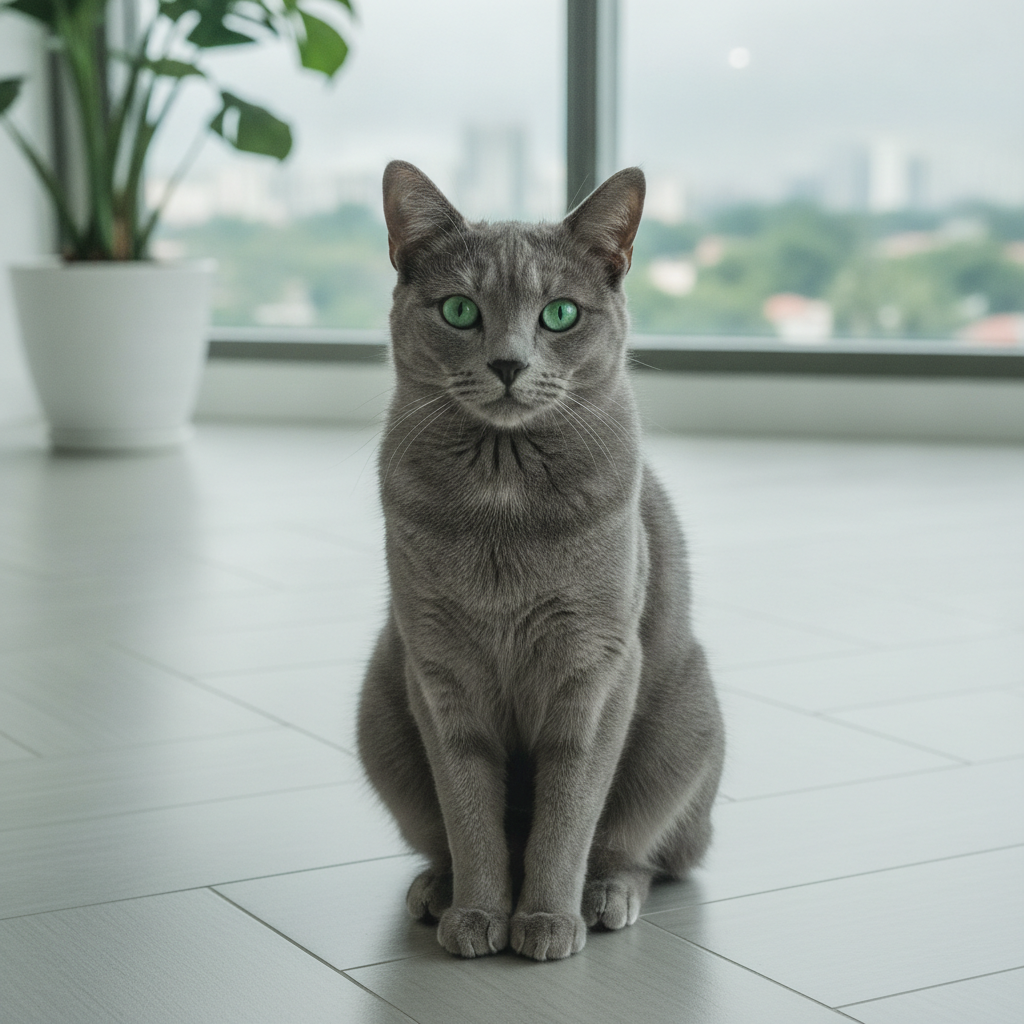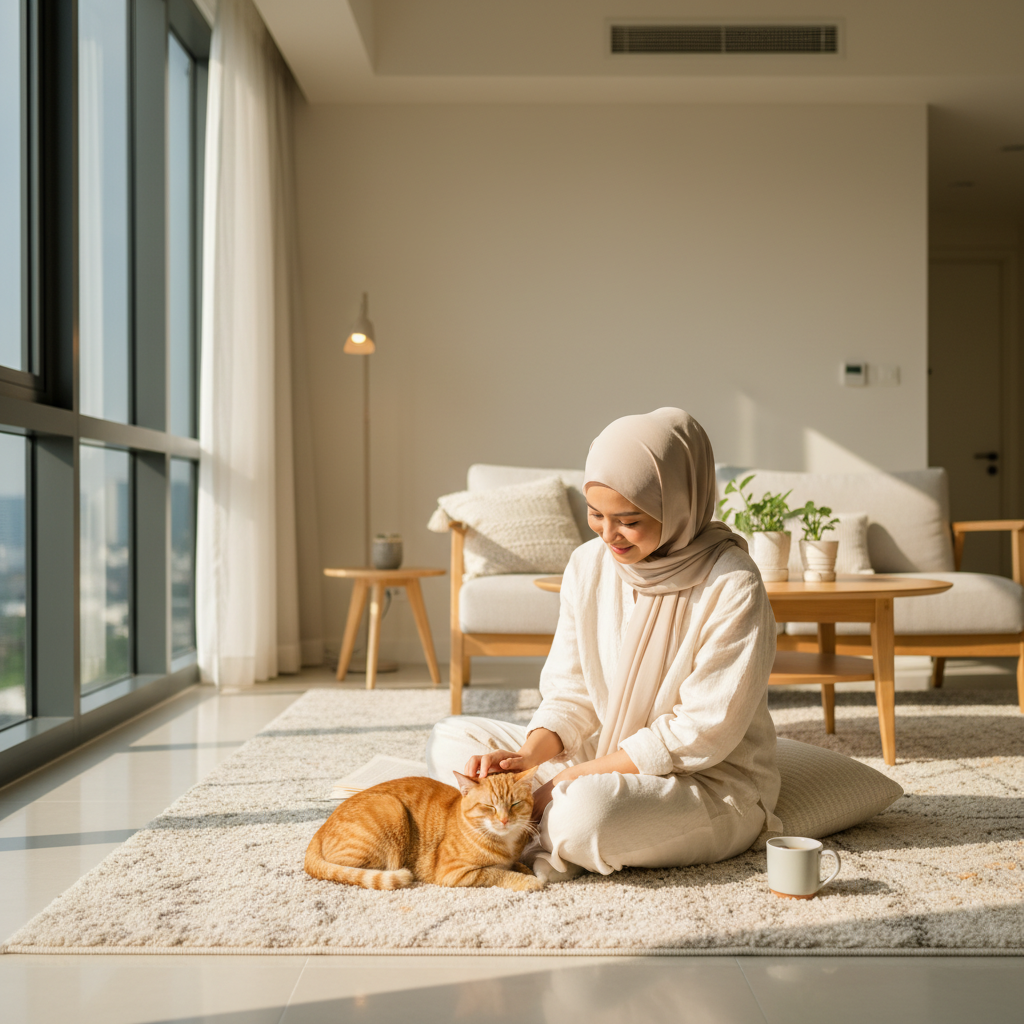
Cats are 'mesopredators', meaning trust is a survival choice to lower their guard.
The 'Slow Blink' is a cross-species Duchenne smile that signals peace.
Exposing the belly is a visual sign of trust, but usually not an invitation for belly rubs.
Bringing 'gifts' like geckos (Cicak) means your cat views you as a core member of their colony.
Your cat doesn't see you as an equal. Biologically speaking, they see you as a giant, ten-times-larger potential predator that just happens to have snacks. For a creature that sits in the middle of the food chain, trust isn't a default setting—it's an expensive biological investment.
Understanding this 'Mesopredator Paradox' changes everything. When a cat chooses to sleep near you or show you their belly, they aren't just being cute; they are actively suppressing millions of years of survival instinct. In Malaysia, where our cats navigate everything from humid condos to sudden afternoon thunderstorms, these signs of trust take on a very local flavor.
The Science of the Slow Blink
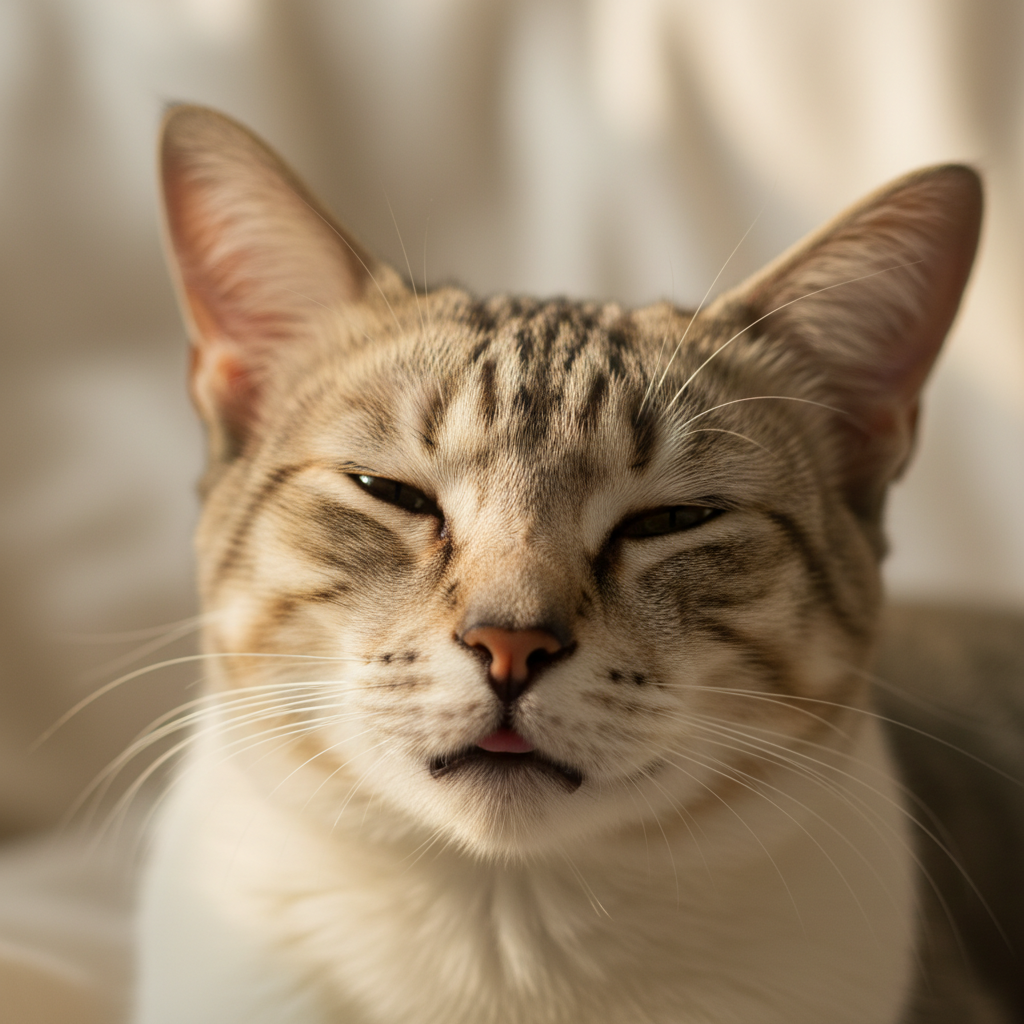
In the wild, staring is a threat. It’s what a predator does before it strikes. When your cat looks at you and slowly closes their eyes, they are doing something radical: they are intentionally blocking their vision. This signals, 'I trust you enough to close my eyes in your presence.'
A 2020 study from the University of Sussex confirmed that this movement, known as the 'slow blink', acts as a "Feline friendly? How to build rap-paw with your cat" or a Duchenne smile across species. If you want to boost your bond, try narrowing your eyes and blinking slowly back at them. It’s the cat equivalent of a warm hug.
Not sure if your bond is there yet? You can use our 猫咪信任度测试 to see where you stand on the Feline Trust Pyramid.
| Trust Level | Typical Behavior | Psychological/Physiological Interpretation | Recommended Human Action |
|---|---|---|---|
| Level 0: Distrust/Fear | Hiding, hissing, dilated pupils, flees upon encountering humans. | Cortisol dominant. Cat perceives you as a predator, survival threatened. | Stop approaching. Provide high perches and hiding boxes. Completely ignore the cat to reduce environmental stress. |
| Level 1: Tolerance | Stays in the same room but maintains distance, stares at you, dares to eat in front of you. | Mesopredator trade-off. Resource temptation > fear. In observation/assessment phase. | Maintain predictability. Slow down movements, establish fixed feeding routines. Avoid direct eye contact. |
| Level 2: Visual & Spatial Assurance | Slow blinks, sleeps with back to you, adopts "chicken squat" posture near you. | Visual relaxation. Confirms your non-aggressive intent, begins to lower guard. | Respond to signals. Return slow blinks. Avoid prolonged staring. Speak softly. |
| Level 3: Chemical Integration & Active Affiliation | Allorubbing (rubs legs/hands), upright tail greeting, allows head touching. | Pheromone marking. F4 pheromone released, incorporating you into the "colony scent" circle. | Moderate interaction. Offer finger for cat to sniff (simulated nose-kiss). Only stroke head and facial gland areas. |
| Level 4: Visceral Vulnerability | Rolls over exposing belly in front of you, presents rear towards your face, deep sleep (dreaming). | Defense disarmed. Trusts you to protect its internal organs and blind spots. | Respect boundaries. Do not touch belly! Praise it, or gently stroke head. Accept the "butt presentation." |
| Level 5: Psychological Interdependence | Kneading, grooming your hair/hands, bringing back prey (toys/insects), drooling and purring. | Neoteny/Oxytocin surge. Views you as a surrogate parent or core companion. | Cherish and reciprocate. Accept "gifts" (dispose of later). Regularly groom as reciprocation (simulated allogrooming). |
The Hugging Fallacy: My Biggest Mistake
I'll be honest—I used to think hugging was the ultimate way to show love. I’d scoop my cats up and squeeze. But then I noticed their ears flattening and tails twitching irritably. I realized I was activating their HPA axis, releasing cortisol, and making them feel like they were caught by a predator.
Research shows that "full-body restraint causes physical signs of fear" in cats. For a cat, being held tight means losing their exit route. Once I stopped forcing hugs and started letting them come to me, our trust skyrocketed. Sometimes, loving them means giving them the space to leave.
The 'Cicak' Gift: Gross But Grateful
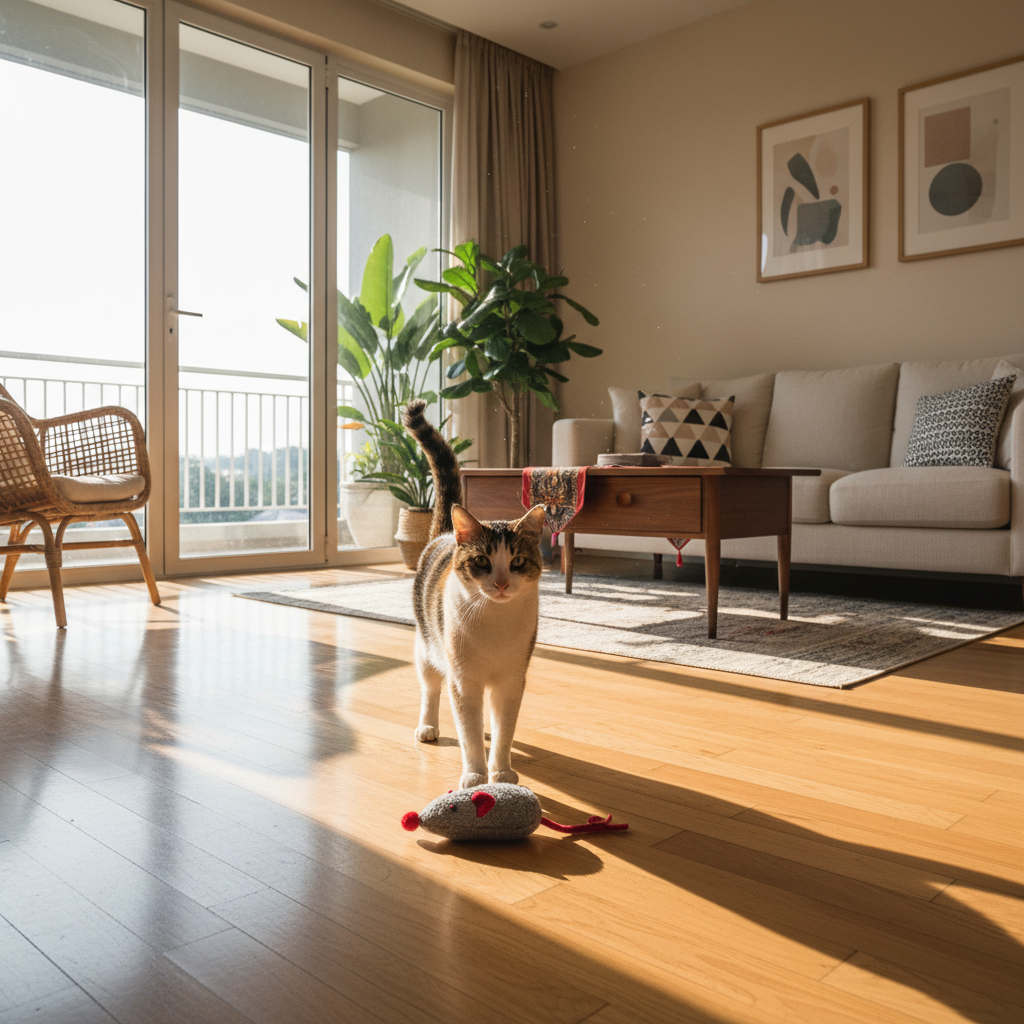
In Malaysian homes, trust often arrives in the form of a half-dead *Cicak* (house gecko) or a giant cockroach left right by your pillow. While our first instinct is to scream, in cat language, this is 'Prey Gifting'.
This is Level 5 trust on the pyramid. Your cat either thinks you’re a terrible hunter who needs to be fed, or they feel so safe in your home that they bring their 'spoils' to the core of their territory to share. Just a quick health tip: geckos in tropical climates can carry liver flukes. If your cat is a frequent hunter, make sure to keep up with their 驱虫时间表.
The Belly Trap: Look, Don’t Touch
Most owners think a cat showing their belly is an invitation for a rub. Then—*CHOMP*—the 'Venus Flytrap Effect' kicks in. This isn't a sign of aggression; it's a misunderstanding of signals.
When a cat shows you their belly, they are exposing their most vulnerable internal organs. It is the ultimate visual proof of trust. However, the hair follicles on a cat's belly are hypersensitive. Touching them can trigger a defensive reflex. They are saying 'I trust you not to hurt my belly,' not 'Please rub my belly until I bite you.'
Trust with a cat isn't built in a day, but it can be broken in a second. Whether it's respecting their space or providing a clean, odor-free litter box (like Lion, our clean-freak cat who demands perfection), every small action matters. When they finally give you that slow blink, you know you've earned something truly special.
Your Monday Morning Action: Tonight, wait for your cat to look at you. Don't reach for them. Instead, narrow your eyes and blink slowly, then look away. See if they blink back. It’s the easiest way to say 'I love you' in cat.
| Cat Behavior Signal | Common Human Misinterpretation | Scientific/Behavioral Interpretation | Evolutionary & Neurological Context |
|---|---|---|---|
| Slow Blink | "It's tired." | "I trust you, I can close my eyes." | Blocks predatory stare, lowers physiological arousal level. |
| Belly Up | "Come quickly, rub my belly!" | "I feel very safe. See, I've put away my weapons." | Ultimate display of trust + ultimate tactile defense. Touching belly triggers primal bite reflex. |
| Butt Presentation | "How disgusting/rude." | "This is my ID, please check my scent." | Anal gland pheromones are cat's social ID. This is an equal social greeting. |
| Kneading | "Sharpening claws." | "I'm nursing, you are my mom." | Neoteny. Oxytocin system activated, triggers infantile nursing memory. |
| Chattering (Window) | "Angry because it can't catch it." | "I'm practicing breaking spines." | Simulates spine-breaking action during hunting, a "vacuum activity." |
| Zoomies (After defecation) | "Gone crazy." | "Vagal nerve stimulation/escaping scent." | Defecation stimulates vagal nerve bringing pleasure + instinct to cover tracks to avoid large predators. |
| Half-closed eyes | "Bored." | "Standby mode: maintaining vigilance." | Allows rest while maintaining partial visual surveillance to respond to sudden threats. |
| Follows to bathroom | "Clingy." | "Guarding vulnerable companion." | Protecting group member engaged in high-risk activity (excretion), or curiosity about enclosed space. |