Feline Chin Acne is a skin disorder, not just poor grooming.
Plastic bowls are a leading cause due to bacterial biofilms.
Malaysia's high humidity (80%+) and haze particles trigger flare-ups.
Never squeeze the spots; it can lead to severe infection (Furunculosis).
You’re scratching your cat’s chin, enjoying a quiet moment together, when your fingernails catch on something. You look closer. It looks like someone sprinkled black pepper all over their fur. You try to wipe it off, but it’s stuck. It feels greasy, a bit gritty, and honestly, kind of gross.
That "black pepper" isn't dirt from their last meal. It's Feline Chin Acne. In Malaysia, where the air is as thick as soup and the haze season loves to clog up every pore, this condition is more than just an eyesore—it’s a persistent skin battle that many cat parents are losing without realizing why.
It's Not Just Dirt: The Science of the "Black Pepper"
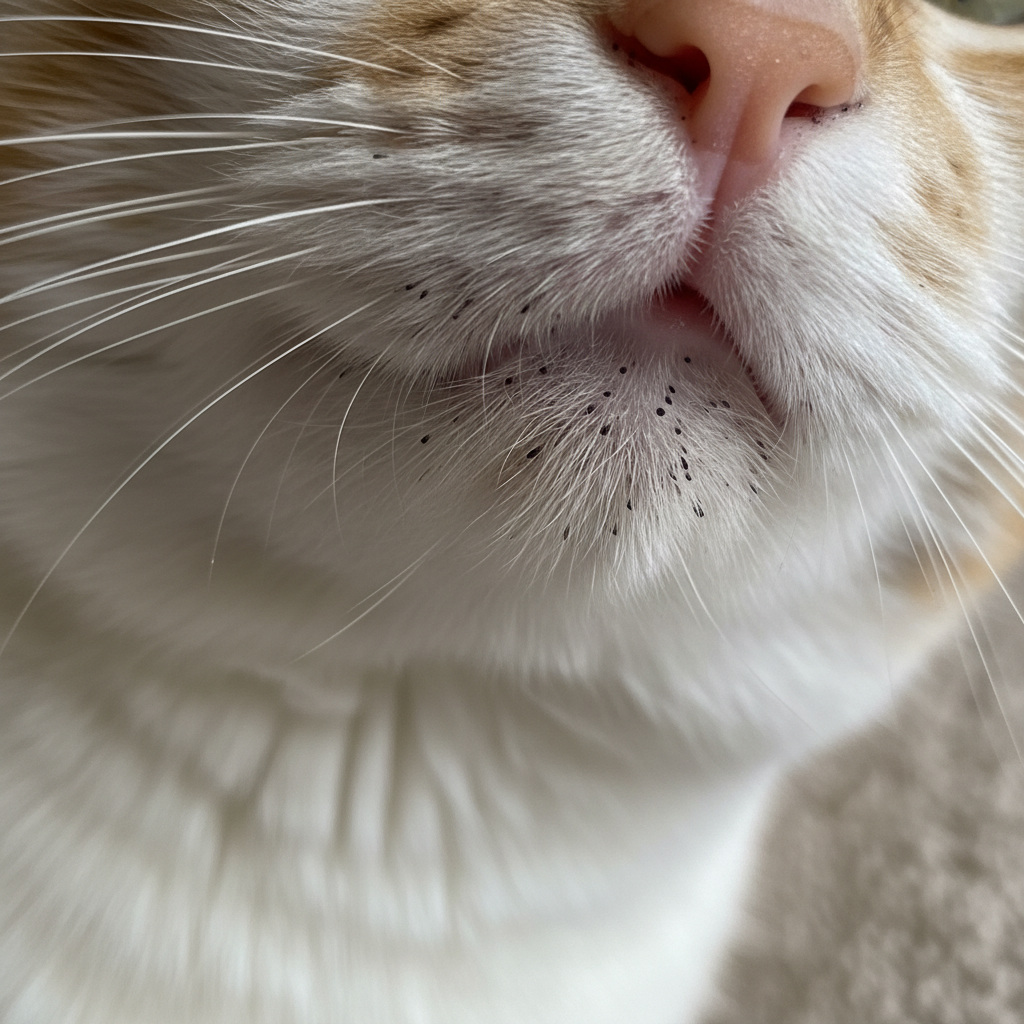
Feline Chin Acne is an idiopathic disorder of follicular keratinization. In plain English? It means your cat’s skin is producing too much keratin (the stuff fur and claws are made of) and trapping it in the hair follicles along with sebum. When this oily cocktail hits the air, it oxidizes and turns black—just like a human blackhead.
If you're unsure if it's acne or something else, you can use our Skin Condition Checker to get a clearer picture. Unlike human acne, this isn't about hormones. It can happen to any cat, regardless of age or gender. Even Tiger, despite his young age and heart condition, needs us to keep a close eye on his grooming habits to ensure skin issues don't add to his health load.
| Severity Stage | Clinical Features | Cat's Sensation | Pathological State | Management Strategy |
|---|---|---|---|---|
| Green Light (Mild / Comedonal) | Scattered or dense small black granules (comedones) on chin, rough texture like sandpaper. Skin base color normal or slightly red, no swelling, no hair loss. | No pain, usually no itching, normal appetite/mood. | Simple follicular hyperkeratosis and blockage, no secondary bacterial infection. | Focus on environmental cleanup and basic cleaning; no antibiotics needed. |
| Yellow Light (Moderate / Folliculitis) | Black granules enlarge and merge into crusts. Chin skin visibly red, swollen. Scattered red papules or white pustules. Localized hair thinning. | May itch, frequent chin rubbing or scratching. May show slight avoidance when touched. | Folliculitis with superficial bacterial or Malassezia infection. | Topical medication (e.g., Benzoyl Peroxide, Chlorhexidine), increased cleaning frequency. |
| Red Light (Severe / Furunculosis) | Chin severely swollen, 'thickened' (edematous swelling). Deep hard nodules or cysts. Skin ulceration, bloody or purulent discharge, large patches of hair loss, 'rotting chin'. | Obvious pain, refuses chin touching, may affect eating. Local lymph nodes (submandibular) may be swollen. | Furunculosis, deep cellulitis, granulomatous inflammation. Follicle rupture, deep dermal infection. | Immediate veterinary intervention. Systemic antibiotics, anti-inflammatory drugs (corticosteroids), possibly surgical debridement and drainage. |
The Malaysia Factor: Humidity and Haze

Living in Malaysia means dealing with relative humidity often exceeding 80%. This moisture weakens the skin barrier and makes sebum more fluid, creating a perfect playground for yeast like Malassezia. Add to that the seasonal Haze—those tiny PM2.5 particles are small enough to settle deep into pores, causing inflammation and oxidative stress. It's a recipe for a "stubborn" case of black chin.
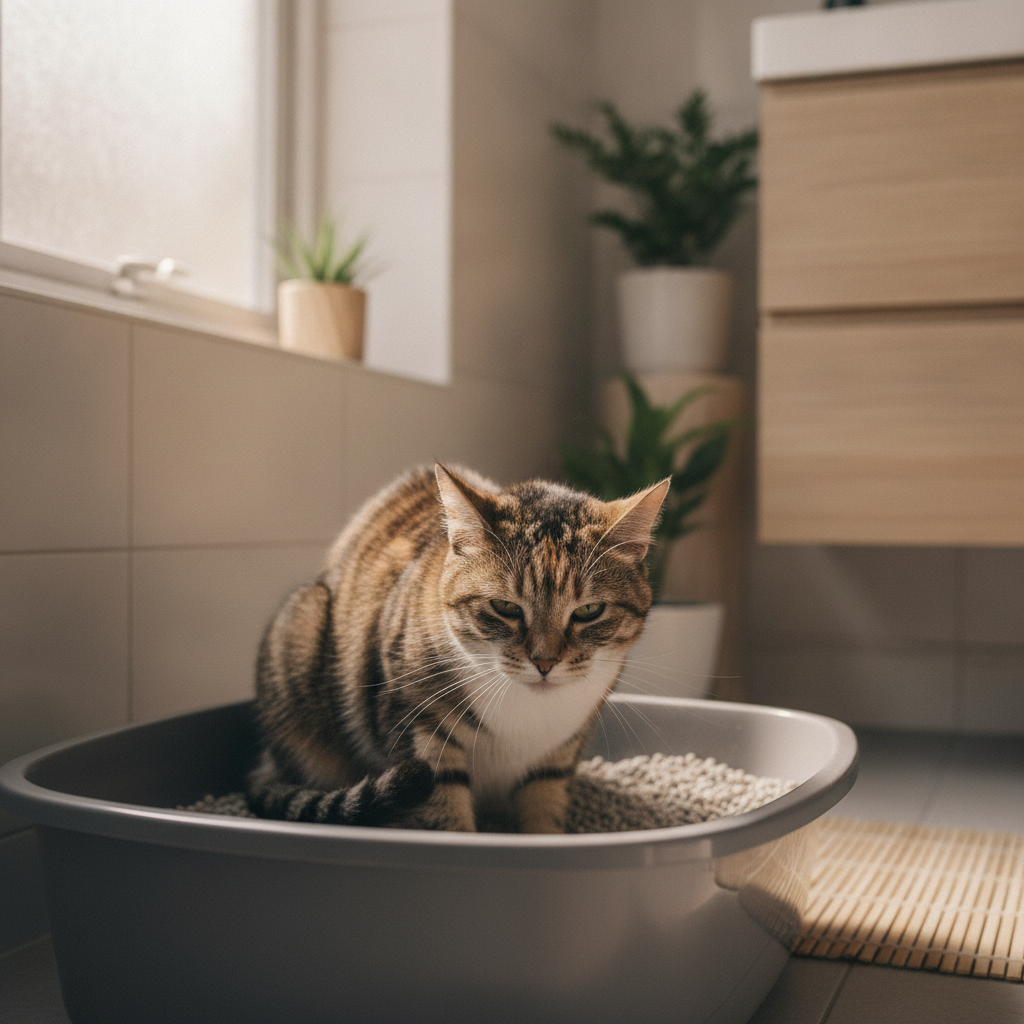
This is why high-quality, low-dust products are so important. Our Ping'An is incredibly sensitive to dust; a dusty environment makes her sneeze and irritates her skin. We've seen how Liger Tofu Cat Litter helps keep the environment cleaner because its ultra-low dust formula doesn't add more particles to the air your cat lives in.
The Bowl Revolution: Ditch the Plastic
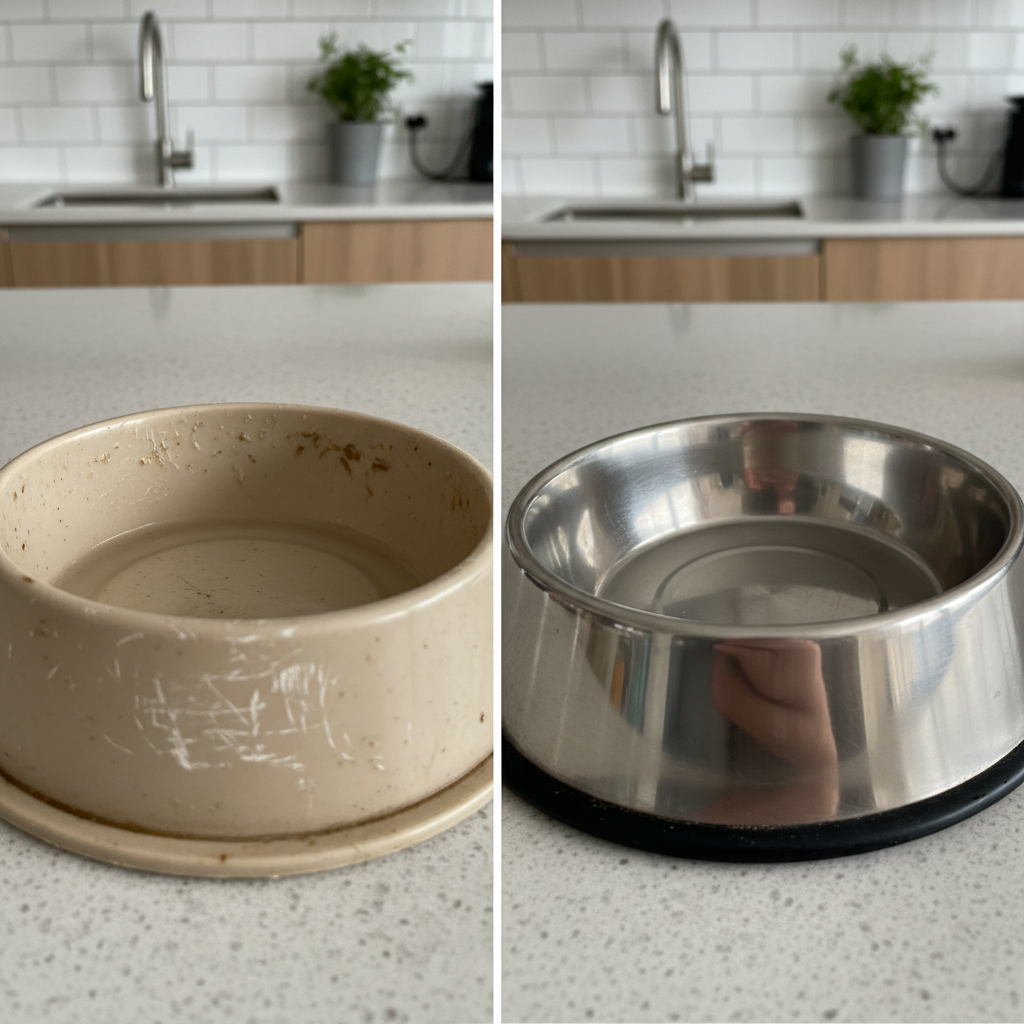
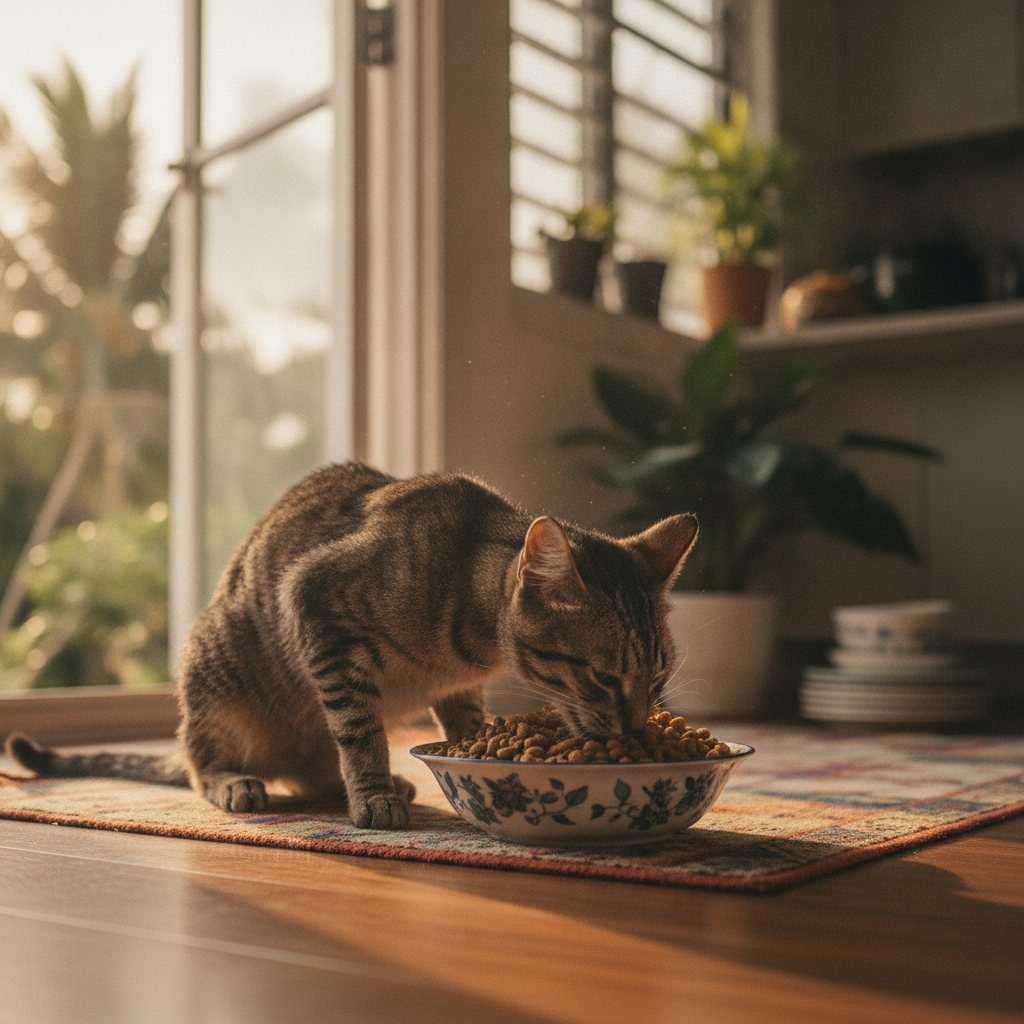
If you're still using plastic bowls, stop. Right now. Plastic is porous and gets scratched easily. Those tiny scratches become luxury condos for bacteria to build biofilms—slimy layers of germs that are 1,000 times more resistant to cleaning than normal bacteria. Every time your cat eats, they're rubbing their chin into a concentrated pool of pathogens.
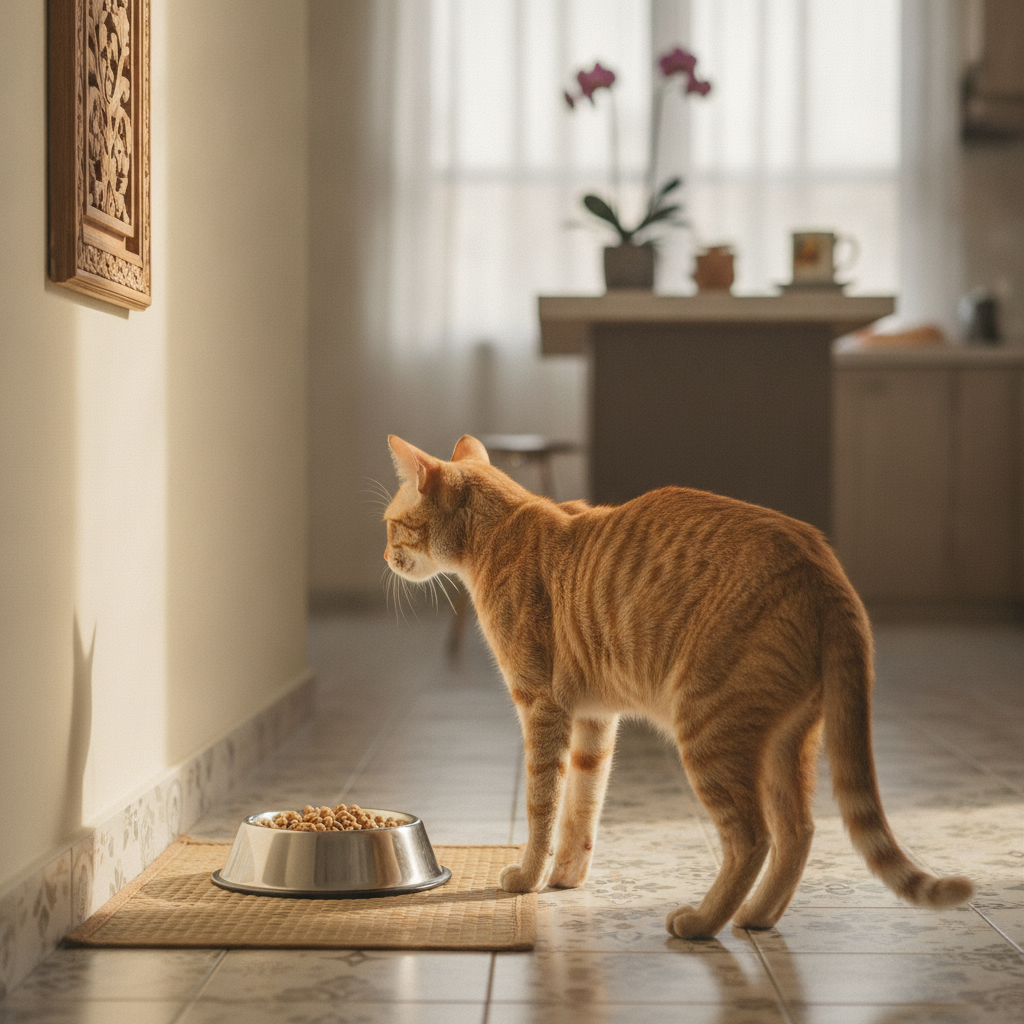
Switch to 304 stainless steel or tempered glass. These materials are non-porous and harder to scratch. Also, look for shallow bowls. Deep bowls force the chin to rub against the edges, pushing dirt and bacteria further into the follicles. You can learn more about how small environment changes impact health in our guide to common cat diseases.
| Category | Material | Surface Microstructure | Biofilm Risk | Recommendation |
|---|---|---|---|---|
| King Tier | 304/316 Stainless Steel | Dense crystal lattice, non-porous | Extremely Low | Highly recommended food-grade SUS304. High hardness, resistant to scrubbing, bacteria difficult to anchor. Does not contain BPA or endocrine disruptors. |
| King Tier | Tempered Glass | Amorphous solid, extremely smooth | Extremely Low | CorningWare glass or reinforced glass is best. Chemically stable, does not adsorb oils, easy to spot dirt. |
| Commoner Tier | High-Temperature Ceramic | Glazed smooth | Low (if intact) | Prerequisite: glaze is complete and lead-free. Once microcracks (crazing) or chips appear, immediately downgrade to Trash tier, as cracks are bacterial hiding spots. |
| Trash Tier | Plastic (PP/PET) | Porous, loose, easily scratched | Extremely High | Plastic surfaces are microscopically porous, low hardness, easily scratched by cleaning tools. Hydrophobic bacteria easily colonize and form biofilms. |
| Trash Tier | Melamine | Easily ages, multiple microcracks | High | Though harder than common plastic, long-term use leads to aging and microcracks. May leach formaldehyde or melamine, irritating skin. |
The Time I Squeezed Too Hard
I’ll be honest: when I first saw those black spots on my cat, I thought I could just "clean" them off with my fingernails. I sat there for 20 minutes, picking and squeezing, thinking I was helping. The next morning, his chin was twice its size, red, and oozing pus. It was a disaster.
I learned the hard way that squeezing forces the gunk deeper into the skin, causing the hair follicle to rupture. This is how a simple blackhead turns into a painful Furunculosis (deep infection). Now, I trust the process: gentle cleaning with saline or vet-recommended wipes, and addressing the root cause like the bowl and the litter dust. If it looks really bad, just consult your veterinarian for proper medication like Benzoyl Peroxide.
| Harmful Practice | Why It's Harmful | Pathological Outcome |
|---|---|---|
| Squeezing the spots | Applies pressure, rupturing follicle walls. Forces contents (keratin, sebum, bacteria) deeper into the dermis. | Turns superficial folliculitis into deep furunculosis, severe foreign body granulomatous reaction, increased risk of sepsis, permanent scarring. |
| Applying Minyak Gamat (Sea Cucumber Oil) | Often coconut oil-based, highly comedogenic. Creates an occlusive layer over clogged follicles. Traditional preparations may not be sterile. | Aggravates blockages, promotes anaerobic bacterial growth (e.g., P. acnes), introduces new pathogens to broken skin. |
| Using Human Toothpaste | Contains fluoride, SLS, menthol, xylitol (toxic to cats). Different pH from cat skin. | Chemical burns, contact dermatitis, xylitol poisoning (hypoglycemia, liver failure), gastrointestinal upset from fluoride ingestion. |
| Using Hydrogen Peroxide | Strong oxidizing agent, indiscriminately destroys healthy cells (fibroblasts) alongside bacteria. | Tissue toxicity, delays wound healing, causes tissue necrosis, ineffective for deep infections. |
Myth: "It's Just a Cosmetic Issue"
Many people think black chin is just about the cat looking a bit dirty. Wrong. While it starts as "blackheads," it often progresses to itchy, painful sores. Cats will scratch their chin on furniture to find relief, introducing even more bacteria. In humid climates, these open sores can easily lead to fungal outbreaks or even systemic infections if left untreated. It’s a health issue that affects their comfort and appetite.
Winning the war against black chin isn't about one magic cream. It’s about changing the environment that caused it in the first place—swapping bowls, managing humidity, and using low-dust litter like Liger.
Your Monday Morning Action: Go to your kitchen right now. If your cat's bowl is plastic or has scratches, throw it away. Replace it with a shallow stainless steel or ceramic bowl before noon tomorrow. Your cat’s chin will thank you.