Resting respiratory rate > 40 bpm is a critical warning sign of distress.
Diaphragmatic hernia causes 'internal drowning' as organs press against lungs.
Surgery is usually standard, but stable cases require intense lifelong monitoring.
Low-dust environment is vital for cats with compromised respiratory systems.
September 2024. We had just finished dinner when a white Siamese cat started circling us outside the restaurant. I honestly thought she was a male cat at first—she had these piercingly beautiful blue eyes that just pulled us in. Without a second thought, I brought her home. We named her Ping'An.
The next morning at the vet, the reality hit. Not only was she female, but she was also at least 6 weeks pregnant. Then, everything changed in a heartbeat. As the vet started the ultrasound, Ping'An's breathing suddenly became shallow and rapid. Her chest was heaving. The vet’s face went pale: 'This looks like a diaphragmatic hernia.'
What is Feline Diaphragmatic Hernia?
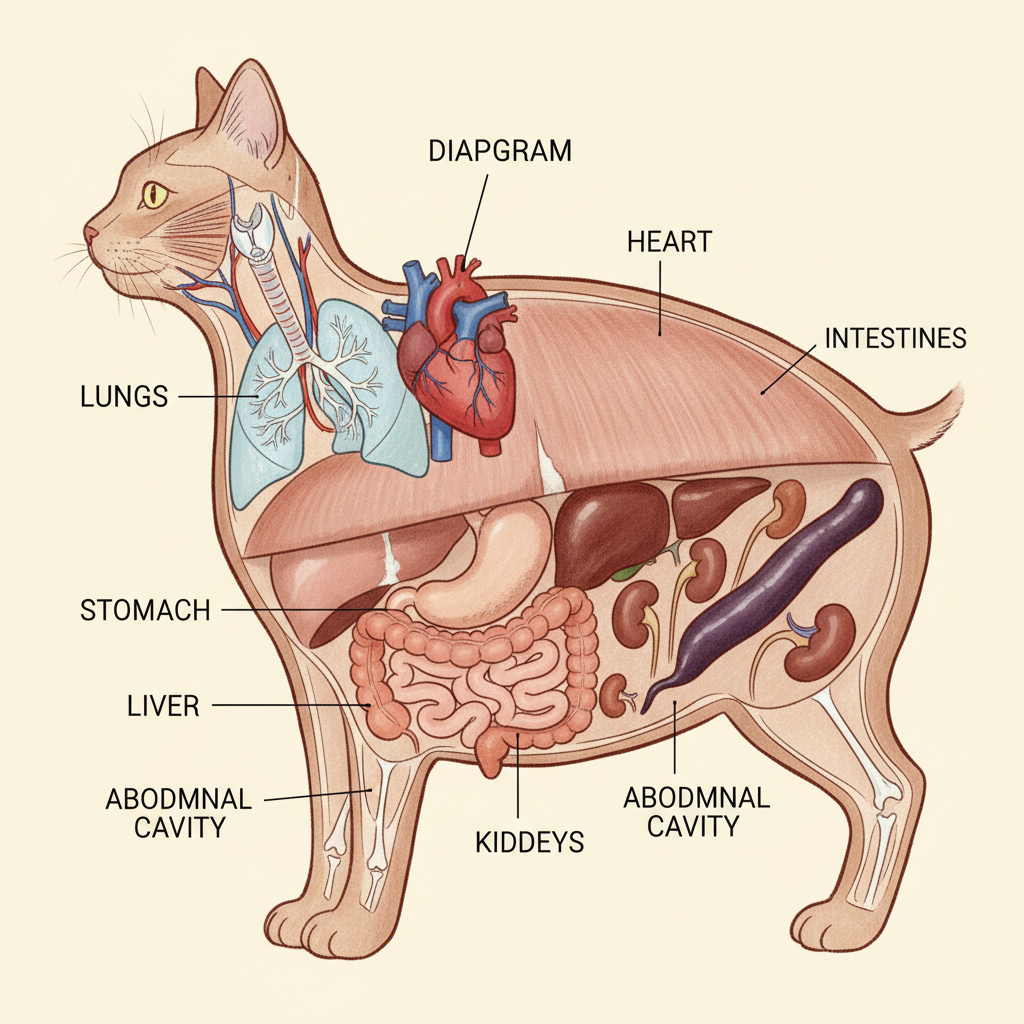
Think of the diaphragm as a biological wall that separates the lungs and heart from the stomach and liver. Under normal conditions, the thoracic negative pressure standards stay around -5 cmH2O. This vacuum allows the lungs to expand easily.
When this wall breaks—usually due to a blunt impact like a car accident or a fall—the pressure balance collapses. Abdominal organs like the liver or stomach slide into the chest cavity, literally stealing space from the lungs. This creates a state of 'internal drowning' where the cat fights for every breath because their lungs can't expand.
Signs Every Cat Parent Must Watch For
The symptoms can be deceiving. Sometimes it’s an acute emergency; other times, it’s a chronic struggle. Keep an eye on these respiratory distress warning signs:
Abnormal Respiratory Rate: A resting cat should breathe 15-30 times per minute. If it's consistently over 40, something is wrong.
Orthopnea (The 'Sphinx' Pose): Standing with elbows out and neck stretched forward to make breathing easier.
Open-Mouth Breathing: Unlike dogs, cats rarely pant unless they are in extreme danger.
The 50% Survival Chance: Ping'An's Story
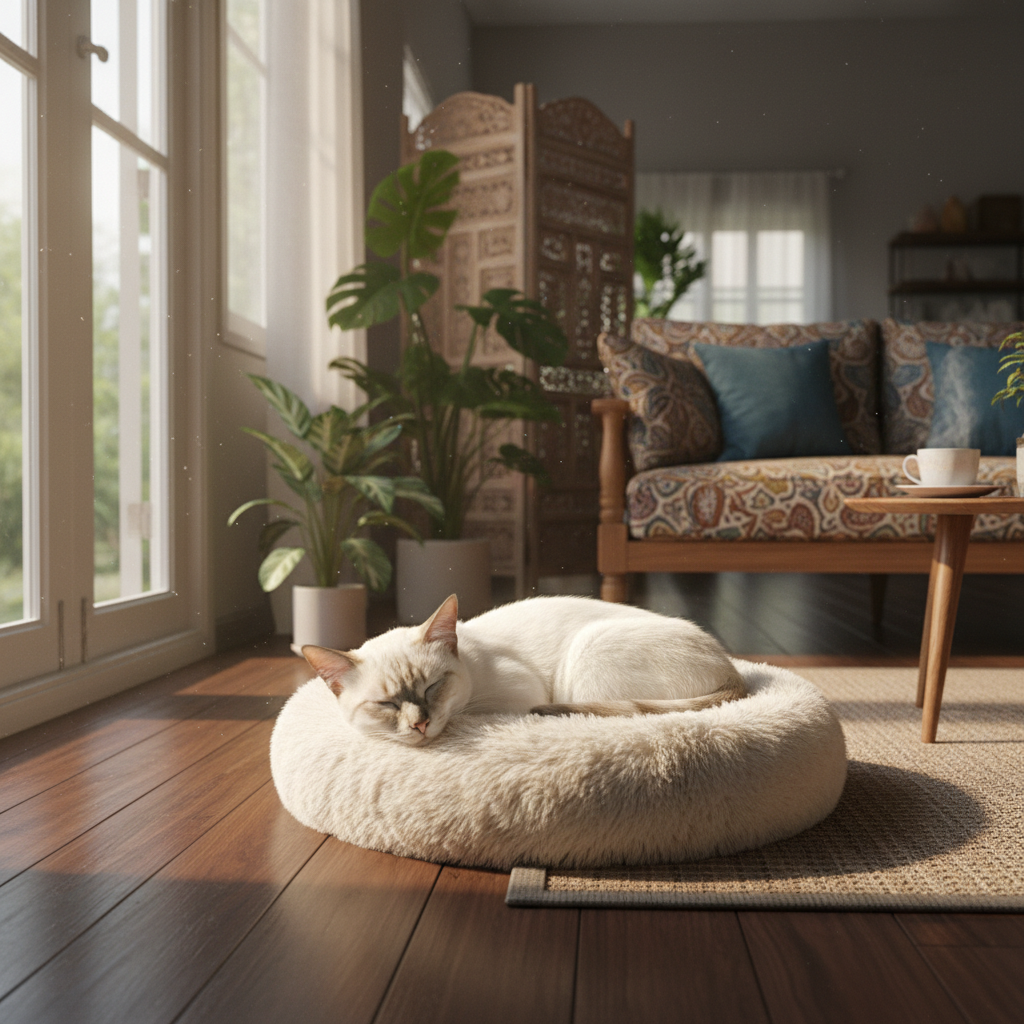
When Ping'An was diagnosed, the vet was blunt: surgery offered a 50% success rate. If it failed, she’d die on the table. Because she was pregnant, we had to wait. The very next day, Ping'An went into premature labor. She gave birth to three tiny kittens. Sadly, the first two didn't make it past a few days. Only Lucky survived—today, he’s a healthy, mischievous troublemaker.
We took Ping'An back for a follow-up. Seeing that she could eat, play, and live a relatively happy life despite her faster breathing, the vet advised against surgery. Sometimes, love means choosing the path of least physical trauma. We decided to manage her condition at home, focusing on a stress-free, low-dust environment.
Managing a Sensitive Cat at Home
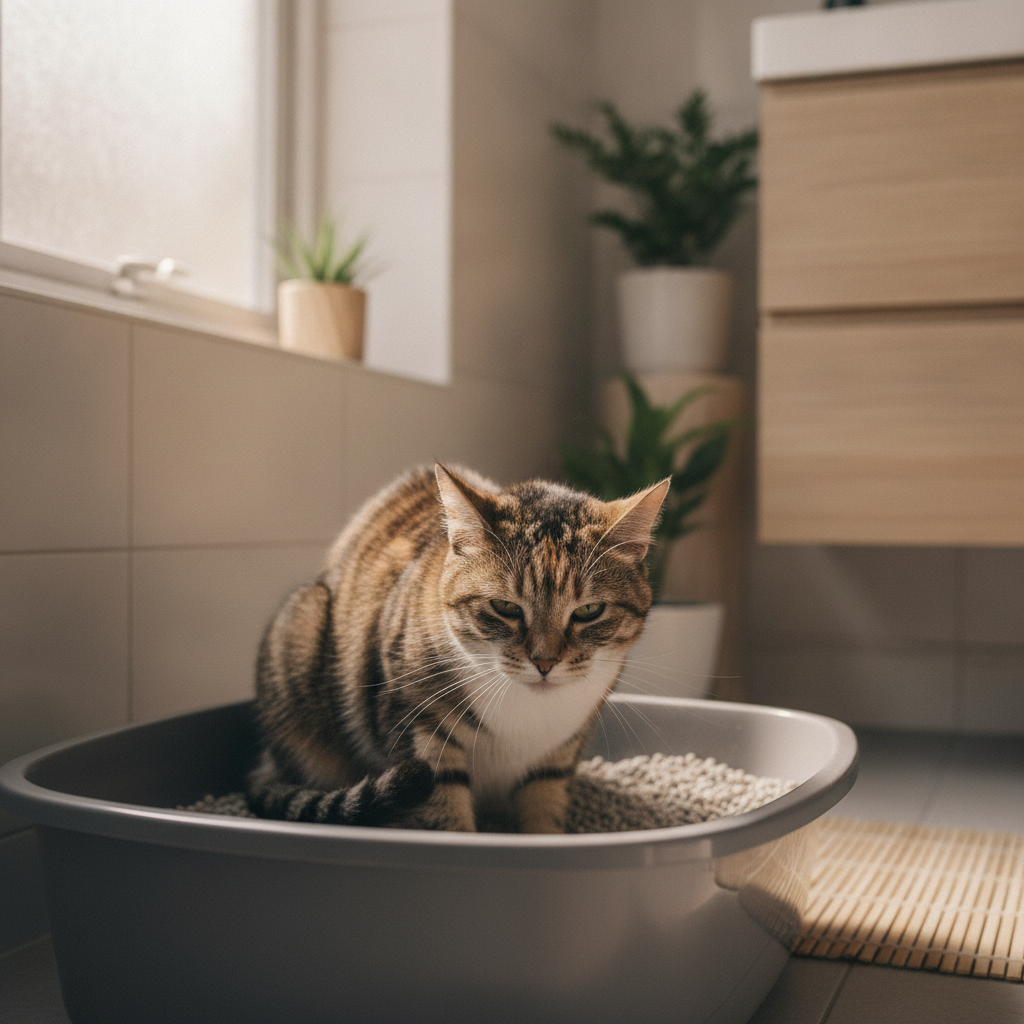
For cats like Ping'An—or even young Tiger with his heart condition—the environment is everything. Because their lungs are already under strain, dust is the enemy. We learned to obsess over litter quality. Lion, being our resident clean freak, helped us realize that a clean, milk-scented litter box actually reduces stress levels.
Is Surgery Always the Only Answer?
Medical textbooks will tell you that diaphragmatic hernias must be repaired surgically. In acute cases, this is 100% true. However, our journey with Ping'An taught us that for chronic, stable cases where the cat's quality of life is high, palliative care and environment management are valid choices. It's about monitoring every breath. If you're caring for a recovering cat, check out our newborn kitten care guide for tips on supporting fragile lives.
Why Dust-Free Environment Matters
Ping'An has a very sensitive nose. Any hint of dust from clay litter makes her sneeze and labor for air. That’s why we created Liger Tofu Cat Litter. We used her as our 'quality control' for our ultra-low dust formula. For a cat with compromised lungs, every dust particle is a microscopic assault. Using a plant-based, low-dust option like ours helps maintain that 'clean breathing micro-environment' she needs.
You can also use our Cat Weight Calculator to ensure your cat isn't carrying extra weight that puts more pressure on their already crowded chest cavity.
Ping'An is still with us today, living a full life with Lucky. Her story taught us that while vet medicine has its rules, as cat parents, our role is to provide the best possible environment for their unique needs. Whether it's congenital issues like Tiger's or trauma like Ping'An's, every moment is a gift.
Your Monday Morning Action: Watch your cat while they sleep tonight. Count their breaths for 60 seconds. If it's consistently over 30-40 bpm while resting, schedule a vet checkup this week just to be safe. It’s the small signals that save lives.
| Status Category | Respiratory Rate (breaths/minute) | Clinical Pathological Significance | Recommended Action |
|---|---|---|---|
| Normal | 15-30 | Good lung compliance, normal V/Q ratio | Continue observation, establish daily baseline record |
| Warning | 30-40 | At critical threshold. Possible pain, fever, mild pleural effusion, or early heart failure | Monitor 2-3 times daily; if not decreasing within 24 hours, consult a vet |
| Danger | > 40 | Tachypnea. Restricted lung volume, compensatory mechanisms activated, oxygen reserves depleting | Seek immediate veterinary attention. Do not wait overnight, especially if accompanied by lethargy |
| Emergency | > 60 or Open-Mouth Breathing | Respiratory Failure. SpO2 possibly <90%. Cat is "internally drowning" | Emergency (STAT). Every second counts, provide oxygen during transport if possible |