You found a better cat food — higher protein, on offer at the pet shop, or the brand your vet suggested. Great. So you pour a fresh bowl, your cat tucks in, and 24 hours later your bathroom looks like a crime scene and your cat is giving you the silent treatment. Sound familiar? Switching a cat's food the wrong way is one of the most common causes of sudden diarrhoea and dramatic hunger strikes in Malaysian homes. The good news: doing it right is simple, it just takes a week of patience. Here's the plan we use for Tiger, Lion, Ping'An and Lucky whenever we change their food.
Why You Can't Just Swap the Bowl Overnight
A cat's digestive system is a finely tuned, somewhat fussy machine. The gut runs on a specific population of bacteria and a specific set of digestive enzymes, both calibrated to whatever your cat has been eating. Change the food suddenly and that whole system is caught off guard: the bacteria that break down the old recipe aren't the right ones for the new recipe, and the result is gas, cramping, and loose stool while the gut scrambles to adapt.
Cats are especially prone to this because their digestion is built differently from ours — and even from a dog's. As obligate carnivores, their bodies are specialised for animal protein and not built for sudden dietary swings. Their stomachs even lack the strong cleansing contraction (the so-called 'housekeeper wave' that dogs and humans have), which is part of why a cat's gut is slower to reset after an abrupt change. Translation: your cat physically can't shrug off an overnight food swap the way a dog often can. The fix is to make the change so gradual the gut barely notices.
The 7-Day Transition Plan (Save This)
The whole method is just mixing old and new food in shifting ratios over about a week. Each step gives the gut a couple of days to adjust before you push the ratio further:
| Days | Old food | New food |
|---|---|---|
| Day 1–2 | 75% | 25% |
| Day 3–4 | 50% | 50% |
| Day 5–6 | 25% | 75% |
| Day 7+ | 0% | 100% |
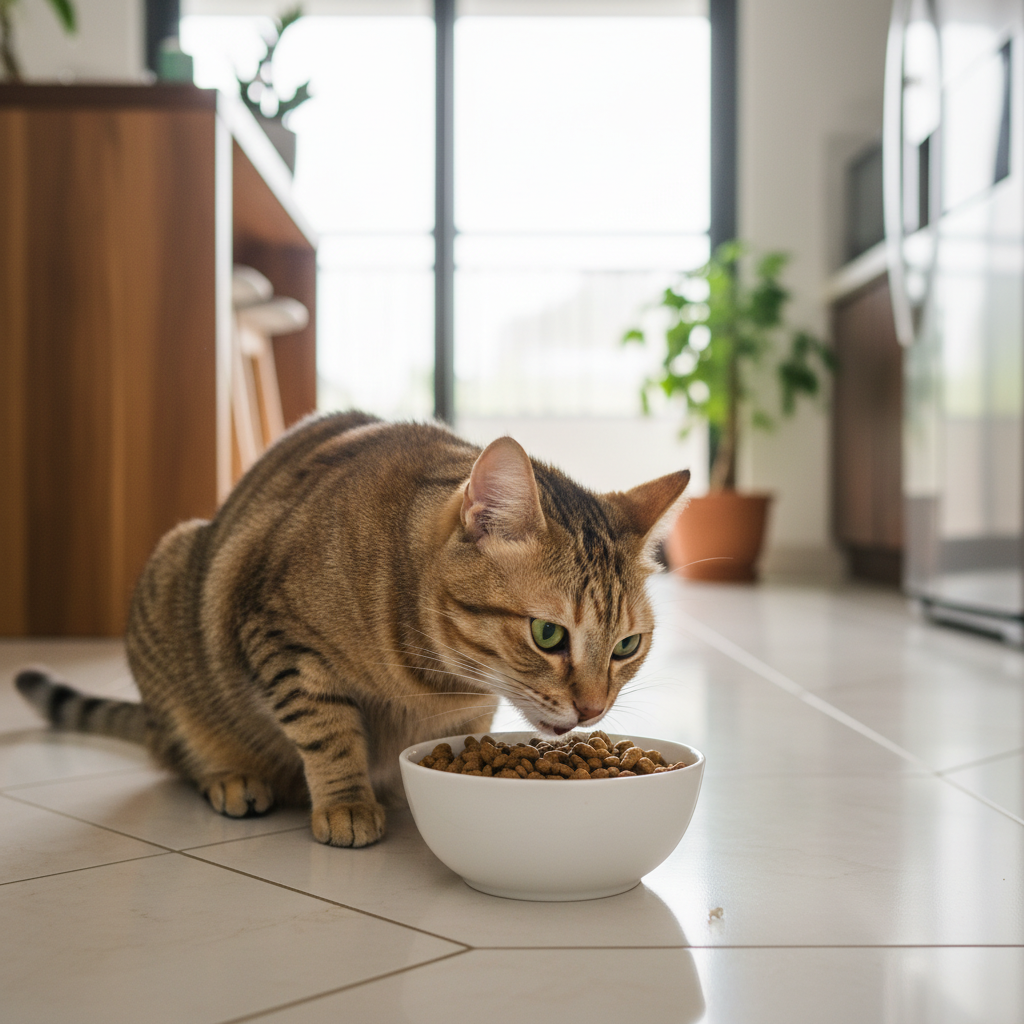
Mix the two foods together thoroughly in the same bowl so your cat can't simply pick out the old kibble and leave the new (they will try). A few practical rules:
- Go at your cat's pace, not the calendar's. The table is a default, not a deadline. If you hit a step and the stool goes soft, hold at that ratio for an extra day or two before advancing. There's no prize for finishing in seven days.
- Slow right down for sensitive cats. Kittens, senior cats, cats with a history of tummy trouble, or any cat moving between very different foods (say, dry to raw, or one protein to a totally new one) should stretch this to 10–14 days. Slower is always safer.
- Switching dry-to-wet or wet-to-dry? Same principle, and mind the portions — wet and dry have very different calorie densities, so check our cat food calculator so you're not accidentally over- or under-feeding during the change. Our guide to dry vs wet food in Malaysia covers the trade-offs.
When — and Why — You Should Switch in the First Place
Before you change anything, make sure the switch is actually worth doing — because every change asks something of your cat's gut. Good reasons to switch:
- Life stage. Moving a kitten onto adult food, or an adult onto a senior formula, at the right age.
- A vet's recommendation. A prescription or therapeutic diet for a specific health issue — these are worth the careful transition.
- Genuine quality upgrade. Moving to a food with better protein and fewer fillers. If you're not sure how to judge that, run the label through our food ingredient checker and read our breakdown on decoding cat food labels. A quick sniff test of the numbers: high named-meat content, named protein sources, and lower carbohydrate. You can estimate the carbs yourself using the standard NFE formula (100% minus protein, fat, fibre, moisture and ash).
A reason not to switch: boredom. Cats don't crave variety the way we assume — many do perfectly well on one good food for years, and constant chopping and changing just keeps their gut permanently unsettled. If your cat is healthy and thriving, 'I felt like mixing it up' isn't a great reason. Switch with purpose.
Reading the Litter Box: Your Early-Warning System
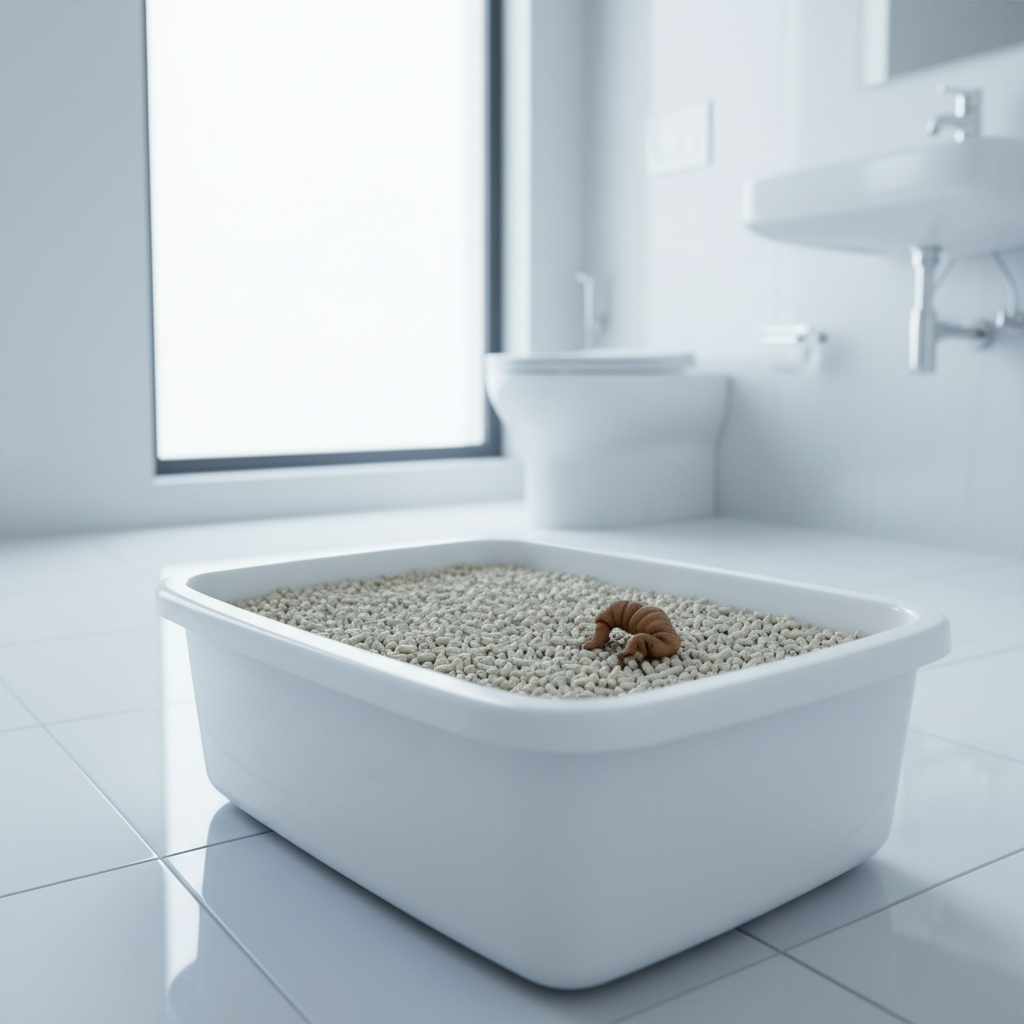
During any food change, the litter box becomes your dashboard. Your cat can't tell you its tummy feels off, but its stool will. You're watching for consistency (firm and formed is good; soft-serve or watery means slow down), frequency, and any sign of blood. This is where your choice of litter quietly matters.
A light-coloured litter makes this monitoring dramatically easier. On a pale surface, you can immediately spot dark, tarry stool (a sign of digested blood) or bright red streaks that you'd miss entirely in dark clay — vets even note that the colour contrast of light litter helps detect blood in stool. This is one underrated reason we use an off-white tofu litter: Liger Premium Tofu Cat Litter is pale, low-dust, and clumps the waste cleanly so a quick glance tells you how the transition is going. There's a second bonus — if the new food does cause some temporary looseness, a soft tofu litter's porous structure is actually recommended for cats with diarrhoea because it absorbs the mess fast and is gentle on a cat that's visiting the box more often. For a full read on what healthy stool should look like, our cat poop health guide is the reference. (As of May 2026, Liger runs RM21.90 for a 2kg pack up to RM169 for 10 packs at RM8.45/kg, free West Malaysia shipping — handy if you want a clean monitoring surface on standby before you start the switch.)
If Things Go Wrong: Loose Stool, Refusal & Red Flags
Even with a careful transition, you may hit a bump. Here's how to read it:
- Mild soft stool for a day or two: common and usually fine. Drop back to the previous ratio, hold there, and advance more slowly. The gut just needs more time.
- The hunger strike: some cats, especially fussy ones, refuse the new food on principle. Don't cave and don't starve them — a cat that stops eating entirely for more than about 24 hours risks a serious liver problem (hepatic lipidosis), so this is genuinely urgent. Warm the food slightly to boost the aroma, mix in a little more of the old food, or add a lick of something tasty. If refusal persists past a day, call the vet.
- Persistent diarrhoea: if loose stool drags on beyond a couple of days despite slowing down, pause the transition and speak to your vet. A probiotic can help — the strain Enterococcus faecium SF68 is shown to shorten diarrhoea in cats — but get vet guidance first. One thing to skip: don't reach for leftover antibiotics. Veterinary consensus now advises against routinely using metronidazole for simple acute diarrhoea.
True red flags — see a vet promptly, don't wait it out: dark tarry or visibly bloody stool (melena signals bleeding higher in the gut), repeated vomiting, a cat that's lethargic or hiding, or any refusal to eat lasting more than a day. These point to something beyond a simple food adjustment.
Malaysia-Specific Tips: Humidity, Picky Cats & Wet-Plus-Dry
A few things matter more in our climate:
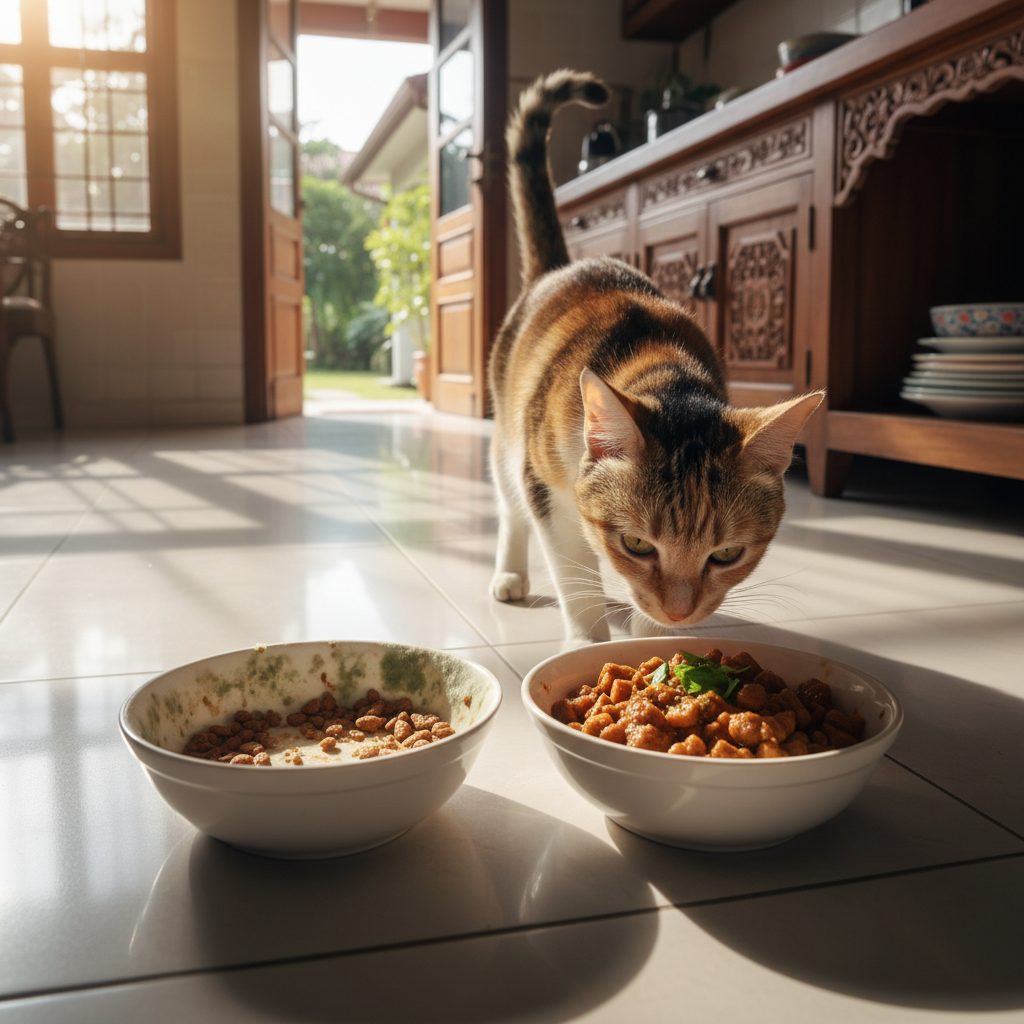
- Storage is half the battle. Our heat and humidity turn an open bag of kibble stale — and worse — fast. Damp, warm conditions are exactly what mould loves, and mouldy pet food can carry aflatoxins that cats are highly sensitive to. Keep both the old and new food in airtight containers, buy sensible pack sizes, and never feed kibble that smells off. A 'food change' that's really just spoiled food is a common hidden cause of tummy trouble here.
- Feed on a schedule. Free-feeding all day (common in our households) makes it harder to monitor appetite during a switch. Scheduled meals let you see exactly how much your cat is eating of the new food — crucial intel mid-transition.
- The wet-plus-dry combo. Many Malaysian cat parents do a mix of wet and dry, partly for hydration in our heat. If you're introducing wet food into a dry-only routine, treat it as its own gentle transition — a teaspoon at first — and check the math with our wet food analyzer and portion feeding guide.
Switching cat food isn't hard — it's just a test of patience. Mix old and new, go slow, let the litter box be your guide, and respect your cat's gut instead of fighting it. Do that, and you'll move your cat onto better food with nothing more dramatic than a slightly unimpressed look for changing the menu. Rush it, and you'll spend the week scrubbing floors. Seven days of patience is the cheaper option every time.