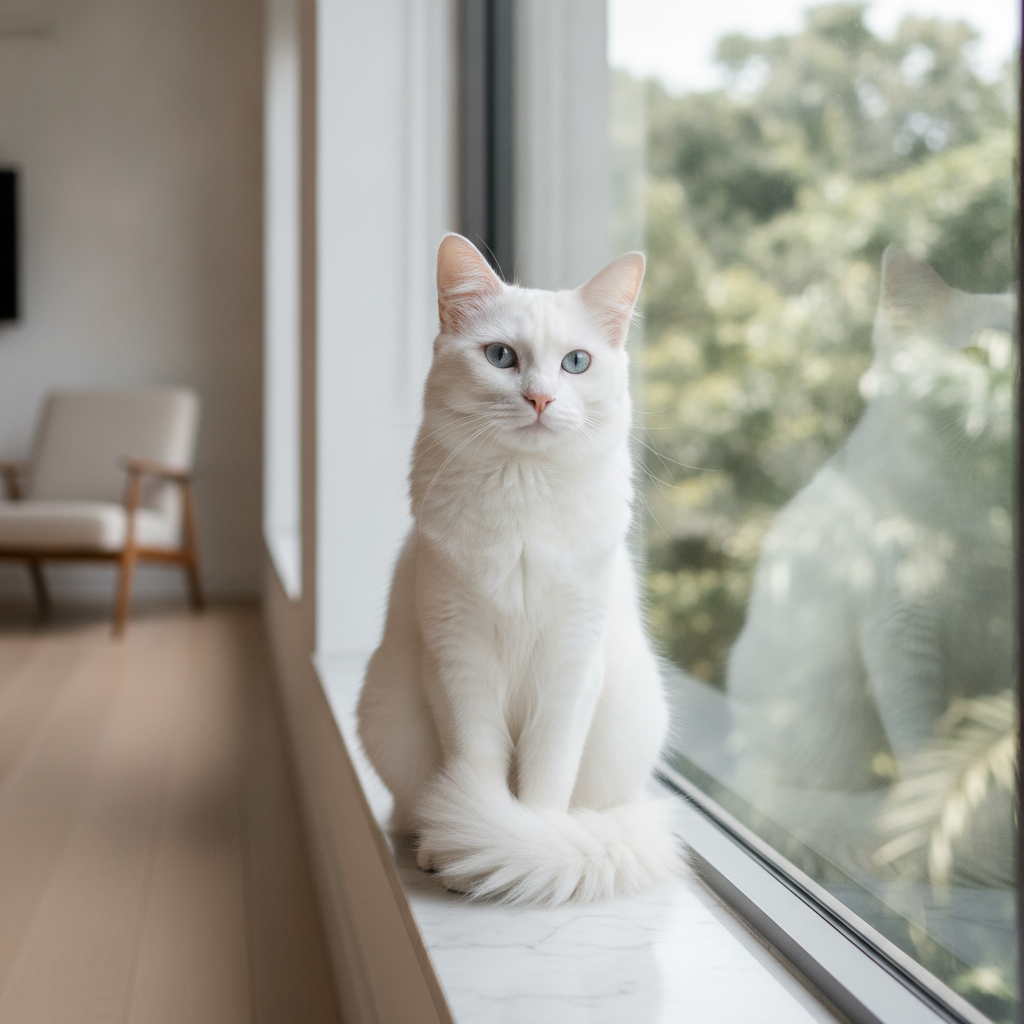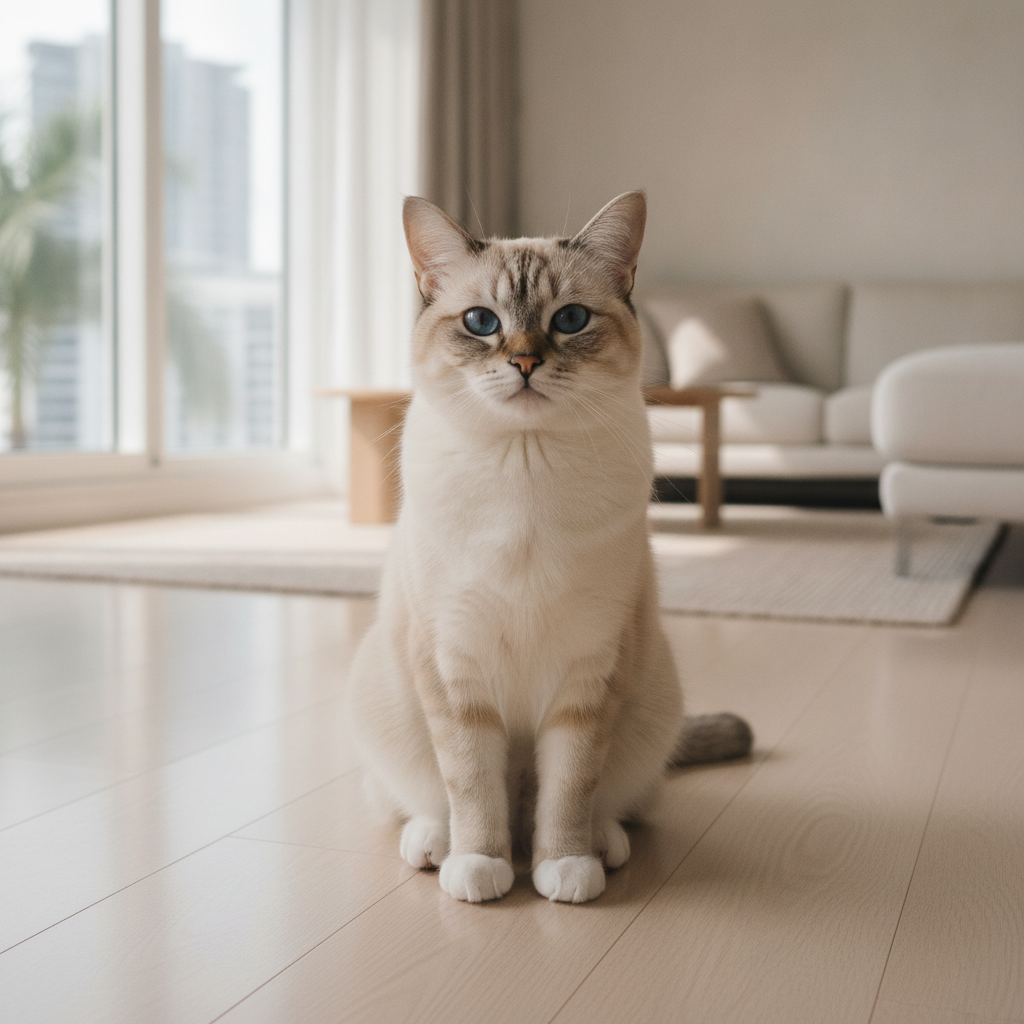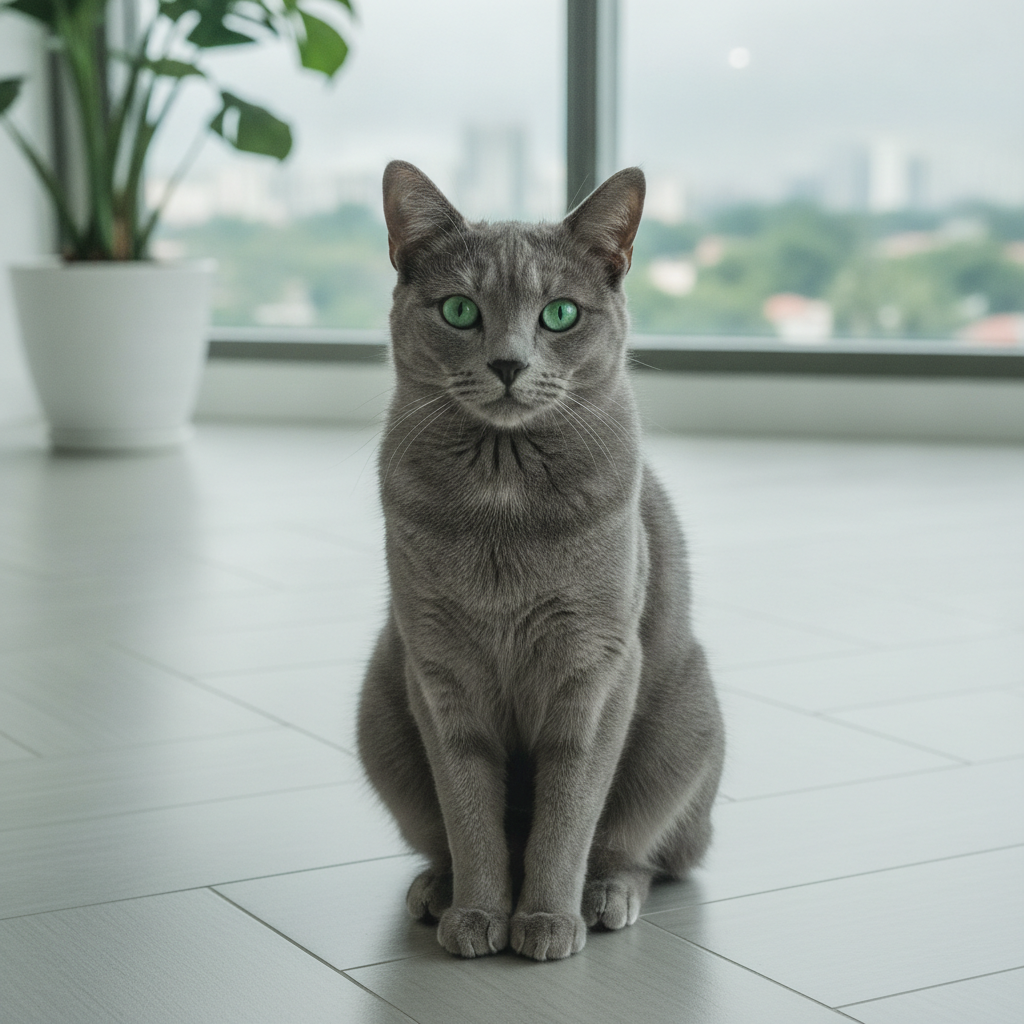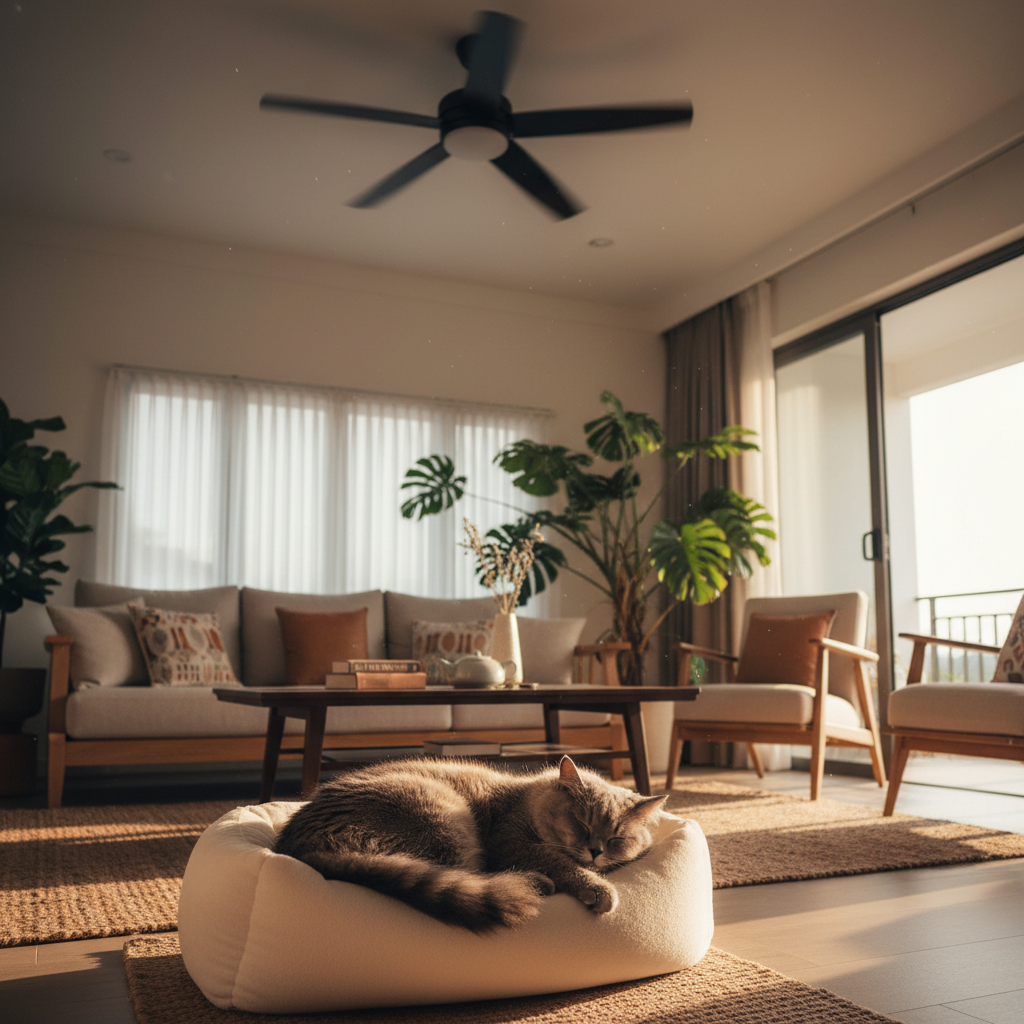
Cats' comfort zone is 30°C - 38°C; our 24°C air-con is actually freezing for them.
Avoid cheap gel cooling mats - they can contain toxic ethylene glycol.
Humidity over 70% makes natural rattan and fluffy beds a breeding ground for mites.
Use 'Scent Soaking' (an old T-shirt) to help your cat accept a new bed immediately.
Your cat is freezing. Right now. Even if it's 32°C outside in sunny Kuala Lumpur, that 24°C blast from your living room air-con feels like an Arctic winter to your feline friend. We often pick cat beds because they look 'aesthetic' or feel soft to our human hands, but for a cat, that bed is a survival tool.
Cats are biological heat-seekers. In Malaysia, we face a weird paradox: it is either too hot and humid (hello, skin fungus!) or artificially too cold. Choosing the right spot for them to recharge those 12 to 16 hours of daily sleep isn't just about shopping; it is about biological engineering.
The 24°C Trap: Why Your House is Too Cold
Humans are comfortable at 18°C to 25°C. Cats? Their Thermoneutral Zone (TNZ) is 30°C to 38°C. This means when we turn on the air-con, your cat's body has to work overtime just to stay warm. This is especially true for young cats like Tiger, who needs a stable environment due to his congenital heart disease.
In an air-conditioned room, a cat bed needs to be a heat-locking fortress. Think high sides and deep dish designs that trap their own body heat. Without it, they might suppress deep REM sleep to stay alert, leading to a grumpy, stressed-out kitty with a weakened immune system.
| Comparison Dimension | Human (Homo sapiens) | Cat (Felis catus) | Malaysia Environment Impact Analysis |
|---|---|---|---|
| Core Body Temperature | ~37°C | 38.0°C - 39.2°C | Cats have higher basal metabolic rate and set point, meaning they feel colder than humans. |
| Thermoneutral Zone (TNZ) | 18°C - 25°C | 30°C - 38°C | Key insight: A 24°C air-conditioned room, comfortable for humans, is cold for cats. |
| Heat Dissipation Mechanism | Well-developed sweat glands, highly efficient evaporative cooling. | Sweat glands only on paw pads; mainly relies on licking fur (saliva evaporation) and contact with cool surfaces (conduction). | In high humidity (common in Malaysia), saliva evaporation efficiency significantly drops, increasing heatstroke risk. |
| Insulation Mechanism | Clothing, subcutaneous fat. | Fur insulation layer, curling up posture, seeking heat sources. | Fur blocks cold air but also hinders heat dissipation. |
Humidity: The Invisible Enemy in Malaysian Homes
In Malaysia, our humidity often hits 80% or 90%. This makes natural materials like untreated rattan or thick cotton fillings very risky. They absorb moisture and become a 5-star hotel for dust mites and mold. If your cat has a sensitive nose like Ping'An, a moldy bed will trigger constant sneezing and skin issues.
For non-air-con areas, I highly recommend elevated mesh beds. They allow air to circulate underneath the cat, preventing heat accumulation and keeping the fabric dry. Plus, if you have a flea breakout, these are much easier to sanitize. Did you know that 95% of fleas live in the environment, not on the cat? A breathable bed is your first line of defense.
| Material | Thermodynamic Properties | Hot and Humid Environment Performance | Tier 1 Rating | Recommended Scenario |
|---|---|---|---|---|
| Cotton/Linen | Skin-friendly, highly absorbent, breathable. | Easily absorbs moisture, becomes heavy; prone to mold if not dried frequently; but cool to the touch. | ★★★★☆ | Suitable for non-air-conditioned areas; requires frequent washing and drying. |
| Fleece/Polyester | Excellent insulation, hydrophobic (non-absorbent). | Disastrous in non-air-conditioned areas, causing heat accumulation and skin problems; but an excellent insulator in air-conditioned rooms. | ★★★☆☆ | Only for air-conditioned rooms or rainy nights. |
| Wicker/Rattan | Excellent ventilation structure, natural aesthetic. | Very high risk. Natural rattan is highly prone to mold in >70% humidity; broken pieces can form sharp splinters. | ☆☆☆☆☆ | Recommended to use **poly-rattan** or treated high-grade rattan art. |
| Cardboard | Excellent insulator. | Softens and collapses quickly after absorbing moisture, prone to cockroaches and bookworms. | ★★☆☆☆ | Excellent as a disposable or short-term consumable; not for long-term use. |
I Learned This the Hard Way
Honestly, I used to buy those giant, fluffy 'princess beds' because they looked cute in my Shopee cart. But after a week of rain, the bed started smelling like a damp towel. My cat stopped using it and chose a cardboard box instead. I felt like a failure. Why didn't he love the expensive bed?
The insight? Cats don't care about aesthetics. They care about scent and security. That expensive bed smelled like a factory. I realized I had to 'prime' the bed by putting my old gym T-shirt inside. Suddenly, he was in it all night. It wasn't the bed's fault; it was my lack of scent engineering.
The Cooling Mat Myth
Unpopular opinion: Stop buying cheap gel cooling mats. While they seem like a godsend in Malaysia's 34°C weather, many cheap brands use ethylene glycol in the gel. If your cat (like the mischievous Lucky) scratches and punctures it, just one teaspoon of that fluid can be fatal. If you want to cool them down, stick to aluminum plates or marble tiles. They are safer, cooler, and won't kill your cat.
Choosing a cat bed is more than just picking a color. It's about respecting their biological need for high heat in a world where we love our air-con. Whether it's an elevated mesh bed for the porch or a deep bolster bed for the bedroom, make sure it fits their size and your room's microclimate.
Your Monday Morning Action: Go to your cat's favorite sleeping spot right now. If it's a bed you bought recently that they ignore, put one of your worn T-shirts in it. Leave it there for 48 hours. Watch if their 'refusal' suddenly turns into a long, deep nap.
| Product Type | Scientific Principle | Hygiene Advantage | Adaptability |
|---|---|---|---|
| Elevated Mesh Cot | Bernoulli's principle and convection cooling. Air circulates freely from below, carrying away abdominal heat, thoroughly solving skin problems caused by high humidity. | Extremely easy to disassemble and wash, quick-drying (suitable for rainy season), no filling means no dust mites. | Summer/Normal Temperature: Direct use, extremely cool. Air-conditioned room/Rainy season: Add a fleece blanket, instantly transforming into a warm bed, with the elevated base blocking cold transfer from floor tiles. |