Never bring a stray home directly; the vet must be the absolute first stop to screen for Sporo and FPV.
A negative test result doesn't mean 'safe'—the 14-day quarantine is non-negotiable due to the viral incubation window.
Budget RM310 to RM660 for the initial check-up, including blood tests and parasite treatment.
Use light-colored tofu litter to monitor urine color and stool health during the critical first month.
The smell of the wet market stayed on Ping'An’s fur for weeks. When we first found her, she was a skeletal 1.8kg, her ribs pushing against skin that felt like parchment paper. We thought we were just saving a hungry stray. We were wrong. A quick scan at the vet revealed she wasn't just starving—she was pregnant and suffering from a ruptured diaphragm, essentially 'drowning' internally.
In Malaysia, rescue isn't just a humanitarian act; it's a high-stakes gamble with environmental pathogens. If you're scrolling through Facebook rescue groups or heard a lonely meow outside your local mamak, stop. Before you open your door, you need a strategy. Because 'free' cats often come with the most expensive lessons.
The Vet Visit: No Shortcuts Allowed
I know the temptation to bring them home, give them a warm bath, and let them sleep on your bed is huge. Don't. A stray cat is a mobile biological library. In Malaysia, we deal with specific 'Tier 0' threats like Sporotrichosis (Sporo). If you have a tiny scratch on your finger and touch a Sporo-positive cat, you could end up with skin ulcers that take months to heal.
According to the Sporotrichosis in cats guidelines, treatment for this deep fungal infection can take 3 to 6 months of medication. You also need to screen for FPV (Parvovirus). Expect to spend between RM310 to RM660 for a full 'entry exam'. It’s an investment in your safety and the safety of your current pets, like Tiger and Lion, who shouldn't have to pay for your impulsive kindness.
| Item | Description | Price Range (RM) |
|---|---|---|
| Consultation Fee | Clinic registration & basic palpation | 35 - 80 |
| FPV Test Kit | Feline Distemper Antigen Test | 50 - 120 |
| FIV/FeLV Combo | Feline AIDS/Leukemia Combined Rapid Test | 120 - 180 |
| Sporo Cytology | Sporotrichosis Smear/Microscopy | 30 - 60 |
| Deworming (Oral) | Internal parasite treatment (tablet) | 20 - 40 |
| Deflea (Spot-on) | External parasite treatment (topical) | 35 - 80 |
| Basic Blood Count | Complete Blood Count (CBC) | 60 - 100 |
| Fluorescein Stain | Corneal Ulcer Fluorescein Staining | 20 - 40 |
| Total Estimate (Excl. Treatment) | Basic Full Set | 310 - 660 |
The 14-Day Incubation Trap
A negative test result on day one is just a snapshot. It’s not a guarantee. FPV has an incubation period of up to 14 days. This means a cat can look perfectly healthy, eat like a champion, and still be carrying a virus that's silently replicating inside them. If you let them roam free immediately, you've just invited a Trojan Horse into your living room.
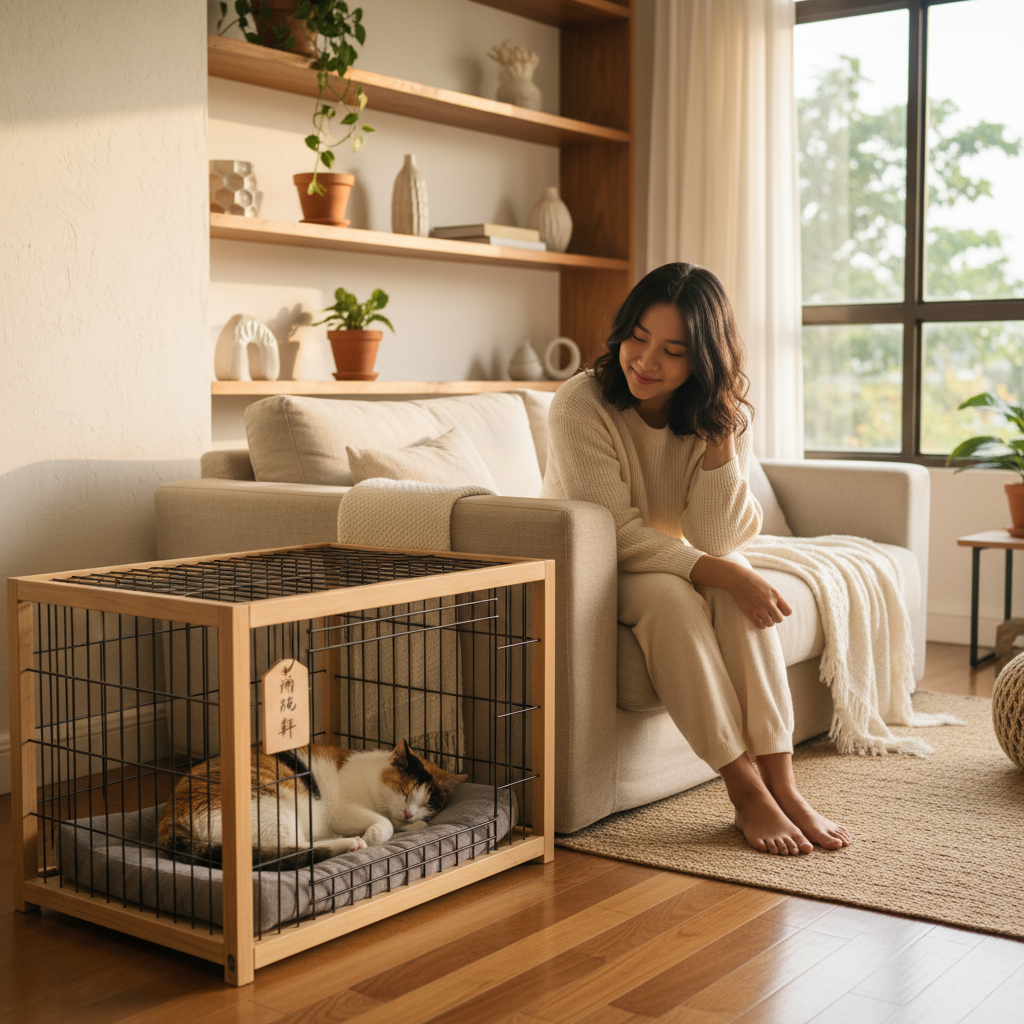
For these 14 days, cage-rest is mandatory. It's not cruel; it's biosecurity. It allows you to monitor exactly how much they eat and—more importantly—what their poop looks like. Any sign of lethargy or 'tomato soup' diarrhea is an emergency. If you're unsure if you're ready, take our personality quiz to see if your lifestyle fits the high-needs rescue life.
My Biggest Mistake: The 'Freedom' Fallacy
When we brought Ping'An home, my heart ached seeing her in a cage. She had lived on the streets; surely she wanted to stretch her legs? I let her out in a spare room after just three days. That night, she stopped eating. Because she had a ruptured diaphragm, the extra movement from 'exploring' was actually making it harder for her to breathe. She was terrified by the large, open space. I had to learn the hard way that a small, covered cage feels like a safe 'den' to a stray, not a prison. Sometimes our human definitions of kindness are actually stressful for a cat in survival mode.
Your Litter Box is a Diagnostic Lab
During quarantine, your choice of litter matters more than you think. This is where Ping'An’s sensitive nose taught us about dust. We noticed she’d sneeze and pull back from cheap, dusty clay. In a small isolation cage, dust can wreak havoc on a stray’s already compromised respiratory system.
We recommend using a light-colored tofu litter (like ours at Liger). Why? Because it acts as a visual 'blood test.' If there’s a tiny hint of pink in the urine (hematuria), it stands out against the milky white base, warning you of a urinary tract issue before it becomes a crisis. Plus, you can easily spot white 'rice grain' tapeworm segments. It's not just about smell—though the mild milk fragrance helps mask the sharp ammonia sting of stray cat pee—it's about monitoring every drop of their recovery.
Myth: Adopting a Stray is 'Free'
I hear this all the time: "Just pick one up from the street, it costs nothing!" Honestly, a 'free' stray often costs more in the first month than a pedigreed cat. Between the FIV/FeLV tests, deworming, and the potential 3-month battle with fungus, you need to have a financial buffer. We always suggest preparing at least RM500 as a 'startup fund'. It sounds like a lot, but as any parent of a cat with congenital heart disease like Tiger will tell you, early detection is always cheaper than emergency surgery.
Rescuing Ping'An was the most stressful and rewarding journey of our lives. Watching her weight climb from 1.3kg post-postpartum to a healthy 2.4kg today reminds us why we do this. Every stray deserves a home, but they deserve a safe home that is prepared for their arrival.
Your Monday Morning Action: Call your local vet today and ask if they offer a 'Rescuer Rate' for stray check-ups. Many Malaysian clinics offer 10-20% off for independent rescuers. Save that number in your phone now—you never know when you'll hear that next lonely meow.