Head bunting (Allorubbing) is a chemical communication tool used to exchange scent and establish social hierarchy.
In stable cat colonies, the dominant cat is usually the one who initiates head rubbing to mark others.
Crucially distinguish head bunting (dynamic, social) from head pressing (static, neurological emergency).
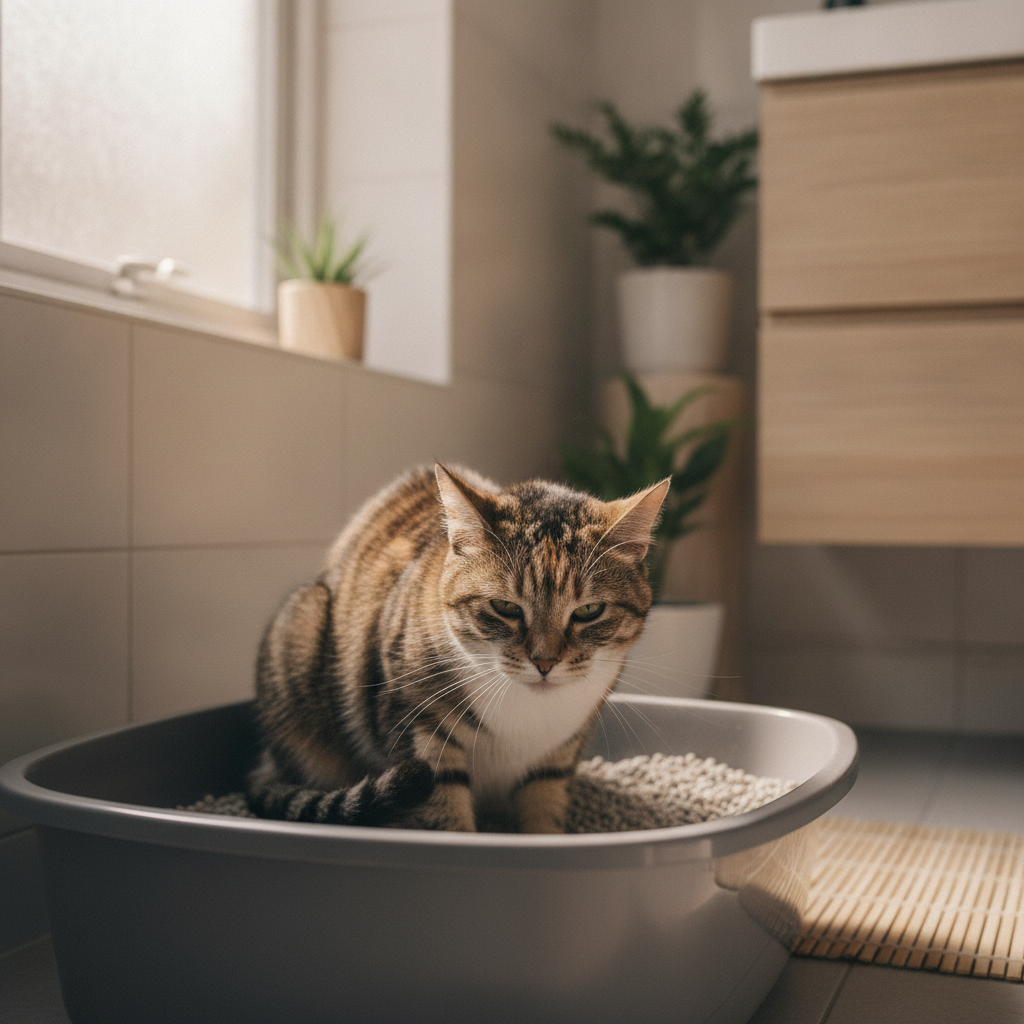
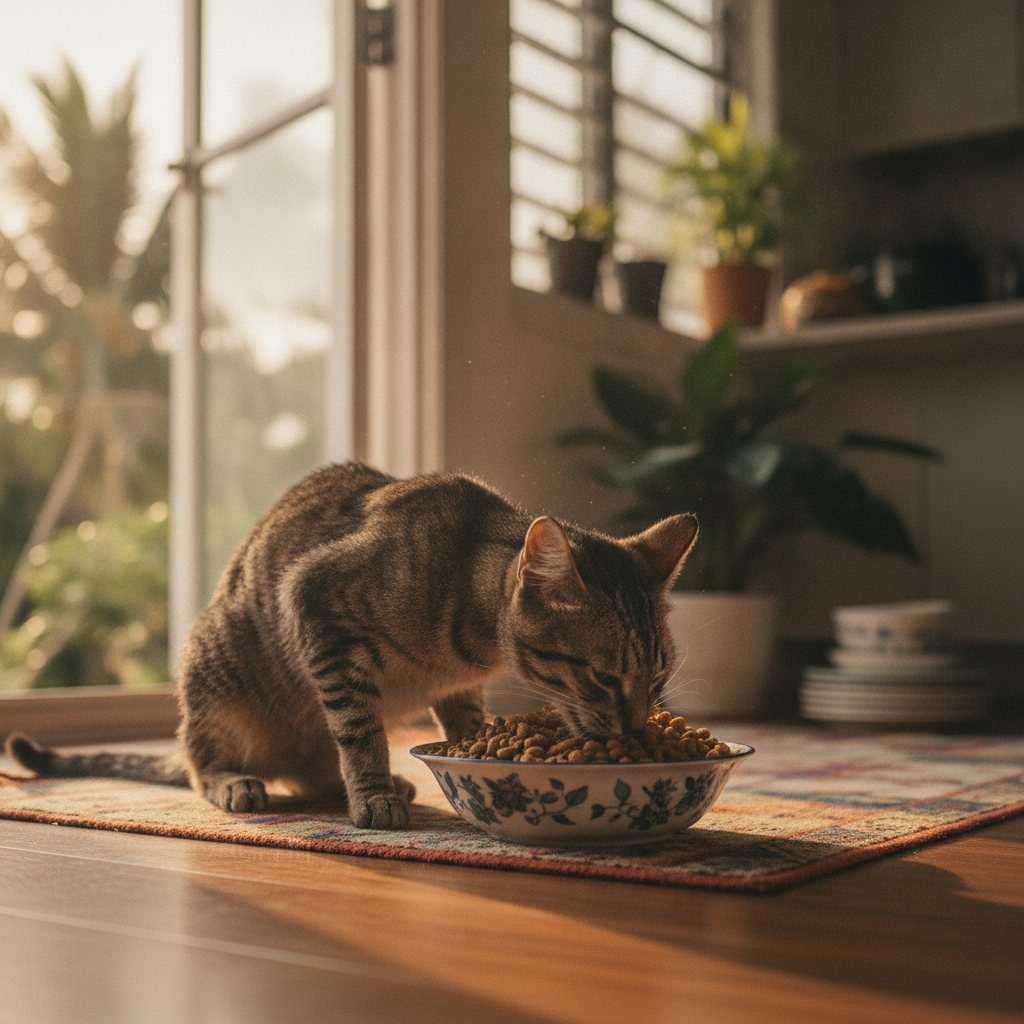
Maintain facial health by using non-porous bowls and dust-free litter to prevent chin acne.
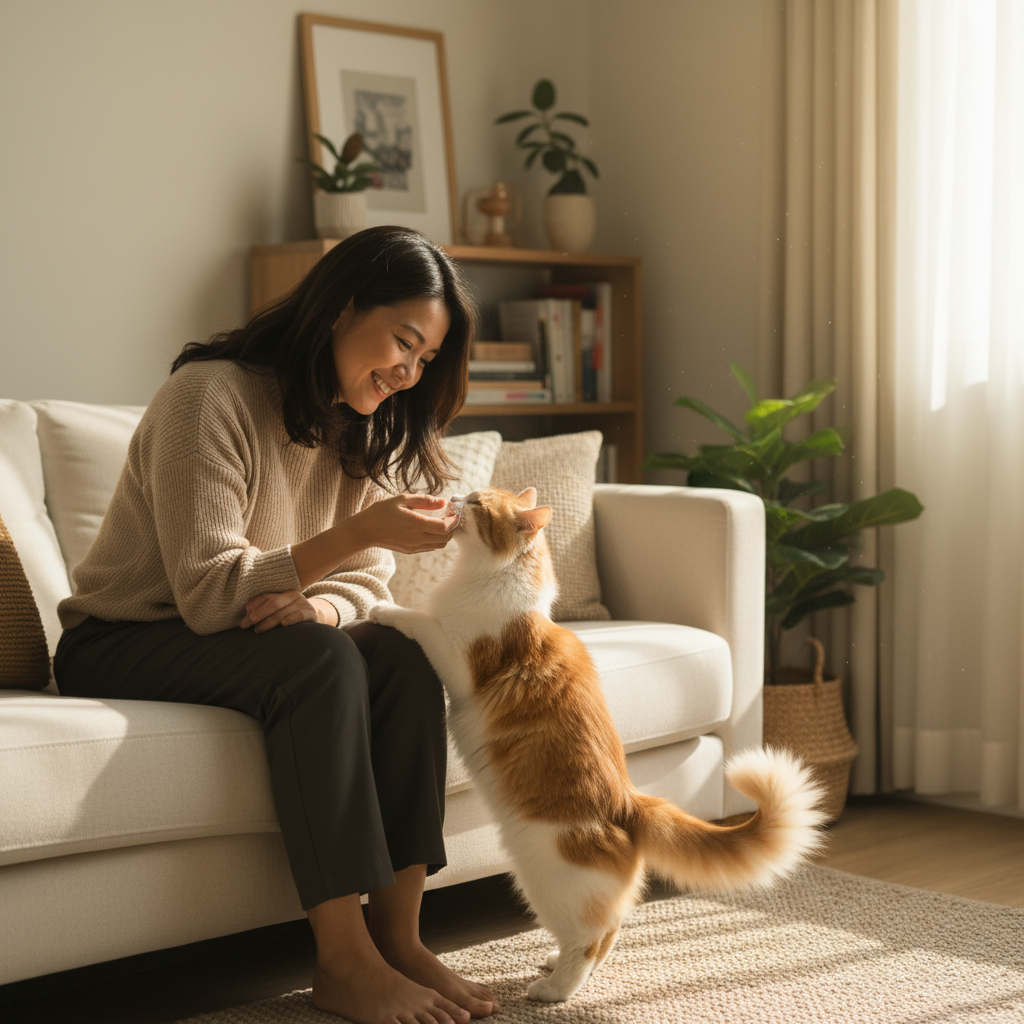
You're sitting on your sofa in KL, trying to finish some work, when suddenly—thump. A furry forehead slams into your shin. It's firm, warm, and followed by a slow, rhythmic rub that feels like sandpaper against your skin. Most of us call this a 'headbutt' and assume it's just our cat being clingy or asking for treats.
But for a cat, this isn't just a cuddle request. It's a high-tech data transfer. By 'bunting' you, your cat is actually rewriting the scent map of your home and confirming your place in their social circle. However, there’s a dark side to this physical contact that every cat parent needs to know: sometimes, a head against the wall isn't love—it's a silent scream for help.
The Science of the 'Headbutt': Pheromones and 9 Marking Points
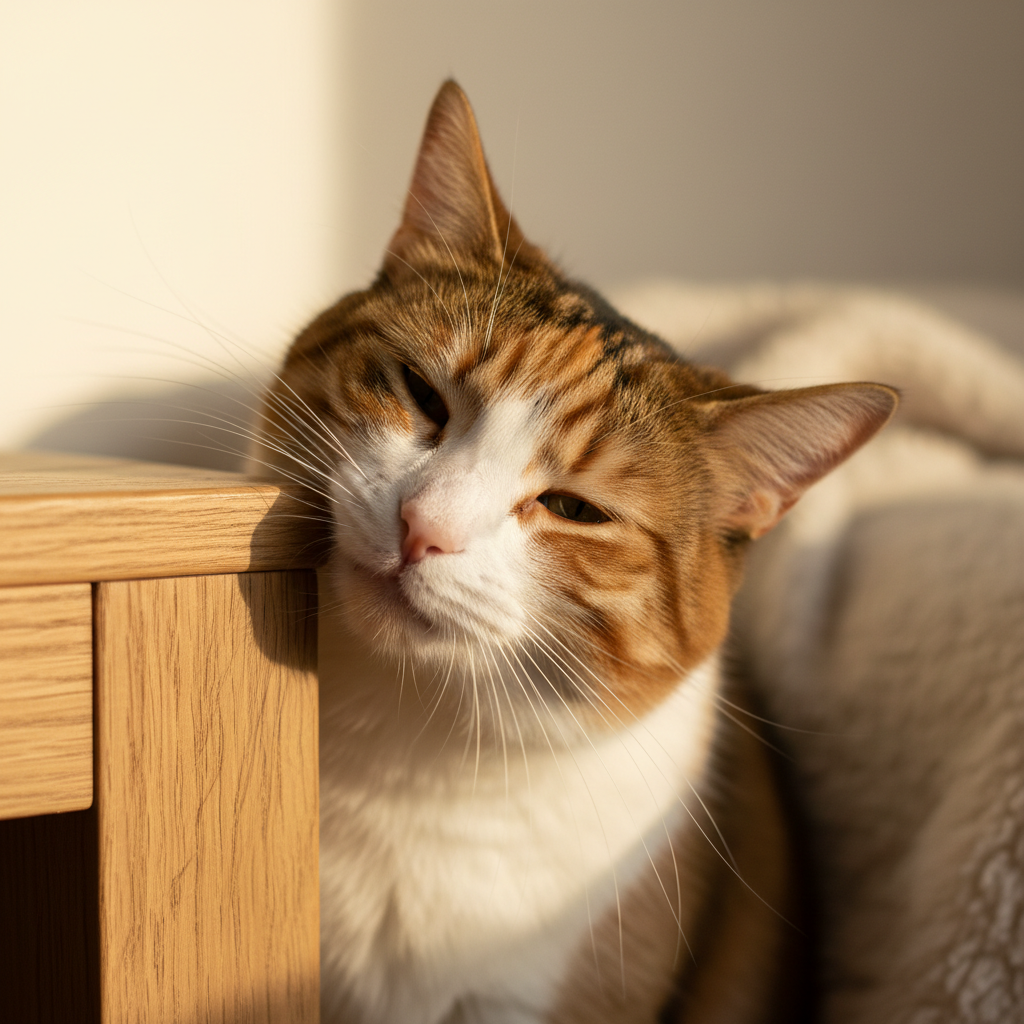
Cats live in a world of smells that we can't even imagine. While we rely on sight, they use chemical signals called pheromones to 'read' their environment. When your cat rubs their head against the corner of your wooden dining table, they are deploying a specific mixture of fatty acids known as the F3 pheromone.
According to research on "Tools for managing feline problem behaviors: Pheromone therapy", this F3 marker acts like a 'safety tag,' telling the cat that this space is familiar and secure. But the head is just the beginning. Cats actually have nine key chemical marking points across their bodies, including six just on their head: the temples, cheeks, corners of the mouth, chin, ears, and forehead.
Temporal glands: Located near the temples, used for high-level ID.
Submandibular glands: Located under the chin, often used on low objects like chair legs.
The 'Boss' Rub: Why Dominant Cats Start the Bunting
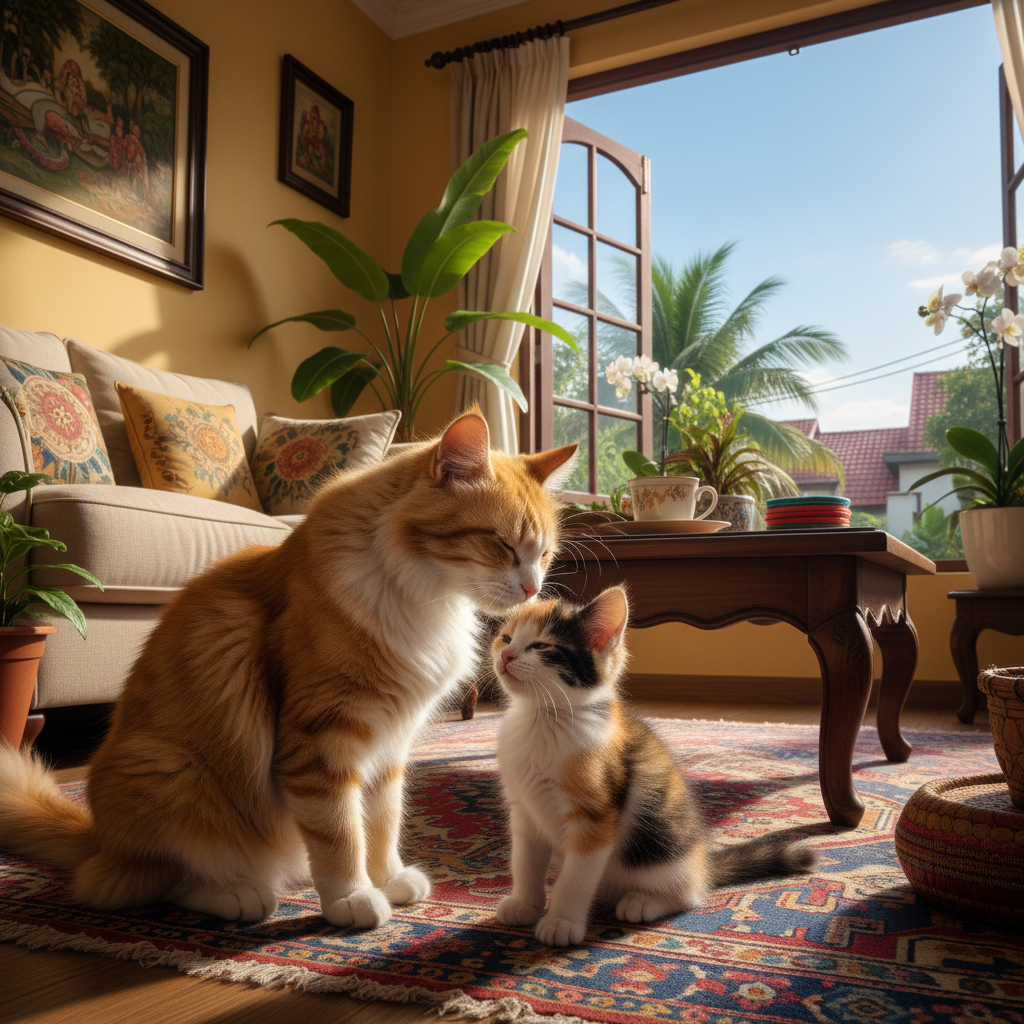
In many animal groups, the 'underdog' shows submission by lowering their head. Cats flip this logic on its head. In a stable household, it is actually the dominant cat (the 'Alpha') who is the active initiator of head bunting. This behavior, known as allorubbing, is a way for the leader to distribute their 'colony scent' onto other members.
Think of it as a uniform. By rubbing against Tiger and Lion, the dominant cat is saying, 'You belong to me, and we all smell like home now.' It's a peaceful way to maintain order without fighting. If you notice your cats stop doing this, it might be a sign of tension or a lack of resources, like not having enough litter boxes. You should aim for the 'Number of Cats + 1' rule for boxes to keep the peace.
Red Alert: Bunting vs. Deadly Head Pressing
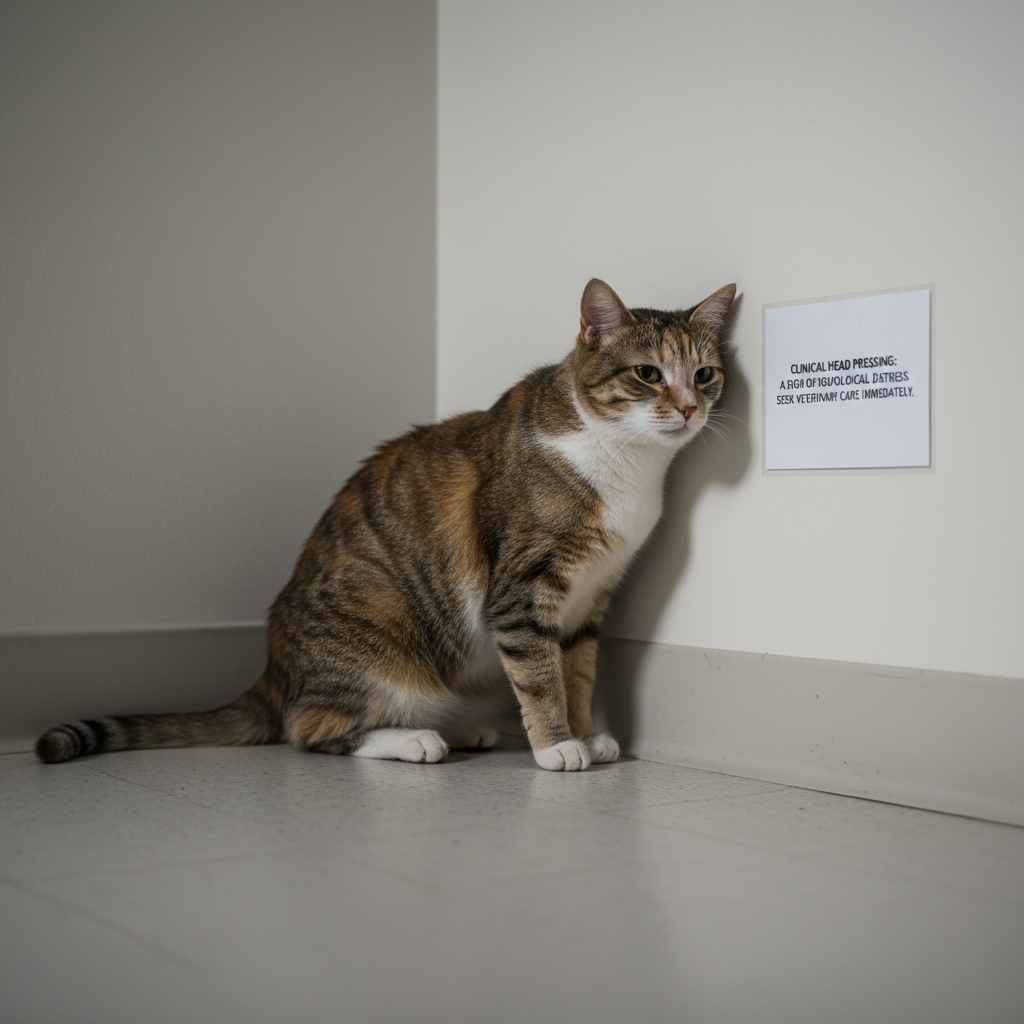
This is where things get serious. There is a condition called Head Pressing that looks similar to bunting but is a total medical emergency. While bunting is dynamic (the cat rubs and moves), head pressing is static and obsessive.
A cat suffering from head pressing will push its forehead against a wall, corner, or floor and stay there for a long time, looking 'stuck' or dazed. This is often a sign of severe forebrain damage, liver failure (hepatic encephalopathy), or poisoning. According to experts on "Cat Head Pressing: Symptoms, Causes, Diagnosis, & Treatment", this behavior indicates intense pain or neurological distress. If you see this, stop filming and get to a vet immediately.
For other health red flags to watch for in Malaysia, check out our guide on common cat diseases.
Quick Check: How to tell the difference?
Head Bunting: Rubbing, sliding, purring, eye contact, interrupted easily by calling their name.
Head Pressing: Static pushing, dazed expression, unresponsive to calls, often accompanied by circling or pacing.
The Time I Ignored the 'Sandpaper' Warning
I'll be honest—I used to think my cat stopped rubbing her face on my legs because she was just 'getting older' and less affectionate. I didn't realize that the act of rubbing requires a healthy, pain-free face. One day, I noticed small black specks on her chin that looked like dirt. I tried to scratch them off (bad idea!), only to realize she flinched in pain.
It turned out to be Feline Chin Acne. Because her chin was sore and inflamed, she had stopped her daily ritual of scent-marking. The culprit? My cheap plastic bowls and a very dusty litter I was using at the time. Ping'An, who is extremely sensitive to dust, taught us that the environment directly affects a cat's social life. If their 'marking tools' (their glands) hurt, their social bonds suffer too.
Protecting the Glands: Why Dust-Free Matters
Since cats use their chin and cheeks to navigate their world, we need to keep those areas clean. Traditional clay litters produce fine mineral dust that sticks to the moist skin on a cat's chin. This can block follicles and lead to painful infections.
That’s why we created Liger Tofu Cat Litter. We used high-pressure technology to make 2mm-3mm pellets that are virtually dust-free. By reducing the dust your cat inhales and gets on their face, you're directly supporting their ability to communicate. Plus, our natural milk fragrance keeps the 'colony scent' of your home smelling fresh, not like a chemistry lab.
Every time your cat nudges you, they are saying you're a trusted part of their family. It’s a silent, chemical language that weaves your household together. Our job as cat parents is to listen—not just to the purrs, but to the subtle signs of health and distress that these physical interactions reveal.
Your Monday Morning Action: Before you leave for work tomorrow, gently check your cat’s chin. Look for 'black pepper' spots or redness. If you find any, swap out their plastic bowls for stainless steel or ceramic immediately, and consider switching to a lower-dust litter like Liger to keep their social tools in tip-top shape.
| Dimension | Normal Head Bunting | Pathological Head Pressing |
|---|---|---|
| Action Dynamics | Dynamic: Rubbing, sliding, gentle bumping, then moving away. Accompanied by body movement and adjustment. | Static: Continuously and rigidly pushing against an object without moving. Appears "stuck," even if posture is awkward. |
| Object/Target | Specific: Owner's legs, hands, other cats, prominent furniture edges, door frames. Socially selective. | Nonspecific: Walls, corners, floors, cabinet corners. Usually flat, hard surfaces. |
| Duration | Brief: A few seconds, often repetitive but not continuous. | Prolonged: Can last minutes or longer, until external interruption. |
| Context | Social: Begging for food, greeting owner, seeking affection, meeting other cats. | Solitary: Often occurs alone in corners, detached from environmental interaction. |
| Accompanying Sounds | Pleasant: Purring, soft meows (Chirping/Meowing). | Abnormal: Abnormal howling, low growls, unconscious moans, or complete silence. |
| Level of Consciousness | Alert: Responsive to sounds, toys, name. | Depressed: Disoriented, slow to react (Stupor), or even comatose. |
| Ocular Signs | Normal: Soft gaze, accompanied by "slow blink," normal pupillary light reflex. | Pathological: Dilated pupils (Mydriasis), unequal pupils, cortical blindness (bumping into objects while walking), gazing abnormalities. |
| Associated Neurological Signs | None: Stable gait, good coordination. | Present: Compulsive pacing, circling, ataxia (incoordination), seizures. |
| Interruptibility | Easily Interrupted: Stops immediately and comes running when called by name or offered food. | Difficult to Interrupt: Unresponsive to external stimuli, difficult to divert attention from the wall. |
| Clinical Significance | Healthy: Happy, confident, strong social bonds. | Red Alert: Neurological damage, requires immediate emergency veterinary care. |