Cats are world-class actors. In the wild, a cat that looks weak becomes a target, so your fluffy housemate has inherited a powerful instinct: hide pain, hide illness, carry on like nothing's wrong. That survival trick is exactly why so many Malaysian cat parents only realise something is wrong when their cat is already very sick.
We learned this the hard way. Our British Shorthair, Tiger, was bouncing around the house like a furry maniac when a routine check-up flagged the earliest whisper of HCM (a heart muscle condition). No coughing, no collapse, nothing we could see. If we'd waited for "obvious" symptoms, we would have missed the window that bought him years. That single appointment rewired how we watch all four of our cats (Tiger, Lion, Ping'An and Lucky).
This guide walks through 12 warning signs your cat is sick, written for Malaysian homes and Malaysian conditions: tropical humidity, year-round ticks and fleas, heatstroke risk in non-air-conditioned flats, and the very real challenge of finding an emergency vet at 2am. For each sign you'll get what it looks like, possible causes, how urgent it is, and what to do.
One thing up front, and we mean it: this article helps you recognise when to seek help. It is not a diagnosis and it is not a substitute for a licensed veterinarian. Cats hide illness so well that the same symptom can mean a hairball or a life-threatening blockage. When in doubt, call your vet. You know your cat's normal better than anyone, and "this isn't like them" is a legitimate reason to pick up the phone.
Why Cats Hide Illness (and Why That Makes You the First Line of Defence)
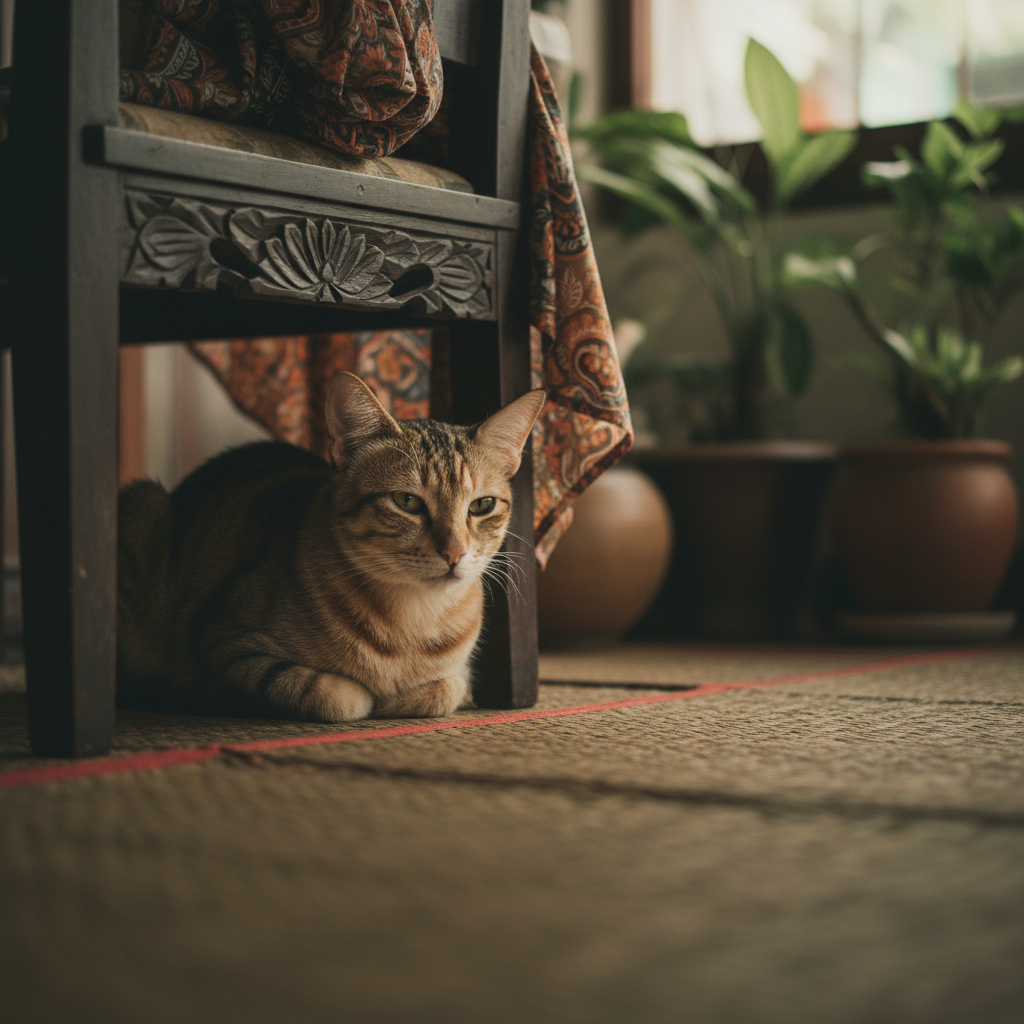
Domestic cats descend from solitary desert hunters. Unlike pack animals, a sick cat had no group to lean on, so masking weakness was the only way to avoid becoming prey. Thousands of years later, that programming is still running in your living room. The American Association of Feline Practitioners notes that this stoicism is a major reason feline disease is so often caught late, which is why they push regular life-stage wellness exams rather than waiting for symptoms.
What this means practically: you are not looking for a cat that "looks sick". You are looking for changes from your cat's personal baseline. A cat who normally greets you at the door but now hides under the bed. A grazer who suddenly inhales food, or a glutton who walks away from the bowl. Subtle shifts are the language cats use, and you're the only translator they have.
Keep a loose mental (or phone-note) baseline: how much they eat, how often they pee and poop, their normal energy, weight, and breathing at rest. When something deviates, you'll catch it days or weeks earlier than someone who only reacts to a crisis.
One more reframe that helps: think in clusters, not single symptoms. A cat hiding for an afternoon is probably fine. A cat hiding plus skipping dinner plus not jumping onto their usual perch is a different story, three small things stacking up is often more meaningful than one dramatic one. Cats rarely give you a single neon sign; they give you a quiet pattern, and your job is to notice the pattern forming.
The 12 Warning Signs Your Cat Is Sick
Here's the fast-reference version. We'll break down each one in detail below, then give you a colour-coded urgency table you can screenshot.
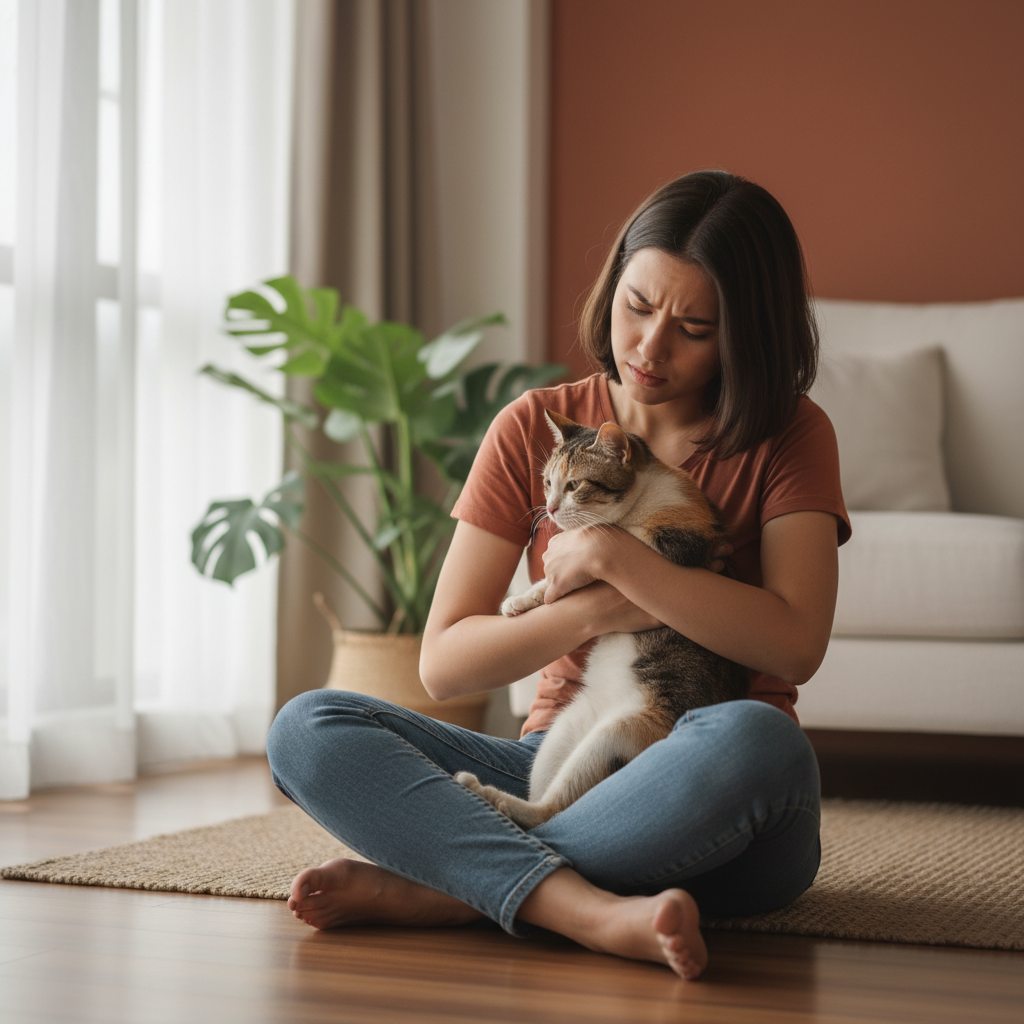
1. Hiding, Withdrawal or a Sudden Personality Change
What it looks like: A normally social cat disappears under the bed or into a cupboard for hours. A lap cat won't be touched. Or the reverse: a calm cat becomes clingy or unusually irritable and swats when you go near a particular spot on their body.
Possible causes: Pain is the big one. Cats in pain retreat. It can also signal fever, nausea, dental disease, arthritis, or emotional distress. Genuine low mood exists too, and we cover how to tell the difference in our guide on spotting depression versus illness in cats.
How urgent: Monitor for 24 hours if the cat is otherwise eating and toileting normally. See a vet soon if hiding lasts more than a day or comes with any other sign on this list.
What to do: Don't drag them out. Quietly observe whether they're eating, drinking and using the litter box. Note when the change started, that timeline is gold for your vet.
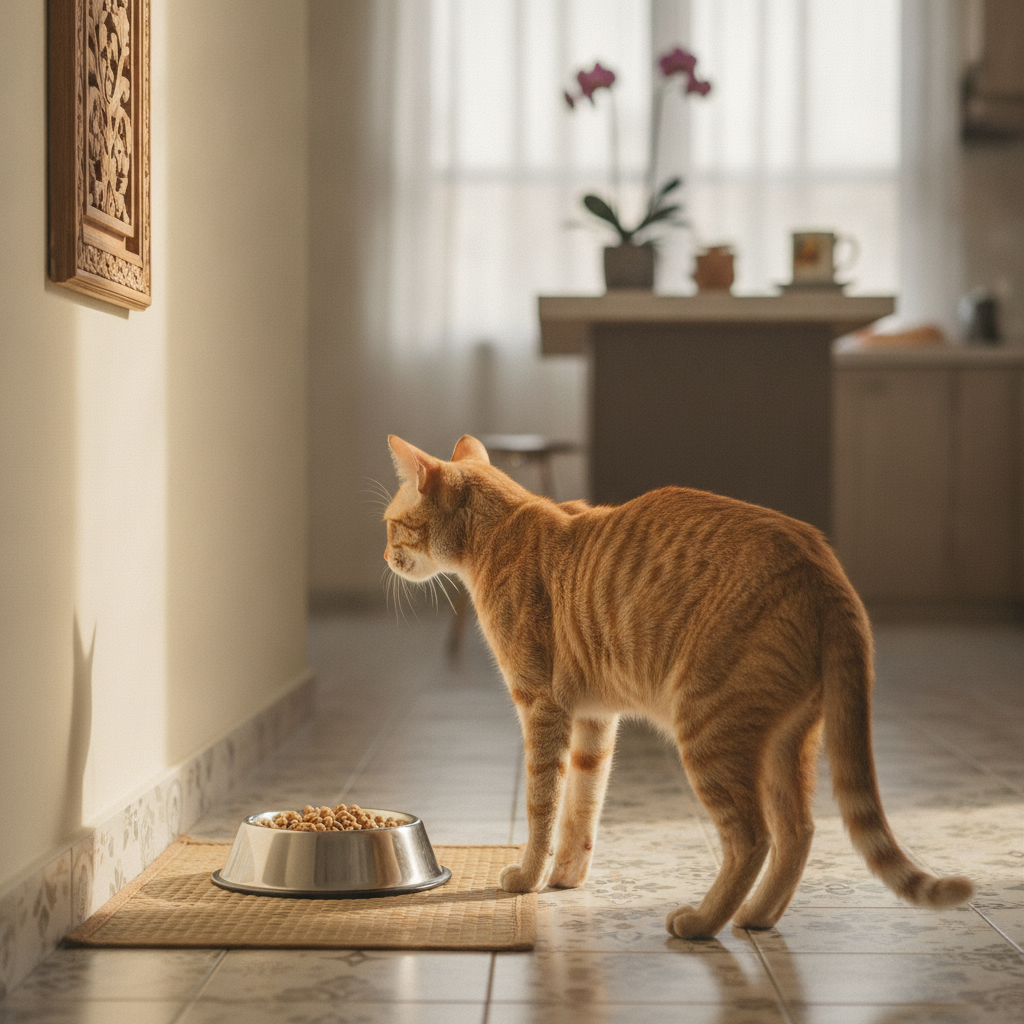
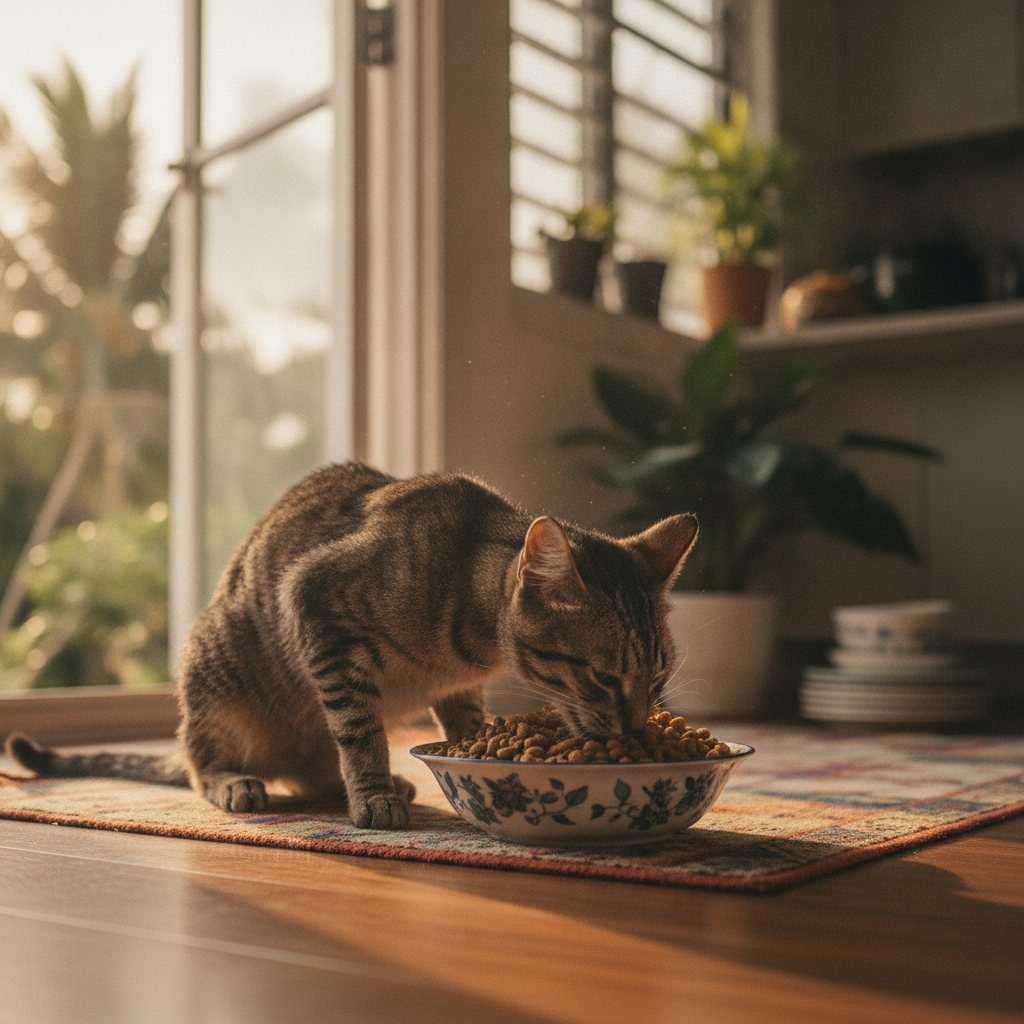
2. Not Eating (or a Sudden Change in Appetite)
What it looks like: Skipping meals, sniffing food and walking away, or eating noticeably less or more than usual. "Kenapa kucing tak makan?" is one of the most-searched cat questions in Malaysia, and for good reason.
Possible causes: Almost everything, which is what makes it important: dental pain, nausea, kidney disease, infection, stress, or an obstruction. The dangerous twist is unique to cats: when an overweight cat stops eating, the body floods the liver with fat and can trigger hepatic lipidosis (fatty liver), a condition that can become fatal in days.
How urgent: See a vet now if a cat eats nothing for more than 24 hours (sooner for kittens, seniors, or chubby cats). Reduced appetite over 2-3 days warrants a call.
What to do: Don't wait it out hoping they'll "get hungry". Try warming the food or offering a strong-smelling favourite, but if they refuse, that's your cue to ring the clinic. A useful gut-check: a healthy adult cat skipping one meal because they're sulking is plausible; a cat ignoring food they normally mug you for is not. Kittens and seniors have far smaller reserves, so the clock runs faster for them, hours, not days.
3. Drinking a Lot More — or a Lot Less
What it looks like: Suddenly camping at the water bowl (or the toilet, the sink, the shower floor), or conversely barely drinking at all.
Possible causes: Increased thirst is a classic early flag for chronic kidney disease and diabetes, two of the most common conditions in cats. Kidney disease in particular is extremely common in older cats; one large review put feline chronic kidney disease prevalence in the 30-40% range for senior cats. Too little drinking, meanwhile, risks dehydration, which our humid heat accelerates.
How urgent: See a vet soon. A sustained change in thirst over several days is rarely "nothing".
What to do: Try measuring water intake for a day or two so you have real numbers. Our cat hydration guide has tricks for tracking and boosting intake, and the hydration calculator tells you how much your cat should be drinking. If they're weirdly obsessed with running water, that has its own surprisingly normal explanation, but a sudden new obsession still deserves a check.
4. Vomiting More Than the Occasional Hairball
What it looks like: Repeated vomiting, vomiting that isn't a tubular hairball, vomiting that comes with lethargy, or bringing up food right after eating.
Possible causes: The myth that cats "just vomit sometimes" causes real harm. Occasional hairballs can be normal, but frequent vomiting points to gastrointestinal disease, dietary issues, parasites, kidney disease, hyperthyroidism, or a swallowed object. We break down when hairballs are actually normal versus a red flag so you're not guessing.
How urgent: See a vet now for repeated vomiting in a day, vomiting plus not eating, or any blood. Monitor a single isolated episode in an otherwise bright cat.
What to do: Photograph or describe what came up (food, foam, hair, fluid, colour). If your cat is also retching with an open-mouth cough, it might not be vomiting at all, see sign #10.
5. Diarrhoea, Constipation or Changes in the Litter Box
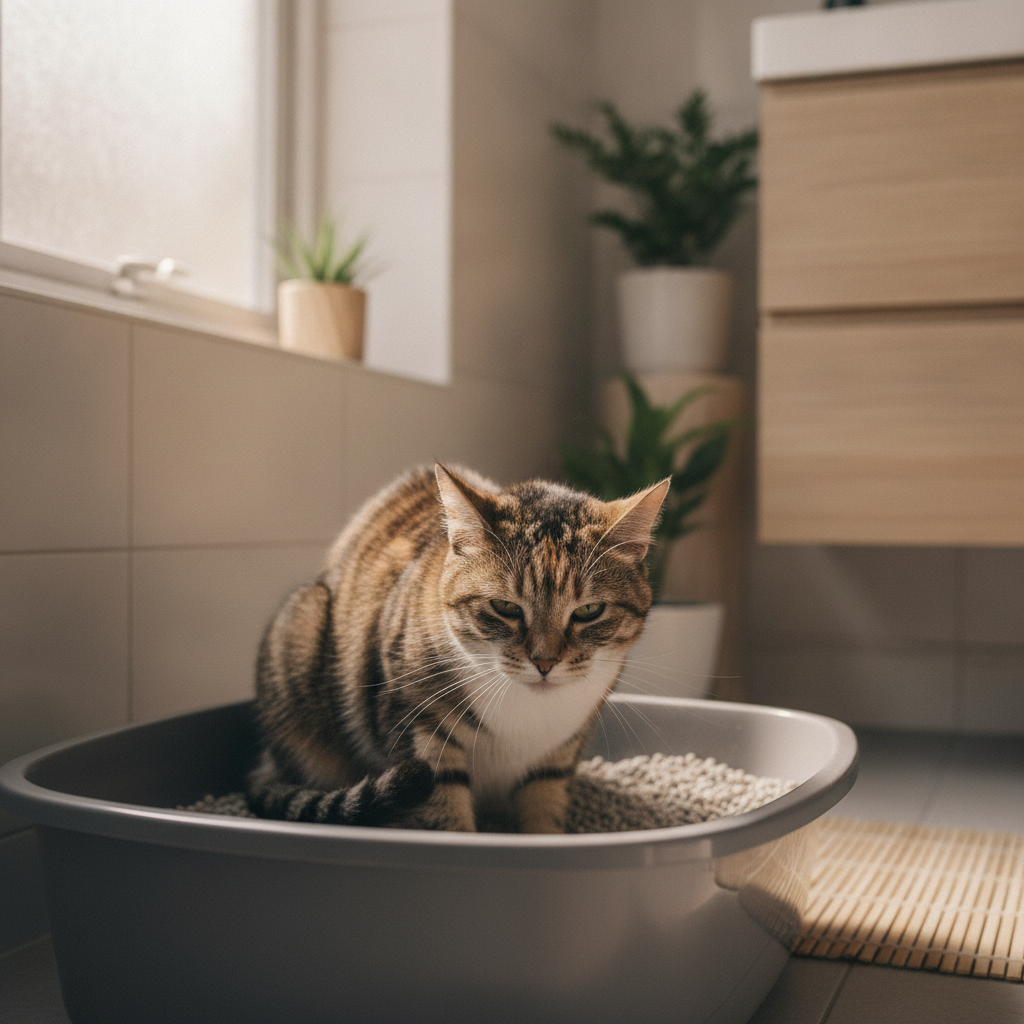
What it looks like: Loose or bloody stool, straining with little result, or no poop for more than 48 hours. The litter box is a daily diagnostic dashboard most owners ignore.
Possible causes: Diarrhoea can mean diet change, parasites (very common in Malaysia's climate, see our Malaysian cat parasite guide), infection, or stress. Constipation can signal dehydration or, in older cats, more serious issues. Healthy clumping litter makes monitoring easy because you can actually see what's normal; our cat poop health guide decodes colour and consistency.
How urgent: See a vet soon for diarrhoea lasting over 48 hours, any blood, or straining. See a vet now if a cat strains repeatedly with nothing coming out, especially a male cat, that can be a urinary emergency, not constipation (see #6).
What to do: Track frequency and appearance. Our poop frequency checker helps you judge whether your cat's bathroom habits are in the normal range.
6. Straining to Pee, Peeing Outside the Box, or Blood in Urine
What it looks like: Frequent trips to the box with little urine, crying in the box, blood-tinged urine, excessive genital licking, or suddenly peeing on the bed or floor.
Possible causes: Feline lower urinary tract disease (FLUTD) and feline idiopathic cystitis are common and often stress-linked; the VCA hospitals overview explains how crystals and inflammation cause this. The genuine emergency: a male cat who can't pee at all may have a urethral blockage, which is fatal within roughly 24-48 hours if untreated.
How urgent: EMERGENCY — see a vet immediately if a male cat is straining and producing no urine. Otherwise see a vet soon for any urinary change.
What to do: Don't assume it's "behavioural" or "spite". Cats don't do spite. Our urinary tract guide covers prevention, and the urinary health checker helps you gauge how worried to be. A litter that clumps cleanly also makes it far easier to spot the early "small, frequent" pee pattern.
7. Sudden Weight Loss or Gain
What it looks like: Ribs and spine becoming prominent, a previously round cat looking gaunt, or rapid weight gain. With long-haired cats it hides under the fluff, so go by feel, not by looks.
Possible causes: Weight loss despite a normal or increased appetite is a hallmark of hyperthyroidism and diabetes. Gradual loss can signal kidney disease, dental pain, cancer, or parasites. Our feline diabetes guide explains the "eating well but melting away" pattern that catches owners off guard.
How urgent: See a vet soon. Any unexplained weight change of more than about 10% deserves investigation.
What to do: Weigh your cat monthly (hold them on a bathroom scale, then subtract your weight). Numbers beat eyeballing every time.
8. Lethargy, Weakness or Sleeping Far More Than Usual
What it looks like: Cats sleep a lot normally (12-16 hours), so this is about change: not greeting you, not interested in play or food, struggling to jump up, or seeming "flat".
Possible causes: Lethargy is one of the least specific but most important signs, it accompanies fever, infection, anaemia, pain, organ disease and more. In a hot Malaysian flat, sudden weakness with heavy breathing can also point to heatstroke.
How urgent: See a vet now if lethargy is profound, sudden, or paired with not eating, hiding, or breathing changes. Mild "off day" with normal appetite, monitor 24 hours.
What to do: Check the gums (see #11) and breathing rate. Note whether they can still jump and walk normally.
9. Changes in Coat, Skin, Lumps or Stopping Grooming
What it looks like: A greasy, matted or dull coat (cats are fastidious groomers, so a scruffy coat means they've stopped, which is itself a sign of illness or pain), bald patches, scabs, persistent scratching, or any new lump.
Possible causes: Malaysia's humidity is a paradise for fungal and bacterial skin disease, fleas, and ringworm. Our Malaysian cat skin disease guide covers the local culprits. Over-grooming one spot can signal pain or stress; under-grooming signals the cat feels too unwell to bother.
How urgent: See a vet soon for spreading lesions, intense itching, or a lump. Monitor a single small scab in an otherwise well cat.
What to do: Part the fur and look at the skin itself. The skin condition checker helps you describe what you're seeing, and if you spot fleas or "rice grains" near the tail, run the flea & worm checker too. New or changing lumps always warrant a vet's hands-on look.
10. Coughing, Wheezing or Laboured Breathing
What it looks like: A dry hacking cough, wheezing, open-mouth breathing, fast breathing at rest, or belly-heaving with each breath.
Possible causes: Feline asthma is common and often mistaken for hairball retching, we untangle the two in our asthma versus hairball guide. Faster, harder breathing at rest can also signal heart disease, fluid in the chest, or respiratory infection.
How urgent: EMERGENCY for open-mouth breathing, blue/grey gums, or a cat that can't settle and breathes with its belly. Cats almost never pant like dogs; open-mouth panting in a cat is a serious red flag unless they've just sprinted around.
What to do: Count breaths while your cat sleeps, one full in-and-out is a single breath, count for 30 seconds and double it. A resting rate consistently over ~30 breaths per minute is worth a vet call, and it's one of the most useful numbers you can hand a vet over the phone. Keep a stressed, breathless cat calm and cool, stress alone makes breathing trouble worse, and transport them gently.
11. Pale, Yellow, Blue or Very Red Gums
What it looks like: Healthy cat gums are bubblegum pink and moist. Watch for pale/white (possible anaemia or shock), yellow (possible liver issues or jaundice), bluish (oxygen problem, emergency), or angry red gums with bad breath.
Possible causes: Pale gums can mean blood loss or the haemoparasites that are well documented in Malaysian cats, including Mycoplasma haemofelis infections spread by ticks and fleas. Red, inflamed gums and foul breath often mean dental disease, painful and far more common than owners realise (see our pieces on feline bad breath and tooth resorption).
How urgent: EMERGENCY for white, blue or yellow gums. See a vet soon for red, inflamed gums or persistent bad breath.
What to do: Learn to do a gentle gum check now, while your cat is well, so you know their normal colour and how fast the pink returns when you press (it should be under 2 seconds).
12. Fever, Hot Ears or Signs of Heatstroke
What it looks like: A cat that feels hot, has warm ears and paws, is lethargic and off its food, or, in the heatstroke version, is panting, drooling, wobbly, or collapsed after being in a hot room or car.
Possible causes: Fever signals the immune system fighting infection. Heatstroke is a specifically Malaysian danger: a closed-up flat or a parked car can hit lethal temperatures fast, and cats cool themselves poorly. The MSD Veterinary Manual stresses that heatstroke is an immediate emergency requiring controlled cooling and a vet.
How urgent: EMERGENCY for suspected heatstroke or a fever with collapse. See a vet soon for a persistent low-grade fever.
What to do: For heatstroke, move to a cool area, wet the fur with cool (not ice-cold) water, offer water, and get to a vet immediately, do not wait to see if they improve.
Quick Urgency Reference Table

Screenshot this. "Emergency" means get to a vet or emergency clinic now; "soon" means within a day or two; "monitor" means watch closely for 24 hours and escalate if anything else appears.
| Symptom | Urgency | Possible Causes |
|---|---|---|
| Male cat straining, no urine | EMERGENCY | Urethral blockage |
| Open-mouth / belly breathing, panting | EMERGENCY | Asthma crisis, heart disease, fluid in chest |
| White, blue or yellow gums | EMERGENCY | Anaemia, shock, oxygen/liver problem |
| Suspected heatstroke / collapse | EMERGENCY | Heatstroke, severe fever |
| Not eating > 24h (sooner if overweight) | EMERGENCY / Now | Many; fatty liver risk |
| Repeated vomiting + lethargy | See vet now | GI disease, obstruction, kidney |
| Increased thirst & urination | See vet soon | Kidney disease, diabetes |
| Diarrhoea > 48h or blood in stool | See vet soon | Parasites, infection, diet |
| Unexplained weight loss | See vet soon | Hyperthyroidism, diabetes, kidney |
| New lump, spreading skin lesion | See vet soon | Infection, fungal disease, tumour |
| Red, inflamed gums + bad breath | See vet soon | Dental disease |
| Hiding / withdrawal, eating normally | Monitor 24h | Pain, stress, early illness |
The Malaysian Context: Ticks, Heat, Humidity and Finding a Vet
Generic cat-health advice often ignores where you actually live. A few things matter more here than in a temperate country:
Year-round parasites. There's no winter to knock back ticks, fleas and mosquitoes, so they breed all year. Tick-borne blood parasites are genuinely present in local cats, and our hot, wet climate keeps fungal skin disease and gut parasites thriving. Year-round prevention isn't optional here, it's the baseline. Start with our parasite guide and the flea & worm checker.
Heat. Many Malaysian cats live in flats without constant air-conditioning. On a hot afternoon, a closed bedroom or an enclosed balcony can become dangerous. Never leave a cat in a parked car, even "for five minutes".
Vet access. Klang Valley is well served, but 24-hour emergency clinics are limited and often far. Do this today, before you need it: save the number and address of your nearest 24-hour emergency vet in your phone. In a real emergency, minutes matter and you don't want to be Googling at 2am.
A clean litter box is a diagnostic tool. This is where day-to-day care quietly helps you catch problems early. When the litter clumps cleanly and stays low-dust, you can actually see changes, more or fewer urine clumps, a sudden tiny-clump pattern, diarrhoea, or blood, instead of them disappearing into a murky, crusty box. That's the practical reason we built Liger as a low-dust tofu litter that forms firm clumps: less dust to irritate the airways you're trying to protect (relevant to signs #10 and #12), and a clearer window into what's coming out of your cat. It won't diagnose anything, but it buys you those crucial extra days of early warning.
When to See a Vet: A Simple Rule
A lot of owners freeze at exactly the wrong moment, caught between "I don't want to overreact and waste money" and "what if it's serious?". Here's the honest truth from years of cat parenting: vets would far rather see a healthy cat for a false alarm than a critical one that waited three days. A consult fee is cheap insurance against a problem that doubles in cost and danger every day you delay.
If you remember nothing else, remember this: cats hide illness, so "wait and see" is riskier with a cat than with a dog. Use this tiered approach:
- Call immediately for any "Emergency" row above, breathing trouble, a male cat who can't pee, abnormal gum colour, collapse, or suspected heatstroke or poisoning.
- Book within a day or two for changes in thirst, appetite, weight, the litter box, skin, or energy that persist beyond 24-48 hours.
- Don't skip wellness exams. Tiger's HCM was caught at a routine check-up with zero visible symptoms. For seniors, twice-yearly exams catch kidney, thyroid and dental disease while they're still manageable.
And if cost is the thing making you hesitate, plan for it before the crisis hits, our honest take on cat insurance in Malaysia walks through whether it's worth it for your situation.
The Bottom Line
You don't need to be paranoid, just observant. Know your cat's normal: how they eat, drink, toilet, move, groom and behave. When the pattern breaks, especially if two or more signs show up together, trust that instinct and get them checked. Cats are brilliant at hiding pain, which makes your attention their best medicine. Tiger is proof that catching the quiet signs early can change everything.
Liger Team — Kelvin & Ann, plus our four cats Tiger, Lion, Ping'An and Lucky. We write from experience and cite veterinary sources, but we're cat parents, not your vet. Always consult a licensed veterinarian for diagnosis and treatment.