The first twelve months decide more about your cat's lifelong health than any year that follows — and they're packed with appointments that are easy to lose track of. Vaccines, boosters, deworming, flea prevention, spaying, microchipping, a diet switch: miss the timing on any one and you leave a gap. This is your single, month-by-month map for a Malaysian kitten's first year, pulling every milestone into one calendar so nothing slips.
Think of this as the timeline that ties together the rest of our preventive care guides. Each milestone below links to the full deep-dive — here we focus on what happens when.
Why the First Year Decides Everything
A kitten grows from helpless newborn to near-adult in twelve months, and three things are being built at once: immunity (through the vaccine and deworming schedule), temperament (through the socialisation window), and lifelong habits (litter, diet, handling). Get the structure right early and you prevent disease, behaviour problems and obesity in one go. The key is that these tracks run in parallel — you're not doing vaccines then socialisation; you're doing both in the same weeks. That's exactly why a single calendar helps.
The first step is simply finding a vet you trust and booking that initial visit promptly — ideally before or right after you bring the kitten home. Everything downstream (which vaccines, when to neuter, what parasite product, the state's rabies rules) gets tailored at that relationship. The calendar below is the globally recognised framework; your vet adapts it to your individual kitten.
Months 0-3: Vaccines Start, Deworming and Socialisation
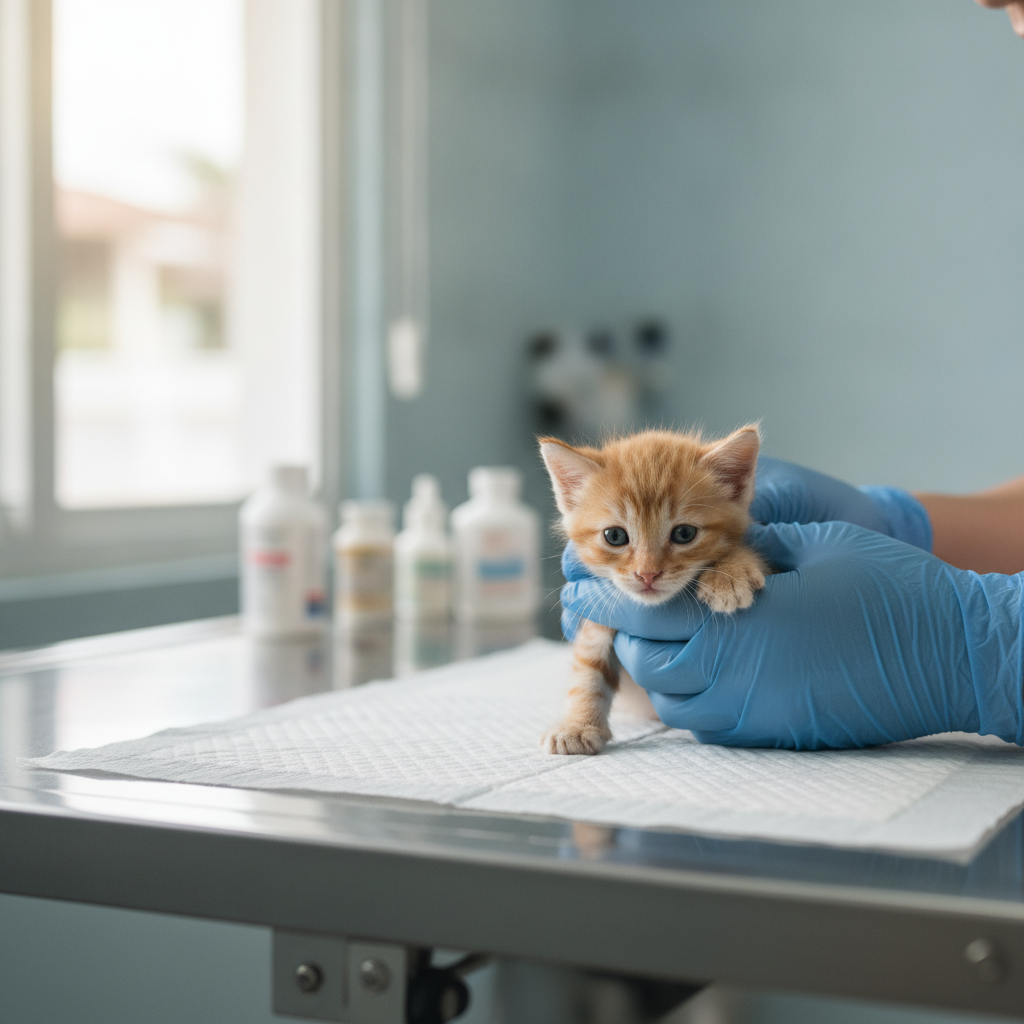
This is the busiest stretch. The first vet visit should happen at 6–8 weeks for a full physical, parasite screen, and the first FVRCP vaccine, with follow-up visits every 3–4 weeks. Per WSAVA and AAHA/AAFP, FVRCP boosters run every 2–4 weeks until at least 16 weeks. Rabies follows at 12–16 weeks. Because Peninsular Malaysia has a notable FeLV prevalence (a 2010 study found 12.2% of cats tested positive), vets strongly advise testing a kitten for FeLV before starting that vaccine.
Parallel to the shots: deworming starts at 2–3 weeks and repeats every 2 weeks until 12 weeks, and monthly flea and tick prevention begins around 8 weeks (once the kitten meets the minimum weight, usually ~0.9 kg). Just as important is the socialisation window of 2–7 weeks (stretching to ~9–10 weeks): AAHA/AAFP recommend 30–60 minutes of gentle daily handling by different people, positive exposure to household sights and sounds, and — critically — never using hands or feet as toys. Experiences in this short window shape whether your cat grows up confident or fearful, so it's worth the daily effort. This is also the ideal time to make the carrier and gentle ear/mouth checks feel normal, which pays off at every future vet visit.
One Malaysia-specific note on FeLV: the 2010 study found young, male and outdoor-access cats were at notably higher risk, so if you've adopted a kitten of unknown background or one that will go outdoors, the pre-vaccine FeLV test is especially worthwhile.
Months 4-6: Spay/Neuter, the Final Shots and Microchip
By 16 weeks the kitten gets its final FVRCP kitten dose. This window also holds the big-ticket milestone: spaying or neutering. International Cat Care recommends desexing around 4–5 months — before females can fall pregnant, which can happen as early as four months. Doing it now also reduces the lifetime risk of mammary tumours and prevents unwanted litters; the full logistics and cost are in our spay and neuter guide.
It's efficient to combine microchipping with the spay/neuter surgery — the chip goes in painlessly while the kitten is already under anaesthesia, giving permanent ID before it's old enough to roam. A microchip is the single best way to be reunited with a lost cat, and it's increasingly relevant in Malaysia as some states discuss licensing. Meanwhile, deworming shifts from fortnightly to a monthly routine through to six months, and the monthly flea preventive should now be a fixed habit. This is also when adult teeth come through and litter-box and scratching-post routines should be firmly established, so any wobble is easier to correct now than later.
The 6-Month Booster: Don't Skip It
This is the milestone most likely to be missed because it's new. The 2024 WSAVA guidelines (echoed by AAHA/AAFP) added an FVRCP booster at 26 weeks (6 months), replacing the old "first booster at 12 months" advice. A small share of kittens still carry interfering maternal antibodies at 16 weeks, which can quietly cancel out the final kitten dose; the 6-month booster closes that window of susceptibility. If your kitten finished its series a couple of months ago, ask your vet specifically about this dose — not every clinic has caught up to the change.
Months 7-12: Diet Switch and Settling Into Routine
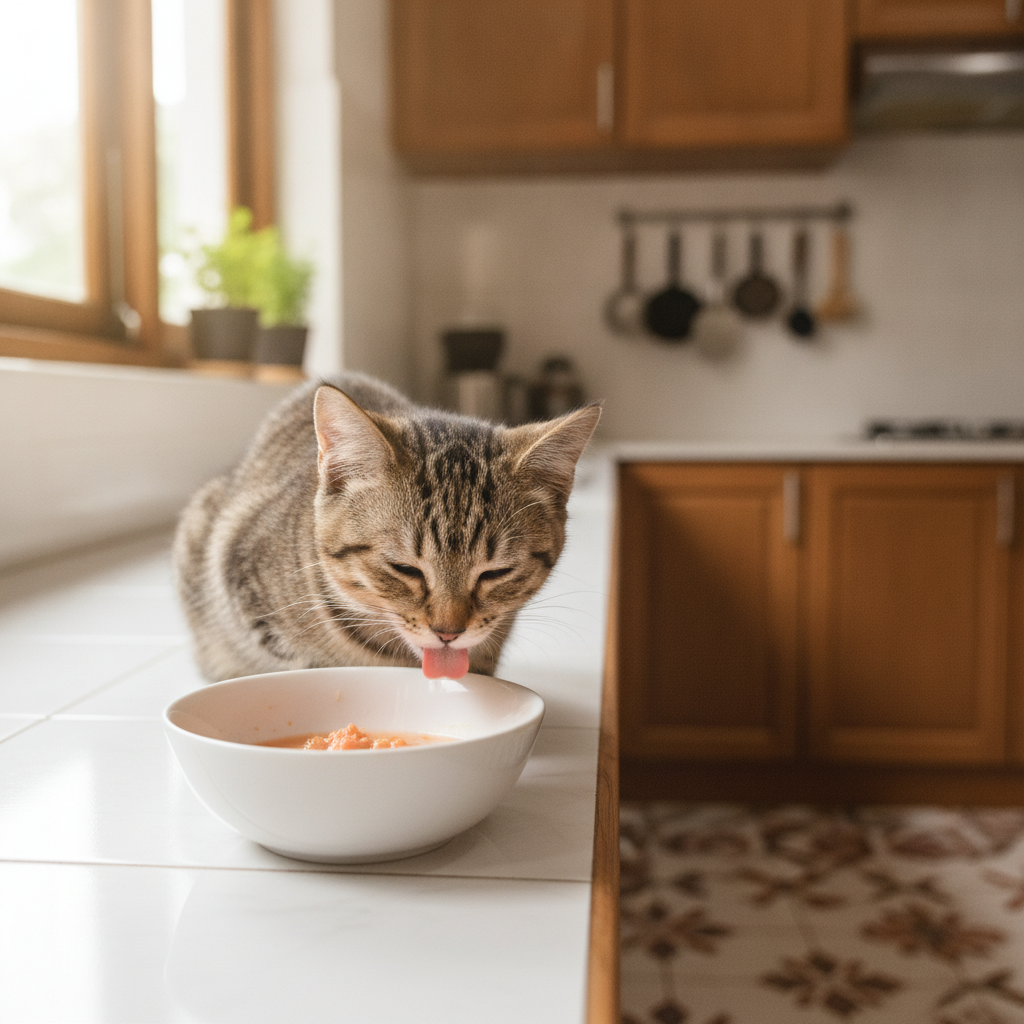
The pace eases. For a healthy, up-to-date kitten there are usually no scheduled vaccines between 7 and 11 months — just steady monthly parasite prevention. The headline event is the switch from kitten food to adult food at around 12 months (large breeds like Maine Coons may stay on growth food to 18–24 months). Kitten food is calorie-dense for rapid growth; staying on it as an adult invites obesity. VCA Hospitals recommends a gradual 7–14 day transition:
| Days | Kitten food | Adult food |
|---|---|---|
| Days 1–2 | 75% | 25% |
| Days 3–4 | 50% | 50% |
| Days 5–6 | 25% | 75% |
| Days 7–14 | 0% | 100% |
Why does the switch matter so much? Kitten formulas are deliberately richer: under AAFCO standards, kitten food needs at least 30% protein (dry-matter basis) versus 26% for adult maintenance, plus more calories per bite. That's perfect for a growing kitten and a recipe for weight gain in a fully-grown one — doubly so after desexing, which lowers a cat's energy needs. Watch body condition and adjust portions rather than free-feeding.
The 12-month mark is also the first annual wellness exam and the rabies 1-year booster, plus a full dental assessment — many cats show dental disease by age three, so starting at-home tooth care (gradual tooth-brushing, safe chews) now pays off. After this, the schedule settles into the adult cadence of one comprehensive check-up a year, which becomes your main chance to catch problems early.
The Complete First-Year Calendar
Here's everything on one page. Treat it as a planning tool and confirm the specifics with your vet, who will tailor it to your kitten and your state's rules.
| Age | Vet milestones & vaccines | At-home care |
|---|---|---|
| 0–2 months (<8 wk) | First vet visit at 6–8 wk; FVRCP 1st dose; start deworming at 2–3 wk (repeat every 2 wk) | Socialisation window (2–7 wk): gentle daily handling; high-quality kitten food |
| 2–4 months (8–16 wk) | Vet every 3–4 wk; FVRCP boosters; FeLV test + (if negative/at-risk) start series; rabies 1st dose 12–16 wk | Start monthly flea/tick prevention ~8 wk; carrier & grooming habituation |
| 4–6 months (16–24 wk) | Final FVRCP kitten dose; spay/neuter ~4–5 mo; microchip; deworm monthly | Reinforce litter & scratching-post habits; adult teeth emerging |
| 6 months (~26 wk) | WSAVA 2024 FVRCP 6-month booster | Watch weight after desexing; adjust portions |
| 7–11 months | No routine vaccines; maintain monthly parasite prevention | Enrichment: play, scratching posts, vertical space |
| 12 months | First annual wellness exam; rabies 1-yr booster; dental assessment | Gradual 7–14 day switch to adult food |
Setting Up Home: Safe Litter for a Kitten
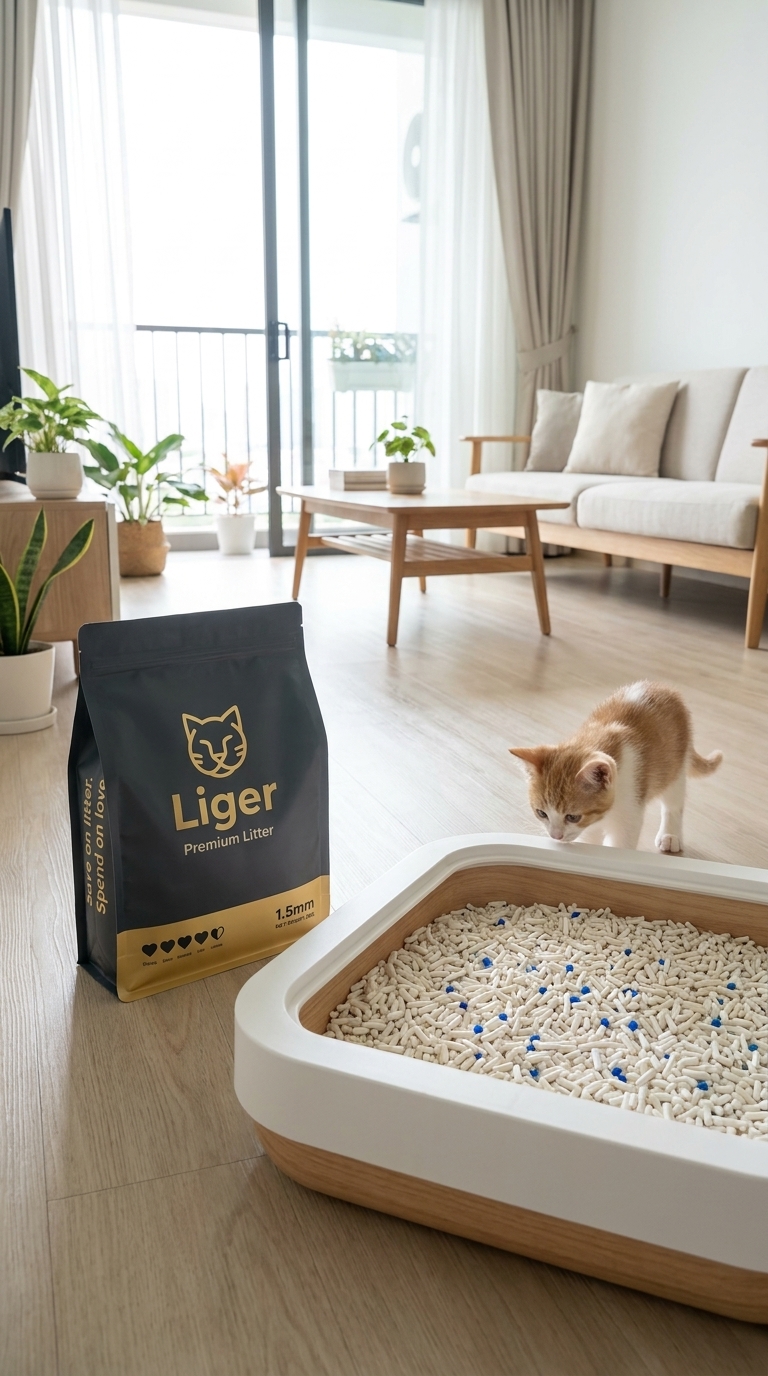
Alongside the medical calendar, the first months are when your kitten learns to use a litter box — and what you put in that box matters more for a kitten than an adult. Kittens explore with their mouths and groom constantly, so a litter that's natural and low-dust is the safer choice: heavy clay dust can irritate developing airways, and you want minimal mess on tiny paws. We use Liger Premium Tofu Cat Litter because the soft soybean pellets are gentle, naturally low-dust and flushable, which makes litter training cleaner and easier. (For the full how-to, see our guides on kitten litter training and the best litter for kittens by age.)
A 2kg pack is RM21.90, scaling to RM169 for the 10-pack (RM8.45/kg) with free shipping in Peninsular Malaysia (current Liger pricing, as of May 2026). Work out how much a growing kitten will get through with the litter calculator, and use the new cat owner checklist to make sure nothing — food, litter, carrier, first vet booking — is forgotten before your kitten comes home.
The Bottom Line
The first year is dense but logical: vaccines and deworming front-loaded in months 0–6, spay/neuter and the new 6-month booster around the middle, then a calmer second half capped by the diet switch and first annual check-up. Print the calendar, stick it on the fridge, book that first vet visit early, and partner with a vet who'll adapt the plan to your individual kitten and your state's specific rules. Do that, and you've given your cat the strongest possible start. For the full preventive picture across its whole life, return to our cat preventive care hub.