
In temperate countries, flea and tick prevention is a "summer thing". In Malaysia, there is no off-season. Our year-round heat and humidity let fleas breed non-stop, which is exactly why prevention here has to be a constant habit rather than a reaction to the first itch. This guide is about preventing fleas, ticks and the parasites they carry — not treating an infestation that has already taken over your home (for that, see our guide to getting rid of an active flea problem).
Flea and tick control is one pillar of complete cat preventive care, and it works hand-in-hand with your deworming schedule. Here's how to keep parasites off your cat all year.
Why Malaysia Has No Flea Season
The cat flea (Ctenocephalides felis) thrives between roughly 21 and 32°C with 70–85% humidity — which describes almost every day in Malaysia. With no cold winter to break the cycle, fleas go from egg to biting adult in as little as three weeks, all year long. A study in the Klang Valley found 39.33% of stray cats were carrying fleas, every one of them C. felis — a permanent reservoir constantly topping up the environment around us. That's the core reason prevention can't be seasonal: the pressure never lets up.
And the damage goes well beyond an itch. Persistent biting can trigger flea allergy dermatitis (FAD), a miserable skin reaction that drives scratching, scabbing and hair loss, as PetMD describes. In kittens or frail cats, a heavy infestation drains enough blood to cause life-threatening anaemia. Treating an established infestation, meanwhile, is a grind: because the bulk of the population is hiding in your home, it takes months of repeated pet treatment plus serious environmental cleaning to clear — which is exactly why getting ahead of it is so much easier.
The Indoor Cat Myth

"My cat never goes outside" is not protection. Fleas and ticks are expert hitchhikers: they ride in on your shoes, trouser cuffs and bags after you've been near other animals, on a dog that goes outdoors, or on rodents that slip into the house. In apartments — most of urban Malaysia — they can even migrate between units through gaps and shared spaces; there are documented cases of a flat becoming infested from a neighbour's unit with no pet of its own. Add the occasional trip to the vet, groomer or boarder, and a "strictly indoor" cat has plenty of exposure routes. Even secondhand furniture or rugs can carry dormant flea eggs and pupae from a previous home, ready to hatch once they sense warmth and movement. The point isn't to make you paranoid — it's that the indoor barrier is leaky enough that going without prevention is a gamble. This is why the Companion Animal Parasite Council recommends year-round, broad-spectrum prevention for every cat, indoor or not.
Know the Enemy: The Flea Life Cycle
Understanding why fleas are so hard to shift explains why prevention beats cure. The crucial fact: more than 95% of a flea population isn't on your cat at all — it's eggs, larvae and pupae living in your carpets, bedding and floor cracks. A single female lays up to 50 eggs a day, which roll off into the environment and hatch into larvae within days. The larvae then spin cocoons and become pupae — the tough, sticky stage that resists most sprays and can lie dormant for weeks or months, waiting for the heat, vibration or carbon dioxide of a passing host before emerging. The CDC notes a newly emerged adult can be laying eggs within 24–48 hours. Because that pupal reservoir is almost untouchable, the winning strategy is simple: keep a preventive on your cat continuously, so every new adult that jumps on is killed before it can breed.
Ticks in Malaysia and the Diseases They Carry
Fleas get the attention, but ticks are the more dangerous half. The brown dog tick (Rhipicephalus sanguineus) is common on cats here and spreads two serious illnesses: Ehrlichiosis (a bacterial infection that attacks white blood cells, causing fever and lethargy) and Babesiosis (a protozoan parasite that destroys red blood cells and causes anaemia). The good news is that a severe overseas disease, Cytauxzoonosis, isn't a primary threat here because its tick vectors aren't established in the region. Still, the local tick load means tick control belongs in every prevention plan — not just flea control. If your cat ever seems off-colour, our list of warning signs a cat is sick can help you decide when to call the vet.
The Flea to Tapeworm Connection
Here's the link that surprises most owners: the common tapeworm, Dipylidium caninum, is spread almost entirely by fleas. Your cat doesn't catch it from a flea bite — it catches it by swallowing an infected flea while grooming. Flea larvae in the environment eat tapeworm egg packets; the tapeworm then develops inside the flea; and when your cat grooms and ingests that flea, the tapeworm sets up home in its gut, with segments appearing in as little as two to three weeks. As CAPC explains, this means flea control is tapeworm control — a single lapse in monthly flea prevention can be enough to trigger a tapeworm infection. It's the clearest reason flea prevention and deworming belong in the same plan, and why our parasite identification guide shows what those rice-grain segments look like.
Choosing a Preventive: Spot-ons, Orals and a Safety Warning
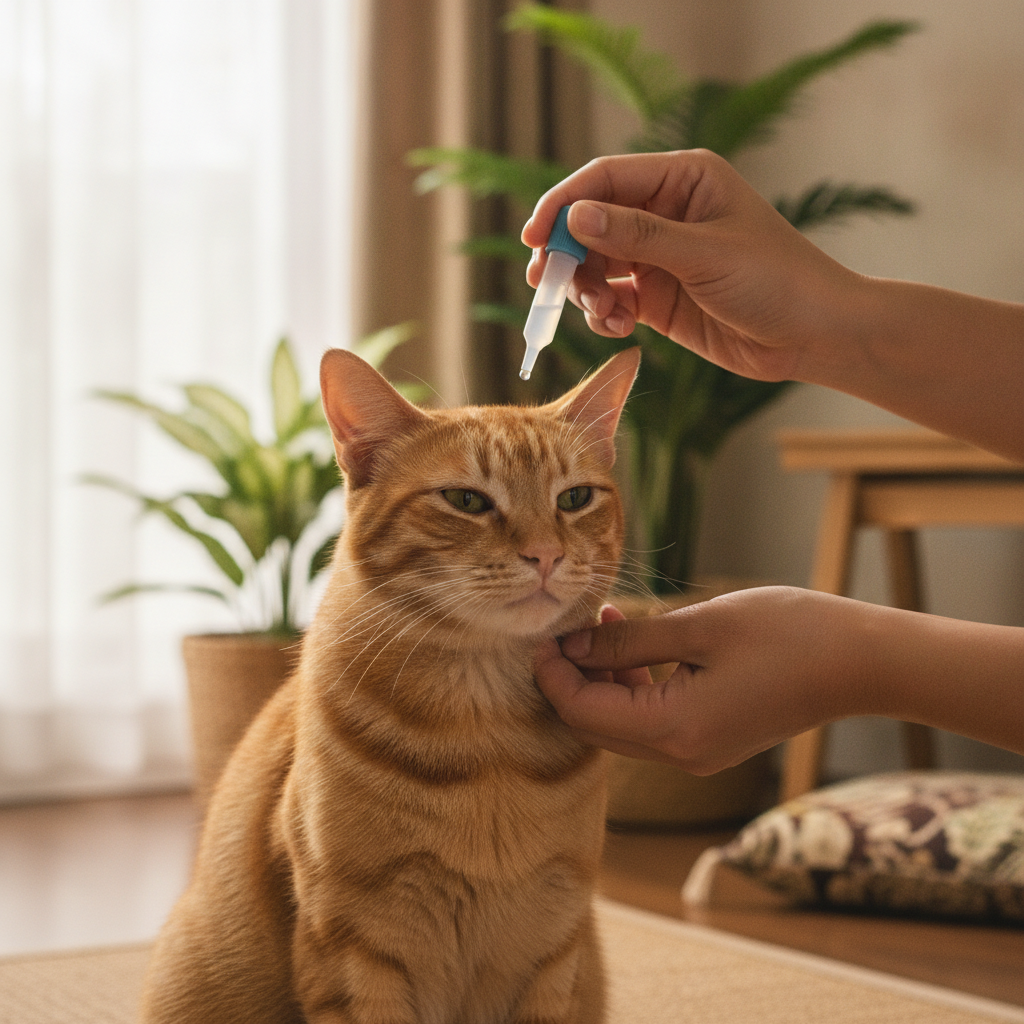
Modern preventives fall into two camps. Topical spot-ons are applied to the skin at the back of the neck where the cat can't lick them; common active ingredients include fipronil, imidacloprid, selamectin and fluralaner. Most are monthly, though some — like topical fluralaner — protect for 8 to 12 weeks. Oral options (such as monthly lotilaner or spinosad chewables) suit cats with skin sensitivities. Many modern products are broad-spectrum, covering fleas, ticks and intestinal worms in one monthly dose, which makes them easy to keep up with and means fewer treatments to remember. VCA Hospitals and your own vet can match the right product to your cat's age, weight and lifestyle. One product type to avoid as a standalone preventive is the fast-knockdown oral that only lasts a day or two — useful to crash an active infestation, but it leaves your cat unprotected the moment it wears off, so it's a treatment, not a prevention plan.
One warning matters more than any product choice: never use a dog flea or tick product on a cat. Many canine products contain permethrin or other pyrethroids that are safe for dogs but highly toxic to cats, causing tremors, seizures and death. Always use a product labelled for cats, at the correct weight, and check with your vet first. Get the timing into your routine with the flea and worm checker and the deworming schedule tool, and steer clear of unproven shortcuts — our piece on the hidden risks of cheap flea collars explains why.
An Integrated, Year-Round Routine

Prevention works best as a single, joined-up habit rather than scattered tasks. Put your cat on a vet-recommended monthly (or 12-weekly) preventive and never let it lapse; treat every cat and dog in the household at the same time so they can't re-infest each other; and pair it with the deworming calendar so the flea-tapeworm loop stays closed. Because most of the flea population lives in your home, basic environmental hygiene helps too: regular vacuuming and washing of bedding, and keeping your cat's core areas clean.
The litter area is part of that clean environment, and it's also your front-row seat for spotting trouble early — flea dirt, tapeworm segments near the tail, or changes in your cat's coat and skin often show up during a daily scoop-and-check. We use Liger Premium Tofu Cat Litter at home because the natural soybean pellets are low-dust and clump firmly, keeping the litter zone cleaner and making that quick daily once-over easier. A 2kg pack is RM21.90, scaling to RM169 for the 10-pack (RM8.45/kg) with free shipping in Peninsular Malaysia (current Liger pricing, as of May 2026); size your supply with the litter calculator. None of this replaces the preventive on your cat — it just supports it. For kittens, fold flea prevention into the full first-year health timeline from around 8 weeks of age.
The Bottom Line
In Malaysia's climate there is no safe gap in the calendar: fleas breed year-round, indoor cats are exposed, and the parasites they carry range from tapeworm to tick-borne anaemia. The fix is refreshingly simple — a continuous, vet-chosen, cat-specific preventive every month, never using dog products, applied to every pet in the home, and tied into your deworming routine. Set it up properly once and then keep it unbroken. Start by raising it at your cat's next checkup; if you haven't booked one, here's what to expect at the first vet visit, and the preventive care hub ties the whole plan together.