You love your cat. You also wheeze every time you scoop the litter box. Or maybe your kid was just diagnosed with mild asthma and the paediatrician asked, casually, what brand of litter you use. Suddenly the bag you've been buying for two years feels less like a household staple and more like a question mark sitting in the laundry corner.
This guide is for Malaysian families navigating that exact decision. We'll go through litter categories honestly — what makes them dusty, what doesn't, and how to pick something that lets both your cat and your respiratory system live in the same condo without daily flare-ups.
When Litter Becomes a Family Health Issue
Asthma Malaysia estimates around 10% of Malaysian adults and 13% of children live with asthma. That's roughly 1 in 8 households. Add in seasonal allergic rhinitis (chronic in nearly half of urban Malaysians, partly thanks to dust mites and our 70-90% humidity year-round) and the math gets uncomfortable: there's a real chance someone you live with is sensitive to airborne irritants — even if they've never connected it to the litter box.
The trick is that cat allergies and litter-dust reactions look almost identical. Sneezing after scooping, post-scoop chest tightness, a dry cough that's worse at night when the box sits two metres from the bedroom. People blame the cat, then feel guilty, then sometimes rehome a perfectly healthy pet they didn't need to part with. We covered the early symptom checklist in our cat litter allergy symptoms guide — if any of that rings a bell, finish reading this article first.
What Actually Causes the Reaction: It's Dust, Not Cat Hair (Mostly)
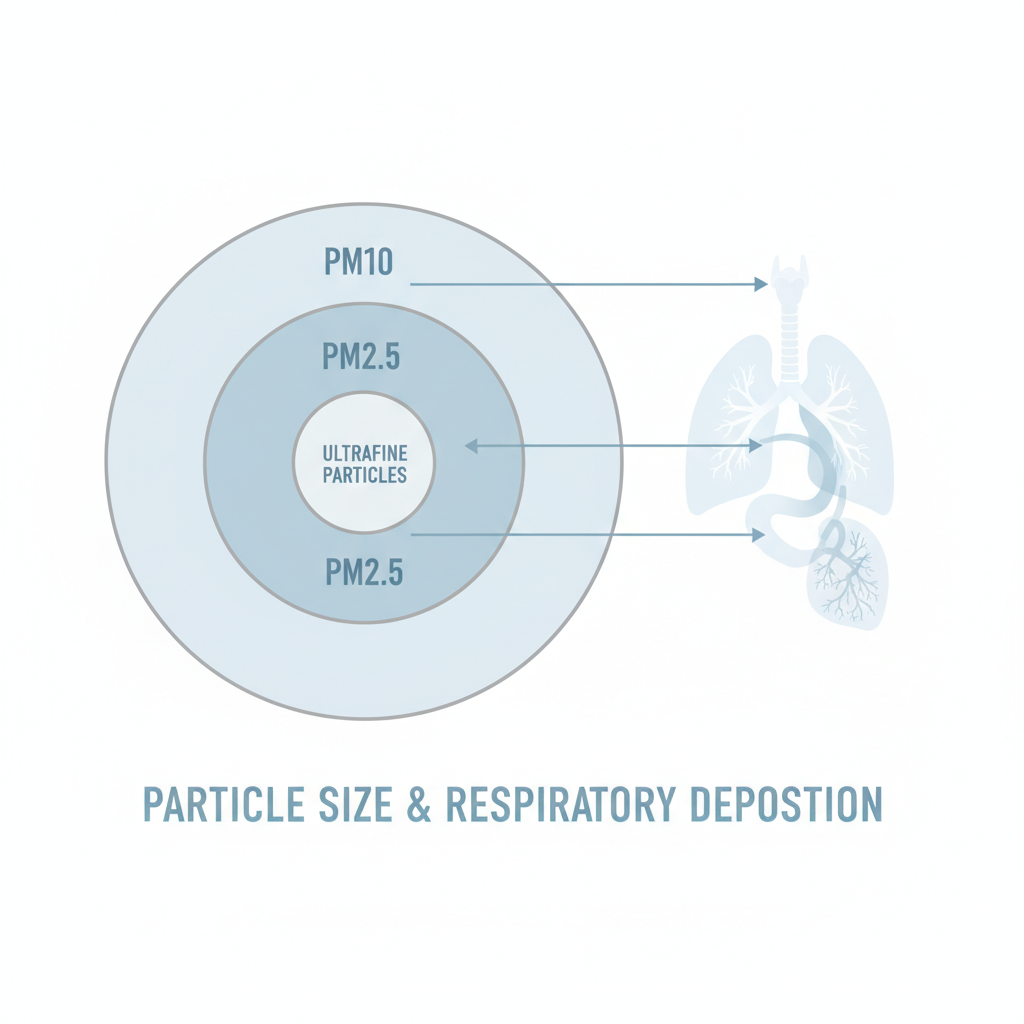
Cat hair carries Fel d 1, the protein behind classic cat allergies. That's real and unavoidable — but it's an entirely separate problem from what we're solving here. What we're tackling is the dust cloud that puffs up when you pour fresh litter or your cat digs to bury a deposit.
The particles that matter for asthma are PM10 and PM2.5 — particulate matter under 10 and 2.5 microns. Anything above PM10 your nose and throat filter out (you'll sneeze, but it won't reach your lungs). PM2.5 slips past every defence and lodges in the alveoli. The WHO classifies long-term PM2.5 exposure as a leading driver of respiratory disease worldwide.
Different litter materials produce wildly different amounts of these fine particles. That's the whole game.
The Honest Dust Ranking: Litter Categories Compared
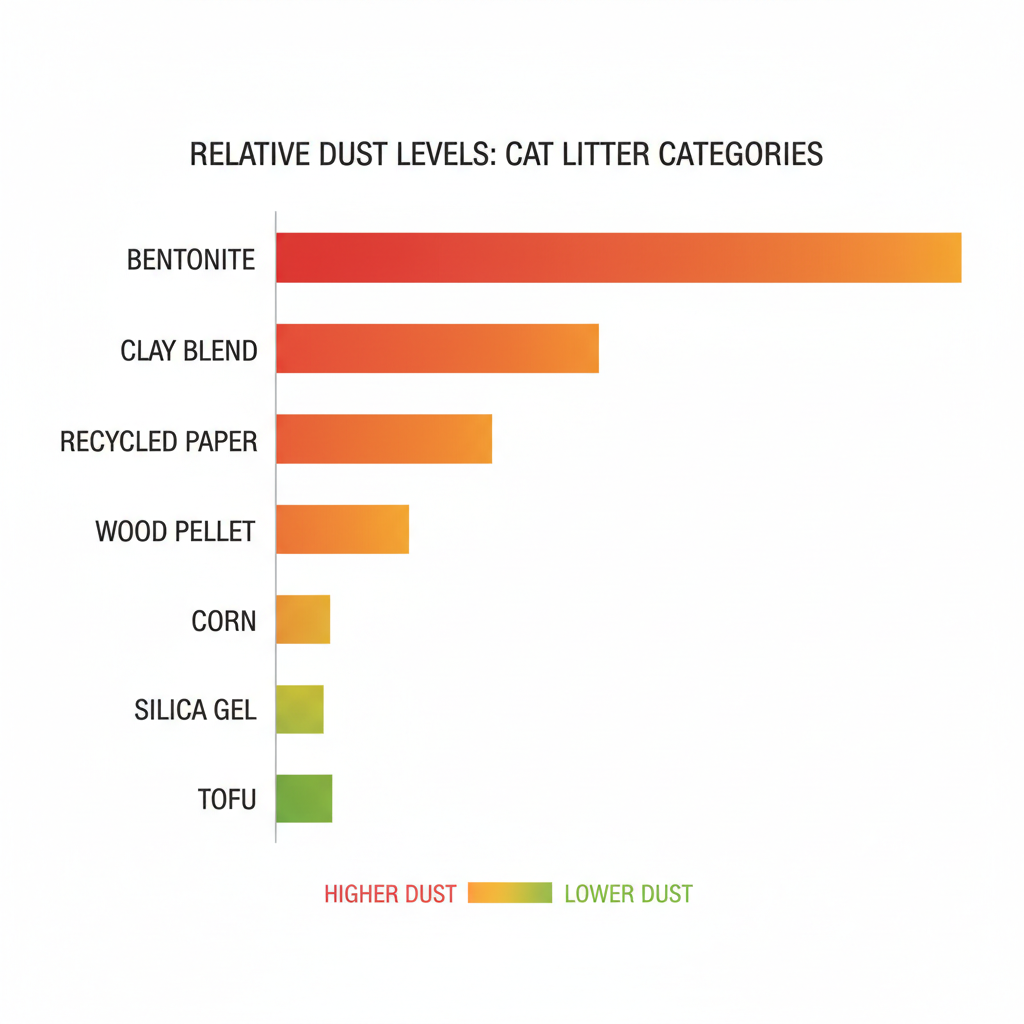
Here's a category-level comparison based on dust profile, clumping behaviour, and how well each holds up in Malaysian humidity. Brand names removed — performance varies more within categories than people think, and a premium bentonite can be cleaner than a budget tofu.
| Category | Dust Profile | Clumps? | Humidity Tolerance | Asthma-Friendly? |
|---|---|---|---|---|
| Bentonite clay | High (respirable silica) | Yes | Good | Avoid |
| Silica crystal gel | Very low | No (absorbs) | Poor in 80%+ RH | OK with caveats |
| Paper / recycled | Very low | Limited | Moderate | Yes |
| Pine / wood pellet | Low to medium | Breaks into sawdust | Variable | Conditionally yes |
| Walnut shell | Medium | Yes (some grades) | Moderate | Conditionally yes |
| Corn | Low | Yes | Poor (mould risk) | Mixed — corn allergy concern |
| Tofu / soy | Very low (pellet form) | Yes | Good when sealed | Generally yes |
If you want to test the dust difference yourself before buying, our dust level comparison tool shows side-by-side visualisations across categories.
Bentonite Clay: The Most Common Offender
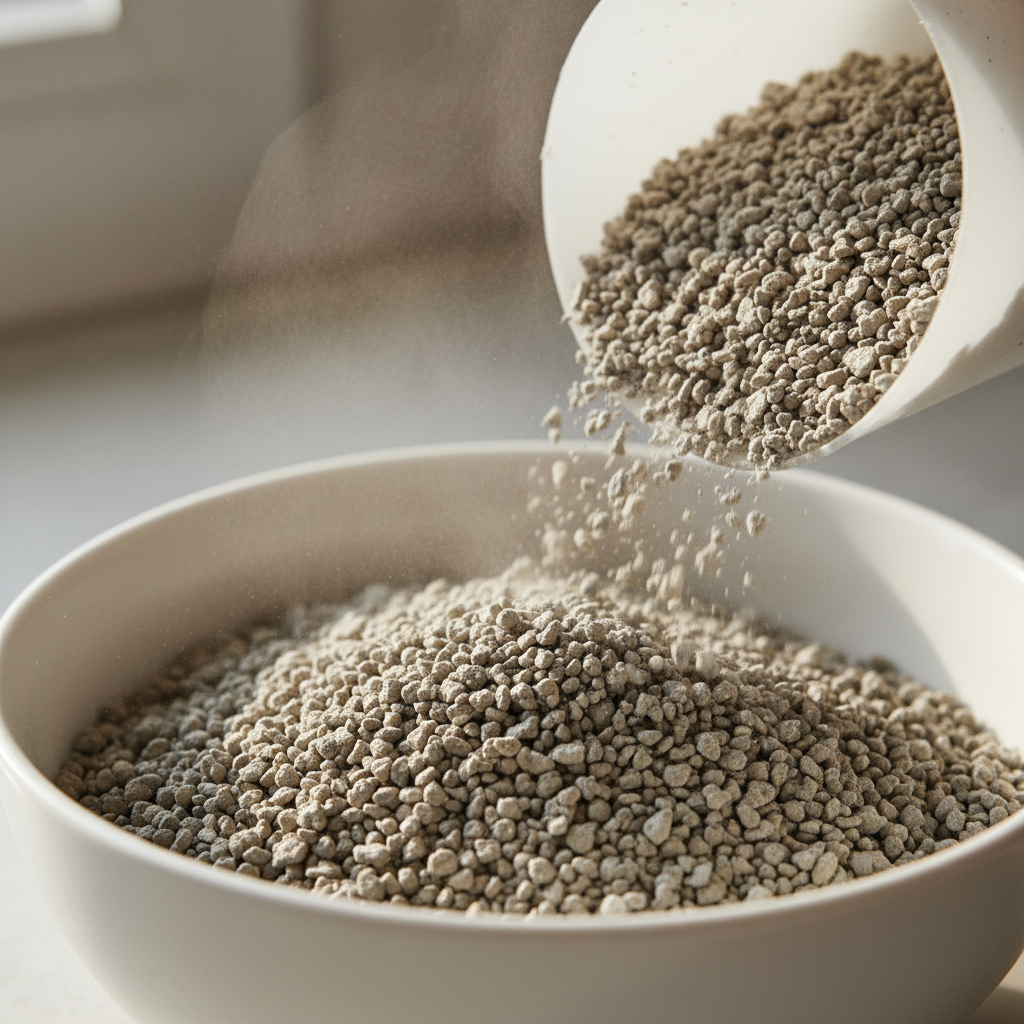
Bentonite clay is the default cat litter sold in supermarkets across Malaysia. It clumps brilliantly, controls odour well, and costs less per kilogram than most alternatives. It's also the worst category for households with asthma, and the reason takes a minute to explain.
Sodium bentonite is a fine-grained clay that expands 15-18 times its volume when it contacts liquid — that's what creates the clump. The flip side: during pouring and scooping, the same fine-grained structure releases a cloud of respirable crystalline silica dust. The US National Institutes of Health has linked occupational crystalline silica exposure to silicosis and accelerated lung function decline, and the International Agency for Research on Cancer classifies it as a Group 1 carcinogen when inhaled long-term.
Cat parents aren't quarry workers — exposure levels are nowhere near industrial — but for someone with reactive airways, even sub-clinical doses can trigger flares. The Asthma and Allergy Foundation of America lists indoor particulate matter as a major modifiable trigger. A 20 kg sack of bentonite poured indoors during litter changes can release visible dust for several minutes, and that dust will settle on your sofa, your bedsheets, and the inside of your AC filter.
If your household has zero asthma and zero allergic rhinitis, bentonite is fine. If anyone wheezes, it's the first thing to change.
Silica Crystal Gel: Low Dust, Big Caveats
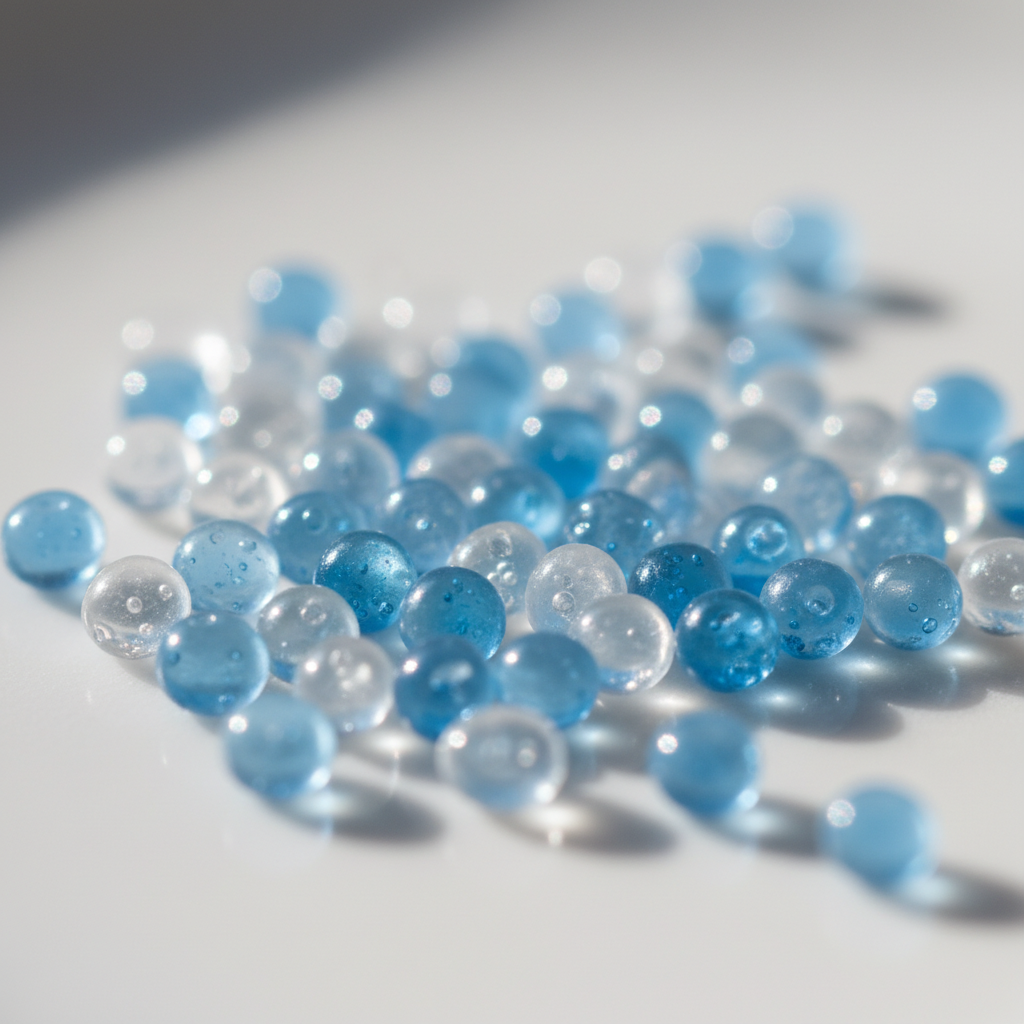
Silica gel beads are the translucent crystals you'll sometimes see in premium imported cat litter. The material is genuinely low-dust — closer to glass beads than powder — and it absorbs up to 40 times its weight in liquid before saturation, according to product testing data collected by a Malaysian pet retailer.
Three caveats your local pet shop won't always volunteer:
- It doesn't clump. You can't scoop out individual pees — you stir, the urine spreads through the bed, and you change the whole tray when the colour shifts. For multi-cat homes this gets expensive fast.
- It performs poorly in Malaysian humidity. Cat parents on r/CatAdvice have noted that silica beads saturate visibly within 7-10 days in 80%+ RH conditions — about half the dry-climate lifespan the packaging implies.
- Ingestion risk for kittens. The beads look like food pellets and silica is non-digestible. Reported pica cases in kittens under 6 months are uncommon but real.
For an adult cat in a dry, air-conditioned room with an asthmatic owner, silica is a reasonable pick. For a kitten or a condo with windows open during the monsoon, look elsewhere.
Paper / Recycled Newspaper: Underrated Option
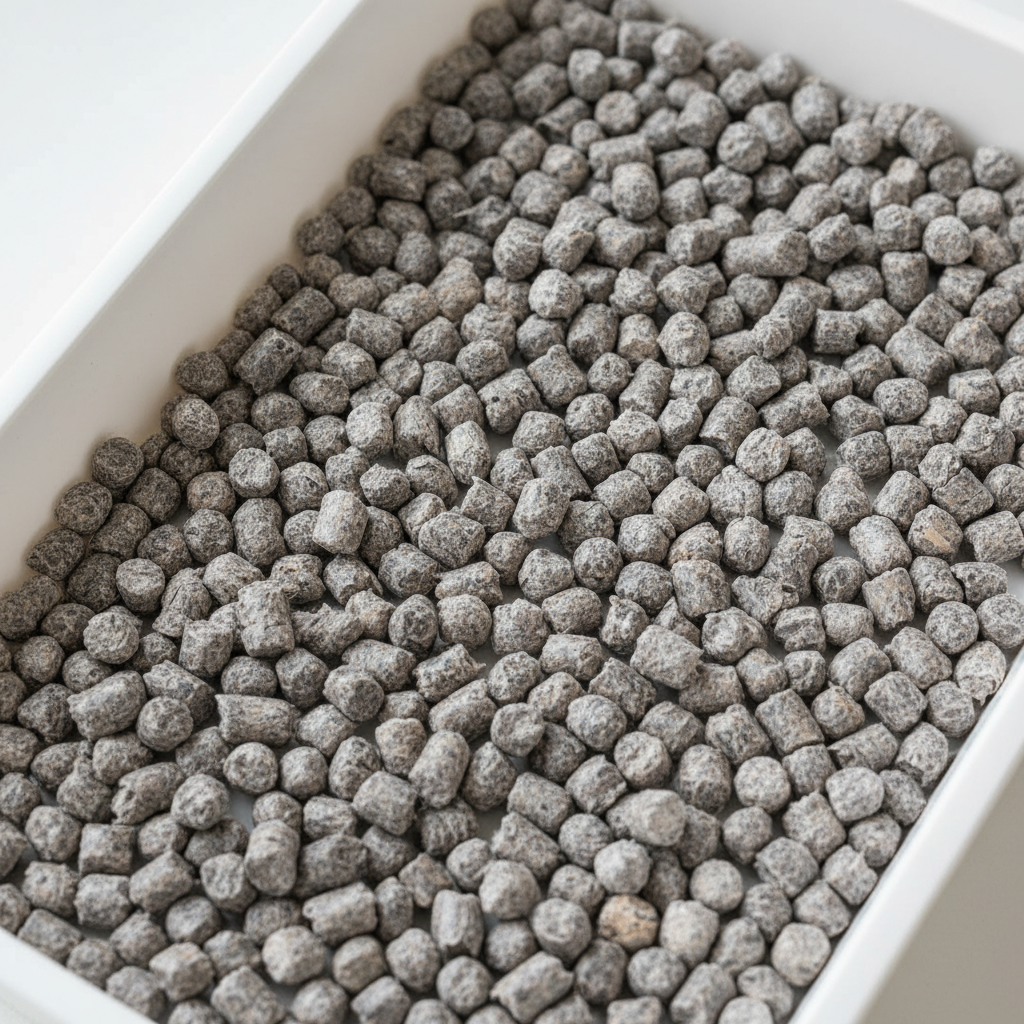
Compressed paper pellets are made from post-consumer newspaper, pulped, dried, and cut into cylinders. The material itself produces almost no dust because the pellets don't fracture into airborne fines — they swell and soften when wet, eventually forming a soft paste.
Paper-based litter is genuinely hypoallergenic. It's also gentle on declawed cats and post-surgery cats whose paws can't tolerate sharper grains. The trade-offs: clumping is weak (some brands clump softly; many don't clump at all), odour control without baking soda additives is modest, and the texture feels strange to cats raised on clay, so transitions take longer than average.
If asthma is the dominant constraint and your cat is flexible about texture, paper deserves a serious look. The American College of Allergy, Asthma and Immunology generally treats low-particulate household products as a first-line environmental adjustment.
Pine / Wood / Walnut: Natural But Variable
This group sounds like one thing but behaves like three different things, so it's worth separating.
Pine pellets start as compressed sawdust. On contact with urine they break apart back into damp sawdust at the bottom of the tray. Dust output is low when fresh, but as the bed ages the broken-down layer kicks up sawdust during digging. Some cats also dislike the strong pine scent, which contains phenols. Veterinary opinion on phenol exposure in cats is mixed — pine pellets marketed for cat use are kiln-dried to reduce phenol levels significantly, and modern formulations are generally considered safe, but kittens with developing livers may be more sensitive.
Wood pellet litter is the most economical option in Malaysia, with a monthly cost around RM 8-10 for a single-cat home, roughly half what bentonite runs.
Walnut shell is finer-grained — closer to coffee grounds than pellets — and clumps reasonably well. Dust output sits in the middle of the pack. Some asthmatic cat parents react to walnut, which is a recognised tree-nut allergen. Safe for most, problematic for the few with confirmed nut allergies.
Tofu / Soy: Why Plant-Based Pellets Stay Low-Dust
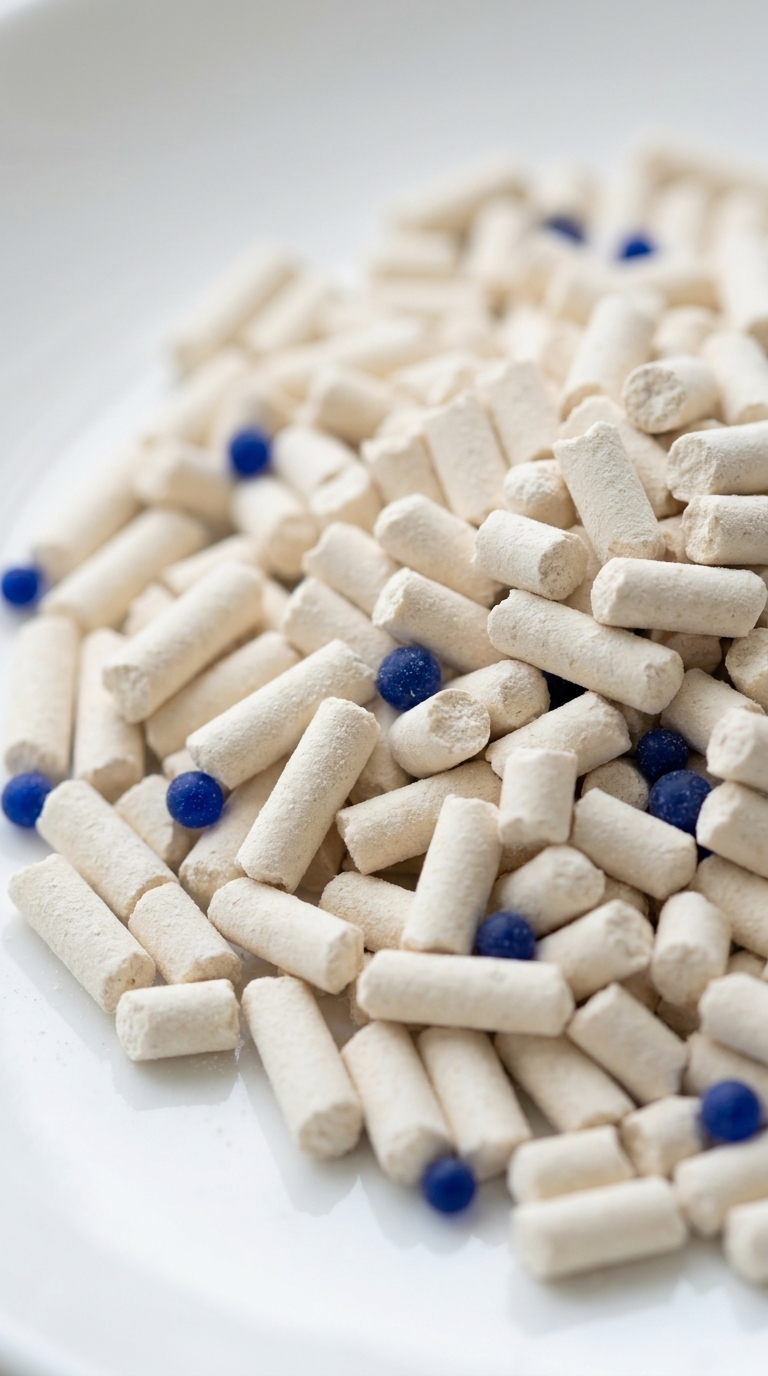
Tofu litter is made from soybean fibre — typically the okara byproduct of tofu production — pressed into 2-3mm rod-shaped pellets and dried. The starch-protein matrix gives it three properties that matter here:
- The pellet form keeps fine particles bound; almost nothing aerosolises during pouring.
- On contact with urine, the starch absorbs liquid and the pellet wall collapses inward, creating clumps that scoop out as a single piece (no scattered fine debris).
- It's biodegradable and dramatically lighter than clay — a 2kg bag covers roughly the same usage area as a 5kg bentonite bag.
For most asthmatic households this category solves the dust problem without the silica caveats. The remaining considerations are: cost per kg is higher than clay (offset partly by lower usage rate), and a small percentage of cats refuse the texture on first try.
Liger's tofu cat litter sits in this category. Pricing is straightforward: a 1-pack (2kg) is RM21.90, and the 10-pack bulk discount drops the per-kg cost to RM8.45 with free West Malaysia shipping. If you're transitioning specifically because of an asthma diagnosis, start with the 1-pack — individual cats vary, and so do individual respiratory sensitivities. We covered the broader dust profile in our dust-free litter guide and how tofu compares to clay specifically in tofu vs bentonite.
Quick way to compare options side by side: our litter comparison tool lays out dust, clump quality, weight, and odour control across categories.
How to Switch Safely Without Triggering a Flare
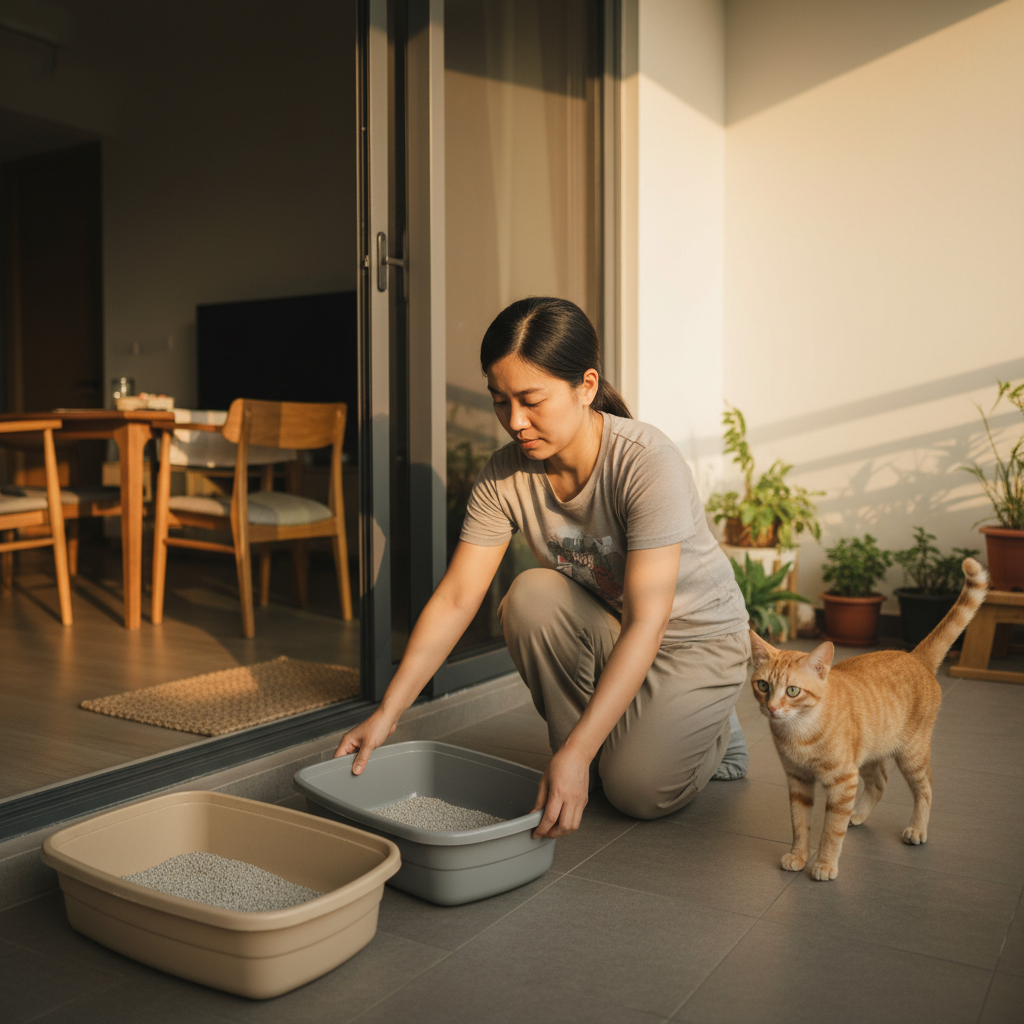
This is the part most asthma guides skip, and it's the part that goes wrong most often. The transition matters as much as the destination.
The standard veterinary protocol from the American Association of Feline Practitioners for any litter change is a 7-10 day gradient. For households with asthma, two extra modifications:
- Do the swap outdoors or on a ventilated balcony. The act of pouring out an old bentonite tray releases more dust in 60 seconds than a week of normal scooping. Wear an N95, open windows, switch off AC recirculation.
- Run a parallel-tray transition, not a mixed-tray transition. Most articles tell you to mix the old litter with the new at increasing ratios. For an asthmatic household, that means every scoop releases dust from both materials. Better: put the new litter in a second tray, place it next to the old one, let the cat choose. Once the cat uses the new tray consistently for 3-4 days, remove the old.
- Wipe surfaces and replace AC filters 1-2 days after the swap. Bentonite residue settles on horizontal surfaces and can re-aerosolise for weeks.
If your cat has any respiratory history — flat-faced breed, post-URI, or current treatment for feline asthma vs hairball confusion — confirm the transition plan with your vet first.
Red Flags: When to See a Doctor (Not Just Change Litter)
Switching litter helps with environmental triggers. It doesn't replace medical diagnosis. See a GP or pulmonologist if any of these are happening:
- Symptoms persist 2-3 weeks after switching to a low-dust litter
- Night-time wheezing, chest tightness on waking, or shortness of breath climbing one flight of stairs
- A child with recurrent "colds" that include cough lasting more than 10 days
- Anyone in the household using a reliever inhaler more than twice a week
Allergies and asthma have overlapping symptoms but different treatment paths. A simple skin-prick panel or specific IgE test can distinguish cat dander allergy from dust sensitivity from cleaning-product reactivity. Get the data before redesigning your home around guesses.
Malaysian Condo Considerations
A few things about how we live in KL, PJ, JB, and Penang that change the calculus:
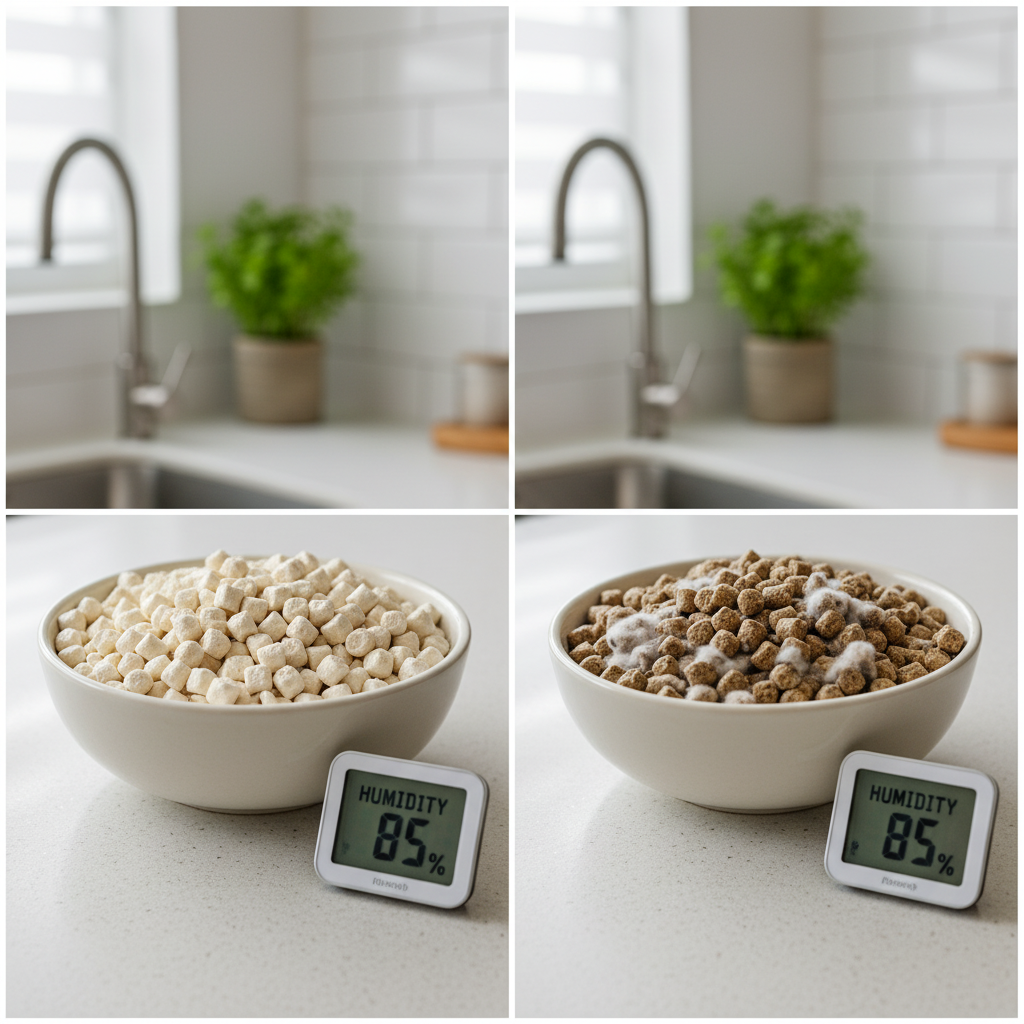
Humidity above 80%. This year-round wet air saturates silica gel faster than packaging claims, encourages mould in corn and damp pine, and reduces shelf life on opened bags of any litter category. Buy smaller bags more often if you have a 1-cat household.
Condo air recirculation. Most modern Malaysian condos use AC that recirculates indoor air with limited fresh air exchange. Litter dust that escapes the box gets cycled through the system and redeposited. The single highest-yield asthma intervention is often not a litter swap — it's a HEPA-filtered air purifier in the same room as the box, running 24/7.
Smaller floor area. A 700 sqft condo means the litter box is rarely more than 5 metres from a sleeping space. Distance matters. Put the box in the area with the best ventilation (kitchen ledge, balcony alcove) rather than the master bathroom by default.
Monsoon and the haze. During hazy weeks (Indonesian peat fires, typically Aug-Oct), outdoor PM2.5 already spikes above WHO safe limits. Layering bentonite dust on top of haze exposure is what tips chronic asthmatics into the ER. If you can't switch litter immediately, at minimum stop pouring new bentonite during haze advisories.
FAQs
Is tofu cat litter completely safe if I have a soy allergy?
Inhalation exposure to processed soy fibre is different from food-protein exposure, but if you have a confirmed soy IgE allergy with respiratory symptoms, do a small patch test first — open a 2kg bag, sniff at arm's length, wait 30 minutes. Paper or silica would be the safer baseline.
Will an air purifier alone solve the problem if I keep using bentonite?
It helps significantly but doesn't fully solve it. A HEPA purifier rated for the room's CADR captures PM2.5 from the air, but it can't catch dust before it reaches your face during the pour or scoop. Best results come from combining a low-dust litter category with an air purifier.
How much litter does an asthmatic single-cat home need per month?
For tofu pellet litter with daily scooping and full change every 14-18 days, expect about 4kg per cat per month. The 5-pack (10kg) at RM89 covers roughly 2.5 months for one cat. Use our litter comparison tool to estimate based on your specific category choice.
My cat has flat-face breed (Persian, Exotic). Does that change anything?
Yes. Brachycephalic cats have shorter airways and reduced filtering capacity, so dust affects them more than mesocephalic breeds. The asthma-friendly category list above is also the cat-friendly list. Combine with a covered, top-entry box to further reduce dust escape.
Can I just use baking soda to control odour and stick with my current litter?
Adding baking soda to a dusty litter actually increases airborne particulate because the powder itself aerosolises during stirring. If odour is the driver, switch litter category first; consider odour additives only with low-dust pellet types.
How do I check if my cat's behaviour change is from a new litter or something else?
If your cat starts urinating outside the box after a litter switch, the litter texture is almost always the trigger. But persistent inappropriate urination plus straining or visible discomfort can signal lower urinary tract issues — run our urinary health checker and see a vet within 48 hours if any straining is observed. We also break this down in our cat health symptom guide and humidity-related odour management.