You fed the skinny tabby outside your apartment a few times, and now — congratulations — you have a cat. Or maybe you brought home a grown rescue, a kampung survivor who's spent years doing his business in the longkang and the flower bed. The big question every new Malaysian cat parent asks: can you actually toilet train a fully grown stray, or did you miss the window? Good news, and we'll say it plainly: yes, you can litter train an adult or stray cat, and it's usually far easier than people fear. Here's the calm, practical guide that's worked for the cats we've taken in.
Good News: Burying Is Instinct, Not a Kitten-Only Skill
Here's the reassuring biology: covering up waste isn't a trick you teach a cat, like 'sit' or 'shake'. It's a deep instinct. In the wild, cats bury their waste to hide their scent from larger predators and rival cats. Your stray has been burying his business his whole life — just in soil, sand, and grass instead of a plastic box. You're not teaching a new behaviour. You're simply redirecting an existing one to a new location.
That's why adult and stray cats often 'get it' within days. You're working with instinct, not against it. And don't believe the myth that an adult cat is too set in its ways to adjust to a new home — a study from Oregon State University found that adult cats form secure attachments to their humans at much the same rate as kittens. A grown stray can absolutely settle, bond, and learn the house rules. The trick isn't forcing the skill — it's setting up the situation so the right choice is the easy choice.
First Things First: Settle, Quarantine & Vet-Check the Stray
Before any litter training, slow down. A stray that's just been scooped off the street is stressed, possibly sick, and in no state to learn anything. Rushing straight to training a frightened cat backfires. Do this first:
- Quarantine in one room. Keep a new stray separate from any resident pets for a couple of weeks. This isn't just about behaviour — it's health. Klang Valley street cats carry a real parasite load; one local study found infection rates as high as 56% for Tritrichomonas foetus in stray cats versus far lower in pets. A quiet single room also happens to be the perfect litter-training environment, as we'll see.
- See a vet early. Get the newcomer checked, dewormed, treated for fleas, and tested before mixing with other cats. A cat with worms or diarrhoea cannot be reliably litter trained — fix the body first.
- Let them decompress. Give the cat a few days of calm, food, water, and a hiding spot before you expect much. A settled cat learns; a terrified one hides under the sofa and holds it in.
If this is your first rescue, our full guide to adopting a stray cat in Malaysia walks through the health and settling steps in detail, and the new cat owner checklist makes sure you haven't missed anything.
The Setup: Box, Location & the Right Litter for a Newcomer
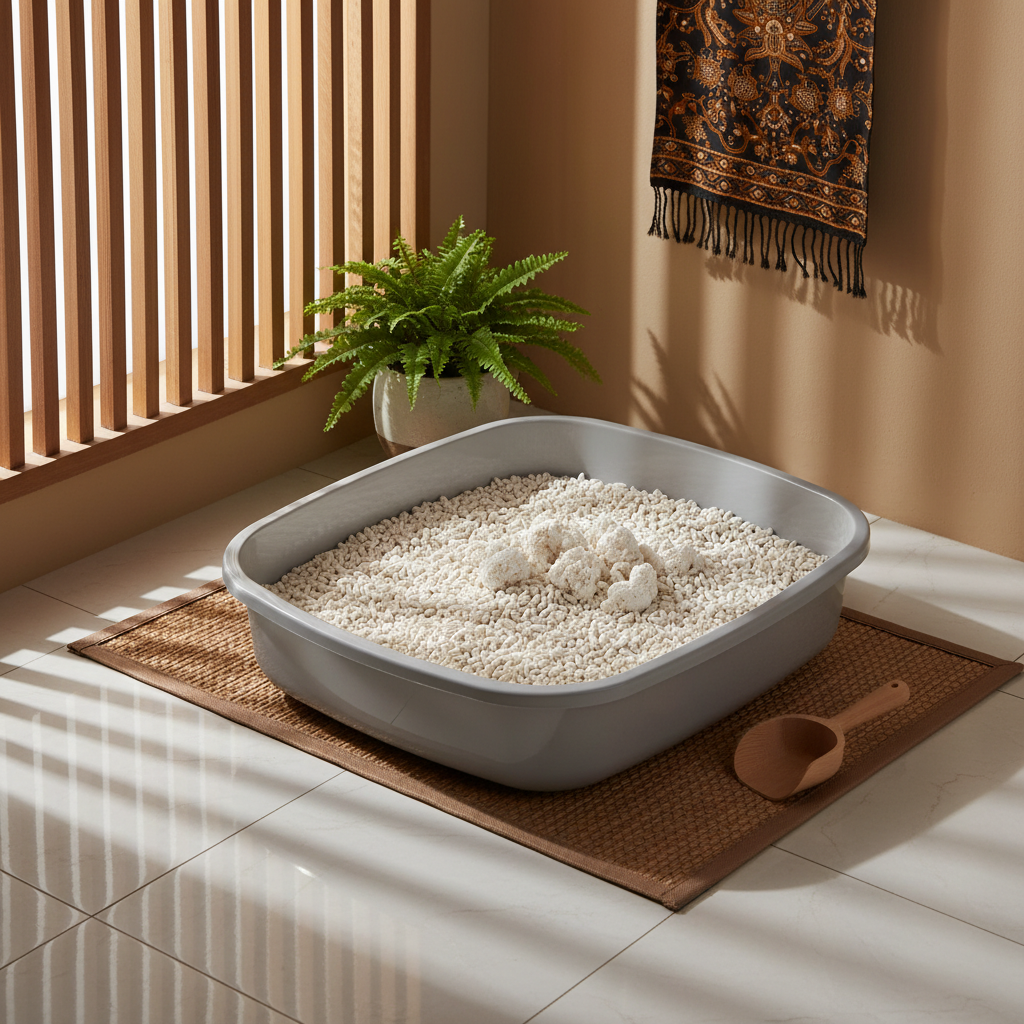
Get the environment right and the cat trains itself. Three pieces:
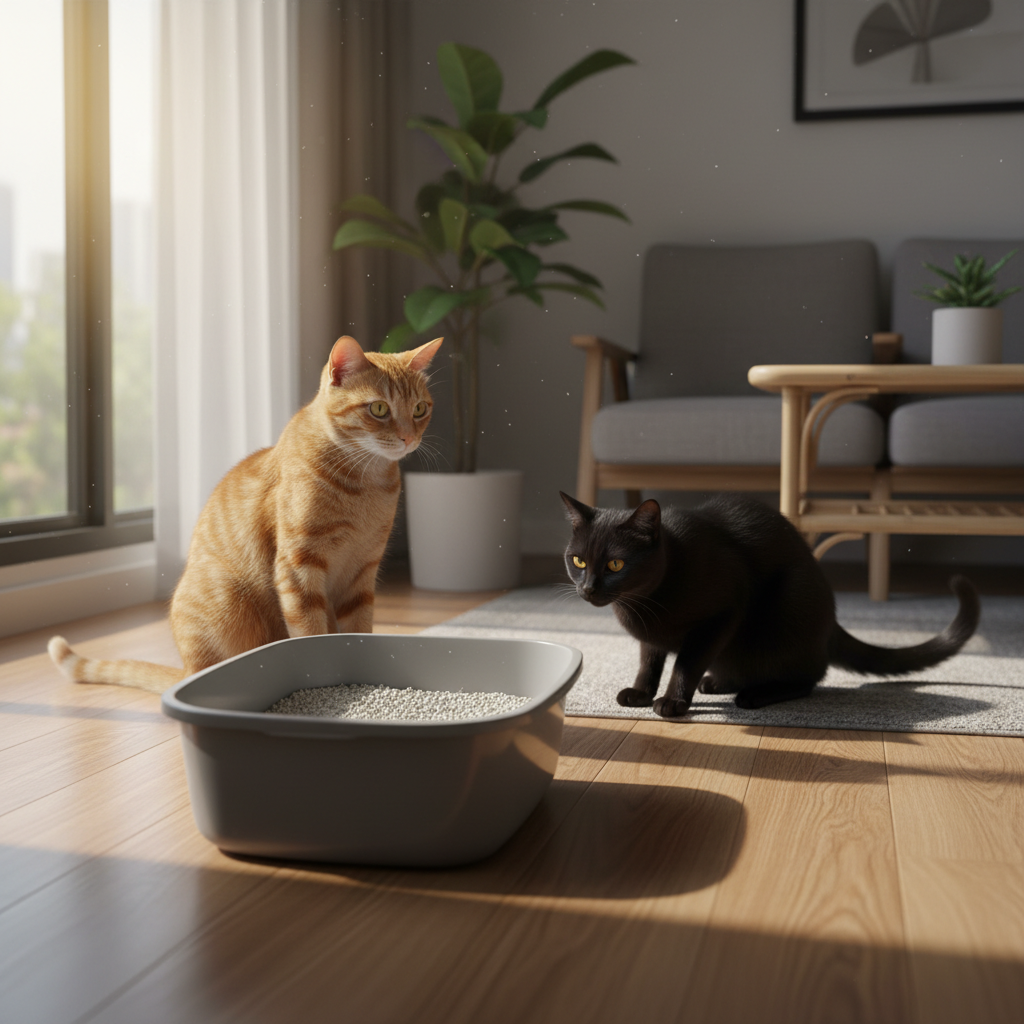
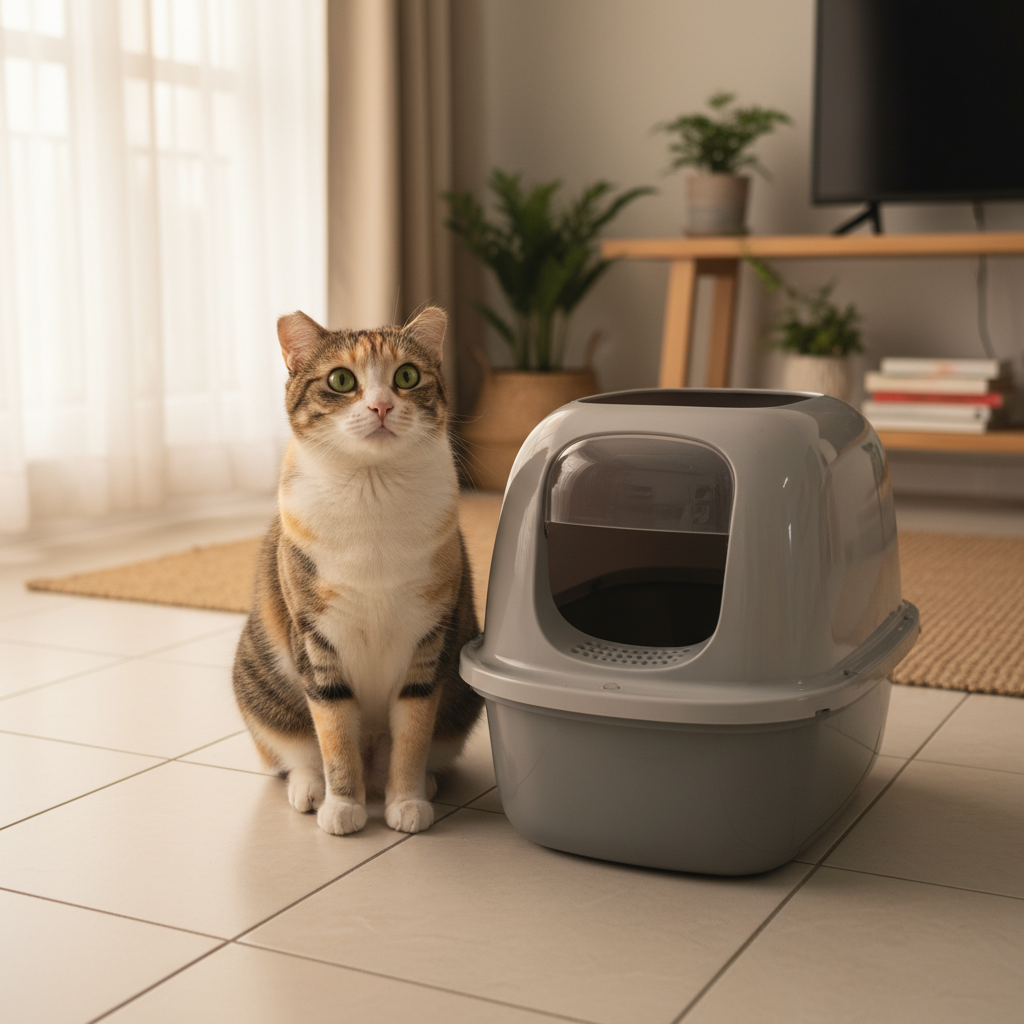
The box. Go big and open. A large, low-sided box or a cheap storage tub is far less intimidating to a cat that's used to the wide-open outdoors than a small enclosed hood. Skip the lid entirely at first — a former street cat wants to see its surroundings and feel it can escape. Make getting in effortless.
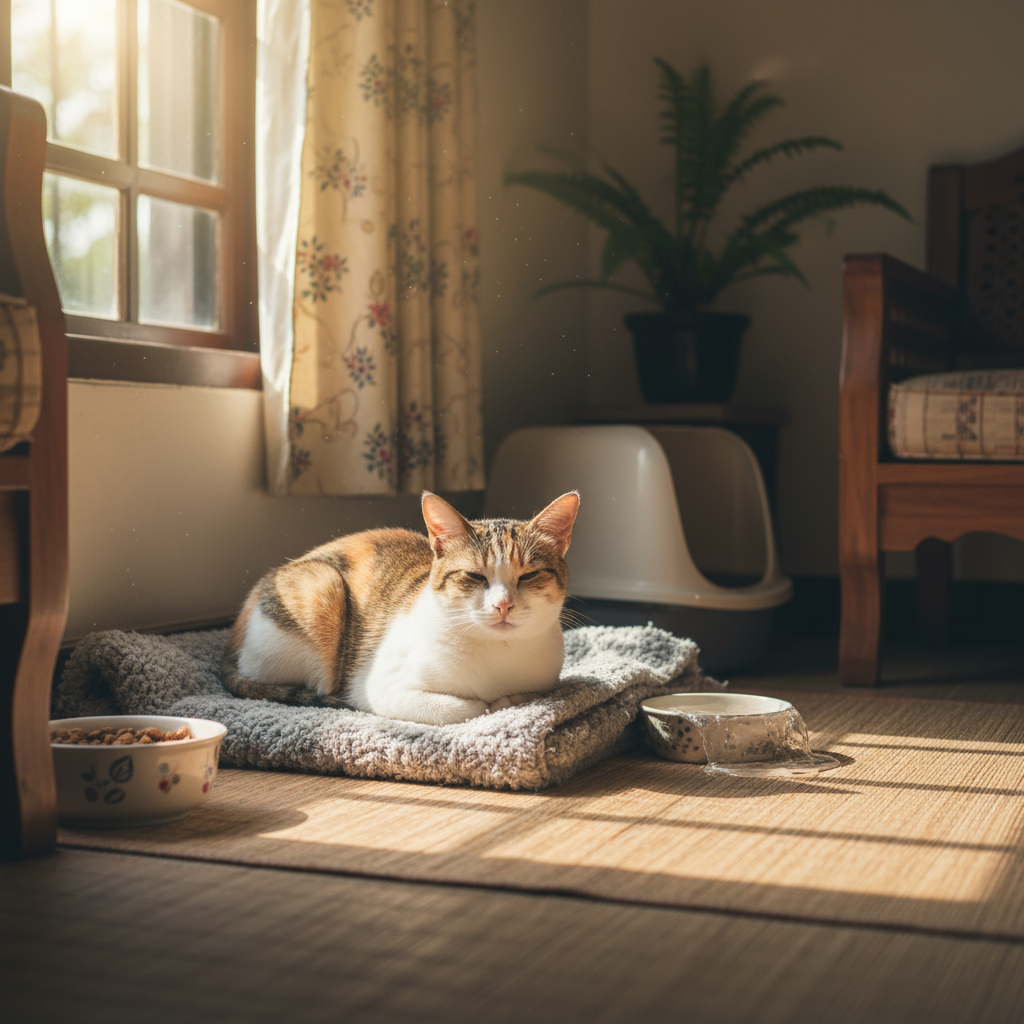
The location. Put the box in the quarantine room, in a quiet corner away from the food and water bowls (cats won't toilet where they eat) and away from noise. Because the cat is confined to one room, the box is never far away — which is exactly what a cat still learning needs.
The litter — this is where you can stack the deck. A street cat's whole life of burying has happened in soil, sand, and earth. The closer your litter feels to that, the faster the instinct kicks in. This is the strong case for a soft, natural litter over hard or heavily perfumed options. A good tofu cat litter made from soft soy-fibre pellets has a gentle, sand-like feel that an outdoor cat recognises and willingly digs into, with very low dust and only a mild natural scent — no synthetic perfume cloud to put off a wary newcomer.
There's also a safety angle that matters with rescues, who often arrive alongside kittens or in unknown health. Traditional clumping clay carries fine crystalline silica dust that can irritate airways and is linked to silicosis, and for any kittens under four months, swallowed clumping clay can cause fatal intestinal blockage — a real risk with curious young cats that mouth everything. A natural tofu litter sidesteps both concerns. Liger Premium Tofu Cat Litter was designed around exactly this: soft, low-dust, lightly scented, and safe. You can compare the feel and dust of different litter types on our litter comparison tool to see why texture matters for a newcomer.
One field trick for the truly outdoor-hardened cat: sprinkle a small handful of clean sand or a little soil on top of the fresh litter for the first few days, so the surface smells and feels like what the cat knows. Phase it out as the cat commits to the box. On cost, Liger comes in 2kg packs — as of May 2026, RM21.90 for 1, RM53.90 for 3, RM89 for 5 (RM8.90/kg), and RM169 for 10 packs at RM8.45/kg, free shipping in West Malaysia. A new rescue is a good moment to buy a 3- or 5-pack, since you'll be changing litter a little more often during the settling-in phase. Our litter calculator helps you size it.
The Training Method: A Simple Day-by-Day Plan
With the cat settled and the box set up, the method itself is gentle and short. The whole strategy is: make the box the obvious, easy, only convenient place to go, then let instinct do the rest.
- Confine to the one room. A small space means the cat is always near the box and can't develop a hidden corner habit. This single step does most of the work.
- Time it with biology. Cats most often need to go shortly after waking from a nap and after eating. Gently place the cat in the box at those moments. If the cat digs and goes — jackpot.
- Let them feel the litter. Some cats need a hint. You can gently run your fingers through the litter so they see the digging action, or lightly use their front paw to scratch once. Don't force or hold them down — a bad first experience sets you back.
- Reward, never punish. The moment the cat uses the box, offer calm praise or a small treat. Positive association is everything. Crucially, never rub a cat's nose in an accident or scold it — punishment only teaches the cat to fear you and to hide where it eliminates, making things worse.
- Clean accidents thoroughly. Use an enzyme cleaner (not an ammonia-based one — ammonia smells like urine and invites a repeat). If you find a poop or pee outside the box, place it in the box so the scent marks the spot as the right toilet.
- Expand slowly. Once the cat is reliably using the box in its room, give it access to more of the home gradually, adding a second box if your place is large or you have other cats.
Most adult strays are reliably using the box within a few days to two weeks. The biggest accelerator is simply a clean, inviting box the cat wants to use.
Common Hiccups: Accidents, Outdoor Habits & the Fussy Adult
A few snags come up often with grown rescues:
- 'He keeps going by the door.' A cat that pees or poops near the front door or a window is often still pulled toward going 'outside'. Block access to that spot, clean it with enzyme cleaner, and consider moving a box near (not on) the favoured area, then shifting it gradually.
- 'She uses it for pee but not poop.' This specific split usually means the box is too small, too dirty, or too enclosed for the longer job. Go bigger, scoop more, lose the lid — we cover this exact problem in depth in our guide on cats pooping outside the box.
- The fussy ex-outdoor cat. Some hardened strays reject any litter that doesn't feel earthy. The sand-on-top trick above, plus a soft natural tofu litter, usually wins them over. Switch litters gradually if you change later — sudden changes unsettle a cat that's only just settled.
- Sudden relapse after success. A trained cat that suddenly stops is often telling you about stress or a health problem, not stubbornness — back to the vet, and check whether something in the home changed.
From Stray to Family Cat: Patience & Routine
Litter training a stray is really just one chapter of a bigger story: helping a street survivor learn that this place is safe, predictable, and his. The box routine — same spot, clean litter, calm rewards — is one of the first ways a wary cat learns to trust the rhythm of your home. Keep it consistent, keep it gentle, and resist the urge to rush.
The kitten-specific version of this process has a few different wrinkles, so if your rescue is very young, pair this with our kitten litter training guide. But for the grown kampung cat blinking at you from under the sofa: relax. The instinct is already there. Give him a quiet room, a big clean box, a soft natural litter that feels like home, and a week or two of patience, and you'll have a former street cat using his box like he's done it all his life — because, in a way, he has.