Last week I opened a Liger bag that had been sitting on the kitchen counter for about ten weeks. Lucky (our youngest, now 19 months old and still the troublemaker of the four) had knocked over a half-empty bag in May and we just folded it back up and clipped it. Smelled fine then. Last week? Sour, slightly sweet, weird. Three pellets near the bottom had a faint greenish tinge. That bag went straight into the bin.
If you live anywhere in Peninsular Malaysia, this is going to happen to you eventually. Our climate is brutal on plant-based litter. Average relative humidity stays between 75% and 90% year-round, and during the Northeast Monsoon (November to March) Kuala Lumpur regularly hits 90%+ RH for days at a time. That is fungal heaven. So here is the full playbook on spotting spoilt tofu litter, why it happens, and how to make a bag last longer in our climate.
Why Tofu Litter Spoils Faster Here Than in Singapore, Sydney, or California
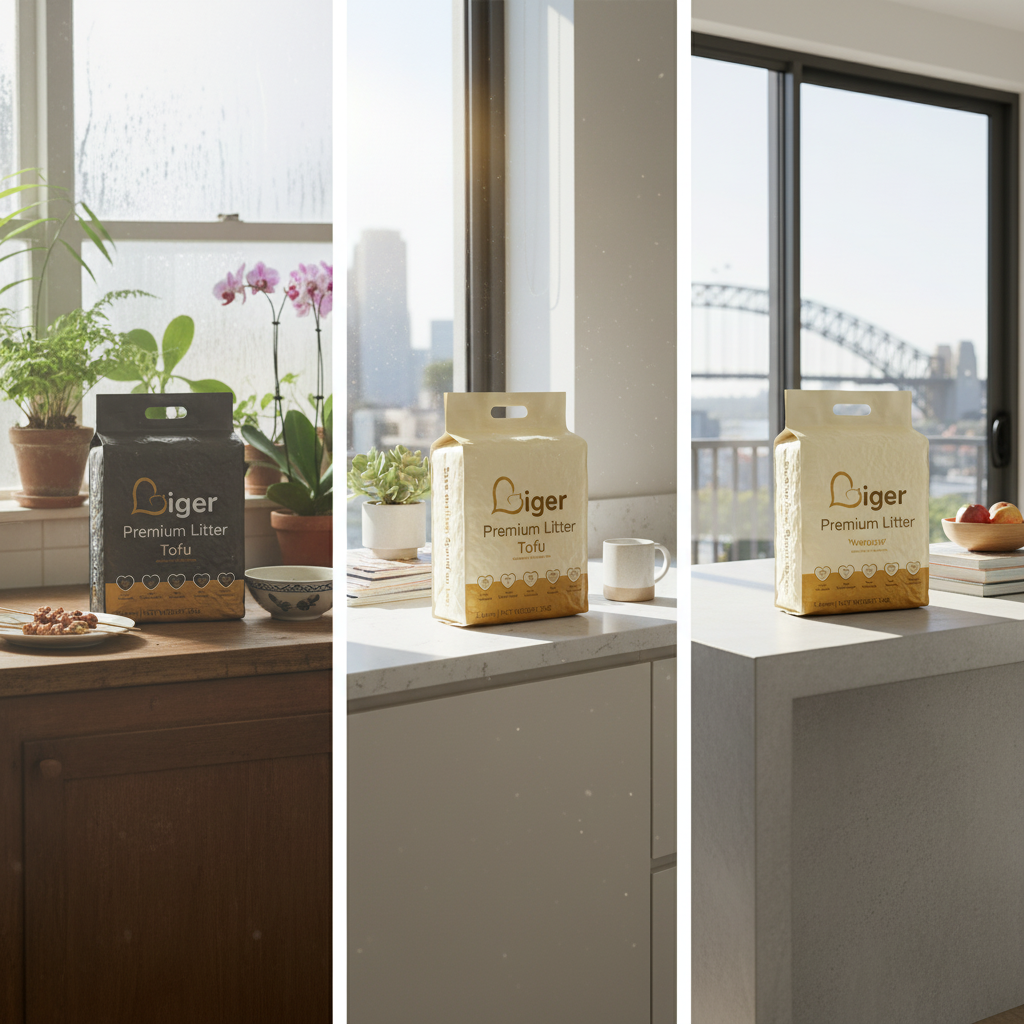
Tofu cat litter is made from compressed soy fibre, pea starch, corn starch, and a small amount of binding agent. Those are the same ingredients a fungus would put on its grocery list. Add 80%+ humidity and 28-32°C ambient temperature and you have an incubator running 24/7.
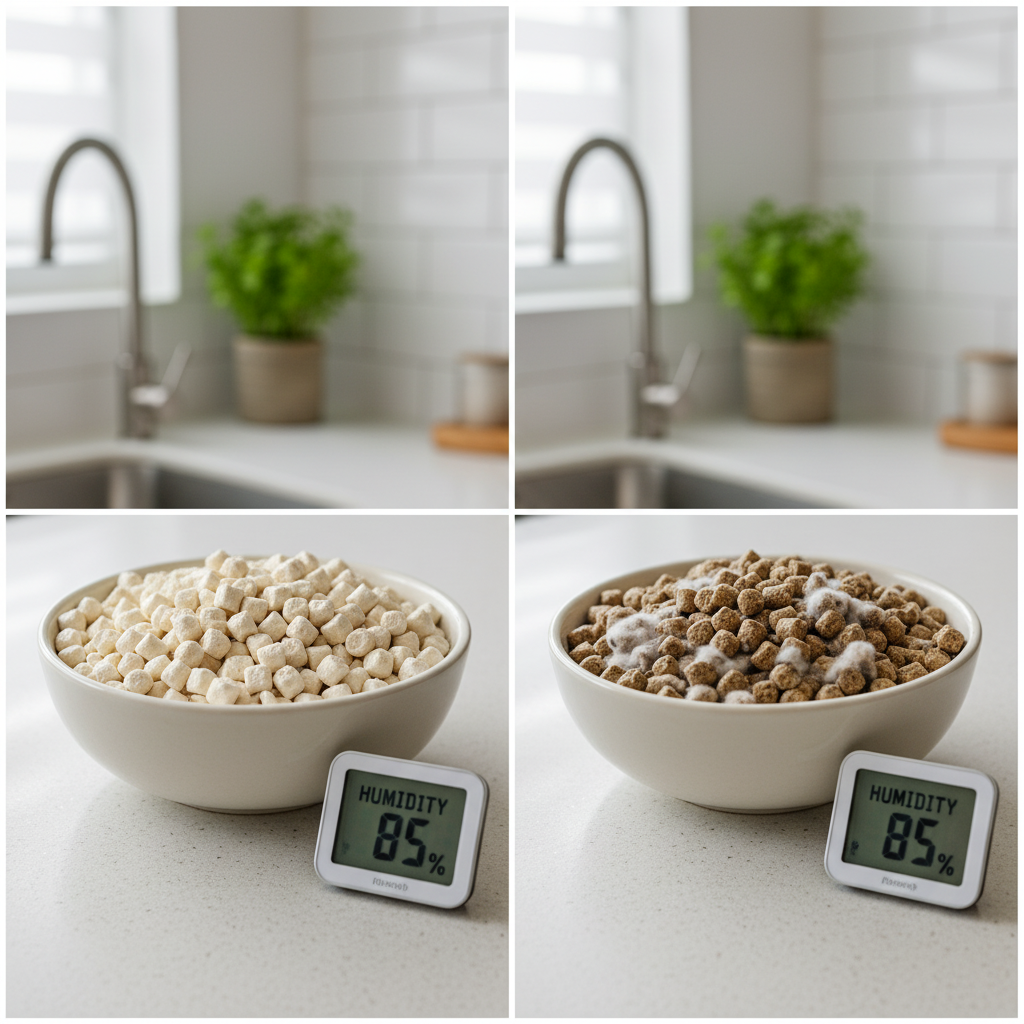
The Aspergillus flavus mould (the one that produces aflatoxin) grows best at 28-32°C and relative humidity above 85% — conditions that occur in Malaysian kitchens almost every afternoon. Singapore is similar but most flats run aircon longer. Sydney averages 60-65% RH year-round. California is bone dry by comparison. So a tofu bag that lasts six months in San Francisco might only last six weeks in Klang Valley once opened.
Two molecular things are happening at the same time:
- Starch hydrolysis. Amylase enzymes from common bacteria (Bacillus subtilis) and fungi (Aspergillus oryzae) break the starch chains down into glucose. Glucose then feeds even faster microbial growth. Snowball effect.
- Soy protein breakdown. Protease enzymes dismantle the soy proteins into amino acids. This is the source of that sour, slightly fermented smell you get from a bag that has gone off. It is literally fermentation, just not the kind you want.
For more context on how plant-based litter physically holds together (and falls apart), see our tofu vs bentonite vs silica comparison tool.
The 5 Signs Your Tofu Litter Has Gone Bad
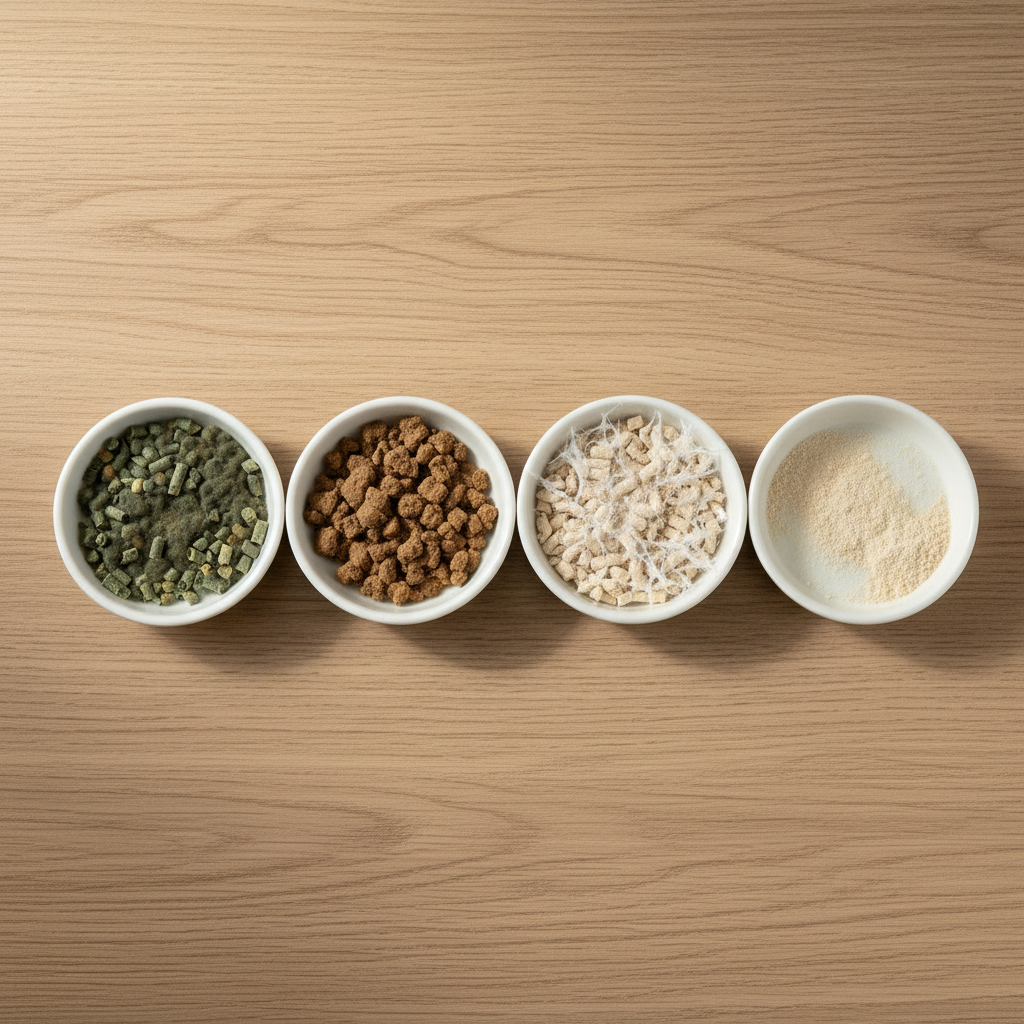
You do not need a lab. You need a nose, a good light, and ten seconds of attention every time you scoop. Here is what to look for, in order of how seriously you should treat it.
1. Visible Mould Spots
This is the only sign that has zero room for interpretation. If you see fuzzy patches in green, black, white, pink, or grey, the whole bag is done. Mould spreads by spores. By the time you see a visible colony, invisible spores have already settled on every pellet in the container. Do not try to scoop out the bad bits. Cat owners who have tried this almost always report mould returning within a week.
Liger family note: Tiger (the bigger of our kitten brothers, born 28 June 2024) refuses to step into a tray that has a hint of mould smell. Cats notice before we do. If yours is hovering at the edge of the box and not going in, sniff before you assume it is a behaviour issue.
2. Sour or Musty Smell
Fresh Liger tofu litter has a mild milky scent (we add milk fragrance for the cats and the humans). A spoilt bag smells sour, sometimes like wet cardboard, sometimes like overripe rice porridge. This often shows up before any visible mould. If you open a bag and your first thought is "did something die in here", trust that instinct.
A persistent ammonia smell that does not go away after scooping is different — that is bacterial breakdown of urine, usually fixed by a full litter change. But the sour-musty smell from a fresh-poured tray means the bag itself is the problem.
3. Soft, Squishy, or Swollen Pellets
Dry tofu pellets are firm and snap cleanly between your fingers. Pellets that have absorbed ambient moisture feel soft, slightly rubbery, or look puffier than normal. They will also be darker — fresh Liger pellets are pale cream, moisture-absorbed pellets shift towards beige or grey-cream.
This stage is recoverable if you catch it early. More on that in the rescue section below.
4. Weevils, Grain Moths, or Tiny Webbing
This one shocks first-time tofu users. Plant-based litter is technically grain product. The same pests that infest your rice and oats — Indianmeal moth (Plodia interpunctella), rice weevil (Sitophilus oryzae), red flour beetle (Tribolium castaneum) — can absolutely infest tofu litter, especially in a bag that has been sitting in a humid pantry for months.
Signs: tiny brown beetles crawling on pellets, small caterpillar-like larvae, silken webbing strands between pellets. If you see any of this, the bag is non-recoverable. Bag it, bin it, and inspect the storage area because the infestation has probably spread.
5. Dust Texture Changes
Fresh tofu litter produces minimal dust — that is half the point of switching from bentonite. If a bag suddenly throws up a lot of pale powder when you pour it, the pellets have started to break down structurally. Could be physical (rough handling, bag dropped) but more often it is moisture-then-drying cycles causing the binders to fail.
Compare against the baseline using our dust level comparison tool if you are not sure what "normal" looks like.
What Actually Happens to a Bag in 6 Weeks vs 12 Weeks (Our Test)
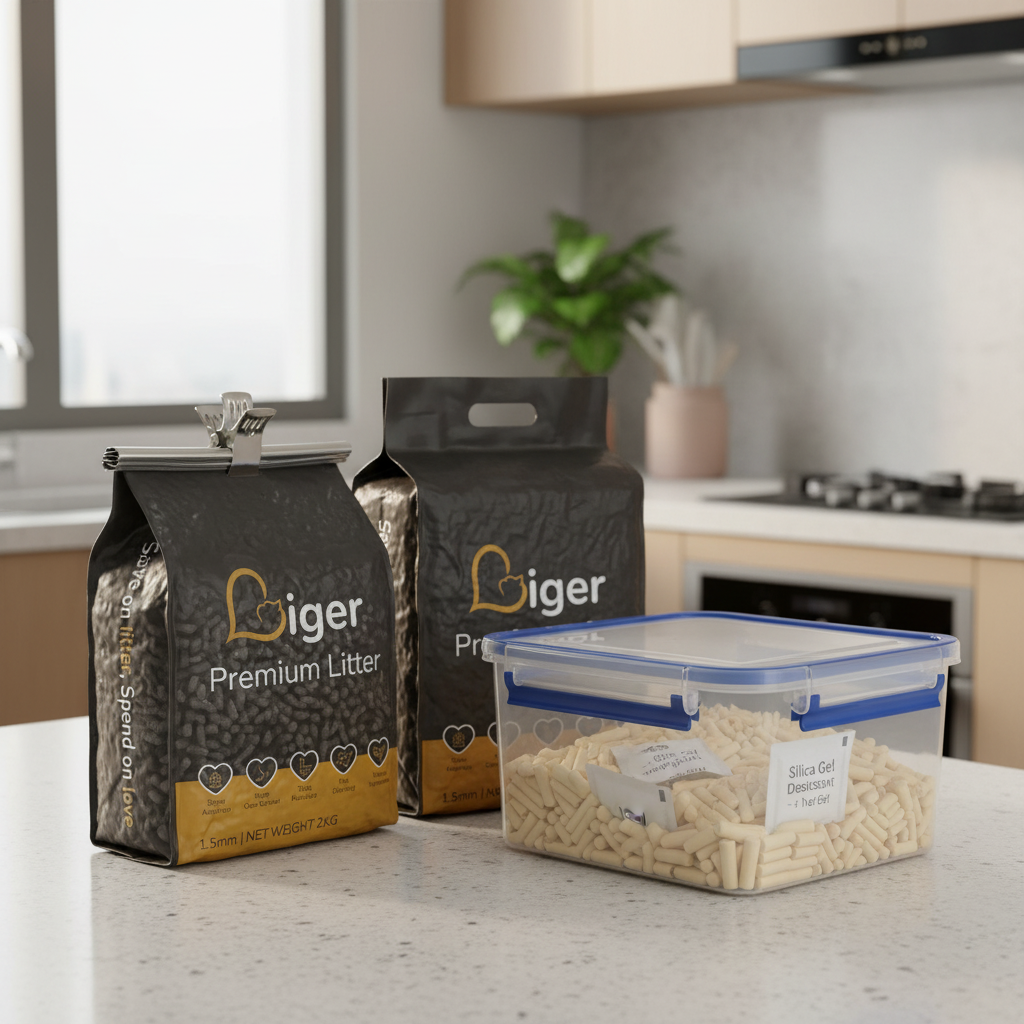
We ran a casual home test earlier this year. Two identical 6kg Liger bags, both opened the same day in March. Bag A: folded and clipped, left in the laundry yard cupboard (typical Malaysian condo storage). Bag B: transferred into a 7-litre Lock&Lock airtight container with two food-grade silica packets, kept in the same cupboard.
- Week 2: Both bags fine. No smell change, no visible issues.
- Week 4: Bag A smells slightly damp. Pellets still firm but darker. Bag B unchanged.
- Week 6: Bag A has noticeable musty edge to the smell. Two pellets near the top show faint discoloration. Bag B still smells fresh, pellets still pale.
- Week 8: Bag A has visible mould spotting in the corners. Discarded. Bag B unchanged, still usable.
- Week 12: Bag B finally starts to lose its tight clumping strength but no mould, no off-smell. We used it up over the next two weeks without issue.
That is the entire case for buying one airtight container. RM30 once, saves you from throwing out half a bag every couple of months. Use our litter calculator to figure out how much you actually go through monthly — most Malaysian single-cat households over-buy and end up storing too much for too long.
Can You Save Almost-Bad Litter? Sometimes.
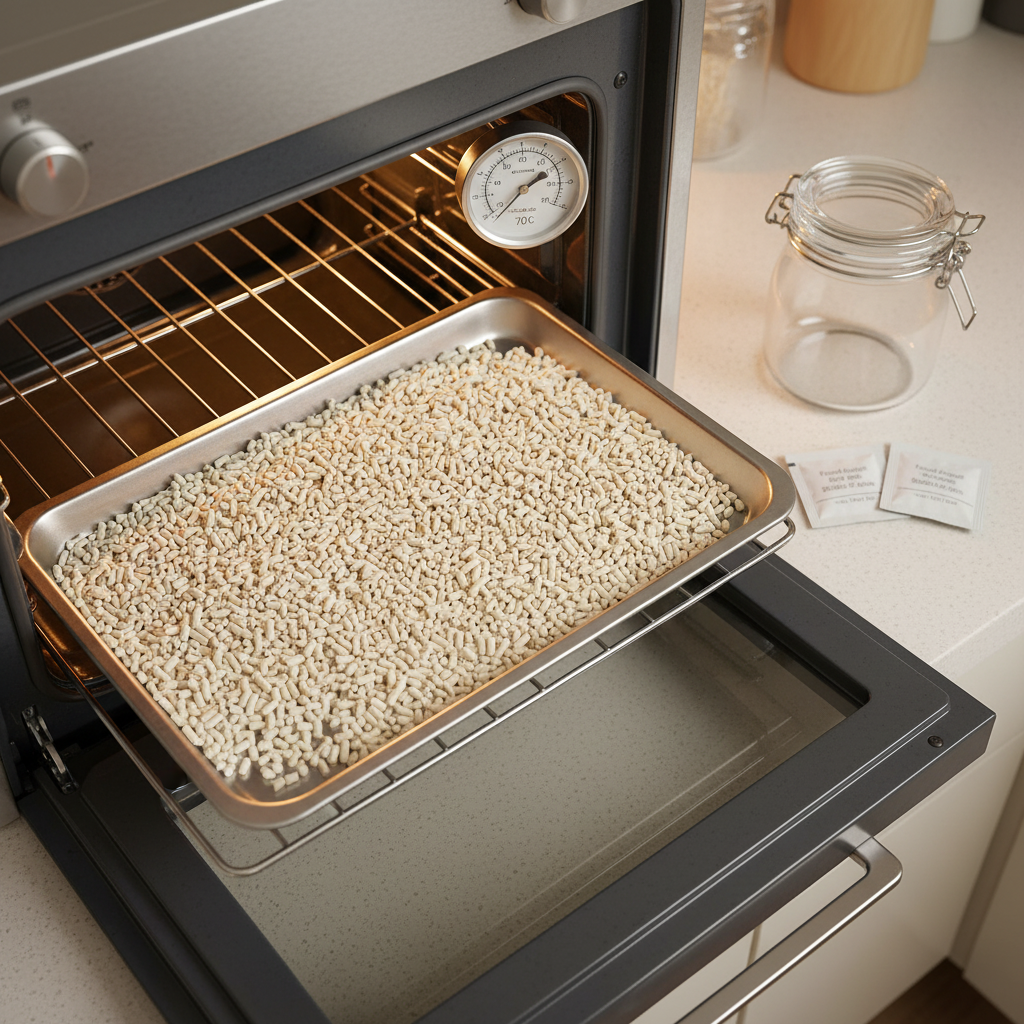
The rescue rules are strict, because the downside of getting this wrong is your cat inhaling mould spores. Reports of mould and even maggots in poorly stored litter are not rare in tropical climates. Mycotoxins from Aspergillus species can cause coughing, sneezing, wheezing, vomiting, and in severe cases liver damage in cats. So when in doubt, throw it out.
You can try to save the bag if:
- Pellets are slightly soft or darker but smell completely normal
- No visible mould, no insects, no webbing
- The bag was opened less than 8 weeks ago
- You catch it within the first day or two of noticing
Rescue method: Spread the suspect litter in a single layer on a baking tray. Set the oven to 70°C (no higher — high heat can scorch and ruin clumping). Leave the oven door slightly ajar for 90 minutes. Let cool completely before returning to a fresh, dry airtight container with new desiccant packets.
Do NOT try to save:
- Any bag with visible mould, no matter how small the spot
- Any bag with a sour or musty smell
- Any bag with insects or webbing
- Any bag where pellets are mushy or sticking together in damp clumps
The Storage Setup That Actually Works in Malaysia
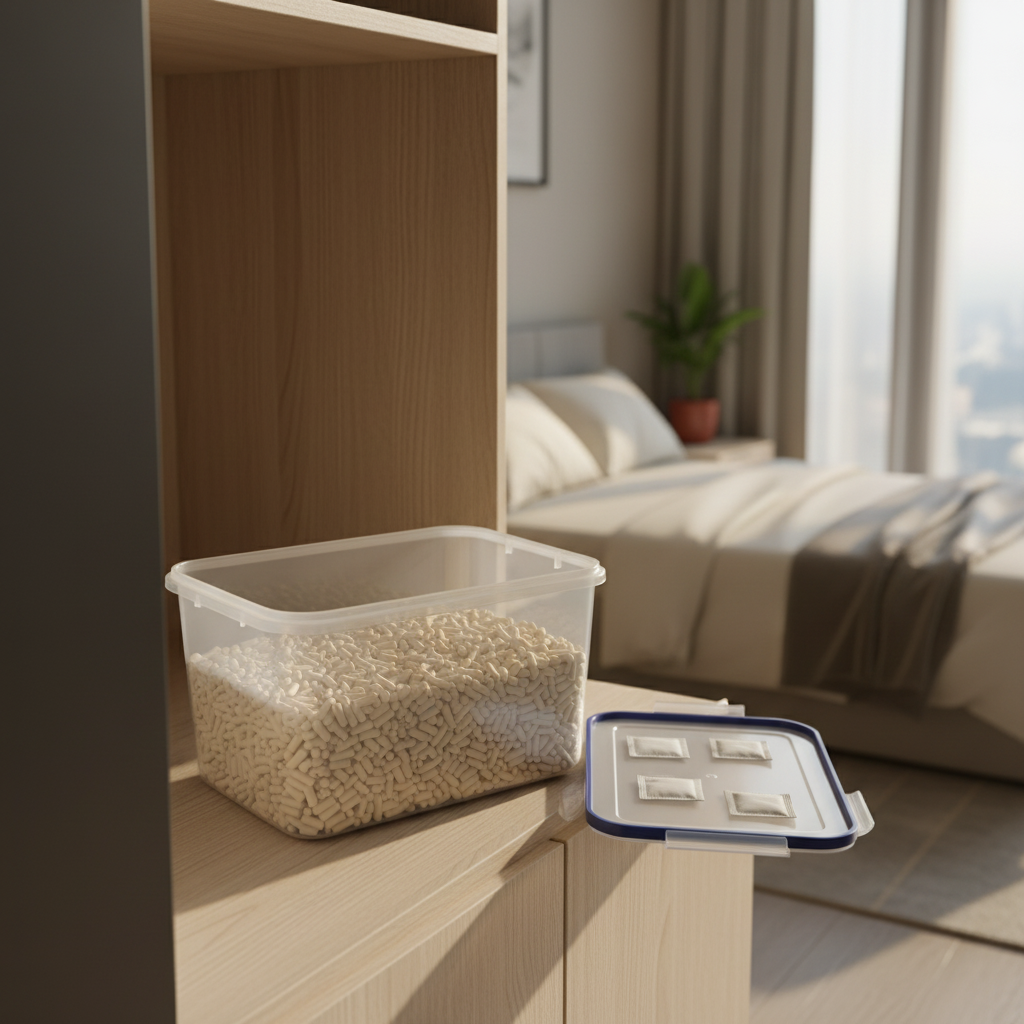
I have tried about six different setups over three years of running four cats on Liger. This is what holds up:
Container
Airtight, food-grade plastic, rectangular shape (round wastes corner space), 10-15 litre capacity for a single bag. Lock&Lock, Tupperware, IKEA 365+, or any BPA-free PP/PET container with a proper silicone gasket lid. Polypropylene (PP) and PET are both fine for litter storage — the key is the seal, not the material.
Avoid: paper bag clips alone, basic Tupperware without gaskets, anything you would not store rice in.
Desiccant
Food-grade silica gel packets. Two to four packets per 6kg bag. Silica gel absorbs up to 40% of its own weight in moisture and is non-toxic if accidentally ingested in small amounts (though obviously do not let your cat eat one). Tape them to the inside of the lid so they do not get mixed into the litter. Reactivate them every 2-3 months by baking at 100°C for two hours.
Avoid activated charcoal for moisture control — great for smell, useless for humidity compared to silica.
Location
NOT the kitchen (too humid from cooking steam), NOT next to the washing machine (vibration loosens seals over time), NOT a bathroom (obvious), NOT direct sunlight (heat accelerates protein breakdown). Best spots in a Malaysian condo: bedroom wardrobe top shelf, living room storage cabinet, dry section of a service yard with no exposure to rain.
When to Throw Out the Whole Bag — No Saving
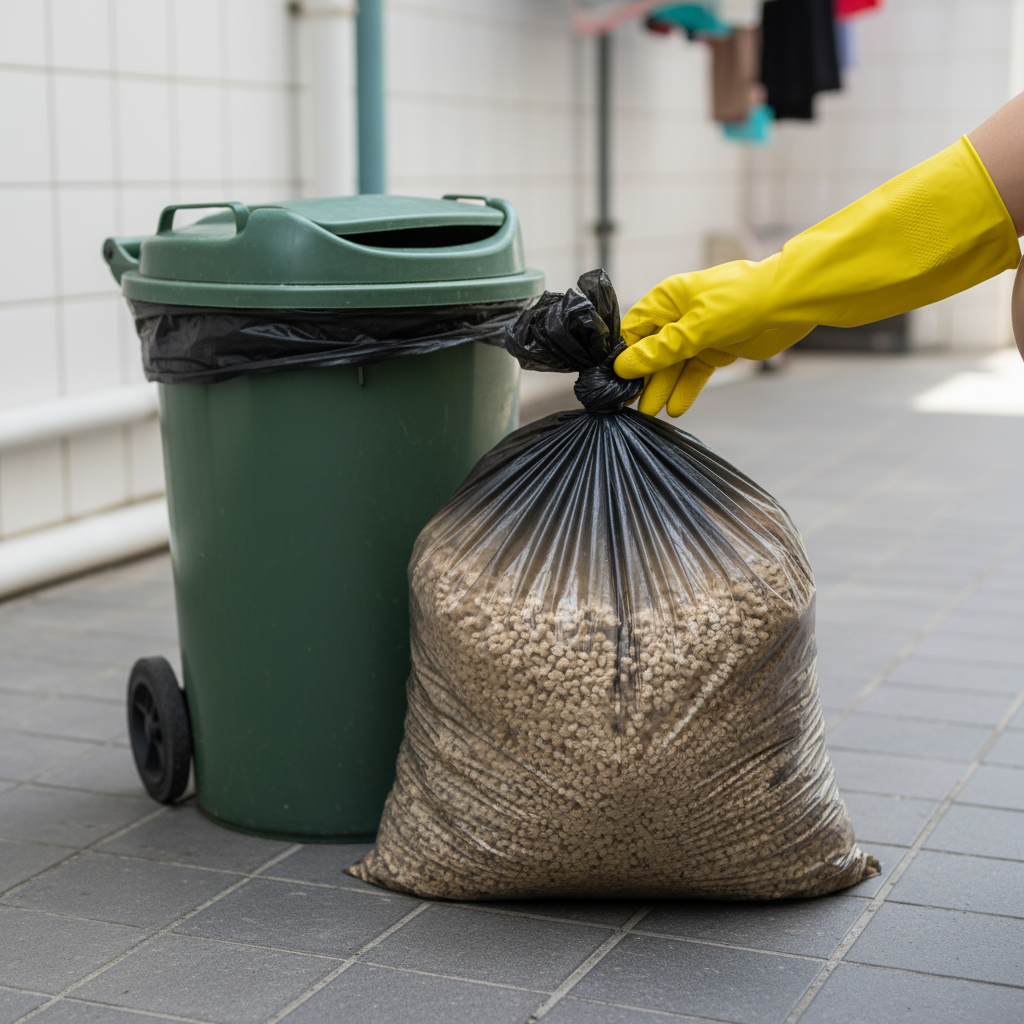
The no-save threshold:
- Any visible mould anywhere in the bag
- Pellets that crumble when squeezed (binders fully gone)
- Sour, fermented, or "off" smell that fills the room when you open it
- Any insect activity
- Bag was sitting in standing water at any point
- Bag was unopened but is 18+ months past the manufacture date in Malaysian storage conditions
The cost of one bag (RM30-40) is tiny compared to a single emergency vet visit for respiratory distress. Just bin it.
Multi-Cat Rotation: How We Manage Four Cats
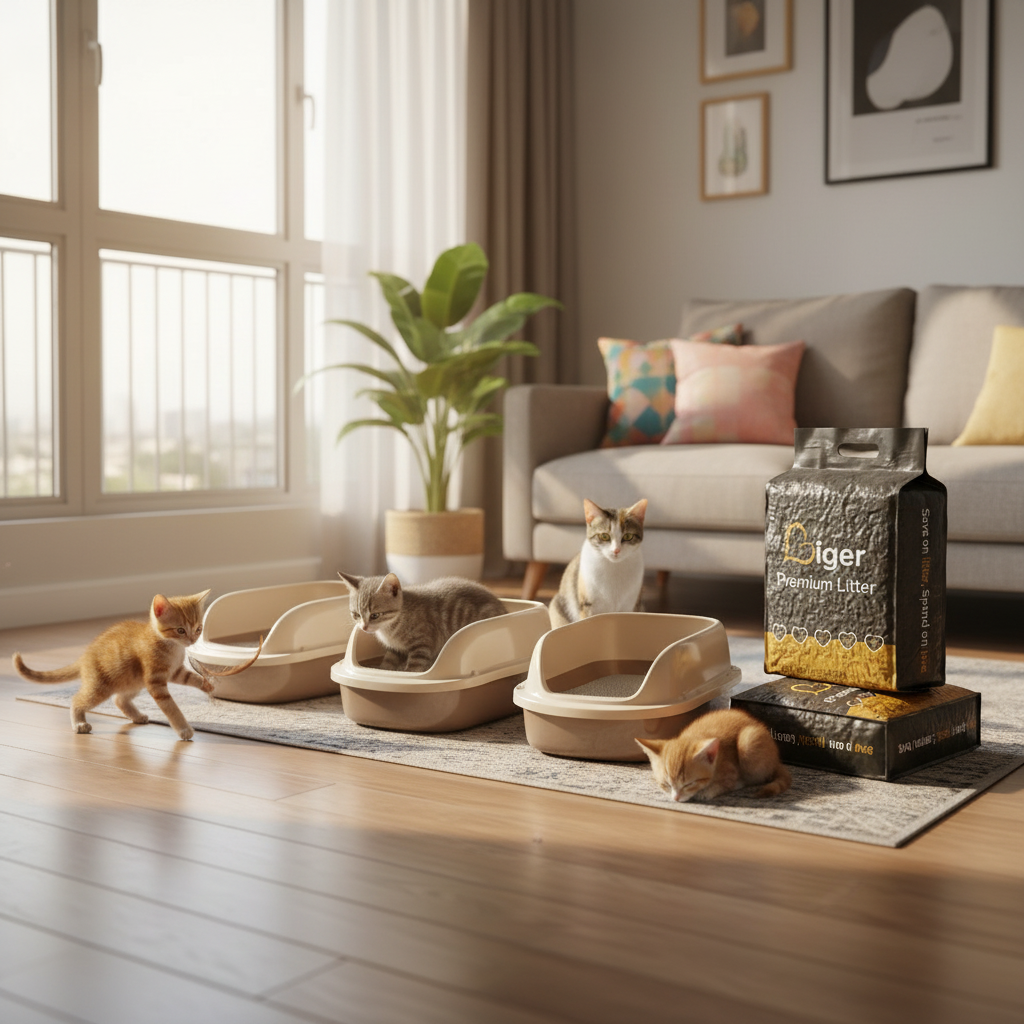
With Tiger, Lion, Ping'An, and Lucky we go through roughly 8-10kg of tofu litter every 7-10 days across three trays. The rotation rule: never store more than four weeks of supply at any time. Buying in bulk seems economical until you throw out a 12kg bag because it sat through one full monsoon.
Our system: one bag in active use, one sealed backup, that is it. Replenish weekly during our regular Friday cat-supplies stock check. Vacuum-packed tofu litter in original packaging is more resilient than unsealed bulk supply, so we always keep at least one factory-sealed bag as the backup.
Halal Disposal for Malaysian Muslim Households
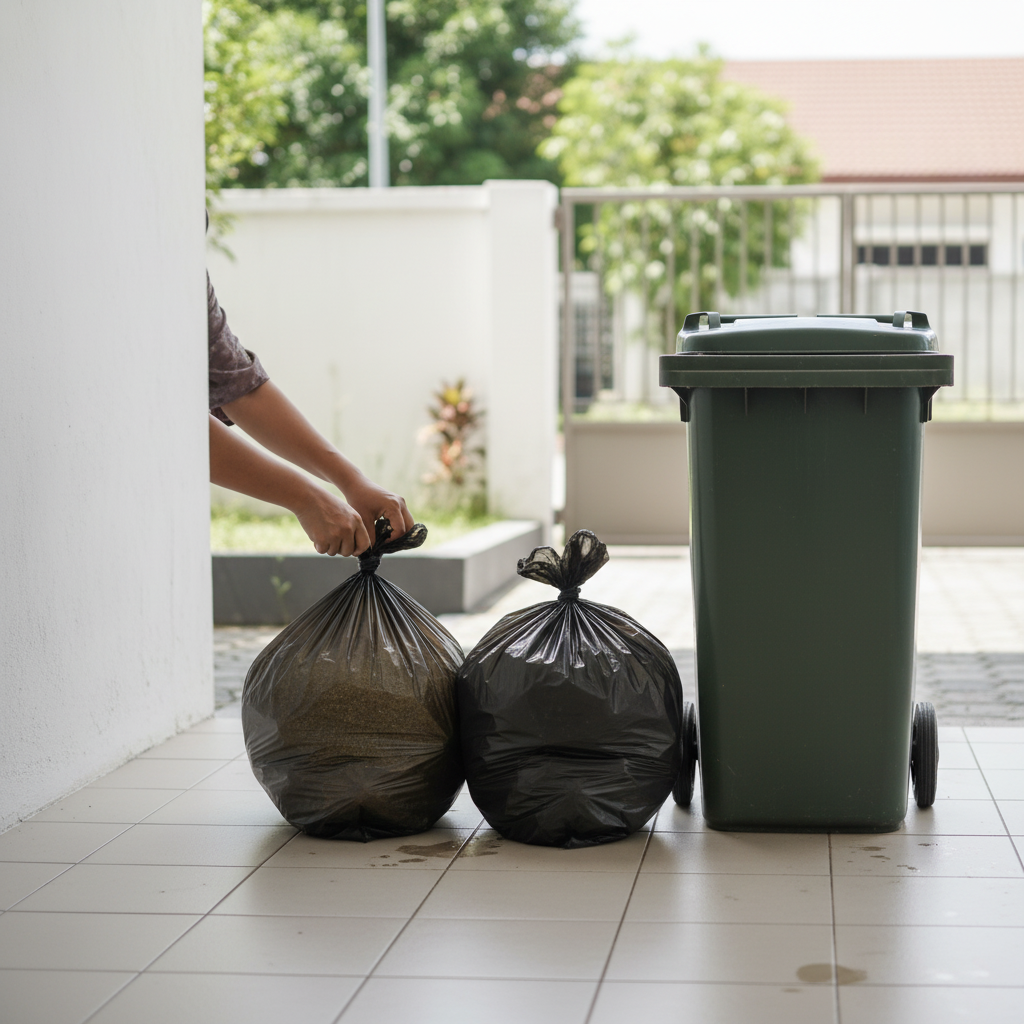
Cat urine and faeces are classified as najis (ritually impure) in Islamic jurisprudence, so spoilt litter that has been in active use needs proper containment. Spoilt-but-unused litter (mould only, no cat contact) is not najis but still needs hygienic disposal due to spore risk.
The Malaysian standard practice:
- Double-bag the spoilt litter in thick rubbish bags. Seal tightly.
- Place in your outdoor household bin for municipal collection. Do NOT put inside your home rubbish bin overnight (spore release continues even in sealed bags over time).
- If you have outdoor space, burial at least 30cm deep is even better and is fully consistent with Islamic disposal of najis.
- NEVER flush, even if the brand says flushable — Malaysian household plumbing is not designed for it and you risk both blockage and water contamination.
- Wash hands thoroughly with flowing water afterwards. If clothing touched the spoilt litter, wash separately.
Improper waste disposal in Malaysia can carry fines up to RM3,000 under local council regulations, so the bagged-and-binned approach is both Halal-compliant and legally safe.
The Three Habits That Prevent 95% of Spoilage
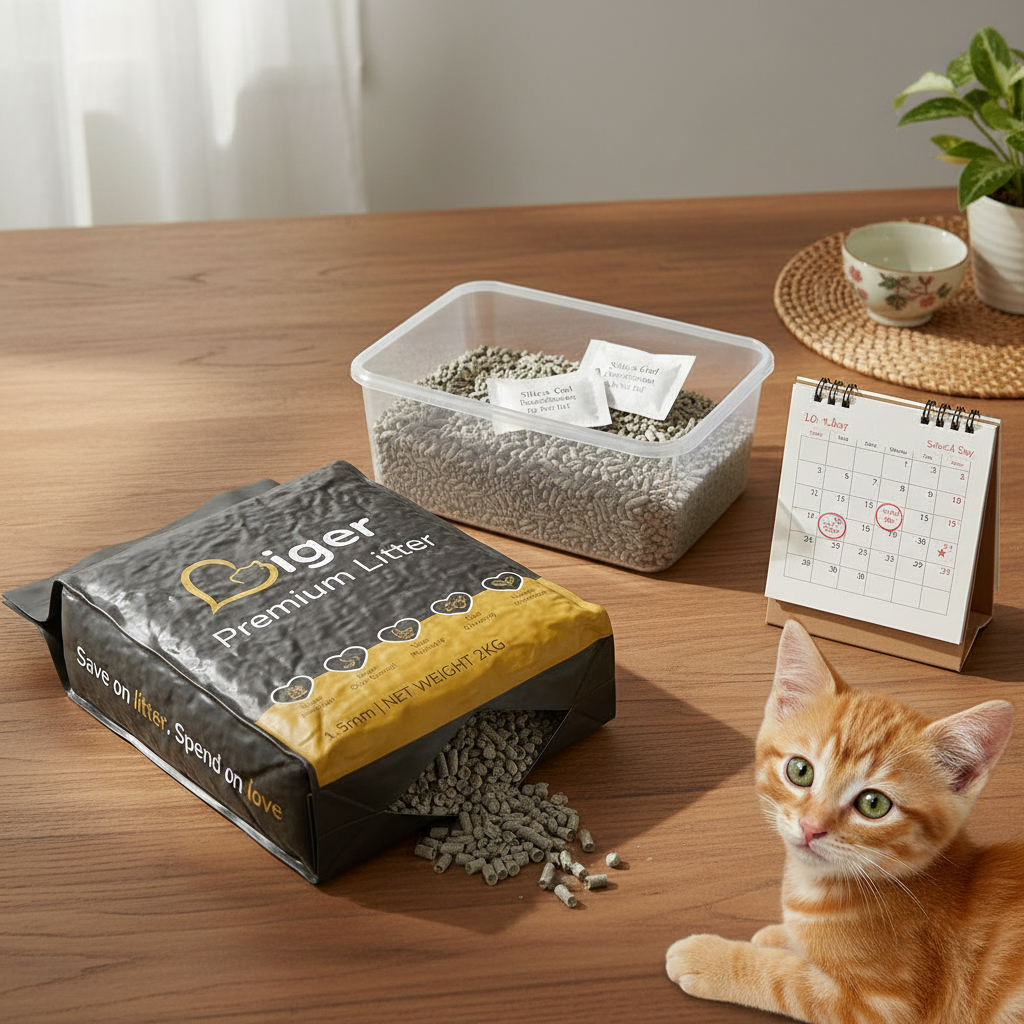
If you take nothing else from this article:
- Transfer to airtight on day one. The bag your litter came in is for transport, not storage in Malaysian humidity.
- Buy what you will use in four weeks, not three months. Storing less means less risk.
- Smell-check every refill. Two seconds of sniffing prevents a vet bill.
Tofu litter is brilliant for our climate in every way except shelf life. Manage the storage and it will outperform every clay litter on the market. Ignore the storage and you will be throwing out half-used bags every monsoon season. Your call.
Lucky says hi. He has not knocked over another bag since May. We are cautiously optimistic.