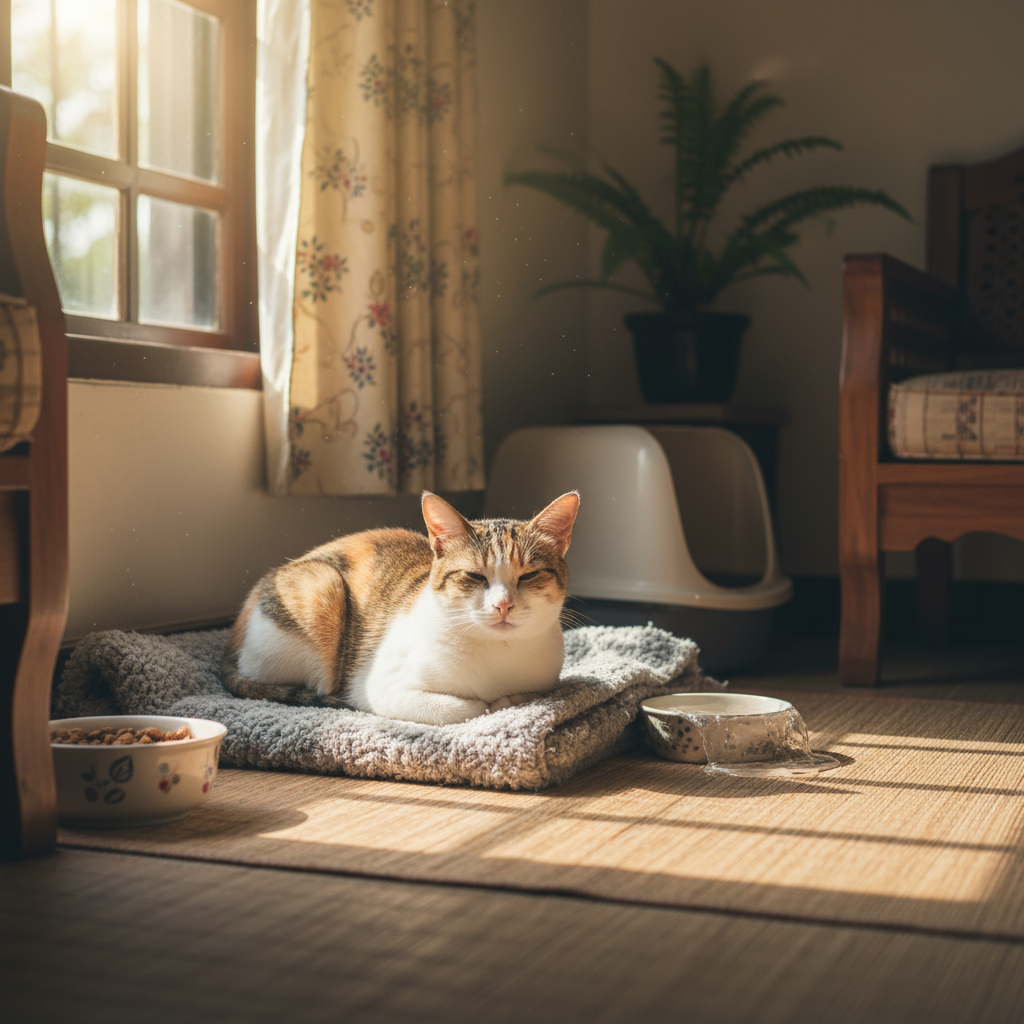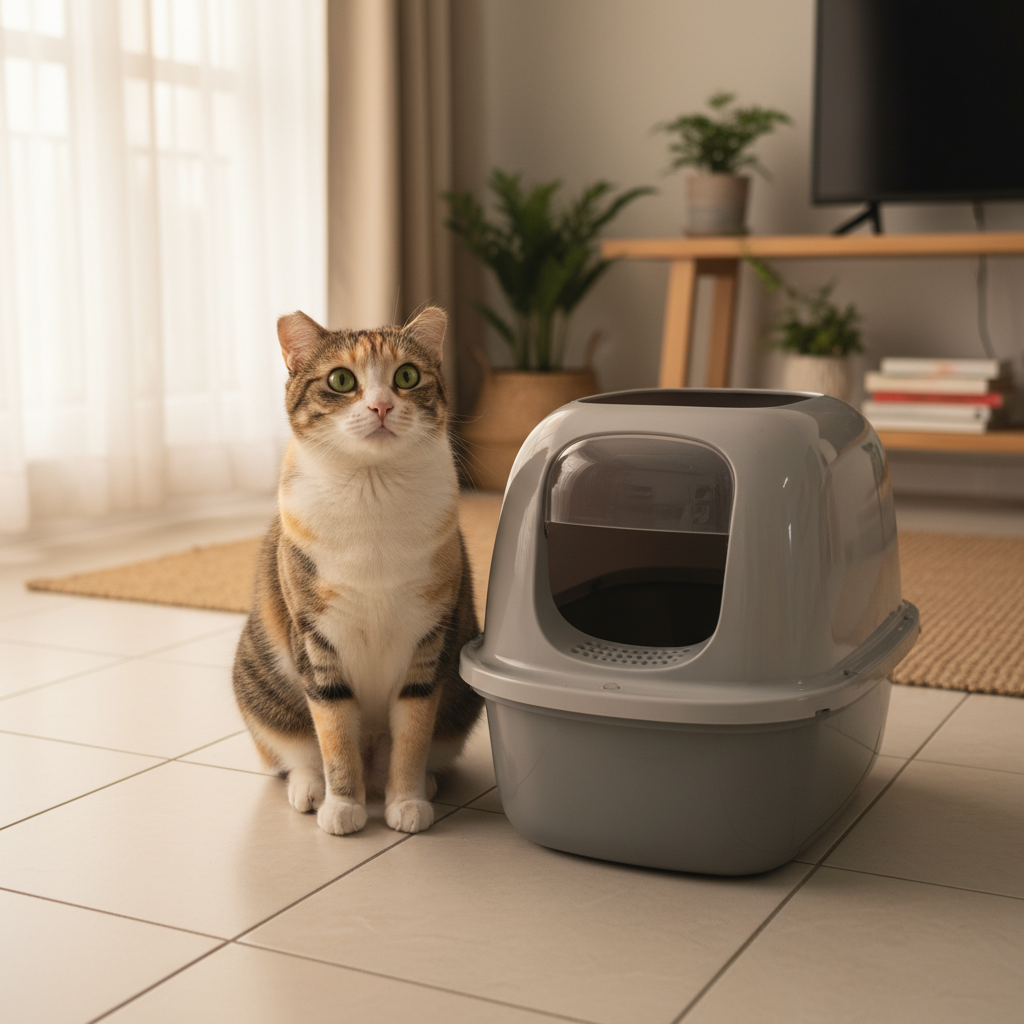
You have two cats and one litter box, and lately something's off. One cat seems reluctant to go, or you've found little 'accidents' just outside the box. Maybe you've even seen it: one cat sitting like a bouncer near the litter box while the other hovers anxiously, waiting for a gap. What you're witnessing isn't randomness — it's litter box bullying, a genuine and surprisingly common problem in multi-cat homes. The good news is it's very fixable once you understand that this is a social problem showing up at the litter box, not a litter problem. Here's how to read it and resolve it.
Is It Really Bullying? Spotting Litter Box Guarding
Litter box guarding is when one cat controls another's access to the box — and it's often subtle, no hissing or fighting required. Watch for these tells:
- Blocking or sitting near the box, especially the only one, or in the hallway leading to it, so the other cat has to pass the 'guard' to reach it.
- The hard stare. Cat conflict is often silent. A dominant cat simply locking eyes with another can be enough to warn it off the box entirely.
- Ambushing. Pouncing on or chasing the other cat as it enters or exits — the box becomes a trap, so the victim avoids it.
- The victim's signs: a cat that dashes in and out without fully covering, 'holds it' for long stretches, hesitates near the box, or starts eliminating in a safer spot away from the box (behind furniture, on a bed).
That last point is the one owners misread most. When a cat starts peeing or pooping outside the box, the instinct is to blame the litter or the cat's manners. But in a multi-cat home, it's frequently because the cat is too intimidated to use the box safely. The behaviour is a symptom of social tension, and treating it as 'naughtiness' (or worse, punishing it) makes everything worse.
Why One Cat Guards the Box
To understand the fix, understand the why. Cats aren't being mean for sport — guarding is rooted in instinct:
- Resource control. In the wild, controlling key resources is survival. The litter box is a resource, and a confident cat may claim it the way it would claim a feeding spot — denying access is a display of social rank.
- Territory and vulnerability. Eliminating is a vulnerable act; a cat squats with its guard down. A box in a dead-end corner with one exit feels like a trap, which a dominant cat can exploit and a timid cat will avoid.
- Redirected aggression. Sometimes the guarding cat is wound up by something it can't reach — a stray cat seen through the window, say — and takes that frustration out on a housemate (redirected aggression), with the box becoming one flashpoint.
- Unstable relationships. Cats that were never properly introduced, or whose social bond is shaky, jostle over resources more. Tension over the box is often just one visible symptom of a wider cold war. (Cornell notes that much feline aggression stems from fear and resource conflict rather than 'dominance' for its own sake.)
Rule Out Medical First
Before you rearrange the house, rule out the body — this is the step people skip. If the 'victim' cat is avoiding the box, you need to be sure it isn't avoiding it because using it hurts. A urinary tract problem, cystitis, or constipation can make a cat associate the box with pain and shy away — which can look exactly like it's being bullied off the box.
This matters because the numbers are striking: over 60% of cases that appear 'behavioural' actually have an underlying medical cause. And stress itself — including the stress of being bullied — can trigger feline idiopathic cystitis, creating a vicious cycle where social stress causes a bladder problem that worsens the box avoidance. So: a vet check first, for both cats if needed. Once the body is cleared, you fix the environment and the relationship.
The Core Fix: More Boxes, Spread Out
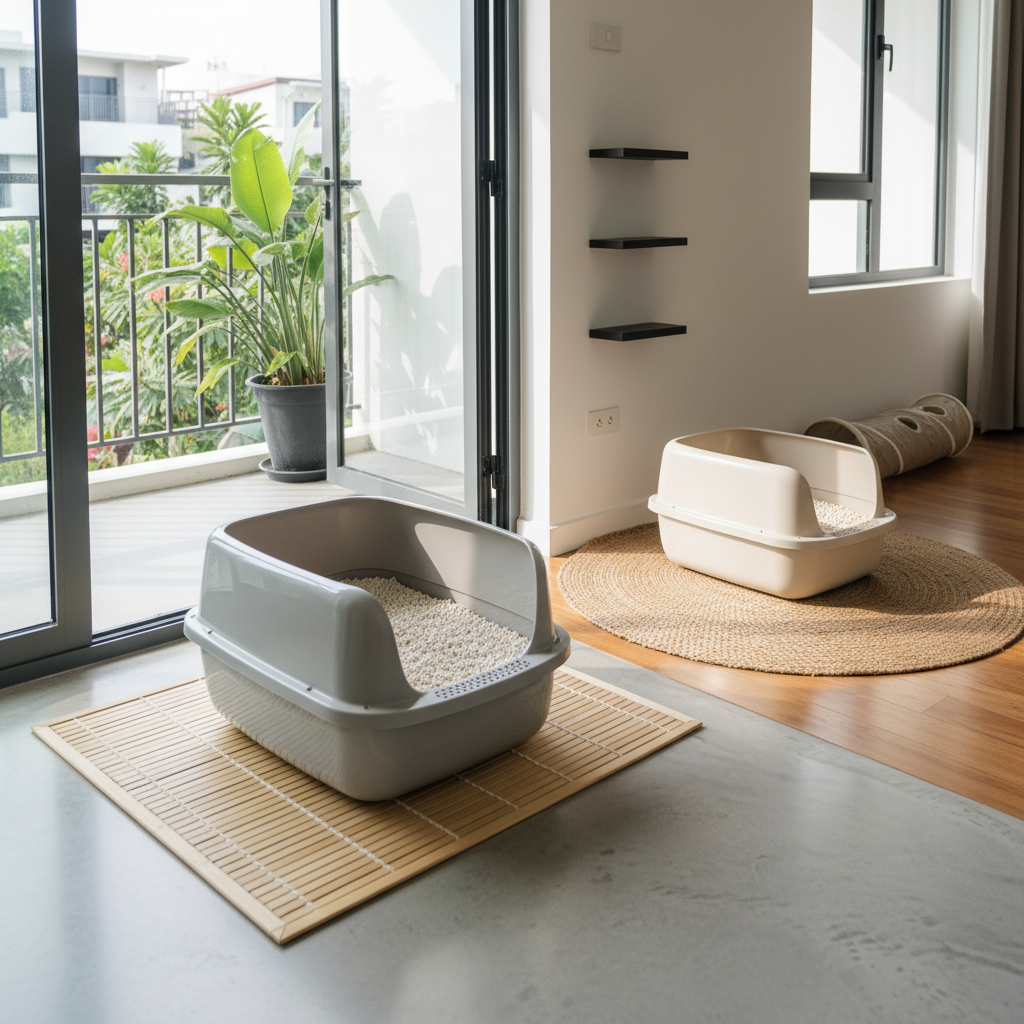
Here's the single most powerful change, and it solves a huge proportion of cases: add more litter boxes, and spread them out.
The golden standard is the N+1 rule — one box per cat, plus one spare. Two cats means three boxes. But the number is only half of it; placement is everything. If you line up three boxes in a row in one room, you've really just made one big guardable resource — a single cat can block all three. The boxes must be in different locations, ideally different rooms or far-apart zones, so the bully physically can't control them all at once. As multi-cat guidance stresses, resources should be distributed, not clustered.
Practical placement rules for a Malaysian home (where space is tight):
- Separate zones. One box near the bedrooms, one in a utility area, one elsewhere — not all in the one bathroom. Our guide on how many litter boxes you need in a condo works out the math for small spaces.
- Open, with two exits. Give each box an escape route so a cat can never be cornered in it. Avoid covered boxes for a bullied cat — a hood means only one way out, which is a trap. Open trays let the timid cat keep an eye out.
- Big enough, and easy to reach. A cramped box in a hard-to-reach spot compounds the problem. Size it properly with our litter box size calculator.
- Keep them spotless and consistent. A stressed cat is even fussier, so scoop often, and use a clean, low-dust litter the timid cat is comfortable in — now is not the time to introduce a new texture it has to 'decide' about. A familiar, soft, low-dust litter (we use Liger tofu litter across all our boxes) keeps that variable constant while you fix the social side.
For the broader multi-cat litter setup, our multi-cat litter solutions guide goes deeper, and if accidents are already happening, our cat pee solver helps you trace the pattern.
Calming the Tension Between Your Cats
More boxes treat the symptom; easing the relationship treats the cause. Work on the underlying tension in parallel:
- Multiply every resource, not just boxes. Separate food bowls, water stations, beds, and scratching posts in different areas. When cats don't have to compete for anything, there's less to fight over.
- Add vertical space. Cat trees, shelves, and high perches let cats time-share a space and avoid each other gracefully. Vertical territory dramatically reduces friction in tight Malaysian apartments.
- Scent swapping. Behaviourist Jackson Galaxy's scent-swapping technique — rubbing a cloth on one cat and letting the other investigate it — helps cats re-accept each other's smell as friendly, which is the foundation of peace.
- Synthetic pheromones. Plug-in feline facial pheromone diffusers can take the edge off tension in the home. Not a magic fix, but a helpful background tool.
- Play and feed to rebuild good associations. Structured play sessions burn off the energy that fuels aggression, and feeding both cats at the same time (at a comfortable distance apart) builds a positive 'good things happen when we're near each other' association.
- Never punish the bully. Punishment raises stress and fear, which fuels more aggression and can damage your bond with the cat. Manage the environment instead.
If the relationship is badly broken, it can help to separate the cats and do a slow, proper re-introduction from scratch — treating them like strangers meeting for the first time.
When to Call the Vet or a Behaviourist
Escalate beyond DIY when:
- The avoiding cat shows any medical red flags — straining, blood in urine, crying in the box, or going repeatedly with little result (in a male cat, a possible blockage is an emergency — go now).
- The aggression is escalating to real fights, injuries, or constant fear in the victim cat.
- Nothing improves after several weeks of N+1 boxes, distributed resources, and tension-reduction work.
In those cases, a vet (to rule out pain) and, if needed, a qualified feline behaviourist can build a tailored plan. Litter box bullying feels personal and frustrating, but it's almost always a solvable resource-and-relationship puzzle, not a hopeless clash of personalities. Give every cat its own safe, accessible place to go, lower the household tension, and the standoff at the litter box usually melts away — leaving you with two cats who can finally pee in peace.