Most cats are lactose intolerant after weaning (around 8 weeks old).
Susu Pekat (Condensed Milk) is extremely dangerous due to high sugar and concentrated lactose.
Goat milk is NOT lactose-free; it still contains high levels of lactose.
If diarrhea happens, switch to high-absorbent tofu litter to break the fecal-oral infection cycle.
We've all seen the classic image: a cute kitten lapping up a saucer of creamy white milk. It looks so natural, right? Like a 'superfood' gifted by nature. But here’s the cold, hard reality that cartoons like Tom & Jerry didn't tell you: for most cats, that bowl of milk is a one-way ticket to a digestive disaster.
In Malaysia, our love for Teh Tarik and Kopi culture means our kitchens are stocked with Susu Pekat (Condensed Milk) and Susu Cair (Evaporated Milk). It’s tempting to share a spoonful with our furballs, but doing so might be causing them silent agony behind those purrs. We’re going to look at why biology says 'no' to the dairy dream.
The 10% Rule: Why Grown Cats Can't Handle Milk
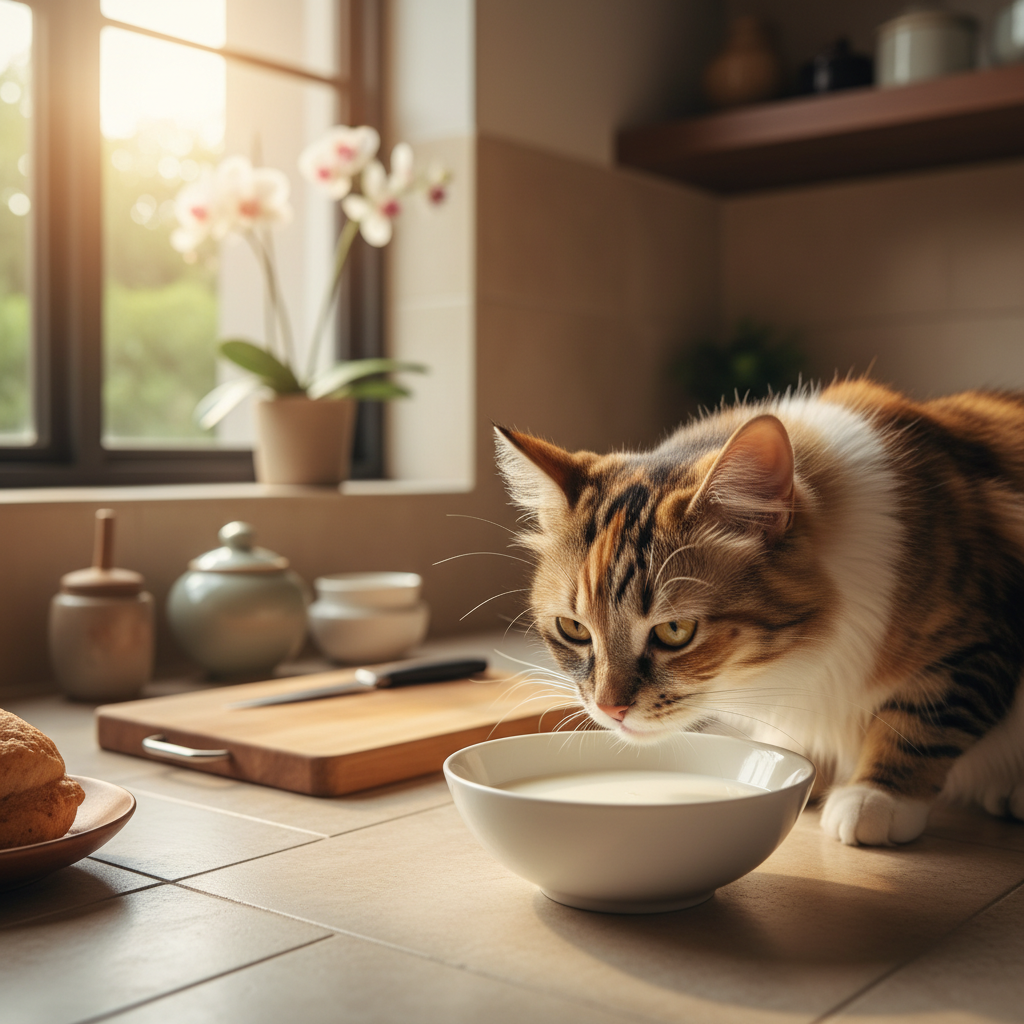
When kittens are born, their small bodies are lactase machines. They need this enzyme to break down the lactose in their mother's milk into energy. It's their fuel. But nature has a 'stop' button. Age-related changes in apparent digestibility in growing kittens show that by the time weaning is complete at 8 weeks, lactase activity drops to 10% or less of birth levels.
Basically, most cats lose their ability to digest milk as they grow up. When an adult cat drinks milk, the undigested lactose sits in their gut, drawing in water like a sponge. The result? Explosive, watery diarrhea. If you're worried about your cat's hydration during such a crisis, you can use our Cat Hydration Calculator to see if they're getting enough water.
Susu Pekat: The Sweet Metabolic Poison
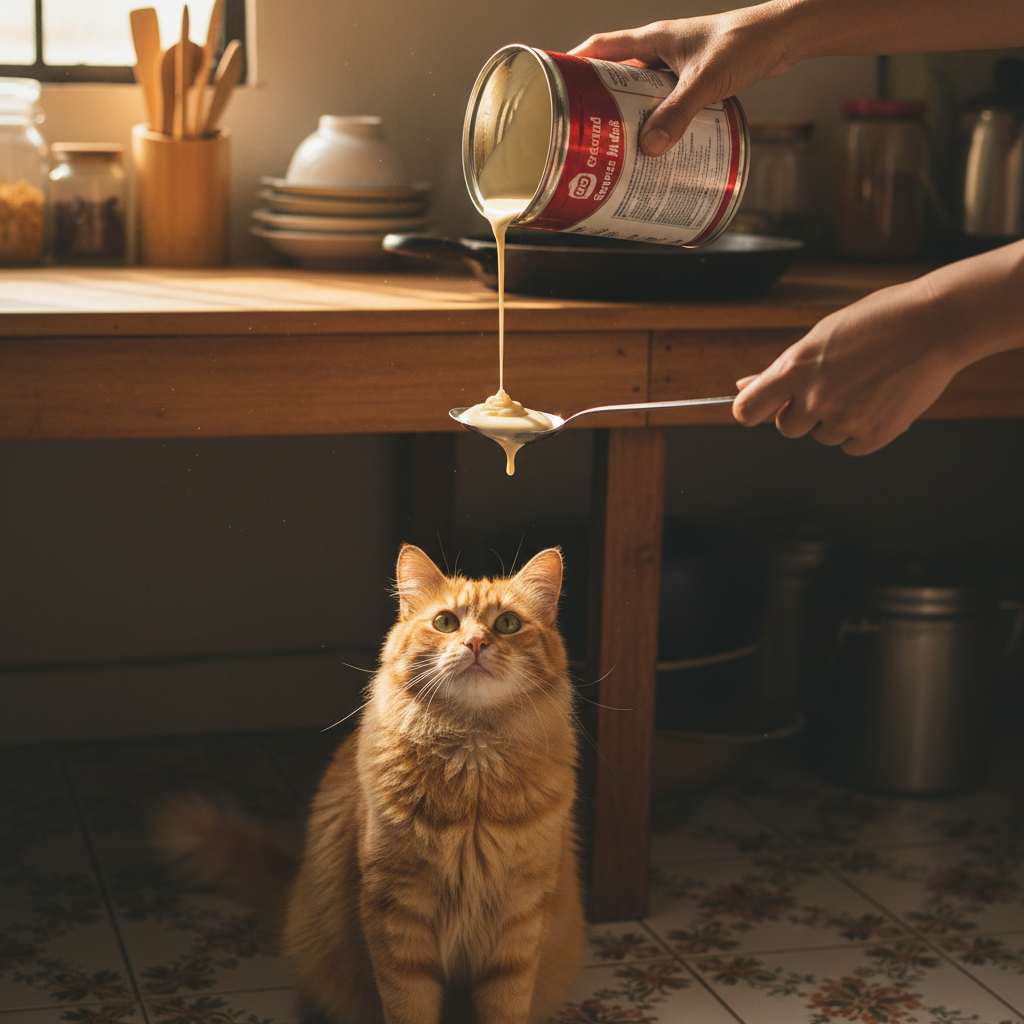
In Malaysia, the biggest mistake is feeding cats Susu Pekat Manis. It’s a literal sugar bomb. Nutritional data for F&N Sweetened Condensed Milk reveals it contains 40-45% sucrose and triple the lactose of regular milk. Seriously, this is the worst thing you can give a cat.
Cats are obligate carnivores. Their bodies aren't built to handle massive amounts of sugar. Feeding them condensed milk is like asking for a fast-track to feline diabetes and obesity. Even Susu Cair (Evaporated Milk) isn't safe—it's just concentrated milk without the extra sugar, meaning it still has double the lactose load of fresh milk. If you're unsure what else might be hiding in your pantry, check our Can My Cat Eat This? tool before feeding.
The 2 AM Diarrhea Disaster
I'll be honest—I used to be 'that' owner. I thought a tiny bit of milk as a treat was harmless. Then came the 'disaster' night. I woke up to a smell that I can only describe as a mixture of sour milk and ammonia. My poor cat had liquid diarrhea all over her tail and the bathroom floor. Cleaning that up at 2 AM was the 'aha moment' I didn't want but desperately needed. It's not just about the mess; it's about the fact that she was in pain because I wanted to give her a 'treat'.
I realized that my cat's digestive health is non-negotiable. If your cat is going through a similar messy phase, reading our cat poop health guide can help you decode what’s going on in their gut.
The Goat Milk Myth: Is It Really Safer?
You might hear someone at the wet market say, 'Feed them goat milk, it has no lactose!' That is a huge misconception. Goat milk versus cow milk: A comparison proves that goat milk still contains 4.1 - 4.4g of lactose per 100ml. While it’s slightly lower than cow’s milk (4.8g), it is definitely NOT lactose-free.
Why do some cats seem to handle it better? Goat milk has smaller fat globules and different proteins (mostly A2 casein), which makes it easier to pass through the stomach quickly. But for a cat with sensitive guts, it can still trigger a sprint to the litter box. For the cleanest experience, especially when things get messy, switching to a high-quality litter like Liger Tofu Cat Litter helps absorb liquid waste instantly before it sticks to their fur.
| Product Type | Representative Local Brands/Types | Lactose Content (g/100g) | Sucrose Content | Risk Level | Core Hazard Mechanism |
|---|---|---|---|---|---|
| Condensed Milk (Susu Pekat) | F&N, Saji, Dairy Champ | 10 - 16 (Very High) | 45-55% | Extreme Risk | Dual high osmotic pressure + sucrose toxicity + obesity risk |
| Evaporated Milk (Susu Cair) | Carnation, Ideal | 9.5 - 12.5 (Very High) | None | Extreme Risk | Acute diarrhea due to extremely high lactose concentration |
| Full Cream Milk | Dutch Lady, Farm Fresh | 4.6 - 4.8 | None | High Risk | Typical lactose intolerance symptoms |
| Fresh Goat Milk (Susu Kambing) | Local farm fresh milk | 4.1 - 4.4 | None | Moderate Risk | Still contains relatively high lactose, can cause sensitivity |
| Greek Yogurt | Farmers Union, Sunglo | ~4.2 (and contains probiotics) | None | Low Risk | Fermentation process breaks down some lactose, probiotics beneficial |
| Lactose-Free Milk | Farm Fresh (Purple Cap) | 0 | None | Safe | Resolves osmotic pressure issue, suitable for occasional consumption |
| Kitten Milk Replacer (KMR/Pet Milk) | PetAg, Cozie, Midalac | <1 (Trace) | None | Optimal | Complete nutrition, contains taurine, no intestinal burden |
Managing the Aftermath: Diarrhea & Hygiene
When a cat has milk-induced diarrhea, the mess is highly acidic and full of bacteria. This is where the 'fecal-oral cycle' starts. Cats lick themselves to stay clean, and if that messy stool sticks to their paws, they re-ingest the bacteria. This is where Tofu Cat Litter vs Clay Cat Litter comparisons show a real winner. Tofu litter absorbs moisture faster than clay, creating dry clumps that don't turn into a 'muddy mess' on your cat's tail.
Tiger and Lion are proof that a clean litter box makes for a happy home. Lion, being the clean freak he is, would refuse to enter a box if there was even a drop of liquid mess. Our Liger Tofu Litter with its mild milk fragrance actually helps mask those sour stomach smells while keeping things dry. If the sneezing starts from dust, Ping'An would be the first to let us know, which is why we keep our formula ultra-low dust.
So, can cats drink milk? Technically, some might handle a tiny lick of lactose-free milk, but why risk the '2 AM disaster'? Stick to water and high-quality wet food. Your cat’s gut (and your nose) will thank you.
Your Monday Morning Action: Check your kitchen pantry tomorrow morning. If you have any Susu Pekat or Susu Cair that you've been tempted to feed your cat, move them to a high shelf where only humans can reach. While you're at it, do a quick skin turgor test on your cat's shoulder to make sure they're well-hydrated without the dairy!