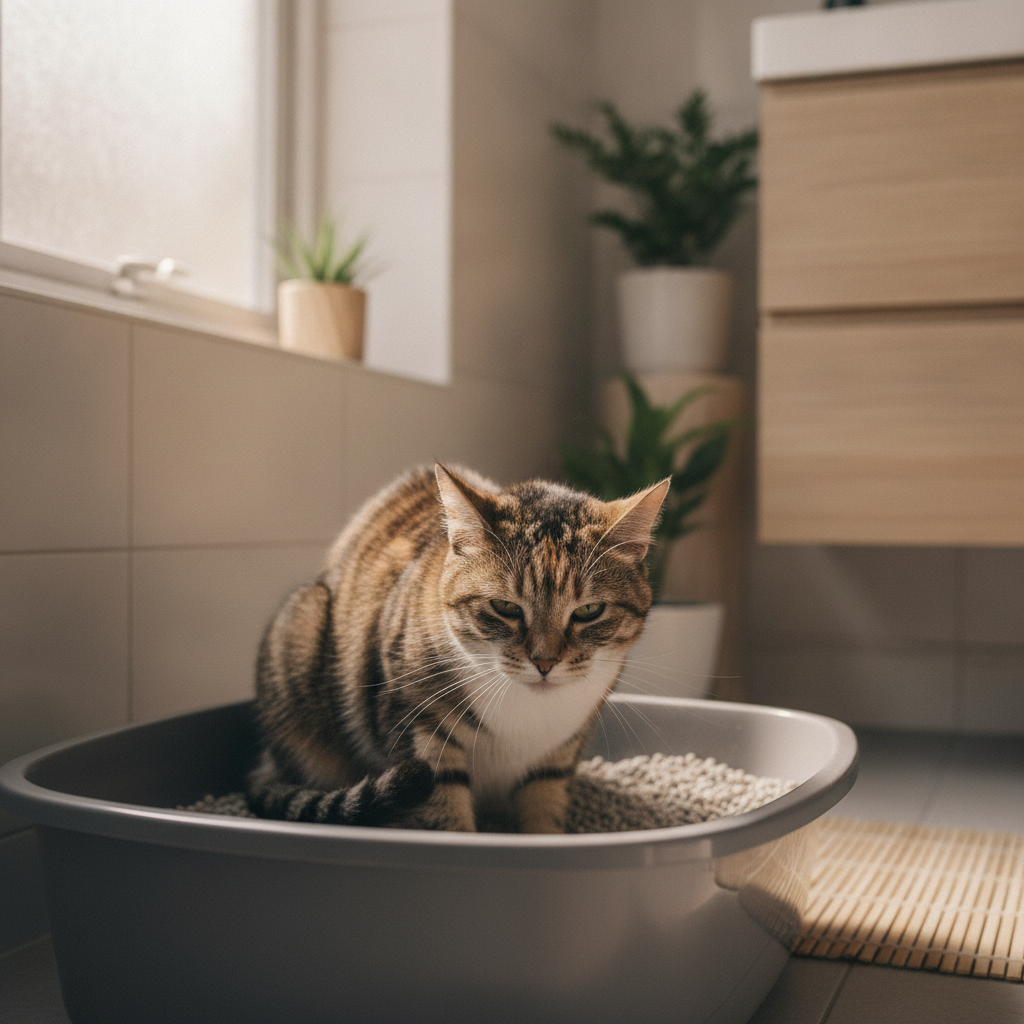
Ideal cat poop should be a firm, brown 'sausage' that doesn't leave much residue.
Black, tarry stools (Melena) indicate an upper GI emergency—see a vet immediately.
Lighter colored tofu litter makes it significantly easier to spot blood or bile issues.
Starting Psyllium husk (1/8 to 1/4 tsp) can help constipation but requires high water intake.
I never thought I’d be the person writing about cat poop, yet here we are. Seriously. If you’re a cat parent in Malaysia, your morning probably starts with a scoop in one hand and a coffee in the other. It sounds gross to outsiders, but that little clump in the litter box is actually a silent health report.
Your cat is a master at hiding pain. It’s an evolutionary survival trait. By the time they actually act sick, things might already be pretty bad. That’s why we have to become 'poop whisperers.' Whether it's the smell that hits you like a truck or a weird color you’ve never seen before, every detail matters. Let's look at what's normal and what's a red flag.
The Consistency Scale: Stones vs. Pudding
Veterinarians use a 1-to-7 scale to grade stool. A '1' is rock hard and dry—this is a big warning for constipation. If this goes on too long, your cat’s colon can stretch to 3-4 times its normal size, leading to a condition called Megacolon in Cats | VCA Animal Hospitals, where the muscles just give up and stop working.
On the flip side, a '7' is basically water. If you see liquid, your cat is losing hydration fast. In our humid Malaysian weather, dehydration hits hard. You can check your cat's poop frequency to see if they are heading towards trouble. Ideally, you want a '3'—a perfect, moist sausage that doesn't crumble but also doesn't stick to the floor like glue.
Constipation Cures at Home
For cats stuck at a 1 or 2, fiber is your best friend. Experts recommend a starting dose of Psyllium husk (around 1/8 to 1/4 teaspoon per meal) as detailed in the Constipation and Megacolon in Small Animals | Merck Veterinary Manual. But—and this is a huge but—you must make sure they drink plenty of water. Without water, psyllium can actually turn into a concrete-like plug in their gut. Not fun.
Decoding the Colors of the Rainbow (The Scary Kind)
Normal is brown. Anything else is a message. Black/Tarry (Melena) usually means bleeding high up in the stomach. It smells metallic and look like asphalt. Bright Red (Hematochezia) is usually lower down, like the colon or rectum. Sometimes it's just a hard poop scratching the exit, but it can also be colitis.
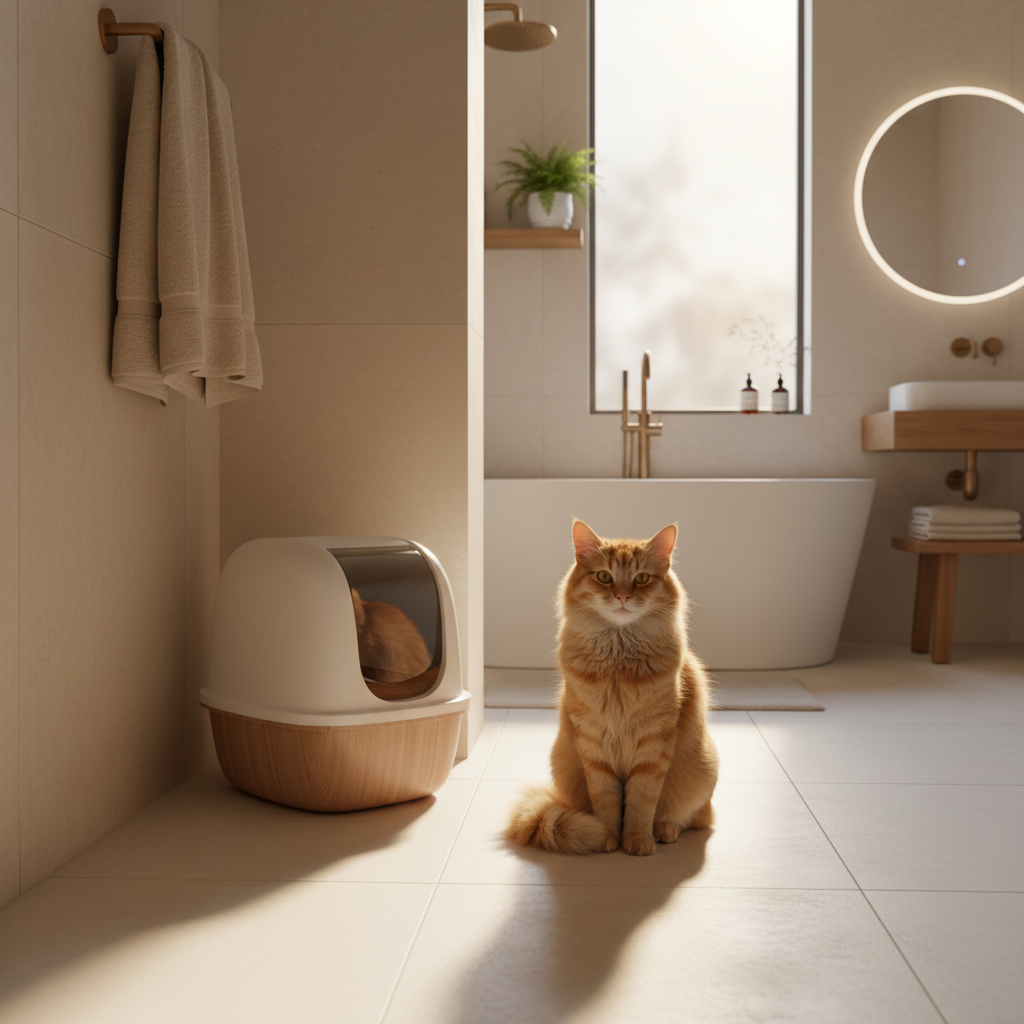
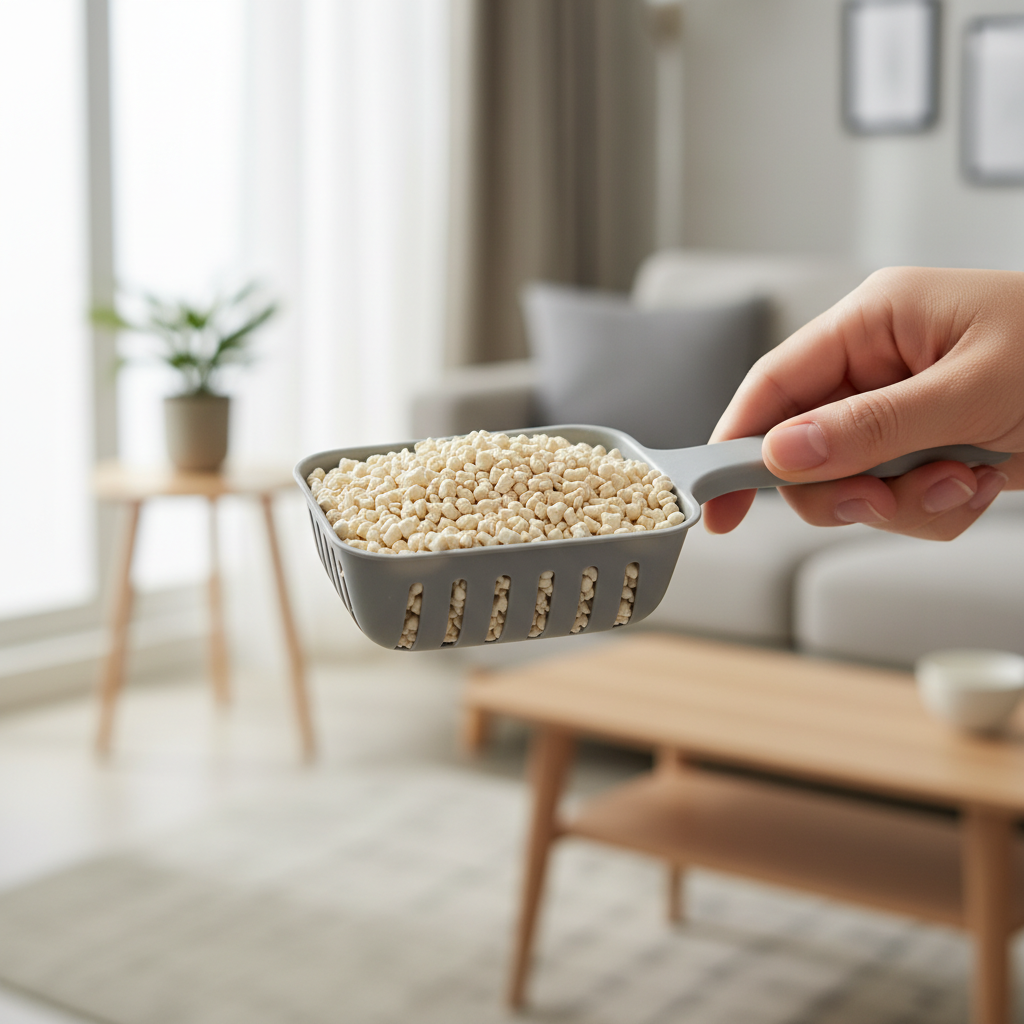
If you see Grey or Clay-colored stools, that’s a bile problem. It means the liver or gallbladder isn't doing its job. This is where your choice of litter matters. Our clean-freak Lion won't even step in a box that smells, but we love Liger Tofu Litter because the light milky color makes spotting these color shifts so much easier compared to dark grey clay. If you're worried about subtle changes, you can use our Urinary Health Checker for related symptoms like straining or vocalizing.
| Color | Description | Clinical Meaning | Urgency |
|---|---|---|---|
| Black/Tarry (Melena) | Like asphalt, sticky, foul metallic odor. | Upper GI bleeding (esophagus, stomach, small intestine). | IMMEDIATE VET EMERGENCY |
| Bright Red (Hematochezia) | Fresh red blood on surface or mixed in. | Lower GI bleeding (colon, rectum) or anal trauma. | VET CONSULTATION NEEDED |
| Grey/Clay-colored | Pale, chalky, lacking brown pigment. | Bile duct obstruction (liver/gallbladder issues), lack of stercobilin. | VET CONSULTATION NEEDED |
| Yellow/Greasy | Pale yellow, oily, bulky, often with strong odor. | Fat malabsorption (exocrine pancreatic insufficiency, small intestinal issues). | VET CONSULTATION NEEDED |
| Green | Greenish hue. | Rapid transit through GI tract (bile not fully converted) or excessive chlorophyll intake (cat grass). | MONITOR, VET IF PERSISTS |
The Time I Ignored the 'Soft' Signs
I'll be honest—early on, I used to think 'soft' poop was just a one-off thing. Maybe my cat just ate too many treats? I ignored it for a week because he still seemed happy. Then came the 'poop-pocalypse' at 2 AM on my favorite rug. One expensive vet trip later, I learned that chronic soft stool can be a sign of IBD or a bacterial mess-up. I felt terrible. If your cat has frequent tummy issues, it’s worth reading about whether hairballs are actually normal or if there's a deeper gut issue at play.
Stop Reaching for the Metronidazole
Whenever a cat has diarrhea, the old-school move was to give Metronidazole. But hold on. The latest ACVIM (American College of Veterinary Internal Medicine) consensus actually warns against using it for simple acute diarrhea. Why? Because it can wreck the gut microbiome for months. Instead, modern vets prefer specific probiotics like Enterococcus faecium SF68, which has been proven to help cats in shelters recover faster from diarrhea. Check the Effect of Probiotic SF68 on Feline Diarrhea | PMC for the science behind it. Sometimes, less is more.
At the end of the day, scooping isn't just a chore—it's a daily checkup. Getting familiar with what's 'normal' for your cat means you'll notice the small changes before they become big, expensive problems. Like Ping'An with her sensitive nose, our cats rely on us to notice the things they can't say out loud.
Your Monday Morning Action: Tomorrow morning, don't just scoop and flush. Actually look at the clump. Check the shape, the hardness, and the color against a white background or light-colored litter. Do this for 3 days and get a 'baseline' for your cat’s health.