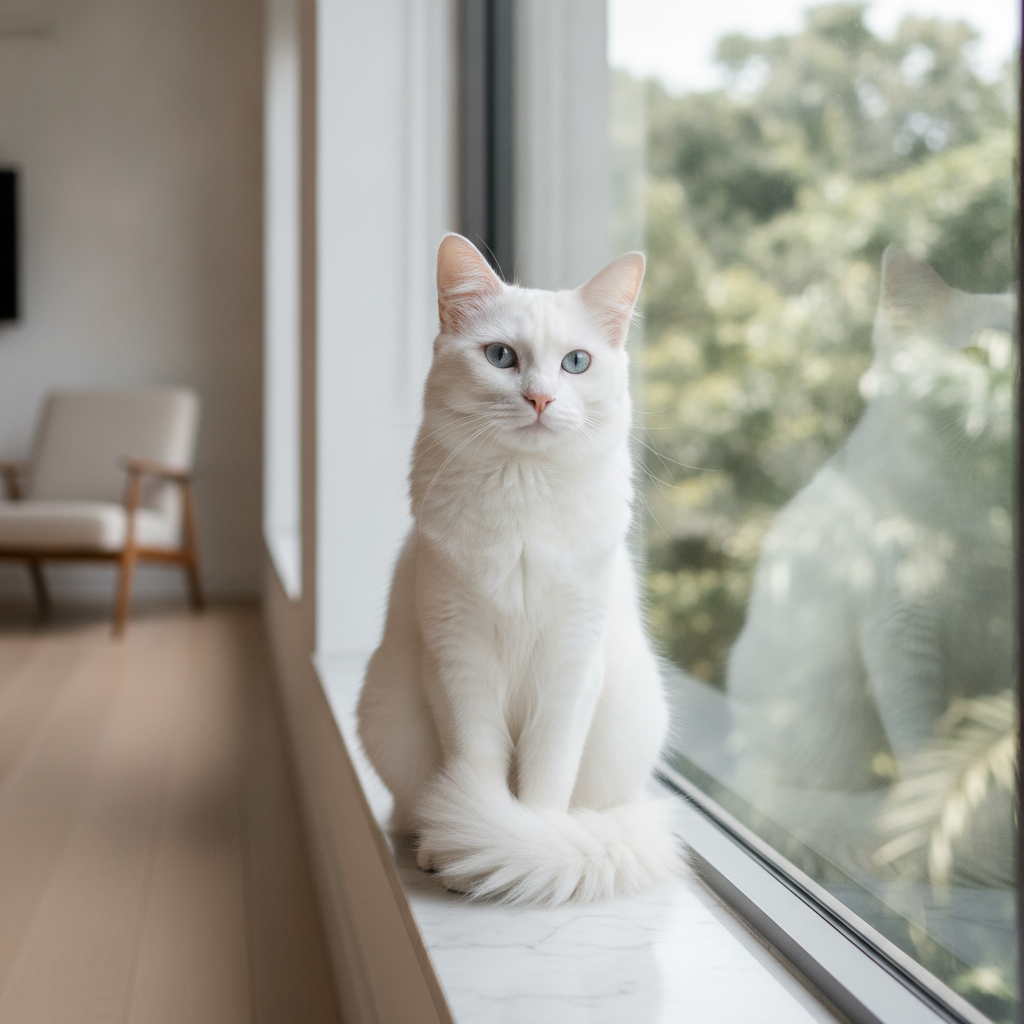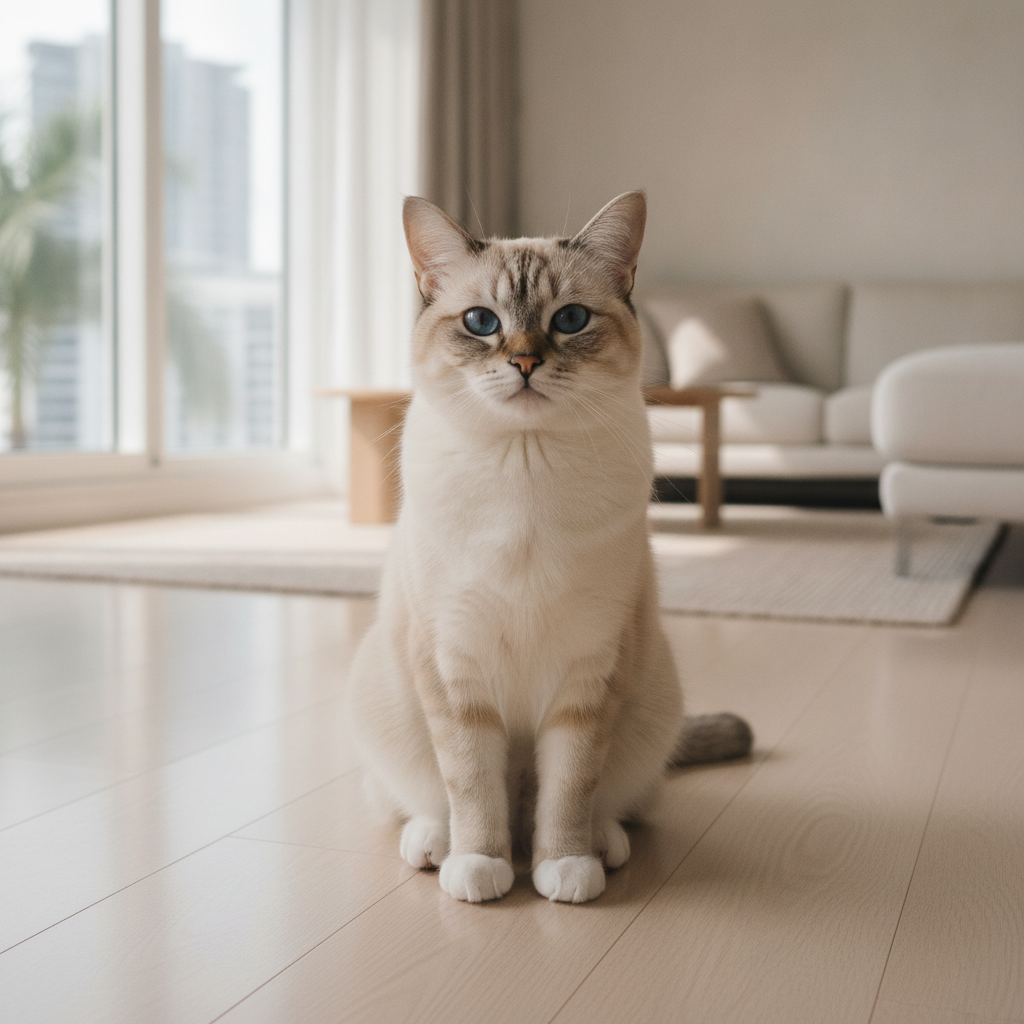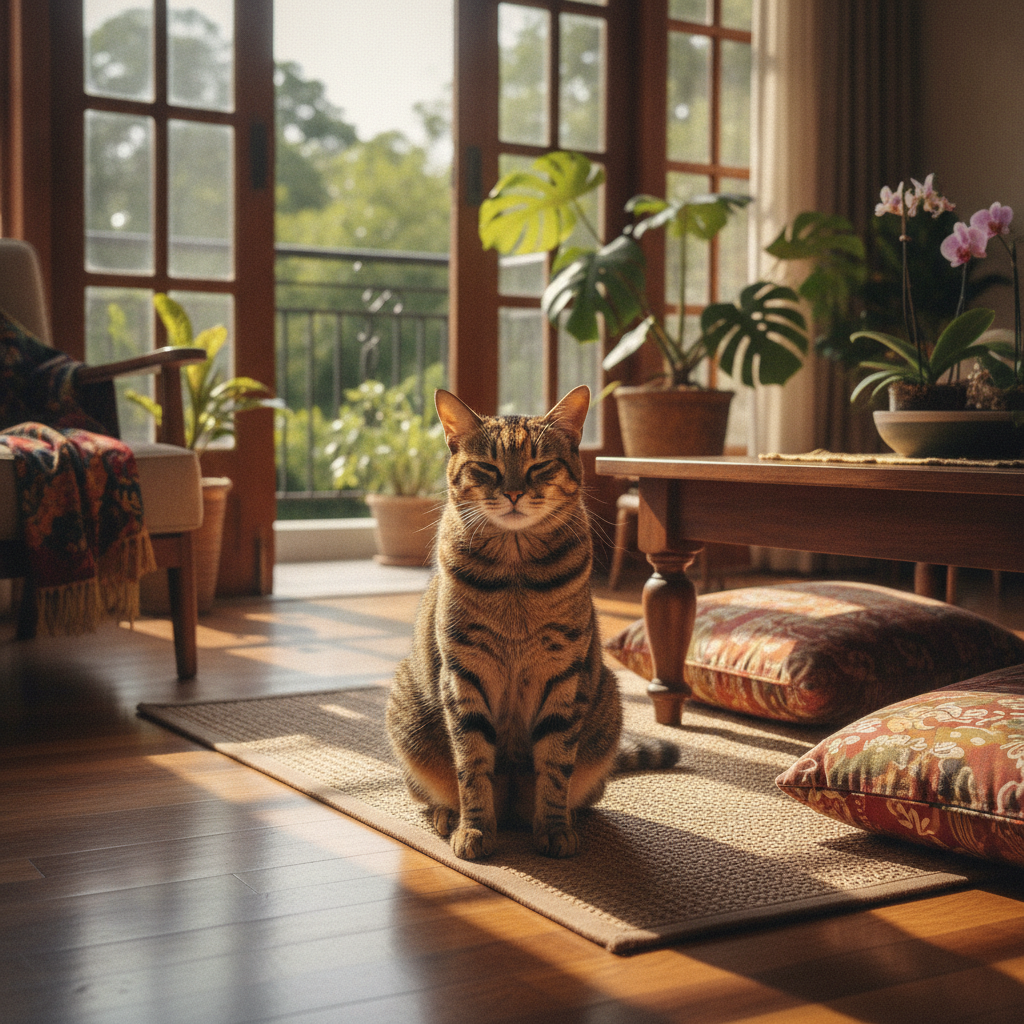
Walk through any Malaysian shelter and you'll meet them: the blind kitten, the white cat that ignores your voice, the three-legged tomcat who survived a road accident. They get passed over again and again, because adopters assume they'll be heartbreaking, fragile, or impossibly hard work. The science — and the people who live with these cats — say almost the exact opposite. Special-needs cats are, by the accounts of the people who share their lives, some of the most rewarding companions you'll ever have.
This is part of our How Cats Work science hub, and it leans on the same feline biology we cover elsewhere — especially how cats lean on their other senses when one is missing. Let's talk about caring for blind, deaf and tripod cats.
Disabled Doesn't Mean Diminished
Start with the evidence, because it's genuinely reassuring. A study of paraplegic cats published in the Journal of Feline Medicine and Surgery recorded a median quality-of-life score of 64 out of 70 — far above the threshold considered acceptable. Just as importantly, 95% of those cats' owners said the care effort was "not excessive," and 92.5% called it "totally" worthwhile. As Cats Protection puts it, cats are "surprisingly adaptable and often more than capable of coping with their physical impairments."
That's the headline to hold onto: a missing sense or limb is something a cat works around, not something that defines its happiness. Your job isn't to pity the cat — it's to make a few smart, mostly one-time adjustments and then let it get on with being a cat. Veterinary educators such as the Cornell Feline Health Center make the same point: cats compensate for lost senses far more gracefully than we expect, precisely because they were never as visually dependent as humans in the first place.
Caring for a Blind Cat
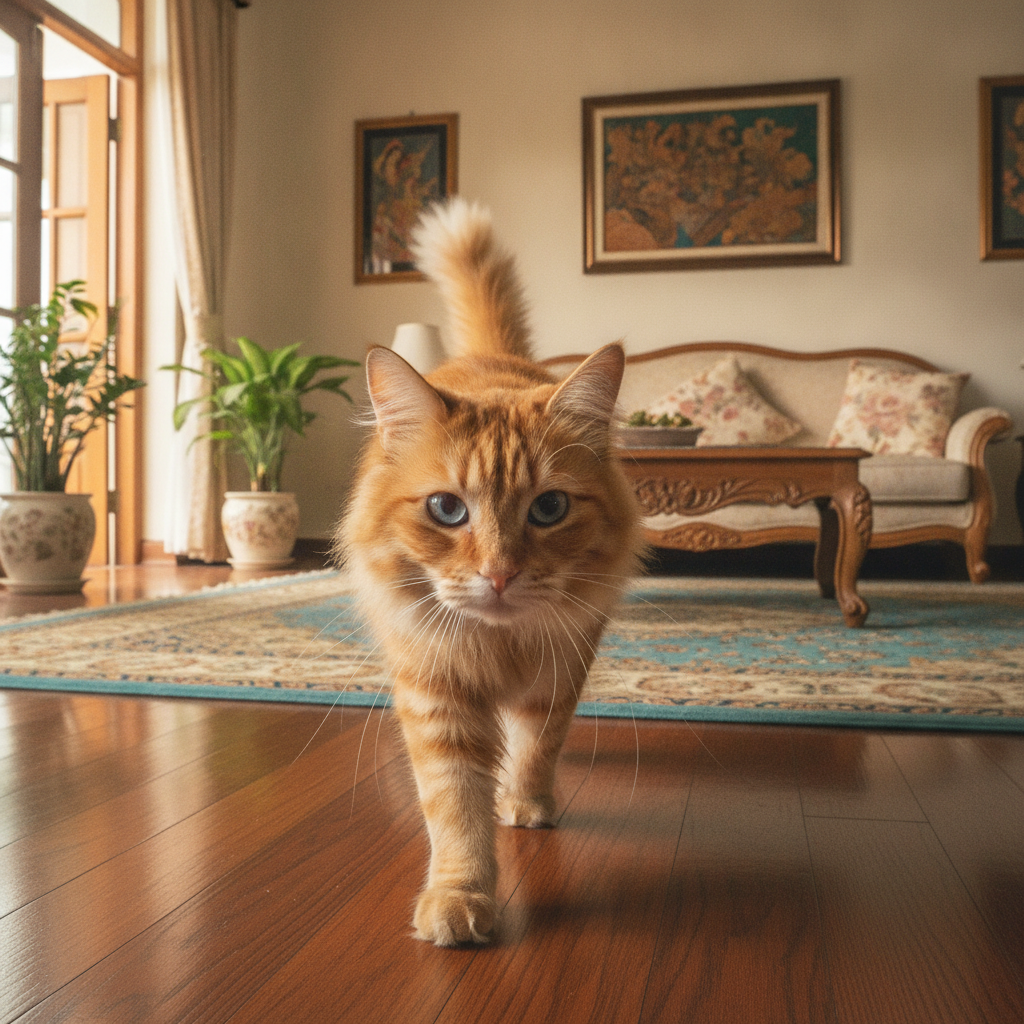
Blind cats navigate using a detailed mental map of your home, built from memory, smell, sound and — crucially — their whiskers, which they hold forward like radar to feel air currents bouncing off furniture. (Never trim a blind cat's whiskers; they're its eyes now.) Most blind cats move with a confidence that astonishes first-time owners.
The cardinal rule, per International Cat Care, is consistency: don't rearrange the furniture, and keep food, water and the litter box in exactly the same spots, because moving them invalidates the cat's map. Beyond that, hazard-proof the home — block stairs with a baby gate until the cat learns them, screen windows, close toilet lids, pad sharp corners and clear cords off the floor. Add sensory landmarks like a textured mat by the feeding station, and a water fountain whose trickle gives an audio beacon. Always speak before you touch, so you don't startle them, and if you carry a blind cat, set it down somewhere it knows, like beside its bed.
Caring for a Deaf Cat
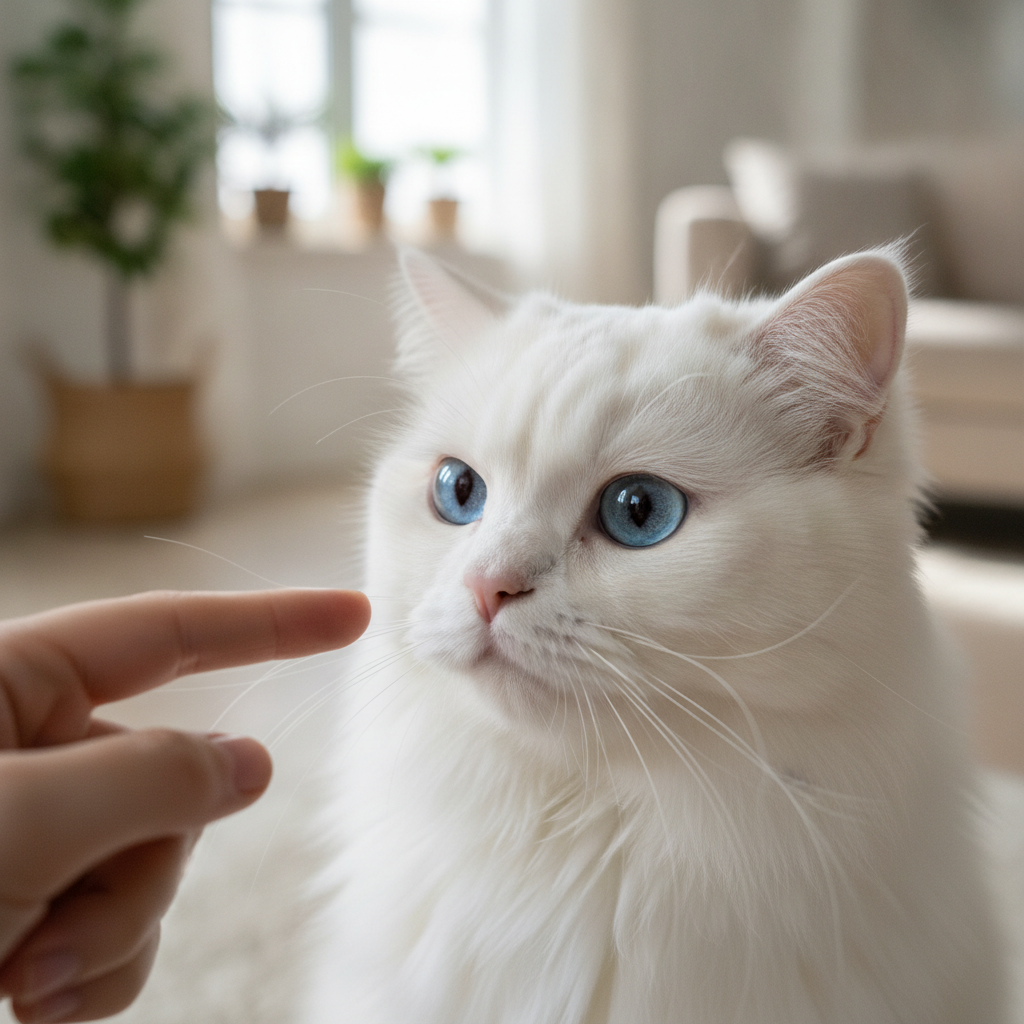
Feline deafness is often genetic, and there's a clear pattern: it's tied to the dominant white (W) gene, which can stop pigment cells from settling in the inner ear. That's why deafness is strongly linked to white cats with blue eyes. According to VCA Hospitals and feline genetics research, a white cat with two blue eyes has roughly a 65-85% chance of being deaf; odd-eyed (one blue eye) around 40%, often on the blue-eyed side; and white cats with non-blue eyes only about 17-22%.
Living with a deaf cat is mostly about switching channels. Use consistent hand signals that everyone in the house agrees on, and a penlight flash as a visual "clicker" for training (flash, then treat). To get attention, stomp a foot or tap a surface — deaf cats feel vibrations beautifully — or flick the lights. Approach from the front so you appear in their field of view before touching, and wake them gently the same way; a startled deaf cat can lash out simply because it never heard you coming. Two quirks to expect: deaf cats often meow very loudly (they can't hear to modulate volume), and they startle easily. A laser pointer is great for getting attention or play, but always let the chase end with the cat "catching" a real toy, as PetMD advises, so play stays satisfying rather than frustrating. None of it is a problem once you adjust — many owners say their deaf cats are unusually calm and affectionate, precisely because a quiet world doesn't rattle them.
Caring for a Tripod (Three-Legged) Cat
Cats who've lost a limb — "tripods" — usually adapt with almost insulting ease, settling into a bouncy, hoppy gait and often fully adjusted within about two weeks of surgery. There's some nuance by limb: cats carry around 60% of their weight on their front legs, so front-leg amputees work harder to absorb landings when jumping down, while rear-leg amputees find it tougher to power up onto high surfaces. Provide low steps or ramps to favourite perches and you remove most of the difficulty.
The one long-term issue to take seriously is osteoarthritis. With three limbs doing the work of four, the remaining joints and the spine carry extra, uneven load, and arthritis is close to inevitable over time — often arriving earlier than in four-legged cats. The single most powerful thing you can do about it is strict weight management: a lean tripod cat is a mobile, comfortable tripod cat, while even a little extra weight dramatically increases joint strain. Keep portions controlled, favour lean muscle on a higher-protein diet, ask your vet about joint supplements containing glucosamine and chondroitin, and keep up regular low-impact play to build the core muscle that supports the skeleton. Watch for early arthritis signs too — reluctance to jump, stiffness after rest, or skipping a once-loved perch — and raise them with your vet early. Our cat weight calculator helps you track a healthy target.
The One Rule for All Three: Keep Them Indoors
Blind, deaf or tripod — every one of these cats must live strictly indoors. A blind cat can't see a car, a deaf cat can't hear one, and a tripod can't scramble out of danger the way a four-legged cat might. The good news is that indoor life suits them perfectly, and you can still offer safe enrichment: a secure screened balcony or catio, food puzzles, scent games, or calm supervised time outdoors on a harness. Microchip every special-needs cat, and put an ID tag on the collar that spells out the condition — "I am blind" or "I am deaf" — so a Good Samaritan knows how to help if your cat ever slips out.
Setting Up the Litter Box for a Special-Needs Cat
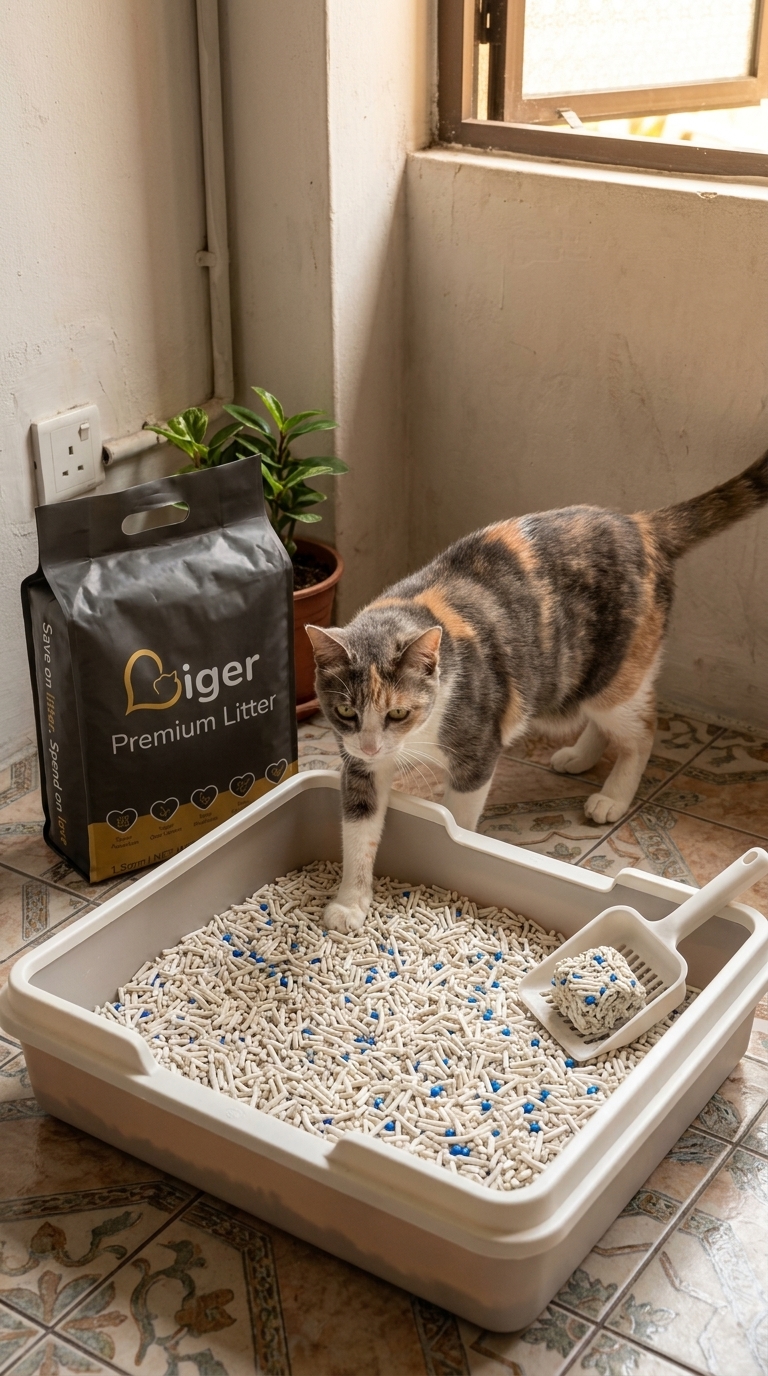
The litter box is where thoughtful setup matters most. For a blind cat, the box must never move — its location is memorised — and a distinct floor texture leading to it acts as a tactile signpost. For a tripod or arthritic cat, choose a box with at least one low side so stepping in doesn't mean a painful balancing act, and place it on the same floor the cat sleeps on to avoid stairs. And because these cats often have their faces close to the litter as they feel their way around, a low-dust litter is genuinely kinder to eyes and airways.
That combination — low dust, a light natural scent, and clumps firm enough to scoop without disturbing the whole box (so a blind cat's mental map of "clean" stays intact) — is exactly what Liger Premium Tofu Cat Litter is built for. Made from food-grade soy fibre, it's low-dust and lightly scented, and current Liger pricing (as of May 2026) is RM21.90 for a single 2kg pack, RM53.90 for 3 packs, RM89 for 5 packs and RM169 for 10 packs (RM8.45/kg), with free shipping across Peninsular Malaysia. Use the litter box size calculator to get an accessible box right, and the litter calculator to plan your supply.
Adopting a Special-Needs Cat in Malaysia
Here's the quietly hopeful part. Because so many adopters skip them, special-needs cats are exactly the ones sitting longest in Malaysian shelters and foster homes — which means adopting one genuinely saves a life that might otherwise run out of time. Many arrive through rescue and fostering networks or come off the street via TNR programmes, and plenty are gentle local cats who simply had bad luck.
If you're considering it, go in informed rather than fearful: the adjustments are mostly one-time, the daily care is manageable, and the bond tends to be extraordinary. Run through our new cat owner checklist to set up well, and head back to the How Cats Work hub for more on the remarkable biology that lets these cats thrive. A blind cat still purrs, a deaf cat still headbutts you good morning, and a tripod still claims the sunniest spot in the house. Disability and all, they're just cats — and they deserve a warm, safe, loving home every bit as much as any other.