Kitten season hits Malaysia hard. Every few weeks someone finds a tiny, mewing litter behind a shoplot, under a parked car, or in a drain after the rain, and suddenly they're a foster parent whether they planned to be or not. Fostering orphaned kittens is one of the most rewarding things you can do for community cats — but those first weeks are genuinely high-stakes, and good intentions aren't enough. Here's the beginner's playbook, built from shelter-medicine best practice, so you know exactly what to do from the first night.
This is the hands-on companion to our feral cats and TNR guide — because the kittens pulled from colonies are exactly the ones who can still be socialised and adopted — and part of the wider How Cats Work hub.
First, Partner With a Rescue
The single best decision a beginner can make is to not go it alone. Reputable shelters and rescues will typically supply the formula, food and litter, cover all veterinary costs, and give you a coordinator to call at 2am when something looks wrong. As Kitten Lady and shelter-medicine programmes stress, that support network is what turns a terrifying solo scramble into a survivable, repeatable system.
Before you scoop anyone up, make sure they actually need rescuing. Healthy, clean, plump kittens in a safe spot may still have a mum who's just away hunting — wait and watch for a few hours first. Truly orphaned kittens are cold, dirty, crying non-stop, or in obvious danger from traffic, dogs or monsoon flooding. And quarantine any new kittens away from your own pets for at least two weeks; tiny kittens carry illnesses that can spread fast. A spare bathroom makes an ideal kitten-proofed quarantine room, and wiping down non-porous supplies with a dilute bleach solution between litters keeps infections from passing on.
Keep Them Warm: It Comes First
This surprises new fosters: warmth matters more than food. Kittens under about four weeks can't regulate their own body temperature, and a chilled kitten can't digest — feeding a cold kitten can be fatal. Their body temperature needs to sit around 100-102 degrees F, so they need a constant, gentle external heat source.
Use a pet-safe heating pad on low, a microwavable heat disk, or a homemade "rice sock," placed under only part of the bedding so the kittens can crawl to a cooler spot if they overheat, and always covered with a towel. The nest should be warmest for newborns (around 29-32°C) and stepped down gradually as they grow, following the staged temperatures published by the University of Wisconsin Shelter Medicine Program. In an air-conditioned KL apartment especially, don't assume "room temperature" is warm enough for a neonate.
Feeding Orphaned Kittens
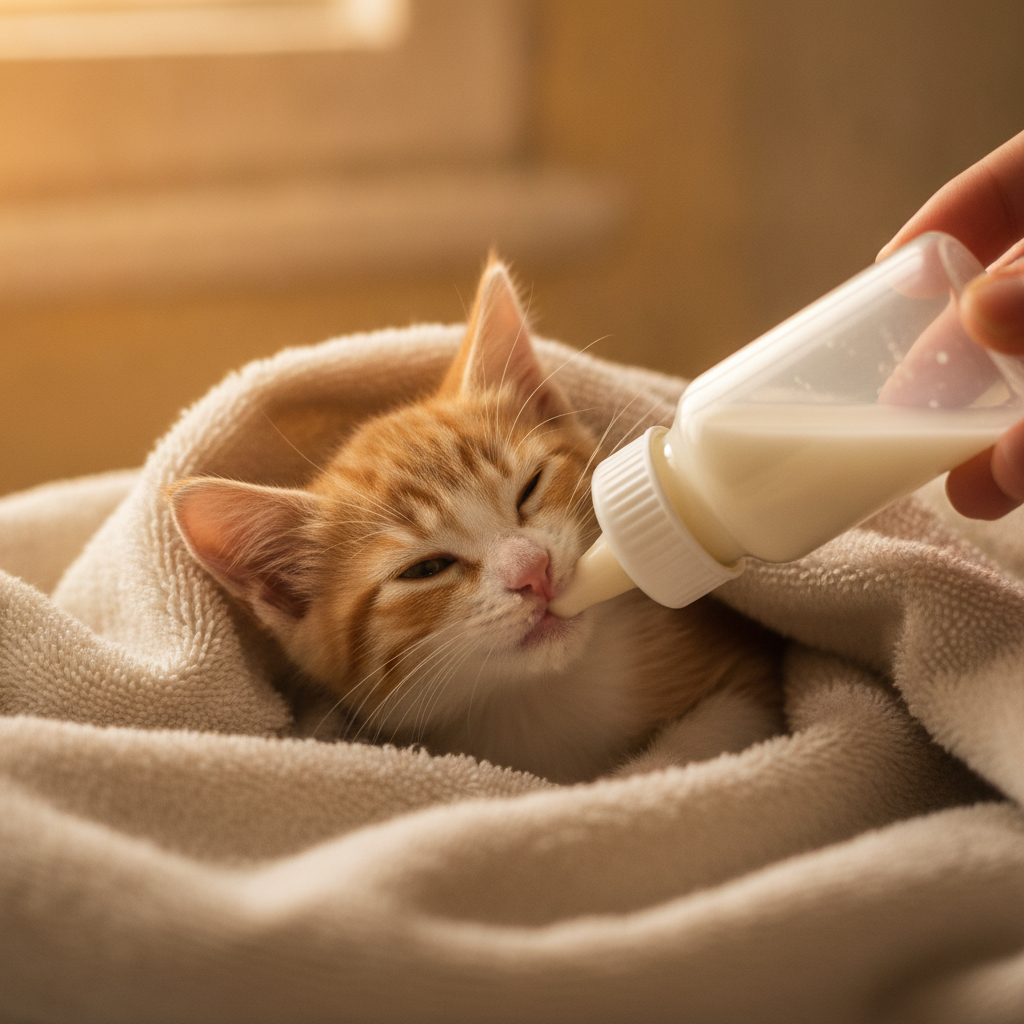
Rule number one, no exceptions: never feed cow's milk (or goat's milk, or human baby formula). Kittens can't digest it and it causes dangerous diarrhoea — the same lactose problem we cover in the truth about cats and milk. Use a commercial Kitten Milk Replacer (KMR), mixed per the instructions and warmed to about body temperature.
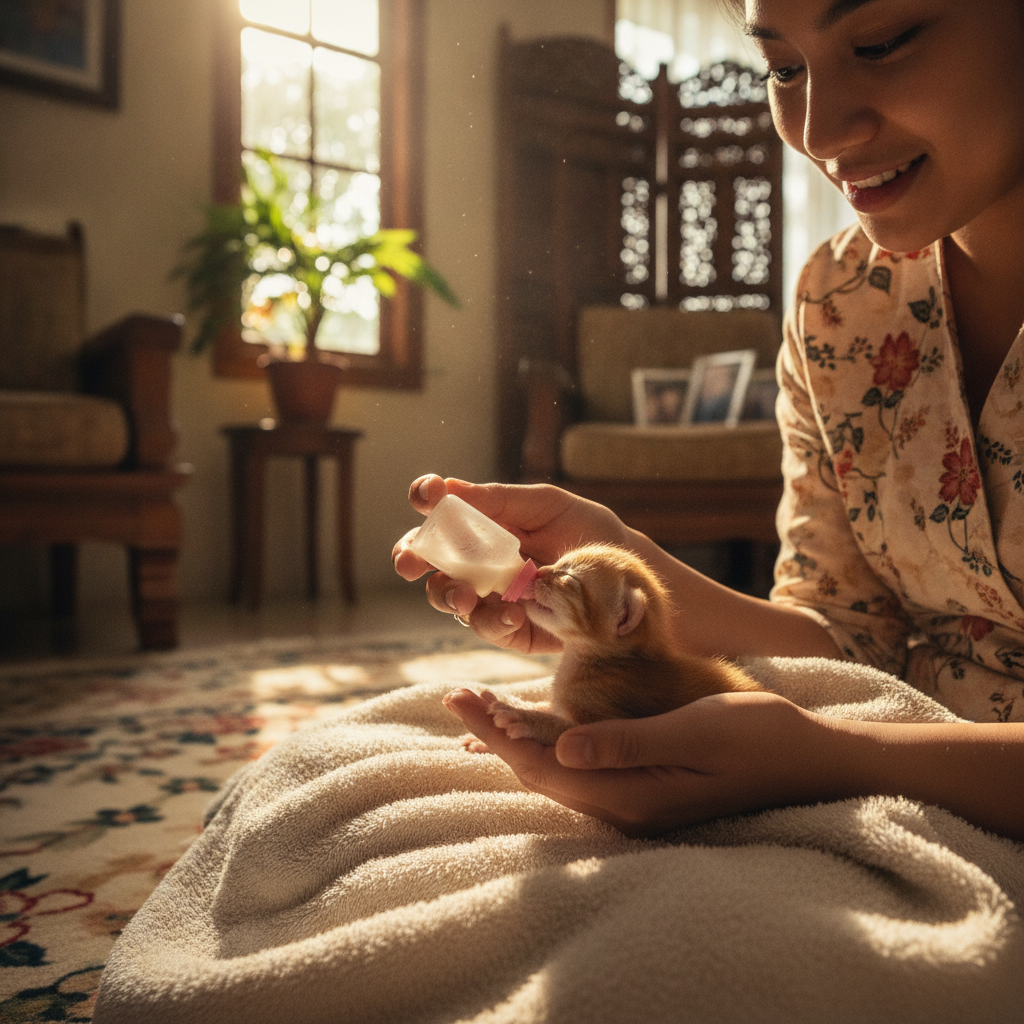
Technique keeps them alive. Always feed a kitten on its stomach, never on its back, to prevent formula going into the lungs. Hold the bottle at roughly a 45-degree angle and never squeeze it; for a weak kitten, a syringe drip — one drop at a time, letting it swallow between drops — is safer. Newborns feed every 2-3 hours around the clock, stretching to every 4-5 hours by 3-4 weeks. A rough guide is 8ml of formula per 28g of body weight across a day, but go by appetite and weight rather than forcing a number. Weigh daily on a kitchen scale: a steady gain of roughly half an ounce (about 10-15g) a day is the reassuring sign you want, and it's the metric veterinary charities like the PDSA point to as the clearest early sign a kitten is thriving. It's safer to slightly underfeed than overfeed, which causes diarrhoea.
Toileting and the Move to Solid Food
Until about three weeks old, kittens can't pee or poo on their own — their mum normally licks them to trigger it. You stand in for her: after each feed, gently rub the genital and anal area with a warm, damp cotton ball or unscented wipe until they finish. Pale urine is good; dark urine suggests dehydration.
Around four weeks, weaning begins. Make a "gruel" by mixing wet kitten food with KMR or warm water to a soupy, oatmeal-like texture and offer it in a shallow dish (or on a fingertip to start). Over a week or two, thicken it up and reduce the formula until they're eating solid kitten food, with fresh water always available. Per the guidance from groups like the ASPCA, slow and steady avoids the tummy upsets that derail weaning.
Litter Training and the Right Litter for Kittens
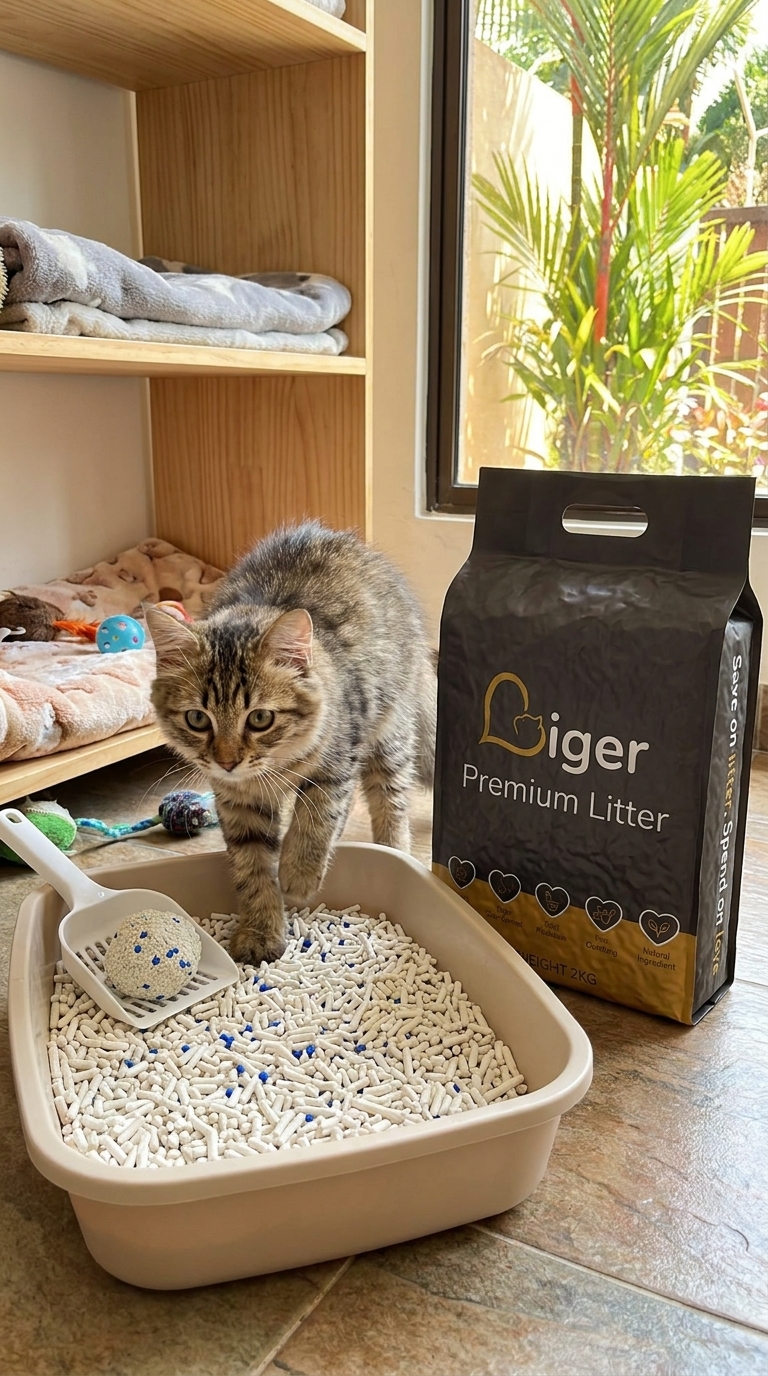
Litter training can start alongside weaning, around 3-4 weeks, when kittens gain bladder and bowel control. Cats are born wanting to bury their waste, so it's mostly about access: a small box with very low sides they can climb into, placed where they eat and sleep. Pop them in after meals and naps, and gently make a digging motion with their paws if they don't start themselves.
Here's the honest, important bit on litter choice: for very young kittens (under roughly 8-10 weeks), shelters and vets recommend a non-clumping litter, because curious kittens taste everything, and a swallowed mouthful of any clumping litter can swell and cause a dangerous intestinal blockage. So for the bottle-baby and early-weaning stage, keep it simple and non-clumping. Once a kitten is past that mouthing phase — fully weaned, confidently using the box, around 8 weeks and up — that's the point to graduate to a low-dust, fast-clumping litter for easier daily scooping. This is exactly where Liger Premium Tofu Cat Litter fits: made from food-grade soy fibre, low-dust and lightly scented, with quick firm clumps that make monitoring a growing kitten's output simple. Current Liger pricing (as of May 2026) is RM21.90 for a single 2kg pack, RM53.90 for 3 packs, RM89 for 5 packs and RM169 for 10 packs (RM8.45/kg), with free shipping across Peninsular Malaysia — handy when you're running several boxes. Size it with the litter calculator.
Socialisation: The 2-to-7 Week Window
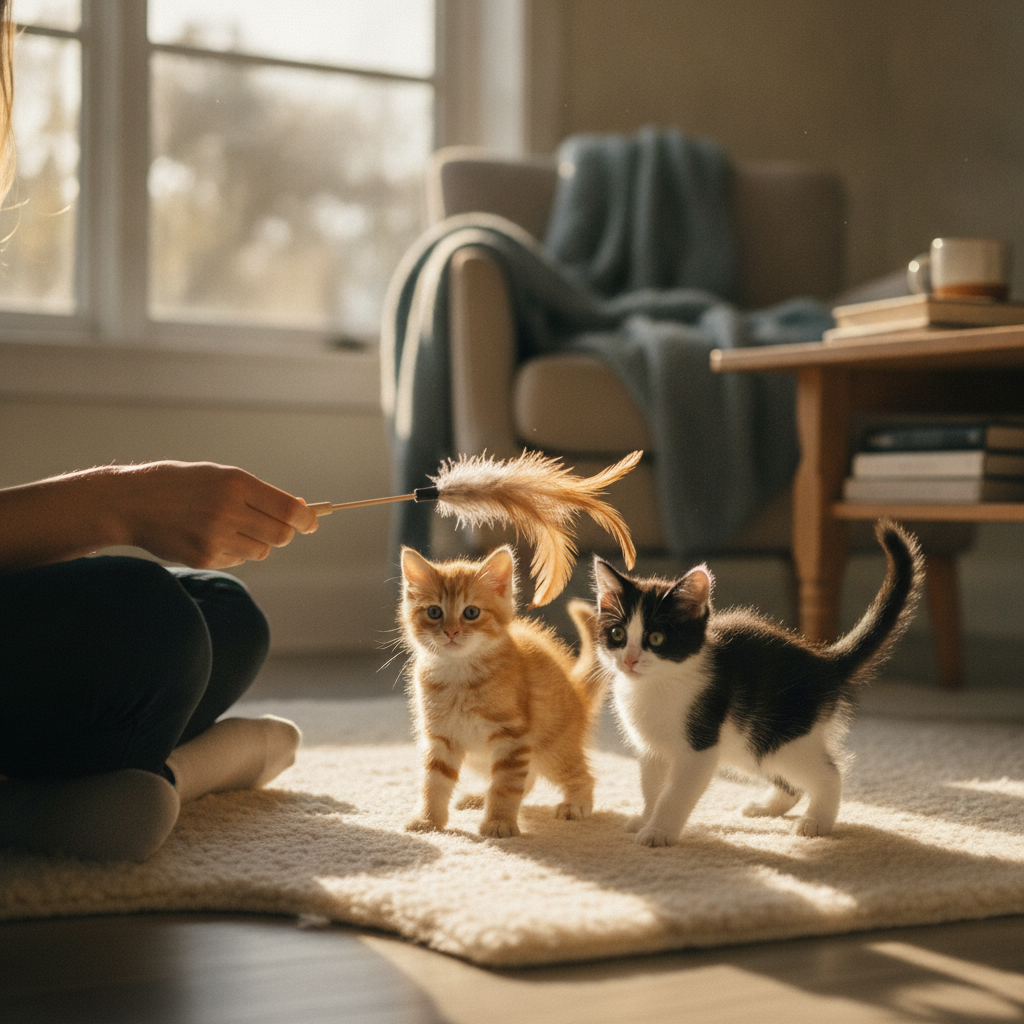
This is the part that decides whether a kitten grows into a confident family cat or a fearful one. The window between roughly two and seven weeks is when kittens learn that humans, sounds and handling are safe. Kittens given gentle, positive handling for 15-40 minutes a day during this period grow up bolder and friendlier, a finding echoed by feline-welfare bodies like International Cat Care.
Handle every part of them — paws, ears, mouth — so vet visits and grooming feel normal later. Introduce everyday sounds (the vacuum, the TV) at low volume, let them explore different rooms and surfaces, and aim to have them meet several different gentle people. Fostering kittens in pairs is a gift: they teach each other bite inhibition, so play stays soft. And never use your hands as toys — redirect every pounce onto a wand or teaser, or you'll raise a cat that bites. (Their senses are wiring up fast through all this; our guides to cat vision and cat senses explain what they're learning to use.)
Health Timeline and Adoption Readiness
Kittens follow a structured medical calendar. Deworming starts as early as two weeks and repeats every two weeks until 16 weeks, because dewormers only kill the current generation of worms. Core FVRCP vaccinations begin around 6-8 weeks in a series of boosters following AVMA vaccination guidance, with the rabies shot usually given at 14-16 weeks. Fleas can cause life-threatening anaemia in a tiny kitten, and chemical flea treatments aren't safe under 8 weeks — use a flea comb and a gentle bath instead until then. Throughout, you are the early-warning system: lethargy, vomiting, diarrhoea or a loss of appetite beyond about 12 hours is an emergency, not a wait-and-see, so call your rescue's vet line straight away. Our kitten first-year health timeline lays the whole schedule out, and the vaccine schedule and deworming schedule tools keep you on track.
A kitten is ready for its forever home once it's at least 8 weeks old, weighs around 1kg (two pounds), is fully weaned, reliably using the litter box, healthy, socialised, and spayed or neutered — the weight that makes surgery safe. Then comes the bittersweet part: writing up each kitten's personality and taking good photos so the rescue can match them with the right family. Send your graduates off with our new cat owner checklist, and head back to the How Cats Work hub. It's exhausting, occasionally heartbreaking work — and there's nothing quite like watching a drain-rescued scrap of fur grow strong and stroll into a loving home on its own four feet. Every kitten you raise is a life the streets would otherwise have claimed.