That little crust in the corner of your cat's eye each morning — is it normal, or a sign something's wrong? For most cats, a tiny bit of "sleep" is completely fine. But cats' eyes can also signal real trouble fast, and one of the most common owner mistakes is reaching for the wrong thing to wipe them with. This guide shows you how to safely clean your cat's eyes, how to read what the discharge is telling you, and the red flags that mean "vet, today".
It's part of our complete home grooming guide. And a quick note: if you're specifically chasing those rusty tear stains on a light-coloured cat, we have a dedicated deep-dive on cat tear stains — this guide is about general eye hygiene and discharge.
Normal "Eye Gunk" vs a Problem
A healthy cat's eyes are bright, clear and fully open, kept moist by an invisible tear film. It's perfectly normal to find a small amount of dry, clear or reddish-brown crust in the inner corner, especially after a nap — that's just dried tear film. According to PetMD, the problem is when discharge becomes excessive, thick, or discoloured. Your single most powerful tool here is daily observation: once you know your cat's normal baseline, you'll spot a worrying change immediately.
How much cleaning a cat actually needs varies a lot. A sleek short-haired cat with a normal face may need an eye wipe only now and then, when you notice crust. A flat-faced Persian, by contrast, may need it every single day. The goal isn't to scrub your cat's eyes on a schedule — it's to keep the area comfortable and clean when it needs it, while watching for anything that crosses the line from "bit of gunk" into "something's wrong".
Decode the Discharge: What the Colour Means
The colour and texture of eye discharge are genuine diagnostic clues:
- Clear and watery (epiphora): constant wetness or damp fur. The fluid's clear but the volume is abnormal — usually an irritant (allergies, a scratch, dust) or a blocked tear duct. Viral conjunctivitis is a common cause.
- White-grey and stringy (mucoid): a mucus-like discharge pointing to inflammation/conjunctivitis or "dry eye" (KCS), where the eye underproduces tears.
- Yellow or green and sticky (purulent): thick, pus-like discharge that strongly signals a bacterial infection — often part of a feline upper respiratory infection (URI). Needs a vet.
- Red or bloody: any blood, even a pinkish tint, is an emergency — trauma, a foreign body, high blood pressure or a clotting issue. Vet immediately.
One more clue: one eye or both? Discharge in a single eye usually means a local cause (a foreign body, blocked duct, ulcer, or even an abscessed tooth root beneath the eye). Both eyes together more often points to something systemic — most commonly a contagious URI (like feline herpesvirus) with sneezing, or environmental allergies. WebMD notes that pinning down which eye, what colour, and what other symptoms accompany the discharge (sneezing, nasal discharge, lethargy) is exactly what your vet will ask — so it's worth a quick mental note before you panic-wipe everything away.
How to Safely Clean Your Cat's Eyes
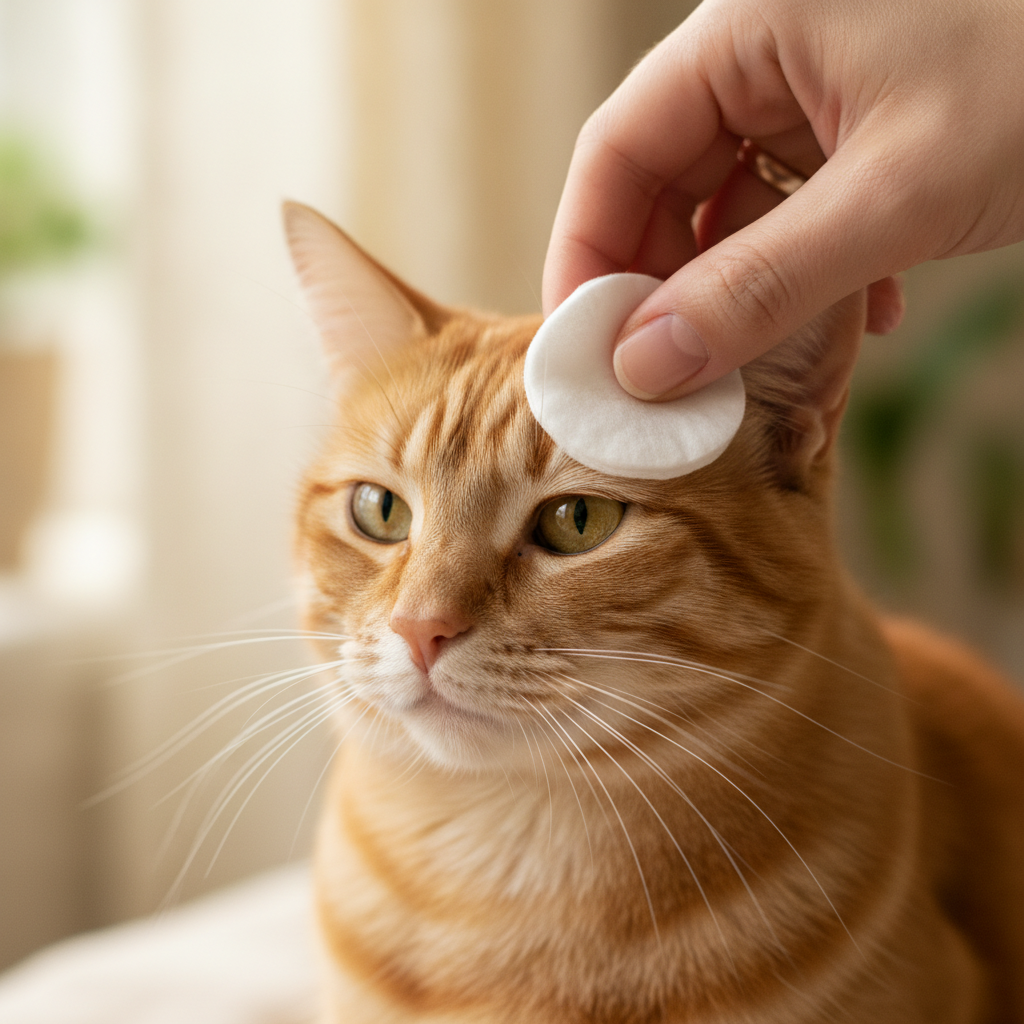
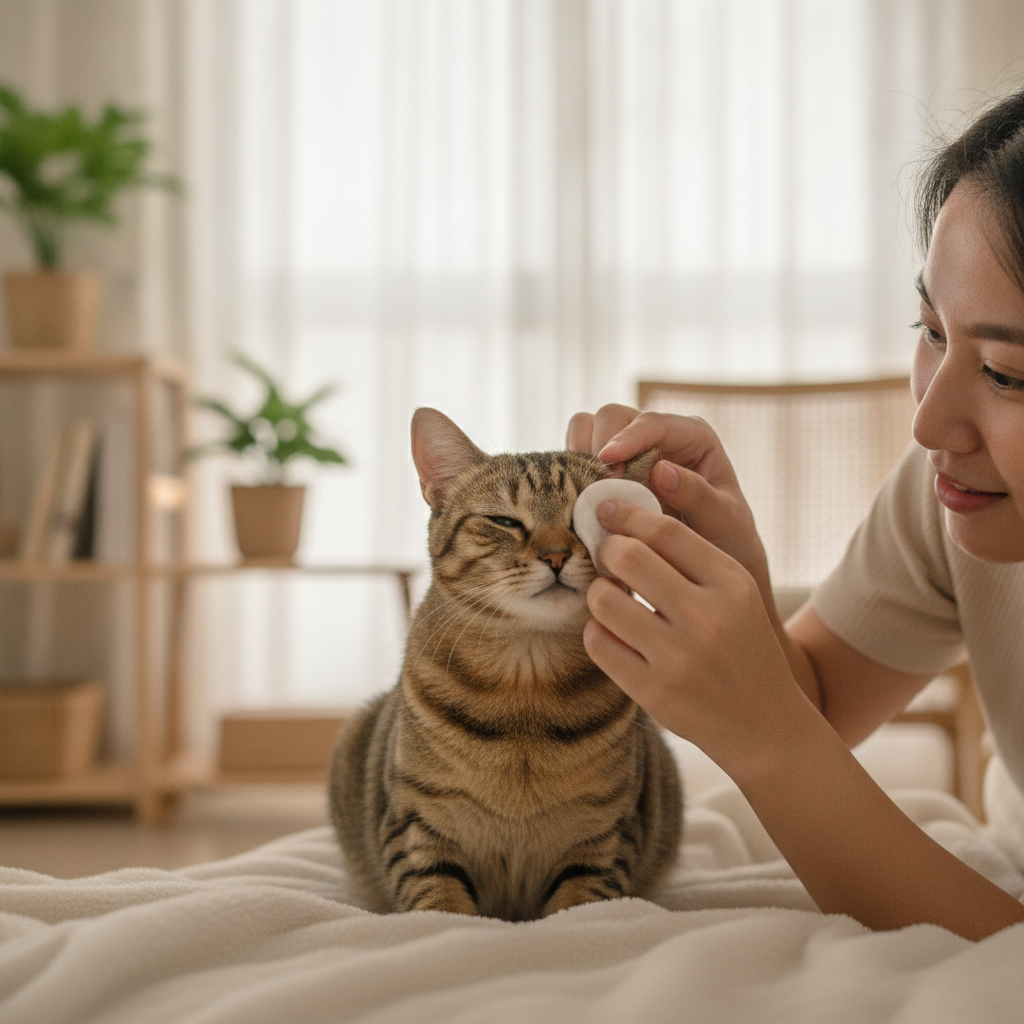
When it's just routine gunk, here's the safe method. Supplies: a vet-approved sterile saline solution or dedicated feline eye wash (or, in a pinch, water that's been boiled and fully cooled — never straight tap water), plus lint-free cotton pads or sterile gauze. Wash your hands first.
- Moisten the pad with saline — damp, not dripping, so fluid doesn't run into the eye.
- Wipe inner corner outward — from near the nose toward the ear. This draws debris away from the tear duct and cornea.
- Soften hard crust by holding the damp pad gently against it for 10–15 seconds, then wipe. Never scrub or pick.
- Use a fresh pad for the second eye — this is non-negotiable; it stops you spreading infection from one eye to the other.
- Pat the fur dry afterwards, especially around the folds of a flat-faced cat — lingering moisture causes skin infections.
- Reward immediately with a treat so the next clean is easier.
For a wriggly cat, the towel "burrito" wrap (head left out) keeps claws contained — the same gentle restraint we cover in our guide on grooming a cat that hates being groomed. Never force a panicking cat near the eyes; postpone and ask your vet instead.
Never Put These Near Your Cat's Eyes
This list matters as much as the technique — the wrong product turns a minor wipe into a chemical burn:
- Human eye drops — balanced for human tears and often toxic to cats. Never, unless your vet prescribed them.
- Soap, shampoo, hydrogen peroxide, alcohol, disinfectants — all cause severe chemical burns to delicate eye tissue.
- Tap water — chlorine and minerals irritate; boric acid and home brews like chamomile tea aren't safe either.
- Cotton wool — sheds fibres that lodge in the eye and scratch the cornea. Use lint-free pads or gauze only.
- Your fingers — they introduce bacteria and a fingernail can scratch the eye.
When in doubt, plain sterile saline on a lint-free pad is the only thing that's always safe to use at home.
Flat-Faced Breeds Need Daily Care (Persians, Exotic Shorthairs)
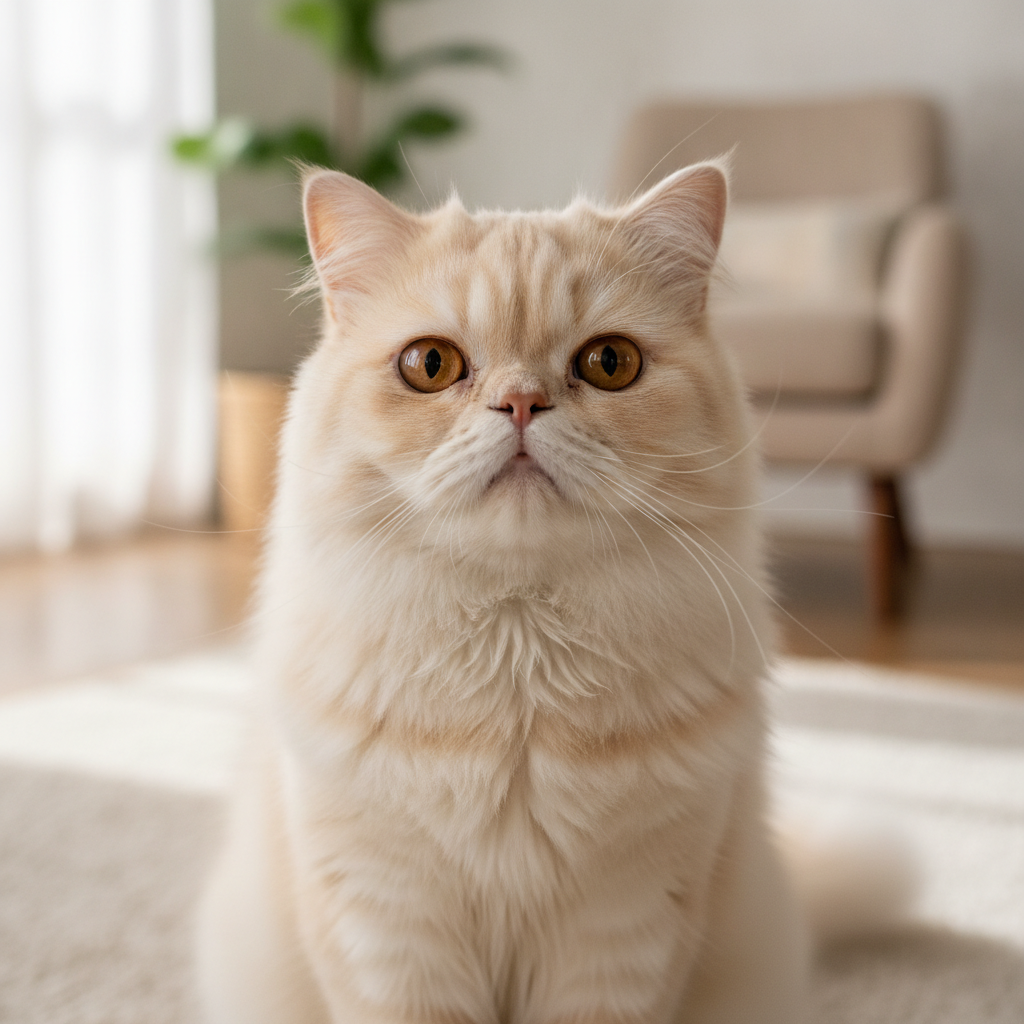
If you have a Persian or Exotic Shorthair, daily eye care isn't optional. Their flat faces give the tear duct a "diabolically tortuous path" that kinks and can't drain properly, so tears constantly overflow onto the face — a condition called epiphora reported by about 69% of brachycephalic cat owners, per veterinary research. Shallow eye sockets leave the cornea more exposed, and deep facial folds trap moisture where bacteria and yeast thrive.
The routine: wipe around the eyes at least once daily with saline on a lint-free pad, inner corner outward, fresh pad per eye — then, crucially, pat the folds completely dry every time. That drying step is what prevents the painful skin-fold dermatitis these breeds are prone to. The rusty staining itself is cosmetic (oxidised porphyrins in the tears), but it's a visible flag that drainage isn't working — so keep an eye on it, and see our tear stain guide for the full story.
It's worth being honest about why these breeds struggle: the flat face is a product of selective breeding for looks, and the RSPCA flags that these same cats are also prone to entropion (eyelids rolling inward so lashes rub the cornea) and corneal ulcers. If you're choosing a flat-faced kitten, ask the breeder about the parents' eye health — and once your cat is home, that daily wipe-and-dry becomes a genuine part of keeping them comfortable, not just tidy. A quick weekly check of the eyelid margins for inward-rolling lashes is a smart habit for these breeds too.
Red Flags: When It's a Vet Emergency
Some eye signs are never "wait and see". Per the PDSA and International Cat Care, get to a vet promptly if you see:
- Squinting, holding an eye shut, excessive blinking, pawing or rubbing the eye, or new sensitivity to light — all signs of pain.
- A cloudy, hazy or bluish cornea — can mean a corneal ulcer, glaucoma or uveitis.
- Severe redness or swollen eyelids, a visible scratch, unequal pupil sizes, or the third eyelid stuck up.
- Green, yellow or bloody discharge.
Speed matters here: a corneal ulcer can develop within 24–48 hours and threaten your cat's vision — even rupture the eye — if untreated. At-home cleaning is for hygiene, not for treating disease. When something looks genuinely off, don't wipe and wait — call the vet.
The Dust Connection: Low-Dust Litter for Sensitive Eyes
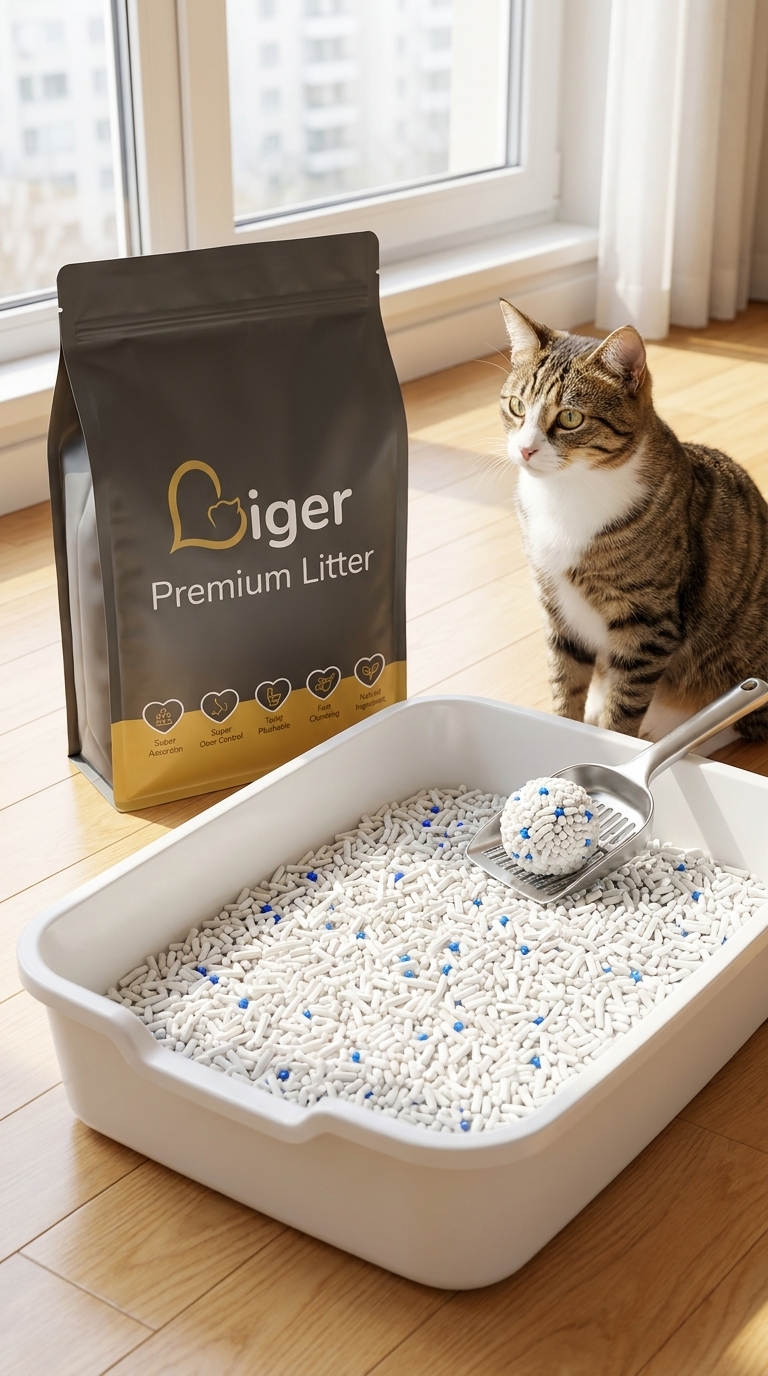
Here's a cause of watery, irritated eyes that owners rarely connect: litter dust. Every time your cat digs in a dusty litter, fine particles puff into the air right at face level — and those particles land on the eye surface, irritating it and triggering exactly the clear, watery overproduction described above. For flat-faced breeds whose corneas are already more exposed, it's an even bigger deal. Cutting the dust at the source means fewer irritated, weepy eyes to clean.
That's one practical reason we use Liger Premium Tofu Cat Litter — the soft, soy-based pellets are genuinely low-dust, so there's far less airborne powder near your cat's face (and yours). It still clumps firmly and is lightly milk-scented, keeping the box fresh. Current pricing (as of May 2026): RM21.90 for 2kg, RM53.90 for 3 packs, RM89 for 5, and RM169 for the 10-pack — about RM8.45/kg, free shipping in Peninsular Malaysia. You can see how different litters stack up on fines with our dust-level comparison tool, and our guide to dust-free cat litter goes deeper on why it matters for eyes and airways alike.
Know your cat's normal, wipe gently with saline and a lint-free pad, never use the wrong products, and treat colour changes or pain as the emergencies they are. That's how you protect those bright eyes for life.