
So your cat might be expecting — or already is — and you suddenly have a hundred questions. How long until kittens? What do I feed her? What does the birth look like, and how will I know if something's wrong? This is the hub guide that pulls the whole journey together for Malaysian cat parents, from the first pink nipple to the busy nursing weeks, with links to deeper guides on each stage. Bookmark it; you'll come back as her belly grows.
A quick honesty note first: most feline pregnancies in Malaysia are unplanned, the result of free-roaming toms meeting an unspayed female. If kittens weren't the plan, there's no shame in it — this guide helps you do right by mum and babies, and ends with the kindest long-term step.
Is My Cat Pregnant? The Quick Answer
A cat is pregnant for about 63 to 65 days — roughly nine weeks. The earliest reliable sign is "pinking-up": around week three her nipples enlarge and turn a rosier pink. Other early clues include a brief bout of "morning sickness", growing affection, a rounder belly by about week five, and a bigger appetite, followed by nesting in the final stretch. As International Cat Care notes, none of these alone is proof — a swollen belly can also be weight gain, worms, or even a false pregnancy — so a vet confirms it properly. We unpack every early sign, week by week, in cat pregnancy: how long and early signs, and you can estimate a due date with the cat pregnancy calculator. One genuinely useful thing to know, as PetMD points out, is that kittens in a single litter can have different fathers — a queen can mate with more than one tom during a heat — which is why one litter can hold a ginger, a tabby and a tuxedo that look nothing alike.
The Nine-Week Timeline at a Glance
Vets split the nine weeks into three trimesters of about three weeks each. Here's the map:
| Trimester | Days | Inside | What you notice |
|---|---|---|---|
| First | 1–21 | Embryos implant (~day 12–14); organs begin forming | Often nothing; pinking-up near day 21 |
| Second | 22–42 | Rapid fetal growth; skeletons start to calcify late on | Rounder belly by week 5, bigger appetite |
| Third | 43–65 | Kittens gain weight; milk comes in | Obvious belly, visible movement, nesting |
Your vet confirms and monitors with a few tools at set times: ultrasound from around three to four weeks (heartbeats by about day 25, confirming the kittens are alive), palpation by an experienced vet around day 20–35, and an X-ray after day 45 (best after day 55) for an accurate kitten count. Per the Merck Veterinary Manual, there's no routine pregnancy blood test for cats, so imaging does the confirming.
Caring for Her During Pregnancy
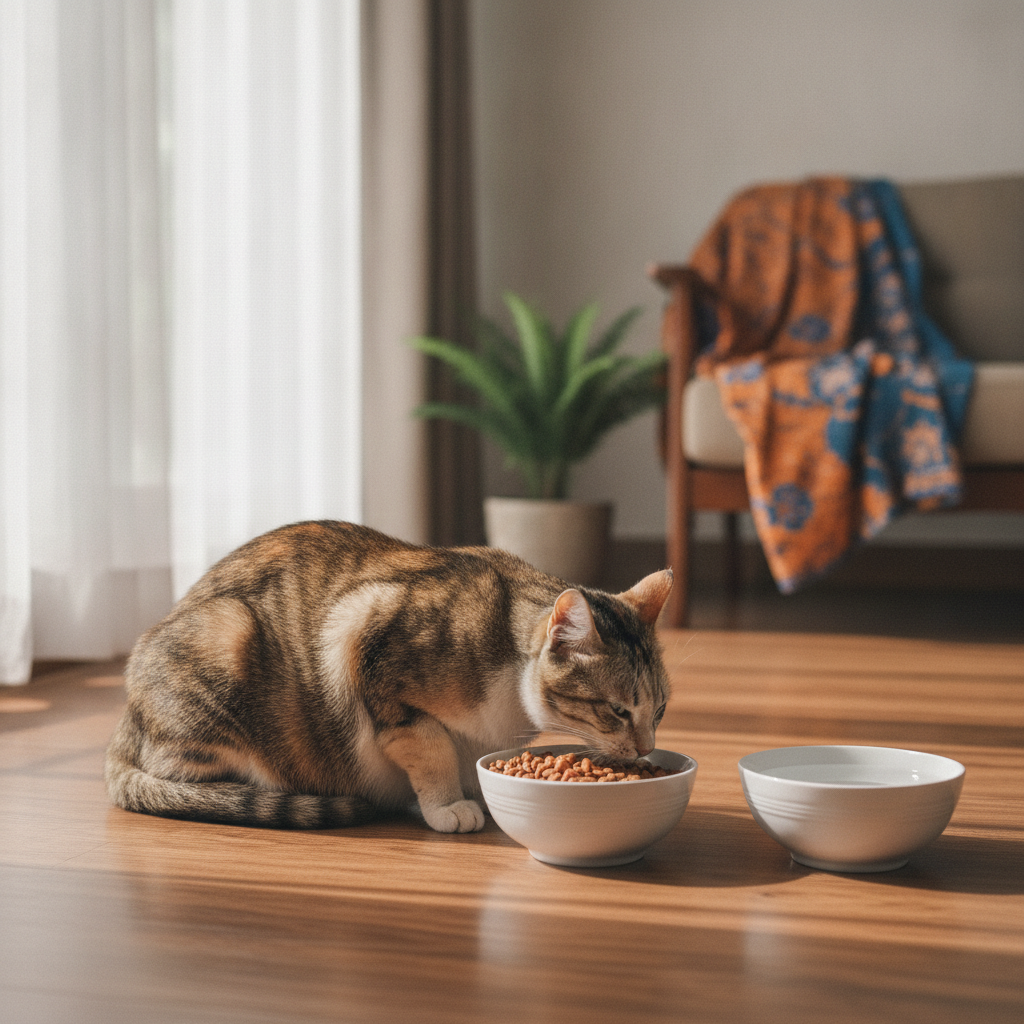
Four things matter most: nutrition, weight, safe preventative medicine, and a calm environment. The headline change is diet — switch her to a high-quality kitten or growth formula, since her energy needs climb from about week three and can reach 50% above normal by term, per Royal Canin. Feed smaller, more frequent meals late on as the kittens crowd her stomach, and keep fresh water always available. Crucially, nothing goes in without your vet's say-so: modified-live vaccines are off the table during pregnancy, and only vet-approved dewormers and flea products are safe. Set up a quiet nesting box around week seven, keep her gently active but indoors for the final fortnight, and weigh her so gain stays under about 40% of her pre-pregnancy weight. The full playbook — feeding amounts, vet schedule, the nesting kit — is in caring for a pregnant cat.
The Birth: What Queening Looks Like
Giving birth is called queening, and it runs in three stages. In stage one (6–12 hours, up to 36 in a first-timer), contractions begin invisibly; you'll see restlessness, nesting, panting and a refused meal, often after her temperature dips below about 37.8°C. In stage two, strong visible contractions deliver each kitten — usually within 5–30 minutes of hard straining, head-first or feet-first, with the mother licking each one to clear its airways. Stage three is the afterbirth; count one placenta per kitten. The gap between kittens runs 10 minutes to an hour, and a normal quirk called "interrupted labour" can see her pause peacefully for up to 24 hours mid-delivery. The whole, detailed picture — plus the emergency red flags — is in cat giving birth: labour signs and what to expect. The short version of when to call the vet: strong straining over 30 minutes with no kitten, more than four hours between kittens, a green or black discharge before the first kitten, or a pregnancy past 70 days.
After the Birth: The Nursing Weeks
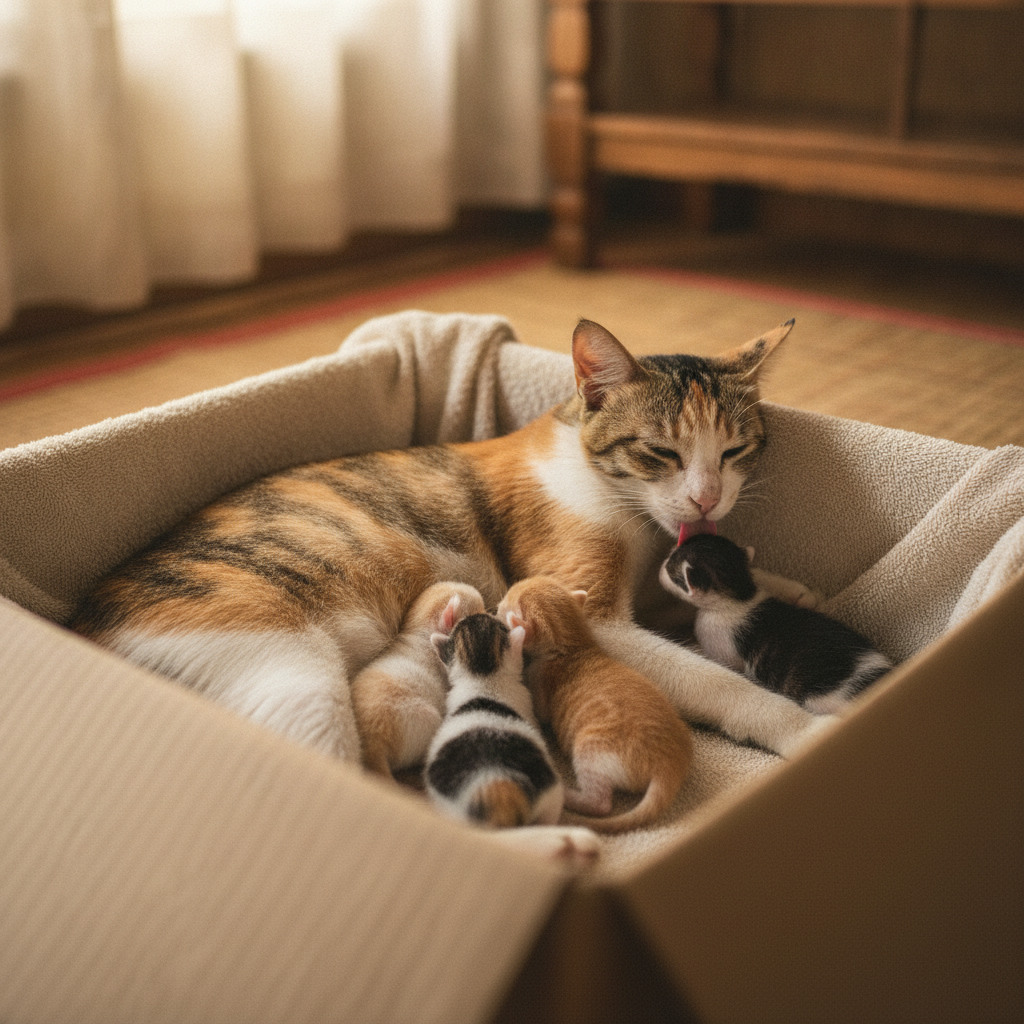
Lactation is even more demanding than pregnancy. A nursing queen's calorie needs can double or triple, so keep her on kitten food, free-choice, with plenty of water. Keep the nest warm — about 29–32°C in week one, stepping down as the kittens grow — since newborns can't regulate their own temperature. VCA Animal Hospitals stresses daily weigh-ins: a healthy kitten weighs about 90–110 g at birth and should gain 7–14 g a day, doubling its birth weight in 7–10 days. Watch the queen for three postpartum emergencies — mastitis, metritis and eclampsia (milk fever) — all covered, along with milk-supply checks and the road toward weaning, in caring for a nursing queen and her newborn litter. As WebMD notes, a reddish-brown discharge for up to a week after birth is normal, but a foul-smelling, green or black discharge with fever means a vet visit. Weaning itself — the kittens' transition to solid food — usually begins around three to four weeks and belongs to its own kitten-development guide. If you ever have to hand-raise an orphan, our newborn kitten care guide covers bottle-feeding.
How Many Kittens, and the Litter-Box Side of Things
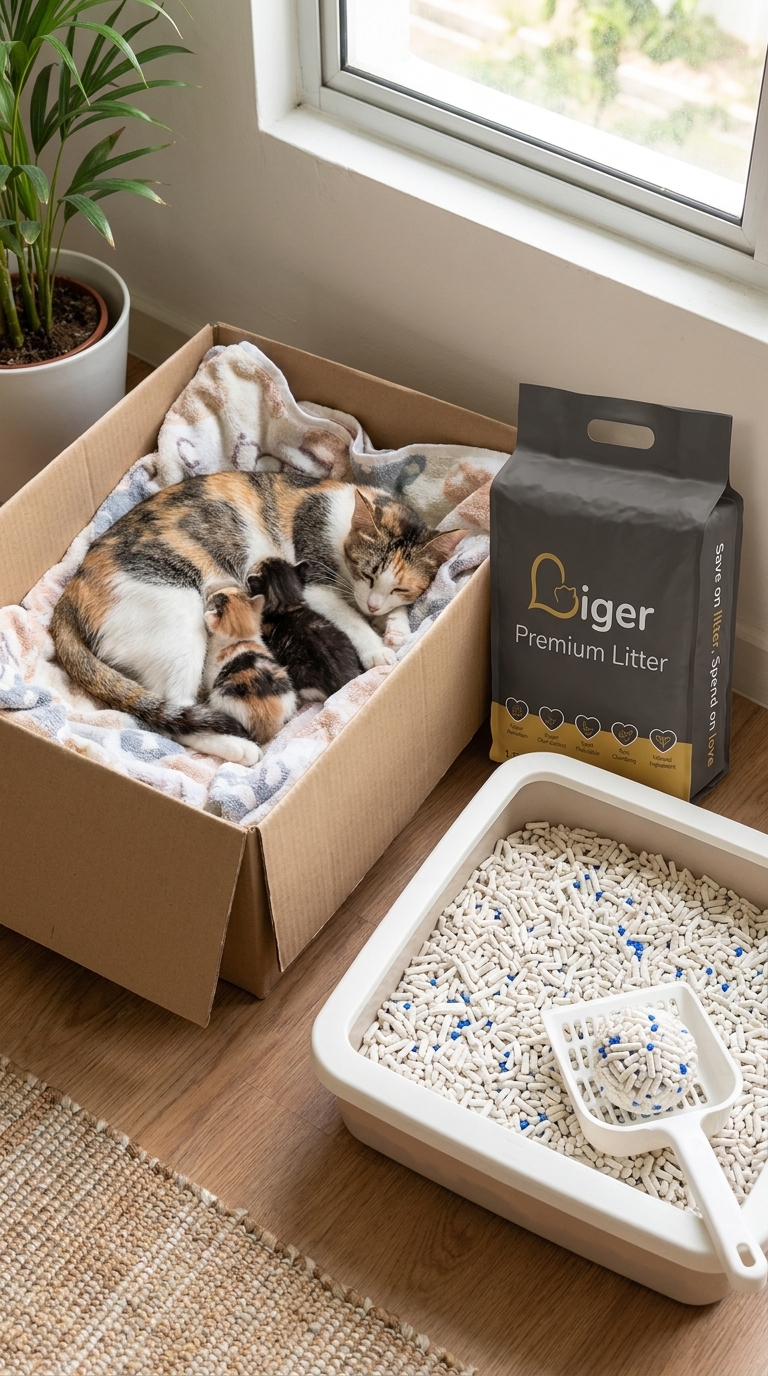
Most cats have four to six kittens, though first litters are often just one to three, and breed, age and health all shift the number (the all-time record is a staggering 19). The full breakdown is in how many kittens do cats have. Whatever the count, your litter usage climbs once the kittens start using the tray, and hygiene around a new mum and fragile newborns is non-negotiable — which is where a clean, low-dust litter earns its place. Liger Premium Tofu Cat Litter suits this stage: natural soy fibre, low-dust (gentler on developing kitten lungs), firm-clumping for an easy-to-keep tray, good odour control in our humid weather, flushable in small amounts, and Halal-certified. Current pricing is RM21.90 (1 pack, 2 kg), RM53.90 (3 packs), RM89 (5 packs) and RM169 (10 packs) — about RM8.45/kg on the 10-pack, roughly 23% cheaper per kilo than a single pack. Size it with the litter calculator. (Very young kittens should start on kitten-safe, non-clumping litter, switching to regular litter as they grow.)
When It's Not a Real Pregnancy
Sometimes the signs lie. A false pregnancy (pseudopregnancy) can make an unspayed cat nest, mother a toy and even produce milk — without any kittens. It's usually harmless and passes in a couple of weeks, but the same signs can occasionally mask pyometra, a life-threatening uterine infection, so a vet check matters; we cover both in false pregnancy in cats. And all of this starts with the heat cycle — the yowling, restless behaviour that drives an unspayed cat to seek a mate. If you're trying to make sense of that, read decoding cat heat. One more distinct topic: if a person in your home is pregnant, litter-box safety around toxoplasmosis is a separate concern with its own litter box safety guide for pregnant families.
The Responsible Picture: Spaying and Safety
Here's where every honest pregnancy guide has to end. Because cats breed so efficiently — three to four litters a year is biologically possible — an unspayed cat and a roaming tom are all it takes to add to Malaysia's already-overwhelmed stray population. Unless you're a registered, intentional breeder, the kindest, most responsible step after this litter is weaned is to spay. Beyond preventing unplanned litters, it removes the risk of uterine and ovarian cancers, slashes mammary-tumour risk, and prevents pyometra entirely. We deliberately don't cover the surgery's cost, timing and recovery here — that lives in our dedicated guide to spaying and neutering in Malaysia, with the wider pros and cons in to snip or not to snip. Talk to your vet about timing once mum has recovered.
The bottom line: plan for about nine weeks, feed her like she's growing kittens (she is), get a vet to confirm and count, prepare a calm nest, learn the labour red flags, weigh the newborns daily — and when it's all done, spay. Do those, and you'll have given a Malaysian cat family the healthiest possible start. Use the guides linked throughout for the detail on each stage, and keep your vet's number close.