Nobody wants to think about it, but the day your cat swallows something it shouldn't, gets into a fight, or suddenly can't breathe properly, you won't have time to start Googling. What you do in the first five minutes — before you reach the vet — can genuinely be the difference between a scare and a tragedy. This isn't about playing vet at home; it's about knowing how to stabilise your cat and get it to professional help safely. Every Malaysian cat parent should have this filed in their head before they ever need it. Here's the practical version, from one cat household (Tiger, Lion, Ping'An and Lucky keep us on our toes) to yours.
One rule above all others: first aid buys time, it does not replace the vet. Everything below is about keeping your cat alive and stable on the way to professional care — not about treating it yourself and hoping.
Build a Cat First-Aid Kit (Before You Need It)
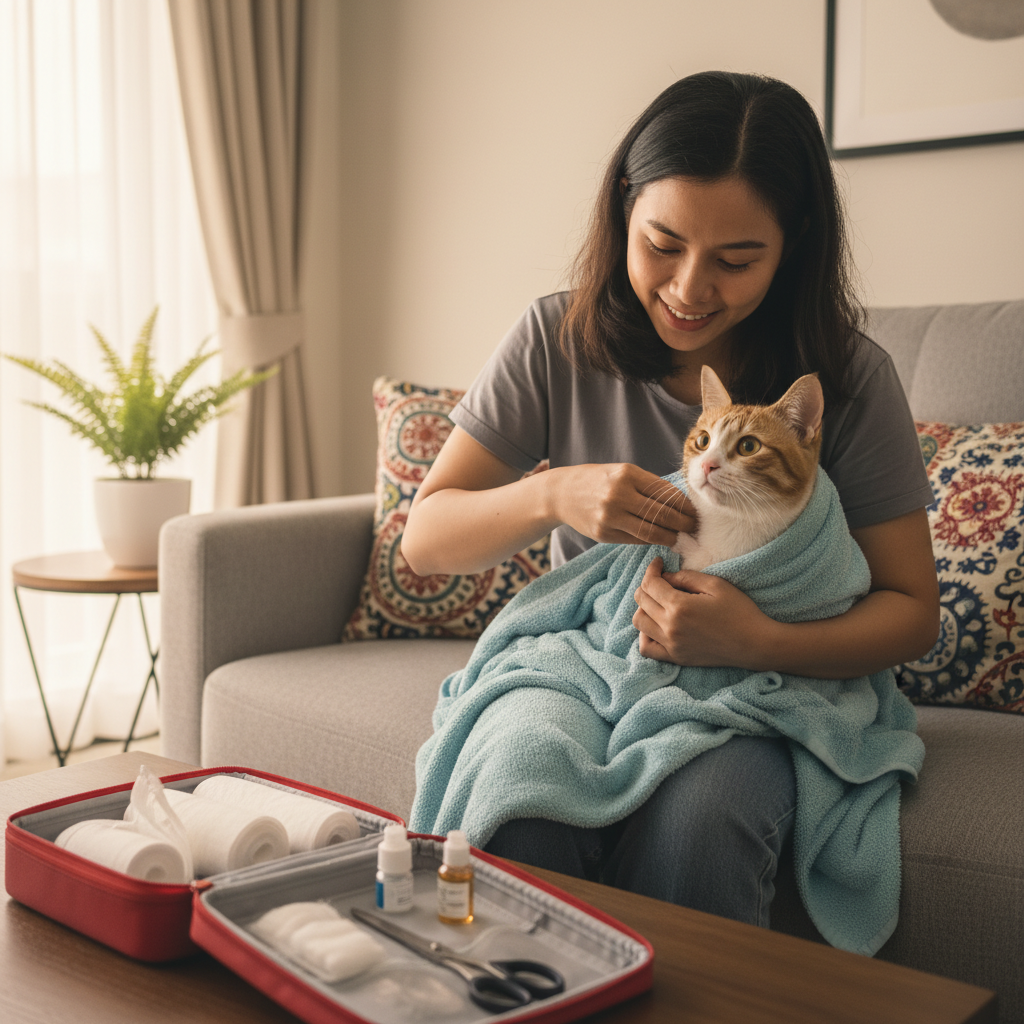
The worst time to realise you don't have gauze is mid-emergency. Put a small kit together this week and keep it where you'll find it in a panic. The essentials for a Malaysian home:
- Phone numbers, saved now: your regular vet, plus the nearest 24-hour emergency clinic. Clinics aren't all open after hours — know where your nearest night vet is before 2am.
- A thick towel or pillowcase — your single most useful tool, for safe restraint (more below).
- Sterile gauze, non-stick pads, and a roll of self-adhesive bandage (the cohesive vet-wrap type that sticks to itself, not fur).
- Sterile saline solution (the kind for contact lenses works) to flush wounds or eyes.
- Blunt-tipped scissors, tweezers, and a digital thermometer (a cat's normal temperature is about 38–39°C).
- A sturdy carrier, always accessible — not buried in the store room. In an emergency you need to move fast.
- A current photo of your cat's gums when healthy (pink) on your phone — handy for comparing colour in a crisis.
What to leave out: human medicines, hydrogen peroxide (don't induce vomiting unless a vet tells you to), and any cream or ointment not approved by a vet. More harm than good.
The Golden Rules: Stay Calm and Restrain Safely
An injured or frightened cat is not your cuddly companion — it's a scared animal with five sharp weapons and teeth, and it may lash out at the person trying to help. Getting bitten or scratched badly helps no one. So:
Stay calm. Cats read your energy. A slow, quiet voice and unhurried movements lower the temperature of the whole situation.
Restrain gently — never wrestle. The safest technique for handling a hurt cat is the towel wrap ("purrito"): drape a thick towel over the cat and gently bundle it so the body is supported and the claws are contained, leaving the injured part or the head accessible. Crucially, do not pin or bear-hug your cat. Research shows that full-body restraint actually raises a cat's fear and stress — it feels like being caught by a predator — which makes handling harder and can worsen breathing distress. Support, don't squeeze. If a cat is panicking and you can move the whole carrier or box instead of grabbing the cat, do that.
Call ahead. Phone the vet while you're on the way, not after you arrive. It lets them prep, and they can talk you through what to do in the car.
Poisoning: Your Home's Hidden Hazards
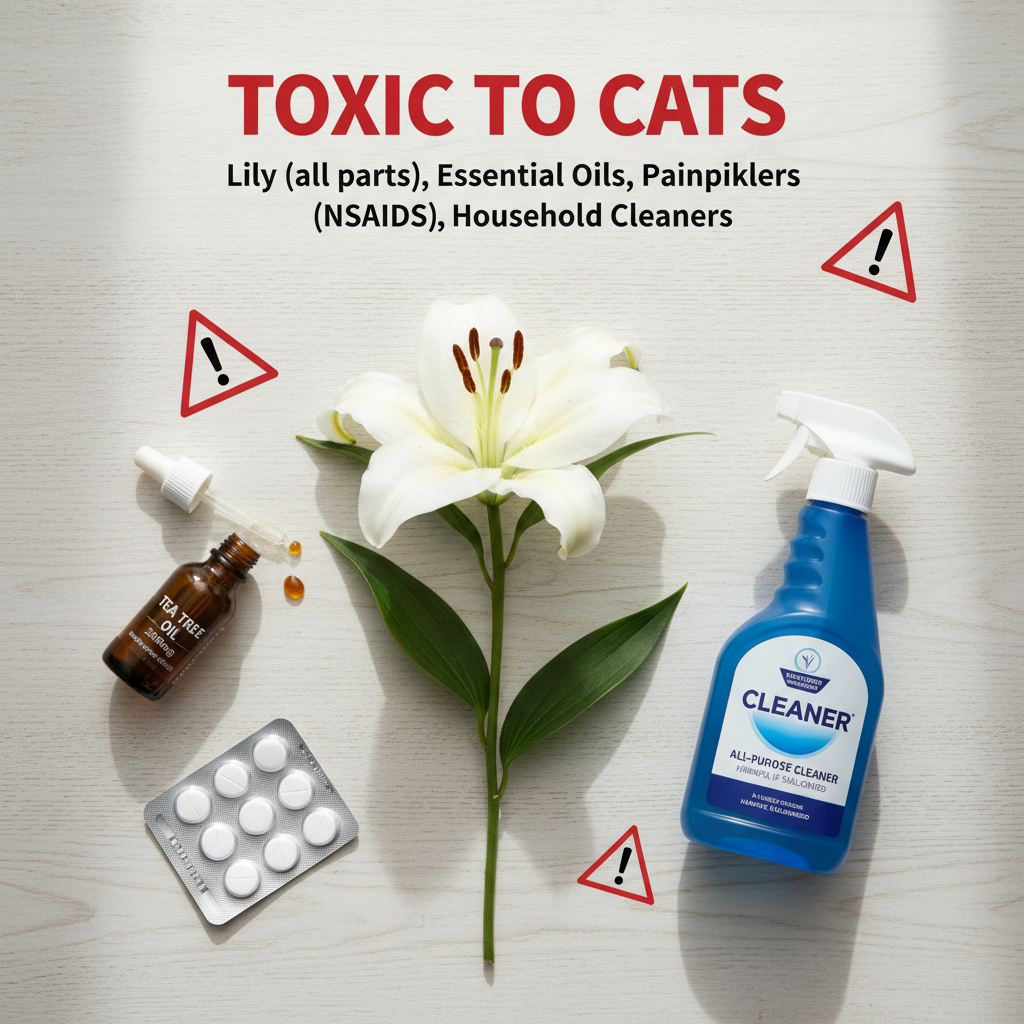
Poisoning is one of the most common feline emergencies, and the Malaysian home is quietly full of hazards. Cats are uniquely vulnerable because their livers lack certain enzymes to break down compounds other animals can handle. If you suspect poisoning, do not induce vomiting unless a vet instructs you to — with many substances it makes the damage worse. Call the vet immediately, and if you can, bring the packaging or a photo of what they got into.
The usual suspects in our homes:
- Dog flea and tick products (permethrin). This is a heartbreakingly common Malaysian mistake — using a dog's spot-on treatment on a cat. Permethrin is highly toxic to cats because they can't metabolise it; it causes tremors and seizures and can be fatal. Never use dog parasite products on a cat, and keep treated dogs separate until dry.
- Human painkillers. Paracetamol (Panadol) and ibuprofen are deadly to cats — a single tablet can kill. Never give human medicine of any kind.
- Lilies. Every part of a lily is severely toxic to cats; even pollen or vase water can cause fatal kidney failure. Keep them out of the house entirely.
- Essential oils. Popular in diffusers, but many — tea tree, eucalyptus, citrus and others — are toxic to cats, absorbed through skin or inhaled. Diffuse only with great caution, if at all.
- Household cleaners. Many common cleaners and disinfectants are hazardous; cats walk through residue and groom it off their paws. Floor cleaners with strong disinfectant are a classic culprit — rinse and dry floors before letting cats back.
- Insecticides. Ant and roach products, and garden chemicals, can cause severe poisoning (the 'SLUDGE' syndrome — drooling, tearing, urination, diarrhoea, vomiting).
For food-specific dangers — onions, garlic, chocolate, grapes and the rest — keep our guide to human foods toxic to cats handy, and check anything questionable with our can-my-cat-eat-this tool before you share.
Wounds, Bleeding and the Tropical Maggot Risk
Cuts, bites and scrapes are common, especially for cats that slip outdoors. For minor wounds:
- Control bleeding by pressing a clean gauze pad firmly over the wound for a few minutes. Most minor bleeding stops with steady pressure.
- Gently flush visible dirt from a minor wound with sterile saline. Don't use hydrogen peroxide or strong antiseptics on open wounds — they damage tissue.
- Don't bandage too tightly, and never leave a tight wrap on a limb — you can cut off circulation. A light cover to keep it clean en route to the vet is enough.
Two things specific to our climate. First, cat bites are deceptively serious: those small puncture wounds seal over and trap bacteria, and abscesses form within days. Any bite wound, however tiny, deserves a vet visit — don't wait for it to swell. Second, the tropical maggot risk: in Malaysia's heat, flies lay eggs in any open or dirty wound, and eggs can hatch into maggots (myiasis) within hours. A wound that looks minor today can be infested by tomorrow, so keep wounds clean and covered and get them seen quickly — this is not a "wait and watch" climate.
Choking, Breathing Trouble and the Blocked Cat
Breathing emergencies are the scariest and the most time-critical. Know these three:
Breathing trouble. A cat's normal resting breathing rate is about 15–30 breaths a minute. A sustained rate above 40, or open-mouth breathing, is an emergency. Cats are obligate nose-breathers; panting or gasping with the mouth open means get to a vet now. Keep the cat calm and cool on the way — stress worsens it.
Choking. If a cat is pawing at its mouth, gagging, or in genuine distress, look in the mouth only if it's safe and remove a visible object with tweezers — but never blindly poke down the throat, as you can push it deeper. If you can't easily remove it and the cat is struggling to breathe, rush to the vet; don't waste minutes.
The blocked cat — the one every owner must know. A male cat straining in the litter box, crying, going in and out, producing little or no urine, is a urethral obstruction — a true emergency that can be fatal within a day or two. It's often mistaken for constipation. If your male cat is straining and not producing urine, this is a drop-everything, go-to-the-vet-tonight situation. (Our guide on a cat that suddenly stops using the litter box covers how to tell the difference.)
Know Your Limits: When to Stop and Rush to the Vet
The hardest part of first aid is knowing when to stop helping at home and start driving. These signs mean the home phase is over — go now:
- Open-mouth breathing, gasping, or a breathing rate over 40 at rest.
- A male cat straining without producing urine.
- Collapse, seizures, tremors, or unresponsiveness.
- Head pressing — a cat pressing its head against a wall or floor for no reason is a neurological emergency.
- Known or suspected poisoning of any kind.
- Heavy bleeding that won't stop with pressure, or any major trauma like a fall or road accident — internal injuries aren't always visible.
- Gums that are pale, white, blue, or brick-red.
And one Malaysia-specific reminder: extreme heat is its own emergency. If your cat is panting and overheating, our guide to heatstroke in cats walks through the cooling steps in detail. For a broader sense of what "something's wrong" looks like day to day, our list of warning signs your cat is sick is worth a read while things are calm.
You'll hopefully never need most of this. But cats are accident-prone, curious, and brilliant at hiding pain until it's serious — so the parent who's thought it through ahead of time is the one who stays calm and acts fast when seconds count. Build the kit, save the numbers, learn the red flags, and keep the vet on speed dial. Your future self, on some panicked evening, will be grateful you did.