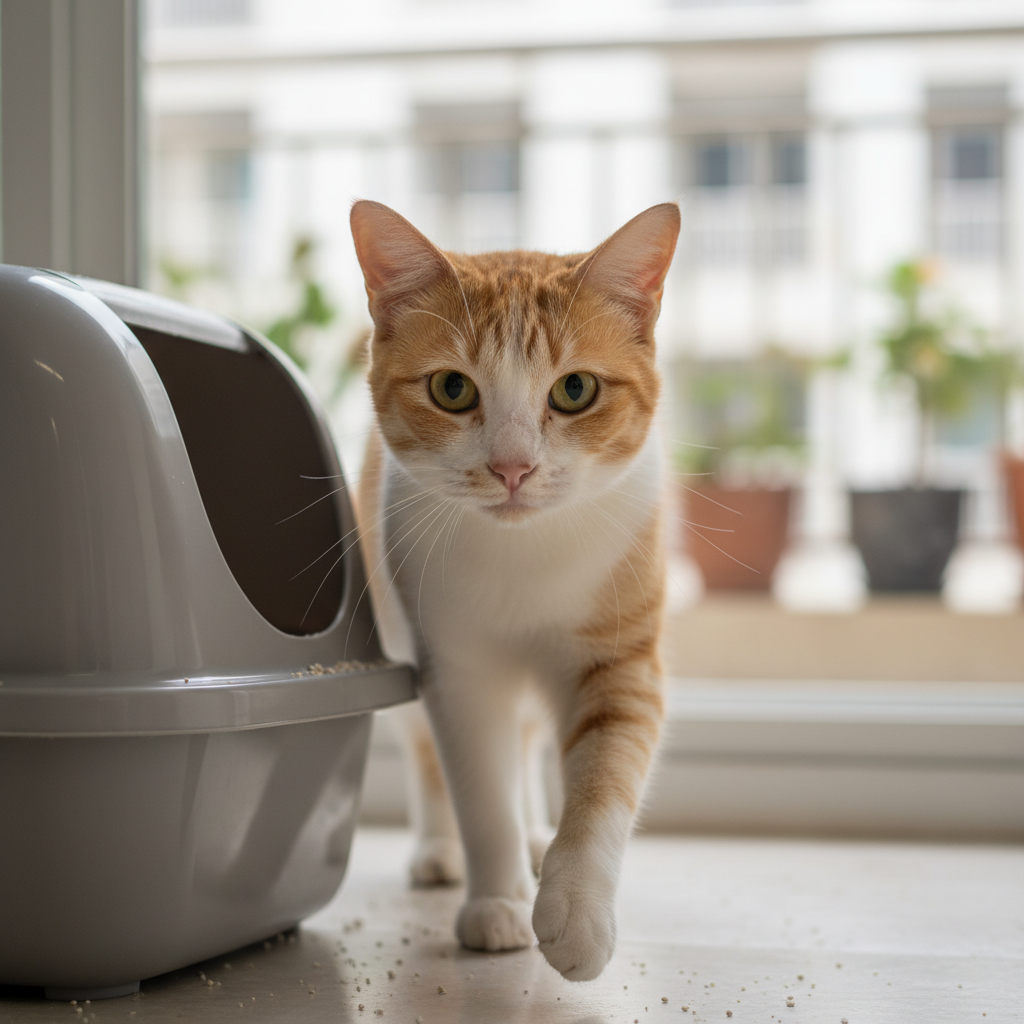
It is 3 AM. You roll over and your hand lands in something warm and wet. The mattress. Again. Your cat is sitting on the windowsill in Bangsar or Mont Kiara like nothing happened, and you are suddenly googling "kenapa kucing kencing merata-rata" through tired eyes.
Take a breath. You are not a bad cat parent, and your cat is not being spiteful. Cats do not pee outside the box to punish you — their brain literally does not work that way. What is happening is a signal. Something in their body or environment has changed, and the litter box has become the wrong answer.
This guide walks you through the same five-layer framework veterinary behaviourists use, adapted for Malaysian condo and landed-home living. It is also separate from a related problem we cover elsewhere — cats that still use the box but stop burying their poop. Covering and using are different behaviours. Mix them up and you will fix the wrong thing.
First: Rule Out the Medical Stuff (This Is Not Optional)
Here is the single most important number in this entire article: studies show that over 60% of cases that look behavioural actually have an underlying medical cause — usually Feline Idiopathic Cystitis (FIC) or a urinary tract infection. This is why every responsible vet in PJ, KL, or Penang will tell you: vet visit first, behaviour analysis second.
The Big Five Medical Causes
- FLUTD (Feline Lower Urinary Tract Disease) — the umbrella term for any urinary inflammation, crystals, or blockage. Malaysia's tropical climate makes this worse: dry-food-only diets and chronic mild dehydration are major risk factors, and both are very common here.
- Feline Idiopathic Cystitis (FIC) — painful bladder inflammation triggered by stress, not bacteria. FIC is a neurogenic inflammation, meaning the cat associates the box with pain and avoids it.
- UTI (less common in cats than dogs, but real) — bacterial infection causing burning, urgency, and small frequent urinations.
- Kidney disease or diabetes — both cause the cat to drink and urinate dramatically more. The current box can no longer keep up, so they overflow elsewhere.
- Arthritis (the silent one) — 90% of cats over 12 and 61% of cats over 6 have radiographic osteoarthritis, but only 13% get diagnosed. If the box has high sides or your cat has to climb stairs to reach it, pain becomes avoidance.
Red Flags — Go to the Vet TODAY
Some symptoms are not "wait and see." If you spot any of these, especially in a male cat, treat it as an emergency:
- Straining in the box but producing only drops, or nothing at all
- Crying, howling, or vocalising while trying to urinate
- Blood in the urine (pinkish stains on bedding)
- Repeatedly licking the genital area
- Hiding, refusing food, vomiting alongside the box issue
- Hard, distended abdomen
A blocked male cat can die within 48 hours. This is not dramatic — it is just the anatomy. Use our Urinary Health Checker if you are unsure, but if symptoms are severe, skip the tool and go straight to a 24-hour clinic.
Then: The Litter Box Audit (Most People Get This Wrong)
Once the vet has cleared medical issues — or while you are waiting for the appointment — run a five-point box audit. This is where the majority of "mystery" cases are actually solved.
1. Size — Is the Box Actually Big Enough?
The golden rule, repeated by every behaviourist worth their salt: the box should be at least 1.5 times your cat's body length, measured from nose to base of tail. For most adult Malaysian house cats — including the chunky orange boys who rule every kedai runcit — that is 60cm or longer. Most boxes sold at pet stores in Mid Valley or IOI City Mall are 40-50cm. They are too small. Cats turn around, hit the wall, and decide the bathroom mat is more comfortable. Run the numbers with our Litter Box Size Calculator — you will likely be surprised.
2. Count — Are There Enough Boxes?
The N+1 rule: number of cats plus one box, placed in separate rooms. Two cats? Three boxes. Not three boxes in a row — three boxes in three locations. In a Malaysian condo this feels impossible, but you can stretch the rule with creative placement. See our deep dive on how many litter boxes you actually need in a condo.
3. Location — Is It a Place Your Cat Wants to Go?
Cats are vulnerable while eliminating. They will not use a box that is next to a noisy washing machine, the rumbling fridge, the front door where the food delivery rider knocks, or right beside their food bowl. The location guide for Malaysian apartments is here: where to put a litter box in a condo.
4. Cleanliness — When Did You Last Fully Empty It?
Cats have between 45 and 80 million olfactory receptors. Yours has roughly six. What smells "fine" to you smells like a wet toilet at KLIA at 6 PM to your cat. Scoop twice a day. Fully wash and replace the litter once a week (clay/silica) or top up daily and full-change every 2 weeks (tofu). If the box smells, the cat votes with their bladder.
5. Covered or Open?
Hooded boxes trap odour inside for the cat while making it smell better for you. In humid Malaysian weather this is even worse — the hood acts like a sauna of ammonia. Many cats refuse hooded boxes outright. We compared options in our covered vs open litter box guide.
The Litter Itself: When Your Cat Is Telling You Something
If the box is right and the vet says your cat is healthy, the next suspect is what you put inside. A 2017 ethogram by McGowan et al. documented up to 39 discrete behaviours in feline elimination — meaning your cat is paying attention to every detail. There are three things they object to most:
Texture aversion
Cats develop a preference for a specific feel under their paws in the first few months of life. If you switch suddenly from a soft texture to a hard pellet (or vice versa), some cats simply refuse. This is also common after declaw surgery (illegal in many countries but worth knowing), arthritis, or paw injuries — hard, sharp litter hurts. Soft textures like tofu cat litter and fine clay tend to be the most universally accepted.
Scent sensitivity
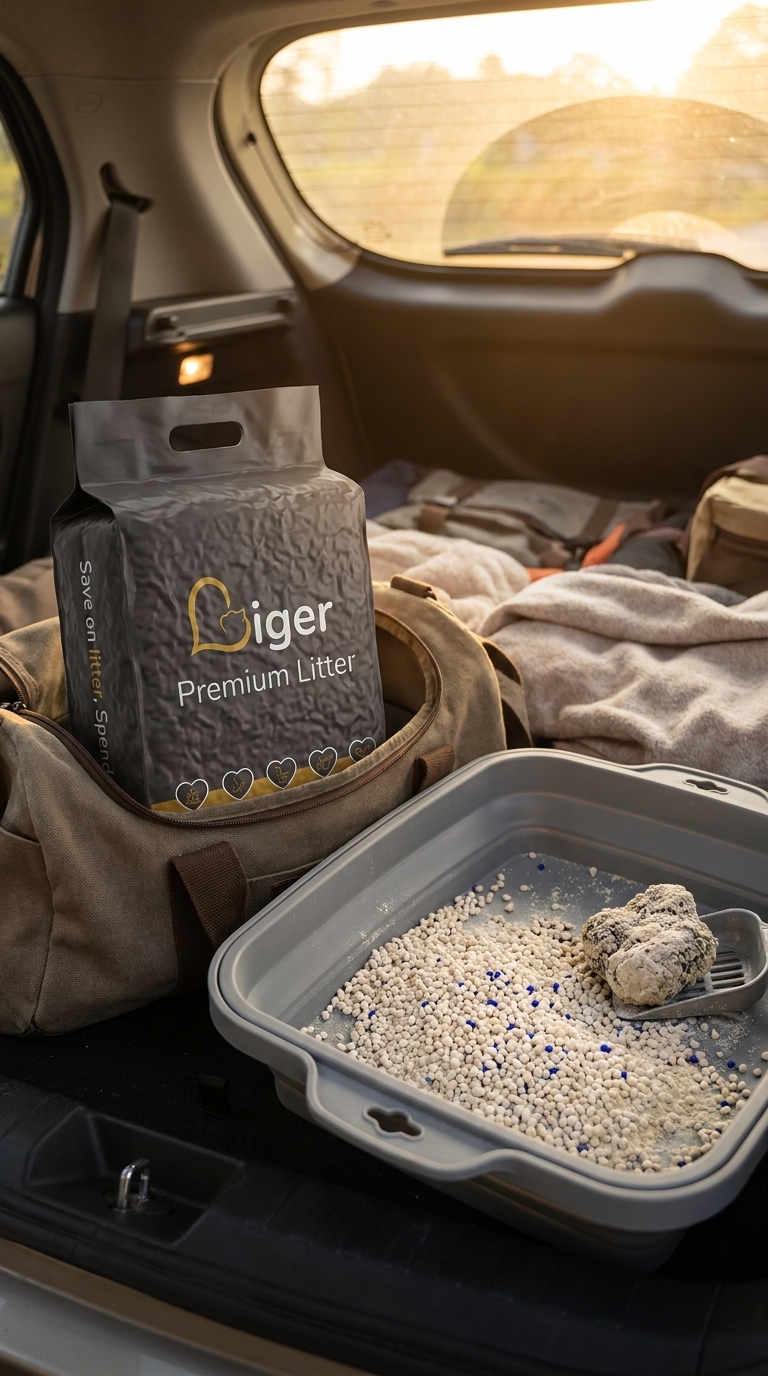
Heavily perfumed litters (lavender, baby powder, "floral fresh") are designed for human noses. To a cat, that perfume is the smell of the box, and it is overwhelming. Many cats will simply walk away. Unscented or naturally low-odour options work better. Liger Tofu Cat Litter, for example, has no added perfume — it relies on the natural absorbency of tofu to lock odour inside the clump.
Dust
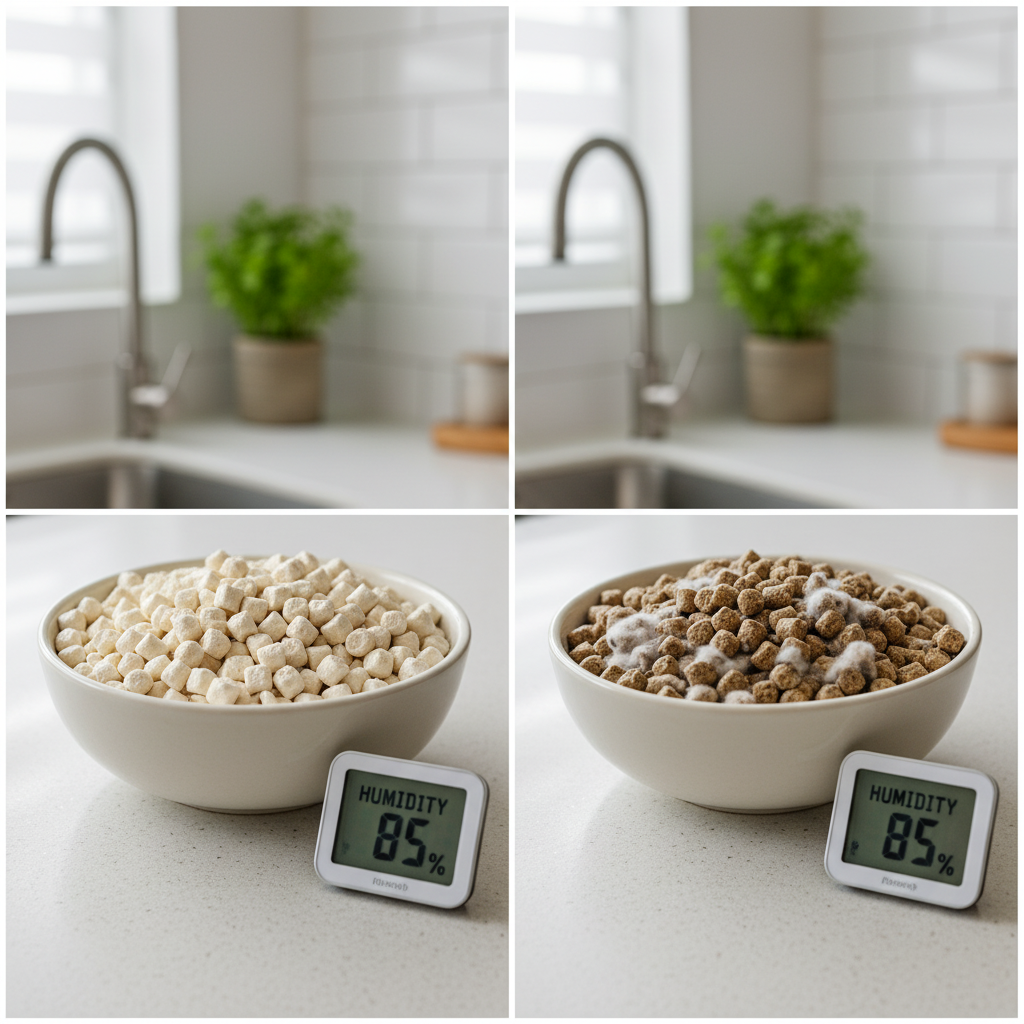
Dusty bentonite clay in a small Malaysian bathroom traps a fine layer of clay particles on your cat's paws and respiratory tract. Cats with even mild asthma — which is more common here than people realise — start associating the box with coughing fits. They then avoid the box. Low-dust options matter more in tropical, often-closed-window apartments than in airy houses.
If You Just Switched Brands…
Switch back. Then transition slowly over 7-10 days: 75% old + 25% new, then 50/50, then 25/75, then full new. Cats are not being difficult; their brain just registers "different = unsafe."
Stress and Environment: The Invisible Triggers
If the vet is clear and the box is perfect, look at what changed in the last 2-4 weeks. Cats have excellent memories for stress events, even if the trigger seems trivial to you.
- New pet, new baby, new partner — even a friendly addition shifts the territorial map.
- Renovation, new furniture, rearranged living room — common in Malaysian households around Raya, CNY, or Deepavali cleaning.
- You moved house — especially landed to condo or vice versa.
- A neighbour got a cat — your cat sees or smells them through the corridor or balcony and stress-spikes.
- Monsoon thunderstorms — the November-February storms in Peninsular Malaysia genuinely scare some cats away from a box near a window.
- You changed your work schedule — WFH-to-office transitions in 2024-2025 destabilised a lot of indoor cats.
Stress-driven elimination outside the box often shows up as urinating on the owner's belongings — bed, sofa, laundry basket — because your scent feels safe and the cat is trying to self-soothe by mixing scents. It is not revenge. It is a small mammal hugging your smell with their bladder.
The Condo Stress Multiplier
Lack of environmental enrichment is positively correlated with FLUTD. Indoor-only condo cats with no vertical space, no window views, and no interactive play sessions are stress-marinating 24/7. A bored, under-exercised cat is a future FIC patient. Add a tall scratcher, a window perch, and 10 minutes of wand-toy play twice a day — boring advice, but it is the highest-ROI fix in this entire article.
The Recovery Protocol: Getting Them Back on Track
Once you have identified the likely cause and treated the medical side, here is the re-training playbook our team uses with the four Liger cats (Tiger, Lion, Ping'An, and Lucky — Ping'An had a brief FIC episode after we adopted Lucky):
- Confine and reset. Move your cat into one quiet room with food, water, a brand-new box (clean, large, uncovered, low-sided), and zero competition. 3-7 days. This rebuilds the box association.
- Clean the accident spots properly. Use an enzymatic cleaner — not bleach, not Dettol. Bleach contains ammonia-adjacent compounds that smell to a cat like "another cat already peed here" and reinforces the behaviour. If you cannot find enzymatic cleaner, a 50/50 white vinegar and water solution followed by a hydrogen peroxide rinse is a reasonable substitute.
- Block re-offending zones temporarily. Cover with aluminium foil, plastic sheet, or upturned plastic mats. Most cats hate the texture.
- Reward calmly. Every time your cat uses the box correctly, drop one treat near (not in) the box. Do not stare or hover. Cats hate an audience.
- Re-introduce the rest of the house gradually. One room at a time, watching for accidents.
For more targeted help, our Cat Pee Solver walks you through a guided diagnosis based on your specific situation.
Other Box Problems That Look Similar But Aren't
Litter box behaviour is a whole world. Before you assume your cat is "not using" the box, double-check it is not one of these closely-related issues:
- Cat uses the box but stops covering poop — different signal, often dominance or texture-related.
- Cat kicks litter all over the floor — usually a depth or box-size issue.
- The box might just be too small — the most common silent cause.
- Preventing recurring UTIs in Malaysian cats — the long-term play if FLUTD or FIC is the diagnosis.
When to See the Vet (Malaysian Clinic Context)
Booking a Malaysian vet for litter box issues is straightforward, but here is what to expect so you can be efficient:
- Bring a urine sample if you can. A clean, dry container with a fresh sample (less than 4 hours old) saves you a second visit. Many KL and Selangor clinics accept this.
- Ask for a urinalysis + dipstick. Usually RM 60-120. This catches crystals, blood, pH issues, and infection.
- Ultrasound or X-ray may be added (RM 100-250) if a blockage is suspected.
- Behavioural-only referral — most Malaysian vets handle this in-clinic. Specialist behaviourists are rare but a few practices in PJ and Penang now offer it.
Do not wait the full weekend if your male cat is straining. 24-hour clinics exist in PJ (Damansara), Subang, and Penang Island — Google one near you and save the number now, before you need it.
FAQs
My cat only pees on the bed, never elsewhere. Why?
The bed concentrates your scent more than anywhere else in the house. A stressed cat self-soothes by mixing their scent with yours. It is almost always either medical (FIC) or stress, not the box itself. Vet visit first, then audit recent changes in the household.
Is it possible my cat is just "too old" to use the box?
Not on its own. But arthritis pain and cognitive decline (feline dementia) can make a previously fine box feel impossible. Lower the box sides, place a ramp, add an extra box on each floor. Senior cats have specific litter box needs that often go ignored.
Should I scold my cat when I catch them peeing outside the box?
No — and this is non-negotiable. Punishment increases anxiety, which increases FIC risk, which causes more accidents. Cats also do not connect the punishment with the act unless caught within 2-3 seconds. Just clean it up calmly and start the audit.
Will switching to tofu litter fix this?
It might help if texture, dust, or perfume was the trigger — tofu is soft, low-dust, and unscented. But it will not fix a medical issue or a box that is too small. Treat the litter as one of five levers, not the answer.
How long until things go back to normal?
If medical issues are treated and the audit is done, most cats return to consistent box use within 2-4 weeks. FIC cases can take longer (4-8 weeks) because the underlying stress needs to settle. Do not give up at week one.
Bottom Line
Your cat suddenly avoiding the litter box is a signal, not a personality flaw. Run the five-layer check in order: medical → box → litter → stress → re-training. Skip the first step and you will spend months treating a symptom while the real cause keeps hurting your cat. The good news: once you find the right layer, most cats recover fully. Tiger, Lion, Ping'An, and Lucky all went through a phase of one kind or another, and they are all happily covering up in the boxes now (well, three of them are — Lion is a special case, which is why we wrote the covering poop guide).