It's one of the most baffling things a cat can do. Your cat marches into the litter box, pees perfectly, buries it like a responsible adult — and then, an hour later, deposits a neat little poop right beside the box, or three steps away on the cool bathroom tile. Pee: flawless. Poop: rebellion. If you're a Malaysian cat parent scrubbing the floor and wondering what you did to deserve this, take heart: this oddly specific pattern is a recognised problem with recognised causes, and it's usually fixable once you know what your cat is actually trying to tell you.
We've run four cats through one KL condo — Tiger, Lion, Ping'An and Lucky — and we've met this exact problem. Here's how to read it and fix it.
The Telling Clue: Why 'Poops Out, Pees In' Is Its Own Problem
When a cat abandons the litter box entirely — pee and poop both going rogue — vets usually look hard at a medical emergency or a deep aversion. But when a cat still pees in the box and only poops outside, that split is itself the biggest clue. It tells you the box is acceptable enough for one job but not the other.
Why would pooping fail the test when peeing passes? A few reasons stack up:
- Poop is bigger and demands more space. A cat needs to turn, position, and sometimes take a few steps mid-squat. A box that's just big enough to pee in can feel too cramped to comfortably poop in.
- Poop is smellier and lingers. Cats are fastidious. A box that smells of old waste may still get a quick pee, but a cat won't want to stand in it long enough to poop.
- Pooping takes longer, so vulnerability matters more. A cat mid-poop is exposed for several seconds. If the box location feels unsafe, the cat will pee-and-go but find somewhere it feels safer to poop.
So the pattern isn't random naughtiness. It's your cat saying the box is borderline — fine for a quick wee, not good enough for the longer, more vulnerable job. That reframing is the whole key to fixing it.
Rule Out Medical First: Constipation, Pain & the Vet Visit
Before you change a single thing about the box, rule out the body. This is the step everyone wants to skip and shouldn't. A cat that finds pooping painful learns to associate the litter box with that pain — and starts going elsewhere to escape the bad memory. The litter box becomes the scene of the crime, not the cause.
The usual medical suspect here is constipation. A constipated cat strains, hurts, and links the discomfort to the box. In our hot climate, dehydration is a constant low-grade contributor to hard stool. Constipation deserves real attention — left unmanaged it can progress, and vets manage it with diet, hydration, and fibre such as psyllium husk added to meals. Pain anywhere else — arthritis in an older cat, for instance — can also make climbing into a high-sided box hurt enough that the cat gives up on it for the harder task.
This isn't a fringe concern. Veterinary data shows that over 60% of cases that look 'behavioural' actually have an underlying medical cause. So a vet visit isn't being over-cautious — it's the statistically smart first move. Ask the vet to check for constipation, digestive issues, and any source of pain. If the stool itself looks off — too hard, too soft, or unusual in colour — bring a photo or a sample. Once the body is cleared, then you fix the environment. While you're observing, our guide to cat elimination problems can help you log the pattern before the appointment.
The Box Itself: Too Small, Too Dirty, Too Covered
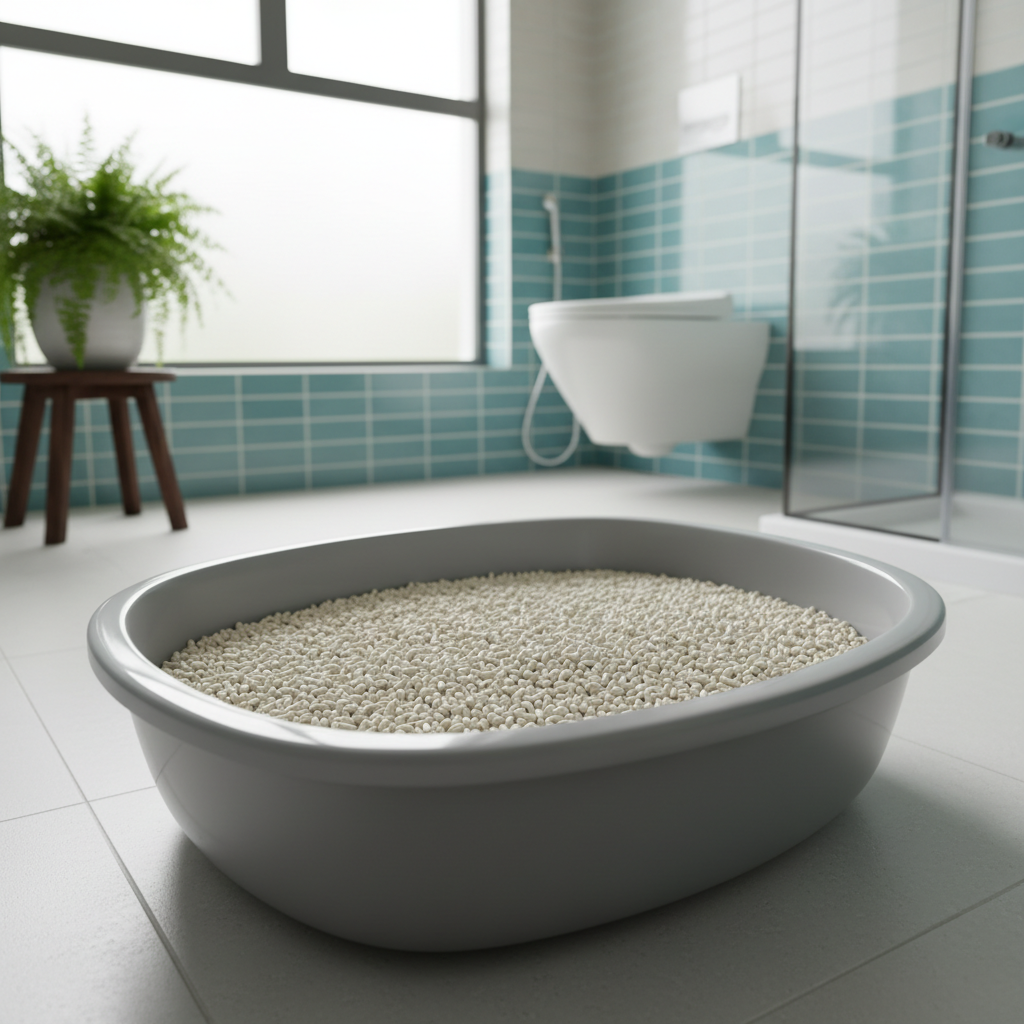
Cleared by the vet? Now we audit the box, because for the poops-out-pees-in cat, the box is usually the villain. Three things matter most:
Size. This is the big one for pooping specifically. The vet-recommended minimum is a box at least 1.5 times the length of your cat, nose to base of tail. Most boxes sold in Malaysian pet shops are smaller than a fully grown cat needs. A cat can pee in a snug box but won't have room to position for a poop — so it steps out. If you're not sure your box passes, our litter box size calculator sizes it to your cat. Pro tip Malaysians love: a large, cheap storage tub does the job better than most 'official' litter boxes.
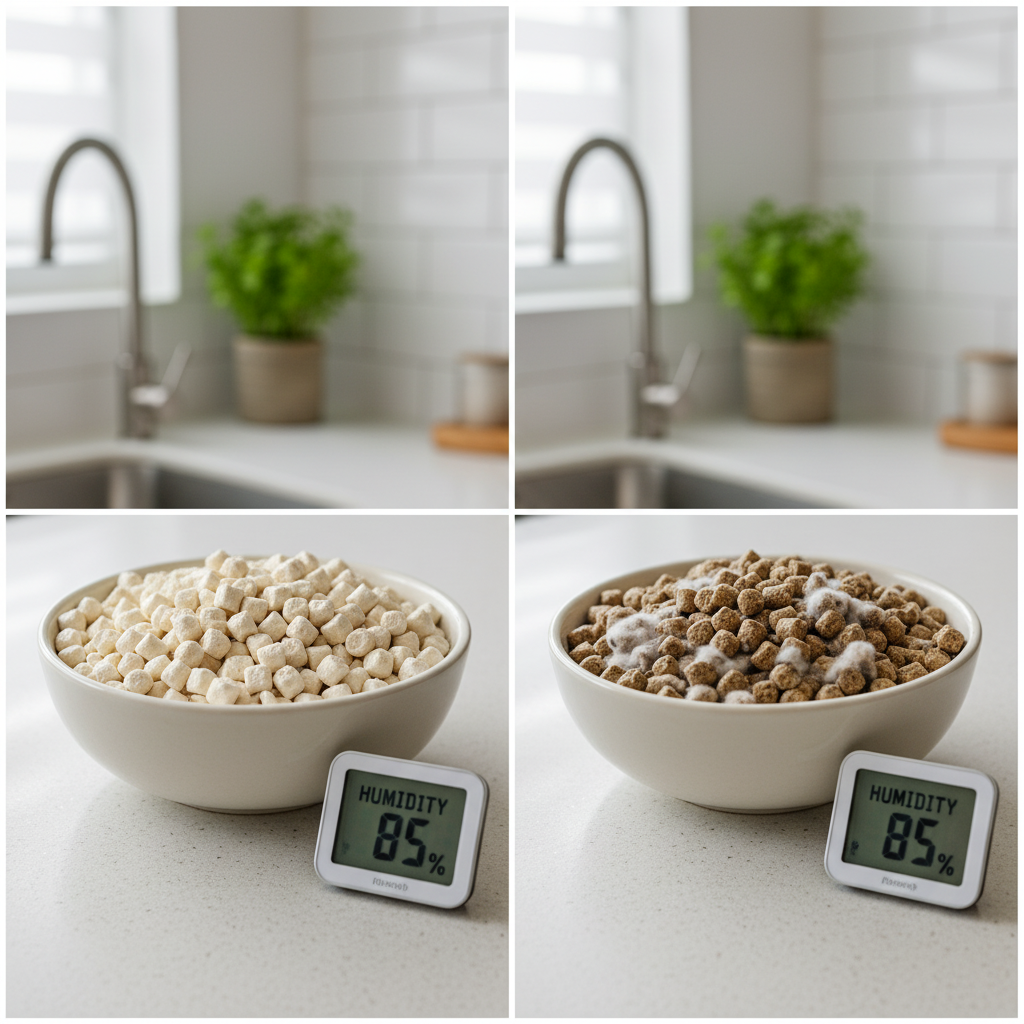
Cleanliness. Cats won't poop in a soiled box even if they'll still pee in it. In our heat and humidity, a box goes stale fast — and a neglected box doesn't just smell, it can grow maggots within 12–24 hours if waste sits in tropical temperatures. Scoop at least twice a day, and do a full litter change on schedule. Cleanliness is the single fastest fix for this exact complaint.
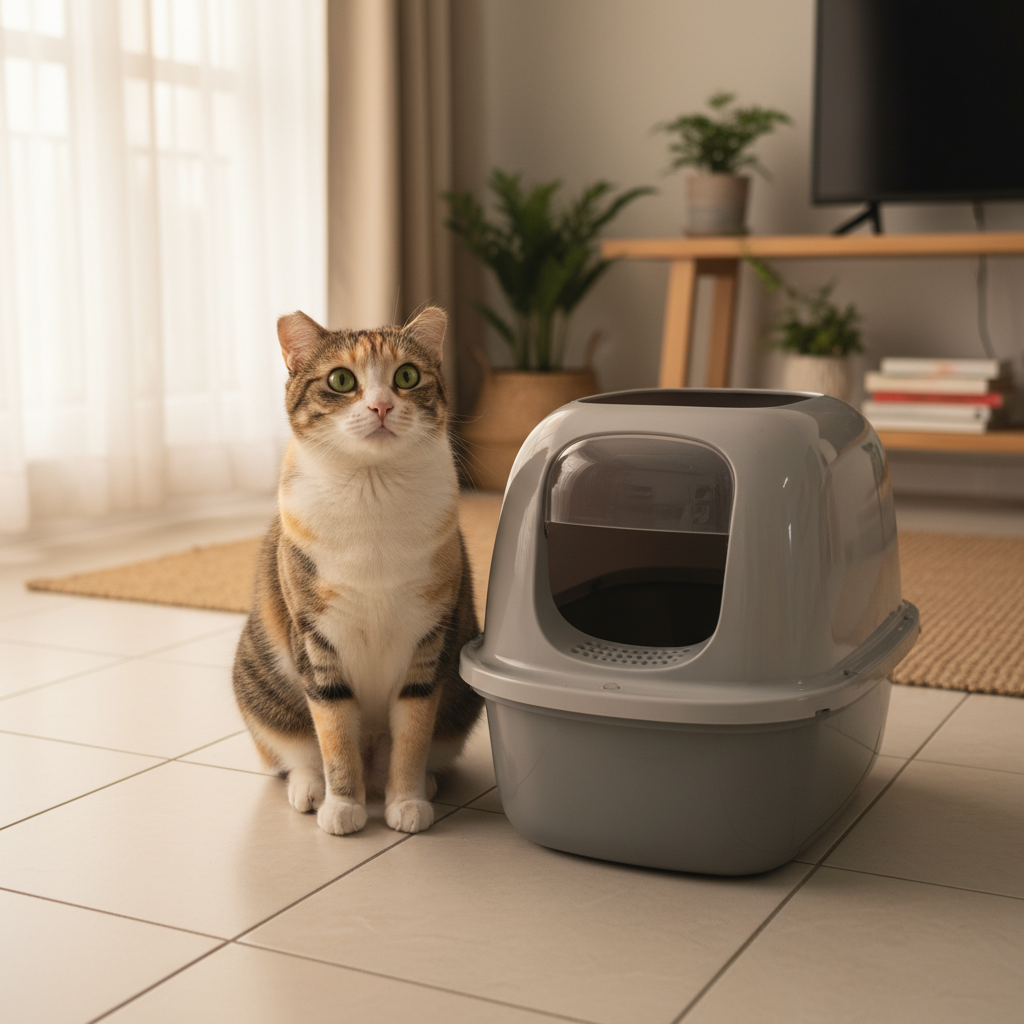
The lid. Covered boxes trap odour inside, concentrating the smell right where your cat has to put its face — and they make a cat feel boxed in, which matters more for the longer, more vulnerable poop. Many cats happily pee in a hooded box but refuse to poop in the funk. Try removing the lid. Our breakdown of covered vs open boxes covers the trade-offs for condo living.
Litter Aversion: The Texture & Smell Your Cat Is Voting Against
If the box is big, clean, and open and your cat still poops beside it, the litter itself is on trial. Cats have strong preferences about what they're willing to stand and dig in, and pooping — being the longer job — is where a borderline litter gets vetoed.
Common litter deal-breakers:
- Too dusty or too sharp. Coarse or heavily dusty litters can feel unpleasant under sensitive paws. A cat may tolerate it for a quick pee but won't linger to poop.
- Too heavily perfumed. Strongly scented litters are made to please human noses, not feline ones. To a cat, an artificial floral cloud can be off-putting enough to send it elsewhere. A lightly, naturally scented litter is far easier on a fussy cat.
- Wrong texture. Most cats instinctively prefer a soft, sand-like or fine substrate they can dig into and cover. Hard, chunky pellets that don't move under the paw can feel wrong.
This is where switching to a soft, low-dust, lightly scented natural litter often solves the problem outright. A good tofu cat litter ticks the boxes a fussy pooper cares about: a soft soy-fibre pellet that's gentle on paws, very low dust, and a mild milky scent rather than a synthetic perfume. Liger Premium Tofu Cat Litter was built around exactly these preferences, with a fine 2.0mm strip pellet designed to be easy to dig and bury. If you want to compare textures and dust levels across litter types before switching, our litter comparison tool lays them out side by side. When you do switch, do it gradually — mix old and new over a week so a cat that's already fussy about pooping doesn't get a second reason to boycott.
On the practical side, Liger comes in 2kg packs, and the pricing as of May 2026 is: RM21.90 for 1 pack, RM53.90 for 3, RM89 for 5 (RM8.90/kg), and RM169 for 10 packs — which works out to RM8.45/kg, with free shipping across West Malaysia. For a multi-cat home that needs an extra box (more on that next), the 5- or 10-pack keeps the cost-per-box sensible.
Stress & Territory: The Multi-Cat Condo Angle
Sometimes the box is perfect and the litter is lovely and the cat still poops outside — and the answer is stress. Inappropriate elimination is one of the most common ways a cat signals that something in its world feels off. The trigger condition behind much of it is feline idiopathic cystitis and stress-driven inflammation, where environmental tension shows up as litter box trouble.
In a Malaysian condo, the usual stressors are:
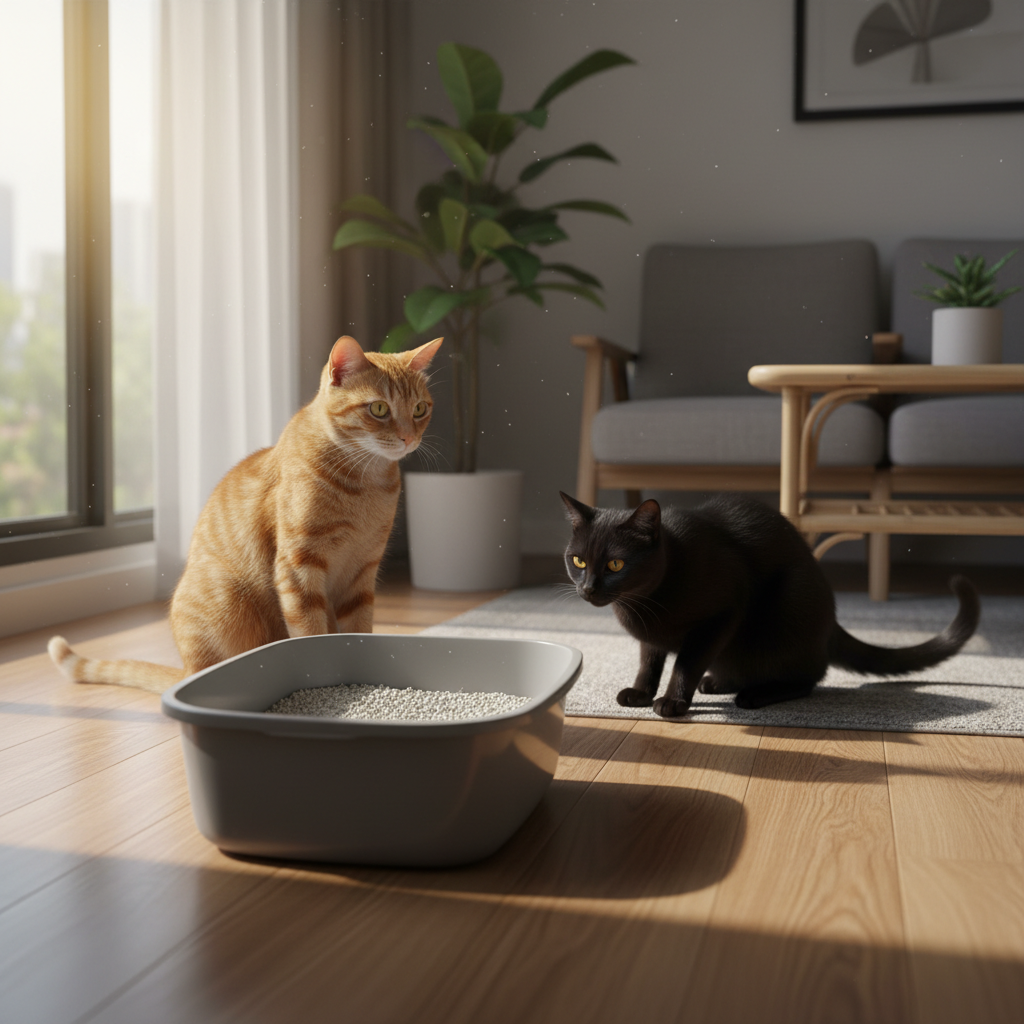
- Too few boxes in a multi-cat home. The vet rule is one box per cat, plus one spare, in different spots — the N+1 rule. With too few boxes, a more timid cat may avoid the 'guarded' shared box and poop somewhere it feels it owns. Our guide to how many litter boxes you actually need runs the math for condo space.
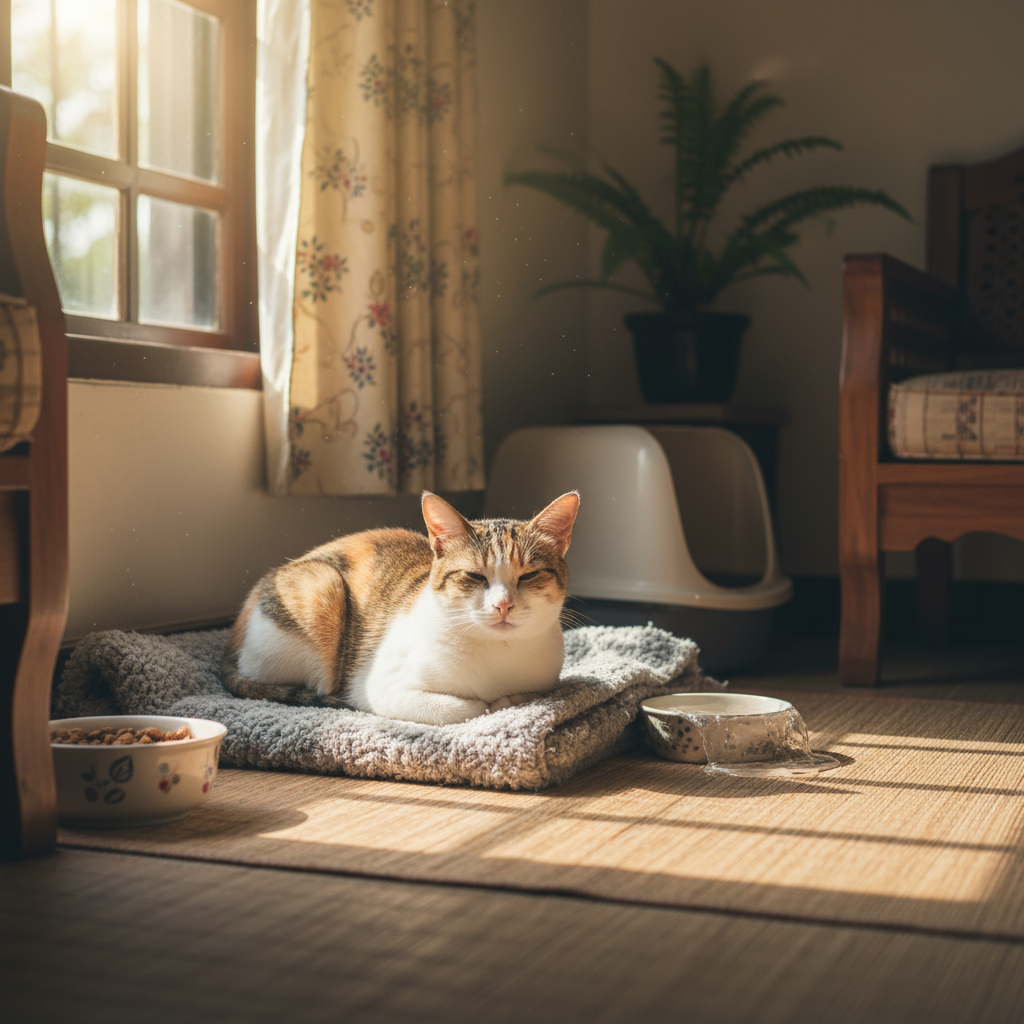
- A box in a high-traffic or noisy spot. Next to the washing machine, a busy doorway, or the dog's path. Cats want to poop somewhere quiet and safe. Even providing a calm, semi-hidden spot helps — research on shelter cats found that simply giving them a hiding box lowered stress significantly.
- Change and tension. A new pet, a move, renovations, festive-season chaos, or friction between resident cats can all show up as a cat pooping where it feels most secure rather than in the contested box.
If your gut says stress, look at the whole social map of your home, not just the box. Sometimes the fix is a second box in a quieter room, not a new litter at all.
The Fix-It Playbook: Step by Step
Put it all together into an order of operations. Work down the list — most cats are solved within the first three steps:
- 1. Vet first. Rule out constipation, pain, and digestive issues before anything else. This is non-negotiable, and statistically your most likely answer.
- 2. Clean it like you mean it. Scoop twice daily, full change on schedule, and properly clean any soiled floor spots with an enzyme cleaner so the lingering scent doesn't invite repeat offences. (Skip ammonia-based cleaners — they smell like urine to a cat.)
- 3. Go bigger and open. Upgrade to a box at least 1.5× your cat's length, and pull the lid off. A roomy storage tub is a cheap, effective upgrade.
- 4. Add a box. Especially in a multi-cat home — N+1, in separate, quiet locations. Often this alone ends it.
- 5. Fix the litter. Switch to a soft, low-dust, lightly scented natural litter your cat actually wants to dig in, and transition gradually over a week.
- 6. Lower the stress. Quiet location, a sense of safety, and resolve any simmering cat-vs-cat tension at home.
The poops-out-pees-in cat isn't being spiteful — cats don't do spite. It's giving you a precise, readable signal that the box clears the low bar for peeing but fails the higher bar for pooping. Clear the medical causes, then make the box bigger, cleaner, calmer, and lined with a litter your cat genuinely likes, and that neat little protest on the bathroom tile almost always disappears. If your cat has stopped using the box for everything, that's a different and more urgent pattern — our guide on a cat that suddenly stops using the litter box covers that case.