Lucky kicked tofu pellets across my kitchen tile again last night. The four-month-old chaos goblin has zero respect for the litter box boundary, and at 3 AM I stepped on a stray pellet barefoot — that satisfying crunch of dignity dying. So we did what every Malaysian condo cat parent eventually does: panic-shopped six different litter mats from Shopee and tested them across our four-cat household (Tiger, Lion, Ping'An, and the aforementioned goblin Lucky).
Here's the honest verdict on whether litter mats are worth it in our humid, tiled, vertical-living reality — and which of the six common types actually survives KL weather.
Why Malaysian Condo Owners Even Consider a Mat
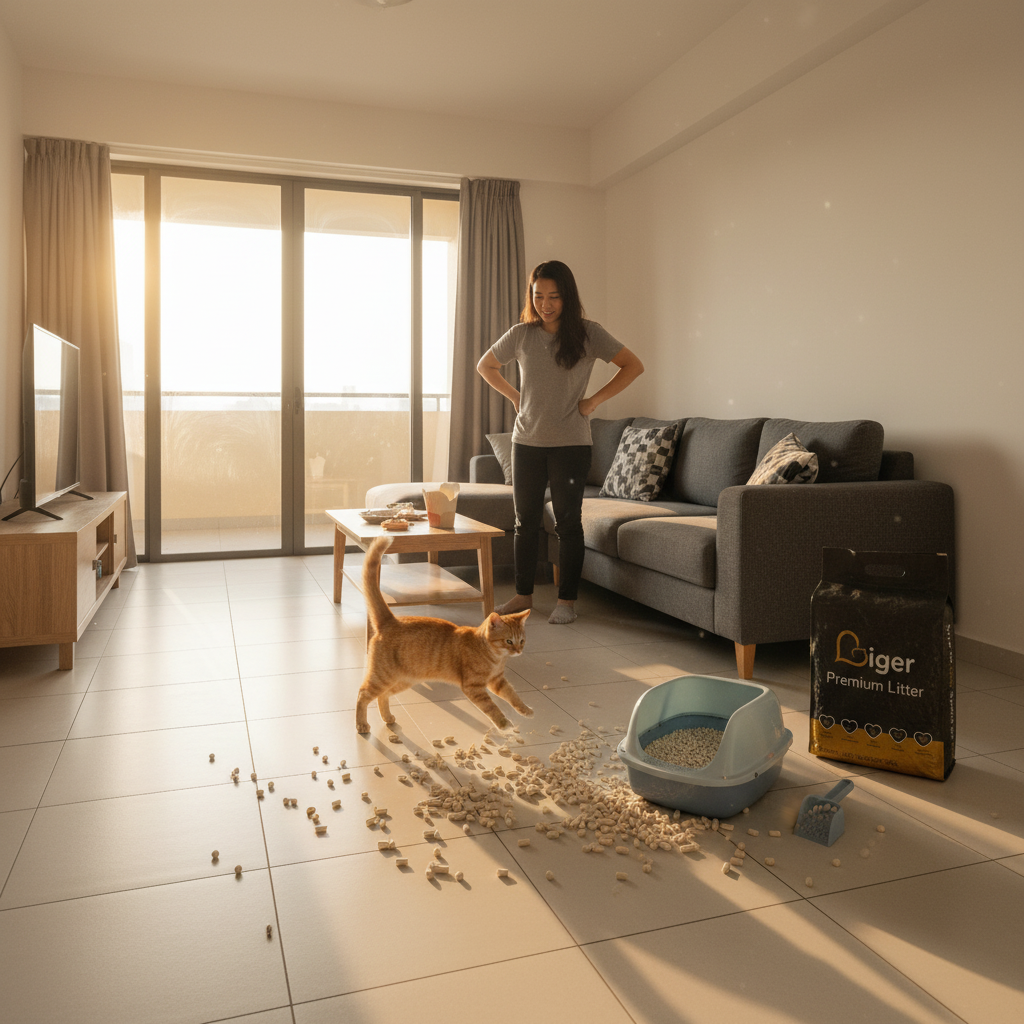
Three pain points push us toward mats. First, tracking — litter granules clinging to paws and ending up in your bed, on the sofa, between the parquet seams. Second, hygiene — cat feces can carry Toxoplasma gondii and E. coli, and litter particles are the vehicle. Veterinarians like Dr. Justine Lee emphasize that a high-trapping mat functions as a "biosecurity barrier" that limits pathogen spread through the home (Business Insider). Third, flooring damage — wet litter sitting on hardwood or luxury vinyl plank (LVP) is a slow apocalypse.
If you haven't yet picked your litter, our litter comparison tool and dust level comparison will save you a month of trial and error before you even worry about mats.
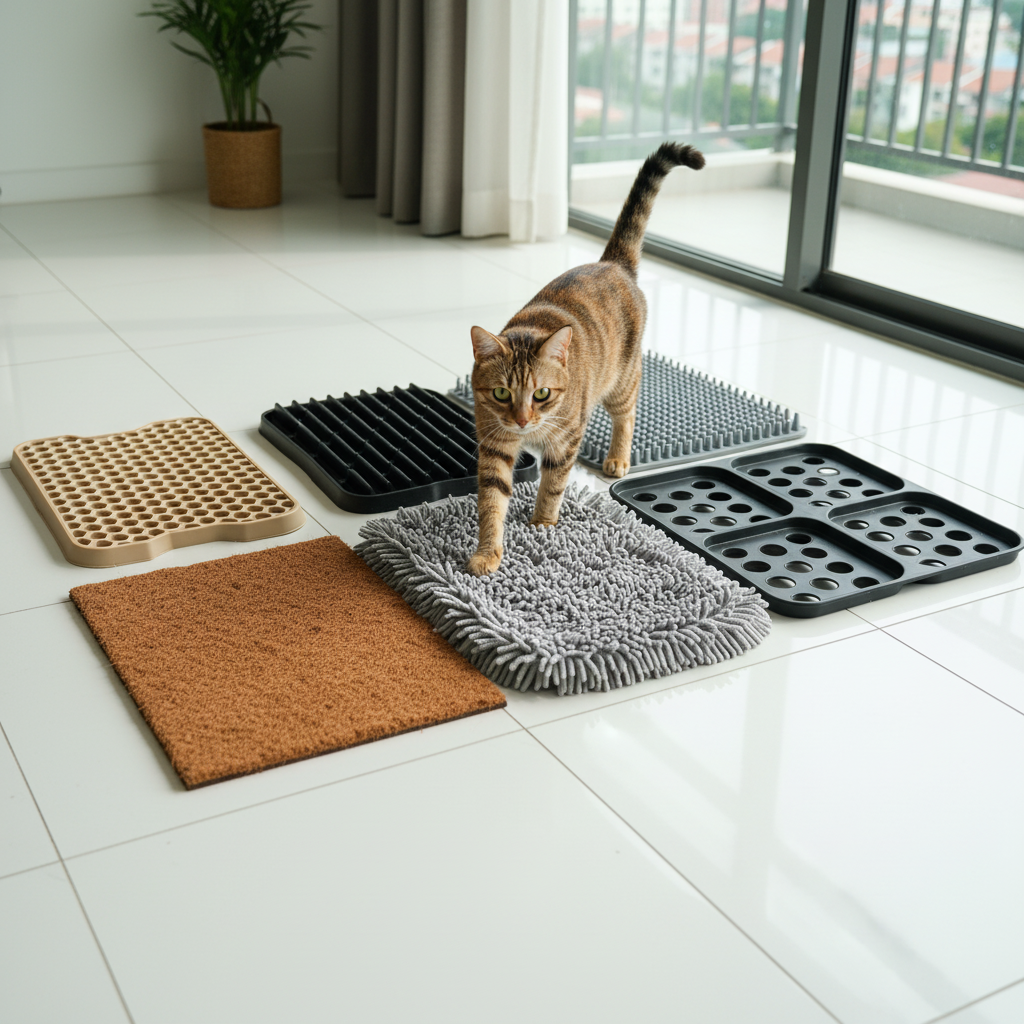
The 6 Mat Types Tested (Side by Side)
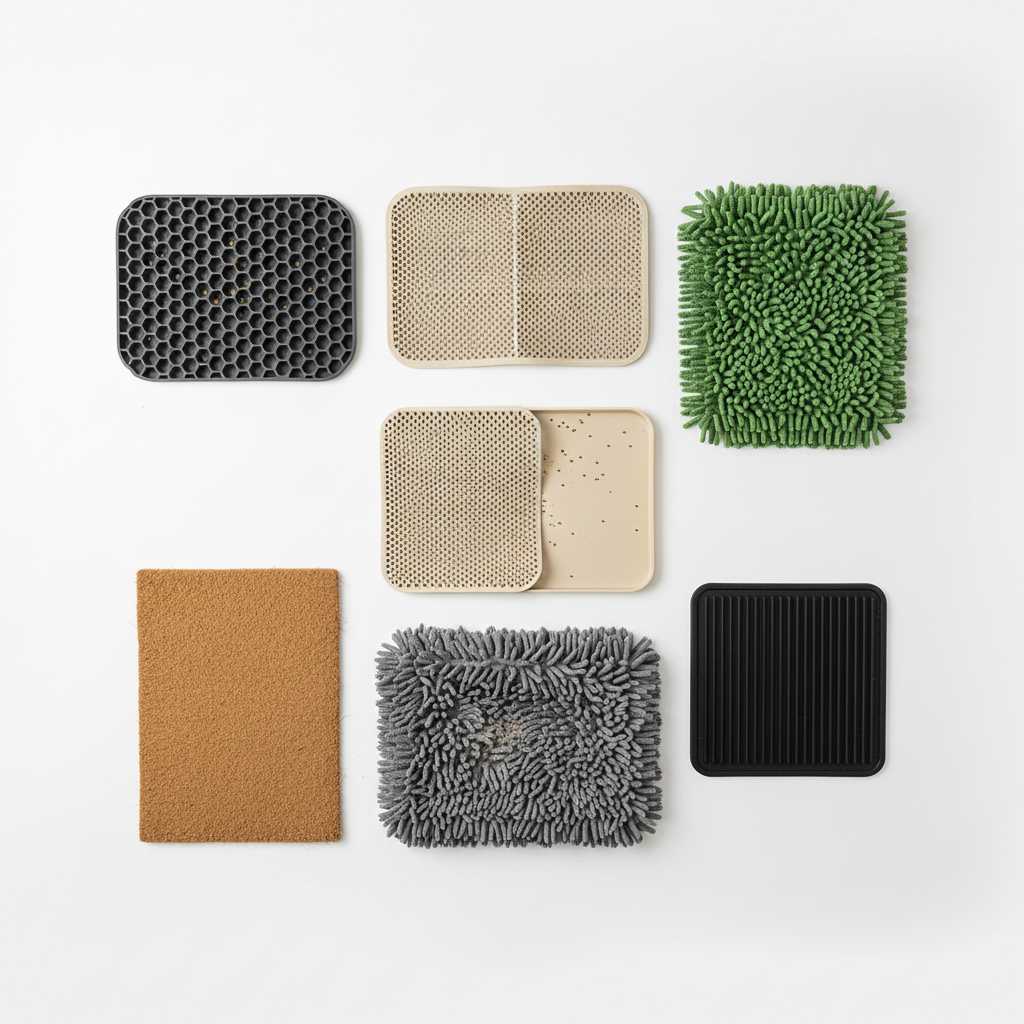
We ran each mat for two weeks beside the same Litter Robot, with the same milk-scented tofu pellets, the same four cats, and the same humid Subang weather (78–88% RH most days). Here's how they ranked.
| Mat Type | Tracking Reduction | Mold Risk (KL Humidity) | Tofu-Friendly? | Shopee Price (RM) | Verdict |
|---|---|---|---|---|---|
| Dual-Layer EVA Honeycomb | ~92% (highest tested) | Very low — non-porous, closed-cell | Excellent — large holes catch pellets | RM 15 – RM 65 | Winner |
| Honeycomb Silicone | ~75% | Very low — fully waterproof | Good — easy shake-off | RM 25 – RM 75 | Best for multi-cat hygiene |
| PVC Coil ("Spaghetti") | ~60% with bentonite, ~30% with tofu | Moderate — coils trap damp | Poor — pellets sit on top | RM 10 – RM 60 | Skip if you use tofu |
| Coconut Coir | ~45% | High — absorbs ambient humidity | Fair | RM 14 – RM 22 | Avoid in Malaysia |
| Microfiber | ~50% (fine dust only) | Very high — soaks moisture | Fair — pellets kick off easily | RM 7 – RM 30 | Bath mat, not litter mat |
| Single-Layer Rubber Trapper | ~55% | Low | Good | RM 12 – RM 40 | Decent budget pick — but check flooring compatibility |
Percentages are aggregated from independent product reviews and informal comparison tests; the 92% figure for dual-layer EVA comes from Furrbby's bentonite tracking test. No peer-reviewed lab study exists yet — a gap the industry quietly ignores.
1. Dual-Layer EVA Honeycomb — The Clear Winner
Two layers of EVA (ethylene-vinyl acetate) foam. Top layer has honeycomb holes that funnel litter through; bottom layer is solid waterproof so the litter pools inside, away from paws. Lift the top layer once a week, pour the trapped litter back into the box, done.
EVA is non-porous, closed-cell foam — meaning mold simply has nowhere to grow on it, even in our 85% RH living rooms (Tuft & Paw). It's also soft enough that Ping'An (our senior rescue mom) walks across it without the paw-flicking protest she gave the PVC coil mat.
2. Honeycomb Silicone — Hygiene Champion
One-piece molded silicone with raised nubs or honeycomb texture. Slightly less effective at containing litter than the dual-layer EVA, but unbeatable for sanitization — you can hose it, dishwash it, even use bleach. Some premium versions (like the PetFusion ToughGrip line) embed antimicrobial silver that tests over 99% effective against E. coli and MRSA (Hauspanther).
If you have three or more cats sharing one box area, silicone is the safer pick. Single SKU households can stretch the EVA budget further.
3. PVC Coil ("Spaghetti Mat") — Skip for Tofu Users
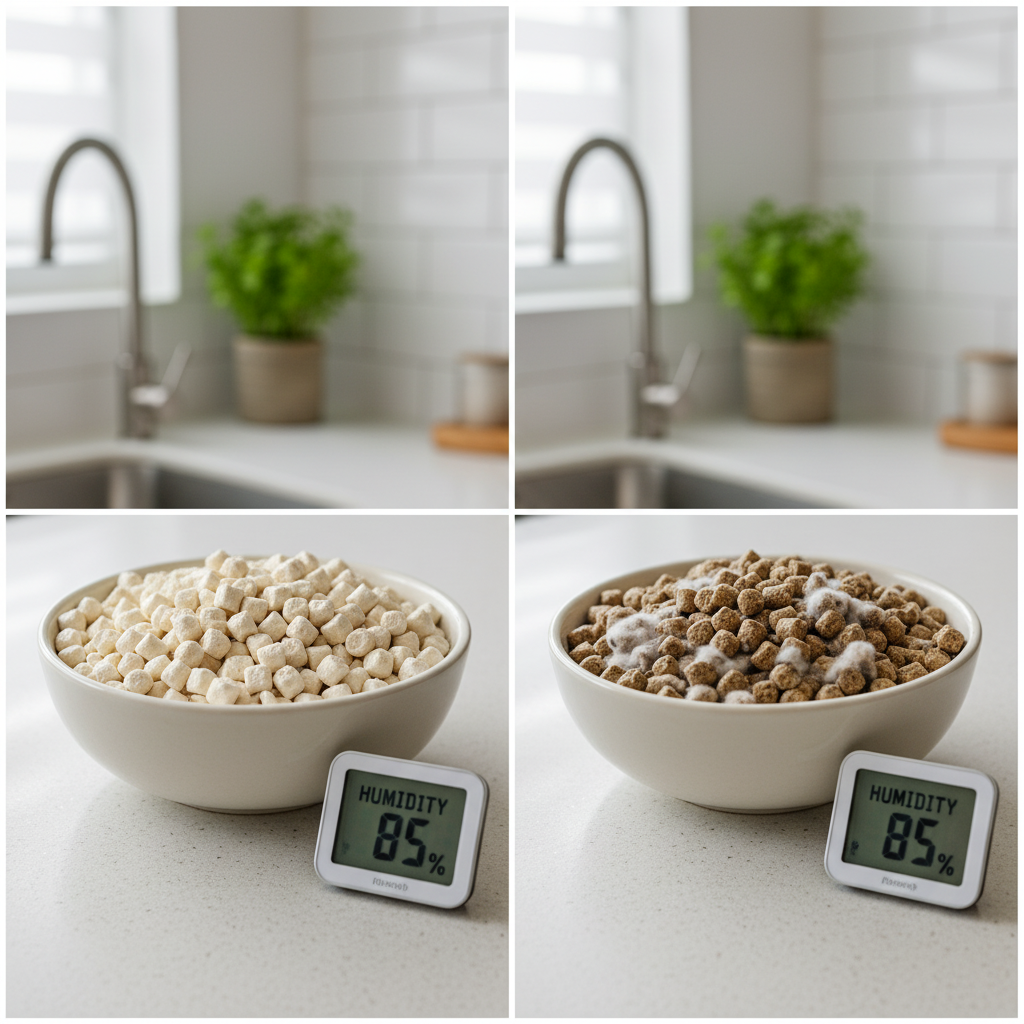
The classic looped-coil mat. Works decently with fine-grained bentonite clay (~60% reduction), but with tofu pellets it's borderline useless — the 4–6mm pellets just rest on top of the coils and Lucky kicks them off on her way out. Worse, the deep coils trap moisture in KL humidity; we found visible mildew on the underside after three weeks. Hard pass.
4. Coconut Coir — A Tropical Climate Trap
Looks rustic and eco-friendly. Performs terribly here. Coir is highly absorbent (CocoMatsNMore), and once it's pulled in ambient moisture above 80% RH, it stays damp and breeds mold within days. A study on coir geotextiles in tropical conditions documented significant structural degradation after just four months of moisture exposure (SciSpace research summary). Save coir for your front-door welcome mat.
5. Microfiber — A Glorified Bath Mat
Soft and Instagram-pretty, but a textile is a textile: it soaks urine misses, ambient humidity, and Lucky's overzealous digging spray. Mold appears within a week. Machine washable, yes — but in Malaysian humidity it takes 24+ hours to fully dry, which means you're alternating two mats forever. Not worth it.
6. Single-Layer Rubber Trapper — The Cautionary Pick
Solid rubber with raised dimples or grooves. Reasonable performance, low price. But here's the buried-lede problem: rubber backings cause permanent yellow staining on luxury vinyl plank (LVP) and hardwood floors through a chemical process called plasticizer migration, and many LVP manufacturers explicitly void the warranty if you use rubber-backed mats (PV Plus flooring guide). If your condo has LVP — extremely common in newer Malaysian developments — pick silicone or EVA instead.
Flooring Compatibility: The Damage Nobody Warns You About
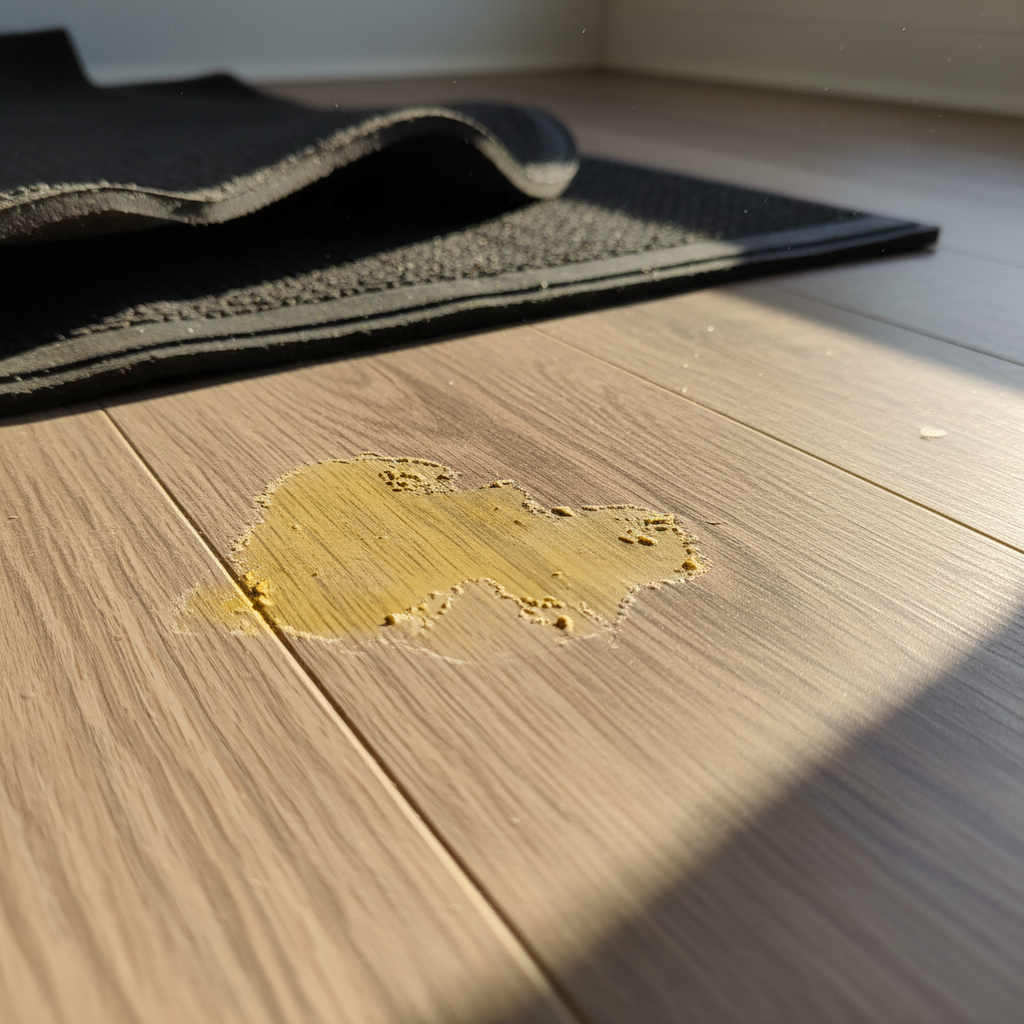
This is the single most under-discussed risk. Plasticizers from PVC and rubber backings leach into vinyl and hardwood finishes, accelerated by Malaysia's heat. The yellow stain is irreversible — sanding doesn't remove it, only replacement does.
- Tile (most KL condos): Safe with all mat types, but unsealed grout can yellow under rubber. Wipe under the mat weekly.
- LVP / Vinyl: Stick to EVA, silicone, or mats explicitly labeled "vinyl-safe." Avoid PVC and rubber backings.
- Hardwood / parquet: Same caution. Also, any mat that traps moisture underneath can warp the wood — lift and dry weekly.
Senior Cats and Kittens: Slip Resistance Matters
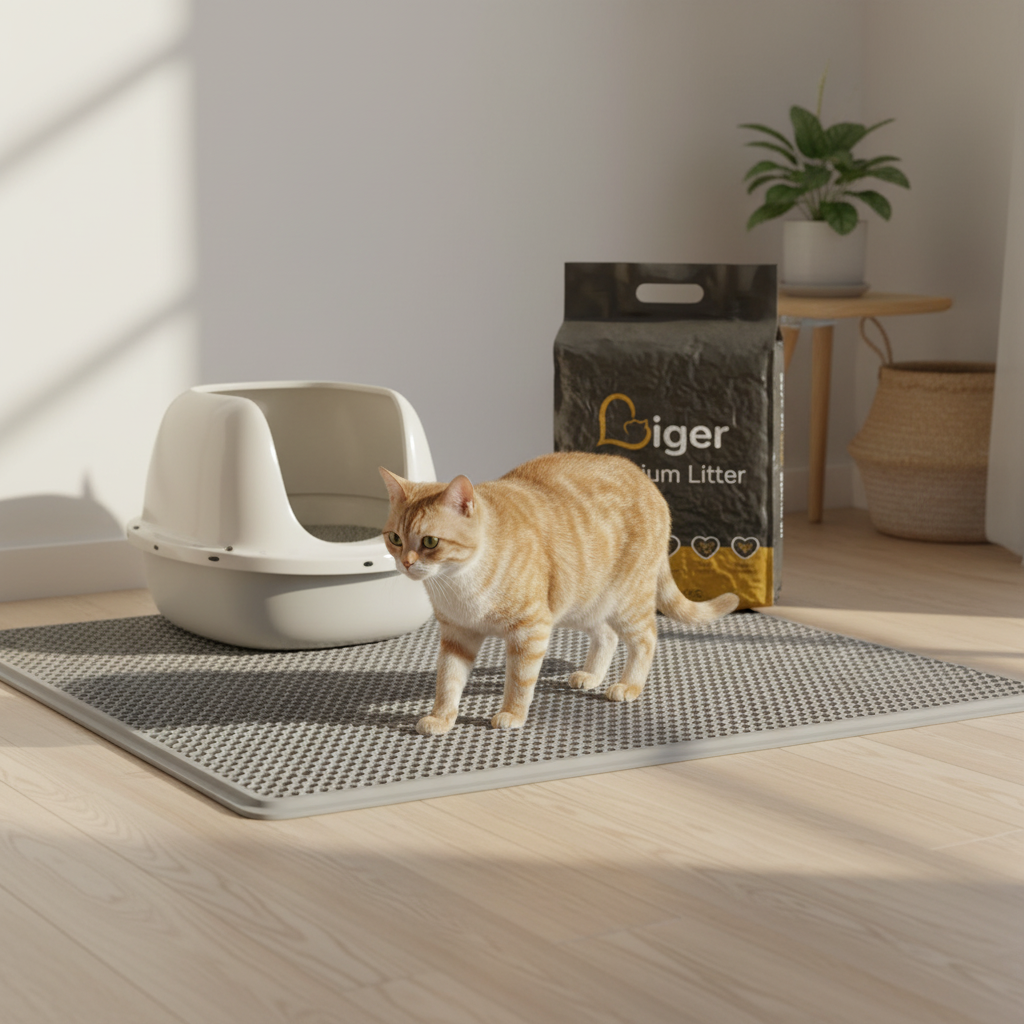
Ping'An (our 5-year-old rescue mom) developed mild arthritis last year, and the smooth tile around her box was making her hesitant. Veterinary clinics use non-slip silicone exam-table mats specifically because traction reduces feline anxiety and prevents falls (Kruuse veterinary supplies).
For senior cats and clumsy kittens, prioritize EVA foam (soft cushion + non-slip backing) or silicone (flexible grip). Avoid microfiber — it slides on tile when damp, which is exactly when you don't want a senior cat slipping.
Multi-Cat Households: Size Up
With four cats sharing two boxes, our first mistake was buying a "standard" 60×40cm mat. Lucky just leaped over it. The fix: get a mat at least 90×60cm, or chain two together. Silicone is easier to wipe down between cats in a multi-cat home — and if one cat has a URI or diarrhea, you can bleach a silicone mat safely; you cannot bleach EVA.
Cleaning Frequency by Mat Type
- Dual-Layer EVA: Empty top layer weekly, full wash monthly. Air dry under a fan — sun in a Malaysian condo is rare.
- Silicone: Daily quick wipe, weekly soap wash, optional dishwasher.
- PVC Coil: Daily shake-out, weekly hose-down. Must dry completely or it molds.
- Coconut Coir: Daily vacuum, spot clean only — never soak.
- Microfiber: Wash twice a week. Rotate two mats.
- Rubber: Daily sweep, weekly wash. Lift weekly to check for floor staining.
The "No Mat" Alternative: Pick Lower-Tracking Litter
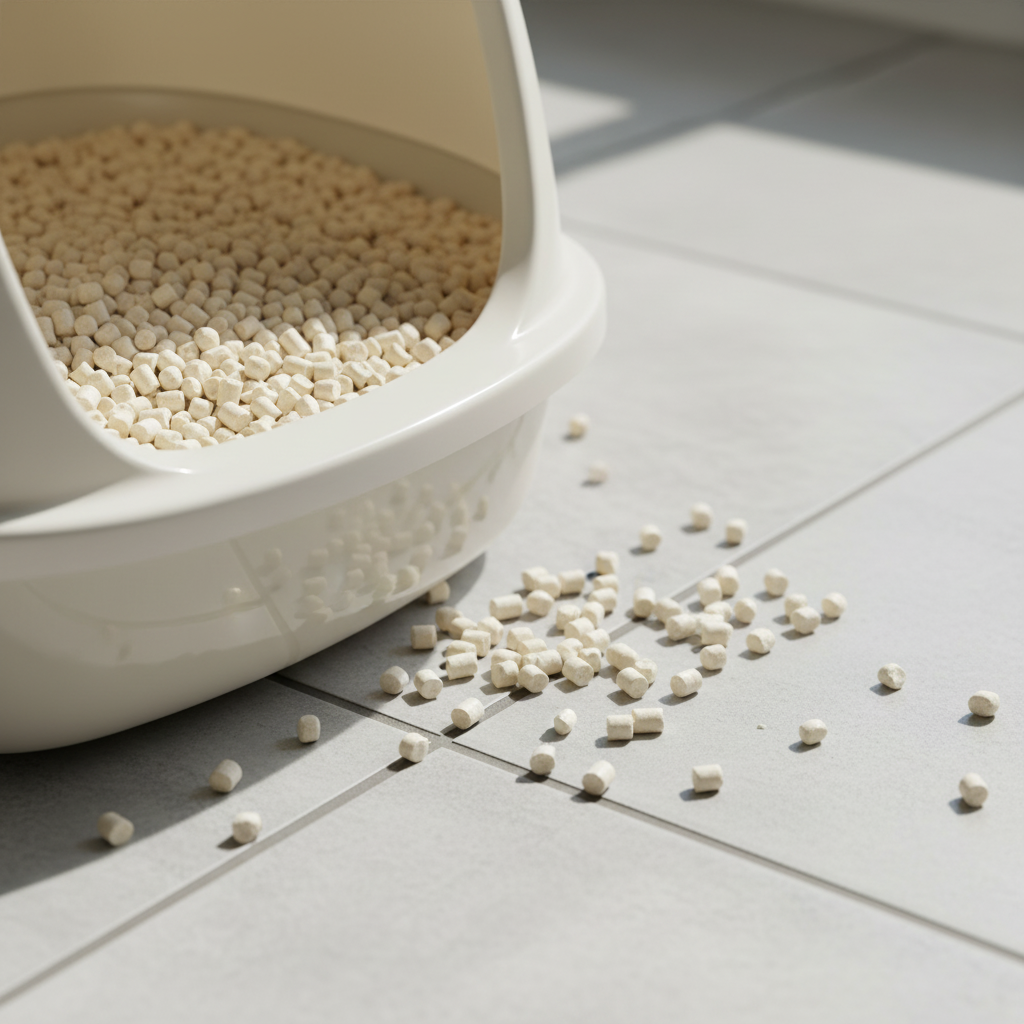
Here's a quieter truth: mats matter less when your litter doesn't track. Heavy bentonite clay (the default in Malaysia) clings to paws and sprays everywhere; lightweight tofu pellets — like our milk-scented Liger tofu — are 4–6mm chunks that mostly just roll. They roll a short distance, hit the mat edge, and stop.
Independent reviewers and pet stores consistently report that tofu litters track significantly less than bentonite (Litter-Robot guide, World's Best Cat Litter). Switching to tofu reduced our floor-sweeping frequency by roughly half before we even added a mat. Pair tofu + a dual-layer EVA mat and you're at maybe 5% of the tracking you had with bentonite + no mat.
Curious how much litter you actually need per month with tofu vs clay? Run the numbers on our litter calculator.
Malaysian Price Reality Check
Shopee MY and Lazada MY dominate the market; PetGalaxy is mostly physical retail. Realistic 2026 ranges:
- Dual-Layer EVA: RM 15 – RM 65 (the RM 15–25 unbranded ones perform 90% as well as the RM 50+ branded versions in our test)
- Silicone: RM 25 – RM 75
- PVC coil: RM 10 – RM 60
- Microfiber: RM 7 – RM 30
- Coconut coir: RM 14 – RM 22 (usually doormats relabeled)
The Verdict: When Worth It, When Not
Worth it if you use bentonite clay litter — a dual-layer EVA mat is a 5x reduction in floor cleanup for RM 20. No-brainer.
Worth it for any household with senior cats, kittens, or three-plus cats — hygiene and slip protection alone justify it.
Less critical if you've already switched to a low-tracking tofu litter — tracking is already minimal, so a basic RM 15 EVA mat is enough; you don't need the premium tiers.
Definitely skip: microfiber and coconut coir in our climate. They are humidity disasters waiting to happen.
For the chaos goblin Lucky? We landed on a 90×60cm dual-layer EVA honeycomb mat from a Shopee seller for RM 28. Two weeks in, our floors are 90% pellet-free, Ping'An walks across it happily, and the LVP isn't yellowing. Worth every ringgit.