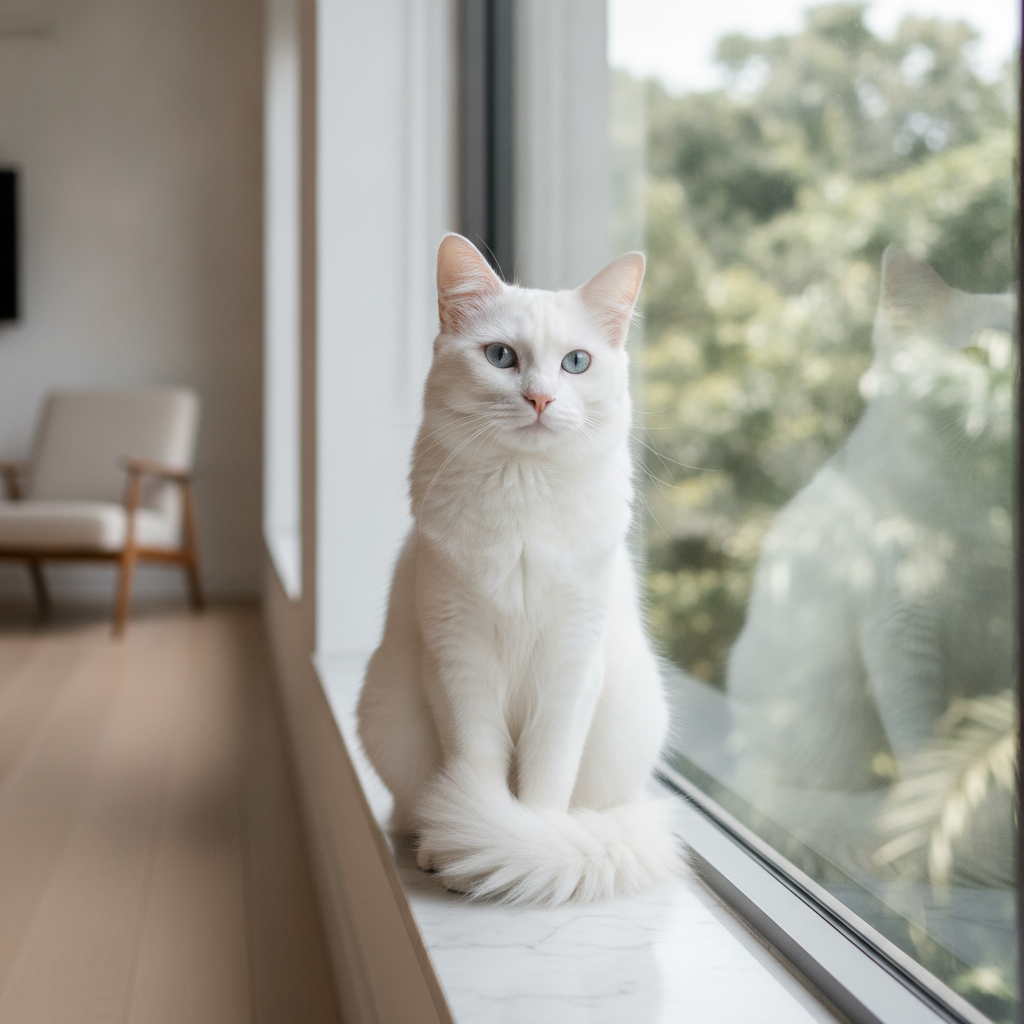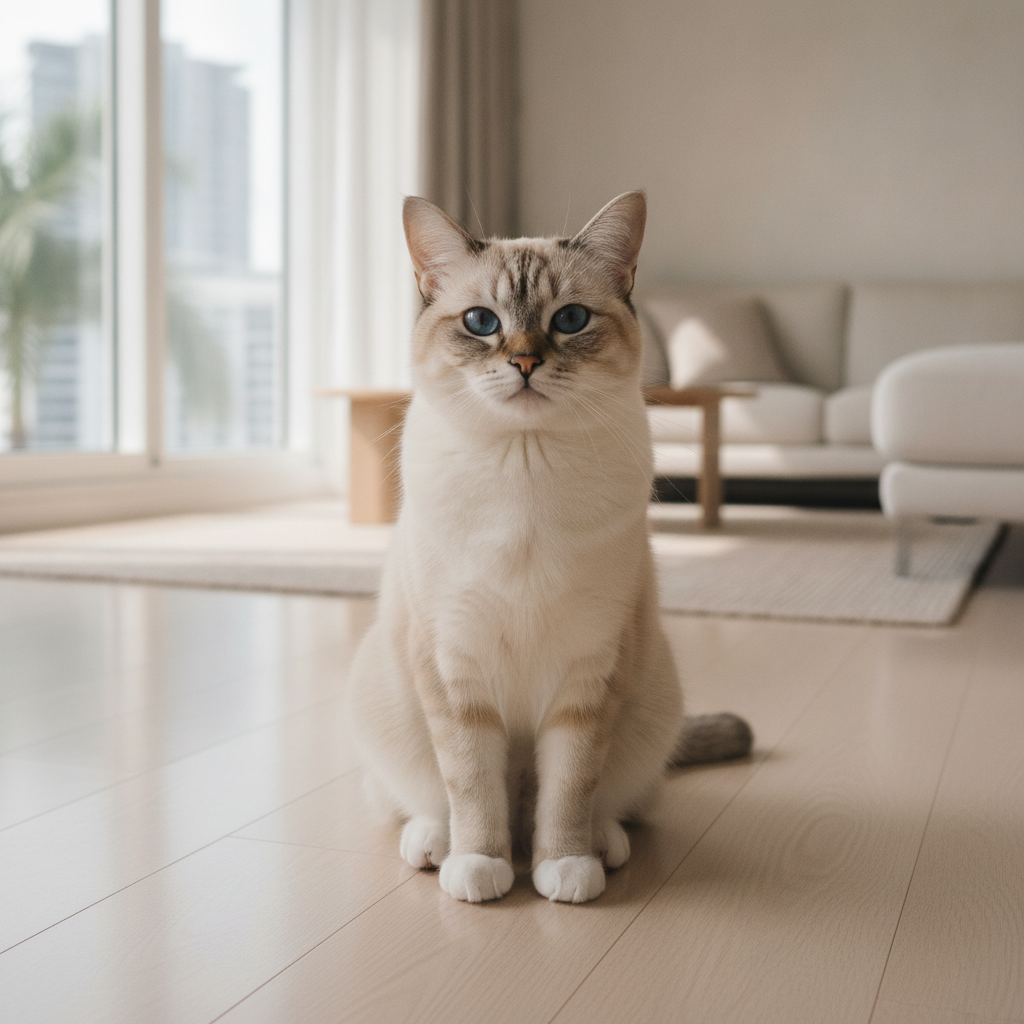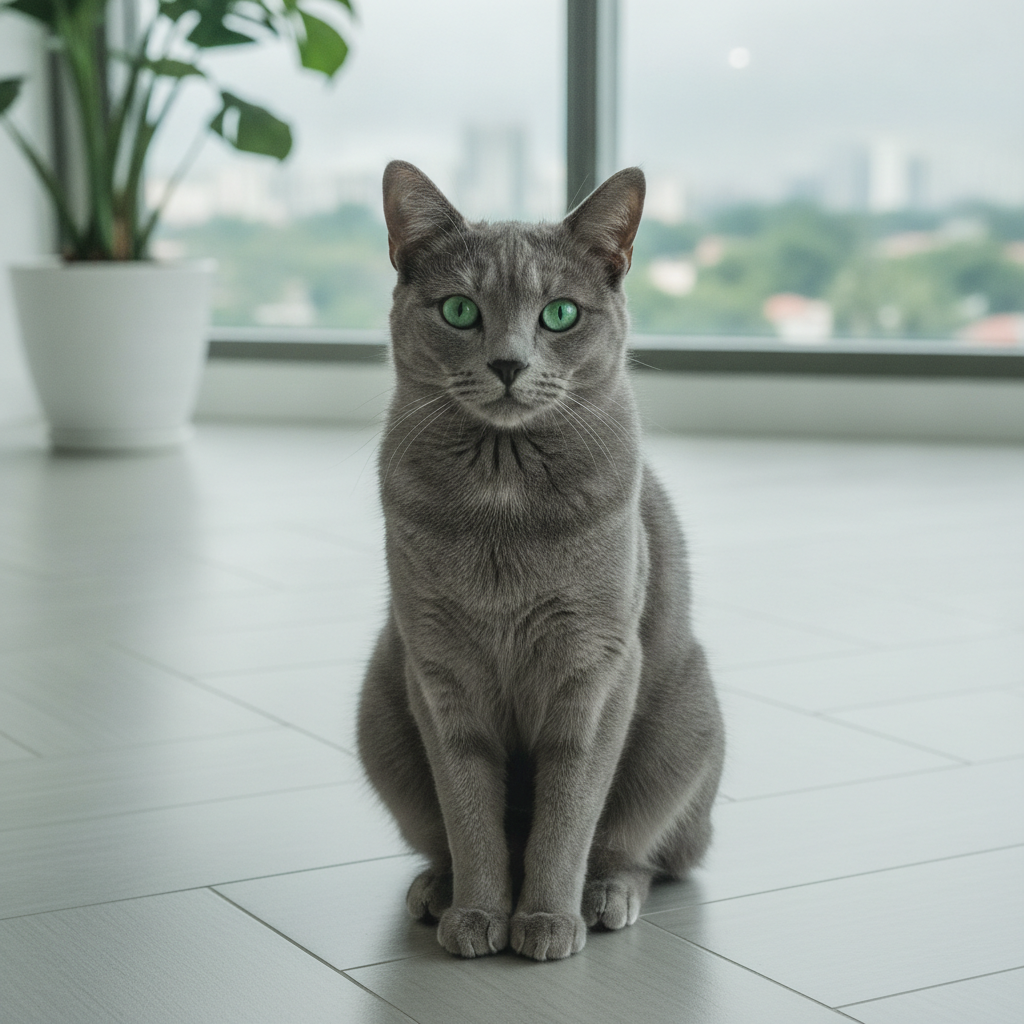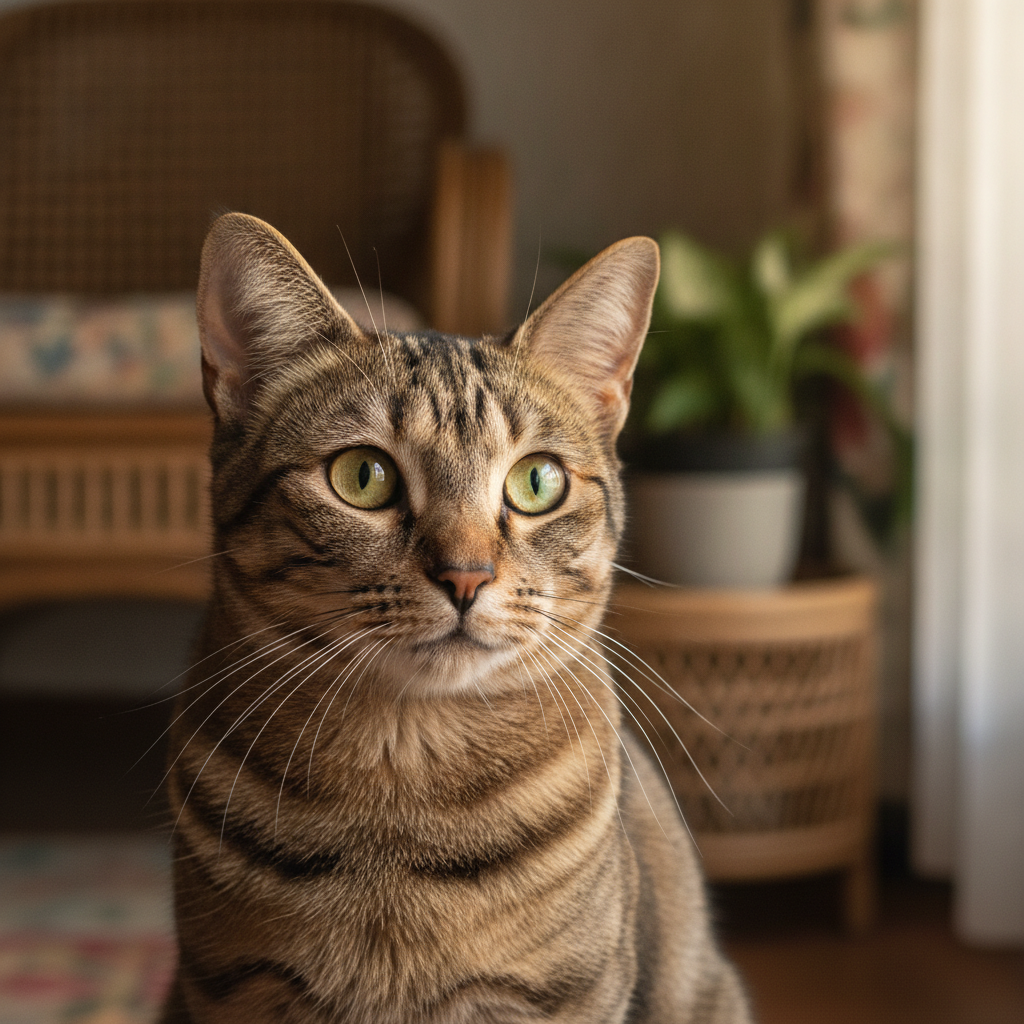
Your cat is curled up on the sofa looking like the most ordinary thing in the world. It is not. Under that soft fur sits a desert-evolved predator running on senses, reflexes and instincts that have barely changed in thousands of years. Tiger, Lion, Ping'An and Lucky may live the soft life in a Malaysian home — air-con, two meals a day, a favourite sunbeam — but they're built from the exact same blueprint as a wildcat stalking prey in an arid Middle Eastern night. Almost nothing about that blueprint has changed.
This is the hub for our How Cats Work series — a plain-English tour of the actual science of cats, with links out to deeper guides on each topic. No "why is my cat being weird" guesswork here; this is the biology, the hardware, the operating system. Once you see how the machine is built, almost everything your cat does stops being mysterious and starts making perfect, ruthless, evolutionary sense. Let's open the bonnet.
A Desert Hunter in Your Living Room
Every house cat descends from the African wildcat, which started hanging around human grain stores in the Fertile Crescent over 9,000 years ago — drawn by the rodents, not by us. Genetic work summarised by the National Library of Medicine suggests cats essentially domesticated themselves, with as few as a handful of genes nudging them toward tolerating human company while leaving their wild toolkit intact. That desert heritage still runs the show. Cats are obligate carnivores: they must get nutrients like taurine from animal tissue and can't thrive on plants, as the Cornell Feline Health Center explains.
Just as importantly, desert cats evolved to get most of their water — around 70-75% — straight from their prey, so they have a famously weak thirst drive. That's fine for a cat eating moist food, but a cat living on dry kibble in hot, humid Malaysia can sit in low-grade dehydration without ever feeling thirsty, quietly raising the risk of urinary crystals, bladder stones and other urinary problems. The practical takeaway: encourage water, lean toward wet food, and watch the litter box for changes. Their kidneys are extraordinarily good at concentrating urine to save water — a brilliant desert trick that becomes a liability indoors, which is why veterinary sources at VCA Hospitals link dry-only diets to urinary tract disease. (Our hydration calculator helps you check they're drinking enough.)
The Senses: A Superior Operating System
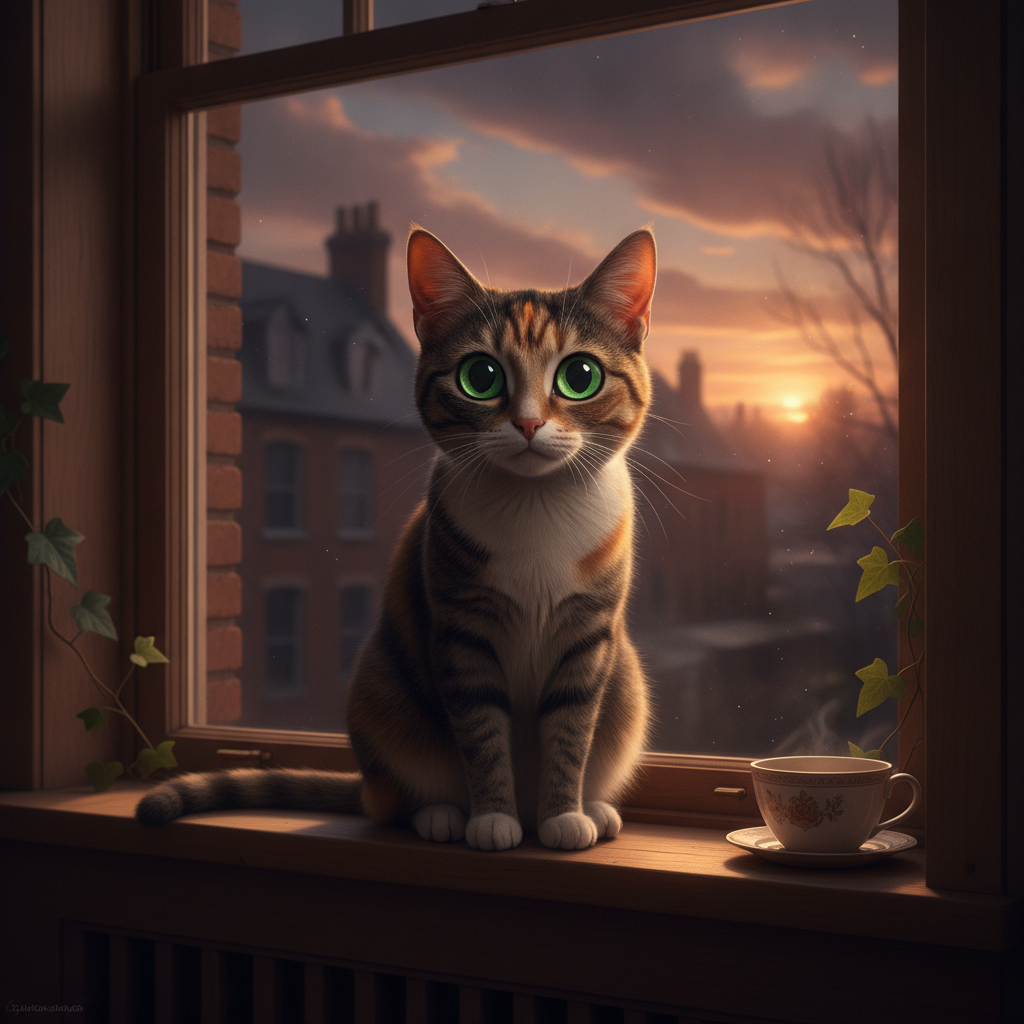
A cat experiences the world on settings you don't have access to. Its eyes need only about a sixth of the light yours do — thanks to a mirror-like layer behind the retina that recycles light and makes the eyes glow — and are tuned to detect the faintest movement, though it sees a muted, nearsighted, blue-and-yellow world rather than your sharp, colourful one. We break the eye down fully in how cats see.
Then there's everything else: a sense of smell up to 40 times sharper than ours, hearing that stretches into the ultrasonic range to catch a mouse's squeak through a wall, and whiskers sensitive enough to "feel" the air and judge a gap in the dark. Those are the cat's real primary senses — explored in cat senses: smell, hearing and whiskers. As PetMD puts it, the cat is essentially a walking sensor array. Understanding this sensory world is the single biggest shortcut to understanding your cat: so much of what looks like odd behaviour is simply a cat reacting to information you literally cannot perceive.
Built to Bend: The Skeleton and the Righting Reflex
A cat's agility is pure engineering. Where you have 33 vertebrae, a cat has 52-53, cushioned by unusually springy, spongy discs, plus a tiny "free-floating" collarbone that isn't bolted to the rest of the skeleton at all. That's why a cat can twist like liquid, and why it can squeeze through any gap its head fits through — if the skull clears, the rest follows.
It's also behind the famous righting reflex: an inner-ear gyroscope detects "down," the cat rotates its head, then twists the front and back halves of its body separately to land feet-first. This reflex starts appearing in kittens at just 3-4 weeks old and is perfected by 7-9 weeks — it's hardwired, not learned. Impressive — but, as we explain in our cat myths debunked guide, this is exactly why the "nine lives, always lands safely" myth is so dangerous. Cats still get badly hurt in falls, so screen those high-rise windows.
Why Cats Sleep So Much (and Whether They Dream)
Cats sleep 12-16 hours a day not from laziness but because conserving energy between explosive hunts is a survival strategy for a crepuscular predator. Their sleep is polyphasic — lots of short naps — cycling through light sleep, deep restorative sleep and REM. And in REM, the evidence strongly suggests they dream: classic experiments showed cats physically acting out stalking and pouncing when the usual sleep paralysis was lifted. The full story, including what your twitching cat might be dreaming about, is in do cats dream? This same crepuscular wiring, noted by welfare bodies like International Cat Care, is why your cat ambushes your feet at dawn: it's peak hunting time on an ancient clock.
The Purr, the Tongue and Other Feline Tech
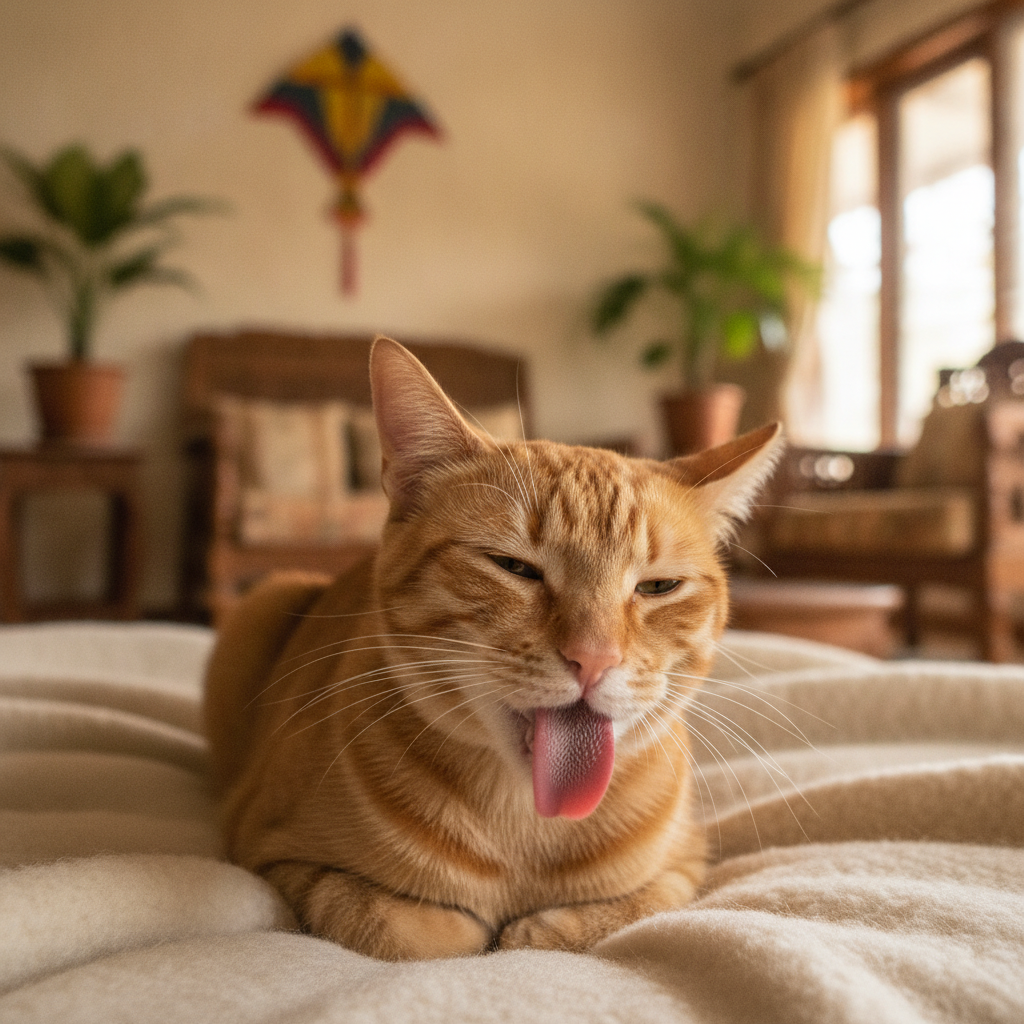
A cat is full of clever hardware. That sandpaper tongue is covered in tiny backward-facing barbs (papillae) that work like a built-in comb for grooming and help strip meat from bone; researchers have even found these spoon-shaped barbs wick saliva down to the skin, helping cats stay cool — useful in our climate. The purr is even stranger — a low-frequency vibration cats make not only when content but sometimes when stressed or injured, with intriguing links to self-soothing and healing, which we dig into in the science of cat purring. None of this kit was designed for your sofa — it was forged for a solitary hunter — which is exactly why it's so fascinating to find it purring on your lap.
And while we're staying out of pure behaviour here, the biology shades into communication: cats famously seem to tune out human speech, a quirk we unpack in do cats actually understand us? Even local genetics get interesting — the hardy mixed heritage of the kampung cat versus purebred is a great example of feline biology in action.
Cats Beyond Your Home: Community and Special-Needs Cats
The same biology shapes the cats living outside your door. Knowing the difference between a once-tame stray and a truly wild feral cat — and how Trap-Neuter-Return humanely manages colonies — is covered in feral vs stray cats and TNR — essential reading if there are community cats on your street. If you find kittens, our beginner's guide to fostering kittens walks you through raising them safely, from warmth and bottle-feeding to that all-important early socialisation window.
And cats are astonishingly resilient: that same sensory toolkit means blind, deaf and three-legged cats compensate so well they live full, happy lives with only a few simple adjustments, as we show in caring for a blind, deaf or tripod cat. A blind cat, for instance, simply leans harder on the whiskers and scent-mapping every cat already uses. Many of these are gentle local cats — if you're thinking of adopting, see adopting a stray and the case for the kucing kampung.
Science-Based Care Starts at the Litter Box
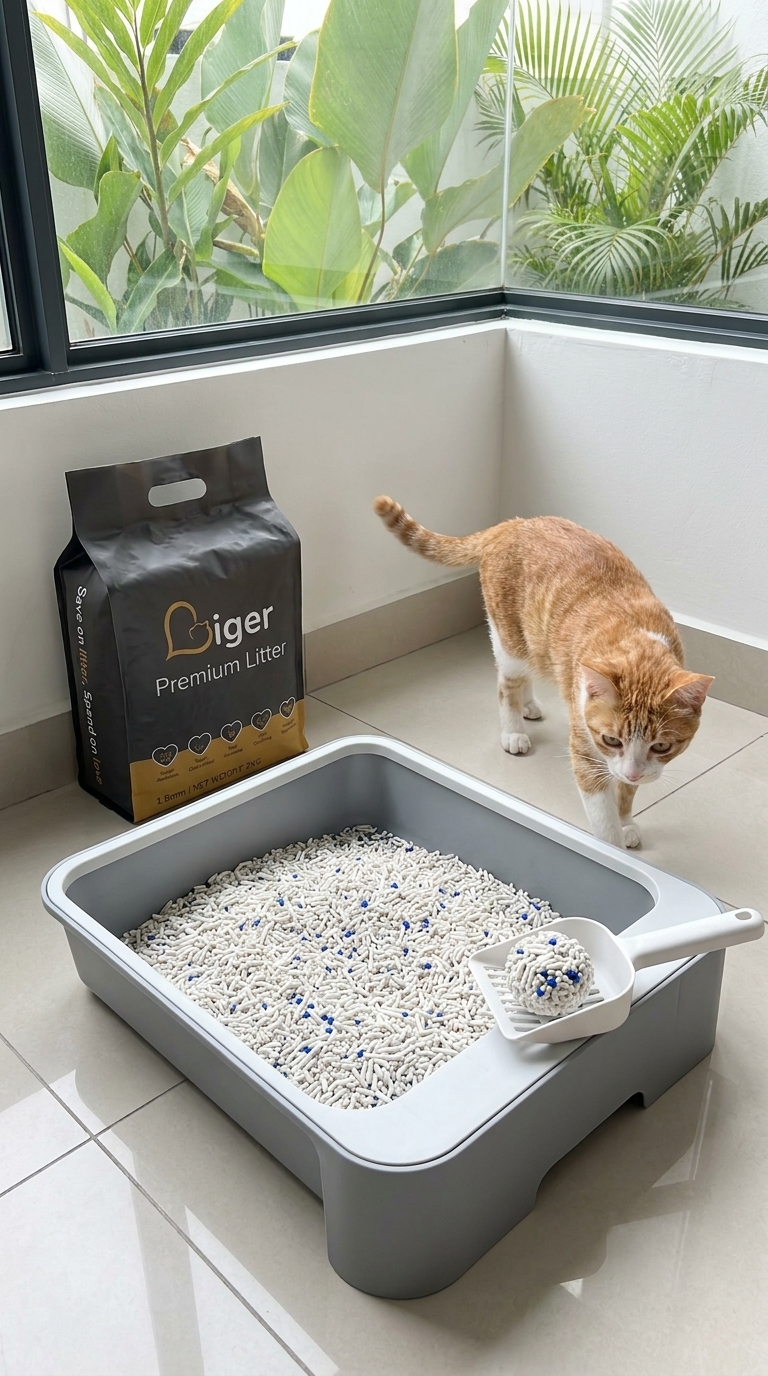
Here's where all this biology becomes practical. A water-conserving desert animal produces concentrated urine, so the litter box is your best early-warning dashboard for health — a sudden change in how much, how often, or how hard your cat is going is frequently the very first visible sign that something is wrong. That means you want a litter that clumps cleanly and lets you read those changes at a glance, rather than one that crumbles and hides them. A scent-driven animal with a nose up to 40 times sharper than yours is easily overwhelmed by heavy perfume, so a light, natural scent beats a chemical one. And a creature that buries and digs is better off without a cloud of fine dust around its sensitive eyes and airways every time it visits the box.
That's the whole design brief behind Liger Premium Tofu Cat Litter: made from food-grade soy fibre, low-dust, fast-clumping, lightly scented, and flushable in small amounts. Current Liger pricing (as of May 2026) is RM21.90 for a single 2kg pack, RM53.90 for 3 packs, RM89 for 5 packs and RM169 for 10 packs — RM8.45/kg on the 10-pack, with free shipping across Peninsular Malaysia. Work out your household's usage with the litter calculator, and see why dust matters with the dust-level comparison tool. Caring well for a cat really does start with respecting the wild little animal it has always been — explore the linked guides above, and you'll never look at that innocent little sofa-loaf the same way again.