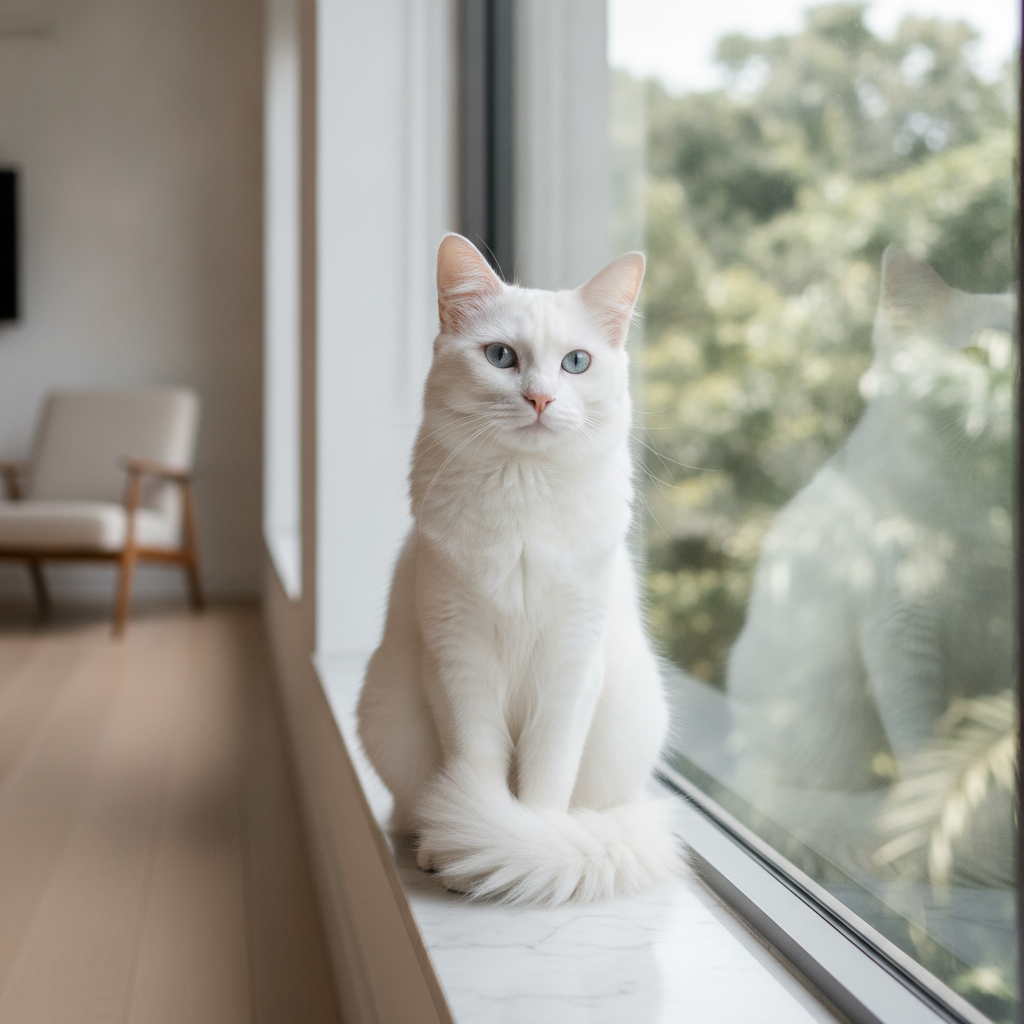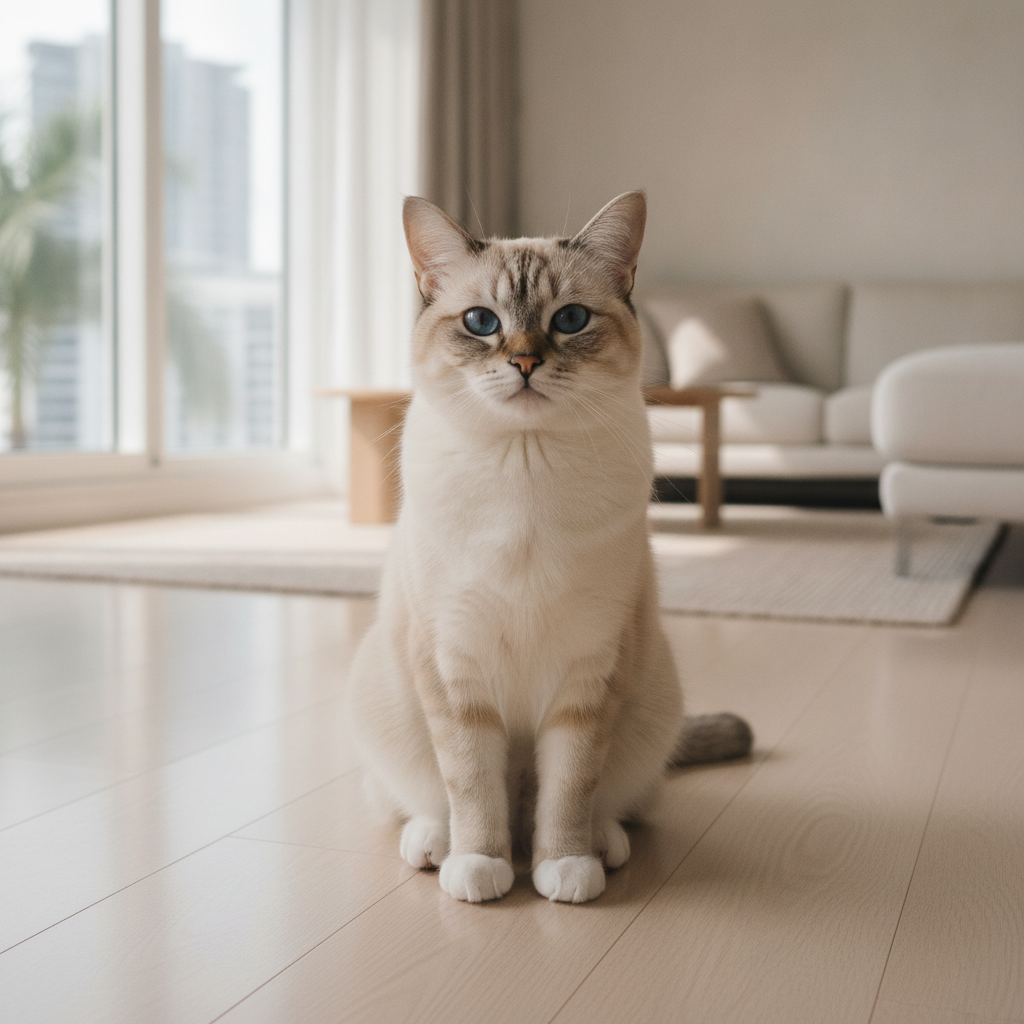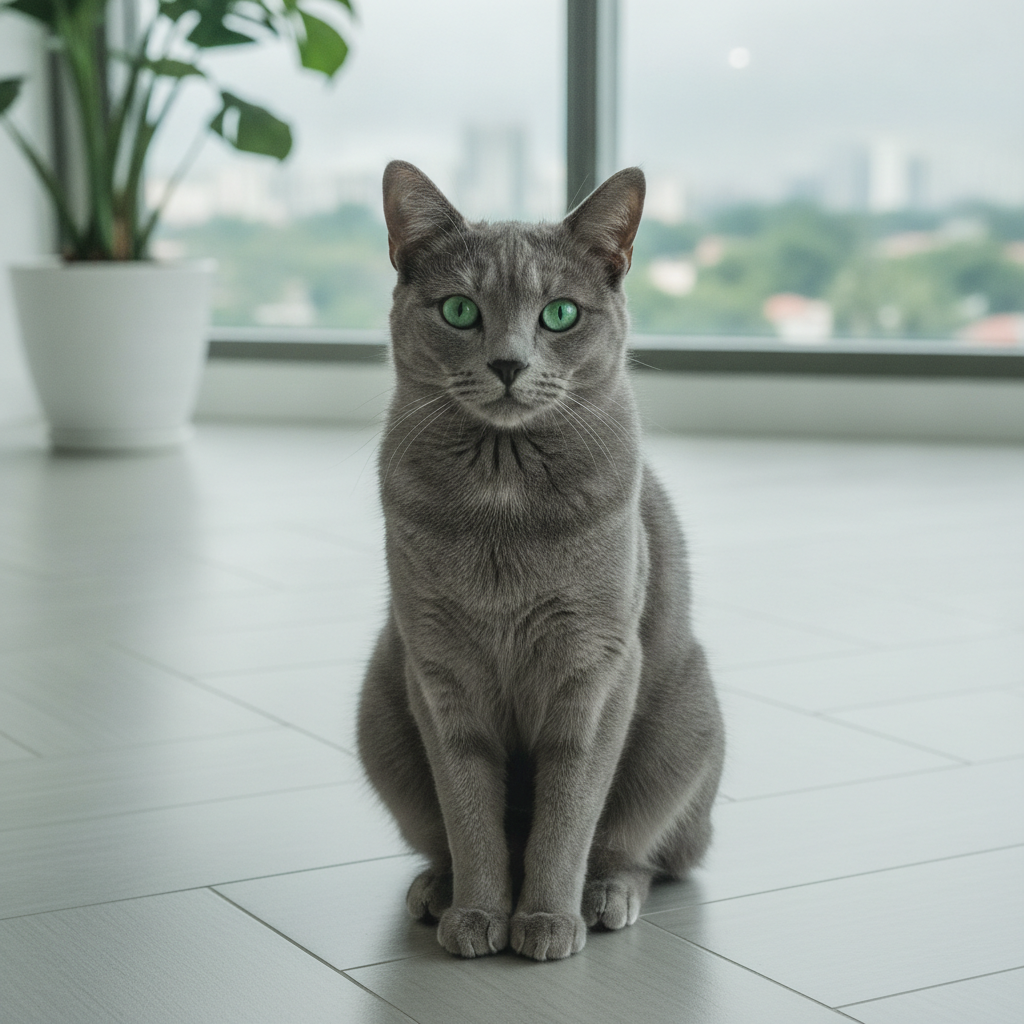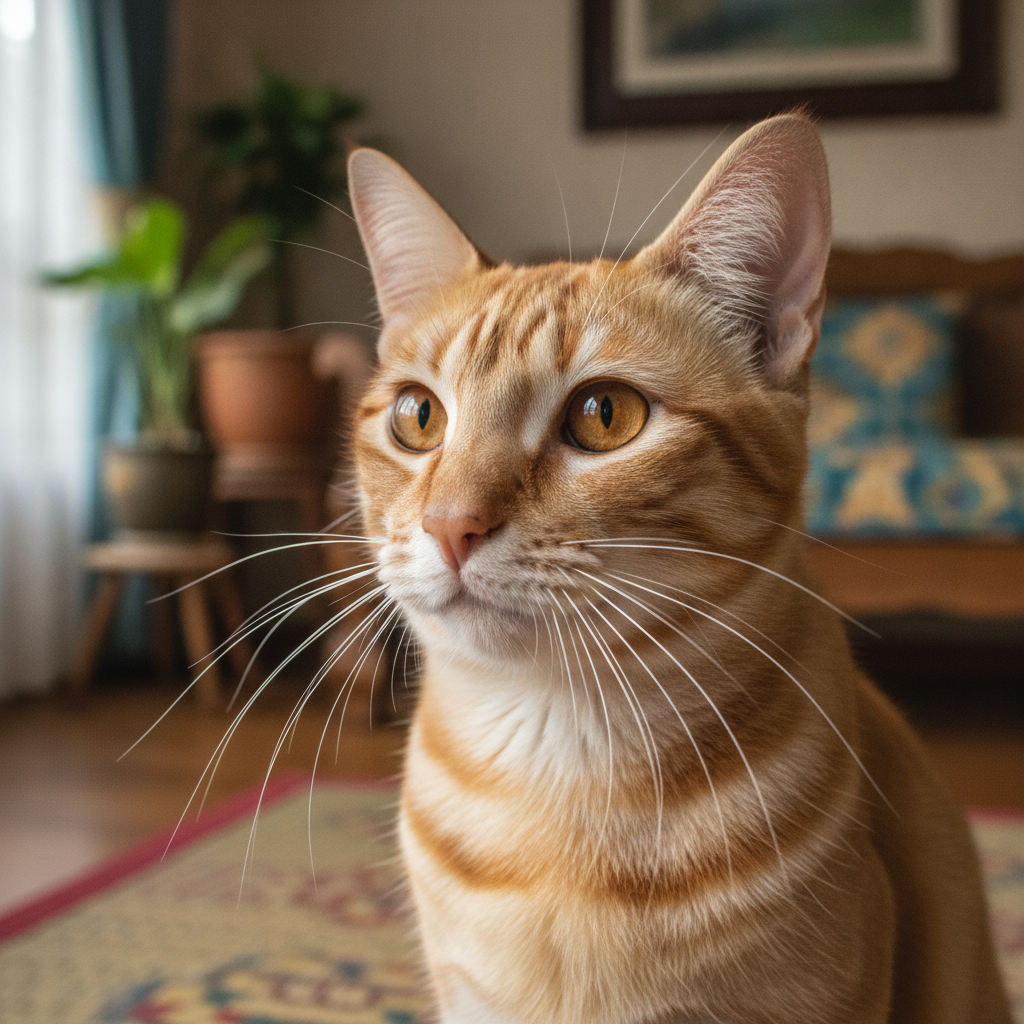
Watch your cat freeze mid-step, nose twitching at something you can't see, hear, or smell, and you get a small reminder: your cat is living in a completely different sensory world from you. We share the same KL apartment, the same sofa, the same air-conditioning — but Tiger, Lion, Ping'An and Lucky are picking up a flood of information that simply doesn't exist for us.
This is the second stop in our How Cats Work science hub. We've already covered how cats see; here we get into the three senses that really run the show: smell, hearing, and that strangely underrated organ — the whisker. None of this is "why does my cat do that" behaviour stuff. This is the hardware: the actual biology that makes a cat a cat.
A Nose Built to Read the World
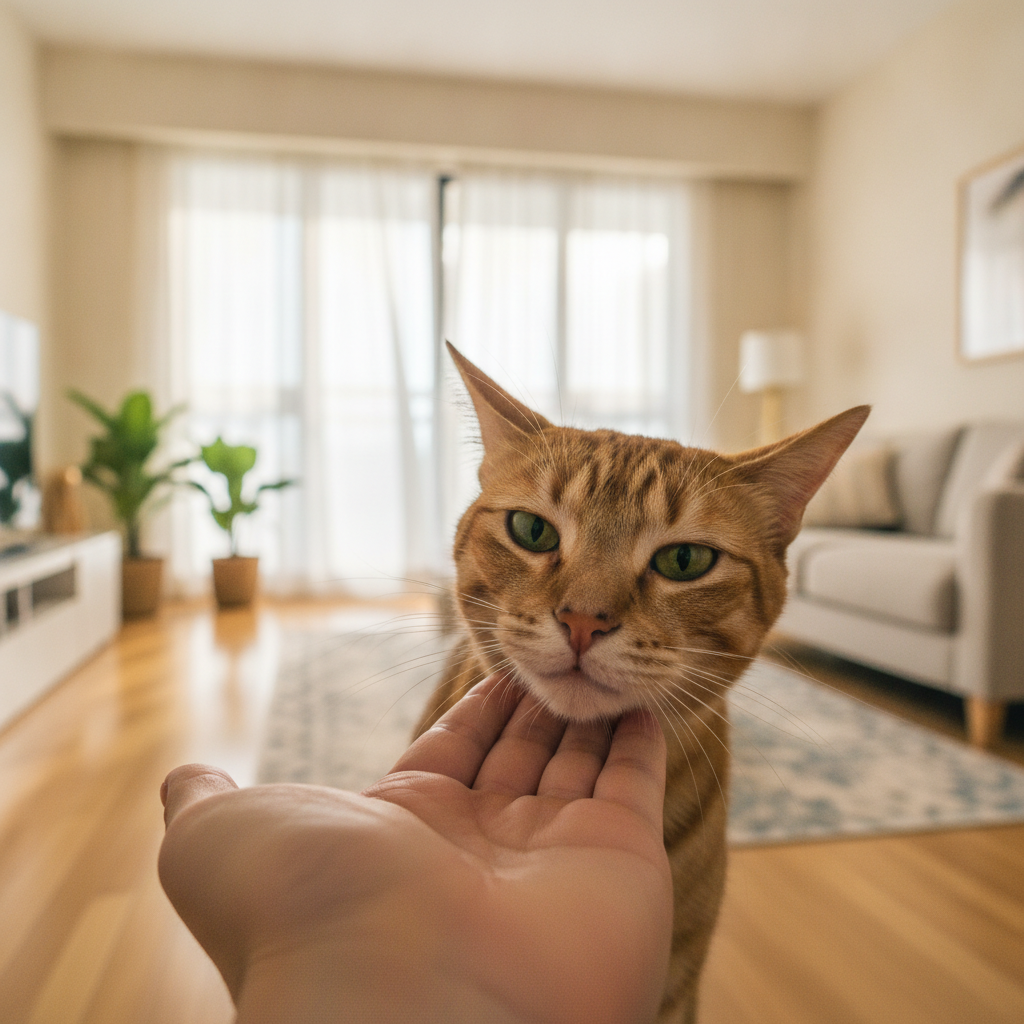
Humans are visual animals. Cats are scent animals. The numbers explain why. A cat carries roughly 200 million olfactory receptors in its nasal lining, against a measly 5 to 6 million in your nose — which is why estimates put a cat's sense of smell somewhere in the range of 14 to 40 times more sensitive than ours, according to veterinary sources compiled by PetMD and feline olfaction researchers at the Felidae Conservation Fund.
The scent-detecting membrane inside a cat's nose covers around 20 square centimetres — four to five times more than the human equivalent — and it feeds a proportionally larger olfactory bulb in the brain. So when your cat sniffs your hand after you've been out, it isn't being cute. It's running a full forensic report: where you went, who you touched, what you ate, and whether another animal got near you. Scent is how cats build their map of home and family.
It's not just raw sensitivity, either — cats are unusually good at telling near-identical smells apart, which is how they distinguish one household member from another and detect tiny changes in their territory. They reinforce that map constantly with their own scent, rubbing the glands in their cheeks and chin against doorways, furniture and your legs. Those head-bumps aren't random affection; your cat is signing its name. This is why suddenly scrubbing every surface with strong disinfectant can unsettle a cat: from its point of view, the family signature just got wiped off the walls.
The Second Nose: Jacobson's Organ
Cats have a sensory trick we completely lack. Sitting in the roof of the mouth, just behind the front teeth, is the vomeronasal organ — also called Jacobson's organ. As feline behaviour specialists explain, this pair of fluid-filled sacs is wired not to the ordinary smell centres but straight to the emotional and instinctive parts of the brain. Its job is to read pheromones and other heavy, non-airborne chemical signals that the regular nose misses.
You've definitely seen it in action. When a cat catches a really interesting smell — another cat's urine mark, a sweaty shoe, a patch of grass outside — it freezes, opens its mouth slightly, and pulls its top lip back into a vacant, slightly horrified grimace. That "stink face" is the flehmen response: the cat is pulling scent molecules up into Jacobson's organ for a deeper analysis. It's not disgust. It's your cat opening a file you didn't even know existed.
Ears That Work Like Radar Dishes
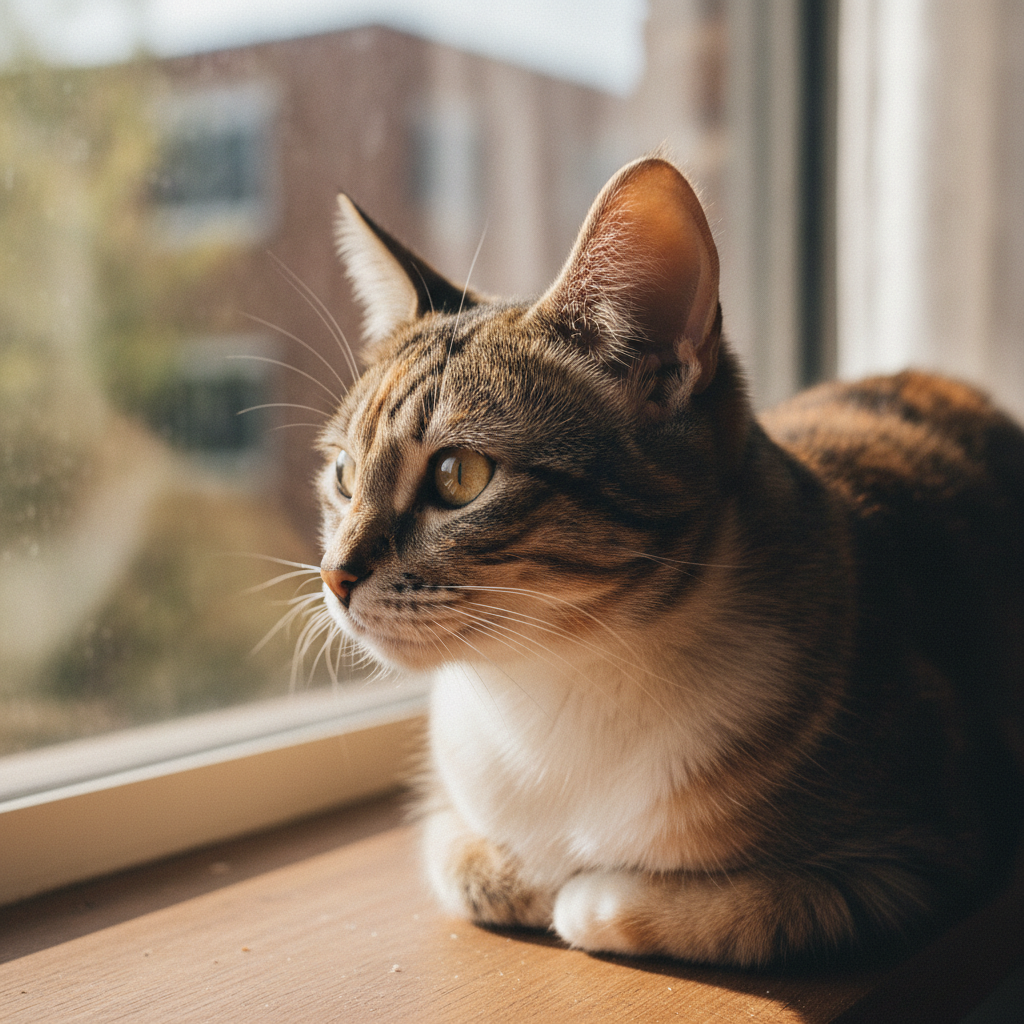
If a cat's nose is impressive, its ears are almost absurd. A cat hears from about 48 Hz all the way up to 85 kHz. Your hearing tops out around 20 kHz; even a dog only reaches roughly 45 kHz. As the Royal Canin Foundation notes, that ultrasonic ceiling is no accident — it sits exactly in the range where rodents squeak and rustle. Your cat can literally hear a mouse "talking" through a wall.
Then there's the steering. Each ear is powered by 32 separate muscles (you have six), letting the outer ear swivel up to 180 degrees and move independently of its partner — one ear locked on the kitchen, the other scanning the corridor. By comparing the tiny differences in when and how loudly a sound hits each ear, a cat can pinpoint a noise from three feet away to within about three inches, and can pick up sounds four to five times further away than you can. That's the talent behind the classic move where your cat snaps awake and stares at a "nothing" spot on the wall. There's something there. You just can't hear it.
Look closely at the outer edge of your cat's ear and you'll spot a small folded slit. That's the cutaneous marginal pouch, nicknamed "Henry's pocket". Vets are honest that its exact purpose isn't fully settled, but a leading theory is that it helps filter and sharpen high-frequency sounds — fitting for an animal whose whole auditory system is tuned to the squeak of small prey.
Whiskers: Touch You Can Aim
People think whiskers are decoration. They are precision instruments. Whiskers — properly called vibrissae — are about three times thicker than normal fur and rooted three times deeper, into a follicle packed with blood and nerves. Each whisker follicle is wired with 100 to 200 nerve cells, which makes the tips roughly as sensitive as your fingertips. A cat doesn't just touch the world with its whiskers; it feels the air move.
Whiskers aren't only on the muzzle, either. Cats have shorter vibrissae above the eyes, on the cheeks and on the back of the front legs, all feeding the same touch map. They're sensitive enough to register the faint change in air currents bouncing off a wall or a piece of furniture — a kind of "remote touch" that lets a cat sense an obstacle before brushing it. The whiskers double as a mood gauge, too: pushed forward and fanned out means curious or hunting, pinned flat against the face means frightened or defensive. Once you learn to read them, your cat is broadcasting its state of mind in plain sight.
This matters because a cat's close-up vision is genuinely poor — there's a blind spot right under the nose where it can't focus. Whiskers fill the gap. As Cats Protection describes, the long muzzle whiskers are usually about as wide as the cat's body, working as a built-in measuring tape: if the whiskers clear an opening, the body will too. During a hunt (or an ambush on your ankle), those whiskers sweep forward into a basket around the target, and small carpal whiskers on the back of the front legs feel whether captured prey is still moving. It's how a cat "sees" in pitch darkness — and how it finds the litter box at 3am without switching on a light.
So What About "Whisker Fatigue"?
You'll see "whisker fatigue" sold hard online — the idea that deep food bowls overload the whiskers and stress your cat. Be careful here. As Tufts University's Petfoodology team points out, it is not a recognised veterinary diagnosis, and the evidence for it is thin. Some cats do seem to prefer a wide, shallow dish — and there's no harm in offering one, it's cheap enrichment. The real danger is the opposite: a cat that suddenly hesitates at the bowl, drops food, or stops eating is far more likely to have dental pain, nausea, or another medical problem than tired whiskers. Don't let a trendy label delay a vet visit.
What a Super-Sniffer Means for the Litter Box
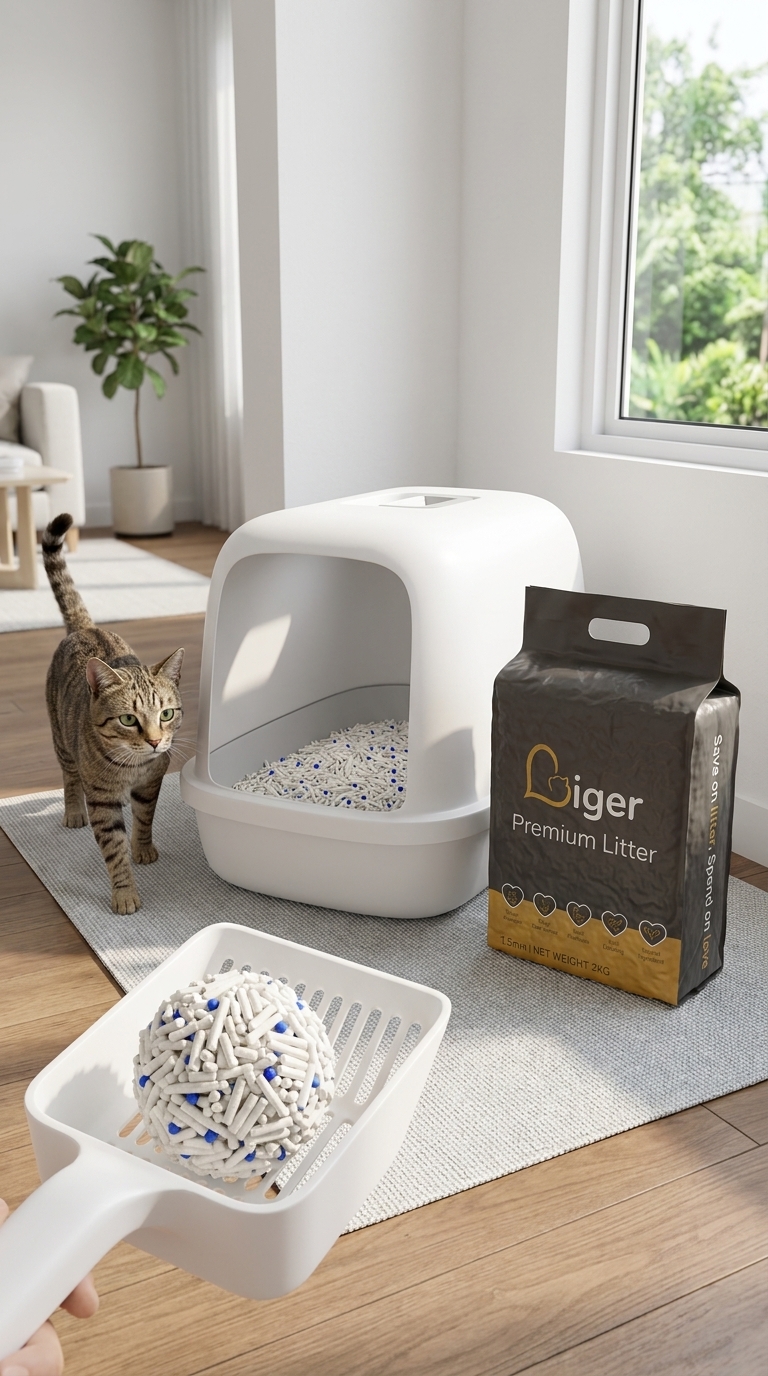
Here's the practical payoff of all this biology — and it lands squarely on the one corner of your home a cat is most fussy about. If your cat experiences scent at up to 40 times your intensity, then a heavily perfumed litter that smells "fresh and floral" to you can be genuinely overwhelming to your cat. Aggressive artificial fragrance is one of the quiet reasons some cats start avoiding an otherwise clean box.
This is exactly why we built Liger Premium Tofu Cat Litter around a light, natural milk scent and clean plant-based pellets rather than a wall of perfume — and why low dust matters just as much for a sense-driven animal. Made from food-grade soy fibre, it clumps fast, flushes in small amounts, and lets your cat's nose stay in charge of the box. Current Liger pricing (as of May 2026) is RM21.90 for a single 2kg pack, RM53.90 for 3 packs, RM89 for 5 packs and RM169 for the 10-pack — that 10-pack works out to just RM8.45/kg, with free shipping across Peninsular Malaysia. Not sure how much your household actually gets through? Our litter calculator sorts it out, and the dust-level comparison tool shows why dust is more than a cleaning annoyance for a nose like your cat's.
Helping a Sensory Athlete Thrive in a Malaysian Home
Once you accept that your cat is a walking sensor array, a lot of small things make sense. Keep scent landmarks stable — don't bleach every surface your cat has marked with its cheeks, because to a cat that's erasing the family signature. In our humid climate, clean the litter and food areas often but skip the heavy air fresheners near them. Give an indoor cat safe things to sniff and listen to: a cracked window with a screen, a bird video, a new cardboard box. And remember that the senses don't work in isolation — pair this with how your cat's eyes handle our bright tropical light, and you start to understand the whole animal rather than guessing at it.
For the bigger picture of feline biology — sleep, the righting reflex, purring and more — head back to our How Cats Work hub. The more you know about the machinery, the easier your cat is to live with.