
One pink nipple, a slightly rounder belly, and a cat who suddenly wants to sleep on your chest all day — and the question lands: is she pregnant, and if she is, how long until kittens? If you live in Malaysia, where free-roaming toms and un-spayed community cats are everywhere, an unplanned pregnancy is one of the most common surprises a cat parent gets. The good news is that feline pregnancy follows a remarkably predictable timeline, and once you know the milestones you can tell roughly where your cat is and what she needs next.
This is the anchor guide to how long a cat is pregnant and the early signs to watch for. For the full birth-and-aftercare picture, start at our complete Malaysian cat pregnancy and birth guide, then come back here for the timeline details.
How Long Is a Cat Pregnant?
A cat is pregnant for about 63 to 65 days — roughly nine weeks. That is the average a queen (the term for an intact, breeding female cat) will carry her litter from conception to birth. According to International Cat Care, the normal full-term range sits between about 63 and 67 days, with healthy births recorded anywhere from roughly 60 to 70 days.
The edges matter. A litter delivered before day 60 is generally considered premature, and those kittens often need urgent veterinary support to survive. A pregnancy that pushes past about 70–72 days without labour is the opposite warning sign and is worth a call to your vet, because an overdue queen can signal a problem. The Merck Veterinary Manual notes there is no reliable, widely available blood test for pregnancy in cats — unlike dogs — so the calendar and your vet's hands and ultrasound do most of the confirming.
If you know roughly when mating happened, you can estimate a due date with our cat pregnancy calculator. If you do not know the date — common with rescues and strays — the signs below will help you place her on the timeline.
Cat Pregnancy at a Glance: The Three Trimesters
Vets often split the nine weeks into three trimesters of about three weeks each. It is a handy way to track what is happening inside and what you should be seeing outside.
| Trimester | Days | What's happening | What you may notice |
|---|---|---|---|
| First | Day 1–21 | Embryos implant in the uterus (around day 12–14); organs begin forming | Often nothing; possible mild "morning sickness" near week 3 |
| Second | Day 22–42 | Fetuses grow rapidly; organs complete; skeletons start to calcify late in this window | "Pinking-up" of nipples, rounder belly by week 5, bigger appetite |
| Third | Day 43–65 | Kittens gain weight; mammary glands fill with milk; final maturation | Obvious belly, visible kitten movement, nesting, restlessness |
According to PetMD, this rapid second-trimester growth is exactly why a queen's nutritional needs climb so steeply — we cover that in detail in our guide to caring for a pregnant cat.
The Earliest Signs: Pinking-Up and Beyond
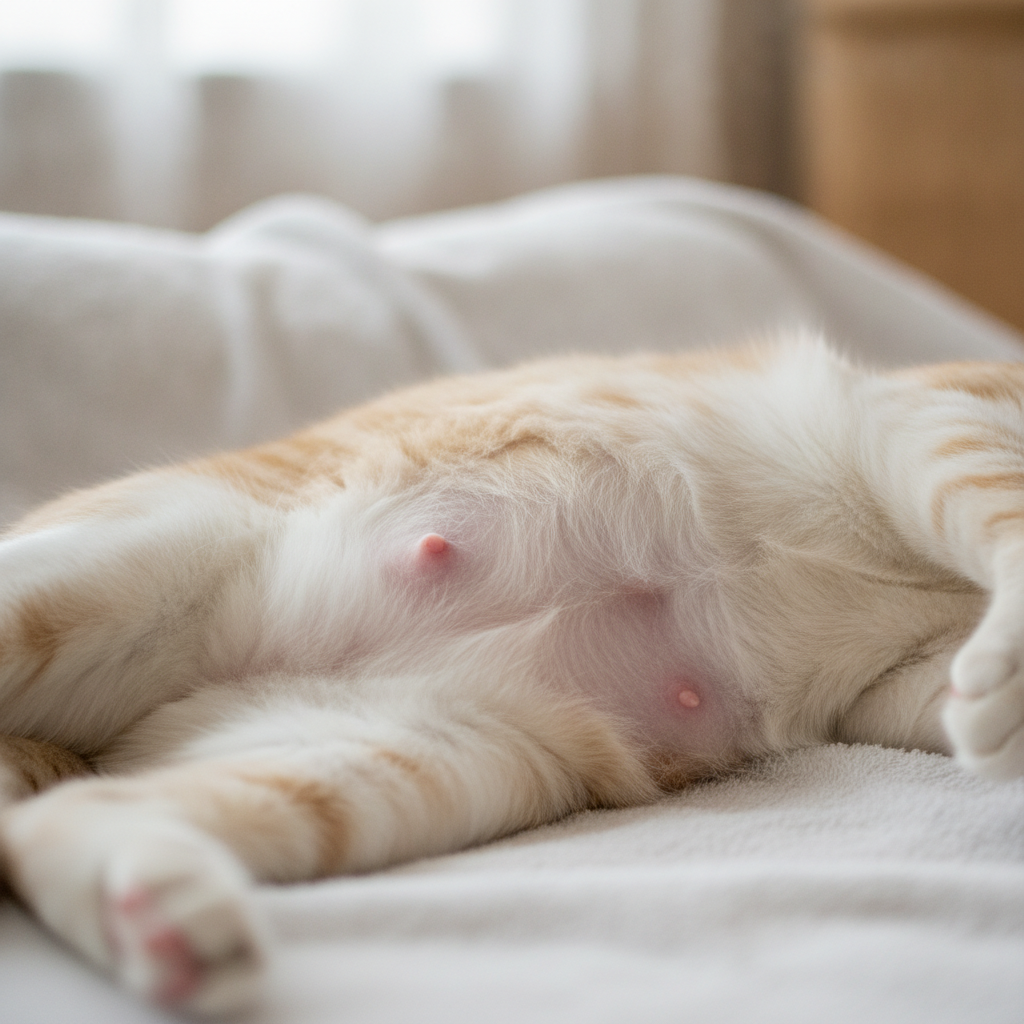
The first sign most owners can actually spot is called "pinking-up". Around the third week (roughly day 21), the queen's nipples become enlarged and turn a rosier, more obvious pink as her body starts preparing to nurse. In a cat with light fur on her belly it is genuinely visible; in a dark or long-haired cat you may need to part the fur gently to see it.
Other early signals tend to arrive in this order:
- Appetite changes (around week 3): some queens go off their food briefly or even vomit — a feline version of morning sickness — before appetite swings the other way.
- Increased affection: hormonal shifts make many cats noticeably clingier, seeking laps and attention they used to ignore.
- Rounder belly (around week 5): the abdomen visibly swells about 30 days in. Note that a swollen belly alone is not proof — weight gain, worms, or fluid can look similar, which is why vet confirmation matters.
- A bigger appetite later on: as WebMD notes, a late-pregnancy queen may eat up to about 1.5 times her normal amount to feed the growing litter.
- Nesting (final weeks): she hunts for quiet, hidden spots — wardrobes, drawers, behind the sofa — and may rearrange towels or blankets.
One sign points the other way: a sharp drop in appetite or refusing food entirely often means labour is 24 to 48 hours away. We break down what comes next in cat giving birth: labour signs and what to expect.
Week by Week: How a Cat Pregnancy Unfolds
Weeks 1–3: Fertilised eggs travel to the uterus and implant around day 12–14, and the kittens' organs begin to form. Outwardly there is little to see, though pinking-up appears near day 21 and she may turn more affectionate.
Weeks 4–5: Growth accelerates and the pregnancy becomes apparent. The belly rounds out around week 5 and her appetite climbs. This is the window in which an experienced vet can often feel the kittens (see below).
Weeks 6–7: The kittens' skeletons calcify enough to show on an X-ray, and their fur starts to develop. Her belly is large and firm; smaller, more frequent meals help because the litter is crowding her stomach. Nesting instincts often begin.
Weeks 8–9: The kittens are fully formed and just gaining weight; you may see ripples or kicks across her belly. Her mammary glands swell with milk, nesting intensifies, and in the final 24–48 hours she may pace, vocalise, groom heavily, and go off her food — the curtain-raiser for labour.
How Your Vet Confirms the Pregnancy

Because there is no routine feline pregnancy blood test, your vet relies on a hands-on exam and imaging, each best at a particular stage.
- Abdominal palpation (day 20–35): a skilled vet can gently feel firm, walnut-sized swellings — the developing kittens. After about day 35 the swellings merge and become harder to count. The MSD Veterinary Manual stresses this needs experience; rough handling can hurt the litter, so never try it yourself.
- Ultrasound (from around week 3–4): a non-invasive scan that confirms pregnancy and, importantly, fetal viability — heartbeats are usually visible around day 25. It is excellent for "are they alive and developing?" but unreliable for counting, because kittens hide behind one another.
- X-ray (after day 45, best after day 55): once the skeletons calcify, radiography gives the most accurate kitten count. Knowing the number ahead of birth matters — it tells you and your vet when all the kittens are out and flags a retained kitten early.
Curious how many to expect? We cover the averages and what shifts them in how many kittens do cats have.
Does Breed Change the Timeline?
Mostly, no — the great majority of cats, including Malaysia's beloved kucing kampung, land in that 63–65 day window. But genetics nudge the edges. A UK gestation study referenced by feline researchers found the Somali averaging around 68 days, while Siamese queens tend to run a touch shorter. There is also a loose inverse link between litter size and length: bigger litters often arrive a day or two earlier, smaller litters may cook a little longer.
One feline quirk surprises a lot of owners: superfecundation. Because a queen releases several eggs and can mate with more than one tom during a single heat, kittens in the same litter can have different fathers. That is why one litter can hold a tabby, a tuxedo, and a ginger that look nothing alike. If you want the backstory on how heat drives all this, see decoding cat heat.
Watching a Pregnant Cat at Home: The Litter-Box Clues
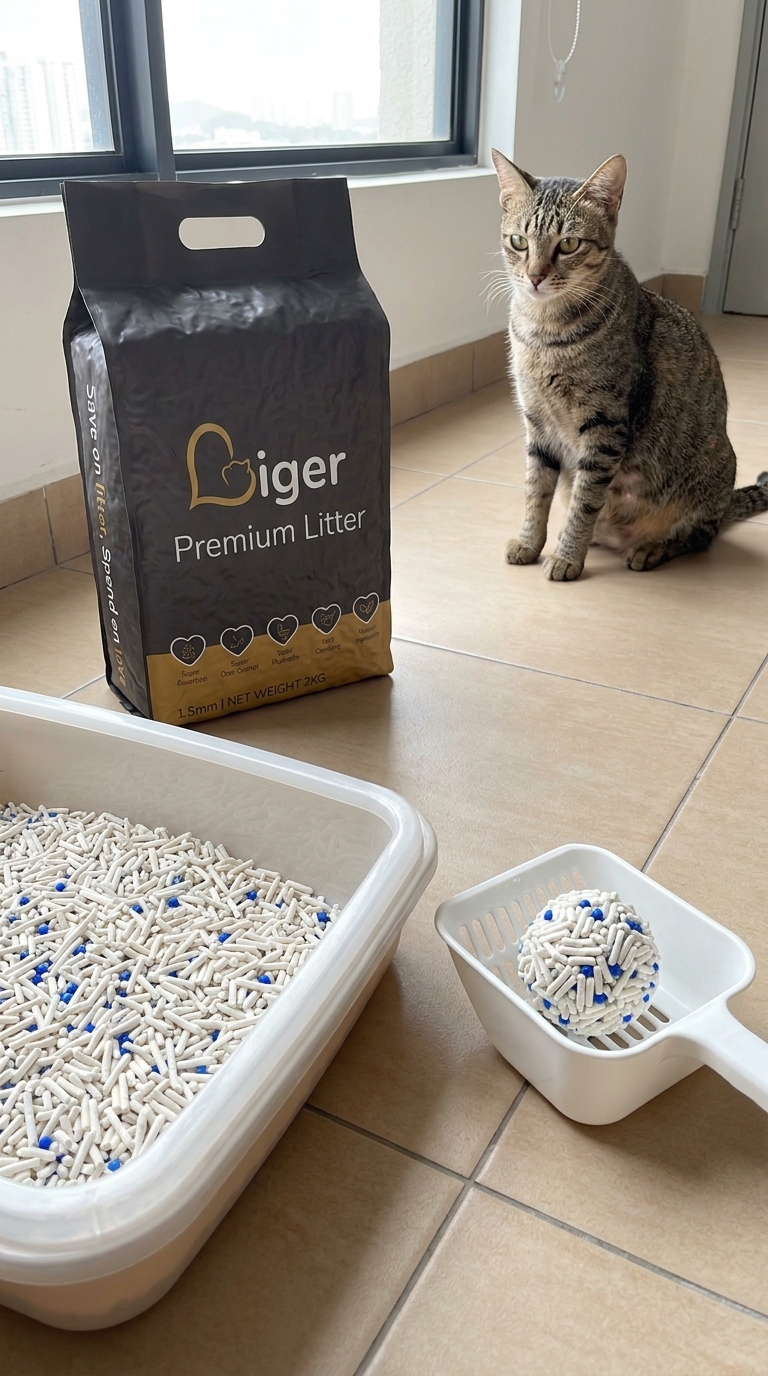
Between vet visits, the litter box is one of your best monitoring tools. A pregnant queen who suddenly strains, produces bloody or unusual urine, or stops eliminating needs a same-day vet check. As she nears term you will also notice her using the tray more often as the kittens press on her bladder — perfectly normal.
Two practical reasons to relook at your litter during pregnancy. First, dust: a heavily pregnant queen spends a lot of time low to the ground, and a low-dust litter is kinder to her airways — and to the newborns who will share that space soon. Second, tracking and hygiene: a clean, easy-to-scoop tray lets you actually see changes in her output. This is where Liger Premium Tofu Cat Litter earns its place — it is made from natural soy fibre, clumps firmly so you can monitor and remove waste cleanly, is low-dust, and is flushable in small amounts. It is also Halal-certified and priced for real Malaysian households: RM21.90 for a single 2 kg pack, RM53.90 for 3 packs, RM89 for 5 packs, and RM169 for 10 packs — that bulk pack works out to about RM8.45/kg (current Liger pricing, as of 2026), which helps when a litter of kittens is about to multiply your scooping. Work out how much you'll need with the litter calculator.
A separate note for human safety: if someone in your household is pregnant, litter-box hygiene matters for toxoplasmosis reasons — that is a different topic, covered in our litter box safety guide for pregnant families.
When to Call the Vet
Most feline pregnancies run smoothly, but call your vet promptly if you see any of these:
- Pregnancy passing about 70–72 days with no sign of labour
- Lethargy, fever, or refusing food for more than a day mid-pregnancy
- Any abnormal vaginal discharge (green, foul-smelling, or bloody before labour)
- Straining in the litter box, or sudden changes in urination
- Signs of pain or a distended, tense abdomen
And confirm the pregnancy properly in the first place — a swelling belly can also be a false pregnancy, which looks convincing but produces no kittens. When in doubt, your vet is the fastest way to an answer.
The bottom line: plan for about nine weeks, watch for pinking-up around week 3 and a rounder belly by week 5, get a vet to confirm and count, and keep her environment clean, calm, and low-dust. Then head to the full pregnancy and birth guide to prepare for the big day. If kittens were not the plan, talk to your vet about spaying once she has recovered — it is the single best way to avoid the next surprise.