If you have ever owned a dog, you probably know the routine: a trip to the groomer, a slightly awkward conversation, and someone "expressing the anal glands." So when your cat starts scooting its bum across your nice KL apartment floor, the natural panic is — do I need to do that to my cat too?
Here is the good news, backed by actual numbers. In cats, this is almost never your job. One large veterinary study found non-neoplastic anal sac disease shows up in roughly 15.7% of dogs but only about 0.4% of cats — nearly 40 times rarer in felines, according to research indexed by the US National Library of Medicine. Most cats sort their anal glands out themselves, every single day, without you ever thinking about it. This guide explains what these glands do, the warning signs that something is wrong, and — importantly — why "just express them at home" is advice that belongs to dogs, not cats.
Do Cats Even Have Anal Glands?
They do. Tucked just under the skin on either side of the anus — roughly at the 4 o'clock and 8 o'clock positions — sit two small pouches called anal sacs. They are about the size of a lentil when empty and a pea when full, and they are lined with glands that produce a potent, fishy-smelling fluid. According to VCA Hospitals, this liquid is basically your cat's signature scent — a chemical "calling card" used for territory marking and communication.
Every time your cat passes a firm stool, the pressure squeezes those sacs and deposits a tiny amount of scent onto the poop. That is the natural, built-in emptying mechanism. (It is also why a frightened cat can suddenly release an eye-wateringly bad smell — those sacs can dump their contents when a cat is scared, as PetMD notes.) One quirky detail from Cornell research: healthy anal sac fluid varies wildly in colour and texture — watery to pasty, yellow-brown to grey — so the look of the fluid alone is not a reliable sign of disease.
Cats vs Dogs: Why Yours Probably Never Needs This
So why do dogs need regular "squeezing" while cats mostly don't? It comes down to plumbing. In cats, the duct that drains each anal sac opens in a more downward-and-sideways (ventrolateral) position just inside the anus. That angle lets a passing firm stool empty the sac more completely and passively. In dogs, the duct sits at a less forgiving angle, so fluid is more likely to be retained and back up.
The practical takeaway: if your cat is healthy, eating well and passing firm stools, you should not be manually expressing its glands "just in case." There is no preventive benefit, and as you will see below, there is real downside. Routine at-home expression is a dog habit that does not transfer to cats.
That said, a small group of cats are more prone to trouble. The usual suspects are cats with chronic soft stools or diarrhoea, overweight cats, cats with food intolerances or skin allergies (inflammation can affect the ducts), and some older cats whose muscle tone and stool quality have changed. If your cat falls into one of these groups, you simply watch a little more closely — you still don't pre-emptively squeeze.
The Warning Signs (Scooting, Licking, That Fishy Smell)
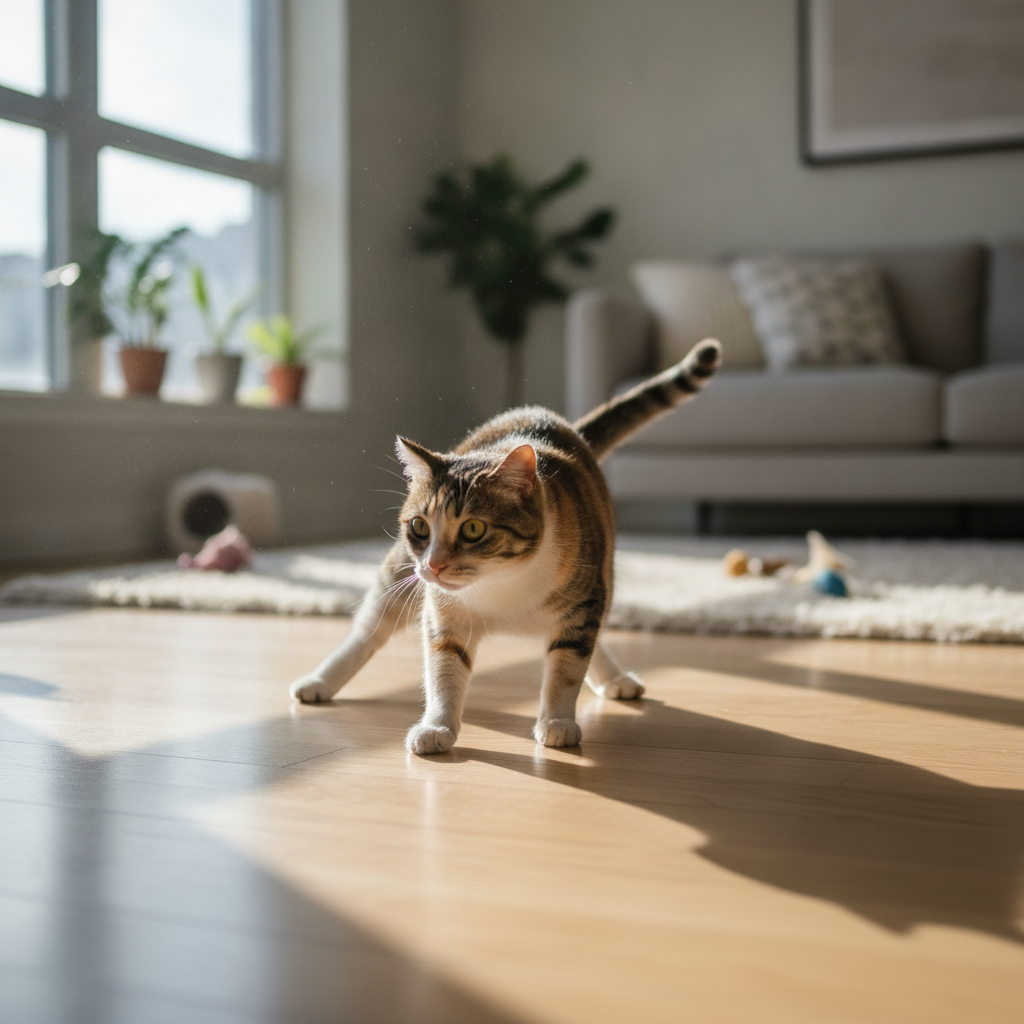
Problems are uncommon, but they do happen — and cats are masters at hiding discomfort, so you need to know the tells. Watch for:
- Scooting — dragging the bottom along the floor or carpet.
- Excessive licking or biting at the area under the tail.
- A sudden foul, fishy odour that lingers.
- Trouble or straining when pooping, or discomfort sitting down.
These behaviours usually signal one of three escalating stages. Impaction is the first: the sac fills with thickened, pasty material that can't drain, often because of soft stools. Infection (sacculitis) follows if impaction isn't resolved — the stagnant sac becomes a breeding ground for bacteria, and now you see redness, swelling, real pain, and possibly yellow, green or bloody discharge. An abscess is the worst stage: a hot, firm, painful lump on one side of the anus that will eventually burst. PetMD stresses that once you are past simple impaction, this is firmly veterinary territory — not something to "have a go at" at home.
Diet, Fibre and a Healthy Weight: Your Real Prevention Plan
Here is the part that actually keeps your cat out of trouble. Because the glands empty mechanically — squeezed by firm poop — stool quality is everything. The single most effective thing you can do is feed a good diet that produces firm, well-formed stools.
Chronic soft stools or diarrhoea are the real villains: loose stool doesn't press hard enough on the sacs, fluid gets retained, and the impaction cascade begins. Fibre helps here — insoluble fibre adds bulk so the stool physically presses the glands, while soluble fibre (think psyllium or plain pumpkin) absorbs excess water to firm up loose stools. Any diet change should be gradual and ideally run past your vet. If you want a deeper dive on building firm-stool nutrition, our complete cat nutrition guide and the cat food calculator are good starting points.
The other big lever is weight. Obesity is a well-documented risk factor — excess fat around the perineal area physically gets in the way of natural emptying. A lean cat with firm stools is a cat whose anal glands you will likely never think about. Use the cat weight calculator to check where yours sits.
Your Litter Box Is the Early-Warning System
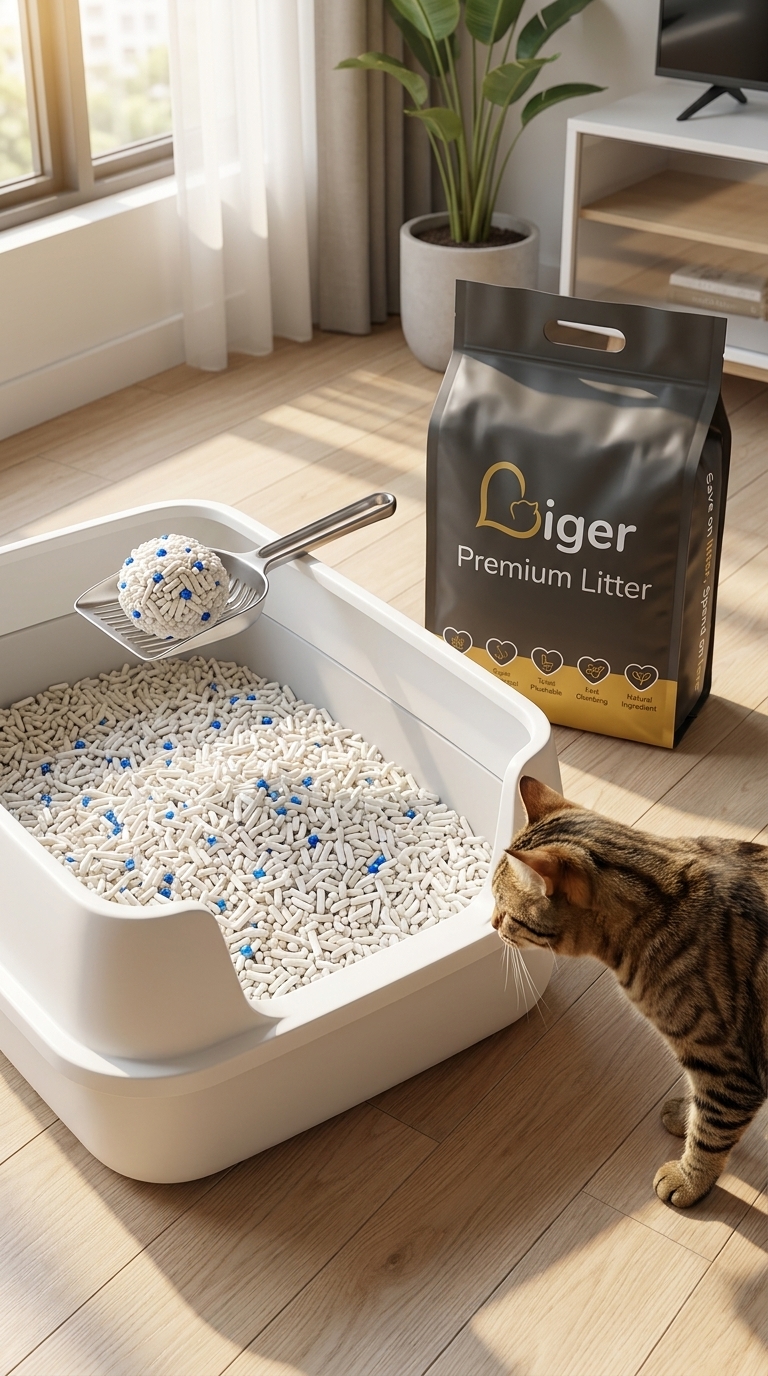
Most owners discover anal gland trouble at the litter box — that's where scooting happens, and it's where you read the one metric that matters most: stool consistency. If you can actually see and assess your cat's poop, you'll catch the soft-stool problems that lead to impaction long before they become an abscess.
This is the unglamorous reason a good clumping litter earns its keep. We use Liger Premium Tofu Cat Litter in our own home with Tiger, Lion, Ping'An and Lucky — it's a low-dust, soft soy-based litter that clumps firmly, so stools and urine clumps are easy to spot, lift and inspect during your daily scoop. It's also flushable and lightly milk-scented, which helps in a humid Malaysian apartment where odour builds fast. Current Liger pricing (as of May 2026): RM21.90 for a single 2kg pack, RM53.90 for 3 packs, RM89 for 5 packs and RM169 for the 10-pack — that 10-pack works out to about RM8.45/kg, with free shipping in Peninsular Malaysia. Not sure how much you need? The litter calculator sizes it to your number of cats. None of this fixes an anal gland problem — but a litter you can actually read is how you spot one early. You can also log changes with our poop frequency checker.
Should You Express Them at Home? (Almost Always: No)
Veterinary sources are unusually blunt on this. Both VCA and PetMD advise against owners manually expressing a cat's anal glands unless a vet has specifically diagnosed a chronic condition and trained you to do it. For the record — and strictly for context, not as a how-to — trained professionals do it externally: gloves on, one person gently restrains the cat, another lifts the tail, places gauze over the anus, and applies gentle inward-and-upward pressure on the sacs to milk them out.
The reason it's a "leave it to the vet" job is the risk list when it goes wrong:
- Pain and tissue trauma — the tissue there is delicate; too much force bruises and hurts.
- Incomplete emptying — you feel "done" but leftover material compacts into a worse impaction.
- Triggering infection — squeezing an already-inflamed gland can drive in bacteria.
- Rupture — the nightmare outcome: too much pressure bursts the sac wall under the skin, turning a manageable problem into a draining, infected emergency.
If you see yellow, green or bloody discharge, that is a sign of existing infection that needs medicine — not more squeezing.
Red Flags: When to Drop Everything and Call the Vet
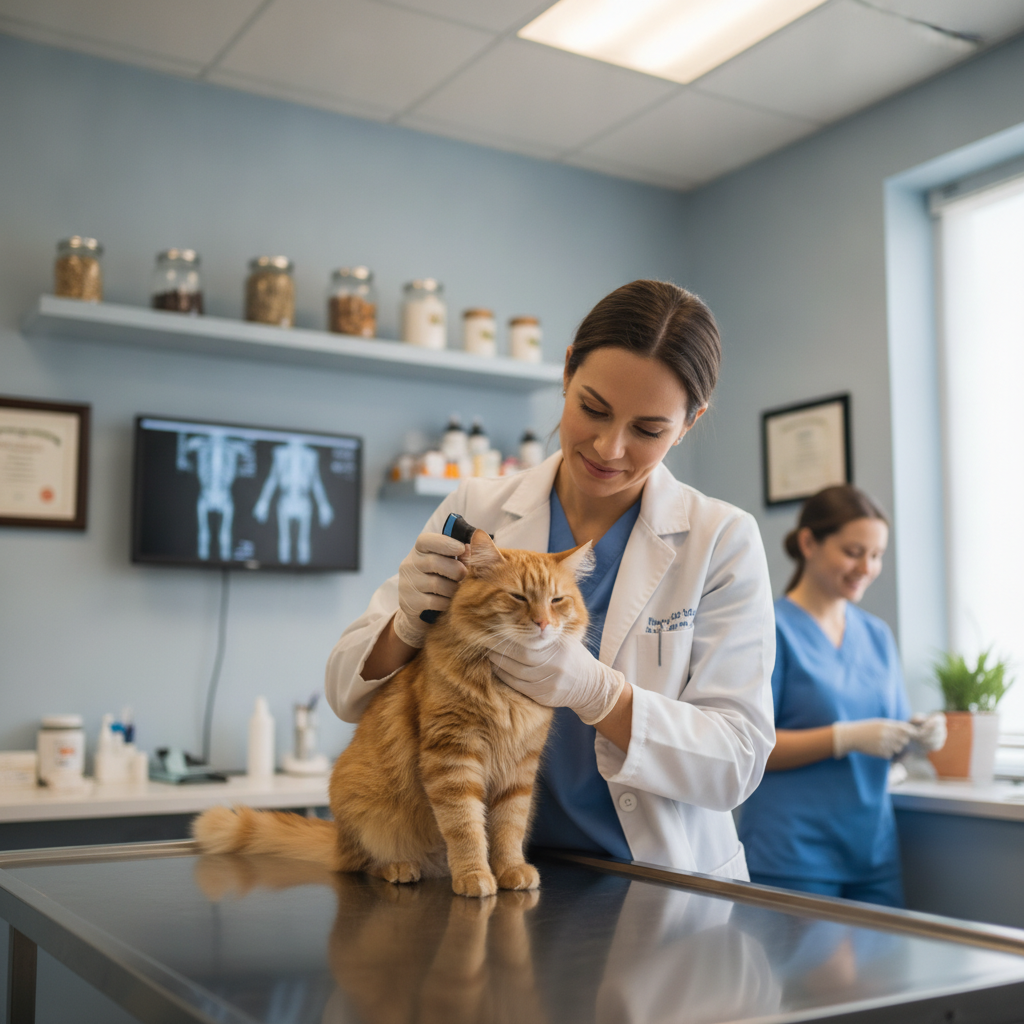
Some signs are not "monitor and see" — they are "go now." Per the Merck Veterinary Manual, get veterinary help immediately if you notice:
- A visible, hot, painful swelling on one or both sides of the anus (a likely abscess).
- An open, draining wound near the anus leaking foul greenish-yellow or bloody discharge (a ruptured abscess).
- Your cat going lethargic, off its food, or crying out — even a gentle cat may hiss or bite when the area is touched.
These don't resolve on their own. Treatment usually means lancing and flushing the sac (often under sedation because it's so painful), antibiotics, pain relief, and a cone to stop licking. The earlier you go, the simpler it is.
The bottom line: feline anal glands are a system that, for the vast majority of cats, runs itself. Your job isn't to squeeze — it's to feed well, keep your cat lean, watch the litter box, and call the vet for the rare red flag. For the bigger picture on keeping your cat clean and comfortable, head back to our complete home grooming guide.