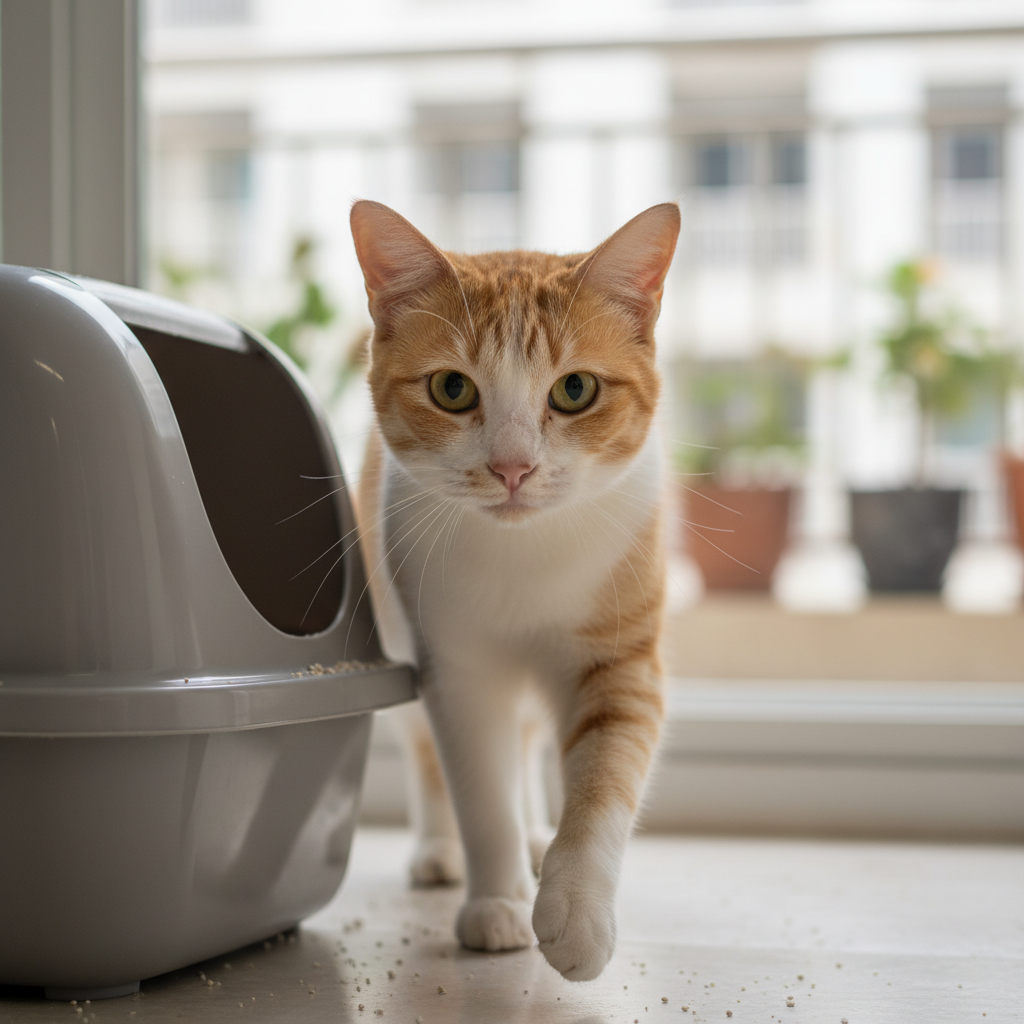
Lucky has always been a chaos goblin. Born 13 September 2024, he treats the litter box the way a child treats a sandcastle. So when he suddenly stopped covering his poop for almost a week, my first thought wasn't 'weird' — it was 'oh no, is he sick?'
If you've just walked into your condo bathroom in PJ, Penang or JB and found an uncovered surprise sitting on top of the litter, this guide is for you. We'll walk through why cats bury waste in the first place, the 8 most common reasons they suddenly stop, when it's an emergency, and a 7-day diagnostic plan you can run at home before the vet.
Why Cats Bury Their Poop in the First Place

Burying waste isn't a manners thing — it's biology. Domestic cats inherited the behaviour from their African wildcat ancestors, where covering urine and faeces served two survival purposes: hiding their scent from larger predators, and avoiding territorial conflict with more dominant cats in the area (PetMD on burying behaviour).
Interestingly, not every cat does it. In the wild, dominant cats — the ones at the top of the social hierarchy in a colony — often leave their droppings uncovered as a literal 'this is my turf' billboard. Subordinate cats bury. So when a house cat covers their poop, behaviourists generally read it as the cat acknowledging that you are the bigger, more dominant member of the household (ASPCA litter box problems).
This means two things:
- Some cats simply never bury well. Kittens learn from their mothers; a kitten weaned too early or from a non-burying queen may never develop the habit. That's not a problem — that's just personality.
- A cat that used to cover and suddenly stops is the case that matters. Sudden is the keyword. It almost always points to one of three things: pain, environment, or social stress.
The Decision Tree: When Sudden Change = Problem

Before we drown in possible causes, here's the quick triage we used with Lucky.
Step 1: Is this new behaviour?
If your cat has always been a half-hearted burier, relax. Some cats are simply bad at it. Move on with your day.
Step 2: Did the change happen suddenly (within 1–7 days)?
Yes → high suspicion of medical cause. Cats hide pain, and a sudden behavioural change is often the first visible sign.
Step 3: Are there ANY of these red flags?
- Straining in the litter box with little or no urine produced
- Crying or vocalising while peeing or pooping
- Blood in urine or stool
- Vomiting, lethargy, refusing food for more than 24 hours
- Repeated trips to the litter box with nothing coming out
Any one of these = vet today, not tomorrow. Urinary blockage in male cats can kill within 24–48 hours, and the American Association of Feline Practitioners considers it a true emergency (AAFP Cat Friendly on FLUTD).
Step 4: No red flags?
Then we can investigate the environment and behaviour for 7 days before escalating to a clinic visit. Plan below.
The 8 Reasons Your Cat Suddenly Stopped Covering

Medical Reasons (Always Rule Out First)
1. Arthritis and joint pain
This is the silent epidemic in cats over 6. Cornell Feline Health Center research shows that around 60% of cats over 6 years old have radiographic evidence of osteoarthritis, climbing to roughly 90% by age 10 (Cornell Feline Health Center). Digging and scratching at litter requires repeated bending of the spine and shoulders. If that hurts, your cat will skip the digging entirely — pee, poop, get out.
Watch for: stiffness on waking, reluctance to jump up to the sofa, sitting at the edge of the box instead of stepping fully in.
2. Urinary tract issues (FLUTD, UTI, cystitis)
Feline lower urinary tract disease (FLUTD) is one of the most common reasons cats start associating the litter box with pain. The cat enters, gets a burning sensation, and bolts before doing the 'clean up' step. In Malaysia, the combination of tropical heat and indoor air-con drying cats out means dehydration-related urinary issues are unfortunately common (Merck Veterinary Manual). If you suspect this, our free urinary health checker walks you through the warning signs.
3. Dental disease
This one surprises most owners. To bury, a cat lowers their head and shoulders. With dental pain — and roughly 50–90% of cats over 4 years have some form of dental disease according to the American Veterinary Dental College — that downward head position becomes uncomfortable, so the cat skips it.
4. Cognitive dysfunction syndrome (CDS)
For senior cats (11+), feline cognitive dysfunction works much like dementia. Cats simply forget the sequence. You'll often see other signs too: nighttime yowling, getting 'stuck' in corners, staring at walls.
5. Declawed paws
Malaysian vets generally don't declaw, but if you've adopted an ex-pat's cat or a rescue from overseas, sensitive amputated paws make digging genuinely painful. These cats often urinate or defecate just outside the box too.
Environmental Reasons (Easiest to Fix)
6. Litter box too small, too dirty, or wrong texture
The rule of thumb from the AAFP environmental needs guidelines: a litter box should be at least 1.5 times the length of your cat from nose to base of tail. Most pet-shop boxes in Malaysia are too small for adult cats over 4 kg. If your cat can't comfortably turn around to dig, they won't.
Litter depth matters too — 3 to 4 inches (about 7–10 cm) is the sweet spot. Too shallow and there's nothing to dig with. Too deep and large cats feel unsteady. Use our litter box size calculator if you're unsure what your cat actually needs.
Texture matters more than people realise. Borchelt's classic Cornell study on litter preference, replicated many times since, found cats overwhelmingly prefer fine sandy substrates over pellets or crystals. If you recently switched from clay to coarse pine pellets, that could be your answer right there.
7. Stress from environmental change (Malaysian context)
Malaysian cat parents face two unique stressors: tropical heat and condo confinement. When the air-con goes off and the bathroom hits 32°C, cats want to get out of the box fast. Skipping the burial saves seconds. Add renovation noise from a neighbour, a new baby, a moved sofa, or even just a new scented detergent on the bath mat, and stress builds quickly. Indoor cats in Cornell's house-soiling research show environmental change is one of the top three triggers for litter box behaviour shifts.
Behavioural Reasons
8. Multi-cat dominance display
If you have multiple cats — we have four (Tiger, Lion, Ping'An and Lucky) — one of them may be making a statement. Uncovered poop is the feline equivalent of a flag. The dominant cat (often, not always, an unneutered male, or a confident female) is telling the others: this territory is mine. The fix isn't to scold; it's to add resources. The AAFP standard is n+1 litter boxes where n = number of cats. Four cats = five boxes, spread across at least two rooms.
Tension between cats also shows up in pee — if you're battling that too, our cat pee solver tool diagnoses the most common multi-cat triggers in a few minutes.
Lucky's Story: How We Actually Fixed It

Back to Lucky. End of March 2026, he stopped covering. We ran the decision tree:
- No straining, no crying, eating normally → probably not urinary blockage.
- Box was clean (we scoop daily) → not hygiene.
- But — and this is the embarrassing part — we had just switched his usual milk-scented tofu litter to a clumping clay we wanted to test. New texture, dustier, smelled different.
We switched back to tofu litter, scrubbed the box with unscented soap, and within 48 hours Lucky was back to enthusiastic burial. Sometimes the answer is exactly that boring. We still booked a quick vet visit a week later to rule out anything we missed — cheaper than regret.
Your 7-Day Diagnostic Plan

If you've ruled out red-flag emergencies, run this checklist over a week. Take notes — your vet will love you for it.
Days 1–2: Observe and document
- Photograph the box state morning and night.
- Note: which cat is the culprit (if multi-cat), what they eat, water intake, energy levels.
- Look for any straining, frequency changes, or accidents outside the box.
Days 3–4: Audit the environment
- Measure the box. Is it at least 1.5x the cat's body length?
- Check litter depth — 3 to 4 inches?
- Was the litter type changed recently? If yes, switch back.
- How clean is it? Scoop twice a day for the diagnostic period.
- Where is it? Quiet, low-traffic, away from food bowls?
Days 5–6: Reduce stress variables
- Any new household members, pets, furniture, scents? Remove or contain if possible.
- Multi-cat household? Add an extra box in a different room.
- Senior cat (7+)? Lower the box entry — cut down one side if needed.
Day 7: Decide
If burying behaviour resumed during this week — you found the trigger. If nothing changed, or new symptoms appeared (lethargy, appetite drop, repeat litter visits), book a vet appointment with your notes. In Klang Valley and Penang, vets at clinics like The Vet Practice, AsiaVets, and Mount Pleasant generally appreciate owners coming in with a clear timeline.
When It's Actually Not a Problem

One last reality check: somewhere between 5% and 15% of cats just don't bury. They never did. If your cat has a long history of half-hearted scratching, or covers urine but leaves poop on top, and is otherwise eating, drinking, playing and pooping like normal — they're fine. Don't pathologise personality.
The thing that should always trigger investigation is sudden change in a previously consistent behaviour. That's the data point that matters. Everything else is just feline taste.
Quick Takeaway
Sudden stop in burying = run the red-flag check first (urinary, lethargy, blood, crying). If clear, audit the box (size, litter, depth, cleanliness), then look at recent household stress. Most cases fix at home in a week. The ones that don't deserve a vet visit. Trust the change in pattern more than the change itself.
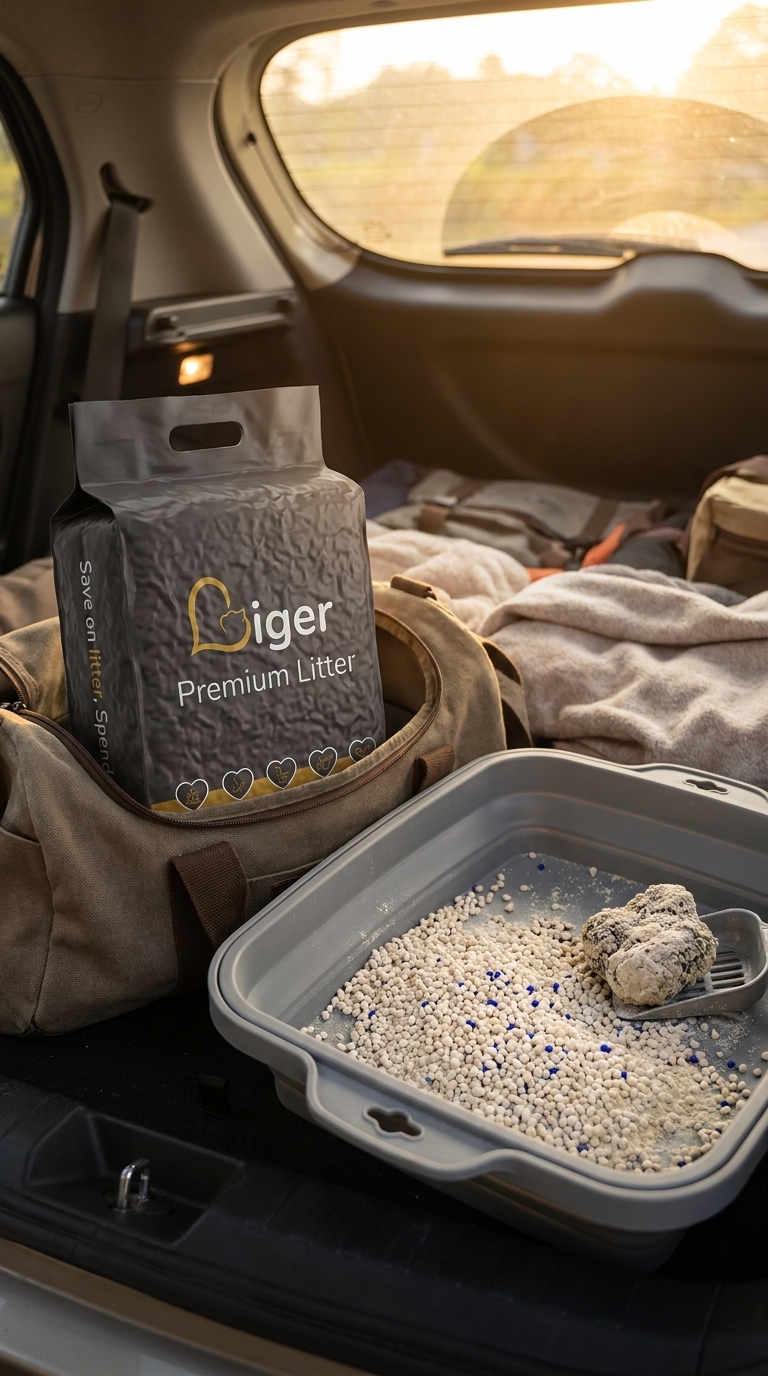
If you're rebuilding your setup from scratch and want a litter that's gentle on paws, low-dust for our Malaysian humidity, and one your cat won't reject — the milk-scented tofu litter is what we use on all four of our cats, Lucky included. Picky goblins approved.