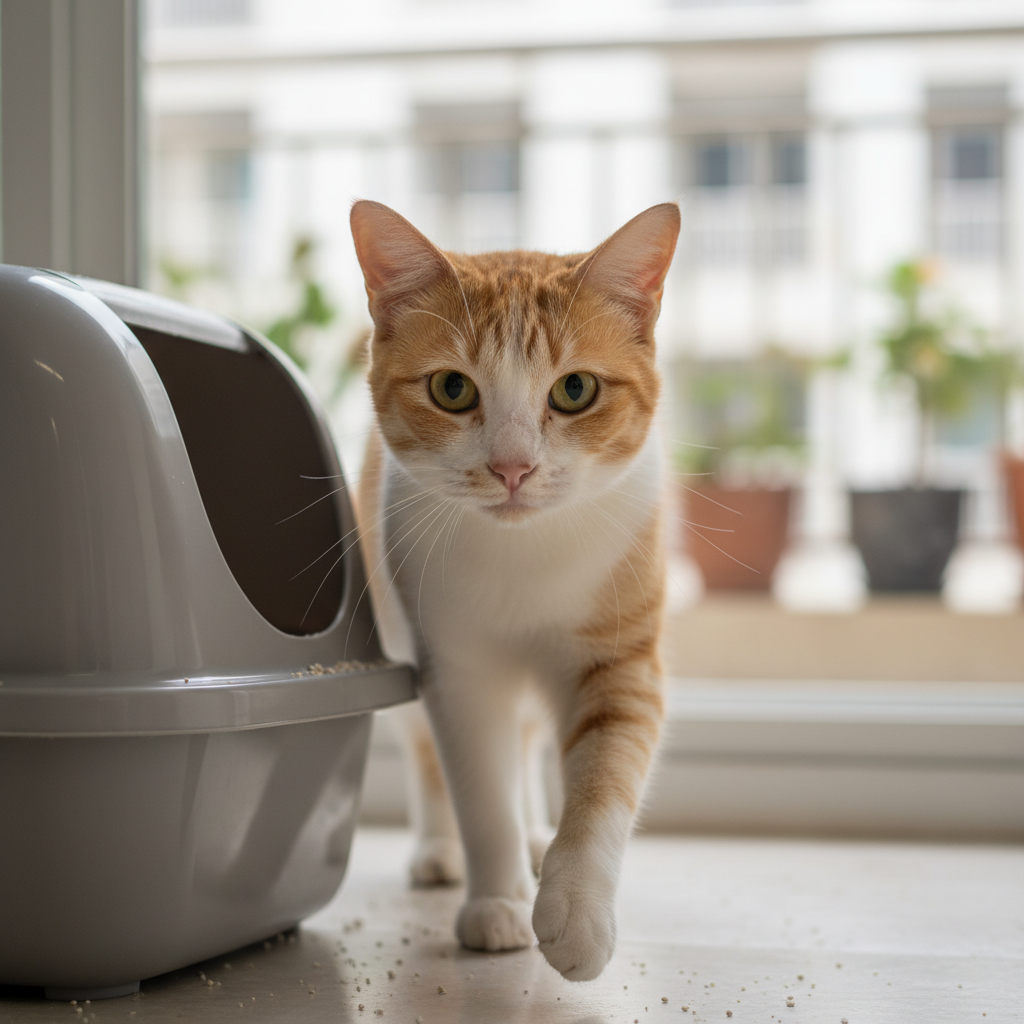
You watch your 13-year-old cat approach the litter box. She pauses at the edge. Then she does that thing — the slow, careful step, like the litter is too sharp, too uneven, too hard. Sometimes she gives up entirely and pees on the bathroom mat instead. You assume it's behavioral. It's almost certainly not.
For cats with paw sensitivity — whether from osteoarthritis, recent paw surgery, pillow paw (plasma cell pododermatitis), allergic dermatitis, or healing injuries — the litter substrate under their feet is one of the most under-discussed comfort variables in feline care. This guide is the deep-dive Malaysian cat parents have been asking for: what's actually happening in your cat's paws, how different litter categories feel to a painful pad, and how to choose without making medical promises you can't keep.
🚨 First: This Is Not a Substitute for the Vet
If your cat is limping, lifting paws, licking pads obsessively, refusing the litter box, or showing any sign of pain — book a vet appointment before changing litter. Litter texture is a comfort variable. It is not a treatment. A vet workup (often including radiographs, paw cytology, or blood work) is what diagnoses the underlying cause. This guide helps you support recovery after a diagnosis, or as part of a broader comfort plan agreed with your vet.
Why Sensitive Paws Are More Common Than You Think
Most Malaysian cat parents assume "sensitive paws" is a niche issue. The data says otherwise. Radiographic surveys show that approximately 90% of cats over 12 years old have signs of osteoarthritis, and around 61% of cats over 6 years already show radiographic evidence of arthritis in at least one joint — yet only about 13% are ever formally diagnosed. That alone means millions of cats are quietly stepping into litter boxes with painful joints every day.
Add post-surgical patients, paw injuries from outdoor adventures, allergic foot dermatitis (more common in Malaysia's humid, fungal-prone climate), and pillow paw, and you realise: this is not a niche. It is one of the most common reasons cats stop using the litter box — and one of the easiest to overlook because cats are pathological pain-hiders.
Conditions That Make a Cat's Paws Sensitive
Feline Osteoarthritis (The Most Common, Most Missed)
Osteoarthritis doesn't just affect hips and knees. It affects carpus (wrist), tarsus (ankle), elbow, and the small intervertebral joints — all of which transmit force through the paw pads when a cat steps onto litter. The deeper a cat sinks into soft litter, the more the joints flex. The harder and more uneven the substrate, the more focal pressure on inflamed joints. Zoetis notes that more than 90% of cats aged 12 and older show radiological evidence of osteoarthritis — most going untreated because owners attribute changes to "just getting old."
Untreated chronic pain has a worse secondary problem: central sensitization, where the nervous system itself becomes hypersensitive, so even normal stimuli — like stepping on slightly textured litter — feels intensely painful. This is why a previously tolerated litter can suddenly become unbearable in a senior cat.
For the full medical picture, read our complete guide to feline osteoarthritis in Malaysia and the companion age-based litter selection guide for senior cats.
Post-Surgery Recovery (Including Onychectomy)
If your cat has just had a paw, claw, or distal limb procedure, vet teams almost universally recommend switching to a soft, dust-free litter for at least 10–14 days post-op, or until incisions are confirmed healed. This protects fresh incisions from contamination, prevents fine particulate from lodging in wounds, and reduces mechanical pressure on the surgical site.
A note on declaw (onychectomy): in Malaysia, declawing is not a standard practice — most local vets will not perform elective declaw, and rightly so. The American Association of Feline Practitioners (AAFP), the International Society of Feline Medicine (ISFM), and most modern veterinary bodies oppose elective onychectomy because it is an amputation of the distal phalanx (the last bone of each toe), not just a "nail removal." Malaysian cat parents are most likely to encounter this with rescued or imported cats who were declawed elsewhere. If you have one, soft substrate matters for life, not just two weeks — the lifelong gait change shifts paw pad loading in ways that can cause chronic discomfort on hard litter.
Plasma Cell Pododermatitis ("Pillow Paw")
This immune-mediated condition causes the central metacarpal/metatarsal pad to swell into a soft, sometimes ulcerated, "pillow." It's painful, often bilateral, and usually requires immunosuppressive therapy from a vet. While the pad heals, hard or sharp substrate is genuinely traumatic. Soft, low-pressure litter is supportive — not curative.
Allergic Dermatitis and Skin Conditions
Malaysia's tropical climate is a paradise for fungal paw dermatitis, allergic interdigital dermatitis, and contact reactions. If your cat is licking paws obsessively or has reddened web spaces between toes, this is a vet-first situation. Once the cause is identified, switching to a low-dust, fragrance-free litter avoids further irritation. Our Malaysian cat skin disease guide covers diagnostic pathways in detail.
Acute Paw Injuries
Cuts from broken glass, thermal burns from a sun-heated balcony floor, foreign bodies, or insect stings all create sudden paw sensitivity. The recovery rules are the same as post-surgery: soft, low-dust, non-irritating substrate until the vet confirms healing.
Paw Pad Biomechanics 101: Why Substrate Actually Matters
A cat's paw pad is not a uniform cushion. It is a layered structure of keratinized epidermis, a thick fatty subcutaneous shock-absorber, and highly innervated dermis loaded with mechanoreceptors and nociceptors (pain receptors). Pressure from the cat's body weight is transmitted through the digital pads and the central metacarpal pad — meaning the substrate the paw lands on directly modulates how much focal force each receptor experiences.
Two variables of litter substrate matter most for sensitive paws:
- Particle hardness and edge geometry. Hard particles with sharp edges create focal pressure points. Softer, rounded particles distribute load. The Feline Grimace Scale — a validated clinical pain assessment — shows cats reliably react to small differences in mechanical stimulus when in a painful state.
- Particle stability under load. Litter that shifts dramatically (deep, fine sand) makes the carpus and tarsus flex more — bad news for arthritis. Litter that holds its position under the paw reduces joint excursion.
This is also why Royal Canin notes that kittens form lifelong litter substrate preferences between 2 and 9 weeks of age — paw pad sensory experience is hardwired early. By the time pain arrives in middle age, an unfamiliar substrate is a double penalty: discomfort plus unfamiliarity.
How Litter Categories Feel to a Sensitive Paw
Hard Bentonite Clumps: The Pressure Problem
Sodium bentonite clay is the workhorse of Malaysian cat litter shelves. It clumps hard — which is great for scooping, less great for sensitive feet. Dried clumps form rock-like aggregates with irregular edges. A cat with arthritis stepping onto a partially clumped patch is essentially walking on small, sharp pebbles. Add in the higher dust load common to bargain clay litter, which Cornell Feline Health Center associates with worsened respiratory irritation, and you have a substrate that's hostile on multiple levels for recovering cats.
Crystal Silica: The Edge Problem
Silica crystal litter is popular for odor control, but the granules are essentially small irregular shards of dried silica gel. They have sharp edges. Anecdotally — and pet community shorthand for this is well known — silica scores high on the so-called "Lego foot" pain scale, while soft pellet litter scores low. Setting aside the unscientific framing, the underlying physics is real: angular sharp particles concentrate force at edges, which is exactly what an inflamed paw cannot tolerate.
Pine and Walnut Shell Pellets: Variable Hardness
Pine and walnut pellets are softer than clay but still firm wood/shell material. They're a step up for sensitivity but can still feel hard underfoot, especially fresh pellets that haven't broken down. Quality varies widely between brands.
Paper Pellets: Lightweight Compromise
Recycled paper pellets are genuinely soft — many vets recommend them specifically for the first 10–14 days after paw surgery. The trade-off is poor odor control, low absorbency for multi-cat households, and they fall apart quickly into a slurry.
Tofu and Soy-Starch Pellets: Why They're Often Recommended for Sensitive Paws
Pea/soy-starch tofu pellets are typically 5–8 mm cylinders that are physically softer than clay clumps and significantly less sharp-edged than silica crystals. They compress slightly under paw weight, distributing load across the pad rather than concentrating it on edges. They are also typically very low dust — Liger Tofu Cat Litter has a certified ultra-low dust level of 0.91% — which matters for cats with paw dermatitis, allergic skin disease, or post-surgical incisions.
A note on the design detail: a 2 mm strip diameter helps reduce tracking and prevents litter from getting wedged into the paw pads — a real concern for cats with widely spaced toe pads or those recovering from interdigital procedures.
None of this makes tofu litter a treatment. It is a comfort variable that stacks with vet-prescribed pain management, weight control, and the rest of an arthritis or recovery plan.
The "Sample Pack" Approach: Why Buy 1 Pack First
Paw sensitivity is individual. A litter that's comfortable for one arthritic cat may be ignored by another with a different gait, weight, or paw geometry. Buying a 10-pack of a new litter only to find your cat rejects it is expensive and stressful.
The smarter pattern: buy a single pack first (Liger's 1-pack is RM21.90, free West Malaysia delivery), set it up alongside the cat's existing box for 5–7 days, and watch behavior. Does she enter without hesitation? Does she scratch the litter to cover, or just exit quickly? Is she licking pads after using the box? Once you have your answer, you can commit to a larger size — the 3-pack at RM53.90, 5-pack at RM89, or 10-pack at RM169.
Recovery-Phase Litter Box Setup
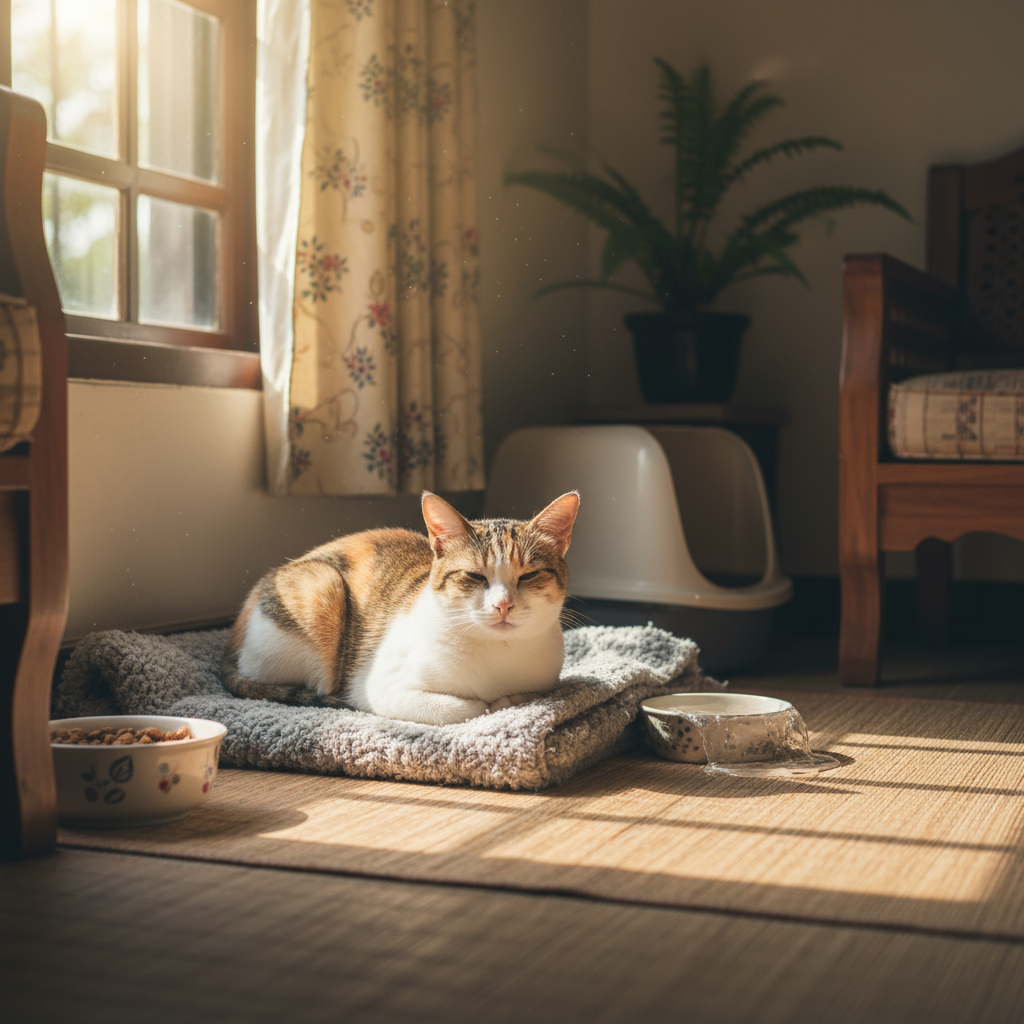
For arthritic or post-surgical cats, the litter itself is only part of the equation. Box height matters enormously. For senior cats with limited mobility, the entry threshold should be no more than 5–7 cm. A standard 15+ cm box edge is a barrier; an arthritic cat may simply give up and find a softer surface elsewhere.
Practical checklist during recovery:
- Provide at least one low-entry box per floor of the house (cats with mobility issues should not have to climb stairs to find a box)
- Keep litter depth shallow — 2–3 cm — during the first 14 days post-op, so the cat's paws don't sink deeply
- Use a non-slip mat outside the box for traction (arthritic cats often hesitate on slippery tile)
- Soft, low-dust substrate (tofu, paper pellet, or vet-recommended option)
- Keep boxes meticulously clean — incisions are a sterility concern, and arthritic cats have lower tolerance for slightly soiled boxes
If your cat has already started avoiding the box because of pain, read why cats suddenly stop using the litter box — pain is one of the top three causes.
Switching Litter During Recovery: 7-Day Protocol
You don't want to swap a familiar litter for a totally new substrate the day after surgery. Cats already under stress can reject the new texture and develop substrate aversion that lingers long after the medical issue resolves. Standard veterinary advice is a gradual transition:
- Days 1–2: 75% old litter + 25% new litter
- Days 3–4: 50% / 50%
- Days 5–6: 25% old + 75% new
- Day 7+: 100% new litter
If the surgery is imminent, ideally start the transition 1–2 weeks before the procedure, so your cat is already comfortable with the new substrate by the time they're recovering. If that's not possible, do the transition during the recovery window with extra vigilance — monitor for litter box avoidance and increase the speed of transition only if your cat is accepting the change well.
Multi-Cat Households: Honest Trade-Offs
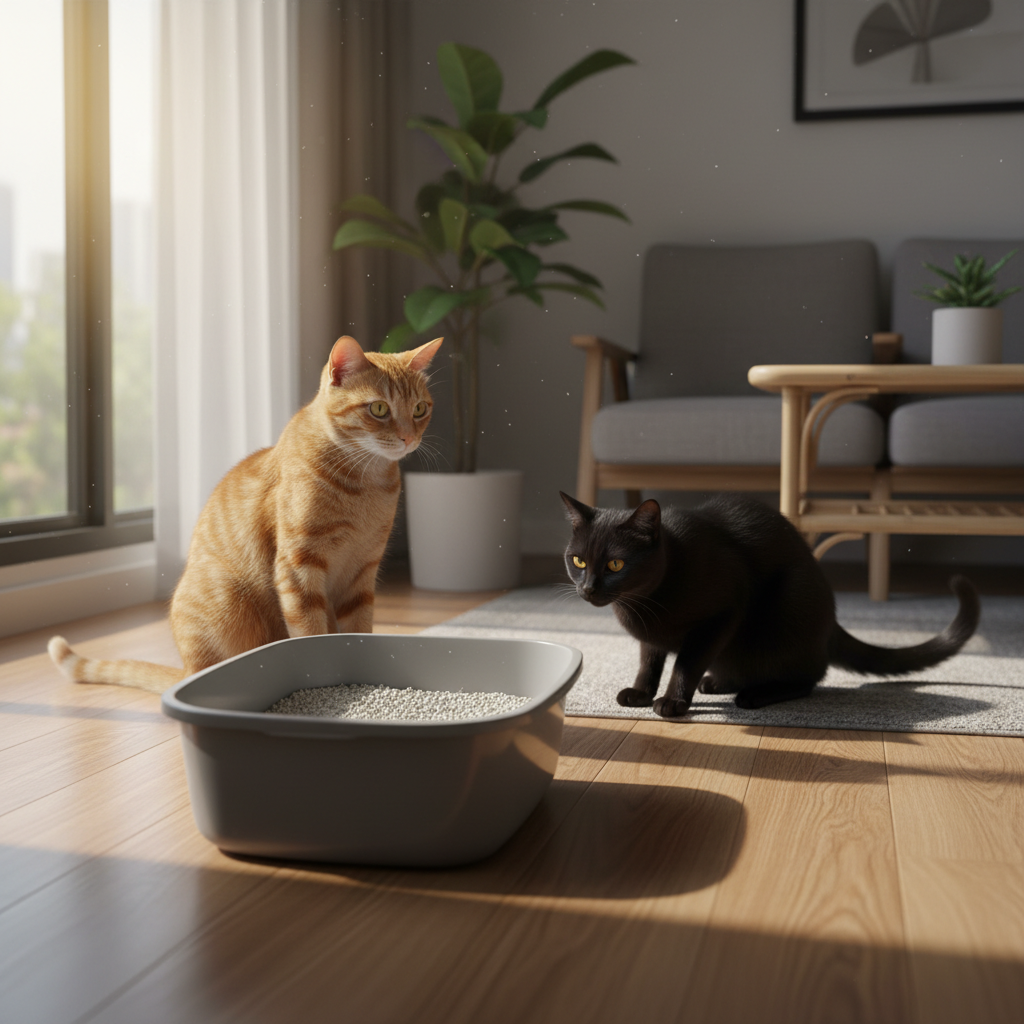
If you have three cats and only one has sensitive paws, what do you do? The honest answer: you don't have to convert every box. The AAFP "n+1 rule" (one box per cat plus one extra) gives you cover here. Dedicate the low-entry, soft-litter setup to the cat who needs it, and let the others use their preferred substrate in separate boxes. Cats are individuals — and one cat's "perfect" litter is another's "too soft, doesn't bury properly."
| Scenario | Recommendation |
|---|---|
| 1 sensitive cat + 1–2 healthy cats | Dedicate 1 soft-pellet box to sensitive cat; keep existing setup for others |
| All cats are senior | Convert all boxes to soft, low-entry setup gradually |
| Sensitive cat is dominant | Place soft-litter box in their preferred territory; healthy cats can use other rooms |
| Sensitive cat is bullied | Place soft-litter box in a quiet, low-traffic area with two exits |
Compare different substrates side-by-side with our litter comparison tool and check dust levels with the dust level comparison tool.
When to Call the Vet (Red Flags)
Switching litter is not a substitute for medical care. Call your vet immediately if you see:
- Limping that's getting worse, not better
- Complete refusal to enter the litter box (especially in a previously well-trained cat)
- Blood in urine, blood on litter, or pus from a healing incision
- Swelling, redness, or discharge from a paw pad
- Weight loss, reduced appetite, or hiding behavior
- Excessive paw licking or chewing
- Vocalisation when using the box
If your cat shows a Feline Grimace Scale score of 4 or higher, that's the threshold for immediate analgesic intervention — call your vet. Cats are excellent at hiding pain; objective scales catch what behavioral observation alone misses.
For ongoing urinary concerns that often accompany litter box avoidance, our urinary health checker can help you triage symptoms before the vet visit.
Long-Term Maintenance: Joint Comfort Beyond Litter
For chronic conditions like osteoarthritis, litter is one variable. The full comfort stack typically includes vet-prescribed pain management (NSAIDs designed for cats, gabapentin, or newer monoclonal antibody therapies your vet may discuss), weight management (every kilogram of excess body weight loads joints), environmental modifications (ramps, low beds, food and water at floor level), and gentle activity. Litter sits inside this broader plan — never on top of it.
Related care fundamentals:
- How to trim cat nails safely — overgrown claws change paw biomechanics and worsen sensitivity
- Clumping vs non-clumping cat litter — the underlying category trade-off
- Feline chronic gingivostomatitis (FCGS) guide — cats with multiple chronic pain conditions need comprehensive pain management, not just one fix
FAQs
Is tofu litter actually softer than clay?
Yes — physically. Tofu pellets are typically compressible soy-starch cylinders, while clay litter compresses into hard angular clumps once wet. Under a paw pad, tofu deforms slightly and distributes load; bentonite clumps act like small pebbles. This is mechanical fact, independent of brand. Whether your specific cat finds it more comfortable is individual — try a single pack before committing.
Can I use paper pellets for an arthritic cat long-term?
You can, but be aware of the trade-offs: paper pellets disintegrate into a wet mash quickly, have weaker odor control, and need more frequent full changes. For a single-cat household with a senior cat, this is manageable. For multi-cat households, tofu typically performs better long-term.
My cat had paw surgery — is regular sand the safest?
No. "Regular sand" (fine play sand) has very small particles that lodge in incisions easily. Vet teams almost universally recommend paper pellets or large, low-dust pellet litter for the first 10–14 days post-op. Confirm with your surgeon — surgical site matters.
My cat is declawed (rescued from overseas). What should I use for life?
Declawed cats have altered weight distribution across the paw permanently — they often shift weight backward, increasing pressure on the carpus and elbow. Soft, compressible substrate helps lifelong, not just during the initial recovery. Tofu and large-pellet litters are common long-term choices. Discuss with your vet, especially if you see signs of secondary arthritis (which is well-documented in declawed cats).
How do I know if my cat's litter is causing paw discomfort vs another problem?
Watch the entry behavior. A cat who hesitates at the box edge, shakes paws after stepping in, exits without burying, or vocalises in the box is telling you something. But these symptoms also overlap with urinary disease, anal gland issues, and box cleanliness problems. The honest answer: see your vet first, change litter second. If the vet rules out medical causes and behavior persists, the substrate is a strong next lever.
What's the cheapest soft litter that's still vet-acceptable?
Paper pellets are usually the cheapest soft option, but you'll go through them faster. Tofu litter typically lasts longer per kilogram due to better absorbency. Run the math per month, not per bag. For a single sensitive cat, Liger's 1-pack at RM21.90 lets you test before committing — the 10-pack at RM169 is the lowest cost per kilogram once you know it works.
A final note on positioning: Liger Tofu Cat Litter is one comfort variable for cats with sensitive paws. It is not a treatment for arthritis, surgical recovery, pillow paw, or any medical condition. Use it as part of a vet-led care plan — never as a substitute for one.