Every Raya, Deepavali, and CNY in Malaysia, the same panicked WhatsApp message lands in cat group chats: "Eh, balik kampung how, my cat's litter box damn heavy, cannot bring lah." Then comes the worst decision in cat parenting — leaving without a real litter plan and praying the cat "holds it" for six hours in the car. Spoiler: she will not. She will pee on your back seat at the Tapah R&R, and you will spend the rest of mudik smelling like regret.
This guide is the Malaysian playbook for cat travel litter — from a 1-day emergency vet run to a permanent interstate move. We will cover the portion math (how much litter per cat per day), portable tray options that actually fit in a Myvi boot, hotel and Airbnb etiquette, and the 5-point cat-sitter handover that stops accidents from happening while you are away.
Why "Just Bring the Big Bag" Doesn't Work
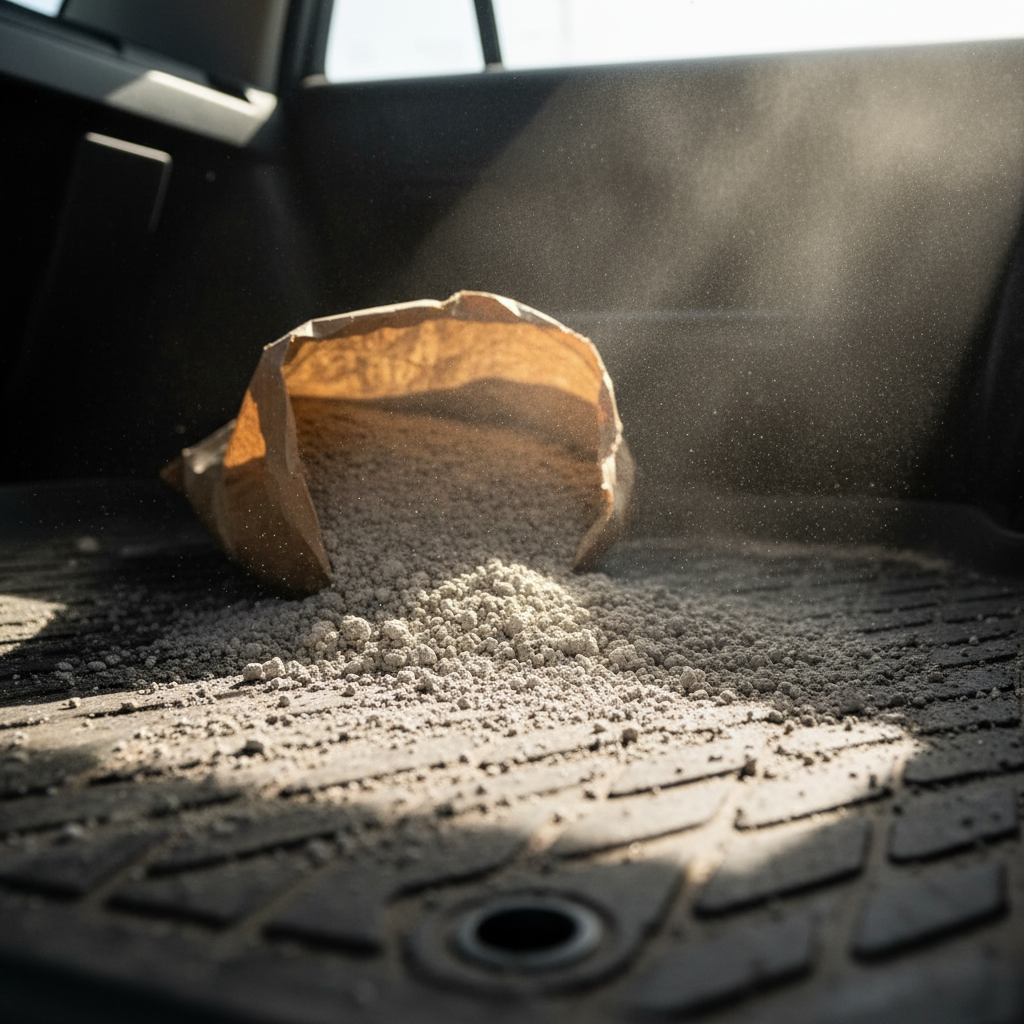
The instinct is right — bring litter from home so the smell is familiar. The execution is wrong. A standard 10kg bentonite clay bag in a Myvi boot during a Genting climb is a recipe for a dust-coated interior. Three problems compound:
- Weight: Clay litter is 4-5x denser than tofu pellets. A 10kg clay bag occupies the same physical volume as roughly 2-2.5kg of tofu — meaning you carry 5x the dead weight for the same number of "litter days."
- Dust trail: Bentonite throws fine silica dust every time the car corners. By the time you reach Ipoh, the boot lining, the spare tyre well, and your kid's car seat all smell like a wet quarry.
- Disposal nightmare: Clay clumps cannot be flushed. In a kampung house with septic tanks and outdoor bins, scooped waste sits for days attracting flies.
The fix is not "bring less" — it is bring smarter. Tofu litter's structural advantages (1.5mm pellets, food-grade soy, flushable) were practically engineered for travel, even if nobody markets it that way.
The Travel Litter Math: How Much Per Day?
The single most useful number in cat travel: one healthy adult cat uses roughly 150-200g of tofu litter per day in a clean box (full daily scoop, no top-up replacement). Multiply by trip length, add a 30% buffer for accidents and re-litter cycles, and you have your travel ration.
| Trip length | Per cat ration | 1-pack (2kg) covers |
|---|---|---|
| 1 day (vet trip) | ~250g | 8 cats easily |
| 2-3 days (weekend mudik) | 500-800g | 2-3 cats |
| 5-7 days (Raya stay) | 1.2-1.8kg | 1 cat exactly |
| 14 days (long Raya + visit relatives) | 2.5-3.5kg | Bring the 3-pack (RM53.90) |
For exact per-cat math factoring in your cat's weight and water intake, use our tofu litter calculator — it returns grams per day and translates to bag size.
Scenario 1: The Emergency Vet Trip (1 Day)
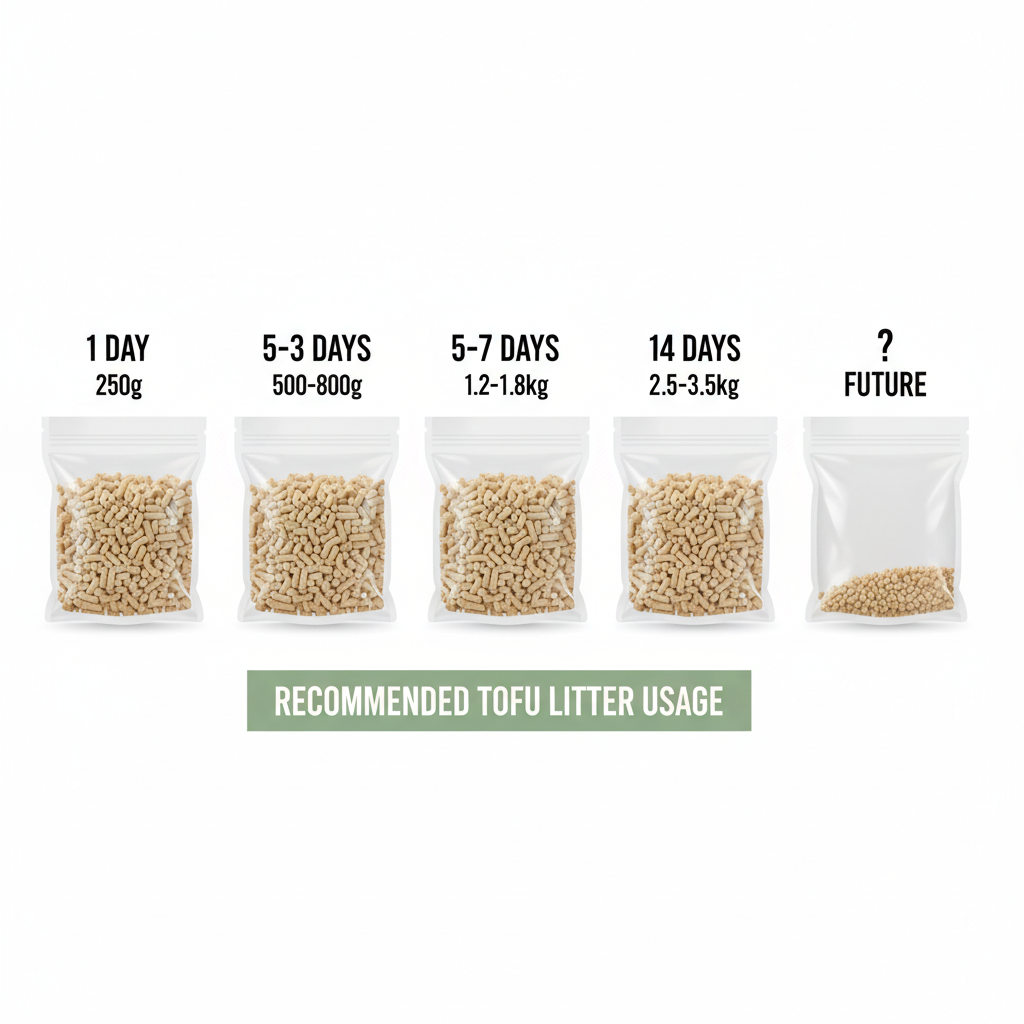
You only need ~250g — about two cupfuls. Pre-portion it the night before into a ziplock bag and toss it in the carrier. International Cat Care notes that the carrier itself should already feel like a safe space, with familiar bedding and a thin layer of familiar litter at the bottom in case of stress urination (iCatCare: Transporting your cat).
A Liger 1-pack (RM21.90, 2kg) is the ideal vet-trip starter — small enough to live permanently in your "cat go-bag" without expiring, light enough that the bag won't burst the carrier base.
Scenario 2: Weekend Mudik (2-3 Days)
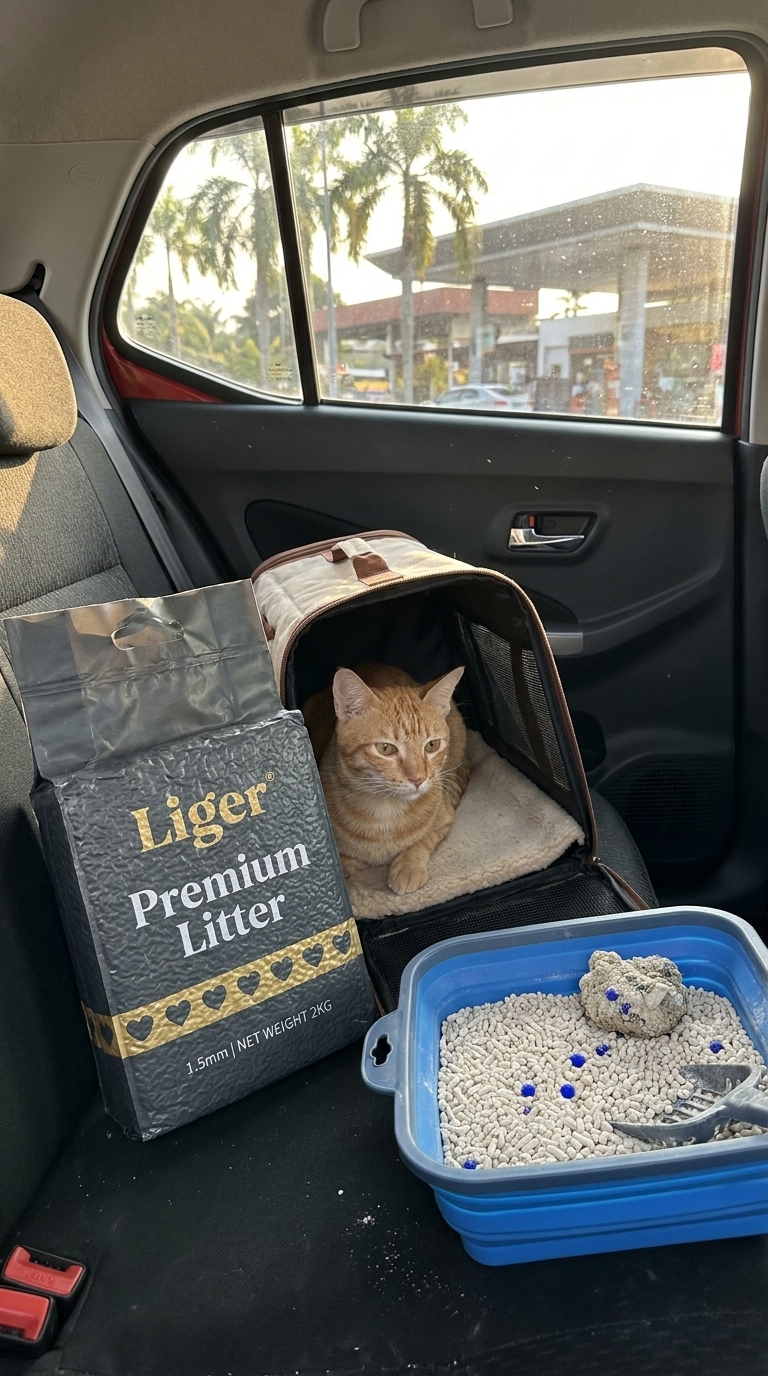
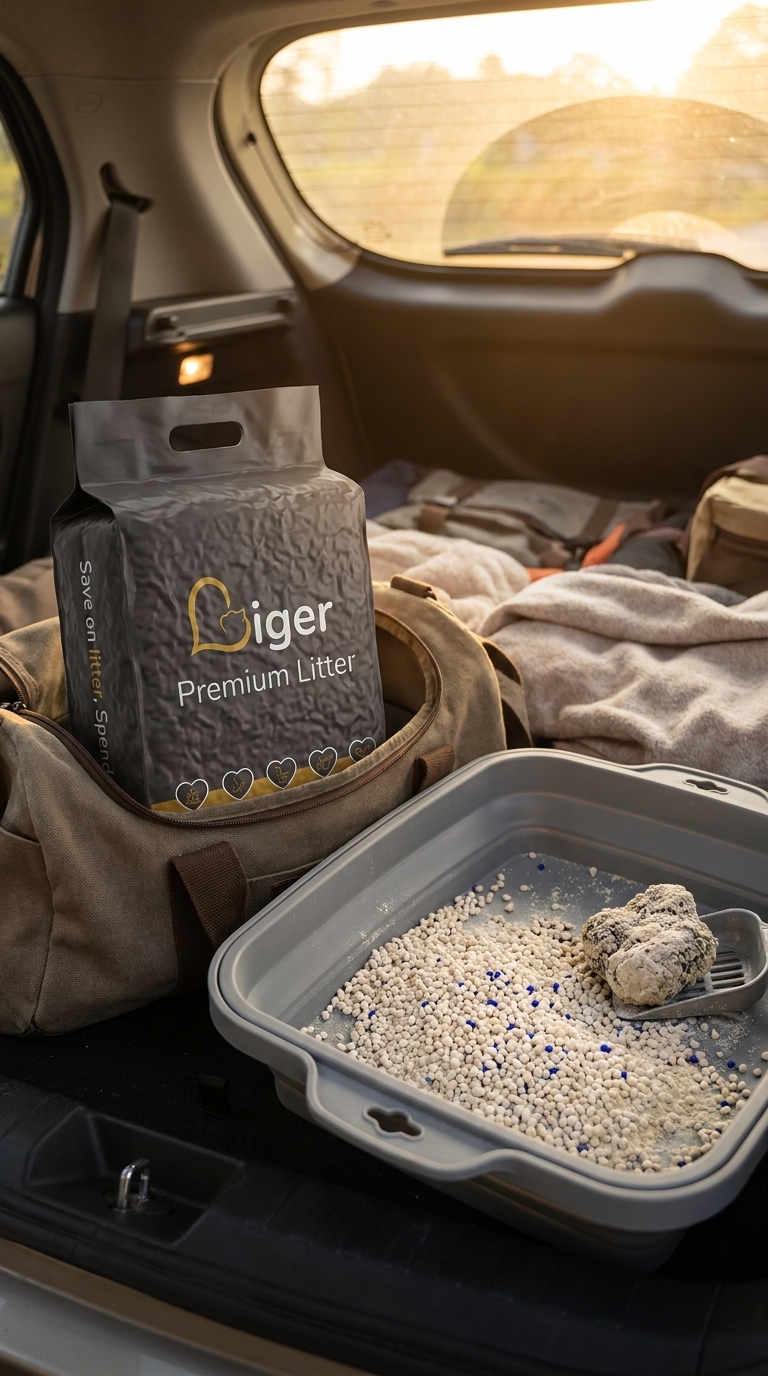
500-800g per cat. This is where portable trays earn their keep. Options that work in Malaysian car boots:
- Collapsible silicone tray — folds flat, washable, ~RM30-50 at any pet category retailer. Best for short trips.
- Disposable cardboard tray with liner — toss after the trip. Hygienic if visiting relatives who do not want pet smell lingering.
- Repurposed large Tupperware (the rectangular cake-storage size) — free, leakproof, fits two days of litter.
- IKEA SAMLA box (11L or 22L) — the cat-parent hack that's been around for a decade. Stackable, sealable lid for transport, RM10-15.
The AAFP Cat-Friendly Practice guidelines emphasize that cats need to maintain elimination routines during travel to reduce stress-induced lower urinary tract issues (American Association of Feline Practitioners). Skipping the litter box for "just two days" is how FLUTD flare-ups start.
Scenario 3: Long Raya / Deepavali / CNY Stay (5-7 Days)
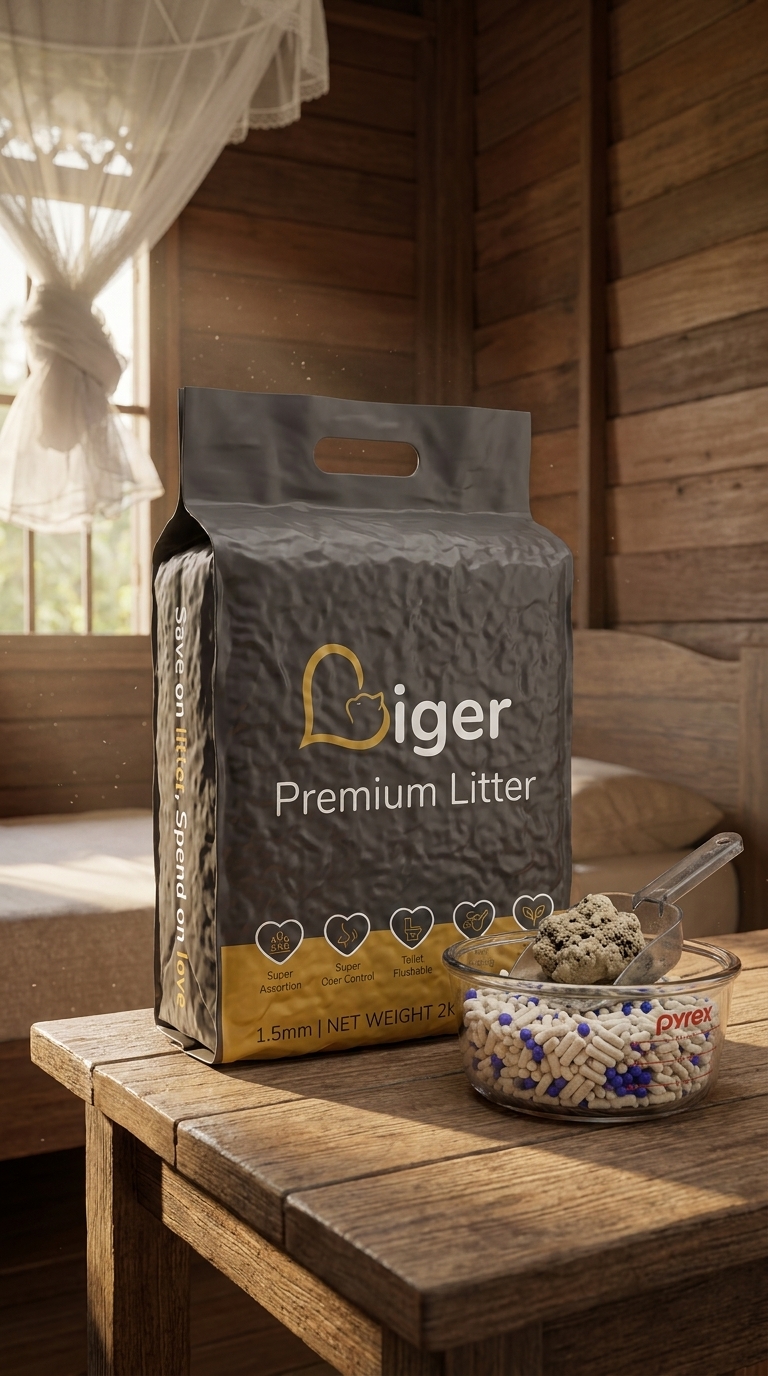
Now you need 1.2-1.8kg per cat — basically one full 1-pack per cat, or a 3-pack (RM53.90) for two cats with margin. Set up a proper semi-permanent station at your destination:
- Choose a quiet corner — never the kitchen, never beside a TV, never near the family altar (many kampung houses have one, cats hate the incense smoke).
- Layer 4-5cm depth of tofu pellets in the portable tray. Less than 3cm and your cat will scratch the bottom and refuse to bury.
- Daily full scoop in the morning. Flush the clumps (tofu pellets are septic-safe in modest amounts) or bag and bin them.
- Top up with fresh pellets every 2 days to maintain depth.
Royal Canin's veterinary travel guidance notes that cats acclimatize to new environments faster when their elimination substrate stays identical — same brand, same texture, same scent (Royal Canin: Travelling with your cat). This is the #1 reason not to switch to "cheap pasar litter" at the destination just because it's local — see also switching cat litter without stress.
Scenario 4: Permanent Move (Condo → Landed, or KL → Other State)
The litter strategy here is different — you're not just keeping the cat alive for a week, you're establishing a new permanent toilet in a place where the cat has zero familiar smells. Three principles:
- Move the litter box BEFORE the cat. If possible, place the new box in the new home a day early with the cat's used (lightly soiled) litter mixed in. The familiar scent marks the new spot.
- Keep the same brand for at least 30 days post-move. Even if you planned to switch litter, do not stack two stressors. New home + new litter = guaranteed accidents and possible FLUTD.
- Watch for hunger strikes and litter strikes for 7-14 days. Cats commonly refuse food or pee outside the box during a major move — see cat stopped using litter box Malaysia for the diagnostic flowchart.
Scenario 5: Hotel & Airbnb Stays
Pet-friendly hotels in Malaysia are still rare — most cluster around KL, PJ, Genting, Penang, and Langkawi. Always email ahead, never just check the website. Airbnb is more flexible but require host approval in writing (screenshot the chat).
Etiquette that protects your cat-parent reputation:
- Bring your own portable tray — never use the hotel ice bucket or bathroom drawer.
- Set up in the bathroom on a towel barrier. Tile floors are easy to wipe; carpets are not.
- Scoop twice daily. Bag clumps tightly and dispose in the corridor bin, not the room bin (room bins are emptied by housekeeping who did not sign up for cat poop).
- Pre-trim claws to reduce scratching damage on hotel fabrics — also reduces nervous scratching at the litter tray edge.
Cat Sitter Handover: The 5-Point Litter Briefing
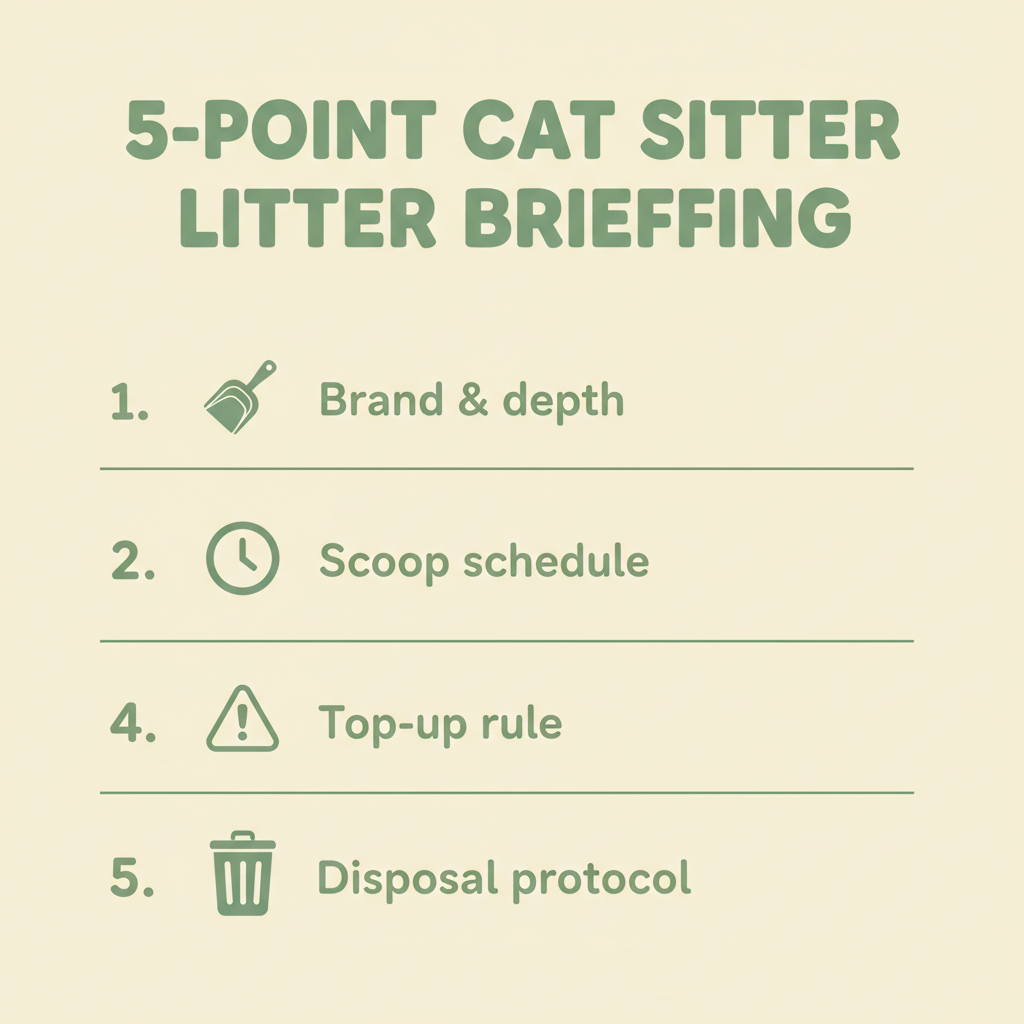
If you're leaving the cat at home with a sitter, the litter briefing matters more than the food briefing. Most cat-sitting disasters are litter accidents that escalate to stress UTIs, not feeding mistakes. Cover these five points in writing (paste into WhatsApp, do not rely on memory):
- The litter brand and depth. "Liger tofu, 5cm deep, 1.5mm pellets. The bag is in the kitchen cabinet under the sink."
- Scoop schedule. "Full scoop every morning before 9am. If you see more than 3 clumps in one day, scoop again in the evening."
- Top-up rule. "After scooping, add one Milo-tin scoop of fresh pellets to maintain depth."
- Red-flag list. "Call me immediately if: no pee clump in 24h, blood in clump, peeing outside the box, straining without producing. These are signs of urinary blockage which kills male cats in 48h." (See cat pee solver tool and Liger cat pee diagnostic tool.)
- Disposal protocol. "Tofu clumps go in the small bin beside the door. Don't flush more than two clumps at a time — old condo pipes."
The AAHA cat behavior guidelines reinforce that owners traveling without their cat should brief sitters on elimination patterns specifically, because changes in litter box habits are the earliest sign of medical or stress problems (AAHA Behavior Management Guidelines).
Why Tofu Litter Travels Better
This is structural, not marketing. Compared to bentonite clay, silica crystal, or pine pellet litters, tofu pellets have four travel-specific advantages:
| Property | Tofu pellets | Clay | Silica crystal | Pine |
|---|---|---|---|---|
| Weight per L | ~0.4 kg/L | ~1.0 kg/L | ~0.5 kg/L | ~0.4 kg/L |
| Flushable | Yes (modest) | No (clogs) | No | Partial |
| Dust in moving car | Very low | High | Low | Low |
| Food-grade if cat eats stray pellet | Yes | No (bentonite swells in gut) | No | Depends |
| Portion-friendly into ziplocks | Excellent | Messy | OK | OK |
The food-grade point matters more during travel than at home. A stressed cat in an unfamiliar place sometimes chews or licks pellets stuck to her paws. With clay, that bentonite swells in the stomach — vet visit territory. With food-grade soy, it passes harmlessly.
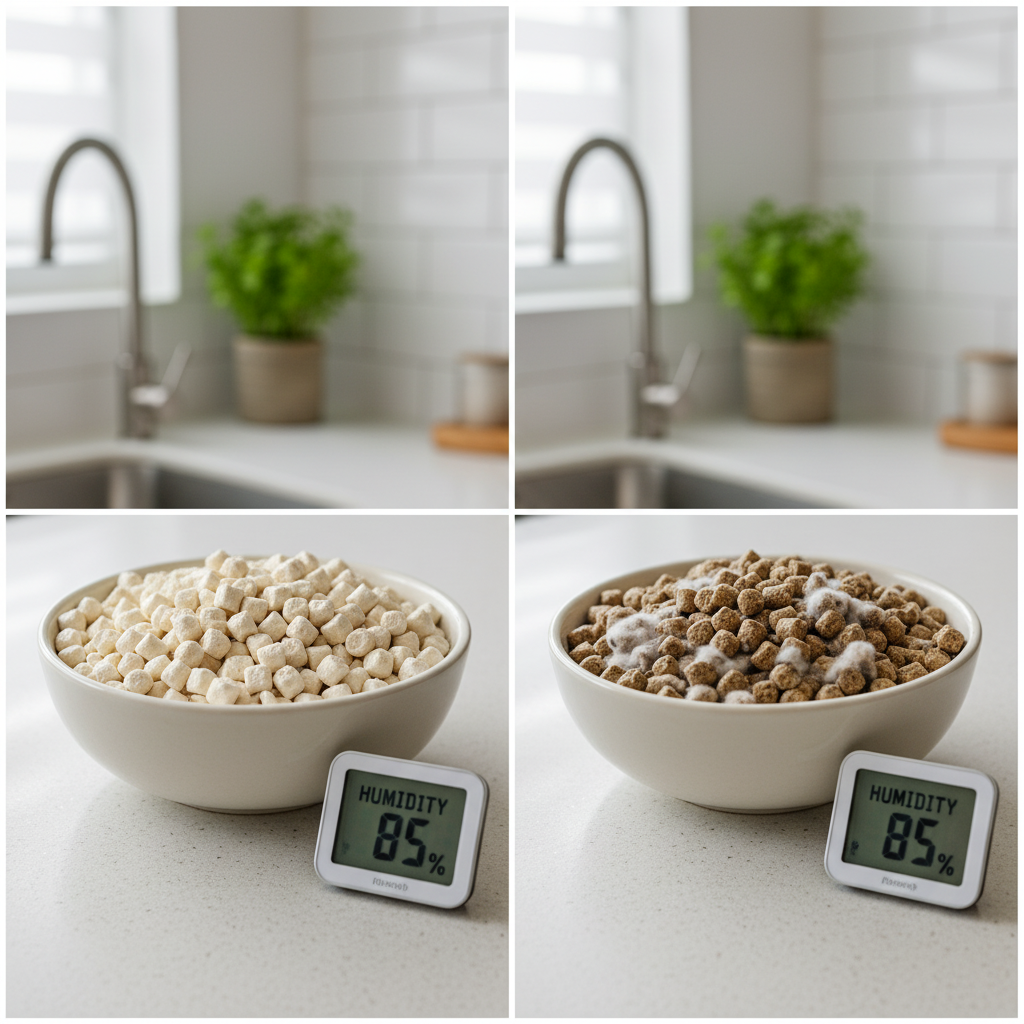
For storage logistics during a humid kampung stay, see tofu cat litter storage in Malaysian humidity — you don't want your travel litter going soggy on day 3.
Portable Tray Options for Malaysian Cat Parents
Avoid "travel litter box" marketing gimmicks. Most are overpriced silicone bowls with a zipper. Practical options from the category, ranked by use case:
- Best for car trips: Rigid plastic storage box with lid (IKEA SAMLA, Daiso 8L, or any sundry shop equivalent). Lid on during transport, lid off during use.
- Best for hotel stays: Collapsible silicone tray. Folds to ~3cm thick, fits in a backpack.
- Best for emergencies: Disposable cardboard tray. One-use, hygienic, lightweight.
- Best for long Raya stays: Bring the cat's actual home litter box if it fits in the car. Familiarity reduces stress more than any portable option.
For day-to-day setup principles that carry over to travel, see daily litter box routine for Malaysian condos.
Pre-Trip Prep Checklist
Print this. Pack the night before, not the morning of:
- Portable tray (cleaned, dry)
- Pre-portioned litter in ziplocks (per the day-count math above)
- Scoop (small travel-size)
- Disposable bags or pet poop bags (one per scoop session)
- Wet wipes (for paw cleaning before re-entering the car)
- One bottle of mineral water (for flushing tofu clumps if needed)
- Cat carrier with absorbent pad at the base
- Vet records + microchip number (laminated copy)
- If pregnant family members in destination: review litter safety during pregnancy before arrival
For Malaysian cross-state travel, the Ministry of Transport recommends that animals be secured in carriers during car journeys to avoid driver distraction and animal injury during sudden braking (Ministry of Transport Malaysia). A loose cat in a moving car is both illegal-adjacent and dangerous.
Common Travel Litter Mistakes (and Fixes)
- Mistake: Switching to "the local pasar brand" at destination. Fix: Bring your own. Always.
- Mistake: Shallow tray (under 3cm depth). Fix: 4-5cm minimum. Cats need to dig.
- Mistake: Putting the tray near the food bowl. Fix: Different room or at least 2m away. Cats are clean — they will not eliminate beside food.
- Mistake: Not scooping at all during a 2-day trip ("it's only 2 days lah"). Fix: Minimum once daily, even on travel days. Ammonia accumulation in 24h is when cats start refusing the box.
- Mistake: Flushing 5+ clumps at once in old kampung plumbing. Fix: Max 2 clumps per flush, or just bag-and-bin.
- Mistake: Assuming the cat sitter knows what "normal" looks like. Fix: Photo of a healthy pee clump on the WhatsApp brief.
- Mistake: Using a covered litter box in a humid kampung house. Fix: Open tray during travel — covered boxes trap ammonia faster in humid air, which is exactly when cats stop using them.
- Mistake: Forgetting to acclimatize the carrier. Fix: Leave the carrier open at home with treats inside for 5-7 days before the trip. A cat shoved into a carrier on departure morning is already stressed before the engine starts.
The Stress Connection: Why Litter Habits Break During Travel
Cats are creatures of routine to a degree that surprises first-time owners. The litter box isn't just a toilet — it's a territorial marker, a stress release point, and a comfort anchor. Disrupt any one of those three roles and elimination habits collapse within 24-48 hours.
During travel, all three are disrupted simultaneously: the location changes (territorial uncertainty), the smells change (no familiar markers), and the substrate may change if you skimped on bringing enough home litter (loss of tactile comfort). The result is the classic travel scenario — a previously perfectly-trained cat pees on the kampung house sofa within hours of arrival. This is not bad behaviour. It is a stress signal that the cat could not find a "safe enough" place to eliminate.
The Veterinary Information Network catalogues stress-related elimination disorders as one of the top three reasons cats are surrendered to shelters after a household move — and the same physiology applies, in compressed form, to a one-week mudik trip (Veterinary Information Network: Feline elimination disorders). Bringing familiar litter is not a luxury — it is the single highest-leverage thing you can do to keep your cat eliminating normally during the trip.
FAQs
How much litter do I need for a 5-day Raya stay with one cat?
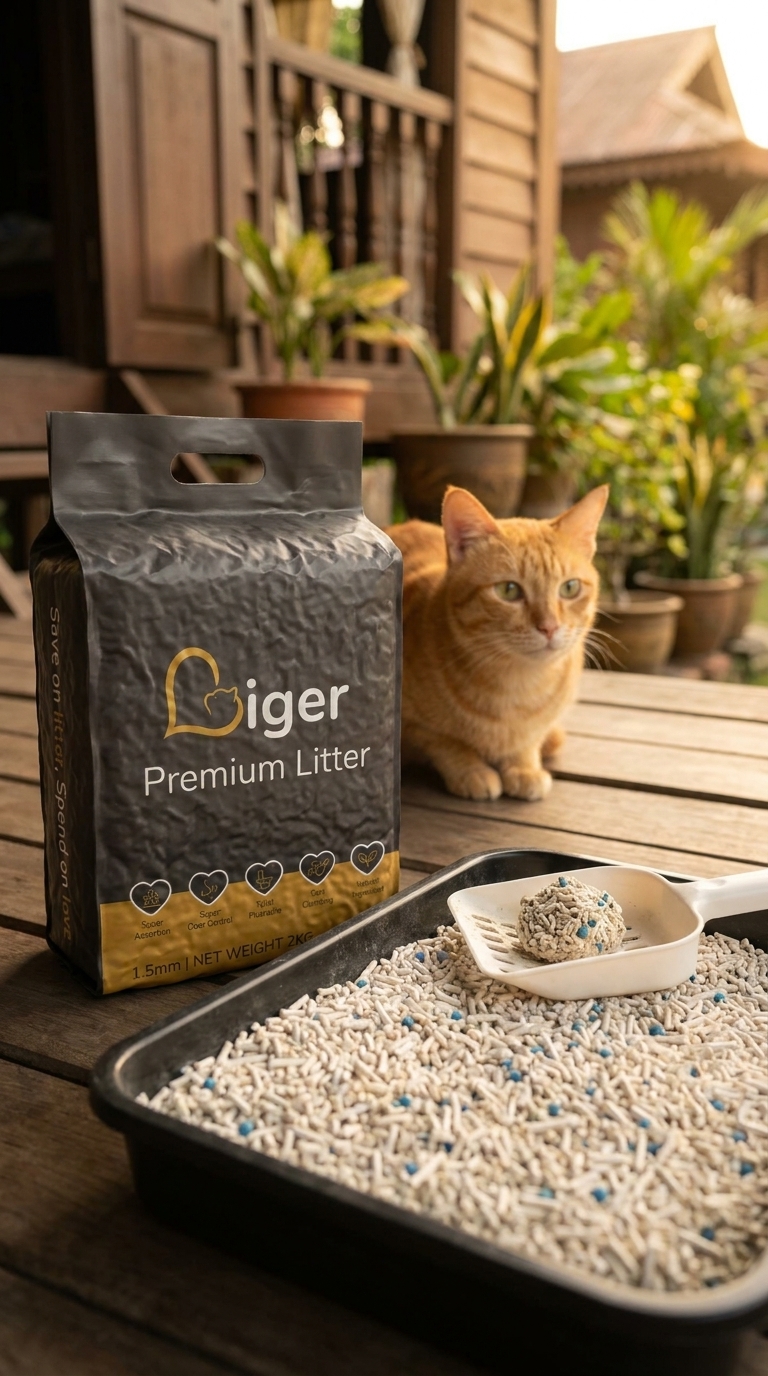
About 1.2-1.5kg of tofu pellets, which is roughly three-quarters of a Liger 1-pack (2kg). Bring the whole 1-pack for buffer — it costs RM21.90 with free West Malaysia shipping.
Can I flush tofu litter clumps in a kampung house with a septic tank?
In modest amounts (1-2 clumps per flush). Tofu is biodegradable but septic tanks have limited bacterial capacity. For heavy use, bag-and-bin is safer.
My cat refuses to use a new portable tray. What do I do?
Sprinkle some used (lightly soiled) litter from home into the new tray. The familiar scent signals "this is your box." Also see switching cat litter without stress.
Is tofu litter safe if my cat licks her paws after using it?
Yes. Food-grade tofu litter is made from soy pulp (okara) — the same byproduct used in human tofu and tempeh. A stray pellet passes harmlessly. Clay litter cannot say the same.
What about flying with my cat to East Malaysia?
Malaysia Airlines and AirAsia both accept cats in cabin with prior arrangement. IATA Live Animal Regulations apply — see IATA Live Animals: Pets. Bring a small ziplock of litter (under 100ml in cabin) and use airport family bathrooms for emergencies.