If you have ever stood in a Shopee aisle staring at ten different cat litter bags wondering whether "clumping" or "non-clumping" matters for your cat — same. We have four cats at home (Tiger, Lion, Ping'An, and Lucky) and we have tested both categories in Malaysian humidity, in a condo, and across kittens and senior cats. The short answer is: clumping vs non-clumping cat litter Malaysia is not a flavour preference. It is a hygiene decision that affects your cat's urinary health, your respiratory health, and how much scooping you do per week.
This guide walks through the actual science, the Malaysian humidity problem, kitten safety, condo dust, price ranges, and a 30-second decision framework. No brand bashing, no marketing fluff — just what we have learned from years of cleaning cat boxes in KL weather.
What 'Clumping' Actually Means (And Why It Matters in Malaysia)

Clumping litter forms a tight, scoopable ball when your cat pees. You scoop that ball out daily, top up fresh litter, and the box stays usable for 2-4 weeks before a full change. Non-clumping litter absorbs pee diffusely — the liquid spreads through the granules without binding. You scoop solids only and dump the entire box every 3-7 days.
In a dry climate, both work. In Malaysia, where outdoor humidity routinely hits 70-90% RH, the difference becomes painful. Silica gel litter saturates within 10-15 days even without urine contact because it adsorbs ambient water vapour. Non-clumping clay gets damp at the bottom of the tray, where pee pools and bacteria multiply. The humid environment also lets fly eggs hatch into maggots in waste containers within 12-24 hours if waste sits too long — a problem far more common with non-clumping setups because the entire tray traps moisture.
Translation: in our climate, the ability to remove wet waste daily is not a luxury. It is the difference between a clean box and a bacterial sauna.
The Science: 3 Different Ways Litter Handles Pee
Not all clumping is the same, and not all non-clumping is created equal. Three distinct mechanisms are at work:
1. Sodium bentonite clay (clumping)
Sodium bentonite contains montmorillonite, a mineral with layered, negatively charged sheets. When urine hits it, water molecules slide between the sheets and the clay swells 15-20 times its original volume, fusing particles into a hard mass. Ion exchange also locks ammonia ions in place, which is why bentonite has strong odour control. Clumps form in 15-30 seconds.
2. Silica gel crystals (non-clumping)
Silica gel is silicon dioxide riddled with microscopic pores. Its internal surface area can reach 600-800 square meters per gram, which is why it adsorbs up to 40 times its weight in liquid. It does not clump — moisture is held on the pore walls and slowly evaporates, leaving odour-causing molecules trapped inside the crystal.
3. Plant-based / tofu (natural-clumping)
Tofu litter uses soybean fibre plus natural binders like guar gum or corn starch. When pee hits it, the porous fibres absorb fast and the binders make adjacent pellets stick together. The clump is softer than bentonite but still holds shape when scooped. This is the same physical principle as bentonite clumping (absorption + binding), but with food-grade ingredients instead of mined clay.
Wood pellets, paper, and recycled-newspaper litters are non-clumping plant-based options. They absorb but do not bind — you have to dump the box more often.
Clumping Litter: Pros, Cons, and the Malaysian Reality Check
Why people pick clumping:
- Daily scoopability. Pee + poop come out, fresh litter goes in. Box stays usable for weeks.
- Urinary health monitoring. You can see the size and frequency of urine clumps, which is an early signal for kidney issues or FLUTD. VCA Hospitals notes that environmental stress including improper litter setup can trigger Feline Idiopathic Cystitis (FIC).
- Odour control. Sealing waste inside a clump cuts ammonia exposure.
Where clumping struggles in Malaysia:
- Bentonite dust. Long-term exposure to high-dust clay litter in enclosed condos has been associated with sarcoid-like lung disease in humans and respiratory irritation in cats.
- Kitten ingestion risk. Sodium bentonite can swell inside a kitten's gut. Documented bentonite toxicosis cases show fatal intestinal obstruction in kittens under 4 months.
- Soft clumps in humidity. Bentonite pre-saturates from ambient moisture before it ever sees urine, weakening the clump.
Natural clumping (tofu, corn) avoids the dust and kitten ingestion risks while keeping daily scoopability.
Non-Clumping Litter: When Does It Actually Make Sense?

Non-clumping options have a legitimate place. They are not just "the cheaper, lazier choice."
When non-clumping wins:
- Brand-new kittens. Wood pellet or paper-based non-clumping litter is safe if ingested — no swelling, no obstruction.
- Post-surgery cats. Vets often recommend paper-pellet non-clumping litter after spay/neuter to prevent litter sticking to incision sites.
- Hospital / quarantine boxes. Easy full-box disposal is more hygienic when you need to fully sterilise between uses.
- Cats with diagnosed silica allergies (rare, but exists).
The trade-offs:
- You cannot remove urine — only solids. Pee sits in the tray until the next full change.
- Odour builds up faster, especially in our humidity.
- You go through more litter by weight (no clumping means you change the whole box).
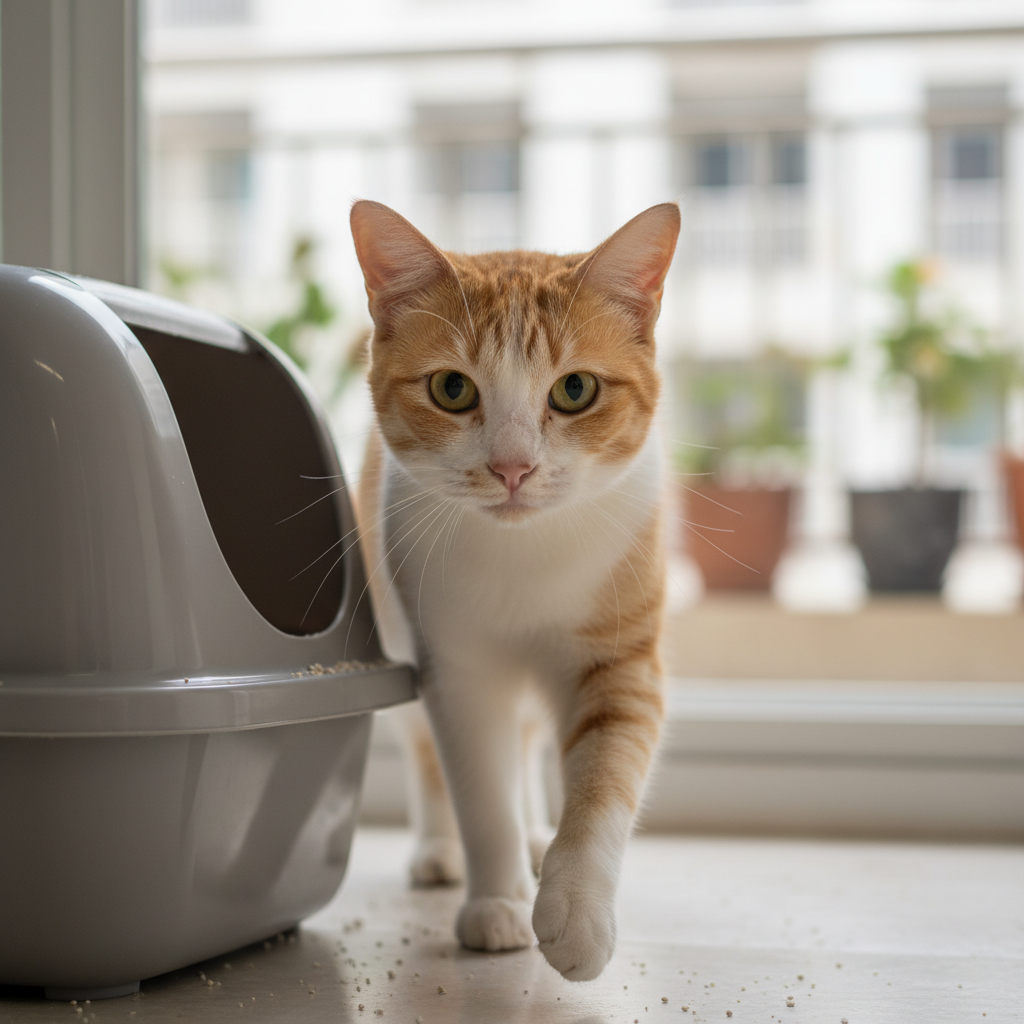
- Silica crystals score a 9/10 on the Lego pain scale when tracked onto floors. Painful for human feet, uncomfortable for arthritic senior paws.
For a deeper comparison of specific litter categories, see our tofu vs bentonite breakdown and tofu vs crystal silica analysis.
Humidity Stress Test: Who Survives 90% RH?
This is the question generic global guides skip. Malaysia's climate breaks litter rules that work fine in temperate countries.
| Category | Humidity tolerance | Effective lifespan in MY | Failure mode |
|---|---|---|---|
| Bentonite (clumping) | Poor | 2-3 weeks if scooped daily | Soft clumps, dust gets stickier, ammonia smell |
| Silica gel (non-clumping) | Fair | 10-14 days vs 30 in dry climate | Crystals turn white, lose odour control |
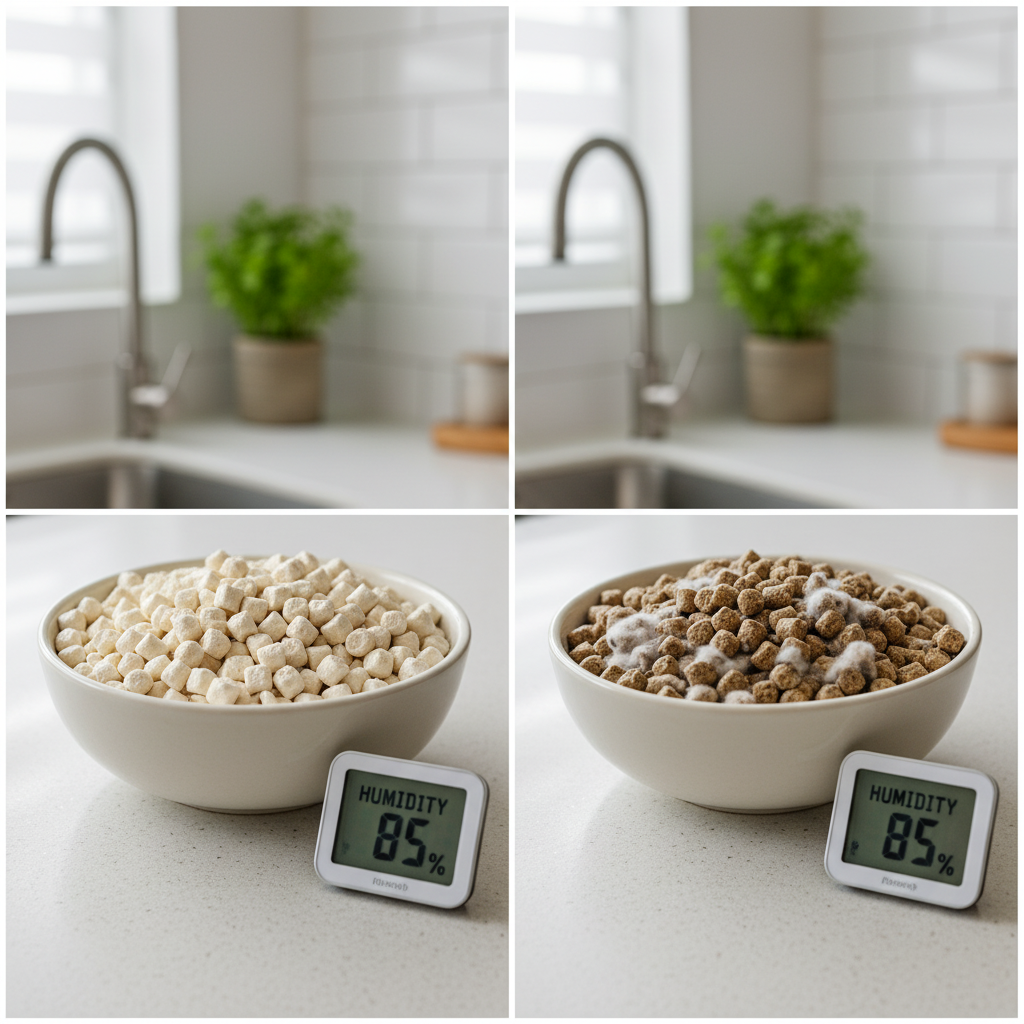
| Tofu (natural-clumping) | Good if sealed | 2-4 weeks if scooped daily | Mould risk if bag left open >2 weeks |
| Wood pellet (non-clumping) | Good | 5-7 days per full change | Swells, breaks down, more frequent full dumps |
| Paper pellet (non-clumping) | Fair | 3-5 days per full change | Bottom of tray gets soggy |
Storage matters more than people realise. Thrive Petcare warns that in tropical temperatures (28-32°C), unclumped tofu pellets can host Aspergillus or Penicillium mould within days if exposed to ambient moisture. Lesson: airtight container, scoop daily, and do not buy litter in volumes larger than you can use in 4 weeks.
Quick reference: our dust level comparison tool shows airborne particle counts for each category.
Kittens, Senior Cats, and Special Cases

Kittens under 4 months
Skip bentonite. The veterinary consensus is consistent — clay swelling inside a small GI tract is a documented emergency. Use tofu, wood pellet, paper pellet, or corn until the kitten outgrows the "taste everything" phase.
Senior cats with arthritis
Silica crystals and large wood pellets are hard on paw pads. Soft, fine clumping tofu or low-profile sand-textured options are easier on stiff joints. Pair with a low-entry litter box (under 10cm lip) — easier to step in and out.
Cats with asthma or respiratory issues
Dust is the enemy. Crystalline silica dust from clay litter is a respiratory irritant. Choose low-dust formulations — tofu, silica gel, or pelletised wood. Avoid scented litters of any category; the fragrance compounds make things worse.
Multi-cat households
Daily scoopability becomes non-negotiable when you have 2+ cats sharing trays. Non-clumping just cannot keep up with the volume. The N+1 rule (one tray per cat plus one extra) holds either way, but with non-clumping you also need to fully change each tray every 3-5 days. See our multi-cat litter solution guide for the full setup.
The Liger Angle: Natural-Clumping Tofu as the Best-of-Both
Here is the honest pitch. The clumping-vs-non-clumping debate is really a trade-off between:
- Convenience (clumping wins)
- Safety for kittens (non-clumping plant-based wins)
- Low dust (silica wins, but at the cost of clumping and paw comfort)
- Eco footprint (plant-based wins)
Tofu cat litter is the one category that sits in the middle. It clumps via starch + water binding (same physical principle as bentonite, different chemistry), it is safe if a kitten nibbles a pellet (the fibre dissolves in the gut instead of swelling), it produces almost no respirable dust, and it is biodegradable.
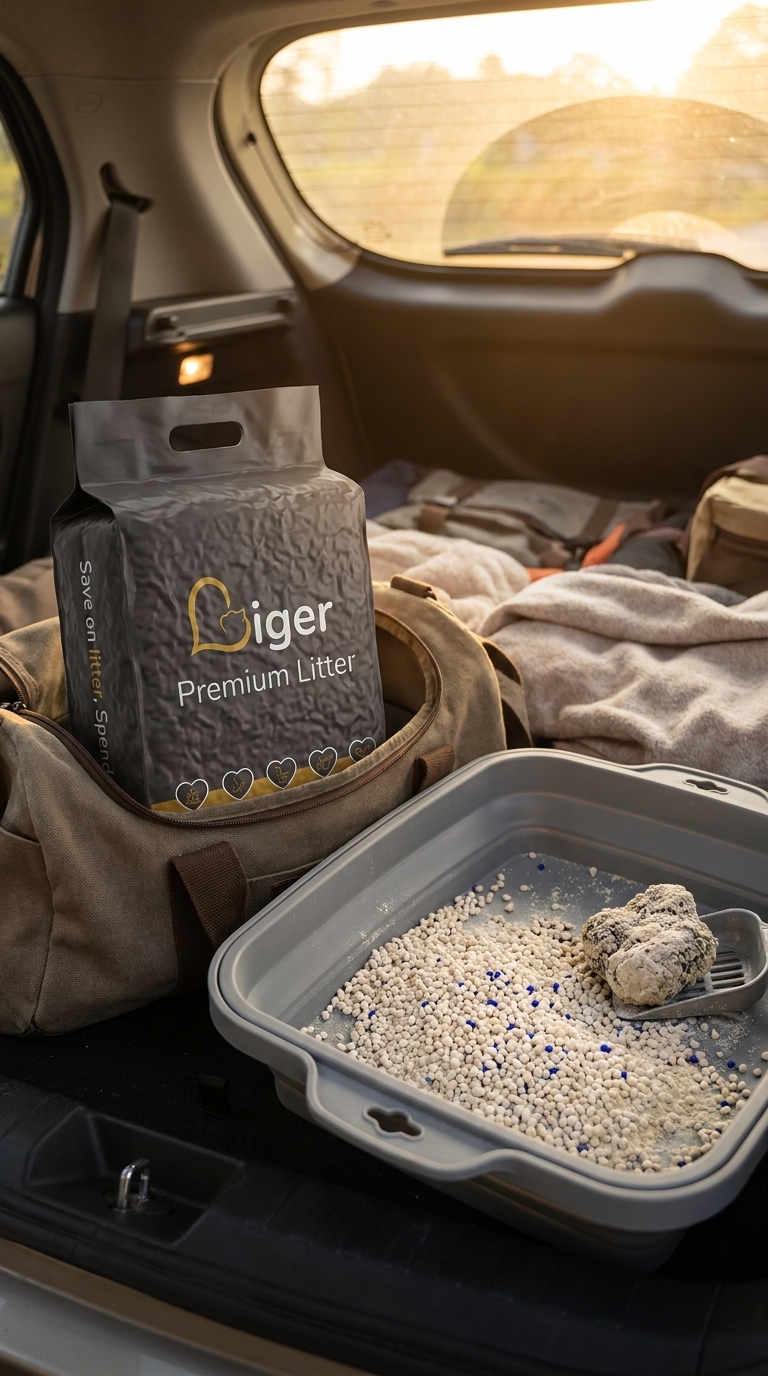
Liger Tofu Cat Litter is what we use for our four cats. Independent lab tests showed our formulation hits a 97% clumping strength — comparable to top bentonite brands — while keeping the kitten-safe, low-dust profile of non-clumping options. We are not saying it is the only good choice. We are saying it is the cleanest answer to the "do I pick convenience or safety?" trap.
If you want a side-by-side spec view, our litter comparison tool lets you filter by clumping strength, dust level, and price per kg.
Price Reality Check: What Malaysian Cat Parents Actually Pay
Pricing varies by retailer and pack size, but the broad market ranges look like this:
| Category | Typical price (MYR) | Effective cost per cat per month |
|---|---|---|
| Sodium bentonite (clumping clay) | RM 1.20 - 1.80 per kg | RM 15 - 25 |
| Silica gel (non-clumping) | RM 3.00 - 7.30 per litre | RM 30 - 60 (factoring shorter MY lifespan) |
| Tofu (natural-clumping) | RM 7.00 - 12.00 per kg | RM 20 - 35 |
| Pine wood pellet (non-clumping) | ~RM 8 - 10 / month | RM 8 - 15 |
| Paper pellet (non-clumping) | RM 4 - 6 per kg | RM 12 - 20 |
Bentonite looks cheapest per kg but you use more of it (heavier, dustier waste fills bags faster) and you replace it more often in humidity. Tofu costs more per kg but you use less because clumping is efficient and the box stays usable for weeks. Run the math with our litter calculator — for most condo cats, tofu and bentonite end up within RM 5-10 of each other on a monthly cost basis once you factor in waste volume.
How to Choose: A 30-Second Decision Framework
Answer these in order. Stop at the first match.
- Do you have a kitten under 4 months? → Non-clumping wood, paper, or natural-clumping tofu. Skip bentonite.
- Is your cat post-surgery (spay/neuter recovery)? → Paper-pellet non-clumping for 7-14 days, then switch back.
- Does your cat or anyone in the house have asthma? → Low-dust only. Tofu or silica gel. Avoid bentonite.
- Do you live in a condo or apartment? → Clumping (tofu preferred for low dust + low tracking).
- Multi-cat household (2+ cats)? → Clumping is non-negotiable. Tofu or bentonite.
- Budget is the absolute top priority? → Pine wood pellet non-clumping. Cheapest, but more frequent full changes.
- None of the above? → Default to a tight-clumping tofu for the best balance of safety, convenience, and dust.
For a more detailed walkthrough, our how to choose cat litter guide covers behavioural preferences too.
Switching Between Clumping and Non-Clumping Safely
Cats are notoriously picky about substrate changes. A sudden switch can trigger litter box avoidance — and that means peeing on your sofa.
The 7-day transition method:
- Days 1-2: 75% old litter, 25% new.
- Days 3-4: 50/50.
- Days 5-6: 25% old, 75% new.
- Day 7+: 100% new.
If your cat starts going outside the box at any stage, slow down and back up one step. Add a second tray with the new litter alongside the old one so the cat has a choice. Pet Professional Guild research shows that providing choice during transitions reduces stress-related avoidance significantly.
Going from non-clumping to clumping is usually easier than the reverse — cats tend to prefer the finer texture and softer feel of clumping options. Going from clumping to non-clumping (for kitten safety or post-surgery) is the harder direction; expect 7-14 days of patience.
If your cat absolutely refuses a switch, that is information. Trust their instinct, try a different category, and revisit later. Tiger took two weeks to accept tofu after years on bentonite — Lion accepted it in two days. Same household, same cats, completely different timelines.
The Bottom Line
Clumping vs non-clumping cat litter in Malaysia is not about preference — it is about matching the right mechanism to your cat's life stage and your living situation.
For most adult cats in Malaysian condos, clumping wins on hygiene, urinary health monitoring, and humidity tolerance. For kittens under 4 months and post-surgery recoveries, non-clumping plant-based options are safer. The middle path — natural-clumping tofu — is what we landed on for our four cats after years of trial and error, because it covers both scenarios without the dust and ingestion risks of mined bentonite.
Whatever you pick, the bigger variables are: scoop daily, change fully on schedule, follow the N+1 rule for multi-cat households, and watch your cat's behaviour. If they suddenly stop using the box, the litter is rarely the only culprit — but it is often the easiest variable to test.