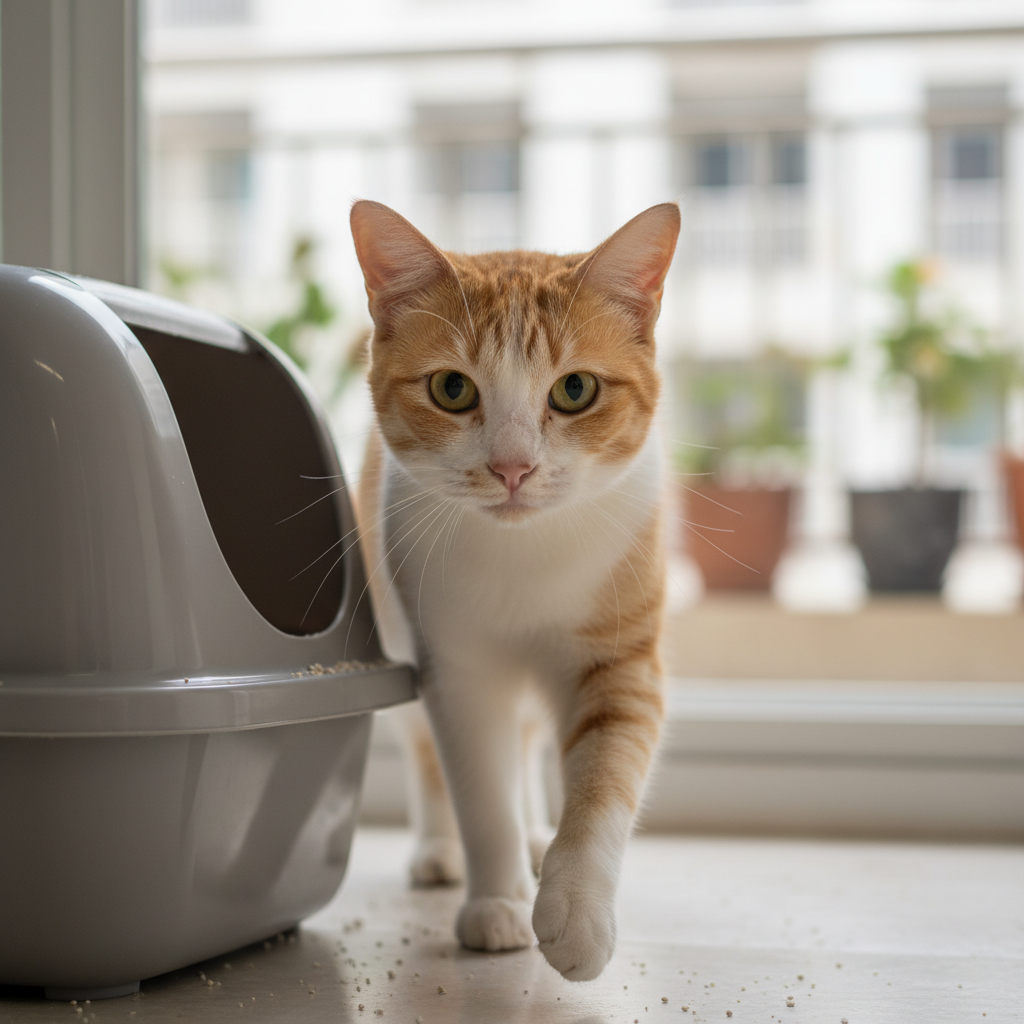
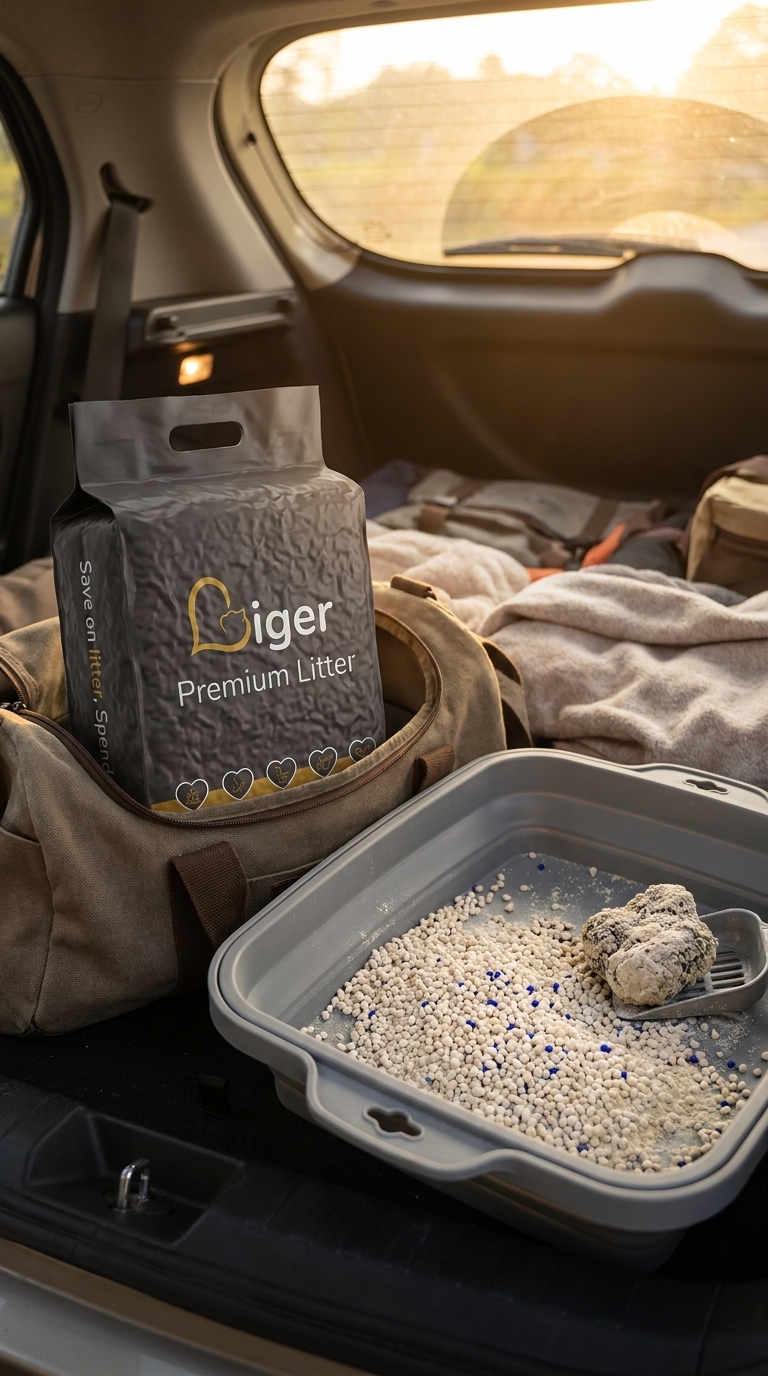
Walk into any pet store in KL or Penang and the shelves tell one story: covered litter boxes are winning. Top-entry dome boxes, IKEA-cabinet-style hideaway units, sleek “tandas kucing” that look like air purifiers. Owners love them because they hide the mess, contain the bau busuk, and fit the aesthetic of a 700 sqft condo. But here is the awkward part nobody wants to say out loud: most cats do not actually love them, and Malaysia’s climate makes the problem worse.
We have four cats at Liger HQ — Tiger and Lion (kitten brothers, born June 2024), Ping’An (our rescue mom), and Lucky (born September 2024). When we set up a real side-by-side covered vs open test in our own condo, the result was not what the marketing pictures showed. So this guide pulls together the actual peer-reviewed research, the humidity math, and what our cats voted with their paws.
Why This Debate Is Different in Malaysia

In a dry-climate apartment in Tokyo or London, the covered vs open argument is mostly about aesthetics and cat personality. In a Malaysian condo, you add three variables that flip the equation: year-round 75-90% relative humidity, 30°C ambient temperature, and tight square footage that puts the litter box closer to the human living zone than the manuals assume.
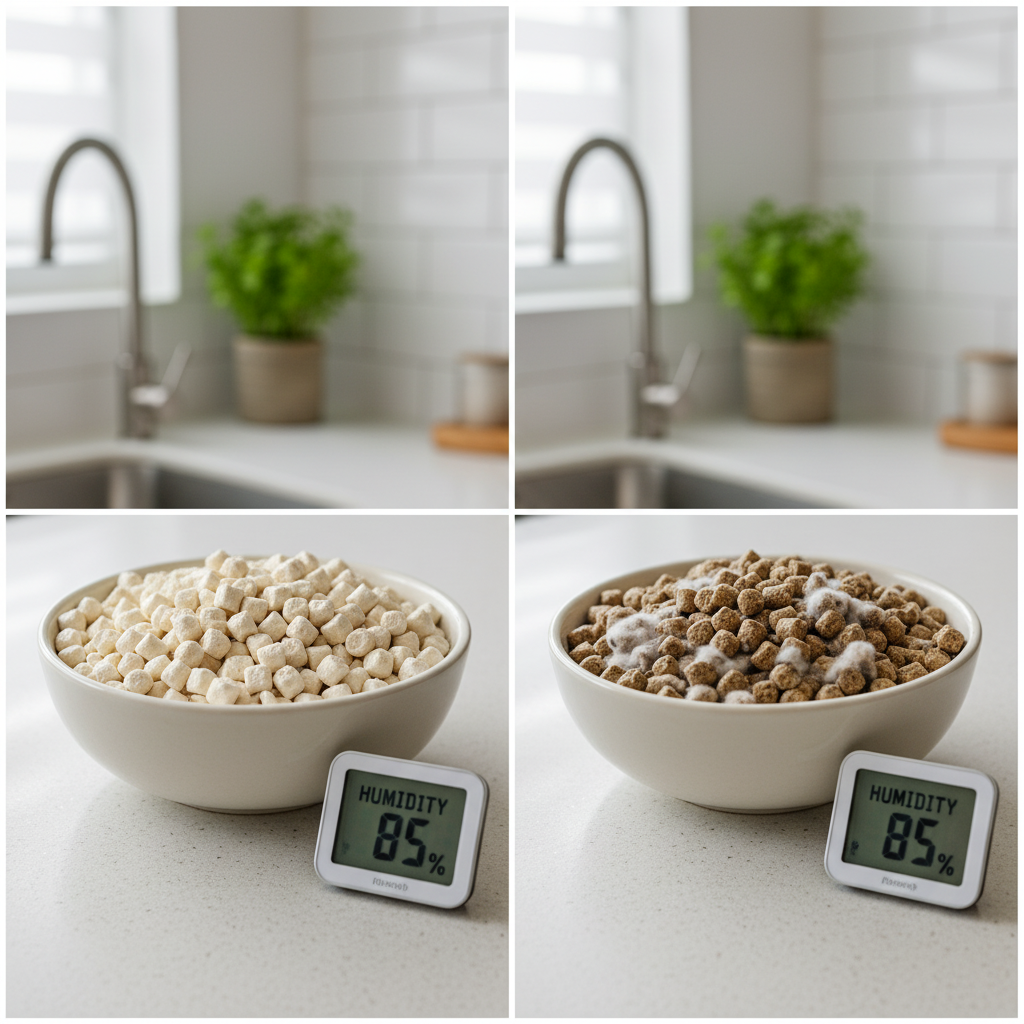
According to user reports compiled from regional PETKIT and Litter-Robot forums, average relative humidity in Malaysia stays between 75% and 90% year-round, and thick white fuzzy mold can grow in sealed waste containers within days. That is not a problem cat owners in temperate climates ever think about — but it is the daily reality for anyone running an enclosed litter box in Bangsar, Mont Kiara, or any other Malaysian high-rise.
The Three Things Malaysian Owners Actually Want
- Odor control (bau busuk): Heat plus humidity accelerates urine breakdown into ammonia. You smell it within hours, not days.
- Space saving (jimat ruang): Condo footprints are tight. A box that disappears into furniture is genuinely valuable.
- Aesthetic integration: When your guest area is 4 metres from the litter box, “does it look like cat furniture?” matters.
These are all reasonable. The problem is that the standard covered-box solution to these three problems creates four new problems for your cat — and in the long run, for your nose too.
What The Science Actually Says About Covered vs Open
The most cited peer-reviewed study is from Dr Emma Grigg’s team at Ross University School of Veterinary Medicine, published in the Journal of Feline Medicine and Surgery. They gave 27 cats access to two large identical boxes — one covered, one open — for 14 days, with daily scooping enforced on both.
The headline result: 70% of cats showed no preference. They used both boxes roughly equally. Of the remaining 30%, the split was roughly even between cats that preferred covered and cats that preferred open. The full methodology and discussion is summarised in this PMC review.
That sounds like a tie. It is not. Two huge caveats hide inside that “70% no preference” number:
- The test boxes were oversized. Researchers used modified storage tubs measuring 82.5 × 50.2 × 47.3 cm — far larger than 90% of commercial covered boxes sold in Malaysia. Most covered domes you can buy at Pet Lovers Centre are smaller than the cat needs.
- Boxes were scooped daily. In real life, the same researchers note covered boxes in homes are often scooped only once every five days because owners cannot see or smell the inside. That changes the experiment completely.
So the honest summary is: if you give a cat a very large, daily-scooped covered box, most cats will tolerate it. Shrink the size or stretch the cleaning, and the open box wins decisively.
The Cats Who Actively Hate Covered Boxes
For roughly 15% of cats in the study, the preference for open boxes was strong. Feline behaviorist Pam Johnson-Bennett at Cat Behavior Associates identifies the recurring profile: timid cats, cats in multi-cat households, senior cats with arthritis, and cats recently relocated. If any of those describes your cat, the science leans hard toward open.
The Humidity Trap: Where Malaysian Condos Break Covered Boxes

Here is the part the global litter box guides skip entirely. Ammonia — the sharp pee smell — is produced when bacteria break down urea in cat urine. That reaction needs three things: moisture, warmth, and time. A Malaysian condo gives all three for free.
According to an analysis from Furrbby on humid-climate litter management, a top-entry covered box can accumulate 30% more ammonia after 24 hours than an open pan in the same room. In dry climates this matters less because moisture dissipates. In our 85% RH air, moisture never dissipates — it just gets trapped under the dome with your cat’s nose.
The Refined Feline’s engineering write-up on hidden boxes goes further: ammonia concentrations as low as 25 ppm cause measurable eye irritation and respiratory distress in cats, and far lower levels are enough to trigger flare-ups in asthmatic cats. Feline asthma incidence in Southeast Asian indoor cats is not well documented, but vets in KL routinely report it. A covered box in a humid condo is the perfect trigger environment.
Mold and Bacteria in the Drawer
This is the part that genuinely surprises new automatic-box owners. Reports from Litter-Robot users in Malaysia and Singapore describe maggots hatching in waste drawers within 12 to 24 hours at our typical 30°C ambient temperature, and white fuzzy mold appearing on the inner walls of sealed compartments within a week. That is not a defect — it is microbiology meeting tropical air.
Plant-based litters are especially vulnerable here. Tofu litter, corn litter, and pine pellet all carry organic carbon that mold loves once moisture is trapped. Open boxes solve this by letting the moisture escape. Covered boxes ask the litter to absorb it forever, which it cannot.
If you want to see how different litters compare on dust and moisture handling before you commit to either box style, our free dust level comparison tool ranks the main types side by side.
Multi-Cat Politics: Why Covered Boxes Trigger Fights

If you have more than one cat, the box design stops being about preference and starts being about safety. Feline behaviorist Mieshelle Nagelschneider explains in Modern Cat that a single-entry covered box creates a “choke point” — the cat inside cannot see who is approaching, has only one route in or out, and is structurally a sitting target.
In our house, this played out exactly as the textbook predicts. Tiger and Lion are litter mates and friendly, but Lion is bigger and occasionally guards resources. When we tested a hooded box, Tiger started peeing on the bathroom mat — classic ambush-avoidance behavior. The behavior disappeared within three days of switching back to open trays placed in two different rooms.
The standard veterinary recommendation is the “N+1 rule” — one box per cat plus one extra — and those boxes should be in different locations, all open-top, with multiple sightlines. The ASPCA confirms this is the single most effective intervention for inappropriate elimination in multi-cat homes. If you are not sure how many boxes your space actually needs, our litter box size calculator works out the right count and dimensions based on your cats.
Pros and Cons: An Honest Tally
Covered Boxes — The Real Pros
- Reduce litter scatter onto floors (significant in small condos)
- Hide the visual mess from guests
- Slightly slower odor escape into the room (in the short term)
- Some shy cats genuinely prefer the privacy — about 15% of cats per the Ross University study
Covered Boxes — The Honest Cons
- Trap humidity and ammonia in tropical climates
- Concentrate litter dust where the cat breathes
- Create single-entry choke points for multi-cat households
- Often too small inside for cats to turn comfortably
- Encourage less frequent scooping because the mess is hidden
- High entry sills are painful for senior or arthritic cats
- Promote mold growth in sealed waste drawers
Open Boxes — The Real Pros
- Maximum ventilation — ammonia and moisture escape quickly
- No choke point, full visibility, multiple escape routes
- Easier ergonomics for kittens and senior cats
- Visible mess prompts daily scooping
- Cheaper, easier to clean fully, no parts to break
Open Boxes — The Honest Cons
- Litter scatter is real — budget for a tracking mat
- Smells reach the room faster if you skip scooping
- Less visually appealing in open-plan condos
- Shy cats may want a privacy screen separately
The Litter Inside The Box Matters More Than The Box

Here is a point most covered-vs-open articles miss entirely: in a covered box, your litter choice doubles in importance because the dust never escapes. If you use a high-dust clay or bentonite inside a sealed dome, your cat is inhaling concentrated particulates every time it digs.
Research on bentonite cat litter dust exposure flags crystalline silica content as a chronic respiratory concern. The risk is much higher when the dust is confined to a covered environment. If you must use a covered box, you must pair it with a low-dust litter — this is not optional. Plant-based options like tofu litter typically produce a fraction of the airborne particulates of clay, which is one reason we built our entire product around milk-scented tofu pellets.
If you suspect your cat is already showing signs of litter aversion — peeing outside the box, perching on the edge, rushing in and out — our cat pee problem solver walks you through the diagnostic tree before you blame the box style.
What About Automatic Covered Boxes (Litter-Robot, Petkit)?

Automatic boxes are a category of covered box, so all of the humidity and ventilation concerns apply — plus electronics. Two specific Malaysian climate issues to know:
Sensor reliability. The official Litter-Robot litter guidance specifies that the Litter-Robot 4 sifting screen is optimized for granular clay — standard 2-3mm stick-shaped tofu litter can jam the screen or be wasted. Combined with high humidity causing soft, gummy clumps, sensors throw false “drawer full” or “cycle interrupted” errors. Reddit threads from Singapore and KL owners are full of these reports.
Mold in the drawer. Already covered above. Owners in our climate report needing to add silica gel packs or run a dehumidifier nearby to keep the waste drawer from growing visible mold.
Automatic boxes can work in Malaysia — but only if you treat them as more maintenance, not less, and pair them with a low-humidity litter and a stable, ventilated location. The “set it and forget it” promise is for temperate climates.
The Real Liger 4-Cat Test

We ran a structured cafeteria-style test in our own condo for two weeks. Two identical open trays and two identical hooded boxes, all using Liger milk-scented tofu litter at the same 5 cm depth, all scooped twice daily. We swapped left-right positions on day 8 to control for side bias, and weighed scooped waste from each box separately.
| Cat | Profile | Preference | Margin |
|---|---|---|---|
| Tiger | Sub-adult male, mid-confidence | Open | Strong (78%) |
| Lion | Sub-adult male, dominant | No preference | 53% covered |
| Ping’An | Adult female, rescue, anxious | Open | Very strong (91%) |
| Lucky | Sub-adult female, calm | Mild open preference | 64% |
Three out of four cats voted open. Lion, the most confident cat, was the only one who showed any covered tolerance — and even he was within the “no preference” band statistically. Ping’An, the rescue with the most anxious history, was the strongest open-box voter. This mirrors the literature exactly: confident cats are indifferent, anxious cats need the visibility and escape routes that open boxes provide.
Recommendations By Cat Profile
If You Have One Confident Adult Cat
Either works, but lean open with a low side. Pair with a low-dust tofu litter to control airborne particulates. If aesthetics demand covered, buy the biggest you can fit and scoop twice a day.
If You Have Multiple Cats
Open boxes, no debate. Multiple boxes (N+1) in different rooms. Single-entry covered boxes will create ambush dynamics whether you see them or not.
If You Have A Senior or Arthritic Cat
Open box with an entry sill under 10 cm. Skip covered entirely — even “low entry” covered models usually still require stepping over a 15-20 cm lip.
If You Have A Kitten
Open box, low sides, until they are at least 5 months old. Kittens get trapped or disoriented inside covered domes.
If You Genuinely Cannot Live With An Open Box
Pick a covered model with vents on at least two sides, large interior volume (cat should be able to turn 360 degrees easily), and commit to scooping twice daily. Place it in your most ventilated room, never in a windowless toilet.
The Bottom Line
Covered boxes solve a human problem (we do not want to see or smell the litter) and create a feline problem (concentrated ammonia, dust, choke points). In a temperate climate this trade is debatable. In a Malaysian condo with 85% humidity, year-round 30°C, and four square metres between the litter box and the dining table, the trade is much worse for your cat than it looks on the shop shelf.
The honest answer for most Malaysian condo owners is: large open box, low side, low-dust tofu litter, daily scooping, placed in a ventilated spot. If your specific cat tells you otherwise via a real two-week cafeteria test — trust your cat, not the marketing. They are the one who has to live inside it.