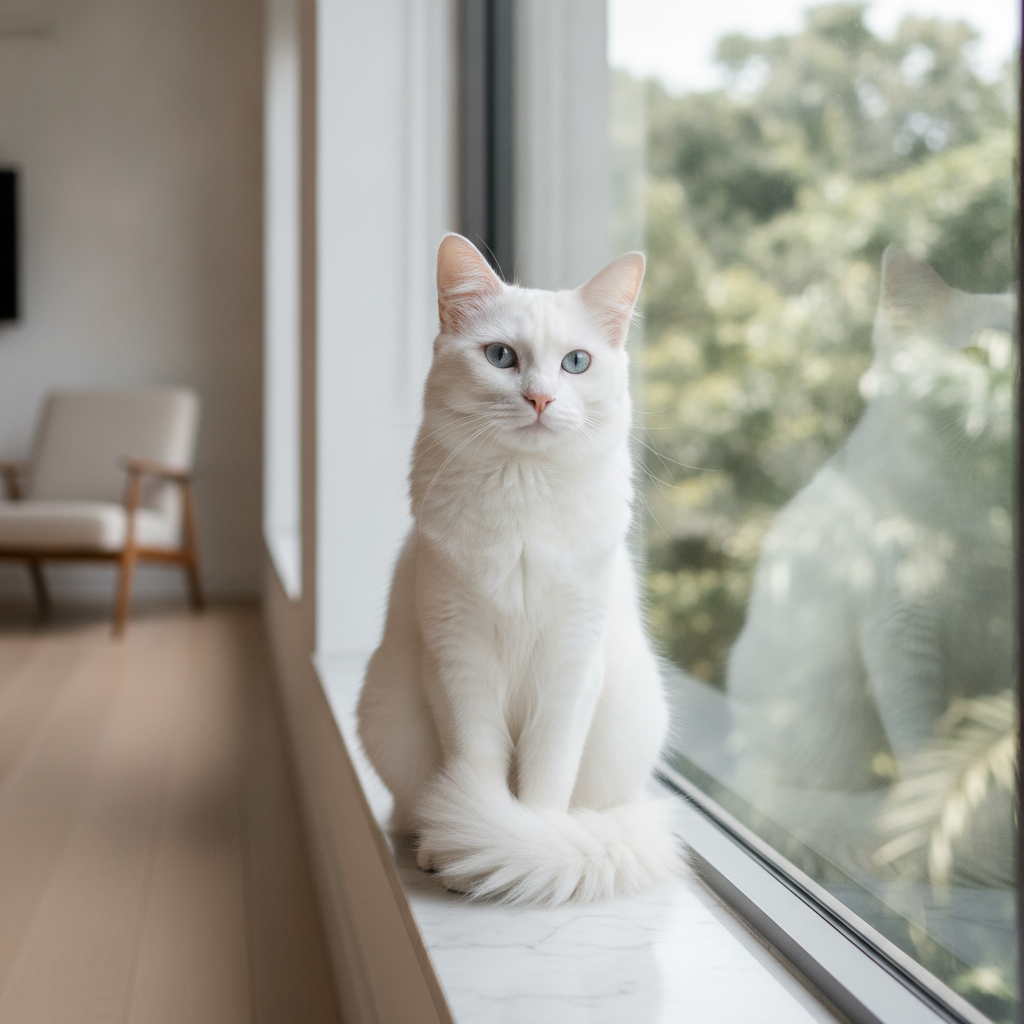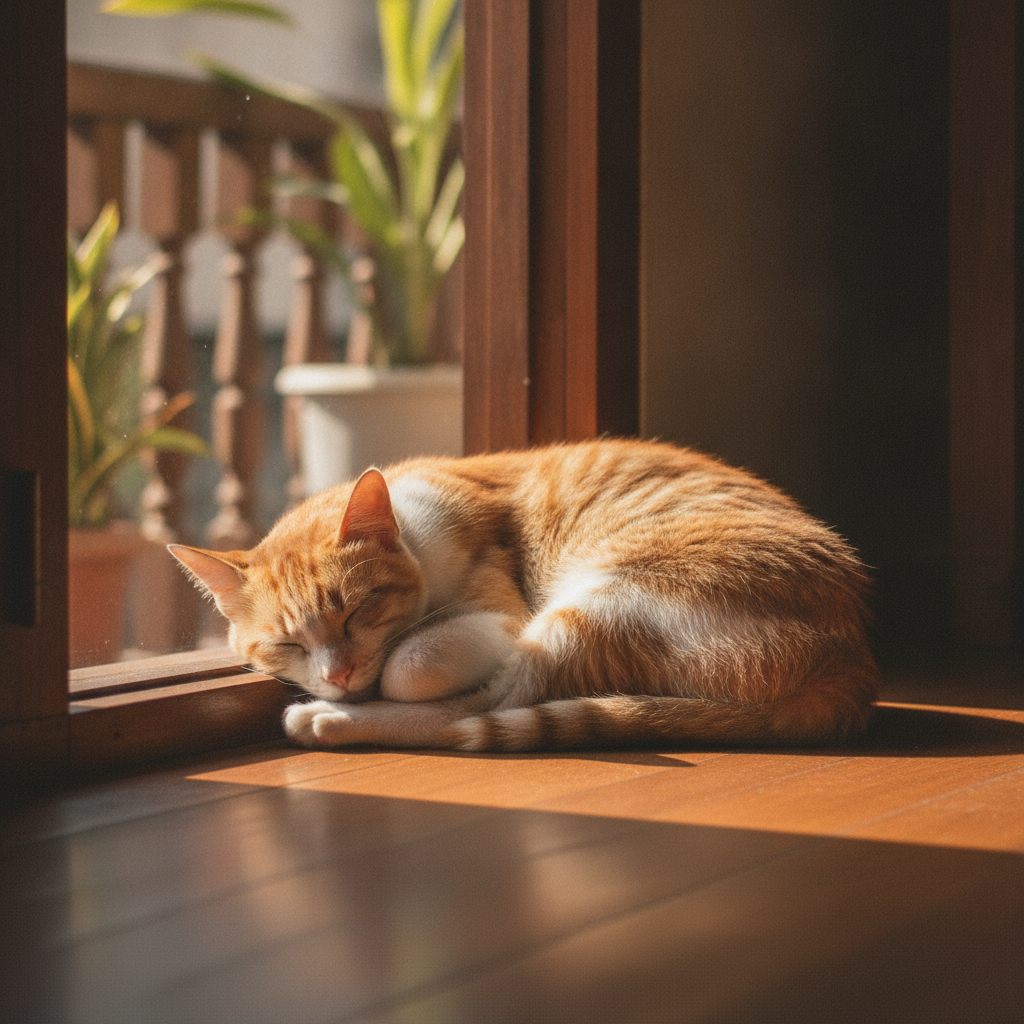
It's 3pm, the fan is humming, and Ping'An is fast asleep on the windowsill — except her paws are paddling, her whiskers are twitching, and every few seconds she lets out the faintest squeak. It really looks like she's chasing something. So the obvious question: is she dreaming? And if she is, what on earth does a cat dream about?
This is one of the more remarkable corners of our How Cats Work science hub. We're staying with the biology of sleep here — the cycles, the brainwaves, the famous experiments — not the "is my cat napping too much" health question (that's covered separately in our guide on why cats sleep so much). Let's look at what's actually happening inside that sleeping head.
Why Cats Sleep 12 to 16 Hours a Day
An adult cat sleeps an average of 12 to 16 hours a day, and some clock up to 20. That's not laziness — it's design. Cats are crepuscular predators, wired to hunt at dawn and dusk when their prey is active and their night-tuned eyes give them the edge. Hunting that way means long stretches of waiting broken by short, explosive bursts of stalking and pouncing, so conserving energy the rest of the time is the whole strategy.
There's a metabolic reason too. As obligate carnivores, cats run on a high-protein diet that is energetically expensive to digest and convert into fuel. Long rest after a meal lets the body process protein, repair tissue and bank energy for the next hunt. Even a pampered indoor cat in a KL condo, who has never caught anything fiercer than a bottle cap, still runs on this ancient hunter's clock.
Sleeping through the brightest and darkest hours may have protected wild ancestors, too: lying low at midday and midnight kept them hidden from both prey and bigger predators, surfacing only in the soft light of dawn and dusk when the odds were best. So when your cat sprawls out for the afternoon, it isn't switching off — it's playing a survival strategy millions of years in the making.
Inside a Catnap: Light Sleep, Deep Sleep and REM
Cat sleep is polyphasic — taken in many short bouts rather than one long block, the way over three-quarters of mammals sleep. A single nap averages around 78 minutes, and within it the cat moves through distinct stages, according to the Sleep Foundation.
It starts with light non-REM sleep — that classic "loaf" with ears still twitching at sounds, easily woken, lasting roughly 25-30 minutes. That half-alert loaf is itself a hunter's pose: enough rest to recover, enough readiness to bolt. On an EEG this phase shows tidy 14-18 Hz "sleep spindles." From there the cat can sink into deep slow-wave sleep, marked by slow, tall 2-4 Hz brainwaves — the most physically restorative phase, when tissue repair and growth-hormone release happen. Then comes the interesting part: REM sleep, nicknamed "paradoxical sleep" because the brain lights up almost like it's awake while the body goes limp. That floppiness is called atonia, and it's a safety lock — it stops the cat from physically acting out whatever's playing in its head. The paws, whiskers and tail still twitch through it, and these REM bursts last only about five to eight minutes before the cycle resets.
Do Cats Dream? What Jouvet's Cats Revealed
The single most striking evidence that cats dream came from French neuroscientist Michel Jouvet in the 1950s and 60s. Jouvet discovered "paradoxical sleep" in cats — that active-brain, paralysed-body state — and then asked what the paralysis was hiding. His team made precise lesions in the brainstem region responsible for the atonia, effectively disabling the safety lock, while leaving everything else intact.
The result, documented in work later summarised by the University of Minnesota, was unforgettable. During REM sleep, instead of lying still, the cats got up and acted out coordinated behaviours — stalking and pouncing at invisible prey, arching their backs, hissing at threats that weren't there. Jouvet called these "oneiric," or dream-like, behaviours and concluded the cats were acting out their dreams of hunting and defending. The same line of research later led to the discovery of REM Sleep Behaviour Disorder in humans, where people do the very same thing.
So What Might a Cat Dream About?
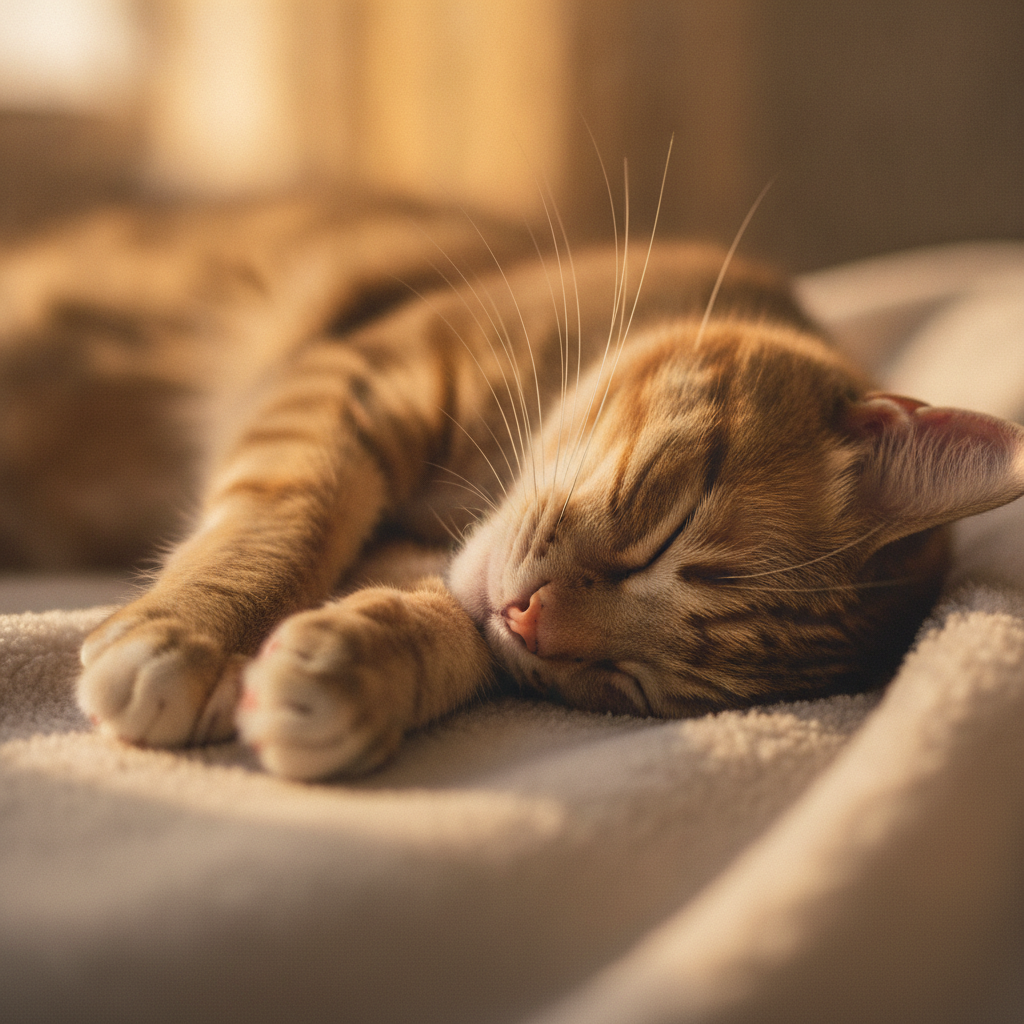
We can't ask, but we can make a strong inference. Modern recordings show that a cat's brain during REM looks fast and awake-like on an EEG, and produces ponto-geniculo-occipital (PGO) waves — electrical signatures tied to the formation of dream imagery in humans and other mammals alike, as science journalists have reported.
The likely content comes from a famous rodent study: when rats learned a maze, the exact pattern of brain cells that fired during the run replayed during sleep, so precisely that researchers could tell where in the maze the rat was "dreaming" it was. This memory-replay function appears to be shared across mammals, as explained by feline-science writers at Cats.com. Put together with Jouvet's hunting cats, the best guess is that your cat dreams about its own day — the hunt, the play, the people and other animals in its life. Tiger probably dreams about the gecko he never quite caught.
One neat detail explains why dreams get weird: during REM the cortex is buzzing with information but its different regions fall out of sync with one another, so the brain stitches together a vivid, slightly illogical highlight reel rather than a tidy recording. It's worth keeping a little scientific humility here, though — as Discover Magazine notes, we can measure the brainwaves and the twitching, but we can never actually climb inside a cat's head to read the dream. We're reading the dashboard, not the movie.
Sleep Through a Cat's Life: Kitten to Senior
How much a cat sleeps shifts dramatically with age, and so does how much of it is REM. Newborn kittens sleep around 22 hours a day — roughly 90% of their lives — and spend a huge share of it in REM, which is thought to be essential for wiring up the developing brain and nervous system. Adult sleep architecture only settles in at about 30 days old.
| Life stage | Daily sleep | Share of the day |
|---|---|---|
| Newborn (0-2 weeks) | ~22 hours | 90-92% |
| Kitten (3-6 months) | 18-20 hours | 75-83% |
| Adult (1-10 years) | 12-16 hours | 50-67% |
| Senior (11+ years) | 16-20 hours | 67-83% |
That heavy dose of REM in kittenhood isn't just rest — it's construction work. The same memory-and-learning machinery that drives dreaming is thought to help wire up sensory and motor circuits, which is part of why a kitten that has played, eaten and crashed out is literally building its brain in its sleep. So a kitten that seems to do nothing but eat and sleep is doing exactly its job, and a senior cat drifting back toward longer sleep is usually just ageing normally.
Normal Nap or Red Flag?
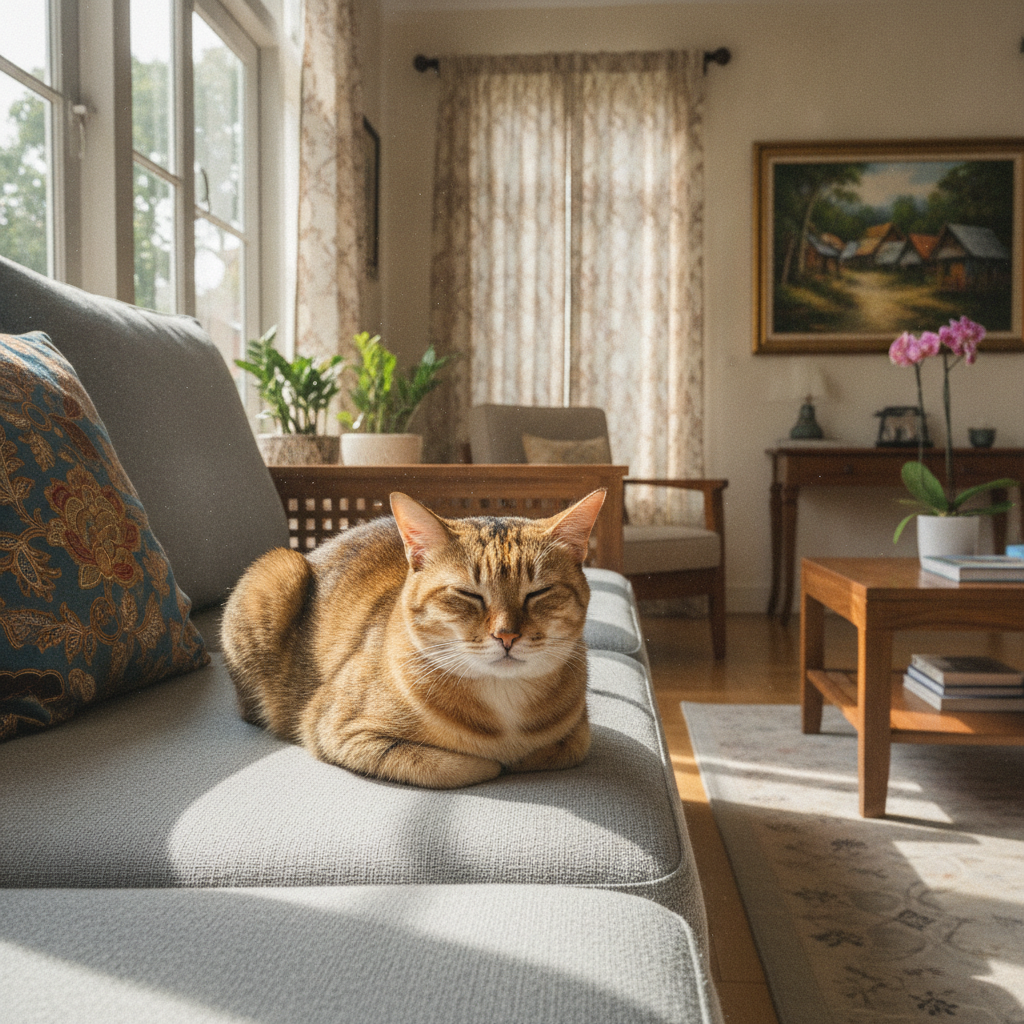
Because cats sleep so much anyway, the useful question isn't "how many hours" but "how does this compare to this cat's normal." A sudden, marked change from your cat's own baseline — sleeping far more and seeming flat, or unable to settle and pacing and yowling at night — is worth noticing, especially when it comes with shifts in appetite, thirst or litter box habits. Those can point to pain, thyroid problems or other illness rather than ordinary rest. We go deep on what's normal versus worrying in our dedicated guide to why cats sleep so much; if anything feels off against your cat's usual pattern, that's a vet conversation, not a guess.
Helping Your Cat Sleep Well in a Malaysian Home
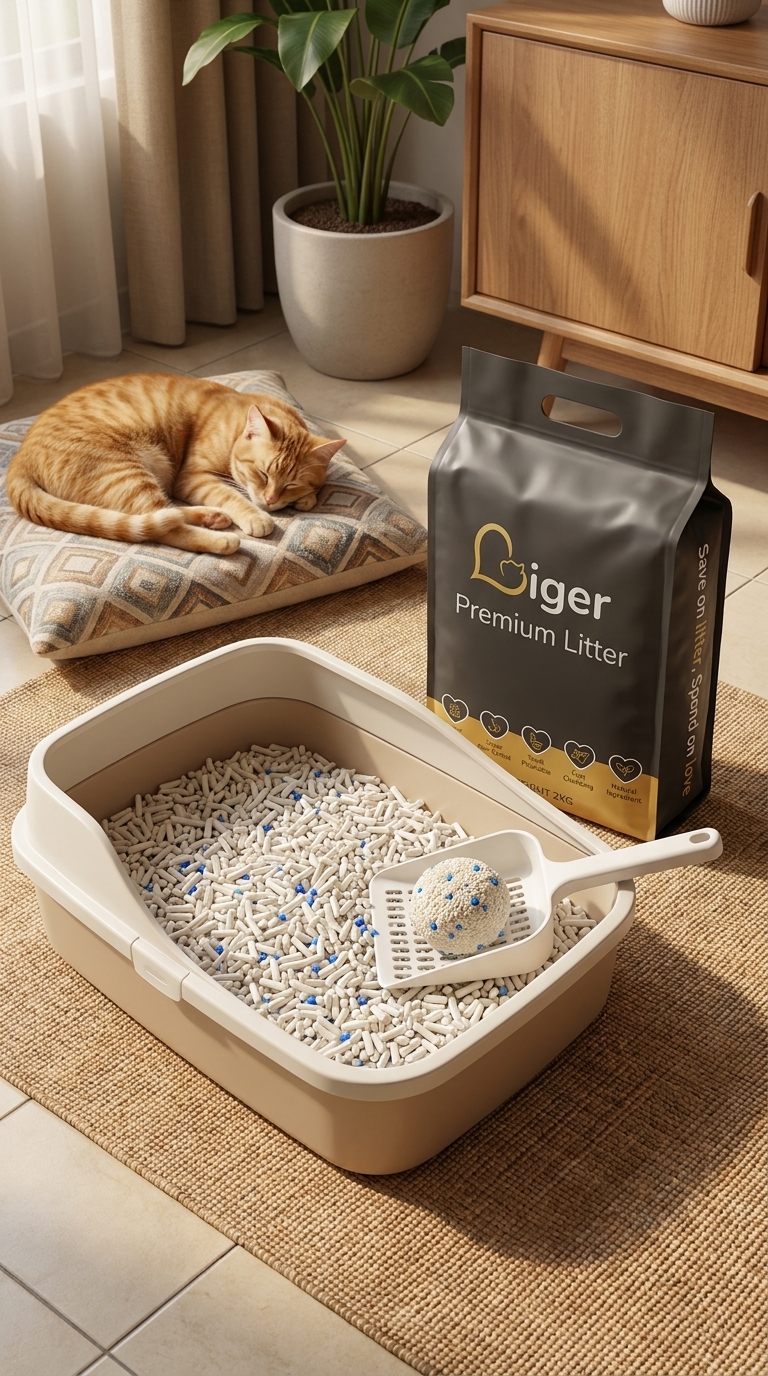
A cat sleeps deepest where it feels safe, so the basics matter more than gadgets: a quiet spot up high, a cool resting place that escapes the worst of the tropical afternoon heat, a predictable daily rhythm, and real play before its active dawn/dusk windows so it burns energy instead of waking you at 5am. Keep the litter area close to the cat's core territory but not right on top of the bed — and keep it clean and low-dust, because a cat that has to use a dusty, smelly box is a cat that rests less easily nearby.
That's the quiet logic behind Liger Premium Tofu Cat Litter: low dust, fast clumping and a light natural scent from food-grade soy fibre, so the calmest corner of the house stays genuinely calm. Current Liger pricing (as of May 2026) runs RM21.90 for a single 2kg pack, RM53.90 for 3 packs, RM89 for 5 packs and RM169 for 10 packs — RM8.45/kg on the 10-pack, free shipping across Peninsular Malaysia. The litter calculator helps you keep a fresh box going without overbuying. And for the rest of the feline operating manual — eyes, senses, the righting reflex and more — head back to the How Cats Work hub. The more you understand the sleeping cat, the more that twitching, squeaking little body on the windowsill makes perfect sense. Sweet dreams, little hunter.